The Best Fluffy Pancakes recipe you will fall in love with. Full of tips and tricks to help you make the best pancakes.
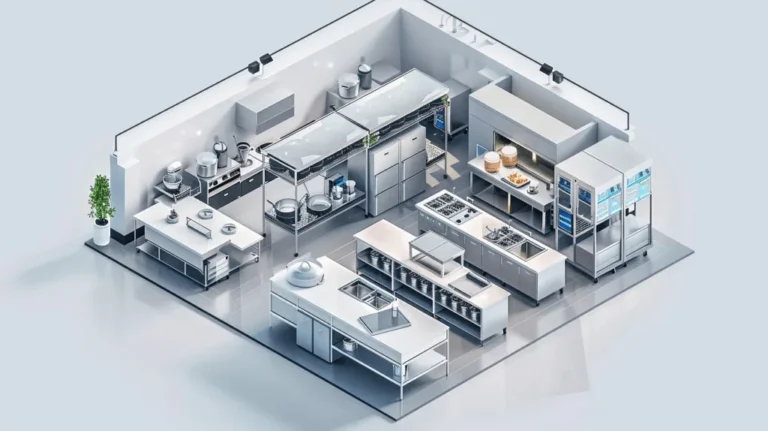
I’ll admit something embarrassing: when I first moved to Nashville and decided to help a friend open a tiny food stall in the Gulch, I thought choosing commercial kitchen equipment would be like shopping for a fancy toaster. Boy, was I wrong. After three returned orders, two near-meltdowns over clearance requirements, and one very confused electrician, I learned the hard way that compact commercial kitchen equipment isn’t just smaller, it’s an entirely different beast. The stakes are higher, the trade-offs are brutal, and the wrong choice can turn your 300-square-foot dream kitchen into a claustrophobic nightmare.
Here’s the thing: small spaces force you to make decisions most restaurant owners never face. Do you sacrifice prep space for a slightly larger oven? Can you really trust that “space-saving” dishwasher to handle 200 plates an hour? And why does every manufacturer seem to have a different definition of what “compact” actually means? After researching, testing, and occasionally regretting my life choices, I’ve put together this guide to help you avoid the mistakes I made. We’ll cover everything from the psychology of small-space cooking (yes, that’s a thing) to the hidden costs of going too small, with plenty of real-world examples from Nashville’s thriving food scene.
By the end, you’ll know how to:
- Assess your space with brutal honesty (no, that corner won’t fit a fryer)
- Prioritize equipment based on your menu’s actual needs (not your chef’s ego)
- Navigate the murky world of “compact” vs. “countertop” vs. “undercounter” labels
- Avoid the 5 most common mistakes that turn small kitchens into efficiency black holes
- Find equipment that’s actually built to last in tight quarters (spoiler: most isn’t)
Let’s start with the hardest truth: your space is smaller than you think. I don’t care what the blueprints say, once you account for walkways, fire codes, and the fact that humans need to actually move around, you’re working with about 70% of what you imagined. That’s why we’re beginning with…
The Brutal Reality of Compact Kitchen Math (Or Why Your Dream Layout Won’t Work)
I once watched a chef spend $12,000 on a “perfectly sized” compact range, only to realize, after delivery, that the hood system required 6 additional inches of clearance. The range is now a very expensive paperweight in his basement. This is what happens when you skip the clearance calculus, which is my fancy term for “measuring everything three times while crying.”
Here’s how to do it right:
- Measure your space in 3D. Not just length and width, height matters too. That beautiful low-ceiling loft kitchen? It just eliminated half your ventilation options. I learned this when trying to fit a combo oven into a repurposed shipping container (don’t ask). The minimum clearance requirements for commercial equipment aren’t suggestions; they’re physics. Most compact equipment needs:
- 6–12 inches behind for maintenance access
- 18–24 inches in front for safe operation
- 30–36 inches above for ventilation (unless you enjoy carbon monoxide parties)
- Map your workflow like a paranoid cartographer. Grab a roll of painter’s tape and physically mark where everything will go. Then, simulate a rush hour. Can your line cook reach the fridge while the fryer is going? Is there a traffic jam between the prep station and the expediter? I once designed what I thought was a genius layout for a taco stand, only to realize during our soft opening that the tortilla press and meat grill created a human bottleneck. We lost 15 minutes of service time every hour until we swapped their positions.
- Account for the “invisible footprint”. Every piece of equipment has a functional zone that extends beyond its physical dimensions. A compact convection oven might be 24 inches wide, but you need another 12 inches to the side to safely load trays. That “space-saving” undercounter fridge? You’ll need 18 inches of clearance to pull out the drawers fully. I’ve seen kitchens where the equipment technically fits, but the staff spends half their shift doing contortionist acts to use it.
Pro tip: Take photos of your taped layout from different angles, then print them and draw arrows showing how people and food will move. If it looks like a Rube Goldberg machine, start over. And for the love of all that’s holy, check your local health department’s clearance requirements before you buy anything. Nashville’s rules changed last year, and suddenly half the food trucks in East Nashville needed to reconfigure their setups. Don’t let that be you.
The Equipment Hierarchy: What Actually Deserves Your Precious Square Footage
Here’s where most people screw up: they assume all equipment is created equal. It’s not. In a compact kitchen, some tools are kings, and others are court jesters. The key is understanding which is which for your menu.
Let me give you an example from my own disaster files. A pizza pop-up I consulted for insisted on a full-size dough sheeter because “it was traditional.” What they didn’t account for was that:
- The sheeter took up 25% of their prep space
- They only used it for 10 minutes a day (the rest of the time it collected dust)
- Their actual bottleneck was proofing space, not dough rolling
We replaced it with a compact dough docker (which does 80% of the work in 10% of the space) and added a proofing cabinet. Their output doubled overnight.
So how do you determine your hierarchy? Ask these questions:
- What’s the one thing that, if broken, would shut down your kitchen? For a burger joint, it’s the grill. For a bakery, it’s the oven. That’s your Tier 1 equipment-it gets priority in space and budget.
- What tasks eat up the most time? If your line cooks spend 30 minutes a day julienning vegetables, a compact food processor might be worth its weight in gold. If you’re hand-washing dishes because your “space-saving” dishwasher can’t keep up, you’ve misassigned your tiers.
- What can you outsource or pre-prep? I know a ramen shop that eliminated their entire prep station by switching to pre-cut noodles and vacuum-sealed broth bases. They traded a little authenticity for a lot of space. Sometimes that’s the right call.
- What’s your “oh sh*t” scenario? If your fryer goes down during Friday night service, can you pivot? If not, you might need a backup plan (like a compact air fryer for emergencies) even if it seems redundant.
Maybe I should clarify something here-compact doesn’t always mean smaller capacity. Some of the best space-saving equipment is actually more powerful than its full-size counterparts because it’s designed for efficiency. The combi oven is a perfect example: it replaces a convection oven, steamer, and proofing cabinet in one unit. Yes, it’s expensive, but in a 200-square-foot kitchen, it’s often the difference between profitability and closure.
The Great Compact Equipment Myths (And Why They’ll Ruin Your Kitchen)
Oh boy, where do I start with the misinformation floating around about compact commercial equipment? I’ve heard it all: “Just get the residential version, it’s cheaper!” (No.) “Stack everything vertically!” (Maybe, but probably not.) “You don’t need a hood if you use electric!” (Please don’t test this theory.) Let’s debunk the biggest lies before they wreck your kitchen.
Myth #1: “Compact = Lower Capacity”
This is the most dangerous assumption because it leads to underbuying, which is somehow worse than overbuying. I consulted for a café that bought a “compact” espresso machine rated for 50 drinks/hour because “we’re a small shop.” What they didn’t account for was that their location was across from a co-working space, and by 10 AM they had a line out the door. The machine couldn’t keep up, the baristas were stressed, and customers started leaving. They had to lease a second machine (which didn’t fit) until they could afford an upgrade.
The truth? Many compact units are designed for high output in small spaces. That espresso machine should’ve been rated for at least 150 drinks/hour. Similarly:
- A compact convection oven might have the same BTU output as a full-size model, just with better heat distribution.
- An undercounter dishwasher can often match the cleaning power of a larger unit if it’s properly loaded.
- A countertop fryer might have a smaller basket, but if it recovers heat faster, you can cook more batches in the same time.
The key is looking at output per hour, not just physical size.
Myth #2: “Residential Equipment Is Fine for Small Commercial Kitchens”
I get it, the price difference is tempting. A residential-grade stand mixer costs $300; a commercial one starts at $1,200. But here’s what happens when you cheap out:
- Safety violations. Most health departments require NSF or ETL certification for commercial equipment. That cute little home blender? It’s a ticket waiting to happen.
- Burnout. Residential motors aren’t built for 8-hour shifts. I’ve seen $200 food processors smoke after 3 hours of continuous use. Now multiply that by a Friday night rush.
- No warranty. Most residential warranties are void if used commercially. So when that mixer dies mid-service, you’re on your own.
- Insurance issues. If a fire starts because you used non-commercial equipment, your policy might not cover it. Not worth the risk.
That said, there are a few residential-commercial hybrids that work in a pinch:
- Immersion circulators (like Anova) are often used in both settings.
- Some high-end home blenders (Vitamix) have commercial-grade motors.
- Certain Induction burners bridge the gap if you’re careful.
But these are exceptions, not the rule. When in doubt, check for NSF/ETL certification-it’s your get-out-of-jail-free card during inspections.
Myth #3: “Vertical Stacking Solves All Space Problems”
Stacking equipment seems like the obvious solution, until you realize that heat rises, grease splatters, and humans have limited vertical reach. I once designed a kitchen where we stacked a grill over a prep table to save space. What we didn’t account for was:
- The grill’s heat made the prep surface uncomfortably warm (imagine slicing tomatoes on a radiator).
- Grease dripped onto the prep area, creating a slip hazard and a sanitation nightmare.
- The line cook had to reach over hot surfaces to grab ingredients, which is both unsafe and slow.
We had to redesign the entire station after two weeks.
If you must stack, follow these rules:
- Never stack heat-producing equipment over prep areas. Ovens over counters? Fine. Fryers over cutting boards? Recipe for disaster.
- Leave at least 12 inches between stacked units for airflow and maintenance. I’ve seen stacked steamers melt their own control panels because there was no gap.
- Prioritize accessibility. If you’re stacking a refrigerator over a prep table, make sure the items you need most are at waist level. The “save space at all costs” mentality leads to ergonomic nightmares.
- Check weight limits. That “lightweight” compact grill might be 200 pounds. Not all shelves or bases can handle it.
And please, for the sake of your staff’s sanity, don’t stack more than two units high. I visited a food truck once where they had three pieces of equipment stacked, oven, grill, and holding cabinet. The poor cook had to use a step stool to reach the top. It was like watching someone play Operation in real life, except the buzzers were fire hazards.
The 5 Compact Equipment Categories You’re Probably Overlooking
Most guides focus on the obvious, ranges, fridges, prep tables, but the real space-saving magic happens in the unsung hero categories. These are the pieces that don’t get the glory but keep your kitchen from descending into chaos.
1. Undercounter Powerhouses
If you’re not using the space under your counters, you’re wasting 30% of your kitchen’s potential. The best undercounter units are like culinary Transformers-they look small but pack a punch. My favorites:
- Undercounter dishwashers: Look for models with 1-minute cycle times and built-in water softeners. The Hobart AM14 is a beast in a tiny package.
- Undercounter refrigeration: Drawers > doors in tight spaces. The True TUC-24 gives you full extension and better organization.
- Undercounter steamers: Perfect for veggie prep or reheating. The Vulcan UC24 can replace a full-size steamer in many cases.
- Undercounter ice machines: If you’re serving drinks, a 200-lb/day unit like the Manitowoc UY-0210A fits under a counter and eliminates the need for a separate ice bin.
Pro tip: Measure your counter height first. Some undercounter units require 34–36 inches of clearance, but many commercial counters are only 30 inches tall. I’ve seen kitchens where the equipment couldn’t even fit under the counter because no one checked this.
2. Multi-Functional Workhorses
In a compact kitchen, every piece of equipment should do at least two jobs. Here are the MVPs:
- Combi ovens: Steam, bake, roast, proof, and even smoke. The Rational SCC 61 is pricey but replaces 4–5 other pieces.
- Induction cooktops with built-in vents: No hood required for some models (check local codes). The Vollrath Mirage is a game-changer for food trucks.
- Countertop convection ovens with air frying: Like the Blodgett QT-100, which does everything from cookies to chicken wings.
- Food processors with multiple attachments: A Robot Coupe CL50 with the julienne and grating discs can replace three separate prep tools.
The trick is to calculate the “space saved per function” ratio. For example, if a combi oven costs $15,000 but replaces a $5,000 convection oven, a $3,000 steamer, and a $2,000 proofing cabinet, you’re actually saving $5,000 and 10 square feet of space. That’s a win.
3. Modular and Mobile Equipment
Flexibility is the secret weapon of compact kitchens. If your equipment can move, fold, or reconfigure, you gain functional space without changing your footprint. Some ideas:
- Mobile prep tables with locking casters: The Cambro Camshelving system lets you roll your prep station outside during slow hours.
- Fold-down shelves and tables: Companies like Metro make wall-mounted shelves that fold flat when not in use.
- Portable induction burners: For pop-ups or catering, the Breville Control Freak is NSF-certified and can go anywhere.
- Stackable food pans and cambros: Cambro’s Camcarriers nest when empty, saving insane amounts of space.
I once helped a caterer who was renting a shared kitchen space. By switching to modular cambro racks and collapsible prep tables, they reduced their storage needs by 40% and could reconfigure their setup based on the day’s menu. Their rent stayed the same, but their usable space effectively doubled.
4. Ventilation Hacks for Tiny Kitchens
Here’s a harsh truth: most compact kitchens are under-ventilated, and that’s a recipe for disaster (sometimes literally). The problem is that traditional hood systems take up valuable space and require expensive ductwork. But there are workarounds:
- Ductless hoods with advanced filtration: The Halton Miza uses electrostatic precipitation to clean grease-laden air without ducts. It’s not cheap, but neither is retrofitting ductwork.
- Induction cooktops with integrated downdrafts: Some models, like the Vollrath Induction Range, pull air downward, eliminating the need for overhead hoods in certain setups.
- Portable ventilation units: For food trucks or pop-ups, companies like CaptiveAire make compact, high-CFM fans that can be mounted temporarily.
- Heat-recovery ventilators: These systems, like those from Greenheck, recycle heat while ventilating, which can save on energy costs in tight spaces.
Warning: Always check with your local fire marshal before installing alternative ventilation. Nashville’s codes changed in 2023, and suddenly a bunch of food trucks had to upgrade their systems. Don’t assume that because something is “ductless” or “portable,” it’s automatically compliant.
5. The Tiny but Mighty Extras
These are the $50–$500 items that solve massive headaches in compact kitchens:
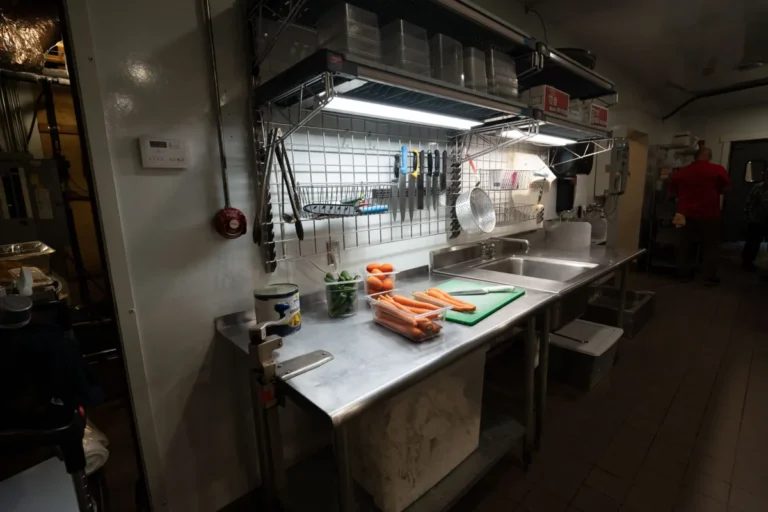
- Magnetic knife strips: Frees up drawer space and keeps knives accessible. I use the Dalstrong strip in my home kitchen and it’s a game-changer.
- Wall-mounted spice racks: Metro’s spice clips hold containers vertically, saving shelf space.
- Under-shelf baskets: Add an extra layer of storage to existing shelves. Cambro makes great ones.
- Collapsible measuring cups and funnels: OXO’s collapsible line is NSF-certified and cuts clutter by 50%.
- Portable fire extinguishers: The Amerex B500 is compact but powerful, critical in tight spaces where fires spread fast.
I call these the “1% improvements”-individually, they don’t seem like much, but together they can increase your functional space by 10–15% without any major renovations. And in a 300-square-foot kitchen, that’s the difference between chaos and control.
How to Buy Compact Equipment Without Getting Scammed (A Cynic’s Guide)
Here’s the thing about the commercial kitchen equipment industry: it’s full of predators. Between misleading specs, fake “compact” labels, and salespeople who get commissions on upsells, it’s easy to get fleeced. After getting burned a few times (including one memorable incident where a “24-inch” grill arrived measuring 26.5 inches, rendering it useless in our space), I’ve developed a **bullsh*t detection system. Here’s how to use it.
Red Flag #1: “Compact” in the Name ≠ Actually Compact
Manufacturers love slapping the word “compact” on equipment that’s only marginally smaller than standard models. Always:
- Check the exact dimensions (including handles, vents, and casters).
- Ask for the clearance requirements (how much space needed around it for safe operation).
- Look at the footprint vs. capacity ratio. A “compact” fryer might be smaller, but if it can only hold half as much oil, it’s not really saving you space, it’s just forcing you to cook in batches.
I once found a “compact” charbroiler that was technically 2 inches narrower than standard, but it required 12 inches of clearance on all sides for ventilation. So instead of saving space, it actually needed more than a regular unit. Always ask for the installation manual before buying; the real dimensions are usually in there.
Red Flag #2: “Space-Saving” = “We Removed Essential Features”
Some manufacturers “compactify” equipment by:
- Reducing insulation (leading to higher energy bills and safety hazards).
- Using weaker motors (so the unit burns out faster).
- Removing safety features (like automatic shut-offs).
- Skimping on materials (thinner stainless steel, cheaper gaskets).
How to spot this:
- Compare the wattage or BTU rating to full-size models. If it’s significantly lower, that’s a red flag.
- Check the warranty. Compact equipment should have the same (or better) warranty than full-size. If it’s shorter, they’re expecting it to fail.
- Look at the weight. A suspiciously light “compact” fridge might have thin walls and poor insulation.
- Read reviews from actual commercial kitchens (not home users). Sites like ChefTalk or Reddit’s r/KitchenConfidential are goldmines for honest feedback.
I once bought a “space-saving” undercounter fridge that was so poorly insulated, it struggled to keep food below 45°F in Nashville’s summer heat. We had to replace it after six months. Lesson learned: cheap compact equipment is usually expensive in the long run.
Red Flag #3: The “You Don’t Need a Hood” Lie
Some salespeople will tell you that electric equipment doesn’t need ventilation. This is dangerously false in 90% of cases. Here’s the reality:
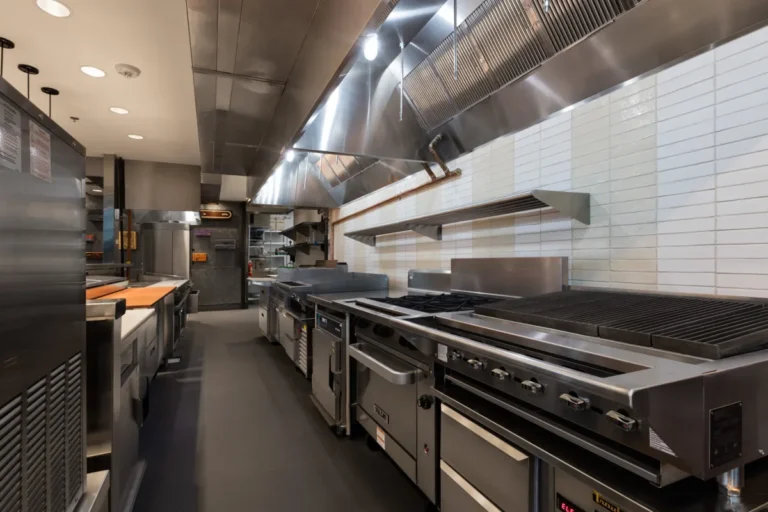
- Most health departments require Type I or Type II hoods for any cooking equipment that produces grease, smoke, or steam.
- Even electric grills and griddles produce grease-laden vapor, which is a fire hazard.
- Some induction cooktops can be used without hoods if they have integrated downdrafts, but this varies by local code.
- “Ventless” doesn’t mean “no ventilation”-it means the unit has built-in filtration, which still needs maintenance and may not meet all codes.
Always, always consult your local fire marshal and health department before assuming you can skip a hood. I’ve seen kitchens shut down during inspections because they believed a salesperson’s “you won’t need a hood” promise. In Nashville, the fire department has been cracking down on this since 2024, so don’t risk it.
Red Flag #4: The “But It’s NSF-Certified!” Bait-and-Switch
NSF certification is essential, but it’s not a blanket guarantee of quality. Some manufacturers get NSF certification for one specific model, then sell “similar” uncertified versions at a discount. Always:
- Verify the exact model number on the NSF website.
- Check if the certification is for commercial use (some are only for residential).
- Look at what the certification actually covers (e.g., a fridge might be NSF-certified for storage but not for high-temperature environments).
I once almost bought a “compact” steam table that had an NSF sticker, but when I looked it up, the certification was only for the stainless steel construction, not the heating elements or temperature control. Needless to say, I passed.
Where to Actually Buy Compact Equipment (Without Getting Ripped Off)
Not all suppliers are created equal, especially when it comes to compact equipment. Here’s my tiered list of where to shop, based on years of trial and error:
- Tier 1 (Best for quality and support):
- WebstaurantStore: Huge selection, good filters for compact equipment, and decent customer service. Their “Compact Commercial Kitchen Equipment” section is a great starting point.
- KaTom: Better for high-end compact equipment (like Rational combi ovens). Their reps actually know what they’re talking about.
- CLW (Central Restaurant Products): Great for undercounter and mobile units. They have a “Small Space Solutions” guide that’s surprisingly helpful.
- Tier 2 (Good for deals, but buyer beware):
- eBay (commercial sellers only): Look for sellers with 100% positive feedback and NSF-certified listings. I’ve found great deals on used Vulcan undercounter steamers here.
- Facebook Marketplace (local pickup only): Only buy if you can inspect the equipment in person. I once scored a barely-used Blodgett countertop convection oven for 40% off retail.
- Restaurant auctions: Sites like BidSpotter often have compact equipment from closed concepts. Just budget for a thorough cleaning/sanitizing.
- Tier 3 (Last resort):
- Amazon (commercial section only): Hit or miss. Stick to known brands like Vollrath or Cambro. Avoid no-name “compact” equipment, it’s usually junk.
- Local restaurant supply stores: Some are great; others are dumping grounds for returned equipment. Always ask if the item is new in box or a floor model.
Pro tip: Call the manufacturer before buying. Ask:
- “What’s the actual clearance required for this model?”
- “Is this NSF-certified for commercial use in [your state]?”
- “What’s the expected lifespan under heavy use?”
- “Do you have a list of local service technicians?” (If they hesitate, that’s a red flag.)
A good manufacturer will answer these questions without pressure. A bad one will dodge or try to upsell you.
The Compact Kitchen Equipment Checklist (Or How to Avoid My Mistakes)
Before you buy anything, run through this checklist. I wish I’d had it when I started, it would’ve saved me thousands of dollars and several panic attacks.
Phase 1: Space Assessment
- [ ] Measured all dimensions (length, width, height) with laser measure for accuracy.
- [ ] Marked clearance zones (18–24 inches in front, 6–12 inches behind, etc.).
- [ ] Checked floor load capacity (especially for heavy equipment like combi ovens).
- [ ] Verified electrical/gas requirements match your kitchen’s infrastructure.
- [ ] Confirmed ventilation compatibility with local fire codes.
Phase 2: Equipment Selection
- [ ] Prioritized multi-functional equipment (e.g., combi ovens, induction cooktops).
- [ ] Matched capacity to peak demand (not just average use).
- [ ] Chose undercounter or mobile units where possible.
- [ ] Verified NSF/ETL certification for commercial use.
- [ ] Checked warranty and service availability in your area.
Phase 3: Workflow Testing
- [ ] Simulated a rush hour with your layout (use painter’s tape to mark equipment placement).
- [ ] Timed how long it takes to move between stations (aim for < 3 seconds per step).
- [ ] Tested ergonomics (can staff reach everything without stretching or bending?).
- [ ] Confirmed cleanability (can you fully access all surfaces for deep cleaning?).
Phase 4: Budget Reality Check
- [ ] Factored in installation costs (electrical, gas, ventilation upgrades).
- [ ] Added 20% buffer for unexpected expenses (you’ll need it).
- [ ] Compared total cost of ownership (not just purchase price, consider energy, maintenance, lifespan).
- [ ] Explored leasing or financing for high-ticket items (some companies offer 0% financing for NSF-certified equipment).
Phase 5: Contingency Planning
- [ ] Identified backup options for critical equipment (e.g., a portable induction burner if the main range fails).
- [ ] Located local repair technicians for each piece of equipment.
- [ ] Stocked essential spare parts (gaskets, fuses, thermostats).
- [ ] Trained staff on basic troubleshooting (how to reset a tripped breaker, clean a clogged vent, etc.).
I know this seems like overkill, but I’ve seen too many kitchens grind to a halt because they skipped one of these steps. The extra hour you spend planning now will save you weeks of headaches later.
The Future of Compact Commercial Kitchens (And Why You Should Care)
Here’s where I get a little speculative, but hear me out. The compact kitchen equipment market is evolving faster than most people realize, driven by food halls, ghost kitchens, and the rise of micro-restaurants. Based on what I’m seeing at trade shows (and in Nashville’s exploding food scene), here are the trends that will shape compact kitchens in the next 5 years:
1. AI-Optimized Layouts
Companies like Kitchensync are already using AI to design commercial kitchens, but the next wave will be real-time optimization. Imagine a system that:
- Adjusts equipment placement based on the day’s menu.
- Predicts bottlenecks before they happen.
- Automatically orders ingredients based on storage capacity.
This isn’t sci-fi-Middleby is already testing prototypes in ghost kitchens.
2. Modular, Plug-and-Play Systems
The future of compact kitchens is LEGO-style equipment: interchangeable, stackable, and reconfigurable. Companies like Modular Kitchen Systems are pioneering units that:
- Snap together like building blocks.
- Share power and ventilation systems.
- Can be rearranged in minutes for different menus.
This could be a game-changer for food halls and pop-ups, where flexibility is everything.
3. Energy-Neutral Equipment
With energy costs rising, self-powered compact equipment is becoming a priority. Look for:
- Solar-assisted refrigeration (already being tested in food trucks).
- Kinetic-energy prep tables (where chopping motions generate power).
- Heat-recapture systems that use waste heat from ovens to power other equipment.
Vollrath and Hobart are both investing heavily in this space.
4. Smart, Self-Cleaning Surfaces
The holy grail of compact kitchens is equipment that cleans itself. We’re not there yet, but we’re getting close:
- UV-sanitizing drawers (already available in some undercounter fridges).
- Self-scraping grills that reduce cleanup time by 80%.
- Antimicrobial coatings that prevent bacteria buildup between deep cleans.
True Manufacturing is leading the charge here with their BioCote-coated refrigeration.
5. Virtual Kitchens, Real Equipment
As ghost kitchens and virtual brands explode, compact equipment designed for delivery-only concepts is becoming a niche. Expect to see:
- Ultra-fast cooking equipment optimized for delivery times (e.g., high-speed impingement ovens).
- Packaging-integrated prep stations where food goes straight from cooker to clamshell.
- AI-driven holding cabinets that adjust temps based on delivery ETA.
Middleby’s Ventless Kitchen is already testing some of these concepts.
So, should you wait for these futuristic solutions? Probably not, most are still 2–5 years away from being mainstream. But if you’re opening a kitchen now, future-proof your setup by:
- Choosing equipment with open APIs (so it can integrate with future tech).
- Prioritizing modular designs that can be upgraded.
- Investing in energy-efficient models that will save you money as costs rise.
I’m torn between being excited and terrified by these trends. On one hand, compact kitchens are about to get a lot smarter. On the other, the learning curve is going to be steep. But if there’s one thing I’ve learned from Nashville’s food scene, it’s that the operators who embrace change are the ones who survive.
Final Thoughts: The Compact Kitchen Mindset
Here’s the truth no one tells you: choosing compact commercial kitchen equipment isn’t just about the equipment. It’s about adopting a different way of thinking-one that prioritizes flexibility, efficiency, and brutal honesty about what you actually need. The most successful compact kitchens I’ve seen (and I’ve seen a lot, from Nashville’s food trucks to Manhattan’s micro-bakeries) all share a few key traits:
- They embrace constraints. Instead of fighting the small space, they use it to force creativity. Limited prep space? They pre-cut everything. No room for a walk-in? They use blast chillers and vacuum sealers to extend ingredient life.
- They prioritize flow over square footage. A well-designed 200-square-foot kitchen can outperform a poorly laid-out 500-square-foot one. It’s all about minutes saved per task.
- They invest in training. Compact equipment often requires different techniques. A combi oven isn’t just a fancy toaster, it’s a whole new way of cooking. The best operators train their staff to maximize every inch and every feature.
- They plan for failure. Something will break. The question is whether it shuts you down for a day or an hour. The smartest kitchens have redundancy built in-even if it’s just a backup induction burner.
So here’s my challenge to you: Before you buy a single piece of equipment, spend a week tracking every movement in your kitchen. Time how long it takes to:
- Grab ingredients from the fridge.
- Move between prep and cooking stations.
- Plate a dish and hand it off.
- Clean and reset a station.
You’ll quickly see where the bottlenecks are, and where you can save space by saving time.
And remember: compact doesn’t mean compromise. Some of the best food in Nashville comes out of kitchens smaller than my living room. The right equipment doesn’t just fit your space, it elevates what you can do within it.
Now, if you’ll excuse me, I need to go measure my cat’s food bowl to see if it’s NSF-certified. (Kidding. Mostly.)
FAQ
Q: Can I really run a full restaurant out of a compact kitchen, or is this only for food trucks and pop-ups?
A: Absolutely, but with caveats. I’ve seen 50-seat restaurants thrive in 300-square-foot kitchens by focusing on limited, high-margin menus and ultra-efficient equipment. The key is specialization: pick a cuisine that doesn’t require a ton of prep space (e.g., pizza, ramen, tacos) and invest in multi-functional tools like combi ovens. That said, if your dream is a fine-dining tasting menu, you’ll probably need more space. Compact kitchens excel at high-volume, limited-SKU concepts.
Q: What’s the one piece of compact equipment you wish you’d discovered sooner?
A: Oh, easy: the Vollrath Mirage induction range. It’s a ventless, portable, NSF-certified induction cooktop that can replace a full gas range in many setups. I used one in a pop-up where we couldn’t install a hood, and it was a lifesaver. The precision temperature control also reduced food waste by about 15% because nothing got overcooked. It’s not cheap ($2,500–$3,500), but it’s cheaper than retrofitting ventilation.
Q: How do I convince my landlord to upgrade the electrical/gas for my compact kitchen? They’re resisting because it’s “just a small space.”
A: Ah, the classic landlord battle. Here’s the script I use:
- Frame it as a revenue opportunity: “If we upgrade to a 208V circuit, I can add a combi oven that will let me expand the menu and increase sales by 20%.”
- Offer to split costs: “I’ll cover 60% of the upgrade if you handle the permitting and labor.”
- Show them the numbers: “This $3,000 electrical upgrade will allow me to add $10,000/month in revenue. Here’s the projection.”
- Leverage health/safety: “The current setup doesn’t meet NFPA 96 standards for ventilation. If we get flagged in an inspection, we’ll both be liable.”
- Propose a trial: “Let me bring in a portable induction burner for a month to prove the concept. If sales increase, we’ll talk about permanent upgrades.”
If they still refuse, consider leasing equipment with built-in power solutions (like propane-powered food trucks) or partnering with a commissary kitchen that already has the infrastructure.
Q: I’m on a tight budget. What’s the bare minimum compact equipment I need to start a small café or food stall?
A: If you’re really strapped for cash, here’s the absolute minimum to open a coffee/light food concept (assuming you have basic utilities):
- Cooking: 1x Countertop induction burner ($300–$600) + 1x Countertop convection oven ($800–$1,500).
- Refrigeration: 1x Undercounter fridge ($1,200–$2,000) + 1x Reach-in cooler (used, $800–$1,500).
- Prep: 1x Stainless steel prep table ($400–$800) + 1x Compact food processor ($200–$400).
- Cleaning: 1x Compact dishwasher ($2,000–$3,500) or 3-compartment sink ($500–$1,000).
- Extras: NSF-certified shelving ($200), fire extinguisher ($100), basic utensils ($300).
Total: ~$6,000–$10,000 (new). You can cut this by 30–50% buying used from restaurant auctions, but inspect everything in person and verify NSF certification.
For a hot food concept (burgers, tacos, etc.), swap the convection oven for a compact grill or griddle ($1,500–$3,000) and add a holding cabinet ($800–$1,500).
Remember: The biggest mistake budget operators make is skimping on refrigeration. A cheap fridge will fail, and then you’re throwing out hundreds in spoiled food. Prioritize reliable cold storage** over fancy cooking equipment.
@article{how-to-choose-compact-commercial-kitchen-equipment-without-losing-your-mind-or-your-budget,
    title   = {How to Choose Compact Commercial Kitchen Equipment Without Losing Your Mind (or Your Budget)},
    author  = {Chef's icon},
    year    = {2025},
    journal = {Chef's Icon},
    url     = {https://chefsicon.com/choosing-compact-commercial-kitchen-equipment/}
}