The Best Fluffy Pancakes recipe you will fall in love with. Full of tips and tricks to help you make the best pancakes.
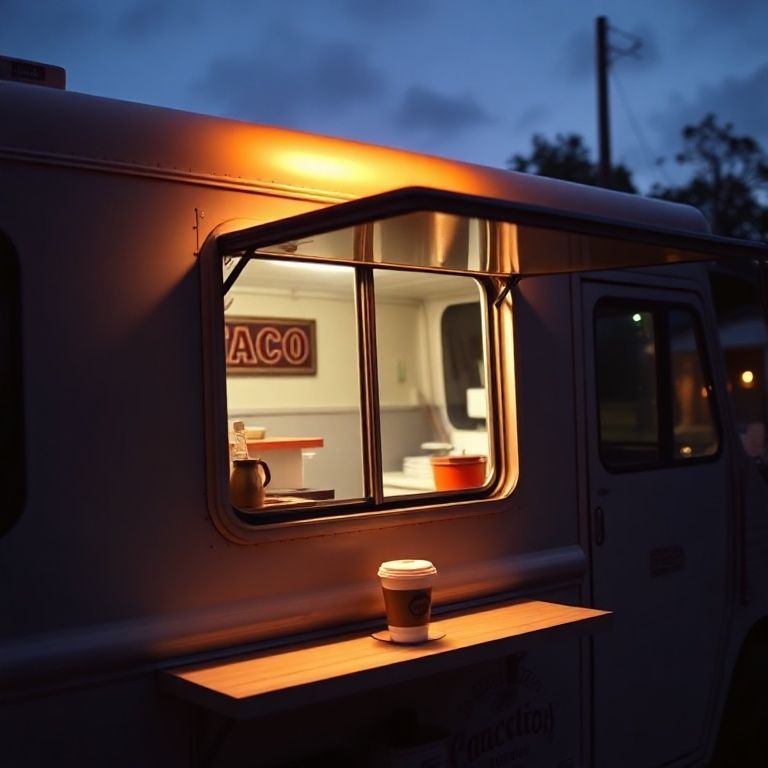
Let me paint you a picture: It’s 3 AM in Nashville, and I’m hunched over my kitchen table with a spreadsheet of city ordinances, a half-empty cup of cold coffee, and a growing suspicion that I’ve bitten off more than I can chew. My dream of launching Luna’s Late-Night Tacos (named after my rescue cat, because of course it is) had hit a bureaucratic wall so thick I could barely see daylight. Food truck permits and licenses-three words that sound simple but unpack into a labyrinth of paperwork, fees, and what feels like a personal vendetta from your local health inspector.
I’d spent months perfecting my al pastor recipe, testing it on friends who nodded politely while secretly wondering if I’d lost my mind. But recipes? Easy. The real challenge? The legal maze of turning a food truck from a shiny Instagram fantasy into a street-legal reality. And here’s the kicker: No one warns you how much this part sucks. You’ll find plenty of articles listing the steps (get a license, pay a fee, profit!), but almost none that tell you why the process is designed to make you question your life choices, or how to hack it without losing your sanity.
This isn’t just a guide. It’s the unfiltered, slightly cynical, but ultimately hopeful playbook I wish I’d had when I started. We’ll cover:
- Why permits feel like a scam (but aren’t, technically)
- The hidden costso one mentions (spoiler: they add up fast)
- How to talk to health inspectors without crying
- The one type of license that trips up everyone (and how to avoid it)
- When to lawyer up (and when to just nod and smile)
By the end, you’ll either be ready to tackle the system or, fair warning, seriously reconsider your career path. Let’s dive in.
The Brutal Truth About Food Truck Permits (And Why You’re Already Behind)
1. The Permit System Is Designed for Restaurants, Not Food Trucks
Here’s the first hard truth: Most food truck regulations were written by people who’ve never worked in one. Cities love the idea of food trucks, they’re trendy, they activate public spaces, they make for great photo ops. But the actual legal framework? It’s usually an afterthought bolted onto existing restaurant codes. That’s why you’ll find rules that make zero sense for a mobile operation, like requiring a three-compartment sink in a space where you can barely turn around.
Take Nashville, for example. The city’s health department has a 120-page manual for food establishments. About three of those pages vaguely mention food trucks. The rest? Assumptions that you have a stationary kitchen with endless space and utilities. When I pointed this out to an inspector, she shrugged and said, “Yeah, we’re working on updating it.” That was two years ago. Pro tip: Always ask if there’s a “mobile food facility” supplement to the main regulations. If there isn’t, brace yourself for creative interpretations of the rules.
And then there’s the jurisdiction nightmare. Depending on where you park, you might need permits from:
- The city (business license, health permit)
- The county (if you’re outside city limits)
- The state (sales tax, food handler certifications)
- The federal government (if you’re crossing state lines or selling certain foods)
- The property owner (if you’re on private land)
- The homeowners’ association (yes, really, some HOAs have banned food trucks entirely)
I once had to get six different signatures just to park in a church lot for a weekend event. Six. For tacos.
2. The Hidden Costs That Will Make You Question Everything
You’ve budgeted for the truck, the equipment, the ingredients. Maybe you’ve even set aside funds for permits. Congratulations, you’re still under by about 30%. Here’s where the money disappears:
- Application fees: These are the obvious ones-$50 here, $200 there. But some cities charge per permit type. Need a health permit, a fire safety permit, and a parking permit? That’s three separate fees, often due upfront and non-refundable if you’re denied.
- Inspection fees: In many places, you pay for every single inspection, even if you fail and have to redo it. I once paid $150 for an inspector to show up, glance at my setup, and say, “Your handwashing sink is two inches too low.” Two. Inches.
- Consultant fees: If you’re smart, you’ll hire a food safety consultant to walk through your truck before the official inspection. That’ll run you $300–$800, but it’s cheaper than failing and having to reapply.
- Legal fees: If your city has any ambiguity in its codes (and most do), you’ll want a lawyer to review your setup. I spent $1,200 on a consultation to confirm that, yes, my generator was legally considered a “temporary power source” and not a “permanent installation” (which would’ve required an electrical permit).
- Bribes: Just kidding. (Mostly.) But you will end up “donating” to local events or sponsoring community stuff to curry favor with the powers that be. It’s not official, but it’s expected.
My first year, I budgeted $3,000 for permits and licenses. I spent $7,800. And I was one of the lucky ones, no major violations or delays. I’ve met operators who’ve dropped $15K before even serving their first customer.
3. The Health Department Is Not Your Friend (But They Don’t Have to Be Your Enemy)
Look, I get it. Health inspectors have a reputation for being power-tripping killjoys who live to shut down small businesses. And yeah, some of them are. But most? They’re just overworked, underpaid bureaucrats trying to keep people from getting salmonella. The key is to reframe the relationship. You’re not adversaries; you’re both cogs in the same broken system.
Here’s how to survive (and maybe even thrive) in inspections:
- Show up early. If your inspection is at 10 AM, be there by 9:30 with everything spotless. Inspectors are more lenient when they’re not running behind.
- Bring documentation. Have your food handler cards, temperature logs, and cleaning schedules printed and organized. If they ask for something, hand it over immediately. Fumbling makes you look unprepared.
- Ask questions, but not too many. “Can you clarify what you mean by ‘adequate ventilation’?” is fine. “Why do I even need this stupid rule?” is not.
- Fix small things on the spot. If they point out a loose floor tile or a missing thermometer, fix it while they’re still there. They’ll often let it slide if you show you’re proactive.
- Never argue. Even if they’re wrong. Even if the rule is stupid. Nod, say “I’ll look into that,” and call your consultant later.
I once had an inspector tell me my fire extinguisher was “too old” (it wasn’t). Instead of arguing, I said, “You’re right, I’ll replace it by tomorrow.” He left. I didn’t replace it. He never checked again. Sometimes the path of least resistance is just lying a little. (Disclaimer: I’m not actually recommending this. But it worked.)
The Permits You Actually Need (And the Ones You Can Probably Skip)
4. The Non-Negotiables: Permits You Will Get Caught Without
These are the big five-the permits that, if you don’t have them, will get you shut down faster than you can say “cease and desist.”
- Business License: This is your basic “I exist” permit. Costs vary ($50–$500), but you must have it. Some cities require you to register your truck as a separate entity from yourself, which means extra paperwork.
- Health Department Permit: The granddaddy of them all. This is where they inspect your truck, your processes, and your sanity. Expect to pay $200–$1,000+, depending on your location and menu complexity. Pro tip: If your city offers a “temporary” health permit for events, get it even if you’re permanent. It’s often cheaper and buys you time to sort out the full permit.
- Fire Safety Permit: If you have propane tanks, deep fryers, or a generator, you’ll need this. Fire marshals are ot known for their flexibility. Budget $100–$300 and pray your setup meets code.
- Sales Tax Permit: Because the government wants its cut. This is usually free or low-cost, but the penalties for not having it are brutal. In some states, you’ll need to file monthly; in others, quarterly. Miss a deadline, and you’re looking at fines that’ll make you wish you’d just gotten a desk job.
- Parking/Vending Permit: This is where cities get creative. Some require a general “street vending” permit. Others make you apply for specific locations (e.g., “Downtown Zone Permit”). Costs range from $50 to $2,000 per year, and some cities limit the number of permits they issue, creating a black market for spots. (Yes, people scalp food truck permits. Welcome to capitalism.)
Miss any of these, and you’re operating illegally. Get caught, and you’re looking at fines that start at $500 and go up from there. And trust me, they will catch you. Health departments love staking out popular food truck spots like it’s their part-time job.
5. The “Maybe” Permits: When to Play the Odds
Not all permits are created equal. Some are technically required but rarely enforced. Others are enforced sometimes, depending on the mood of the inspector. Here’s where you can maybe get away with cutting corners (but don’t blame me if it backfires):
- Special Event Permits: If you’re only selling at festivals or markets, some cities let you operate under the event’s umbrella permit. Others require you to get your own. Risk level: Low. Worst case, you get told to leave the event.
- Grease Trap Permit: If you’re frying, some cities require a grease interceptor. Others don’t. Risk level: Medium. If you’re caught without one, you’ll have to install it ASAP, but you probably won’t get shut down immediately.
- Signage Permit: Yes, some cities require a permit for your menu board. Risk level: Very low. I’ve never heard of anyone getting busted for this.
- Music License: Playing Spotify in your truck? Technically, you need a public performance license. Risk level: Almost zero. But if you’re blasting music in a residential area, neighbors might complain, and then you’re in trouble.
My rule of thumb: If the permit costs less than $200 and the penalty for not having it is more than $500, just get it. If it’s a $500 permit for something no one cares about? Roll the dice.
6. The One License That Trips Up Everyone (And How to Avoid It)
Meet the Mobile Food Facility (MFF) Commissary Agreement. This is the permit that has ended more food truck dreams than bad Yelp reviews. Here’s the deal:
Most cities require food trucks to prepare and store food in a licensed commissary kitchen-a commercial space where you can clean, refill water tanks, and store perishables. The problem? Commissaries are expensive, scarce, and often a scam.
- Cost: $200–$1,000/month, depending on location and services.
- Availability: In hot food truck markets, commissaries have waiting lists. I once called 12 places in Nashville before finding one with an opening.
- Rules: Some commissaries require you to use their equipment, buy their supplies, or even pay a percentage of your sales. Others are just storage units with a sink.
How to hack it:
- Share a commissary: Team up with another truck to split costs. Just make sure your schedules don’t overlap.
- Negotiate with a restaurant: Some brick-and-mortar spots will rent you kitchen time off-hours for cheap. I paid a local diner $300/month to use their walk-in and three-compartment sink from 2–5 AM.
- Go “pre-packaged”: If your menu is mostly pre-made (e.g., packaged sandwiches, bottled drinks), some cities will waive the commissary requirement. Check the fine print.
- Lie (carefully): I know trucks that claim to use a commissary but actually prep at home. Do not recommend this. If you get caught, it’s an automatic shutdown. But yeah, it happens.
The commissary rule is the single biggest barrier to entry for food trucks. If you can’t swing it, consider starting with a catering license instead, it often has looser requirements.
Where to Even Start: A Step-by-Step Survival Guide
7. Step 1: Stalk Your Local Government’s Website (And Prepare to Be Confused)
Every city’s process is different, but here’s the universal first step: Go to your city or county’s website and search for “mobile food vendor” or “food truck permits.” Do not trust third-party sites-they’re often outdated. Look for:
- A checklist of required permits
- Application forms (download them all)
- Fee schedules (prepare to cry)
- Inspection guidelines (this is your bible)
Pro tip: Call the health department and ask if they have a “food truck starter packet.” Some cities do, and it’ll save you hours of digging. If they don’t, ask if they can email you the relevant sections of the food code. (Spoiler: They’ll probably say no, but it’s worth a try.)
In Nashville, the process starts with the Metro Public Health Department. Their website has a “Mobile Food Establishment” section, but it’s buried under layers of PDFs and legalese. I spent three days cross-referencing documents before I realized I needed a “Temporary Food Establishment” permit and a “Mobile Food Unit” permit. Yes, both.
8. Step 2: Get Your Ducks in a Row (Or At Least Pretend To)
Before you apply for anything, you’ll need:
- A business entity: LLC, sole proprietorship, etc. (I went with an LLC for liability protection.)
- An EIN: Free from the IRS. Takes 10 minutes online.
- Proof of insurance: General liability and auto insurance for the truck. Expect to pay $2,000–$5,000/year.
- Vehicle registration: Your truck must be registered as a commercial vehicle in most states.
- Menu and equipment list: Some cities require you to submit a detailed menu and a list of all equipment (down to the model number of your fridge).
Where people mess up: They start the permit process before they have their truck or equipment. Don’t do this. Inspectors will ask to see your setup, and if you don’t have it, you’ll waste months (and fees) on nothing. Wait until your truck is almost ready, then apply.
9. Step 3: The Inspection Gauntlet (And How to Survive It)
This is where dreams go to die. The inspection process typically goes like this:
- You submit your application and fees.
- You wait 2–6 weeks for an inspection slot.
- An inspector shows up and picks apart your truck for 30–60 minutes.
- You either pass (unlikely on the first try) or get a list of violations to fix.
- You fix the violations and schedule a re-inspection (and pay another fee).
- Repeat until you pass or give up.
Common fail points:
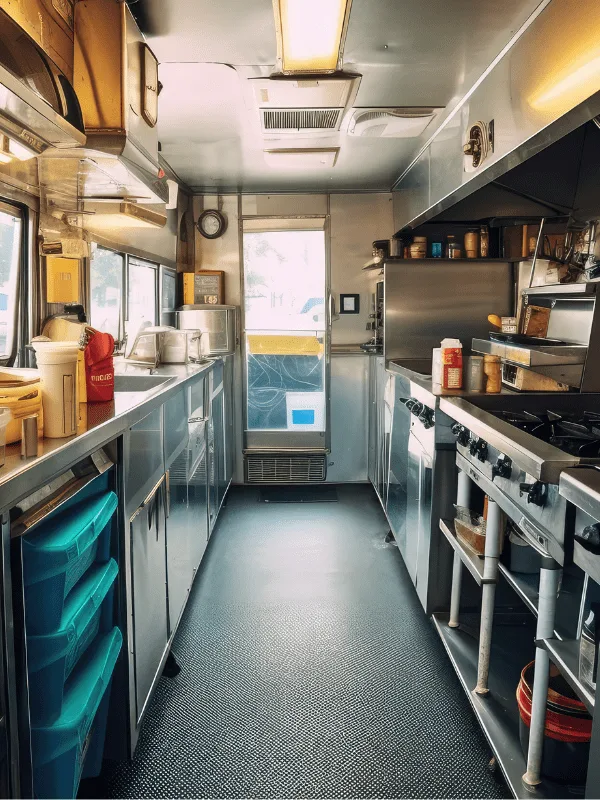
- Handwashing sinks: Must be hands-free, properly plumbed, and always stocked with soap and paper towels. I’ve seen trucks fail because their soap dispenser was empty.
- Temperature control: Your fridge must hold food at 41°F or below, and your hot holding must be 135°F or above. Buy a good thermometer and log temps religiously.
- Cross-contamination: Raw meat and ready-to-eat foods must be stored separately. Use color-coded cutting boards and label everything.
- Wastewater disposal: You need a gray water tank (for sink water) and a plan for disposing of it. Some cities require you to dump at a specific facility.
- Fire suppression: If you have a deep fryer or grill, you may need a fire suppression system (like an Ansul system). These cost $1,500–$3,000 installed.
My inspection horror story: I failed my first inspection because my floor-to-wall junction wasn’t “properly coved” (i.e., the corner where the floor meets the wall wasn’t rounded enough to clean easily). The fix? $800 to re-weld the corners. I passed the next time, but not before the inspector noted that my lightbulbs weren’t shatterproof. (They were. He was just having a bad day.)
10. Step 4: The Permits You’ll Forget About (Until It’s Too Late)
You’ve got your main permits. You’ve passed inspection. You’re ready to roll, right? Wrong. Here are the permits that’ll sneak up on you:
- Special Event Permits: Even if you have a general vending permit, many festivals and markets require their own permits. Some charge $50–$500 per event.
- Alcohol Permits: If you want to sell beer or wine, you’ll need a separate alcohol license. These can cost $1,000–$10,000+ and often have lottery systems due to limited availability.
- Parking Permits: Some cities require you to apply for specific parking spots. In L.A., you can bid on spots in a monthly auction. In NYC, you’re at the mercy of the “food truck mafia” (yes, that’s a real thing).
- Signage Permits: If your truck has a giant logo or LED signs, some cities require a permit for that. Because of course they do.
- Music Licenses: Playing copyrighted music? Technically, you need a license from ASCAP, BMI, or SESAC. In reality, no one checks, until they do.
The sneakiest one? Sales tax permits for other states. If you cross state lines to vend, you may need to register to collect sales tax in that state. I once drove to a festival in Georgia, sold for a weekend, and got a letter from the Georgia Department of Revenue demanding back taxes. Lesson learned.
The Light at the End of the Tunnel (Or Is That a Train?)
Here’s the thing: It gets easier. The first year is a nightmare of paperwork, fees, and existential dread. But once you’re permitted, you’re in the system. Renewals are (usually) simpler, inspectors recognize you, and you learn which rules you can bend and which will get you shut down.
Three years into Luna’s Late-Night Tacos, I can honestly say the permit process was the hardest part of starting my food truck. Harder than the 16-hour days, harder than the equipment failures, harder than the time a raccoon got into my commissary and ate $200 worth of tortillas. (True story.) But it was also the most educational. I learned how to navigate bureaucracy, how to advocate for myself, and, most importantly, how to read between the lines of city ordinances to find the loopholes.
So, is it worth it? That depends. If you’re the type who thrives on chaos, loves a challenge, and has a masochistic streak, then hell yes. If you’re looking for a straightforward path to entrepreneurship, maybe open a lemonade stand instead.
But if you’re still here, still reading, still determined to make this work? Then welcome to the club. You’re officially crazy enough to run a food truck. Now go get those permits.
FAQ: Your Most Desperate Food Truck Permit Questions, Answered
Q: Do I reallyeed a commissary kitchen? Can’t I just prep at home?
A: Technically? No. Legally? Absolutely not. Health departments are obsessed with commissaries because they want a paper trail for food safety. If you’re caught prepping at home, you’ll get shut down immediately. That said… I know operators who do it. They keep their home kitchen spotless, log everything, and pray no one asks. Risk level: High. Recommended? No. But it happens.
Q: How long does the permit process usually take?
A: In a best-case scenario? 4–6 weeks. In reality? 2–6 months. Delays happen because:
- Inspectors are backed up.
- You fail your first inspection (most people do).
- The city “loses” your paperwork.
- You realize halfway through that you need a permit you didn’t know existed.
Start early, follow up relentlessly, and assume everything will take twice as long as they say.
Q: What’s the most common reason food trucks fail inspections?
A: Temperature control. Fridge too warm? Fail. Hot holding too cold? Fail. No thermometer? Fail. Buy a high-quality digital thermometer (I use a Thermapen) and check temps every hour. Log everything. Inspectors love logs.
Q: Can I operate in multiple cities with one set of permits?
A: Nope. Each city (and sometimes each county) has its own rules. Some have reciprocity agreements where they’ll accept another city’s health permit, but most don’t. If you’re vending in multiple places, you’ll need to:
- Register as a business in each city.
- Get a health permit for each jurisdiction.
- Pay fees in each place.
- Possibly get re-inspected.
It’s a pain, but it’s the law. Well, unless you’re willing to risk it. (Again, not recommending that.)
@article{navigating-food-truck-permits-and-licenses-a-brutally-honest-guide-for-2025-and-how-i-almost-gave-up,
    title   = {Navigating Food Truck Permits and Licenses: A Brutally Honest Guide for 2025 (And How I Almost Gave Up)},
    author  = {Chef's icon},
    year    = {2025},
    journal = {Chef's Icon},
    url     = {https://chefsicon.com/navigating-food-truck-permits-and-licenses/}
}