The Best Fluffy Pancakes recipe you will fall in love with. Full of tips and tricks to help you make the best pancakes.
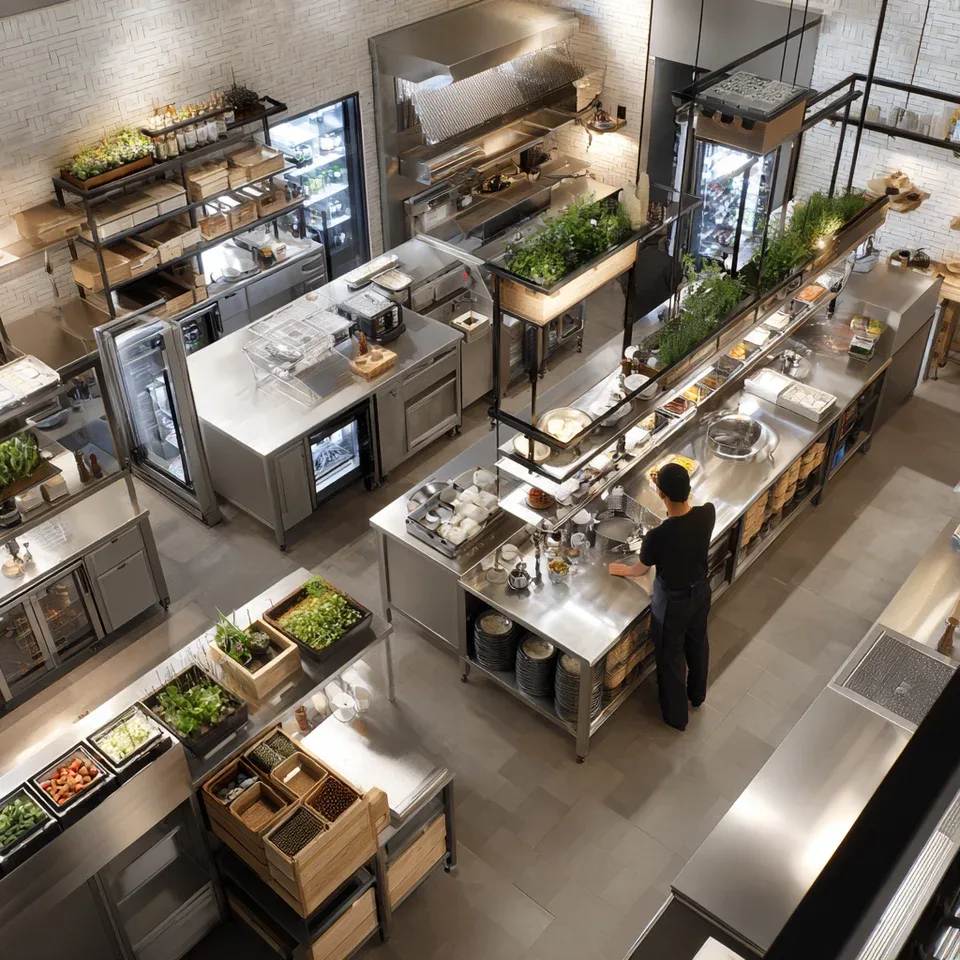
Let me start with a confession: I’ve watched more restaurant kitchens fail than I’ve seen succeed. Not because the food was bad, though sometimes it was, but because the kitchen design was fundamentally broken from day one. We’re talking about places where the fryer was so far from the expediter that orders came out cold, or where the dish pit backed up into the prep area during Friday night service (yes, that’s as disgusting as it sounds). And the worst part? Most of these disasters could’ve been avoided with better planning.
I moved to Nashville five years ago after burning out in the Bay Area’s cutthroat restaurant scene, and let me tell you, the South has its own set of kitchen design challenges. Space is cheaper here than in San Francisco, but labor is tighter, and the expectation for high-volume, high-quality output-especially with hot chicken and biscuits, means your kitchen has to be a well-oiled machine. I’ve spent the last few years studying what works (and what doesn’t) in everything from food trucks to fine dining, and I’m going to save you from making the same mistakes I’ve seen repeated like a bad recipe.
This isn’t just a step-by-step guide, it’s a o-BS breakdown of how to design a restaurant kitchen that actually functions under pressure. We’ll cover everything from workflow and equipment placement to the psychological toll of a poorly designed space (yes, that’s a real thing). By the end, you’ll know how to avoid the classic pitfalls, where to splurge vs. save, and, most importantly, how to design a kitchen that doesn’t make your staff want to quit by week two.
Fair warning: I’m going to challenge some “industry standards” here. Some of it might contradict what your equipment sales rep told you. That’s intentional. Let’s get into it.
The 10 Non-Negotiable Rules of Restaurant Kitchen Design
1. Start with the Menu, Not the Equipment
I can’t tell you how many chefs I’ve seen get starry-eyed over a $20,000 combi oven, only to realize too late that their menu only requires a basic convection setup. Here’s the hard truth: Your menu dictates your equipment, not the other way around. Before you even think about layout, sit down and analyze:
- What are your top 10 most ordered dishes? (Not what you *want* to sell, what actually moves.)
- Which items require specialized equipment? (e.g., a plancha for Spanish tapas, a tandoor for Indian, a dedicated fryer for Nashville hot chicken)
- What’s your peak hour output? (If you’re doing 200 covers in two hours, your prep station better be able to handle it.)
- How much of your menu is made to order vs. batch-prepped?
I once consulted for a “modern American” spot where the chef insisted on a wood-fired grill for “ambiance,” but 80% of his sales came from salads and sandwiches. The grill ended up being a $15,000 dust collector. Don’t be that guy.
Pro tip: If you’re opening a multi-concept space (like a breakfast-lunch-dinner hybrid), design separate zones for each daypart. Trying to use the same prep area for omelets at 8 AM and braised shorts ribs at 6 PM is a recipe for chaos.
2. The Golden Rule of Workflow: “The Path of Least Resistance”
Every great kitchen follows what I call the “Path of Least Resistance” principle: Ingredients and dishes should move through the space with minimal cross-traffic, backtracking, or bottlenecks. Think of it like a factory assembly line, but for food. The classic workflow order is:
- Receiving/Dry Storage (where deliveries come in)
- Prep Stations (chopping, portioning, mise en place)
- Cooking Stations (grill, fryer, sauté, etc.)
- Plating/Expediting (where dishes are finished and sent out)
- Dishwashing (the often-forgotten heart of the kitchen)
Where most people screw this up is by placing the dish pit in the wrong spot. If your dishwasher has to walk 20 feet to drop off clean plates, you’re losing valuable seconds during service. Similarly, if your prep station isn’t adjacent to both storage *and* cooking areas, you’re forcing your line cooks to play Tetris with ingredients.
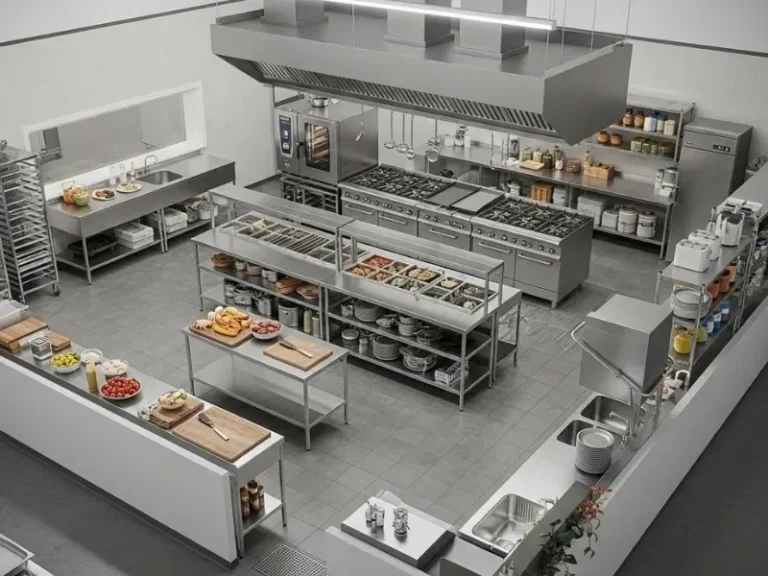
Here’s a rough sketch of how this looks in a real kitchen:
[Imagine a U-shaped layout where:]
- The walk-in fridge is at one end, opening into the prep area.
- Prep feeds directly into the hot line (grill, fryer, sauté).
- The hot line faces the expediter station, which is right next to the pass-through window.
- The dish pit is within arm’s reach of the expediter so clean plates can be grabbed instantly.
Is this the only way? No. But it’s a proven template that works for 80% of restaurants. If you’re devising something radically different, ask yourself: “Does this make the cook’s job easier, or am I just trying to be clever?”
3. Equipment Placement: The “5-Foot Rule”
I stole this term from a grizzled old chef in New Orleans, and it’s saved more kitchens than I can count. The “5-Foot Rule” states that o two pieces of equipment that are used sequentially should be more than 5 feet apart. That means:
- The distance from your prep table to the sauté station should be ≤5 feet.
- The distance from your fryer to the expediter should be ≤5 feet.
- The distance from your grill to the plating area should be ≤5 feet.
Why 5 feet? Because that’s roughly the maximum distance a cook can cover in one step without losing momentum. Any farther, and you’re adding unnecessary movement, which slows down service and increases fatigue.
Where this gets tricky is with specialized equipment. For example, if you’re running a ramen shop, your noodle boiler and broth pots need to be within that 5-foot radius of your assembly station. If you’re doing Neapolitan pizza, your dough prep, oven, and topping station better be in a tight triangle.
Exception to the rule: Dishwashing. It can be slightly farther away (but not much). The key is that clean dishes should flow *toward* the expediter, not away from it.
4. The Hidden Psychology of Kitchen Zones
Here’s something most designers won’t tell you: Kitchens have emotional geography. The placement of stations doesn’t just affect efficiency, it affects morale, stress levels, and even turnover. A few hard-learned lessons:
- The grill station is the “anchor.” It’s usually the hottest, most intense spot in the kitchen. Put your most experienced cook here, and give them a little extra space. Nothing kills morale faster than a grill cook constantly getting bumped by runners.
- The prep area should have natural light if possible. Prep is monotonous work. A window or even a well-placed skylight can reduce errors and burnout. I’ve seen prep cooks in windowless basements make mistakes like confusing salt and sugar, because they’re working in a cave.
- The expediter is the “air traffic controller.” This person needs a 360-degree view of the hot line, the pass, and the dish pit. If they’re tucked in a corner, they can’t do their job.
- Avoid putting the dish pit in a high-traffic area. It’s loud, wet, and chaotic. If your cooks have to squeeze past the dishwasher every time they move, tempers will flare.
I once worked in a kitchen where the chef put the pastry station right next to the fryer. The pastry chef quit after a week because her delicate chocolates kept melting from the heat. Small details like this add up.
5. Ventilation: The Invisible Make-or-Break Factor
Let’s talk about the thing no one thinks about until it’s too late: hoods and airflow. A poorly ventilated kitchen isn’t just uncomfortable, it’s a health code violation waiting to happen. Here’s what you need to know:
- CFM (Cubic Feet per Minute) matters more than you think. Your hood’s CFM rating must match your equipment’s BTU output. A standard rule of thumb is 1 CFM per 100 BTU. Undersize this, and your kitchen will feel like a sauna by 7 PM.
- Type I vs. Type II hoods:
- Type I is for grease-producing equipment (grills, fryers, ranges).
- Type II is for steam and heat (dishwashers, ovens).
Mixing these up is a fire hazard.
- Makeup air is non-negotiable. For every cubic foot of air your hood sucks out, you need to replace it with fresh air. Otherwise, you’ll create negative pressure, which can:
- Make doors slam shut unexpectedly (annoying and dangerous).
- Cause grease vapors to linger (disgusting and illegal).
- Make your HVAC system work overtime (expensive).
- Ductwork routing: If your ducts have too many bends, grease will accumulate, increasing fire risk. Aim for as straight a path as possible to the roof.
I once saw a kitchen where the hood was installed 6 inches too low over the grill. The chef didn’t notice until service started, and suddenly, every time someone flipped a burger, they’d bang their hand on the hood. It took three weeks to get it fixed. Measure twice, install once.
6. The Great Refrigeration Debate: Walk-ins vs. Reach-ins
This is where I see the most wasted money. The choice between walk-in coolers and reach-in fridges depends on three factors: volume, space, and workflow.
Walk-ins are best for:
- High-volume restaurants (200+ covers/day).
- Places with bulk ingredient prep (butcher shops, bakeries, large catering operations).
- Kitchens where you’re storing large, awkward items (whole pigs, 50-lb bags of flour, kegs).
Reach-ins are better for:
- Small or fast-casual concepts (food trucks, café kitchens).
- Spaces where real estate is at a premium (urban locations with high rent).
- Kitchens where you need multiple temperature zones (e.g., a separate fridge for seafood at 30°F and another for produce at 38°F).
Here’s the kicker: Most restaurants overestimate how much walk-in space they need. A 6’x8’ walk-in is plenty for a 50-seat restaurant. But if you’re doing off-site catering or storing a week’s worth of proteins, you might need a 10’x12’.
Pro tip: If you’re tight on space, consider a “combo unit”-a walk-in with a built-in prep table inside. It’s a game-changer for small kitchens.
7. Flooring: The Unsung Hero (or Villain) of Kitchen Design
I’ve slipped on more kitchen floors than I care to admit. The right flooring can mean the difference between a smooth service and a worker’s comp claim. Here’s what to look for:
- Material:
- Quarry tile is the gold standard, durable, slip-resistant, and easy to clean. But it’s hard on the feet.
- Epoxy-coated concrete is cheaper and seamless (no grout to trap bacteria), but it can get slippery when wet.
- Vinyl composition tile (VCT) is budget-friendly but requires frequent waxing.
- Slope: Your floor should have a minimum 1/8” per foot slope toward floor drains. No slope = standing water = slip hazards and bacteria growth.
- Drain placement: At least one floor drain per 200 sq ft, preferably near the dish pit and prep areas.
- Anti-fatigue mats: Non-negotiable for stations where staff stand for hours (grill, prep, dish). They reduce back pain and improve focus.
I once worked in a kitchen with polished concrete floors. They looked sleek, but by hour three of service, the line cooks were sliding around like they were on an ice rink. We ended up laying down rubber mats everywhere, which defeated the purpose of the “aesthetic” floor. Form follows function.
8. Lighting: The Difference Between a Kitchen and a Dungeon
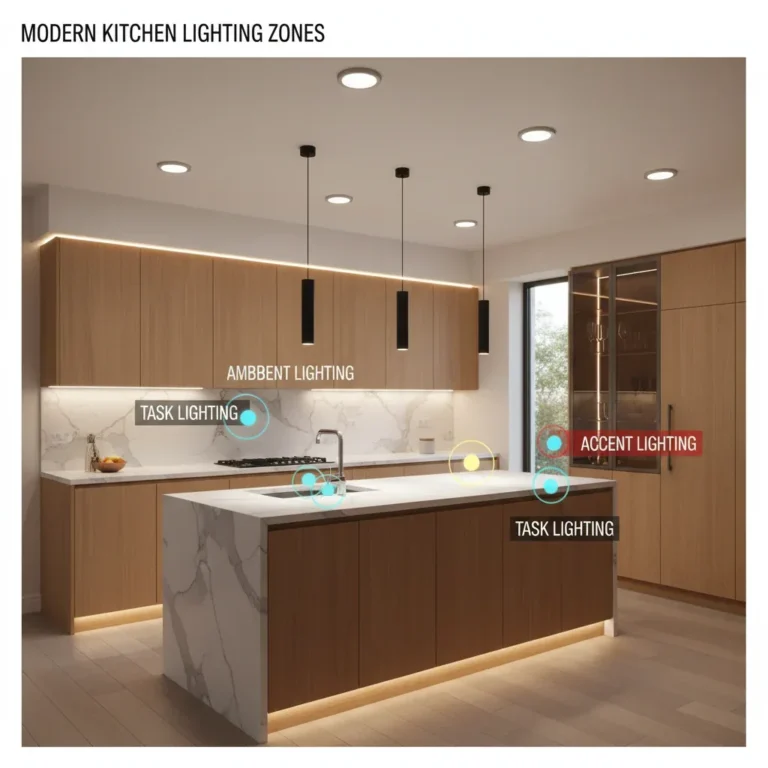
Bad lighting doesn’t just make your kitchen feel depressing, it increases accidents and food waste. Here’s how to get it right:
- Task lighting: Every prep station needs direct, shadow-free lighting. Under-cabinet LEDs or pendant lights work best. Avoid fluorescent tubes, they flicker and make everything look unappetizing.
- Ambient lighting: Overhead LEDs (5000K color temperature) for general visibility. Avoid warm tones, they make it harder to spot spoilage.
- Emergency lighting: Battery-backed LEDs near exits and critical stations. If the power goes out during service, you don’t want cooks fumbling in the dark with hot pans.
- Avoid glare: Position lights so they don’t reflect off stainless steel surfaces into employees’ eyes. This is a common cause of headaches and mistakes.
Bonus: If you can afford it, install motion-activated lights in walk-ins and storage areas. It saves energy and prevents staff from accidentally getting locked in (yes, that happens).
9. The “Oh Sh*t” Contingency Plan
Every kitchen needs a “disaster zone”-a place where things can go wrong without derailing service. This includes:
- A backup power source for critical equipment (like a generator for the walk-in if you’re in a storm-prone area).
- An emergency hand-washing station in case the main sink clogs.
- A “misfire” area where burnt or dropped dishes can be quickly disposed of without blocking traffic.
- Extra propane tanks if you’re using gas equipment (running out mid-service is a nightmare).
- A first-aid kit and burn gel within reach of every station.
I once saw a kitchen shut down for two hours because a mouse chewed through the hood’s wiring. The chef had no backup plan. Don’t be that chef.
10. The Human Factor: Designing for the People Who Actually Use the Kitchen
Here’s the harsh truth: Most kitchen designs prioritize aesthetics or cost over the humans who work there. That’s why so many restaurants have high turnover. If you want a kitchen that runs smoothly, you need to design for:
- Ergonomics:
- Counter heights should be 34-36 inches for prep (lower for pastry work).
- Shelving should be placed so staff aren’t reaching above their shoulders or bending below their knees.
- Knife storage should be at hip level to avoid unnecessary bending.
- Noise control: Stainless steel is durable but amplifies sound. Add acoustic panels or rubber bumpers to reduce clanging.
- Breaks and hydration: A small fridge with drinks near the dish pit (not in the main kitchen) encourages staff to stay hydrated without disrupting flow.
- Staff input: Before finalizing the design, have your head chef and a line cook walk through it. They’ll spot flaws you never considered.
I once designed a kitchen where I placed the ice machine right next to the grill. Seemed logical at the time, until the grill cook pointed out that every time someone grabbed ice, they’d get blasted with heat. We moved it during construction, but it was a costly lesson in listening to the people who’ll actually use the space.
Common Mistakes That Will Haunt You (And How to Avoid Them)
Even with the best intentions, some mistakes keep popping up. Here are the ones I see most often, and how to sidestep them:
Mistake #1: Underestimating Dishwashing Needs
Most restaurants treat the dish pit as an afterthought, but it’s the heartbeat of your kitchen. If dishes pile up, everything stops. Rule of thumb:
- For every 50 seats, you need at least 1 full-time dishwasher during peak hours.
- Your dish machine should be sized to handle 2x your maximum expected volume (e.g., if you do 300 plates at lunch, get a machine that can handle 600/hour).
- The dish pit should have:
- A pre-rinse station with a high-pressure hose.
- A three-compartment sink for manual washing.
- Drain boards on both sides for clean and dirty dishes.
- A dedicated area for glassware (broken glasses are a top cause of injuries).
I’ve seen kitchens where the dishwasher was so small that during rush, plates would stack up like the Leaning Tower of Pisa. The line cooks would start washing their own dishes, which slowed everything down. Don’t skimp here.
Mistake #2: Ignoring Local Health Codes
Health inspectors are not your friends, but they *are* a reality. Every city has quirks, but here are the universal on-negotiables:
- Hand-washing sinks: Must be within 10 feet of any food prep area. No exceptions.
- Grease traps: Required if you’re discharging into the sewer. Size depends on your fryer usage.
- Food temperature zones:
- Hot food must be held at 135°F+.
- Cold food must be held at 41°F or below.
- Danger zone is 41°F–135°F-avoid at all costs.
- Storage rules:
- Food must be stored 6 inches off the floor.
- Chemicals must be stored below food to prevent contamination.
Pro tip: Call your local health department *before* finalizing your design. Some cities have weird rules, like Nashville’s requirement for separate mop sinks in commercial kitchens. Better to know upfront than during your inspection.
Mistake #3: Overlooking the “Invisible” Costs
When budgeting for a kitchen, most people focus on equipment and construction costs. But the hidden expenses will kill your profit margins if you’re not careful:
- Utility upgrades: Older buildings often need electrical or gas line upgrades to handle commercial equipment. This can add $10K–$50K to your budget.
- Permits and inspections: Expect to pay for:
- Building permits
- Health department permits
- Fire marshal inspections (especially for hoods)
- Plumbing and electrical inspections
- Warranties and service contracts: A $20,000 oven is useless if it breaks and you can’t get parts for a week. Factor in 10–15% of equipment cost for maintenance plans.
- Training: New equipment often requires staff training. Budget for a day or two of downtime to get everyone up to speed.
I once worked with a restaurant that bought a vacuum sealer for sous vide without realizing their electrical panel couldn’t handle the load. They had to rewire the entire kitchen mid-build. Don’t let this be you.
Mistake #4: Chasing Trends Instead of Function
Open kitchens. Copper hoods. Exposed brick. None of these matter if your kitchen doesn’t function. I get it, you want your space to look cool. But ask yourself:
- Does that open kitchen concept mean your cooks will be distracted by customers?
- Does that reclaimed wood shelf meet health code standards for food contact surfaces?
- Does that minimalist design leave enough storage for actual operations?
Case in point: A trendy Nashville spot installed a glass-walled walk-in fridge so guests could see the “farm-to-table” ingredients. Problem? The glass didn’t insulate well, so the fridge had to work overtime, driving up energy costs. And the condensation made the glass foggy, defeating the purpose. Form should follow function, always.
Putting It All Together: A Real-World Example
Let’s say you’re opening a 50-seat fast-casual burger joint in a 1,200 sq ft space. Here’s how I’d design the kitchen:
Step 1: Menu Analysis
Your menu is:
- Burgers (grilled to order)
- Fries (fresh-cut, double-fried)
- Milkshakes (blended to order)
- Salads (prepped in advance)
Key equipment needs: Grill, fryer, prep tables, reach-in fridges, milkshake machine, ice machine.
Step 2: Workflow Layout
Using the “Path of Least Resistance” principle, here’s the floor plan:
[Imagine a linear setup from left to right:]
- Receiving/Dry Storage (100 sq ft): Near the back door for easy unloading.
- Walk-in Fridge (8’x6’): Adjacent to prep area.
- Prep Station (1): For burgers (patties, toppings, buns).
- Prep Station (2): For fries (peeling, cutting, blanching).
- Cooking Line:
- Grill (center)
- Fryer (right of grill)
- Flat top (left of grill for onions, mushrooms, etc.)
- Expediter/Plating Station: Directly in front of the cooking line, with a heat lamp for finished burgers.
- Milkshake Station: Near the expediter but out of the main traffic flow.
- Dish Pit: To the right of the expediter, with a pass-through window to the dining room for bussers.
Step 3: Equipment Specs
- Grill: 36” charbroiler (gas, 75,000 BTU).
- Fryer: Double-basket, 50-lb capacity.
- Prep Tables: Two 4’ stainless steel tables with undershelf refrigeration.
- Walk-in: 6’x8’ with shelving on three walls.
- Hood: Type I, 1,200 CFM (covers grill and fryer).
- Flooring: Quarry tile with a 1/8” slope toward two floor drains.
Step 4: Contingency Planning
- Backup propane tank for the grill.
- Extra fryer oil storage (so you don’t run out mid-service).
- A small prep table near the expediter for “emergency” burger assembly if the line gets backed up.
Total estimated cost for this setup: $80,000–$120,000, depending on brands and local labor rates.
Final Thoughts: The Kitchen Is a Living Thing
Here’s what most people don’t tell you: A restaurant kitchen is never “done.” Even after opening, you’ll tweak the layout, adjust workflows, and upgrade equipment as your menu evolves. The best designs are flexible-modular prep tables, movable shelves, and equipment that can be easily swapped out.
I’ll leave you with a challenge: Before you finalize your design, work a shift in a kitchen similar to yours. Not as the chef, as a line cook or dishwasher. Pay attention to what frustrates you. Where do you waste steps? What equipment feels clunky? What small changes would make your job easier? Those observations are worth more than any blueprint.
And remember: A great kitchen isn’t about how it looks, it’s about how it feels to work in. If your staff dreads coming in, no amount of high-end equipment will save you. Design for humans first, food second, and aesthetics last.
Now go build something that doesn’t suck.
FAQ
Q: How much space do I need per seat in the kitchen?
A: A good rule of thumb is 15–20 sq ft of kitchen space per seat in the dining room. So a 50-seat restaurant would need a 750–1,000 sq ft kitchen. However, this varies wildly by concept. A fast-casual place can get away with less (10–12 sq ft/seat), while fine dining needs more (20–25 sq ft/seat) due to complex plating and prep.
Q: Should I buy new or used equipment?
A: It depends on the item. Buy new for: Refrigeration (walk-ins, reach-ins), ventilation (hoods), and anything with moving parts (blenders, mixers). Consider used for: Stoves, grills, prep tables, and fryers (if they’ve been well-maintained). Always get a mechanic’s inspection before buying used, especially for gas equipment. And check the warranty; some brands void it if the equipment is resold.
Q: How do I future-proof my kitchen design?
A: Focus on modularity and utility connections:
- Install extra electrical outlets (20% more than you think you’ll need).
- Use movable prep tables on casters so you can reconfigure the layout.
- Plumb for an extra sink even if you don’t need it now.
- Leave space for an additional piece of equipment (e.g., a future combi oven).
- Choose equipment with universal parts (e.g., Vulcan or Garland ranges) so repairs are easier.
And document everything, equipment manuals, warranty info, and as-built drawings. Future-you will thank present-you.
Q: What’s the biggest mistake first-time restaurant owners make in kitchen design?
A: Not accounting for the “human factor.” They design for the food, not the people making it. Common examples:
- Placing the ice machine too far from the bar or drink station.
- Not including a staff break area (leading to burned-out employees).
- Ignoring ergonomics (e.g., counters that are too high for shorter cooks).
- Underestimating how loud a kitchen gets (noise fatigue is real).
The best kitchens are designed with input from the entire staff-not just the chef or owner. Hold a walkthrough with your line cooks, dishwashers, and servers before finalizing the layout. Their feedback will save you thousands in costly revisions.
@article{how-to-design-a-restaurant-kitchen-a-brutally-honest-guide-from-someone-whos-seen-it-all-go-wrong,
    title   = {How to Design a Restaurant Kitchen: A Brutally Honest Guide from Someone Who’s Seen It All Go Wrong},
    author  = {Chef's icon},
    year    = {2025},
    journal = {Chef's Icon},
    url     = {https://chefsicon.com/how-to-design-a-restaurant-kitchen/}
}