The Best Fluffy Pancakes recipe you will fall in love with. Full of tips and tricks to help you make the best pancakes.
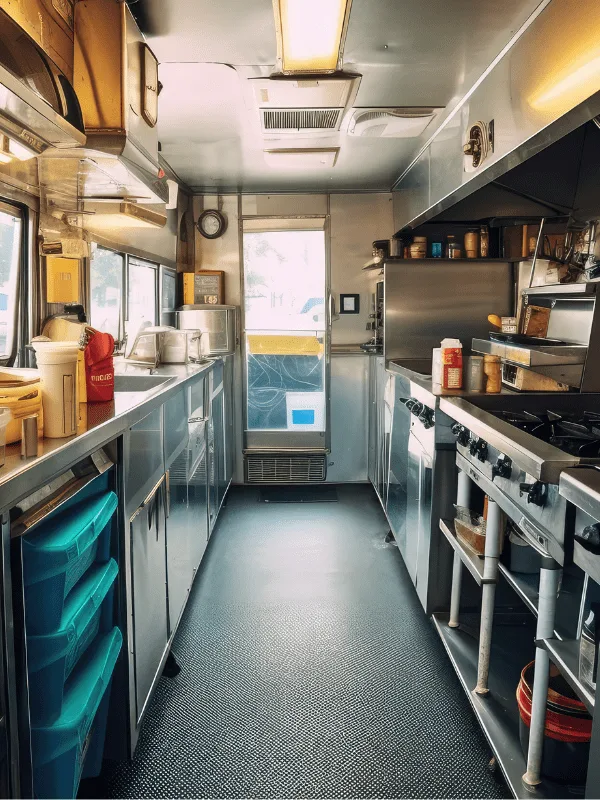
Designing an Efficient Food Truck Workflow Layout: The Difference Between Chaos and Culinary Magic
I still remember the first time I stepped into a food truck kitchen during a Nashville lunch rush. It was like watching a jazz quartet where everyone was playing a different song. The grill cook was doing a tap dance around the fryer, the prep guy was elbow-deep in a cooler that clearly hadn’t been organized since the Clinton administration, and the poor soul at the window was trying to hand out orders while simultaneously preventing a stack of to-go containers from performing a swan dive onto Broad Street. That day, I learned two things: 1) Nashville’s food truck scene is as vibrant as its music, and 2) a poorly designed workflow layout will make you question your life choices faster than a bad Yelp review.
Fast forward a few years, and I’ve spent more time than I’d like to admit obsessing over the alchemy of food truck layouts, partly because I’m that guy who rearranges his kitchen every six months (Luna, my rescue cat, judges me silently from the counter), and partly because I’ve seen how the right setup can turn a clunky operation into a well-oiled machine. Whether you’re launching your first truck or trying to salvage your sanity mid-service, designing an efficient food truck workflow layout isn’t just about fitting equipment into a metal box. It’s about choreographing every movement, anticipating every bottleneck, and making sure your team isn’t performing an interpretive dance every time someone orders a burger with extra pickles.
So, let’s break this down. We’ll cover everything from the psychology of movement in tight spaces to the hidden costs of poor refrigeration placement, with a healthy dose of “why didn’t I think of that?” moments. And because I’ve made roughly 87 mistakes in this arena, I’ll save you the trouble of repeating them. By the end, you’ll have a blueprint, not just for a functional truck, but for one that feels like an extension of your culinary brain. (Or at least one that won’t make you cry during the dinner rush.)
One quick note before we dive in: If you’re at the stage where you’re actually sourcing equipment, companies like Chef’s Deal offer free kitchen design services that can be a game-changer, especially if you’re staring at a blank slate and wondering how to fit a commercial fridge, a grill, and your dignity into 150 square feet. Their team can help you visualize workflows before you commit to a layout, which, trust me, is worth its weight in gold when you’re dropping thousands on equipment. But more on that later. Let’s get into the nitty-gritty.
The Philosophy Behind the Layout: Why Your Food Truck Isn’t Just a Smaller Restaurant
1. The Illusion of “Scaling Down”
Here’s the first trap: thinking a food truck is just a restaurant kitchen in miniature. It’s not. A restaurant kitchen is designed for parallel workflows-multiple cooks, multiple stations, multiple hands making magic happen simultaneously. A food truck? That’s a serial workflow. One person (or maybe two, if you’re lucky) is doing everything: prepping, cooking, plating, ringing up orders, and occasionally playing therapist to the customer who’s having a existential crisis over their taco choices.
This means your layout needs to prioritize linear efficiency. Every item, every tool, every ingredient should follow the path of least resistance from storage to prep to cook to plate to customer. If your workflow looks like a game of Chutes and Ladders, you’ve already lost. I once watched a truck where the cook had to walk past the window to grab napkins after plating. During rush hour. In 95-degree heat. The look on his face haunts me to this day.
2. The Three Zones You Can’t Ignore
Every efficient food truck layout revolves around three core zones. Miss one, and you’re basically setting up a obstacle course for yourself:
- The Cold Zone: Refrigeration, prep, and storage. This is where ingredients live before they’re called to duty. The golden rule? Nothing should ever have to travel backward from this zone. If your prep station is between the fridge and the cooktop, you’re forcing your team to retrace steps like a hamster on a wheel.
- The Hot Zone: Cooking equipment, grills, fryers, burners, ovens. This is the heart of the operation, and it needs to be centrally located but not obstructive. If your cook has to sidestep a cooler every time they flip a burger, you’ve failed.
- The Hand-off Zone: Where plating, packaging, and customer interaction happen. This is your last line of defense before the food leaves your hands. If this area is cramped or poorly placed, you’ll either slow down service or start a game of Jenga with stacked to-go containers.
I’m torn between calling these zones “non-negotiable” and admitting that sometimes, in the chaos of a tiny space, you have to bend the rules. But here’s the thing: the more you deviate from this structure, the more you’re asking your team to compensate with extra movement. And in a food truck, every extra step is a step toward burnout.
3. The Psychology of Movement: Why Your Body Hates You
Humans are lazy. Not in the “I don’t want to work” sense, but in the “our brains are wired to conserve energy” sense. This is why we invent things like remote controls and drive-thrus. In a food truck, every unnecessary movement is a micro-aggression against your body and your efficiency.
Think about the “touchpoints” in your workflow, the places where hands interact with tools, ingredients, or equipment. The goal is to minimize the distance between these touchpoints. For example:
- If you’re making tacos, your tortillas, protein, and toppings should all be within a 18-inch radius of your assembly station.
- If you’re frying, your fryer, tongs, and paper-lined trays should form a triangle no wider than your arm span.
- If you’re blending smoothies, your blender, cups, and ingredients should live in a line that flows like a conveyor belt.
I once consulted for a truck where the owner insisted on keeping the napkin dispenser “out of the way” near the ceiling. Every time an order went out, someone had to reach up, grab a stack, and then bend down to hand it to the customer. It added roughly 3 seconds per order, which doesn’t sound like much until you’re 20 orders deep into a rush and your shoulders feel like they’ve been doing CrossFit.
Maybe I should clarify: This isn’t about being lazy; it’s about being smart. Every second you save on movement is a second you can spend on quality, customer interaction, or, let’s be honest, not wanting to set the truck on fire by the end of the night.
The Equipment Puzzle: What Goes Where (And Why You’re Probably Wrong)
4. Refrigeration: The Silent Saboteur
Refrigeration is the most underestimated player in the food truck layout game. Why? Because it’s big, it’s heavy, and it’s often an afterthought. Here’s the hard truth: If your fridge isn’t in the right spot, your entire workflow will feel like it’s fighting against you.
First, the type of refrigeration matters. You’ve got a few options:
- Undercounter fridges: Great for prep stations, but they eat up legroom. If your cook is over 6 feet tall, they’ll hate you.
- Reach-in fridges: The gold standard for most trucks, but placement is key. If it’s too far from the prep area, you’re adding steps. If it’s too close to the cooktop, you’re creating a heat vs. cold war in your kitchen.
- Drawers: Ideal for small, frequently used ingredients (cheeses, sauces, prepped veggies), but they can become a black hole if not organized.
The biggest mistake I see? Putting the fridge at the back of the truck. Yes, it’s out of the way, but now every time you need to grab something, you’re playing Frogger with your team. Instead, place it near the prep station but ot in the main traffic path. And for the love of all things holy, don’t block the fridge door with another piece of equipment. You will regret it when you’re trying to grab the last pack of bacon during a breakfast rush and your cook is trapped behind the grill.
Pro tip: If you’re working with a supplier like Chef’s Deal, their design team can help you map out refrigeration placement based on your menu. They’ve seen enough food trucks to know which configurations lead to tears and which ones lead to smooth service. And since they offer professional installation, you won’t have to MacGyver a fridge into place with bungee cords and prayers.
5. The Cooking Line: Where Dreams (and Burgers) Are Made or Broken
Your cooking equipment is the soul of your truck, but it’s also the biggest space hog. The key here is proximity and sequence. Think about the order in which food is cooked and how that flows into plating.
For example, if you’re running a burger truck:
- The grill should be center-stage, with the prep station (where patties are formed) to the left and the bun toaster to the right.
- The fryer (for fries or onion rings) should be within arm’s reach but not so close that you’re risking a grease fire every time you flip a patty.
- Condiments and toppings should live above or beside the grill, not across the truck.
If you’re doing Asian street food with a wok station:
- The wok should be front and center, with prepped veggies and proteins in stackable cambros to the left (assuming you’re right-handed).
- Sauces should be in squeeze bottles mounted on the wall above the wok to avoid spills.
- Rice cookers or steamers should be within a quick pivot, not a full-body turn.
I once saw a truck where the fryer was placed behind the grill. The cook had to reach over a hot griddle every time they needed to drop fries. Not only is this a safety nightmare, but it also slows everything down. Your cooking line should feel like a dance, not an obstacle course.
And let’s talk about ventilation for a second. If your cooking equipment isn’t properly vented, your truck will turn into a sauna within 20 minutes. Most food trucks use a hood system that vents out the roof, but the placement matters. If your hood is too small or poorly positioned, you’ll be battling smoke, grease, and heat all day. This is another area where a supplier with design expertise (like Chef’s Deal) can save you headaches, they’ll make sure your ventilation matches your cooking setup, not the other way around.
6. The Prep Station: Where Organization Meets Despair
Prep stations are the unsung heroes of food truck workflows. They’re also where chaos goes to thrive. The goal here is vertical and modular storage. You don’t have the luxury of sprawling countertops, so you need to think in layers.
Start with the basics:
- Cutting boards: Use color-coded boards (red for meat, green for veggies, etc.) and store them vertically in a wall-mounted holder. This saves space and keeps things sanitary.
- Ingrédient bins: Stackable cambros or clear plastic bins are your best friends. Label them. Actually label them. I’ve seen too many trucks where “mystery powder” turns out to be either flour or baking soda, and no one knows until it’s too late.
- Tools: Knives, tongs, spoons, and spatulas should live in a magnetic strip or hanging rack above the prep station. Drawers get cluttered fast, and digging for a spoon mid-rush is a special kind of hell.
- Waste bins: Place a small trash bin under the prep station with a foot pedal. Every second you spend walking to a trash can is a second you’re not prepping.
Here’s a controversial take: Your prep station should not be your storage unit. I’ve seen trucks where the prep table is buried under bags of flour, extra napkins, and a mysterious box labeled “DO NOT OPEN.” If your prep space looks like a garage sale, you’re doing it wrong. Keep only what you need for the shift, and store everything else in designated bins or shelves.
And while we’re on the topic of storage-underutilized vertical space is a crime. Install shelves above your prep station for less frequently used items (extra containers, backup utensils, that one spice you only use once a month). Just make sure they’re secured; nothing ruins a shift like a rogue bag of rice avalanching onto your cutting board.
The Human Factor: Designing for Your Team (Not Just Your Menu)
7. Ergonomics: Because Your Back Will Hate You Later
Food trucks aren’t known for their ergonomic luxury, but that doesn’t mean you should design a layout that turns your team into hunchbacks by the end of the week. Height matters. If your countertops are too low, you’ll be bent over like Quasimodo. Too high, and you’ll feel like you’re doing a standing plank all day.
The ideal counter height for most people is 36 inches, but this can vary based on your team’s average height. If you’ve got a crew of taller folks, consider adjustable legs or platforms. And if you’re working with a supplier on custom fabrication, ask about ergonomic add-ons like foot rests or anti-fatigue mats. They’re small investments that pay off in morale and longevity.
Another often-overlooked ergonomic factor: door swings. If your fridge or storage cabinet doors open into a walkway, someone will get clotheslined. Always plan for door clearance, and consider soft-close hinges to prevent slamming (which, in a metal box, sounds like a gunshot every time).
8. The “One-Person Test”
Here’s a brutal truth: Your food truck should be operable by one person during a slow shift. If it’s not, your layout is too complex. This doesn’t mean you’ll always work alone, but it does mean that every station should be accessible without requiring a team huddle.
Ask yourself:
- Can one person reach the fridge, prep, cook, and plate without taking more than two steps between stations?
- Is the cash register within arm’s reach of the plating area? (If not, you’re forcing someone to abandon their post every time a customer pays.)
- Can the cook see the order queue (whether it’s a screen, a ticket rail, or a whiteboard) without turning their head more than 45 degrees?
I once worked with a truck where the cook had to shout orders to the cashier, who then relayed them to the prep person. It was like a game of telephone, but with more cursing. By simply moving the ticket rail to a spot visible from all stations, they cut order errors by 40%. Visibility is just as important as proximity.
9. The Customer Interaction Zone: Where First Impressions Are Made (or Broken)
The window is your stage, and how you design the space around it can make or break the customer experience. Here’s what most people get wrong: The window isn’t just for handing out food. It’s where you upsell, engage, and create loyalty. If your layout forces you to turn your back on customers mid-conversation, you’re missing opportunities.
Key considerations:
- Order taking: If you’re using a tablet or POS system, mount it at eye level near the window. Nothing screams “I don’t care” like a cook hunched over a phone trying to punch in an order.
- Menu display: Your menu should be visible from the line, not just at the window. Customers decide what they want while waiting, so give them something to look at besides your exhausted face.
- Condiment station: If you offer self-serve toppings (like hot sauce or napkins), place them outside the window to avoid congestion. Nothing slows down a line like someone debating between mild and hot salsa while blocking the order pickup.
- Trash and recycling: Have a small bin near the window for customers to toss their trash. It keeps the area clean and reduces the chance of someone “accidentally” leaving their empty cup on your counter.
And here’s a pro tip: Add a small ledge or shelf below the window. It gives customers a place to set their drinks or phones while they’re waiting, and it prevents the awkward dance where they’re trying to juggle their wallet, their food, and their dignity.
The Devil in the Details: Small Tweaks with Huge Impacts
10. Lighting: Because No One Wants to Eat Food Prepped in the Dark
Food truck lighting is often an afterthought, which is a shame because bad lighting slows you down and makes your food look sad. You need three types of lighting:
- Task lighting: Bright, focused lights over prep and cooking areas. LED strips under shelves work great here.
- Ambient lighting: General overhead lighting to keep the space feel open. Avoid fluorescent bulbs, they make everything look like a crime scene.
- Accent lighting: A small light above the window to highlight your food when handing it to customers. It’s amazing how much more appetizing a burger looks under warm light versus the glow of a bare bulb.
Bonus: If you’re working late-night shifts, consider red or amber lights for the prep area. They’re easier on the eyes after dark and won’t disrupt your night vision when you’re trying to see if that meat is actually cooked or just charred on the outside.
11. The “Oh Crap” Kit: Preparing for Disasters
In a food truck, something will go wrong. The question is whether you’ve designed your layout to handle it. Every truck should have:
- A fire extinguisher mounted within reach of the cooking area (and make sure your team knows how to use it).
- A first aid kit in an accessible spot (not buried under a stack of takeout containers).
- A backup power source (like a portable generator) if you’re in an area with unreliable electricity.
- A spill kit (absorbent pads, a small broom, and a dustpan) for grease or liquid mishaps.
- Extra fuses, light bulbs, and propane tanks (if applicable) stored in a designated “emergency” bin.
I once saw a truck shut down for 30 minutes because they didn’t have a spare propane tank, and the nearest refill station was 10 miles away. Thirty minutes might not sound like much, but in food truck time, that’s an eternity, and a lot of lost revenue.
12. The Cleanup Conundrum: Because the Shift Isn’t Over When the Last Customer Leaves
Cleaning a food truck is like playing Tetris with grease and crumbs. The easier you make it, the more likely your team will actually do it. Here’s how to design for cleanup efficiency:
- Dedicated wash station: Even if it’s just a small sink with a sprayer, have a spot where dishes, utensils, and prep tools can be cleaned without clogging up the main workflow.
- Drainage: Make sure your sinks and prep areas drain away from cooking equipment. Nothing’s worse than standing in a puddle of soapy water while flipping burgers.
- Trash and compost: Have separate, lidded bins for trash, recycling, and compost (if applicable). Label them clearly, and empty them regularly. A overflowing trash can is a magnet for pests and a morale killer.
- Sanitizing station: Keep a spray bottle of sanitizer and a stack of clean rags near the prep area. Wiping down surfaces between tasks should be effortless.
And here’s a hard lesson I learned the hard way: Designate a “dirty dish” zone. If clean and dirty utensils mix, you’ll spend half your time rewashing things. A simple bin or tray labeled “DIRTY” can save hours of frustration.
Putting It All Together: A Step-by-Step Layout Blueprint
13. Step 1: Map Your Menu
Before you even think about equipment, write down every step of every dish you serve. For example, if you’re selling banh mi sandwiches, your flow might look like this:
- Toast the baguette (requires toaster or grill).
- Spread pate and mayo (requires condiment station).
- Add pickled veggies (requires prep station with stored toppings).
- Add protein (requires grill or steamer).
- Garnish with cilantro and jalapeños (requires small ingredient bins).
- Wrap and hand to customer (requires packaging station).
Now, plot these steps on paper. Where are the bottlenecks? Where can tasks overlap? This exercise will reveal whether your dream menu is actually feasible in a tiny space.
14. Step 2: Sketch Your Floor Plan (Then Murder Your Darlings)
Grab graph paper or use a free kitchen design tool (some suppliers, like Chef’s Deal, offer this as part of their service). Start by drawing the outline of your truck’s interior. Then, place your three zones (cold, hot, hand-off) in a way that flows logically.
Here’s a rough template to start with:
- Back of the truck: Refrigeration and dry storage. This is your “ingrédient library.”
- Middle of the truck: Prep station on one side, cooking equipment on the other. This is your “workhorse” area.
- Front of the truck: Plating, packaging, and customer interaction. This is your “showtime” zone.
Now, ask yourself:
- Is there a clear path from storage to prep to cook to plate?
- Are there any “cross-traffic” points where two people might collide?
- Can you reach everything you need without stretching or bending?
Be ruthless. If something doesn’t fit, cut it or rearrange. Remember: In a food truck, every inch is a negotiation.
15. Step 3: Test Your Layout (Before You Spend a Dime)
Once you have a rough sketch, simulate a shift. Grab a friend (or a very patient partner) and walk through the motions:
- Pretend to take an order. Where do you look? Where do you reach?
- Pretend to prep an ingredient. Is the knife where it should be? Is the cutting board stable?
- Pretend to cook. Can you monitor multiple items at once? Is the heat manageable?
- Pretend to plate. Is the packaging easy to access? Can you see the order tickets?
You’ll quickly spot friction points. Maybe the trash bin is in the way, or the fryer is too close to the prep station. Fix these now, before you’re stuck with a layout that feels like a prison.
If you’re working with a supplier that offers design services (shoutout again to Chef’s Deal), they can create 3D renderings of your layout. This lets you “walk through” the space virtually, which is a lot cheaper than realizing your grill is too wide after it’s already installed.
16. Step 4: Plan for Growth (Because You Won’t Stay Small Forever)
Your first food truck layout won’t be your last. As your menu expands or your team grows, your needs will change. Design with modularity in mind:
- Can you swap out equipment easily? (For example, replacing a single burner with a double if demand increases.)
- Is there space to add a second prep station if you hire another cook?
- Can you reconfigure storage if you start offering catering or meal prep?
I’ve seen trucks that were so tightly packed they couldn’t adapt when business took off. Don’t paint yourself into a corner, literally or metaphorically.
The Reality Check: What No One Tells You About Food Truck Layouts
17. You Will Hate Your Layout at Some Point
Here’s the truth: No layout is perfect. There will be days when you curse the person who decided to put the ice machine next to the fryer (spoiler: it was you). There will be shifts where you fantasize about setting the whole truck on fire and starting over. This is normal.
The goal isn’t perfection; it’s minimizing friction. If your layout lets you serve 80% of your menu without wanting to scream, you’re doing better than most. And remember: You can always tweak. Food trucks are mobile for a reason. If something isn’t working, change it. Swap equipment. Rearrange shelves. Paint the walls a different color if it makes you feel better. The best operators are the ones who treat their layout as a living document, not a prison sentence.
18. Your Team’s Feedback Is Worth More Than Your Ego
You might think you’ve designed the perfect layout, but if your cook is constantly bumping into the fridge door, you’re wrong. Your team is on the front lines every day. They’ll notice inefficiencies you miss. So ask them:
- What’s the most annoying part of the current setup?
- What tool or ingredient is always in the wrong place?
- Where do they feel like they’re wasting time?
And then, here’s the hard part-actually listen. I once worked with an owner who insisted on keeping the napkins in a high cabinet because “it looked cleaner.” His team revolted. They started keeping a stash of napkins in their pockets just to avoid the climb. Moral of the story? Aesthetics don’t pay the bills. Efficiency does.
19. The Hidden Costs of a Bad Layout
A poorly designed food truck layout doesn’t just slow you down. It costs you money in ways you might not realize:
- Wasted ingredients: If your prep station is disorganized, you’ll over-order or spoil food because you can’t see what you have.
- Higher labor costs: Extra steps mean extra time, which means you either pay for more hours or burn out your team.
- Lost sales: If your service is slow, customers will walk away. And in the food truck world, they might not come back.
- Equipment damage: Cramped spaces lead to accidents, dropped tools, scratched surfaces, and equipment that wears out faster.
- Your sanity: Stress has a price. If your layout makes every shift feel like a survival challenge, you’ll resent your business.
I’m not saying your layout needs to be flawless. But if you’re ignoring these costs, you’re leaving money on the table, literally.
Final Thoughts: The Layout Isn’t the Menu, It’s the Secret Sauce
When I first started writing about food trucks, I thought the magic was in the recipes. The secret spice blend. The perfect sear. And sure, those things matter. But after watching hundreds of trucks in action, some thriving, some barely surviving, I’ve realized that the layout is the secret sauce. It’s the difference between a team that moves like a well-rehearsed band and one that’s constantly stepping on each other’s toes.
So here’s your challenge: Spend as much time designing your workflow as you do designing your menu. Sketch. Test. Iterate. And when you think you’ve got it perfect, ask your team what’s still broken. Because in a food truck, the layout isn’t just about fitting equipment into a space. It’s about fitting a dream into a metal box, and making sure that dream doesn’t turn into a nightmare by the third shift.
And if you’re feeling overwhelmed, remember: You don’t have to do this alone. Companies like Chef’s Deal exist precisely because designing a food truck is hard. Their free design services can help you avoid costly mistakes, and their installation teams can make sure everything fits like a glove. Sometimes, the smartest move isn’t DIY, it’s knowing when to call in the pros.
Now go forth and design a layout that makes your food truck feel less like a clown car and more like a culinary command center. And when you inevitably hit a snag, remember: Even the best chefs burn the occasional batch of fries. The key is to keep cooking.
FAQ
Q: How much space should I allocate for storage vs. prep vs. cooking?
A: A good rule of thumb is:
- 30% storage (fridge, dry goods, utensils)
- 40% prep and cooking (this is your money-making zone)
- 20% plating and hand-off (where orders go out)
- 10% miscellaneous (trash, cleaning, emergency supplies)
But this can vary. If you’re doing a lot of prepped ingredients (like a salad truck), you might need more storage. If you’re cooking everything to order (like a burger truck), you’ll want more prep and cooking space. Start with this ratio, then adjust based on your menu.
Q: Should I prioritize equipment size or workflow efficiency?
A: Workflow efficiency, always. You can have the fanciest grill on the market, but if it’s placed where it blocks the fridge, it’s useless. That said, don’t sacrifice essential equipment for space. For example, if you need a six-burner stove but only have room for a four-burner, you might need to rethink your menu or truck size. Workflow should serve your food, not the other way around.
Q: How do I handle power and gas line placement?
A: This is where professional help is worth its weight in gold. Never DIY gas or electrical in a food truck. Work with a supplier or contractor who specializes in mobile kitchens. They’ll ensure:
- Gas lines are properly vented and secured.
- Electrical loads are balanced (you don’t want to blow a fuse mid-rush).
- Everything meets local health and safety codes.
Chef’s Deal, for example, offers full installation services, so you’re not left Googling “how to install a propane tank” at 2 a.m.
Q: What’s the one thing most people forget when designing their layout?
A: The human factor. People get so focused on equipment and space that they forget to design for people. Ask yourself:
- Can my tallest team member stand upright?
- Can my shortest team member reach the shelves?
- Is there a place to sit during slow periods? (Yes, this matters.)
- Can we communicate easily, or do we have to shout over equipment?
A layout that ignores your team’s needs is a layout that will fail. Period.
@article{designing-an-efficient-food-truck-workflow-layout-20-tips-from-someone-whos-burned-the-midnight-oil-literally,
    title   = {Designing an Efficient Food Truck Workflow Layout: 20+ Tips from Someone Who’s Burned the Midnight Oil (Literally)},
    author  = {Chef's icon},
    year    = {2025},
    journal = {Chef's Icon},
    url     = {https://chefsicon.com/designing-an-efficient-food-truck-workflow-layout-tips/}
}