The Best Fluffy Pancakes recipe you will fall in love with. Full of tips and tricks to help you make the best pancakes.
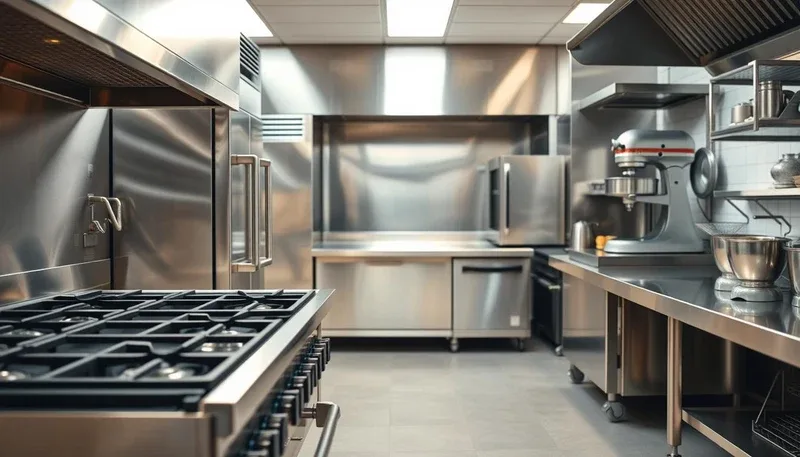
I’ll admit something embarrassing: when I first helped a friend open a food truck in Nashville back in 2019, we blew nearly $12,000 on a commercial-grade deep fryer with all the bells and whistles, digital temperature probes, self-cleaning cycles, even Wi-Fi connectivity (yes, really). Three months later, we realized we’d only used about 30% of its “features,” and the thing took up so much space we had to mount our prep table at an awkward angle. The lesson? Commercial kitchen equipment isn’t about collecting the shiniest tools, it’s about solving real problems.
Fast-forward to 2025, and the market’s even more overwhelming. Between the rise of ghost kitchens, the push for “smart” appliances, and the never-ending debate over gas vs. induction, it’s easy to feel like you’re navigating a minefield of upcharges and unnecessary upgrades. So let’s cut through the noise. This guide isn’t just a list of equipment, it’s a framework for deciding what you actually need, what you can skip, and where to invest for long-term efficiency. We’ll cover everything from the on-negotiable workhorses (like your range and refrigeration) to the “nice-to-have” luxuries that might not be worth the splurge. And yes, I’ll share where I’ve seen operators, including myself, waste money, so you don’t repeat our mistakes.
By the end, you’ll know:
- How to prioritize equipment based on your menu, volume, and space (not a sales rep’s commission).
- The hidden costs of “cheap” equipment (spoiler: energy bills and repairs add up fast).
- Where technology actually helps (and where it’s just gimmicky).
- How to future-proof your setup for scaling, menu changes, or pivots (because 2020 taught us all that flexibility matters).
Let’s start with the hardest question: What do you really need to open your doors?
-
The 10 Essential Categories of Commercial Kitchen Equipment (Ranked by Priority)
Not all equipment is created equal. Some pieces are the backbone of your operation-without them, you’re dead in the water. Others are more like the cherry on top: nice, but not critical. Below, I’ve ranked the 10 core categories by priority, based on what I’ve seen across hundreds of kitchens (from food trucks to fine dining). Think of this as your hierarchy of needs-start at the top and work your way down.
-
1. Refrigeration: The Silent Workhorse (And Where Most People Underinvest)
If I had to pick one category where operators consistently underestimate their needs, it’s refrigeration. Here’s why: A commercial fridge isn’t just a cold box, it’s your inventory’s lifeline. Get this wrong, and you’re dealing with spoiled food, health code violations, or (worst case) a full shutdown. Let’s break it down:
- Reach-in refrigerators: The standard for most kitchens. You’ll need at least one (often two) for daily prep. Pro tip: Measure your pans and trays first. I’ve seen kitchens buy units only to realize their sheet pans don’t fit vertically. Aim for stainless steel interiors (easier to clean) and self-closing doors (energy efficiency).
- Walk-in coolers/freezers: Non-negotiable if you’re doing volume (think 100+ covers/day). The rule of thumb? 1 cubic foot per $1,000 in monthly food sales. So if you’re pulling $30K/month, you need at least a 30 cu. ft. walk-in. Skimp here, and you’ll be playing Tetris with your protein orders.
- Under-counter units: Great for prep stations or bars, but don’t rely on them for bulk storage. They’re prone to temperature fluctuations if opened too often.
- Blast chillers: If you’re doing meal prep, catering, or high-volume batch cooking, this is your best friend. It drops food temps from 160°F to 40°F in 90 minutes, which is critical for food safety. Without one, you’re either wasting food or risking bacteria growth.
Where people mess up:
- Buying residential-grade fridges. They can’t handle the frequency of door openings or the heat load from a commercial kitchen. You’ll burn through compressors in a year.
- Ignoring the “temperature recovery” spec. Cheap units take forever to cool back down after the door’s opened. Look for models that recover within 10–15 minutes.
- Forgetting about clearance. You need at least 3–6 inches of space around the unit for airflow. I’ve seen kitchens cram fridges into corners, only to have them overheat and fail.
Pro move: If you’re tight on space, consider a combo unit (refrigerator + freezer). Brands like True Manufacturing and Traulsen make reliable ones, but they’re pricier upfront. Is it worth it? Maybe. Run the numbers on energy savings over 5 years.
-
2. Cooking Equipment: The Heart of Your Kitchen (But Don’t Overcomplicate It)
This is where things get emotional. Chefs love their toys, and sales reps love selling them. But here’s the truth: Most kitchens only need 2–3 primary cooking appliances to execute 90% of their menu. The rest is either redundancy or ego. Let’s tackle the big players:
Ranges and Ovens
- Gas vs. induction: The debate rages on, but here’s my take:
- Gas: Better for high-heat searing and wok cooking. Chefs swear by the control, but it’s less energy-efficient and requires proper ventilation (more on that later).
- Induction: Faster heating, safer (no open flame), and more energy-efficient. But it requires magnetic cookware, and some chefs hate the “lack of feel.” If you’re doing delicate sauces or a lot of stir-frying, test it first.
- How many burners? For most restaurants, 4–6 burners are plenty. Unless you’re running a diner with a massive breakfast rush, you don’t need 12. (I’ve seen kitchens with 8-burner ranges where only 3 are ever used.)
- Oven types:
- Convection ovens: A must for baking, roasting, or high-volume cooking. They circulate hot air for even cooking and can cut cook times by 20–30%.
- Combi ovens: The Swiss Army knife of ovens (steam, convection, or combo). Expensive, but if you’re doing sous vide, braising, or multi-course menus, it’s worth it. Brands like Rational and Blodgett dominate here.
- Pizza ovens: Only necessary if you’re, well, a pizzeria. For everyone else, a deck oven or convection with a pizza stone works fine.
Fryers
Ah, the deep fryer, the most abused piece of equipment in any kitchen. Here’s how to avoid the common pitfalls:
- Open vs. pressure fryers:
- Open fryers are standard for most ops (fries, chicken tenders, etc.).
- Pressure fryers (like the ones KFC uses) are for high-volume fried chicken or items that need to be cooked through quickly. They’re overkill for 90% of restaurants.
- Size matters: A 35–50 lb. capacity is typical for most restaurants. But if you’re a seafood spot or a chicken wing joint, you might need a 70–100 lb. model. Rule of thumb: 1 lb. of oil per 1 lb. of food per hour.
- Filtration systems: If you’re frying a lot, invest in a built-in filtration system (like the ones from Pitco or Frymaster). It extends oil life by 30–50%, saving you thousands annually.
Where I’ve seen people overspend: Buying a fryer with “automatic oil top-off” or “Wi-Fi monitoring.” Unless you’re a chain with 50+ locations, you don’t need it. A simple manual filter and a thermometer will do.
Grills and Griddles
- Flat-top griddles: Essential for burgers, pancakes, eggs, and quesadillas. A 36-inch griddle is standard for most restaurants. Go for thicker plates (1” or more) for even heat distribution.
- Charbroilers: If you’re doing steaks, chops, or char-marked veggies, this is your tool. Infrared burners give you those nice sear marks but require more cleaning.
- Salamanders/cheesemelters: Only necessary if you’re doing a lot of broiling or finishing dishes (like melting cheese on burgers or browning gratins). Otherwise, your oven’s broiler can handle it.
Controversial take: Unless you’re a steakhouse, you probably don’t need a $10K charbroiler. A well-seasoned cast-iron griddle or a good-quality flat-top can handle most tasks just fine.
-
3. Food Preparation Equipment: The Unsung Heroes
This is where efficiency lives or dies. A poorly set up prep station can add 20–30% to your labor costs because your staff is constantly running around or waiting for equipment. Here’s what you actually need:
- Prep tables: The center of your universe. Look for:
- Stainless steel construction (no rust, easy to clean).
- Built-in cutting boards (preferably NSF-certified).
- Undercounter storage for pans, knives, and smallwares.
- Optional: Refrigerated tops if you’re prepping a lot of cold items (like salads or sushi).
- Mixers:
- Planetary mixers (like Hobart or KitchenAid): The gold standard for dough, batters, and sauces. A 20-quart mixer is the sweet spot for most bakeries and restaurants. If you’re a pizzeria or bakery, you might need a spiral mixer for high-gluten doughs.
- Immersion blenders: For soups, sauces, and purees. A $200 Vitamix will outlast three $50 blenders.
- Food processors: If you’re doing a lot of chopping, slicing, or shredding (think coleslaw, pico de gallo, or hummus), a commercial-grade processor (like a Robot Coupe) is worth it. For most ops, a #3 or #5 model is plenty.
- Cutting boards and knives: Seems basic, but I’ve seen kitchens skimp here and regret it.
- Boards: Color-coded (red for meat, green for veg, etc.) to prevent cross-contamination.
- Knives: Invest in a few high-quality chef’s knives (like Wüsthof or Shun) and a sharpener. A dull knife is more dangerous than a sharp one.
- Scales: A digital portion scale is critical for consistency (especially in baking or butchering). Look for one with a tare function and waterproof design.
Where people waste money: Buying a $5K robotic food cutter when a $500 food processor and a trained prep cook would do the job faster. Automation is cool, but it’s not always practical.
-
4. Ventilation: The Invisible System That Can Make or Break You
Here’s a fun fact: More restaurants fail health inspections due to poor ventilation than almost any other issue. And yet, it’s the thing most operators underestimate when budgeting. A proper hood system isn’t just about sucking out smoke, it’s about air balance, fire safety, and energy efficiency. Mess this up, and you’ll deal with:
- Grease buildup (fire hazard).
- Excessive heat (uncomfortable for staff, harder on equipment).
- Health code violations (fines or shutdowns).
- Higher energy bills (poor airflow = HVAC working overtime).
Here’s what you need to know:
Hood Types
- Type I hoods: For grease-producing equipment (grills, fryers, ranges). These are required by code and must be paired with a fire suppression system (like Ansul or Pyro-Chem).
- Type II hoods: For steam, heat, or odors (like over a dishwasher or steam table). No fire suppression needed.
Key Specs to Watch
- CFM (cubic feet per minute): This measures how much air the hood moves. For most restaurant kitchens, you need 100–200 CFM per linear foot of hood. A 6-foot hood over a grill might need 600–1,200 CFM.
- Makeup air: For every cubic foot of air your hood removes, you need to replace it with fresh air. Otherwise, you’ll create negative pressure, making doors hard to open and causing drafts. Many cities now require makeup air systems by code.
- Grease filters: Must be UL-listed and cleaned regularly. Some newer models have self-cleaning or baffle filters, which can save on maintenance.
Common Mistakes
- Undersizing the hood. If your hood can’t keep up with your grill’s BTUs, you’ll have smoke and heat buildup. Always match the hood’s capacity to your cooking equipment’s output.
- Ignoring local codes. Some cities require specific duct materials (like stainless steel) or additional fire suppression for certain equipment. Check with your local fire marshal before installing.
- Skipping the makeup air. I’ve seen kitchens where the hood was so strong it sucked the pilot lights out on the range. Not fun.
Pro tip: If you’re in a cold climate, consider a heat recovery ventilator. It captures heat from the exhaust air and uses it to warm the incoming fresh air, saving you a ton on heating bills.
-
5. Warewashing: Because No One Wants to Hand-Wash 200 Plates a Night
Dishwashing is the least glamorous part of running a kitchen, but it’s one of the most critical. A slow or inefficient dish station creates bottlenecks that can derail your entire service. Here’s how to set it up right:
Dish Machines
- Undercounter dishwashers: Good for small ops or bars (50–100 covers/day). They’re compact but require more manual scraping and racking.
- Door-type dishwashers: The standard for most restaurants. They handle 200–400 racks/hour and are more efficient for high volume. Brands like Hobart and Jackson are industry staples.
- Conveyor dishwashers: For large operations (hotels, hospitals, or 500+ covers/day). These are beasts, expect to spend $20K–$50K.
Key Features to Look For
- Energy efficiency: Look for Energy Star-certified models. A high-efficiency machine can save $1,000–$3,000/year in water and energy costs.
- Water temperature: Must reach 180°F for sanitizing. Some models have boosters if your water heater can’t keep up.
- Rack size: Standard is 20” x 20”, but some machines take larger racks (useful for sheet pans or hotel trays).
- Chemical injection: Automated detergent and sanitizer dispensers ensure consistent cleaning and save on waste.
The Dish Station Setup
A well-designed dish area has:
- A pre-scraping station (with a garbage disposal or compost bin).
- A three-compartment sink (for wash, rinse, sanitize)-required by health code even if you have a dish machine.
- Rack storageearby to minimize steps.
- A ventilated area (dishwashing creates a lot of steam).
Where people cut corners: Buying a used dish machine. While you can save money, older models often lack energy-efficient features and may have worn-out pumps that don’t clean effectively. If you go used, get a full service history and test it before buying.
-
6. Storage and Organization: The Difference Between Chaos and Control
Poor storage is like a silent productivity killer. If your staff spends 10 minutes every hour searching for tools or ingredients, that’s over 40 hours of lost labor per year-for a single employee. Here’s how to optimize:
Dry Storage
- Shelving: Stainless steel wire shelving is the gold standard, durable, easy to clean, and allows airflow. Avoid wood or particleboard (they harbor pests and mold).
- Bins and containers: Use clear, stackable bins for dry goods (rice, pasta, flour) and label everything. A FIFO (First In, First Out) system prevents waste.
- Spice racks: Wall-mounted or countertop spice organizers save space and keep your cookline efficient.
Cold Storage Organization
- Labeling: Use waterproof labels and date everything. A label maker is a $50 investment that saves hundreds in wasted food.
- Shelf dividers: Keep raw proteins on the bottom shelves (to prevent cross-contamination from drips) and ready-to-eat items on top.
- Portion control: Pre-portion proteins and sauces in vacuum-sealed bags or delis containers to speed up prep.
Smallwares and Utensils
- Knife storage: Magnetic strips or knife rolls keep blades accessible and safe.
- Utensil crocks: Place them at every station with tongs, spoons, and whisks so staff isn’t constantly searching.
- Pegboards: Great for hanging ladles, strainers, and tools within easy reach.
Underutilized Storage Hacks
- Ceiling-mounted racks: For lightweight items like colanders or sheet pans.
- Rolling carts: Move ingredients from storage to prep stations without multiple trips.
- Modular bins: Brands like Cambro make bins that fit inside each other when empty, saving space.
Biggest mistake: Not designing storage around your workflow. For example, if your prep cook is constantly walking from the walk-in to the prep table, you’ve failed. Map out the path of ingredients from delivery to plate and organize accordingly.
-
7. Small Equipment: The Little Things That Add Up
This is where budgets get bloated. There are thousands of gadgets marketed to restaurants, but most are unnecessary. Here’s the shortlist of what you actually need:
- Immersion circulators: If you’re doing sous vide, this is a game-changer. But unless you’re a steakhouse or a high-end concept, it’s probably overkill.
- Vacuum sealers: Essential for sous vide, marinating, or extending shelf life. A chamber sealer (like VacMaster) is better than an edge sealer for liquids.
- Thermometers: Every kitchen needs:
- A digital instant-read (for checking meat temps).
- A refrigerator/freezer thermometer (for health inspections).
- An infrared thermometer (for checking grill or fryer temps).
- Mandolines and slicers:
- A manual mandoline is fine for low volume.
- A commercial slicer (like Berkel or Hobart) is worth it if you’re slicing deli meats, cheese, or veggies daily.
- Blenders: A high-powered blender (like Vitamix) is a must for sauces, soups, and smoothies. Don’t cheap out, you’ll burn through motors.
- Can openers: A heavy-duty manual opener is fine, but if you’re opening dozens of cans daily, an electric opener saves time (and carpal tunnel syndrome).
- Portion scales: For consistent plating, especially in baking or butchering.
Where to draw the line: I’ve seen kitchens with $2K robotic stirrers or automated herb choppers. Unless you’re doing extremely high volume (think 1,000+ covers/day), these are novelties, not necessities.
-
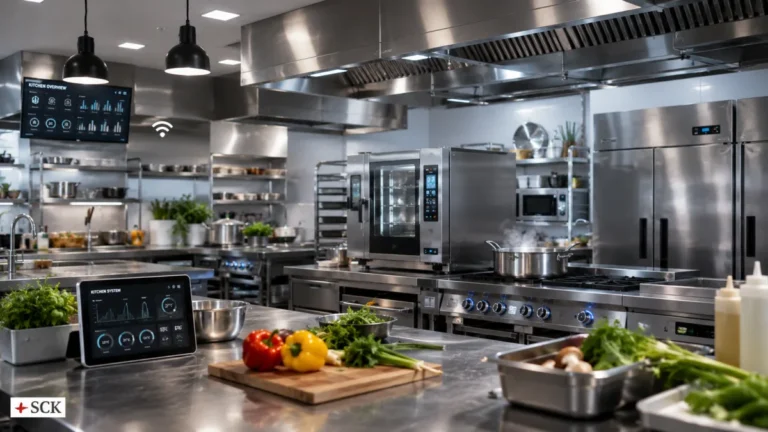
8. Technology and Automation: What’s Worth It in 2025?
This is the most hyped and most confusing category right now. Between “smart” appliances, AI-driven inventory systems, and robot chefs, it’s hard to separate the game-changers from the gimmicks. Here’s my take after testing (and regretting) a lot of tech:
Worth the Investment
- Inventory management software: Tools like MarketMan or Toast integrate with your POS to track usage, reduce waste, and auto-generate orders. If you’re doing $50K+/month in sales, this pays for itself.
- Digital thermometers with logging: Devices like Thermoworks’ BlueTherm or Comark log temps automatically for HACCP compliance. No more clipboard logs.
- Energy monitors: Plug-in devices like Sense or EcoStruxure track your equipment’s energy use and alert you to inefficiencies (like a fridge running too warm).
- Smart HVAC controls: Systems like 75F adjust temperature and airflow based on occupancy, saving 10–20% on energy bills.
Maybe Worth It (Depends on Your Volume)
- Combi oven automation: Some newer models (like Rational’s iCombi Pro) have guided cooking programs that adjust time/temp automatically. Useful for consistency, but not a replacement for skilled cooks.
- Robot assistants: Devices like Miso Robotics’ Flippy (for frying) or Picnic’s pizza assembler are cool, but they’re $30K+ and only make sense for high-volume QSRs.
- AI-driven demand forecasting: Tools like Apicbase or Craftable predict ingredient needs based on sales data. Helpful for multi-unit ops, but overkill for a single location.
Not Worth It (Yet)
- “Smart” fryers or grills: Most of the “connected” features (like remote temp monitoring) are solveable with a $20 thermometer and a phone alert.
- Voice-activated assistants: Amazon and Google are pushing these for kitchens, but in a loud, fast-paced environment, they’re more frustrating than helpful.
- Blockchain for supply chain: Unless you’re a global corporation, this is solutionism at its finest. A good supplier relationship beats blockchain every time.
My rule for tech: If it doesn’t save labor, reduce waste, or improve consistency, it’s probably not worth the investment. And always pilot before committing-rent or lease equipment for a month before buying.
-
9. Safety and Compliance: The Boring Stuff That Keeps You Open
No one gets excited about fire suppression systems or grease traps, but skimp here, and you’re one inspection away from a shutdown. Here’s what you must have:
Fire Safety
- Fire suppression system: Required over any grease-producing equipment (grills, fryers, ranges). Ansul and Pyro-Chem are the big names. Cost: $2K–$10K, depending on size.
- Fire extinguishers: You need at least one Class K extinguisher (for grease fires) and one Class ABC (for general fires). Check local codes, some require one within 30 feet of cooking equipment.
- Grease traps: If you’re discharging wastewater, you must have a grease interceptor. Size depends on your volume, but expect to spend $1K–$5K installed. Clean it every 1–3 months (or more, depending on use).
Health and Sanitation
- Three-compartment sink: Non-negotiable for health code compliance. Must be large enough to submerge your biggest pot.
- Handwashing stations: Required within 25 feet of any food prep area. No excuses.
- NSF-certified surfaces: All prep surfaces, cutting boards, and utensils must be NSF-listed (or equivalent).
- Food safety training: At least one ServSafe-certified manager on staff at all times. Online courses cost $150–$200 and are worth every penny.
Accessibility
- ADA compliance: If you’re in the U.S., your kitchen must accommodate employees with disabilities. This includes:
- Lowered prep tables or adjustable-height stations.
- Clear pathways (at least 36 inches wide).
- Lever-style door handles (easier to operate).
Biggest compliance mistakes:
- Ignoring local codes. What flies in one city might not in another. Always check with your health department and fire marshal before finalizing your layout.
- Skipping the grease trap maintenance. A clogged trap can back up into your kitchen (or worse, the city sewer). Fines start at $500 and go up from there.
- Not training staff on fire systems. I’ve seen kitchens where the staff didn’t know how to reset the Ansul system after a false alarm. That’s a $500 service call you don’t need.
-
10. Future-Proofing: How to Build a Kitchen That Grows With You
Here’s the thing about commercial kitchens: They’re expensive to change. Once you’ve installed equipment, moved gas lines, and set up ventilation, reconfiguring isn’t just a hassle, it’s a five-figure expense. So how do you design for flexibility? Here’s my approach:
Modular Design
- Mobile equipment: Whenever possible, choose casters or modular units that can be rearranged. For example:
- Prep tables on wheels.
- Rolling racks for storage.
- Portable induction burners (if your menu might change).
- Flexible utility connections: Install quick-connect gas and water lines so you can move equipment without replumbing.
Scalable Systems
- Refrigeration: Start with a walk-in cooler that’s 20% larger than you think you need. Adding a second unit later is costly.
- Ventilation: If you might add a grill or fryer later, oversize your hoodow. Upgrading later is a nightmare.
- Electrical: Run extra circuits to key areas (prep, cookline, dish). It’s cheaper to do it now than to rewire later.
Menu Adaptability
- Multi-use equipment: A combi oven can replace a steamer, convection oven, and proofing cabinet. A good range can handle saute, grill, and boil functions.
- Avoid single-purpose gadgets: Unless you’re 100% sure you’ll always need that pasta extruder or waffle iron, skip it. Rent or lease specialty equipment instead.
Energy Efficiency
- Energy Star-rated equipment: It’s not just about saving the planet, it’s about saving $100s monthly on utilities.
- Demand-controlled ventilation: Hoods that adjust airflow based on heat output (like Greenheck’s DCV) can cut energy use by 30–50%.
- LED lighting: Swap out fluorescents for LED tubes. They last longer and use 75% less energy.
Final thought: The most future-proof kitchen isn’t the one with the fanciest equipment-it’s the one with the most adaptable layout and systems. Ask yourself: If I had to pivot to takeout-only, catering, or a pop-up concept tomorrow, could this kitchen handle it? If the answer’s no, reconsider your design.
-
The Bottom Line: How to Spend Smart on Commercial Kitchen Equipment
After all this, you might be wondering: How do I actually decide what to buy? Here’s my step-by-step framework:
- Start with your menu. List every dish and break it down into prep steps, cooking methods, and ingredients. This tells you what equipment is essential vs. optional.
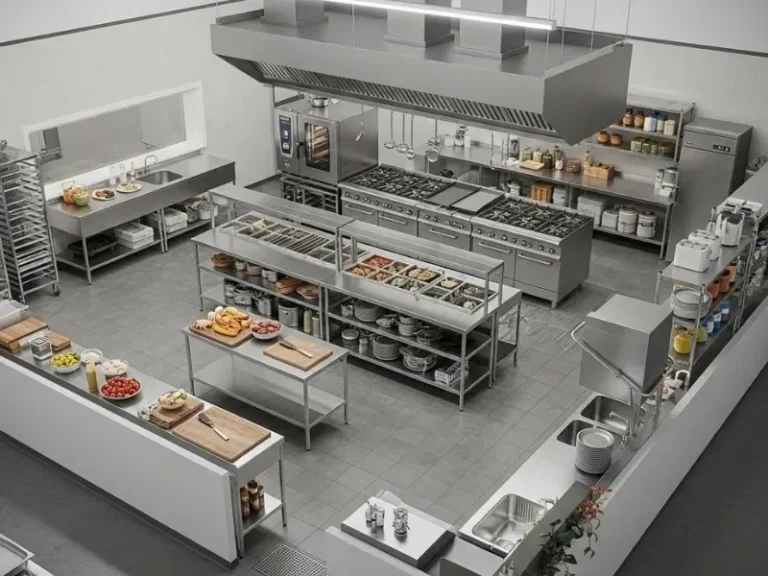
- Map your workflow. Sketch out how food moves from delivery → storage → prep → cooking → plating → dishwashing. Optimize for minimal steps.
- Prioritize the “big 5”: Refrigeration, cooking equipment, ventilation, warewashing, and storage. These are your on-negotiables.
- Set a contingency budget. Add 20% to your equipment budget for unexpected costs (like electrical upgrades or permit fees).
- Buy used (smartly). Some equipment (like stainless tables, shelving, or mixers) holds up well used. Avoid buying used refrigeration, fryers, or anything with complex electronics.
- Negotiate with suppliers. Many offer package deals or financing. Ask about trade-in programs or seasonal discounts.
- Train your team. The best equipment in the world is useless if your staff doesn’t know how to use it. Schedule training sessions with the manufacturer or a consultant.
- Plan for maintenance. Budget 1–3% of equipment costs annually for repairs and upkeep. A preventative maintenance contract can save you from costly breakdowns.
And remember: The goal isn’t to have the “best” kitchen, it’s to have the right kitchen for your concept, volume, and budget. That food truck I mentioned earlier? We eventually sold the fancy fryer and replaced it with a basic but reliable model. Our food quality didn’t suffer, our profits improved, and we gained back precious space. Sometimes, less really is more.
So before you sign that purchase order, ask yourself:
- Does this piece of equipment directly contribute to revenue (by speeding up service, improving quality, or reducing waste)?
- Can I rent, lease, or borrow it instead of buying?
- What’s the true cost of ownership (purchase price + energy + maintenance + space)?
- If my menu or volume changes in a year, will this still be useful?
If you can’t answer these confidently, pump the brakes. Your future self (and your bank account) will thank you.
-
FAQ: Your Burning Questions About Commercial Kitchen Equipment
Q: How much should I budget for commercial kitchen equipment for a small restaurant (50–100 seats)?
A: For a full-service restaurant, expect to spend $80,000–$150,000 on equipment alone. Breakdown:
- Refrigeration: $15K–$30K
- Cooking equipment: $20K–$40K
- Ventilation: $10K–$25K
- Warewashing: $5K–$15K
- Prep and storage: $10K–$20K
- Smallwares and misc.: $5K–$10K
Pro tip: If you’re on a tight budget, consider leasing or buying refurbished equipment from reputable dealers (like CLW Restaurant Equipment or Auction Houses). Just avoid anything with compressors or electronics that might be worn out.
Q: Is it better to buy gas or electric equipment?
A: It depends on your menu, location, and utilities:
- Gas pros: Better for high-heat cooking (searing, wok work), faster recovery time, and often cheaper to operate in areas with low gas prices.
- Gas cons: Requires proper ventilation (more expensive upfront), and some cities are phasing out gas for new constructions.
- Electric pros: More energy-efficient for low-and-slow cooking (like braising), easier to install (no gas lines), and induction is safer (no open flame).
- Electric cons: Can be slower to heat up, and if your kitchen isn’t wired for high amperage, you might need costly electrical upgrades.
Bottom line: If you’re doing a lot of searing or wok cooking, gas is probably better. For baking, simmering, or boiling, electric (especially induction) can be more efficient. Many kitchens use a hybrid setup-gas for the range and electric for ovens.
Q: What’s the most common mistake you see in new kitchen setups?
A: Hands down, it’s poor workflow design. I’ve seen kitchens where:
- The dish station is 50 feet from the cookline, so servers are constantly running back and forth.
- The walk-in cooler is blocked by the prep table, creating a bottleneck during rush hours.
- There’s o designated area for plating, so dishes get backed up during service.
Fix: Before buying a single piece of equipment, map out your workflow on paper. Where does food enter the kitchen? Where does it get prepped, cooked, plated, and sent out? Where do dirty dishes go? Optimize for minimal steps and cross-traffic. A good rule: The fewer times a plate is handed off, the faster and more consistent your service will be.
Q: How often should I replace commercial kitchen equipment?
A: Lifespans vary, but here’s a general timeline:
- Refrigeration: 10–15 years (if well-maintained). Compressors usually go first.
- Ranges/ovens: 10–20 years. Gas burners may need replacing at 5–10 years.
- Fryers: 5–10 years. The oil degradation and constant heat wear them out faster.
- Dish machines: 7–12 years. Pumps and seals wear out with heavy use.
- Prep tables/shelving: 15–20+ years if stainless steel.
- Smallwares (knives, pans, etc.): 1–5 years, depending on quality and use.
Pro tip: Keep a maintenance log for each piece of equipment. Track repairs, part replacements, and performance issues. This helps you predict failures and budget for replacements. And always compare repair costs to replacement costs-if a repair is more than 50% of the cost of a new unit, it’s usually time to upgrade.
@article{the-ultimate-guide-to-commercial-kitchen-equipment-2025-edition-what-you-actually-need-vs-what-youre-being-sold,
    title   = {The Ultimate Guide to Commercial Kitchen Equipment (2025 Edition): What You Actually Need vs. What You’re Being Sold},
    author  = {Chef's icon},
    year    = {2025},
    journal = {Chef's Icon},
    url     = {https://chefsicon.com/ultimate-guide-commercial-kitchen-equipment/}
}