The Best Fluffy Pancakes recipe you will fall in love with. Full of tips and tricks to help you make the best pancakes.
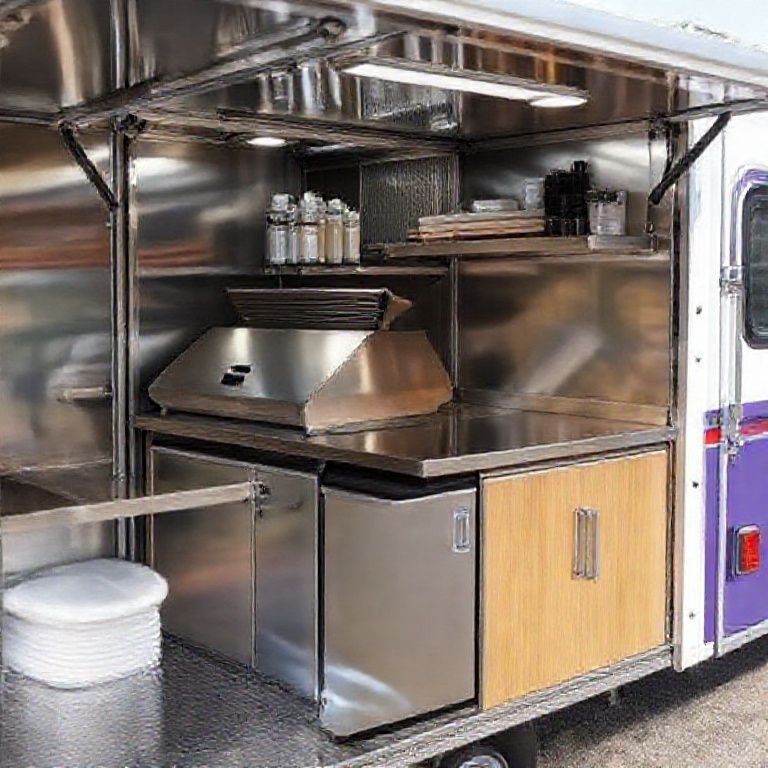
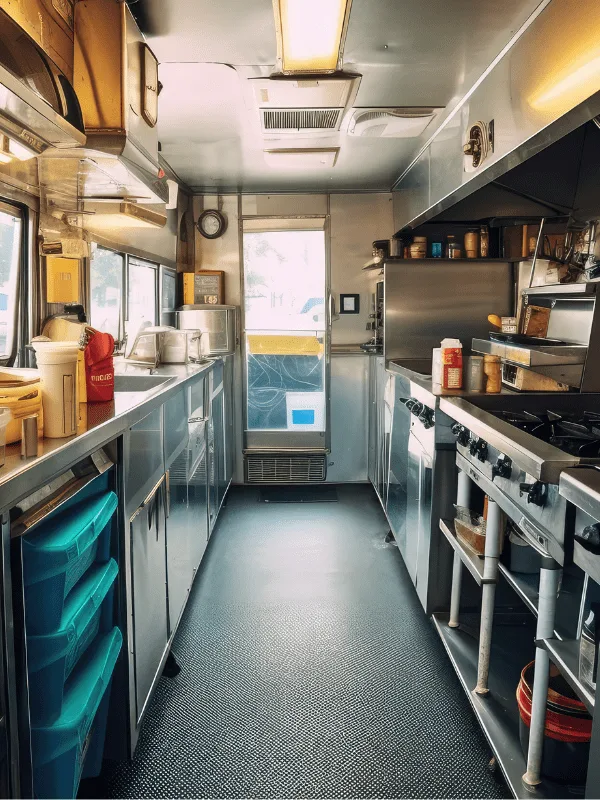
I’ll admit something embarrassing: my first food truck design looked like a Tetris game gone horribly wrong. I’d spent months dreaming up a menu of Nashville-inspired Korean BBQ tacos, imagine bulgogi with a hot chicken glaze, but when it came to actually fitting all the equipment into a 16-foot truck, I froze. The grill was too wide, the prep station was laughably small, and the fridge? Let’s just say I learned the hard way that compact kitchen efficiency isn’t just about cramming stuff in, it’s about designing a space that moves with you, not against you.
Fast forward three years, and I’ve seen (and helped fix) enough food truck disasters to know this: The difference between a truck that hums like a well-oiled machine and one that feels like a claustrophobic nightmare often comes down to three things: workflow, equipment choice, and the brutal art of sacrifice. You can’t have it all. But you can have enough, if you’re smart about it.
This isn’t just another list of “top 10 must-have appliances.” We’re diving into the psychology of small-space cooking, the hidden math behind ergonomic layouts, and why your grandmother’s advice about “a place for everything” might actually be the key to surviving a lunch rush. By the end, you’ll know how to design a food truck kitchen that’s not just functional, but liberating-because nothing kills the joy of cooking like tripping over your own deep fryer for the 50th time.
And hey, if you’re reading this while staring at a blank sketch of your future truck, take a deep breath. I’ve been there. Let’s figure this out together.
The Brutal Truth About Food Truck Space (Or: Why Your Dreams Are Too Big for 150 Square Feet)
1. The 80/20 Rule of Food Truck Real Estate
Here’s the cold, hard truth: 80% of your cooking will happen in 20% of your space. That’s not just a guess, it’s what I’ve observed after watching dozens of trucks in action. The problem? Most first-time owners design for the 20% of “what if” scenarios (What if we need to prep 50 extra burgers? What if we add a dessert station?) instead of optimizing for the 80% of daily reality.
Take my friend Javier’s truck, El Rey del Taco. He insisted on a six-burner stove “for flexibility,” but after three months, he realized he only used two burners regularly, the others just collected grease and got in the way. Meanwhile, his prep station was so cramped that chopping onions became a contact sport. The fix? He swapped the six-burner for a two-burner induction cooktop with a built-in griddle, freed up 18 inches of counter space, and suddenly, his kitchen felt expansive. Moral of the story: Design for your menu’s MVP (Most Valuable Processes), not its benchwarmers.
Ask yourself:
- What are the three most repetitive tasks in your workflow? (For tacos, it’s tortilla warming, protein cooking, and toppings prep.)
- Where do bottlenecks happen? (Is it waiting for the fryer? Struggling to reach the spices?)
- What’s the one piece of equipment you’d save in a fire? (That’s your anchor. Build around it.)
2. The “Three-Zone” Myth (And Why You Probably Only Need Two)
Every food truck guide will preach the gospel of the three-zone layout: prep, cook, and service. But here’s the thing-most trucks don’t have the luxury of three distinct zones. Trying to force it leads to either a cramped mess or a comically long truck (which, by the way, is a nightmare to park in cities).
Instead, think in two overlapping zones:
- The Hot Zone: Where cooking and finishing happen (grill, fryer, steam table). This is your “no distractions” area.
- The Flex Zone: Where prep, plating, and service blur together. This is where you’ll do double-duty, chopping lettuce while handing out orders, or assembling tacos between fry batches.
The key is to minimize cross-zone movement. If your Flex Zone is next to the service window, you shouldn’t have to walk to the other end of the truck to grab tortillas. That’s why Javier’s redesign worked: he moved his tortilla warmer inside the Flex Zone, cutting his steps per taco from 8 to 3. Small change, massive impact.
3. The Hidden Cost of “Just a Little Extra” Space
I once advised a client to downsize her truck from 20 feet to 16 feet. She looked at me like I’d suggested she cook with a toaster oven. “But I need the space!” she said. Fast forward six months, and she was paying an extra $200/month in parking fees (longer trucks cost more in most cities), burning more gas, and still only using 70% of her “extra” space for storage she didn’t need.
Every extra foot costs you in:
- Fuel efficiency: Longer trucks = worse mileage. Over a year, that’s hundreds (or thousands) in extra gas.
- Parking flexibility: Many food truck parks and events have length limits. A 20-foot truck might get turned away from spots a 16-footer could fit.
- Maintenance: More space = more surfaces to clean, more equipment to maintain.
- Psychological clutter: Empty space is an invitation to hoard “just in case” gadgets. Suddenly, you’re storing a waffle iron you’ve used twice.
Is there a magic size? Not really, but 14–18 feet is the sweet spot for most concepts. Any smaller, and you’ll feel like you’re cooking in a shoebox. Any larger, and you’re paying for dead weight. And if you’re thinking, “But what about growth?”-ask yourself: Would you rather have a slightly cramped truck now or a money pit that’s “ready for expansion” in a fantasy future?
Equipment: The Art of Ruthless Prioritization (Or: Why Your Food Processor Is Lying to You)
4. The “One Job” Rule for Appliances
Here’s a rule that’ll save you thousands: If a piece of equipment doesn’t do at least two jobs, it better do its one job flawlessly. That fancy immersion circulator? Unless you’re serving sous vide eggs and using it to temper chocolate, it’s a luxury. That food processor you bought for “versatility”? It’s probably sitting in a cabinet while you hand-chop onions because it’s easier to clean the cutting board.
Let’s break down the non-negotiables (the stuff that earns its keep) vs. the “maybe laters” (the stuff that sounds cool but clogs your kitchen):
| Non-Negotiables (Must-Have) | “Maybe Laters” (Nice-to-Have) |
|---|---|
|
|
Pro tip: Borrow before you buy. Rent a shared kitchen space for a weekend and test-drive equipment. You’ll quickly realize that the Vitamix you thought was essential is actually a pain to clean mid-service, or that a flat-top griddle can replace three other appliances.
5. The Secret Weapon: Modular and Stackable Gear
If there’s one thing I’ve learned, it’s that fixed equipment is the enemy of flexibility. That’s why the smartest food truck kitchens use modular, stackable, or convertible gear. Examples:
- Stackable steam pans: Use them for prep, then stack them under the counter during service.
- Magnetic knife strips: Frees up drawer space and keeps knives accessible.
- Collapsible bins: For storing produce or dry goods; they flatten when empty.
- Convertible prep tables: Some models have cutting boards that flip to reveal storage underneath.
- Portable induction burners: Can be used on the countertop or stored away when not in use.
The game-changer? A mobile prep cart. It’s a rolling island with a cutting board, storage underneath, and sometimes even a small sink. Park it next to your service window during prep, then wheel it out of the way when service starts. I’ve seen trucks where this single cart replaced an entire stationary prep station.
6. The Fryer Dilemma: To Vent or Not to Vent?
Fryers are the most polarizing piece of equipment in food truck design. Half the operators swear by them; the other half regret them daily. The issue? Ventilation. A traditional open fryer requires a hood, which eats up vertical space and adds complexity to your build. But ventless fryers? They’re expensive, and some chefs claim they don’t crisp as well.
Here’s the breakdown:
- Open fryer + hood:
- Pros: Better frying performance, lower upfront cost.
- Cons: Requires a hood (which needs cleaning, maintenance, and steals headroom), can make the truck hotter.
- Ventless fryer:
- Pros: No hood needed, more compact, often energy-efficient.
- Cons: Higher initial cost (~$3,000–$5,000), may require more frequent oil changes.
- Air fryer (yes, really):
- Pros: No venting, compact, multi-use (can roast, bake, reheat).
- Cons: Limited capacity, not ideal for battered foods.
My take? If fried food is less than 30% of your menu, skip the fryer. Use an air fryer or outsource (e.g., partner with a local kitchen for fried items). If it’s core to your concept, invest in a high-quality ventless fryer-the space savings are worth it. And if you’re dead set on an open fryer, consider a low-profile hood or a downdraft system to reclaim some vertical space.
Workflow: The Invisible Grid That Makes or Breaks Your Sanity
7. The “One-Touch” Rule (And Why You’re Probably Breaking It)
In a compact kitchen, every extra touch is a time bomb. The “one-touch” rule means that once you pick up an ingredient or tool, you should be able to use it and put it away without setting it down in between. Sounds simple, but in practice? It’s brutal.
Example: Let’s say you’re making a burrito.
- Bad workflow:
- Grab tortilla from stack on shelf.
- Set it on counter.
- Walk to fridge for cheese.
- Walk back to counter, sprinkle cheese.
- Walk to grill for meat.
- Walk back to counter, add meat.
- Repeat for every ingredient.
- Good workflow:
- Tortillas are in a warmer above the prep station.
- Cheese is in a small bin next to the tortillas.
- Meat is in a hot pan on the griddle (already cooked, just needs assembly).
- You grab tortilla, add cheese, scoop meat, and roll-without moving your feet.
How to audit your workflow:
- Grab a stopwatch and time yourself making your most popular item. Count every step and every movement.
- Ask: Where am I setting things down? That’s a touchpoint to eliminate.
- Look for “ping-pong” movements (e.g., fridge to counter to grill to counter). These are workflow killers.
Pro move: Use color-coded bins for prep. Red bin = proteins, green bin = veggies, blue bin = sauces. Your brain will process it faster, and you’ll waste less time hunting for ingredients.
8. The “Dirty Secret” of Food Truck Ergonomics
Here’s something no one talks about: Most food trucks are designed for people who are 5’10”. If you’re shorter or taller, you’re going to hate your life. Counter heights, shelf placements, and even the height of the service window can turn a shift into a backache marathon.
A few ergonomic non-negotiables:
- Counter height: Should be 34–36 inches (standard for most people). If you’re over 6’, consider a 38-inch section for chopping.
- Shelf depth: 12 inches max for upper shelves. Deeper shelves force you to reach, which slows you down and risks spills.
- Floor space: You need at least 24 inches of clearance between counters to turn around comfortably. Less than that, and you’ll feel like a sardine.
- Service window height: Should align with your elbow when your arm is at a 90-degree angle. No one should have to bend or stretch to hand out food.
And here’s a trick I stole from a sushi truck in Austin: Angled prep stations. Instead of a straight counter, they had a 10-degree angle toward the cook, so ingredients naturally slid closer. Less reaching, less strain. It’s a small tweak, but after an 8-hour shift, your shoulders will thank you.
9. The “Clean-as-You-Go” Lie (And What Actually Works)
Every food safety guide will tell you to “clean as you go.” That’s great in theory, but in a food truck? Ain’t nobody got time for that during a rush. The reality is that you’ll have about 30 seconds between orders to wipe a surface or toss trash. So how do the pros keep it (relatively) clean?
Three systems that actually work:
- The “Trash Bowl” Method:
- Keep a large bowl or bin on your prep station. All scraps, wrappers, and trash go in there during service.
- Every 10–15 orders, dump it into the trash. No running back and forth.
- Spray Bottle + Squeegee:
- Fill a spray bottle with hot water + vinegar (1:1 ratio). Spritz counters between orders, then squeegee into a towel.
- Faster than wiping, and the vinegar cuts grease.
- The “Dirty Dish Hamper”:
- Instead of a sink full of dishes, use a wire hamper under the counter. Toss dirty tools in there, then wash in batches during slow periods.
And here’s the hardest lesson: Some mess is inevitable. Your goal isn’t a spotless kitchen, it’s a functional level of clean. Focus on:
- Keeping the service window area pristine (customers see this).
- Ensuring no cross-contamination (raw meat vs. ready-to-eat).
- Having a 10-minute reset drill for between rushes (wipe surfaces, restock, empty trash bowl).
Storage: The Black Hole of Food Truck Design
10. The “Vertical First” Mindset (And Why You’re Wasting Your Walls)
In a food truck, floor space is gold; wall space is platinum. Yet most designs treat walls as an afterthought. Big mistake. Your walls should be working harder than your grill.
How to maximize vertical real estate:
- Magnetic strips: For knives, spatulas, and metal tools. No drawers needed.
- Pegboards: Hang utensils, towels, and small bins. Label everything.
- Stackable shelf units: Look for 12-inch-deep shelves (standard depth is 16”, which is overkill).
- Overhead racks: For bulk items like paper goods or backup ingredients.
- Door-mounted organizers: Spice racks, condiment caddies, or even a shoe organizer (yes, really, great for sauces or small packets).
Pro tip: Use the space above your service window. Most trucks leave this empty, but it’s perfect for a small shelf with to-go containers, napkins, or condiments. Just make sure it’s secured, nothing worse than a rogue hot sauce bottle flying out during a sharp turn.
11. The “Prep Day” Revolution (Or: How to Turn Your Home Kitchen Into a Secret Weapon)
Here’s the truth: Your food truck kitchen isn’t for prepping, it’s for executing. The more you can prep off-site, the more efficient your truck will be. This is where a shared commercial kitchen (or even your home kitchen, if allowed) becomes your best friend.
What to prep ahead:
- Sauces and dressings (portion into squeeze bottles).
- Chopped veggies (store in stackable deli containers).
- Marinated proteins (vacuum-seal for freshness).
- Pre-cooked grains (rice, quinoa, beans, reheat in the truck).
- Portioned cheese/toppings (use small bins with lids to prevent spills).
How to organize it in the truck:
- Use color-coded labels (e.g., red = raw meat, green = veggies).
- Store by order of use-ingredients for the first step of cooking should be easiest to reach.
- Keep a “mise en place” station-a small area where you stage all the prepped ingredients for the shift.
Warning: Don’t over-prep. Freshness matters, and some things (like guacamole or crispy toppings) just don’t hold well. Find the balance between efficiency and quality.
12. The “No Dead Zones” Rule
A dead zone is any space in your truck that’s hard to reach or underutilized. Common culprits:
- The corner behind the fridge (where random junk collects).
- The space under the sink (often wasted or used for a trash can).
- The area above the service window (usually empty).
- The gap between equipment (where tools get lost).
How to eliminate them:
- Corner shelves: Rotating or pull-out shelves for deep corners.
- Under-sink organizers: Use a tiered shelf to store cleaning supplies or extra trash bags.
- Over-window storage: Add a narrow shelf for condiments or to-go supplies.
- Equipment “bridges”: Fill gaps between appliances with custom-cut cutting boards or slide-out trays.
Ask yourself: If I had to reach for something blindfolded, could I find it? If not, reorganize.
Tech and Hacks: The Little Things That Save Your Sanity
13. The $20 Upgrades That Feel Like Magic
You don’t need a $50,000 buildout to be efficient. Some of the best food truck hacks cost less than a tank of gas:
- Bungee cords: Secure lids on bins, keep doors from swinging open, or create makeshift hooks.
- Non-slip mats: Cut to fit under cutting boards or equipment to prevent sliding.
- LED strip lights: Stick them under shelves or inside cabinets. No more fumbling in the dark.
- Carabiners: Hang towels, aprons, or utensils from hooks.
- Dry-erase board: Mount it near the service window for order notes or specials.
- Phone mount: For your POS tablet, keeps it visible and hands-free.
My favorite? A retractable clothesline. Hang it across the ceiling to dry towels or air out aprons. Genius.
14. The POS System You’re Probably Overcomplicating
I’ve seen food truck owners spend thousands on fancy POS systems, only to use 10% of the features. Here’s what you actually need:
- Tablet + cloud-based POS (Square, Toast, or Clover). No bulky terminals.
- Bluetooth printer (for receipts; mount it under the counter).
- Customer-facing display (optional but reduces “What’d I order?” questions).
- Offline mode (because food truck Wi-Fi is a myth).
Skip the:
- Kitchen display system (overkill for most trucks).
- Inventory management software (track with a spreadsheet).
- Loyalty program integrations (start with a punch card).
And here’s a hack: Use a tablet mount with a swivel arm. Position it so you can see orders while prepping, then swing it toward the window for payment. Saves space and neck strain.
15. The “Emergency Kit” You Didn’t Know You Needed
Every food truck should have a **“Oh $h*t” box-a small container with the stuff that saves your butt when things go wrong. Mine includes:
- Extra fuses (for when you blow a circuit).
- Duct tape and zip ties (for, well, everything).
- Spare propane connector (because yours will fail at the worst time).
- Disposable gloves in multiple sizes (for when a cook calls in sick).
- Instant cold packs (for burns or swollen feet).
- A cheap multimeter (to check outlets if power goes out).
- Cash float ($100 in small bills for when the card reader dies).
Store it in a waterproof bin under the driver’s seat-somewhere you can grab it without digging through the kitchen.
Putting It All Together: A Sample 16-Foot Food Truck Layout
Let’s say you’re running a taco truck with a menu of:
- Braised meat (beef, chicken, pork).
- Fresh salsas and toppings.
- Handmade tortillas (warmed, not fried).
- Queso and beans (pre-made, reheated).
Here’s how I’d design the kitchen: (Note: This is a textual description; in a real post, you’d include a sketch or 3D model.)
Zone 1: Service Window (Flex Zone)
- Pass-through shelf for finished orders.
- Tortilla warmer above shelf (easy access).
- Condiment caddy and napkin dispenser mounted on wall.
- POS tablet on swivel arm.
Zone 2: Prep/Flex Zone
- Cutting board with built-in bins for chopped veggies.
- Stackable deli containers with color-coded lids (red = meat, green = veg, etc.).
- Magnetic knife strip and utensil hooks.
- Small trash bowl for scraps.
Zone 3: Hot Zone
- 24-inch griddle (for meats and veggies).
- Steam table with two wells (one for beans, one for queso).
- Heat lamp above for keeping tortillas warm.
- Fire extinguisher mounted within reach (but not in the way).
Zone 4: Storage and Cleanup
- Under-counter fridge (12 cu. ft.) with pull-out drawers for easy access.
- Dry storage bins under prep station (rice, spices, backup supplies).
- Three-compartment sink with wall-mounted faucet to save counter space.
- Paper towel holder and sanitizer spray bottle mounted on wall.
Zone 5: Overhead and Walls
- Pegboard above prep station for utensils.
- Magnetic spice racks on the wall.
- LED strip lighting under shelves.
- Bungee cords to secure lids during transit.
Workflow in action:
- Customer orders at window → POS pings.
- Grab tortilla from warmer, place on pass-through shelf.
- Turn to Hot Zone: scoop meat from griddle, beans from steam table.
- Turn to Prep Zone: add toppings from bins.
- Slide to service window, hand to customer.
- Repeat, with zero cross-traffic between zones.
Notice what’s missing?
- No fryer (not needed for this menu).
- No extra burners “just in case.”
- No dead space, every inch has a purpose.
Final Thoughts: The Mindset Shift That Changes Everything
Here’s the thing about food truck design: It’s not about fitting everything in. It’s about fitting the right things in. The trucks that thrive aren’t the ones with the most equipment, they’re the ones where the kitchen feels like an extension of the cook’s body. Where reaching for a spatula is as natural as scratching your nose. Where the rhythm of service isn’t a frantic scramble, but a dance.
So as you’re sketching your layout or staring at your current truck wondering why it feels like a jail cell, ask yourself:
- What can I remove? (Not what can I add.)
- Where am I wasting motion? (Every step is a time tax.)
- What’s the one thing that would make my life easier? (Start there.)
And remember: Your first design will be wrong. Mine was. Javier’s was. Even the fancy food trucks you see on Instagram started with a layout that made them want to scream. The difference is, they iterated. They watched how they moved, where they got stuck, and what they actually used. Then they tweaked.
So go ahead, draw that layout. Buy that equipment. But stay light on your feet. Stay willing to admit when something isn’t working. And for the love of all that is holy, measure your truck before you buy anything. (Yes, I’ve seen people bring home a fridge that didn’t fit. No, it wasn’t pretty.)
Now, if you’ll excuse me, I need to go rescue Luna from the box of takeout containers she’s claimed as her new fortress. Happy designing, and may your kitchen be compact, your workflow smooth, and your tacos ever crispy.
FAQ
Q: I’m torn between a propane or electric setup. Which is better for a food truck?
A: It depends on your menu and location. Propane is more powerful (better for grilling/frying) but requires tank refills and good ventilation. Electric is cleaner and often allowed in more indoor markets, but you’ll need a generator or shore power, and it may lack the heat output for high-volume cooking. Hybrid setups (e.g., electric fridge + propane grill) are common. If you’re doing a lot of frying or searing, propane is usually the way to go. For lighter cooking (e.g., sandwiches, salads), electric can simplify things. Always check local regulations, some cities restrict propane tanks in certain areas.
Q: How do I deal with limited water supply in a food truck?
A: Water is one of the biggest challenges. Here’s how to manage it:
- Install a gray water tank (for sink drainage) and a fresh water tank (usually 20–30 gallons).
- Use foot pedal sinks to minimize water waste (no running faucet while scrubbing).
- Prep as much as possible off-site to reduce on-board dishwashing.
- Carry extra water jugs for emergencies (or to refill between locations).
- Train your team to scrape plates thoroughly before washing, less food waste = less water used.
Pro tip: Some trucks use compostable plates/utensils to cut down on washing, but check local laws, some areas require reusable dishware.
Q: What’s the biggest mistake you see in food truck layouts?
A: Ignoring the “golden triangle” of cooking. In a home kitchen, it’s the sink-stove-fridge triangle. In a food truck, it’s the prep-cook-serve triangle. The most common mistake is placing these zones too far apart, forcing the cook to constantly pivot or walk. Example: If your fridge is at one end of the truck and your grill is at the other, you’re doomed. Keep your most-used stations within arm’s reach of each other. Another biggie? Underestimating the need for landing space. You need a place to set down hot pans, finished plates, or prep ingredients, even if it’s just a 12-inch section of counter. No landing space = spilled food and burned fingers.
Q: How do I future-proof my food truck design?
A: Future-proofing is tricky because you don’t know how your menu or volume will evolve. But here’s how to stay flexible:
- Choose modular equipment (e.g., countertop induction burners instead of built-in ranges).
- Leave one “flex zone”-a section that can be reconfigured (e.g., swap a prep table for a fryer if your menu changes).
- Invest in multi-use tools (e.g., a combi oven that steams, bakes, and roasts).
- Keep your electrical and plumbing accessible-don’t bury them behind permanent cabinets.
- Design for easy cleaning-avoid nooks where grease can build up.
- Plan for tech upgrades-leave space for a tablet mount or extra outlets.
And accept that some changes will require a rebuild.** That’s okay, better to pivot than stick with a design that’s holding you back. Just don’t over-invest in “someday” equipment. Start lean, then expand.
@article{food-truck-design-how-to-maximize-compact-kitchen-efficiency-without-losing-your-mind-or-your-tacos,
    title   = {Food Truck Design: How to Maximize Compact Kitchen Efficiency Without Losing Your Mind (or Your Tacos)},
    author  = {Chef's icon},
    year    = {2025},
    journal = {Chef's Icon},
    url     = {https://chefsicon.com/food-truck-design-compact-kitchen-efficiency/}
}