The Best Fluffy Pancakes recipe you will fall in love with. Full of tips and tricks to help you make the best pancakes.
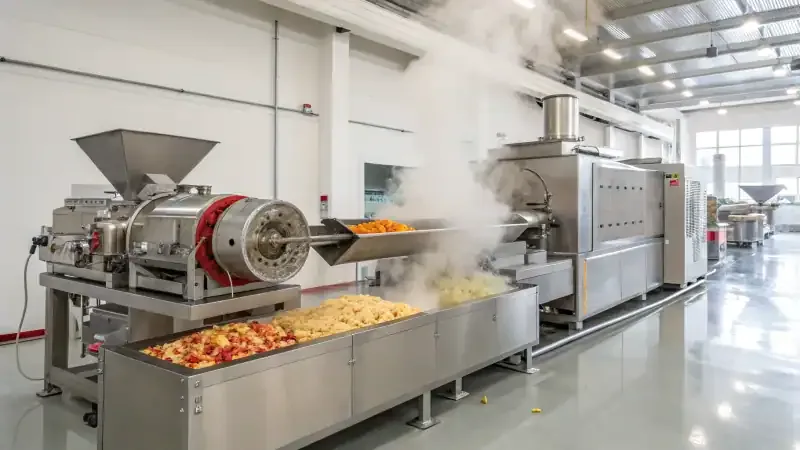
Let me tell you something, I didn’t see this coming. A few years back, I was at a food expo in Chicago, wandering through aisles of shiny kitchen gadgets, when I stumbled upon a booth demonstrating commercial extrusion equipment for protein snack production. The guy running the demo handed me a puffed pea protein snack that looked like it could’ve been a Cheeto’s cousin but packed 12 grams of protein per serving. I took one bite and immediately thought, *”Okay, this is either the future of snacking or a very convincing magic trick.”* Turns out, it was both.
Fast forward to today, and protein snacks are everywhere, gym bags, office drawers, even gas station coolers. But here’s the thing: most people don’t realize how these snacks are made. It’s not just about mixing ingredients and hoping for the best. Extrusion technology is the unsung hero behind those crunchy, high-protein bites, and if you’re thinking about getting into this space, you need to understand the equipment inside and out. That’s what this guide is for. Whether you’re a startup founder, a product developer, or just a curious food nerd like me, I’ll walk you through everything, from how extrusion works to what to look for in a machine, and even the mistakes I’ve seen others make (so you don’t have to).
By the end of this, you’ll know:
- How extrusion equipment transforms raw ingredients into protein-packed snacks
- The key differences between single-screw and twin-screw extruders (and which one you actually need)
- What features matter most when buying or leasing equipment
- How to avoid common pitfalls in protein snack production
- And whether this is even the right move for your business
Fair warning: I’m not here to sell you a machine. I’m here to give you the unfiltered truth, because, let’s be honest, this stuff isn’t cheap, and the last thing you want is to drop six figures on equipment that doesn’t fit your needs. So, let’s dive in.
1. What Is Extrusion, and Why Does It Matter for Protein Snacks?
First, let’s clear up a common misconception. When people hear “extrusion,” they often think of 3D printing or plastic manufacturing. But in the food world, extrusion is a high-temperature, high-pressure process that cooks, shapes, and texturizes ingredients into finished products. Think of it like a culinary pressure cooker on steroids, except instead of making soup, it’s making snacks, cereals, or even plant-based meats.
For protein snack production, extrusion is a game-changer. Here’s why:
- Texture Control: Ever wonder how those protein puffs get their airy, crispy texture? Extrusion does that. The process gelatinizes starches and denatures proteins, creating a structure that’s light yet sturdy.
- Nutrient Retention: Because extrusion cooks ingredients quickly at high temperatures, it preserves more nutrients than traditional cooking methods. That’s a big deal for protein snacks, where every gram counts.
- Versatility: You can extrude everything from pea protein to cricket flour (yes, really). If it’s a dry, powdery ingredient, chances are an extruder can turn it into something edible.
- Scalability: Once you dial in your recipe, extrusion lets you produce thousands of snacks per hour with consistent quality. Try doing that with a fryer.
But here’s the thing, extrusion isn’t just about shoving ingredients into a machine and hoping for the best. It’s a science. And like any science, it has its quirks. For example, did you know that the moisture content of your ingredients can make or break your snack? Too dry, and it’ll crumble. Too wet, and it’ll turn into a gummy mess. I’ve seen companies spend months tweaking their recipes only to realize they were using the wrong extruder screw configuration. Don’t be that company.
2. The Two Types of Extruders: Single-Screw vs. Twin-Screw
Alright, let’s talk about the two main types of extruders you’ll encounter: single-screw and twin-screw. If you’re new to this, the names might sound self-explanatory, but the differences go way deeper than the number of screws. Choosing the wrong one could mean the difference between a smooth production line and a nightmare of clogs, inconsistencies, and wasted ingredients.
Single-Screw Extruders: The Workhorse
Single-screw extruders are the OGs of the extrusion world. They’ve been around for decades, and for good reason, they’re reliable, relatively simple, and cost-effective. If you’re just starting out or working with straightforward recipes (like corn-based snacks), a single-screw extruder might be all you need.
Here’s how they work: A single screw rotates inside a barrel, pushing ingredients forward while heating and pressurizing them. The screw’s design, its length, diameter, and the shape of its flights (the ridges that move the material)-determines how the ingredients are processed. For example, a screw with deep flights will move ingredients more gently, while a screw with shallow flights will create more shear, which is great for breaking down tough proteins.
Pros of single-screw extruders:
- Lower Cost: They’re generally cheaper to buy and maintain than twin-screw extruders. If you’re on a budget, this is a big plus.
- Simplicity: Fewer moving parts mean less can go wrong. They’re easier to clean and require less training to operate.
- Good for High-Starch Ingredients: If your recipe is heavy on corn, rice, or wheat, a single-screw extruder will handle it like a champ.
Cons of single-screw extruders:
- Limited Flexibility: They struggle with high-protein or high-fat recipes. If you’re working with pea protein or soy, you might run into issues with clumping or inconsistent texture.
- Less Control: Single-screw extruders don’t offer as much precision over temperature, pressure, or shear. If you’re trying to create a specific texture (like a meat-like chew), this could be a dealbreaker.
- Feed Sensitivity: They’re picky about ingredient moisture levels. Too much or too little, and you’ll end up with a mess.
I’ll be honest, when I first started researching extrusion, I assumed single-screw extruders were outdated. But after talking to a few manufacturers, I realized they’re still the go-to for a lot of companies, especially those making simpler snacks. Is this the best choice for you? Let’s hold that thought and look at the alternative.
Twin-Screw Extruders: The Precision Machine
If single-screw extruders are the workhorses, twin-screw extruders are the race cars. They’re more complex, more expensive, and, when used correctly, capable of things single-screw extruders can only dream of. Twin-screw extruders have two intermeshing screws that rotate inside the barrel, creating a more dynamic processing environment. This setup allows for better mixing, more precise temperature control, and the ability to handle a wider range of ingredients.
Here’s why twin-screw extruders are a big deal for protein snack production:
- Superior Mixing: The two screws create a kneading effect that thoroughly blends ingredients, which is crucial for high-protein recipes. If you’ve ever tried to mix pea protein powder by hand, you know how clumpy it can get. Twin-screw extruders solve that problem.
- Better Heat Transfer: The intermeshing screws create more surface area for heat transfer, which means you can cook ingredients more evenly. This is key for achieving the right texture in protein snacks.
- Flexibility: Twin-screw extruders can handle a wider range of ingredients, including high-fat and high-protein blends. They’re also better at processing sticky or viscous materials.
- Modular Design: Many twin-screw extruders allow you to swap out screw elements, giving you more control over the extrusion process. Want more shear? Swap in a different screw element. Need gentler processing? There’s an element for that too.
Pros of twin-screw extruders:
- Versatility: They can handle almost any recipe, from high-protein snacks to plant-based meats. If you’re experimenting with new ingredients, this is the way to go.
- Precision: You have more control over temperature, pressure, and shear, which means you can fine-tune your product’s texture and quality.
- Less Feed Sensitivity: They’re more forgiving when it comes to ingredient moisture levels. This is a huge advantage if you’re working with ingredients that vary in moisture content.
Cons of twin-screw extruders:
- Higher Cost: They’re significantly more expensive than single-screw extruders, both upfront and in terms of maintenance. If you’re a small startup, this could be a dealbreaker.
- Complexity: More moving parts mean more can go wrong. They require more training to operate and maintain, and if something breaks, repairs can be costly.
- Overkill for Simple Recipes: If you’re making a basic corn puff, a twin-screw extruder might be overkill. You wouldn’t use a sledgehammer to hang a picture, right?
So, which one should you choose? I’m torn between the two, to be honest. If you’re just starting out and working with simple recipes, a single-screw extruder might be the smarter choice. But if you’re serious about protein snack production and want the flexibility to experiment with new ingredients, a twin-screw extruder is the way to go. Maybe I should clarify: it’s not just about the type of extruder, but also about your long-term goals. Are you looking to scale quickly? Do you want to innovate with new textures? These questions matter more than the equipment itself.
3. Key Features to Look for in Commercial Extrusion Equipment
Alright, let’s say you’ve decided whether you need a single-screw or twin-screw extruder. Now what? Not all extruders are created equal, and if you’re dropping tens or hundreds of thousands of dollars on this equipment, you need to know what features actually matter. Here’s what I’ve learned from talking to manufacturers, reading case studies, and, let’s be real, making a few mistakes of my own.
1. Screw Design and Configuration
The screw is the heart of the extruder. Its design determines how your ingredients are mixed, cooked, and shaped. When evaluating extruders, pay close attention to:
- Screw Diameter and Length: A longer screw gives you more control over the extrusion process, but it also means higher energy costs. For protein snacks, a length-to-diameter ratio (L/D ratio) of 20:1 to 30:1 is common.
- Screw Elements: These are the individual segments that make up the screw. Some elements are designed for mixing, while others are for kneading or conveying. If you’re using a twin-screw extruder, look for one that allows you to swap out elements easily.
- Flight Depth: The depth of the screw’s flights (the ridges that move the material) affects how much shear is applied to the ingredients. Shallow flights create more shear, which is great for breaking down tough proteins, while deep flights are gentler.
I remember talking to a product developer who spent months trying to perfect a pea protein puff. The issue? The extruder they were using had a screw configuration designed for corn-based snacks. Once they switched to a screw with more kneading elements, their product went from “meh” to “wow.” Moral of the story: don’t underestimate the importance of screw design.
2. Barrel Heating and Cooling
Extrusion is all about heat and pressure, so the barrel’s heating and cooling system is critical. Look for an extruder with:
- Multiple Heating Zones: The barrel should be divided into several heating zones, each with its own temperature control. This allows you to fine-tune the cooking process. For example, you might want a lower temperature at the feed end to prevent clumping and a higher temperature at the die end to ensure proper expansion.
- Precise Temperature Control: Some extruders use electric heaters, while others use steam or oil. Electric heaters are more precise and easier to control, but they’re also more expensive. If you’re working with delicate ingredients, precision matters.
- Cooling Capabilities: Some extruders allow you to cool the barrel in certain zones. This is useful if you’re working with heat-sensitive ingredients or if you need to prevent overcooking.
I’ve seen companies skimp on heating and cooling systems to save money, only to regret it later. Trust me, you don’t want to be the person explaining to your investors why your snacks are coming out undercooked or burnt.
3. Die Design
The die is the part of the extruder that shapes the final product. It’s essentially a metal plate with holes that determine the size, shape, and texture of your snack. When evaluating dies, consider:
- Shape and Size: The die’s holes can be round, square, star-shaped, or even custom-designed. For protein snacks, round or oval holes are common, but don’t be afraid to get creative. Just remember that more complex shapes can be harder to produce consistently.
- Land Length: This is the length of the hole in the die. A longer land length creates more backpressure, which can improve texture but also increases the risk of clogging.
- Material: Dies are typically made of stainless steel, but some are coated with non-stick materials to prevent clogging. If you’re working with sticky ingredients, a non-stick die is a game-changer.
Here’s a pro tip: if you’re experimenting with new shapes or textures, start with a simple die and work your way up. I’ve seen companies waste thousands of dollars on custom dies only to realize their product didn’t expand properly. Don’t let that be you.
4. Feed System
The feed system is how ingredients get into the extruder. It might seem like a minor detail, but a poorly designed feed system can cause all sorts of problems, from inconsistent product quality to clogging. Look for:
- Gravimetric Feeders: These feeders measure the weight of the ingredients as they’re added to the extruder, ensuring consistent feed rates. They’re more expensive than volumetric feeders (which measure volume), but they’re also more accurate.
- Multiple Feed Ports: Some extruders have multiple feed ports, allowing you to add ingredients at different stages of the process. This is useful if you’re working with heat-sensitive ingredients or if you need to add liquids or fats separately.
- Pre-Conditioning: Some feed systems include a pre-conditioner, which mixes and hydrates ingredients before they enter the extruder. This can improve product quality and reduce wear and tear on the extruder.
I’ll admit, I didn’t pay much attention to feed systems when I first started researching extrusion. But after talking to a few operators, I realized how much of a difference a good feed system can make. If your ingredients aren’t feeding into the extruder consistently, your snacks won’t be consistent either. And in the world of protein snack production, consistency is king.
5. Control System
The control system is the brain of the extruder. It monitors and adjusts parameters like temperature, pressure, and screw speed to ensure consistent product quality. When evaluating control systems, look for:
- User-Friendly Interface: The control system should be easy to use, with a clear display and intuitive controls. If you need a PhD to operate it, it’s not the right system for you.
- Data Logging: The system should log data like temperature, pressure, and screw speed. This is useful for troubleshooting and quality control.
- Remote Monitoring: Some control systems allow you to monitor and adjust the extruder remotely. This is a nice feature if you’re managing multiple production lines or if you want to keep an eye on things from your office.
- Automation: Look for a system that can automate certain tasks, like starting up or shutting down the extruder. This can save you time and reduce the risk of human error.
I’ve seen extruders with control systems that look like they were designed in the 1990s. Don’t make the mistake of thinking you can skimp on this. A good control system will save you time, money, and headaches in the long run.
4. The Role of Ingredients in Protein Snack Extrusion
Alright, let’s talk about ingredients. You can have the fanciest extruder in the world, but if your ingredients aren’t up to snuff, your snacks will flop. Protein snack production is a delicate balance of science and art, and the ingredients you choose will determine everything from texture to nutritional content. Here’s what you need to know.
Protein Sources: The Building Blocks
The protein source you choose will have a huge impact on your snack’s texture, flavor, and nutritional profile. Here are some of the most common options:
- Pea Protein: Pea protein is one of the most popular choices for protein snacks. It’s plant-based, hypoallergenic, and has a neutral flavor, making it easy to work with. However, it can be tricky to extrude because it’s prone to clumping. If you’re using pea protein, make sure your extruder has a good mixing system.
- Whey Protein: Whey protein is a byproduct of cheese production and is widely used in protein bars and shakes. It’s easy to work with and has a great amino acid profile, but it’s not plant-based, which could be a dealbreaker for some consumers. It also tends to be more expensive than plant-based proteins.
- Soy Protein: Soy protein is another plant-based option, and it’s been around for decades. It’s affordable and has a good amino acid profile, but it’s also a common allergen, which could limit your market. Some consumers also avoid soy due to concerns about GMOs or estrogen-like compounds.
- Rice Protein: Rice protein is hypoallergenic and easy to digest, making it a good choice for sensitive stomachs. However, it’s not as high in protein as pea or soy, and it can have a gritty texture if not processed correctly.
- Insect Protein: Yes, you read that right. Insect protein is a thing, and it’s gaining traction in the snack world. It’s sustainable, high in protein, and has a neutral flavor. But let’s be real, convincing consumers to eat cricket flour is an uphill battle. If you’re considering insect protein, make sure your marketing game is strong.
I’ll be honest, I didn’t think insect protein was a serious option until I tried a cricket-based protein puff at a trade show. It was surprisingly good, but I’m not sure I’d be brave enough to put it on the market. Maybe I’m just not ready for the future.
Starches and Binders: The Glue That Holds It All Together
Protein alone won’t give you the texture you need for a snack. You’ll also need starches and binders to hold everything together. Here are some common options:
- Tapioca Starch: Tapioca starch is a popular choice because it’s gluten-free and has a neutral flavor. It’s also easy to work with and helps create a light, crispy texture. However, it’s not as high in protein as some other starches, so you’ll need to balance it with your protein source.
- Corn Starch: Corn starch is affordable and widely available, but it’s not gluten-free, which could be a dealbreaker for some consumers. It also has a slightly sweet flavor, which might not work for all snacks.
- Potato Starch: Potato starch is another gluten-free option, and it’s great for creating a crispy texture. However, it can be more expensive than other starches, and it’s not as widely available.
- Rice Flour: Rice flour is hypoallergenic and easy to digest, making it a good choice for sensitive stomachs. It’s also gluten-free and has a neutral flavor. However, it can be more expensive than other starches, and it doesn’t bind as well as tapioca or corn starch.
- Gums and Hydrocolloids: Gums like xanthan gum or guar gum can help improve texture and binding. They’re often used in small amounts to prevent clumping and improve mouthfeel. However, they can be expensive, and some consumers avoid them due to concerns about additives.
Here’s a tip: if you’re struggling with texture, try experimenting with different starches and binders. I’ve seen companies spend months tweaking their protein blends only to realize the issue was with their starch. Don’t make that mistake.
Flavors and Additives: The Finishing Touches
Let’s be real, no one’s going to eat a bland protein puff. Flavors and additives are what make your snack stand out, but they can also be a minefield. Here’s what you need to know:
- Natural vs. Artificial Flavors: Natural flavors are derived from plants or animals, while artificial flavors are created in a lab. Natural flavors are more expensive, but they’re also more appealing to consumers. If you’re going for a clean label, natural flavors are the way to go.
- Salt: Salt is a must for most snacks, but too much can be a turnoff. Look for a balance between flavor and health. Some companies are experimenting with low-sodium options, but be aware that reducing salt can affect texture and shelf life.
- Sweeteners: If you’re making a sweet snack, you’ll need a sweetener. Sugar is the obvious choice, but it’s not the healthiest option. Alternatives like stevia, monk fruit, or erythritol are gaining popularity, but they can be expensive and have a different taste profile.
- Spices and Herbs: Spices and herbs can add depth and complexity to your snack. However, they can also be expensive and hard to source consistently. If you’re using spices, make sure you’re working with a reliable supplier.
- Colors: Colors can make your snack more visually appealing, but they can also be controversial. Natural colors like turmeric or beet juice are more expensive than artificial colors, but they’re also more appealing to consumers. If you’re going for a clean label, natural colors are the way to go.
I’ll admit, I’m torn on the whole natural vs. artificial flavors debate. On one hand, I get why consumers want natural ingredients. On the other hand, artificial flavors are often more consistent and affordable. Maybe I should clarify: it’s not about what’s “better,” but what aligns with your brand’s values. If you’re positioning yourself as a health-focused brand, natural flavors are a no-brainer. If you’re going for mass appeal, artificial flavors might be the way to go.
5. The Extrusion Process: Step-by-Step
Alright, let’s get into the nitty-gritty of how extrusion actually works. I’ll walk you through the process step by step, so you can understand what’s happening inside that machine. Trust me, it’s more interesting than it sounds.
Step 1: Ingredient Preparation
Before you can extrude anything, you need to prepare your ingredients. This usually involves:
- Grinding: If you’re using whole ingredients like peas or soybeans, you’ll need to grind them into a fine powder. This ensures consistent texture and helps the ingredients mix better.
- Mixing: Once your ingredients are ground, you’ll need to mix them together. This is where you’ll add any liquids, fats, or flavorings. The goal is to create a homogeneous blend that will feed smoothly into the extruder.
- Pre-Conditioning: Some recipes require pre-conditioning, which involves hydrating the ingredients before they enter the extruder. This can improve product quality and reduce wear and tear on the extruder.
I remember visiting a production facility where the operators were struggling with clumping. The issue? They weren’t grinding their pea protein fine enough. Once they switched to a finer grind, their product went from lumpy to smooth. Moral of the story: don’t skip the prep work.
Step 2: Feeding the Extruder
Once your ingredients are prepared, it’s time to feed them into the extruder. This is where the feed system comes into play. The ingredients are typically fed into the extruder via a hopper, where they’re metered into the barrel at a consistent rate. If you’re using a gravimetric feeder, the system will measure the weight of the ingredients to ensure accuracy.
Here’s a pro tip: make sure your feed system is calibrated correctly. If the feed rate is too fast, the extruder won’t have enough time to cook the ingredients properly. If it’s too slow, you’ll end up with a product that’s overcooked or burnt. I’ve seen companies waste thousands of dollars on ingredients because their feed system was out of whack.
Step 3: Extrusion
This is where the magic happens. As the ingredients move through the barrel, they’re subjected to heat, pressure, and shear. The screw(s) inside the barrel mix and knead the ingredients, while the barrel’s heating zones cook them to the desired temperature. The combination of heat, pressure, and shear transforms the ingredients into a molten dough-like substance.
Here’s what’s happening inside the barrel:
- Mixing: The screw(s) mix the ingredients together, ensuring a homogeneous blend.
- Cooking: The barrel’s heating zones cook the ingredients, gelatinizing starches and denaturing proteins.
- Shearing: The screw(s) apply shear to the ingredients, breaking down tough proteins and creating a smooth texture.
- Pressurizing: As the ingredients move toward the die, they’re subjected to increasing pressure. This pressure is what forces the ingredients through the die and gives the snack its shape.
I’ll be honest, this part of the process is fascinating to watch. It’s like a culinary pressure cooker, but with way more precision. If you ever get the chance to tour an extrusion facility, do it. You won’t regret it.
Step 4: Die Forming
Once the ingredients are cooked and pressurized, they’re forced through the die. The die shapes the final product, giving it its size, shape, and texture. As the ingredients exit the die, they expand due to the sudden drop in pressure. This expansion is what gives extruded snacks their light, crispy texture.
Here’s a tip: the shape of the die can have a big impact on the final product. For example, a round die will produce a snack with a smooth surface, while a star-shaped die will produce a snack with ridges. If you’re experimenting with new shapes, start with a simple die and work your way up.
Step 5: Cutting and Drying
After the snack exits the die, it’s typically cut into individual pieces. This is usually done with a rotating knife or a guillotine cutter. The cutting speed determines the length of the snack, faster cutting produces shorter pieces, while slower cutting produces longer pieces.
Once the snack is cut, it’s usually dried to remove any remaining moisture. This is typically done in a drying oven, where the snack is subjected to hot air. The drying process is critical for achieving the right texture and shelf life. If the snack isn’t dried enough, it’ll be soft and chewy. If it’s dried too much, it’ll be hard and brittle.
I’ve seen companies skip the drying step to save time and money, only to end up with a product that goes stale in a matter of days. Don’t make that mistake. Drying is non-negotiable if you want a snack that stays crispy.
Step 6: Flavoring and Packaging
Once the snack is dried, it’s time to add any final flavors or coatings. This is typically done in a tumble drum or a spray system. The snack is coated with oil, flavorings, and any other additives, then packaged for distribution.
Here’s a tip: make sure your packaging is airtight. Extruded snacks are prone to absorbing moisture, which can make them go stale. If your packaging isn’t airtight, your snacks won’t last long on the shelf.
6. Common Mistakes in Protein Snack Production (And How to Avoid Them)
Let’s be real, extrusion isn’t easy. Even the most experienced operators make mistakes, and if you’re new to this, you’re bound to run into a few hiccups. Here are some of the most common mistakes I’ve seen in protein snack production, along with tips on how to avoid them.
Mistake 1: Skimping on Ingredient Quality
I get it, ingredients are expensive, and it’s tempting to cut corners. But here’s the thing: if your ingredients are low-quality, your snack will be too. I’ve seen companies use cheap protein powders only to end up with a snack that tastes like cardboard. Don’t be that company.
How to avoid it:
- Work with reputable suppliers who can provide consistent, high-quality ingredients.
- Test your ingredients before committing to a large order. What works in a lab might not work on a production scale.
- Don’t be afraid to invest in premium ingredients. If your snack tastes better, consumers will be willing to pay more for it.
Mistake 2: Ignoring Moisture Content
Moisture content is one of the most critical factors in extrusion. Too much moisture, and your snack will be gummy. Too little, and it’ll crumble. I’ve seen companies waste months tweaking their recipes only to realize the issue was with their ingredient moisture levels.
How to avoid it:
- Measure the moisture content of your ingredients before extrusion. Most protein powders should have a moisture content of 5-10%.
- Adjust your recipe based on the moisture content of your ingredients. If your protein powder is too dry, you might need to add more water. If it’s too wet, you might need to add a drying agent.
- Monitor the moisture content of your final product. Most extruded snacks should have a moisture content of 2-5%.
Mistake 3: Using the Wrong Screw Configuration
The screw configuration is the heart of the extruder. If it’s not set up correctly, your snack won’t turn out right. I’ve seen companies use a screw designed for corn-based snacks to extrude pea protein, only to end up with a product that’s dense and chewy.
How to avoid it:
- Work with your extruder manufacturer to determine the best screw configuration for your recipe.
- Start with a simple screw configuration and adjust as needed. Don’t try to reinvent the wheel on your first try.
- Keep a log of your screw configurations and the results they produce. This will help you troubleshoot issues in the future.
Mistake 4: Overcomplicating the Recipe
It’s easy to get carried away with ingredients. You start with a simple protein puff, then you add flavors, colors, and who knows what else. Before you know it, your recipe is a mess, and your snack tastes like a science experiment.
How to avoid it:
- Start with a simple recipe and build from there. Master the basics before you start experimenting.
- Keep a log of your recipe changes and the results they produce. This will help you identify what’s working and what’s not.
- Don’t be afraid to simplify. Sometimes less is more.
Mistake 5: Skipping the Drying Step
Drying is one of the most important steps in extrusion. If you skip it, your snack will be soft and chewy instead of light and crispy. I’ve seen companies skip the drying step to save time and money, only to end up with a product that goes stale in a matter of days.
How to avoid it:
- Invest in a good drying oven. It’s worth the money.
- Monitor the moisture content of your final product. Most extruded snacks should have a moisture content of 2-5%.
- Don’t rush the drying process. Let the snack dry completely before packaging it.
7. How to Choose the Right Extrusion Equipment for Your Business
Alright, let’s say you’re sold on extrusion. You’ve got your recipe dialed in, and you’re ready to start producing protein snacks at scale. Now comes the hard part: choosing the right equipment. With so many options out there, it’s easy to feel overwhelmed. Here’s how to make the right choice for your business.
1. Determine Your Production Needs
The first step is to figure out how much product you need to produce. This will determine the size and capacity of the extruder you need. Here are some questions to ask yourself:
- How many snacks do you need to produce per hour?
- What’s your target production volume per day/week/month?
- Do you plan to scale up in the future?
If you’re just starting out, you might not need a massive extruder. A smaller machine with a capacity of 50-100 kg/hour might be enough. But if you’re planning to scale quickly, you’ll want a machine that can handle higher volumes.
I’ll be honest, I’ve seen startups invest in massive extruders only to realize they didn’t have the demand to justify the cost. Don’t make that mistake. Start small and scale up as needed.
2. Consider Your Budget
Extrusion equipment isn’t cheap. A small single-screw extruder can cost anywhere from $50,000 to $100,000, while a large twin-screw extruder can run upwards of $500,000. And that’s just the upfront cost, you’ll also need to factor in maintenance, repairs, and energy costs.
Here’s what to consider when budgeting:
- Upfront Cost: How much can you afford to spend upfront? If you’re on a tight budget, you might need to start with a smaller or used machine.
- Maintenance Costs: Extruders require regular maintenance to keep them running smoothly. Make sure you budget for things like screw replacements, barrel repairs, and general upkeep.
- Energy Costs: Extruders are energy-intensive machines. Make sure you factor in the cost of electricity or gas when calculating your budget.
- Financing Options: If you can’t afford to buy an extruder outright, look into leasing or financing options. Some manufacturers offer flexible payment plans.
I’ll admit, I’m torn on the whole budgeting thing. On one hand, I get why companies want to save money. On the other hand, skimping on equipment can cost you more in the long run. Maybe I should clarify: it’s not about how much you spend, but how wisely you spend it.
3. Evaluate Your Space
Extruders take up a lot of space. Before you buy one, make sure you have enough room in your facility. Here’s what to consider:
- Footprint: How much floor space does the extruder require? Make sure you measure your facility before making a purchase.
- Ceiling Height: Some extruders are tall and require high ceilings. Make sure your facility can accommodate the machine.
- Ventilation: Extruders generate a lot of heat and steam. Make sure your facility has adequate ventilation to keep things cool and dry.
- Utility Access: Extruders require access to electricity, water, and sometimes gas. Make sure your facility has the necessary utilities.
I’ve seen companies buy extruders only to realize they don’t fit in their facility. Don’t make that mistake. Measure twice, buy once.
4. Think About Your Long-Term Goals
When choosing an extruder, it’s important to think about your long-term goals. Are you planning to scale up in the future? Do you want to experiment with new ingredients? These factors will determine the type of extruder you need.
Here’s what to consider:
- Scalability: If you’re planning to scale up, look for an extruder that can handle higher volumes. A modular design is a plus, as it allows you to add capacity as needed.
- Flexibility: If you want to experiment with new ingredients, look for an extruder that’s versatile. Twin-screw extruders are a good choice for this, as they can handle a wider range of ingredients.
- Future-Proofing: Technology is always evolving. Look for an extruder that’s easy to upgrade, so you can take advantage of new features as they become available.
I’ll be honest, I didn’t think about long-term goals when I first started researching extrusion. But after talking to a few manufacturers, I realized how important it is. Don’t make the same mistake. Think about where you want to be in five years, and choose an extruder that can grow with you.
5. Work with a Reputable Manufacturer
Not all extruder manufacturers are created equal. Some are more reliable than others, and some offer better customer support. When choosing a manufacturer, look for:
- Experience: How long has the manufacturer been in business? Do they have experience with protein snack production?
- Customer Support: What kind of support does the manufacturer offer? Do they provide training, troubleshooting, and maintenance services?
- Warranty: What kind of warranty does the manufacturer offer? A good warranty can save you a lot of money in the long run.
- References: Ask the manufacturer for references from other customers. Talk to these customers to get a sense of their experience with the manufacturer.
I’ve seen companies buy extruders from shady manufacturers only to regret it later. Don’t make that mistake. Do your research, and choose a manufacturer you can trust.
8. The Future of Protein Snack Production: Trends to Watch
Alright, let’s take a step back and look at the bigger picture. The protein snack market is growing fast, and extrusion technology is evolving right along with it. Here are some trends to watch in the coming years.
1. Plant-Based Everything
Plant-based proteins are no longer a niche market. They’re mainstream, and they’re here to stay. Consumers are looking for snacks that are not only high in protein but also sustainable and cruelty-free. Expect to see more plant-based protein snacks hitting the shelves in the coming years.
Here’s what this means for extrusion:
- More demand for extruders that can handle plant-based proteins like pea, soy, and rice.
- Increased focus on texture. Plant-based proteins can be tricky to extrude, so manufacturers will need to invest in equipment that can handle them.
- More experimentation with new plant-based ingredients, like lentils, chickpeas, and even algae.
2. Clean Label Snacks
Consumers are becoming more health-conscious, and they’re looking for snacks with clean labels. That means no artificial flavors, colors, or preservatives. It also means simple, recognizable ingredients.
Here’s what this means for extrusion:
- More demand for natural flavors and colors.
- Increased focus on ingredient transparency. Consumers want to know what’s in their snacks, and they’re willing to pay more for products that are upfront about their ingredients.
- More experimentation with alternative sweeteners, like stevia and monk fruit.
3. Functional Snacks
Snacks are no longer just about taste. Consumers are looking for snacks that offer functional benefits, like improved digestion, increased energy, or better sleep. Expect to see more snacks fortified with probiotics, adaptogens, and other functional ingredients.
Here’s what this means for extrusion:
- More demand for extruders that can handle heat-sensitive ingredients, like probiotics and enzymes.
- Increased focus on nutrient retention. Functional ingredients can be delicate, so manufacturers will need to invest in equipment that can preserve their benefits.
- More experimentation with new functional ingredients, like collagen, turmeric, and ashwagandha.
4. Sustainability
Sustainability is no longer a buzzword, it’s a necessity. Consumers are looking for snacks that are not only good for them but also good for the planet. Expect to see more brands focusing on sustainable packaging, ethical sourcing, and reduced waste.
Here’s what this means for extrusion:
- More demand for energy-efficient extruders. Extrusion is an energy-intensive process, so manufacturers will need to invest in equipment that can reduce their carbon footprint.
- Increased focus on waste reduction. Extrusion can generate a lot of waste, so manufacturers will need to find ways to minimize it.
- More experimentation with upcycled ingredients. Brands are looking for ways to use food waste, like spent grain from breweries or fruit pulp from juicing.
9. Is Extrusion Right for Your Business? A Reality Check
Alright, let’s take a step back. Extrusion is a powerful tool, but it’s not for everyone. Before you invest in equipment, ask yourself: is extrusion really the right move for your business? Here are some questions to consider.
1. Do You Have the Budget?
Extrusion equipment is expensive. If you’re a small startup with limited funds, you might need to start with a smaller or used machine. Alternatively, you could outsource your production to a co-packer until you’re ready to invest in your own equipment.
Here’s a rough breakdown of costs:
- Small Single-Screw Extruder: $50,000 – $100,000
- Large Single-Screw Extruder: $100,000 – $250,000
- Small Twin-Screw Extruder: $200,000 – $400,000
- Large Twin-Screw Extruder: $400,000 – $1,000,000+
And that’s just the upfront cost. You’ll also need to factor in maintenance, repairs, and energy costs.
2. Do You Have the Expertise?
Extrusion is a science. If you don’t have experience with food production, you might struggle to get the results you want. Consider hiring a food scientist or working with a consultant to help you dial in your recipe and process.
Here’s what you’ll need to know:
- How to formulate a recipe that extrudes well.
- How to operate and maintain the extruder.
- How to troubleshoot common issues, like clogging or inconsistent texture.
3. Do You Have the Demand?
Extrusion is a high-volume process. If you don’t have the demand to justify the investment, you might end up with a lot of unsold product. Make sure you have a solid sales and marketing plan in place before you invest in equipment.
Here’s what to consider:
- Do you have a target market for your snacks?
- Do you have a distribution plan in place?
- Do you have the resources to market and sell your product?
4. Are You Ready to Scale?
Extrusion is a scalable process, but it’s not without its challenges. If you’re not ready to scale, you might struggle to keep up with demand. Make sure you have a plan in place for scaling your production, distribution, and marketing.
Here’s what to consider:
- Do you have the space to scale your production?
- Do you have the resources to hire and train more staff?
- Do you have the infrastructure to handle increased demand?
10. Final Thoughts: The Extrusion Journey
Alright, let’s wrap this up. Extrusion is a powerful tool for protein snack production, but it’s not a magic bullet. It takes time, money, and expertise to get it right. But if you’re willing to put in the work, the rewards can be huge.
Here’s what I’ve learned from my journey into the world of extrusion:
- Start small. Don’t invest in a massive extruder if you’re just starting out. Start with a smaller machine or outsource your production until you’re ready to scale.
- Invest in quality. Don’t skimp on ingredients or equipment. If you want a high-quality snack, you need high-quality inputs.
- Be patient. Extrusion is a science, and it takes time to dial in your recipe and process. Don’t expect to get it right on the first try.
- Stay flexible. The protein snack market is evolving fast. Be open to new ingredients, technologies, and trends.
- Have fun. Extrusion is a fascinating process, and it’s a blast to see your ingredients transform into a finished product. Enjoy the journey!
So, is extrusion right for you? Only you can answer that. But if you’re passionate about protein snacks and willing to put in the work, it could be the start of something amazing. Who knows, maybe one day I’ll be writing an article about your successful protein snack brand. Stranger things have happened.
FAQ: Your Burning Questions About Commercial Extrusion Equipment for Protein Snack Production
Q: How much does commercial extrusion equipment cost?
A: The cost of commercial extrusion equipment varies widely depending on the type, size, and features. A small single-screw extruder can cost anywhere from $50,000 to $100,000, while a large twin-screw extruder can run upwards of $500,000. Keep in mind that this is just the upfront cost, you’ll also need to factor in maintenance, repairs, and energy costs.
Q: What’s the difference between single-screw and twin-screw extruders?
A: Single-screw extruders have one screw that rotates inside the barrel, while twin-screw extruders have two intermeshing screws. Twin-screw extruders offer better mixing, more precise temperature control, and the ability to handle a wider range of ingredients. However, they’re also more expensive and complex than single-screw extruders. For protein snack production, twin-screw extruders are often the better choice due to their versatility and precision.
Q: Can I use extrusion equipment to make other types of snacks?
A: Absolutely! Extrusion equipment is incredibly versatile and can be used to make a wide range of snacks, including cereals, puffed snacks, and even plant-based meats. The key is to adjust your recipe and process to suit the type of snack you’re making. For example, if you’re making a cereal, you might use a different screw configuration than you would for a protein puff. The possibilities are endless, it’s all about experimentation.
Q: What are the most common mistakes in protein snack production?
A: Some of the most common mistakes include skimping on ingredient quality, ignoring moisture content, using the wrong screw configuration, overcomplicating the recipe, and skipping the drying step. These mistakes can lead to inconsistent product quality, wasted ingredients, and even equipment damage. The key is to start small, test your recipe thoroughly, and be patient. Extrusion is a science, and it takes time to get it right.
@article{the-ultimate-guide-to-commercial-extrusion-equipment-for-protein-snack-production-what-you-need-to-know-before-investing,
    title   = {The Ultimate Guide to Commercial Extrusion Equipment for Protein Snack Production: What You Need to Know Before Investing},
    author  = {Chef's icon},
    year    = {2026},
    journal = {Chef's Icon},
    url     = {https://chefsicon.com/commercial-extrusion-equipment-guide-protein-snack-production/}
}