The Best Fluffy Pancakes recipe you will fall in love with. Full of tips and tricks to help you make the best pancakes.
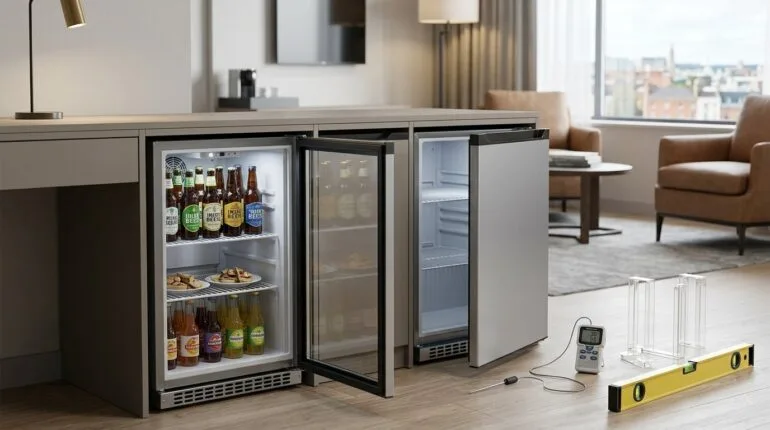
Why Your Bar or Cafe’s Mini Fridge is the Unsung Hero of Efficiency
Let’s be real, when you’re running a bar or cafe, the last thing you want to deal with is a mini fridge that looks like it’s been through a tornado. You’ve got customers waiting, orders piling up, and a line of people glaring at you because their cold brew is taking *forever*. Meanwhile, your mini fridge is a black hole of condiments, half-used syrups, and mystery containers that may or may not contain something edible. Sound familiar?
I’ll admit it: I used to think mini fridges were just glorified coolers. That was until I spent a week shadowing a bar manager in Nashville who treated her under-counter fridge like a military operation. Every bottle had a home, every shelf had a purpose, and not a single square inch was wasted. It was a thing of beauty. And here’s the kicker, her bar ran smoother because of it. Fewer mistakes, faster service, and zero frantic digging for the last bottle of oat milk. That’s when it clicked: commercial mini fridge organization isn’t just about tidiness; it’s about survival.
In this guide, I’m diving deep into the hacks, systems, and mindset shifts that’ll turn your mini fridge from a cluttered nightmare into a well-oiled machine. We’re talking space-saving strategies, productivity-boosting layouts, and even a few psychological tricks to keep your team on track. Whether you’re running a speakeasy with limited real estate or a bustling cafe where every second counts, these tips will help you reclaim control, one shelf at a time.
Oh, and full disclosure? I’m not a professional organizer. I’m just a guy who’s spent way too much time staring into the abyss of poorly labeled fridge shelves, wondering how it all went so wrong. So if some of these ideas feel a little “out there,” bear with me. I’ve tested them in real-world settings, and they work, even if they’re not always pretty.
The Psychology of Fridge Chaos: Why We Let It Happen
1. The “Out of Sight, Out of Mind” Trap
Here’s the thing about mini fridges: they’re small. Like, *really* small. And when space is limited, our brains default to a dangerous assumption: “If I can’t see it, it doesn’t exist.” That’s how you end up with three half-empty bottles of grenadine buried under a pile of lime wedges, or a forgotten tub of whipped cream that’s been there since last Halloween. Visibility is the enemy of waste. If you can’t see it, you won’t use it, and if you won’t use it, you’re basically throwing money in the trash.
I learned this the hard way when I helped a friend reorganize his cafe’s mini fridge. We pulled out no fewer than *five* expired bottles of syrup, all shoved to the back because “someone” (read: everyone) assumed someone else would deal with it. The fix? First In, First Out (FIFO) isn’t just for restaurants, it’s a mini fridge mantra. Label everything with the date it was opened, and rotate stock so the oldest stuff is always at the front. It’s basic, but it’s also revolutionary.
Is this the best approach? Let’s consider: What if you’re dealing with a team that’s resistant to change? Maybe the real hack isn’t just the system itself, but how you sell it to them. More on that later.
2. The “I’ll Do It Later” Syndrome
We’ve all been there. You’re in the middle of a rush, and someone shoves a new delivery into the fridge without a second thought. “I’ll organize it later,” you tell yourself. Spoiler alert: later never comes. The problem isn’t laziness, it’s that we underestimate how quickly chaos spirals. One misplaced bottle turns into two, then three, and suddenly you’re playing Tetris with your inventory every time you need to grab something.
The solution? Designate a “fridge captain.” This isn’t about micromanaging; it’s about accountability. Assign one person per shift to do a quick 60-second scan of the fridge. Are things where they’re supposed to be? Is anything expired? Is there a rogue container of mystery sauce lurking in the corner? A quick check-in prevents the slow creep of disorganization. And if you’re thinking, “My team won’t go for that,” I get it. But here’s the thing: people rise to the expectations you set. If you treat fridge organization like a non-negotiable part of the job, they will too.
Maybe I should clarify: This isn’t about shaming anyone. It’s about creating a culture where efficiency is the default, not the exception. And sometimes, that starts with a single, well-placed sticky note.
3. The Illusion of “It’s Just a Mini Fridge”
Here’s a hard truth: Mini fridges are not second-class citizens. They’re not the “little sibling” to your walk-in or under-counter units. In a bar or cafe, they’re often the *most* critical piece of refrigeration you have. Why? Because they’re the ones you interact with the most. They hold the ingredients you reach for a hundred times a day, your syrups, your garnishes, your backup creamers. And yet, we treat them like an afterthought. “Oh, it’s just the mini fridge,” we say, as if that excuses the chaos inside.
This mindset shift is everything. Start thinking of your mini fridge as the command center of your operation. If it’s disorganized, your entire workflow suffers. But if it’s streamlined? That’s where the magic happens. Faster service, fewer mistakes, and, let’s be honest, less stress. So ask yourself: Are you giving your mini fridge the respect it deserves?
Space-Saving Hacks That Actually Work
4. The Shelf Hierarchy: What Goes Where (And Why)
Not all shelves are created equal. In a mini fridge, vertical real estate is prime real estate. The top shelf? That’s for your most frequently used items, the stuff you grab every five minutes. Think syrups, garnishes, and backup condiments. The middle shelf? That’s your “supporting cast”-less frequently used but still essential items like extra bottles of juice or specialty milks. The bottom shelf? That’s your “deep storage”-the things you don’t need often but can’t live without, like backup kegs or bulk ingredients.
But here’s where it gets interesting: temperature zones matter. Most mini fridges have a warmer zone near the door and a colder zone in the back. Use this to your advantage. Store items that don’t need to be *super* cold (like syrups or sealed bottles) near the door, and reserve the back for perishables like dairy or fresh herbs. It’s a small tweak, but it can extend the life of your ingredients and keep everything at its peak.
I’m torn between keeping this simple and overcomplicating it. On one hand, the more rules you have, the harder they are to follow. On the other hand, a little structure goes a long way. Maybe the sweet spot is a hybrid approach: a few non-negotiable guidelines (like FIFO) with room for personalization. What do you think?
5. The Power of Bins and Baskets
If you’re not using bins in your mini fridge, you’re missing out. Clear, stackable bins are the unsung heroes of fridge organization. They keep like items together, prevent spills from turning into disasters, and make it easy to pull out an entire category of items at once. For example, designate one bin for syrups, another for dairy backups, and a third for garnishes. Suddenly, you’re not digging through a sea of bottles, you’re grabbing a bin and getting back to work.
But not all bins are created equal. Here’s what to look for:
- Clear plastic: So you can see what’s inside without opening them.
- Stackable: Because mini fridges are short, and vertical space is precious.
- Easy to clean: Because spills happen, and you don’t want to deal with a bin that’s impossible to scrub.
- Label-friendly: More on this later, but trust me, labels are your best friend.
I’ll admit, I used to think bins were overkill. “Why add more stuff to the fridge?” I’d ask. But then I saw a bar in Austin using them, and it was like watching a well-choreographed dance. No wasted motion, no frantic searching, just smooth, efficient service. That’s when I became a convert.
6. The Door Dilemma: What Belongs (And What Doesn’t)
The door of your mini fridge is the most abused real estate in the entire unit. It’s where things go to die, half-empty bottles of sauce, random packets of butter, and that one mystery container that no one claims. But here’s the thing: the door is also the warmest part of the fridge. That means it’s not ideal for perishable items like dairy or fresh herbs. So what *should* go there?
Think of the door as your “grab-and-go zone.” This is where you store items that are used frequently but don’t need to be ice-cold, like:
- Syrups and sauces (sealed or in squeeze bottles)
- Condiments (ketchup, mustard, hot sauce)
- Backups of non-perishable items (like extra bottles of soda or juice)
- Small tools (like bottle openers or garnish picks)
Pro tip: Use over-the-door organizers to maximize space. These are especially handy for small items like creamers or single-serve packets. Just make sure they’re not so bulky that they block airflow, because a fridge that can’t circulate air is a fridge that’s working overtime.
And here’s a controversial take: Don’t store anything on the top of the fridge. I know, I know, it’s tempting. But it’s a dust magnet, a spill hazard, and a surefire way to lose things. If you’re using every inch of your mini fridge and still running out of space, it’s time to rethink your inventory, not stack things precariously on top.
Labeling: The Secret Weapon of Fridge Organization
7. Why Labels Are Non-Negotiable
If you take one thing away from this article, let it be this: Label everything. I don’t care if you’re running a dive bar or a Michelin-starred cafe, labels are the difference between a fridge that works and a fridge that’s a constant source of frustration. Why? Because labels eliminate the guesswork. They tell you (and your team) exactly what’s inside a container, when it was opened, and when it needs to be tossed. No more sniff tests, no more “I think this is oat milk,” no more wasted time.
But here’s the catch: ot all labels are created equal. The best labels are:
- Waterproof: Because spills happen, and you don’t want your labels washing away.
- Easy to write on: No one has time for finicky pens or labels that smudge.
- Removable: Because inventory changes, and you don’t want to deal with sticky residue.
- Visible: If you can’t read it at a glance, it’s not doing its job.
I’ve seen bars use everything from masking tape to fancy label makers, and honestly? It doesn’t matter what you use, as long as it works for your team. The key is consistency. Pick a system and stick with it. For example, always write the date opened in the same format (e.g., MM/DD/YY) and use the same abbreviations for common items (e.g., “OM” for oat milk, “HM” for heavy cream).
And here’s a pro tip: color-code your labels. Assign a color to each category (e.g., blue for dairy, green for garnishes, red for sauces) and watch how quickly your team adapts. It’s like giving them a cheat sheet for the fridge.
8. The Art of the “Open Date” System
Let’s talk about expiration dates. Or, more accurately, let’s talk about why they’re not enough. Sure, that bottle of syrup might say it’s good until 2027, but once you open it? All bets are off. That’s where the “open date” system comes in. Every time you open a new container, slap a label on it with the date. Then, set a rule: if it’s been open for more than X days, it’s time to toss it. (The exact number depends on the item, but a good rule of thumb is 7-10 days for most perishables.)
But here’s the thing: rules are only as good as the people who follow them. If your team isn’t on board, the system falls apart. So how do you get buy-in? Make it easy. Keep a roll of labels and a marker right next to the fridge. Train new hires on the system during onboarding. And most importantly, lead by example. If your team sees you labeling everything, they’ll be more likely to do the same.
I’m torn between making this sound like a strict rule and keeping it flexible. On one hand, consistency is key. On the other hand, not every item needs the same level of scrutiny. Maybe the solution is a tiered system: critical items (like dairy) get labeled and checked daily, while less perishable items (like syrups) get a weekly check. What do you think?
Workflow Hacks: How to Keep Your Fridge Organized *During* Service
9. The 60-Second Rule: A Daily Reset
Here’s a hard truth: No matter how organized your fridge is, it’s going to get messy during service. Bottles get moved, spills happen, and before you know it, things are out of place. That’s why you need a daily reset routine. And no, it doesn’t have to take forever. In fact, it shouldn’t. The goal is to spend 60 seconds or less at the end of each shift doing a quick scan and tidy-up.
Here’s how it works:
- Wipe down shelves: A quick pass with a damp cloth keeps things clean and prevents sticky buildup.
- Check labels: Are all open containers labeled with the date? If not, fix it.
- Rotate stock: Move older items to the front and newer items to the back (FIFO, remember?).
- Toss expired items: If it’s past its prime, it’s out.
- Straighten bins: Make sure everything is where it’s supposed to be.
That’s it. Five steps, 60 seconds. It’s not about deep cleaning, it’s about maintaining the system. And here’s the best part: The more you do it, the faster it gets. Soon, it’ll feel like second nature.
But what if your team is resistant? What if they see it as just another chore? That’s where the “why” comes in. Don’t just tell them to do it, explain why it matters. Fewer mistakes, faster service, less waste. When people understand the bigger picture, they’re more likely to buy in.
10. The “One In, One Out” Rule for Inventory Control
Here’s a simple but powerful rule: For every new item that goes into the fridge, one old item has to come out. It’s called the “one in, one out” rule, and it’s a game-changer for inventory control. Why? Because it prevents overstocking, reduces waste, and keeps your fridge from turning into a black hole of forgotten ingredients.
Let’s say you’re restocking your syrups. Before you add the new bottle, check the old one. Is it empty? Great, toss it and replace it. Is it half-full? Either use it up first or consolidate it with another bottle. The key is to ever let old stock linger. It’s a small habit, but it adds up. Over time, you’ll find that your fridge stays leaner, your inventory turns over faster, and you’re not constantly throwing away expired items.
But here’s the catch: This only works if everyone follows it. If one person adds a new bottle without checking the old one, the system breaks down. That’s why it’s important to make it part of your team’s routine. Train them on the rule, post a reminder near the fridge, and hold each other accountable. It’s not about being rigid, it’s about being intentional.
I’ll admit, I was skeptical of this rule at first. “What if I need the backup?” I’d ask. But then I realized: If you’re constantly restocking before you’ve used up the old stuff, you’re not managing your inventory, you’re hoarding. And hoarding leads to waste, which leads to lost money. It’s a slippery slope.
Beyond the Fridge: Systems That Support Organization
11. The Role of Prep Lists and Par Levels
Here’s a question: How do you know when it’s time to restock? Do you wait until you’re completely out of something? Do you guess based on how busy you think the next shift will be? Or do you have a system in place? If you’re in the first two camps, it’s time to level up. Prep lists and par levels are the secret to staying organized without overstocking.
A par level is the minimum amount of an item you need to have on hand at all times. For example, your par level for oat milk might be two bottles. Once you dip below that, it’s time to restock. A prep list is a checklist of everything that needs to be prepped or restocked before each shift. It’s your roadmap for keeping the fridge (and the rest of your operation) running smoothly.
Here’s how to make it work:
- Set your par levels: Look at your sales data and figure out how much of each item you go through in a typical shift. Then, set your par levels slightly higher to account for busy periods.
- Create a prep list: Include everything that needs to be restocked, prepped, or checked before each shift. This might include refilling syrups, chopping garnishes, or checking expiration dates.
- Assign responsibility: Make it clear who’s in charge of prep for each shift. This could be the opening manager, the lead bartender, or a designated prep person.
- Review and adjust: Par levels aren’t set in stone. If you’re constantly running out of something, it’s time to adjust. If you’re throwing away expired items, it’s time to scale back.
The beauty of this system is that it takes the guesswork out of restocking. No more last-minute panic orders, no more wasted ingredients, no more frantic digging through the fridge to see what’s missing. It’s all laid out for you in black and white.
But here’s the thing: This only works if you stick to it. It’s easy to let prep lists fall by the wayside when things get busy, but that’s when you need them the most. Make it a non-negotiable part of your routine, and you’ll wonder how you ever lived without it.
12. Digital Tools to Streamline Fridge Management
Let’s talk tech. Digital tools can be a game-changer for fridge organization, especially if you’re managing multiple locations or a large team. From inventory apps to temperature monitors, there’s a tool for just about every aspect of fridge management. And the best part? They take the guesswork out of the equation.
Here are a few tools worth checking out:
- Inventory apps: Apps like UpKeep or SimpleOrder let you track inventory in real time, set par levels, and even generate purchase orders when it’s time to restock. No more manual counts or forgotten items.
- Temperature monitors: Tools like TempTrak or Cooper-Atkins keep an eye on your fridge’s temperature 24/7 and alert you if something’s off. This is especially useful for mini fridges, which can be finicky when it comes to maintaining consistent temps.
- Label printers: If you’re serious about labeling, a Dymo or Brother label printer can save you time and hassle. Print labels in seconds, stick them on containers, and you’re good to go.
- Task management apps: Apps like Trello or Asana can help you create checklists for daily fridge maintenance, assign tasks to team members, and track progress. It’s like having a digital prep list that everyone can access.
But here’s the catch: Tech is only as good as the people using it. If your team isn’t on board, even the fanciest app won’t make a difference. That’s why it’s important to train your team on how to use these tools and make them part of your daily routine. Start small, maybe with an inventory app or a temperature monitor, and build from there.
I’ll admit, I was slow to adopt digital tools. “Why fix what isn’t broken?” I’d ask. But then I saw a cafe in Portland using an inventory app, and it was like watching a well-oiled machine. No wasted time, no forgotten items, no last-minute scrambles. That’s when I realized: Tech isn’t about replacing systems, it’s about making them better.
Putting It All Together: A Step-by-Step Fridge Overhaul
Alright, let’s bring it all home. You’ve got the hacks, the systems, and the mindset shifts, now it’s time to put them into action. Here’s a step-by-step guide to overhauling your mini fridge, whether you’re starting from scratch or just giving it a refresh.
Step 1: Empty Everything Out
Yes, everything. Pull it all out and lay it on the counter. This is your chance to take stock of what you have, toss what’s expired, and start fresh. It might feel overwhelming at first, but trust me, it’s worth it. As you’re emptying, ask yourself:
- Is this still good?
- Do we actually use this?
- Is this in the right place?
If the answer to any of these is “no,” it’s time to make a change.
Step 2: Clean Like You Mean It
Now that your fridge is empty, give it a deep clean. Wipe down the shelves, scrub the bins, and sanitize the door. This isn’t just about aesthetics, it’s about food safety. A clean fridge is a safe fridge, and a safe fridge is one less thing to worry about during service.
Pro tip: Use a baking soda and water solution to clean the interior. It’s non-toxic, effective, and won’t leave behind any harsh chemical smells.
Step 3: Group Like Items Together
Before you start putting things back, group like items together. This will make it easier to assign them to bins or shelves later. For example:
- Syrups and sauces
- Dairy and creamers
- Garnishes and herbs
- Backups and bulk items
This step is all about creating a logical flow. When everything has a category, it’s easier to find what you need and keep things organized.
Step 4: Assign Zones and Bins
Now it’s time to assign zones and bins. Use the shelf hierarchy we talked about earlier (top shelf for frequently used items, middle shelf for supporting cast, bottom shelf for deep storage) and assign bins to each category. For example:
- Top shelf: Syrups and sauces bin, garnishes bin
- Middle shelf: Dairy and creamers bin, backup condiments bin
- Bottom shelf: Bulk items bin, extra bottles bin
- Door: Grab-and-go items (condiments, small tools)
Don’t forget to label each bin so everyone knows what goes where.
Step 5: Implement the Open Date System
Before you put anything back, label it with the date it was opened. This is your chance to start fresh with the open date system. Use a waterproof marker or a label printer, and make sure the date is clearly visible. If an item is unopened, note the expiration date instead.
Pro tip: Use different colors for different categories. For example, blue for dairy, green for garnishes, red for sauces. It’s a small tweak, but it makes a big difference.
Step 6: Set Par Levels and Create a Prep List
Now that your fridge is organized, it’s time to set par levels and create a prep list. Look at your sales data and figure out how much of each item you go through in a typical shift. Then, set your par levels slightly higher to account for busy periods. Finally, create a prep list that includes everything that needs to be restocked or checked before each shift.
Post the prep list near the fridge so everyone knows what’s expected. And don’t forget to review and adjust your par levels regularly. If you’re constantly running out of something, it’s time to increase your par level. If you’re throwing away expired items, it’s time to scale back.
Step 7: Train Your Team
This is the most important step. An organized fridge is only as good as the team that maintains it. Take the time to train your staff on the new system, explain why it matters, and answer any questions they have. Make it clear that fridge organization is a non-negotiable part of the job, and lead by example.
Pro tip: Hold a fridge organization workshop. Walk your team through the new system, show them how to label items, and explain the importance of the open date system. The more they understand, the more likely they are to buy in.
Step 8: Maintain the System
Finally, commit to maintaining the system. That means doing a 60-second reset at the end of each shift, following the one in, one out rule for inventory, and sticking to your prep list. It’s not about perfection, it’s about consistency. The more you stick to the system, the easier it gets.
And remember: It’s okay to adjust as you go. If something isn’t working, tweak it. If a bin is too small, swap it out. If a par level is off, adjust it. The goal is to create a system that works for *you*, not to force yourself into a one-size-fits-all solution.
The Big Picture: Why This Matters More Than You Think
At the end of the day, commercial mini fridge organization isn’t just about tidiness. It’s about efficiency, profitability, and sanity. A well-organized fridge means:
- Faster service: No more frantic digging for the last bottle of syrup.
- Fewer mistakes: No more grabbing the wrong ingredient because it was mislabeled.
- Less waste: No more throwing away expired items because they were forgotten in the back.
- Happier customers: Because when your team isn’t stressed, they’re more likely to deliver great service.
- A smoother operation: Because when one part of your workflow is running smoothly, it has a ripple effect on everything else.
But here’s the thing: This isn’t a one-and-done project. It’s an ongoing process. Fridge organization is like a garden, it needs regular tending to stay healthy. But if you put in the work, the payoff is huge. You’ll save time, save money, and, most importantly, save your sanity.
So here’s my challenge to you: Pick one thing from this guide and implement it today. Maybe it’s the open date system. Maybe it’s the 60-second reset. Maybe it’s just labeling your bins. Whatever it is, start small and build from there. Because the truth is, you don’t need to overhaul your entire fridge overnight. You just need to start.
And who knows? Maybe in a few weeks, you’ll look at your mini fridge and think, “Huh. This actually works.” I know I did.
FAQ: Your Mini Fridge Organization Questions, Answered
Q: How often should I deep clean my commercial mini fridge?
A: At least once a month, but ideally every two weeks. Deep cleaning involves emptying the fridge, wiping down all surfaces, and sanitizing the interior. It’s also a good time to check for expired items and reorganize as needed. If you’re in a high-volume environment, you might need to deep clean more frequently.
Q: What’s the best way to store fresh herbs in a mini fridge?
A: Fresh herbs are tricky because they’re delicate and prone to wilting. The best way to store them is to trim the stems, place them in a jar or glass with an inch of water, and cover them loosely with a plastic bag. This keeps them hydrated and extends their shelf life. Just make sure to change the water every few days. For mini fridges, consider using small mason jars or even test tubes to save space.
Q: How do I keep my mini fridge from smelling bad?
A: Mini fridges are notorious for developing odors, especially if they’re packed with perishable items. Here are a few tips to keep yours smelling fresh:
- Clean spills immediately: The longer a spill sits, the more likely it is to develop an odor.
- Use an open box of baking soda: Place it in the back of the fridge to absorb odors. Replace it every few months.
- Store strong-smelling items in airtight containers: Things like garlic, onions, and certain cheeses can permeate the fridge. Keep them sealed tight.
- Deep clean regularly: As mentioned earlier, a monthly deep clean can work wonders for odor control.
- Check for expired items: Sometimes, the source of the smell is a forgotten container of something that’s gone bad.
Q: What’s the best way to organize a mini fridge for a coffee shop?
A: Coffee shops have unique needs when it comes to mini fridge organization. Here’s a tailored approach:
- Top shelf: Milk and creamers (the most frequently used items). Use clear bins to separate different types (e.g., whole milk, oat milk, half-and-half).
- Middle shelf: Syrups and sauces. Group them by flavor (e.g., vanilla, caramel, hazelnut) and label each bin.
- Bottom shelf: Backups and bulk items. This is where you store extra bottles of syrup, backup milk, or bulk creamers.
- Door: Grab-and-go items like single-serve creamers, sugar packets, or small tools like stirrers or garnish picks.
Don’t forget to implement the open date system for dairy and other perishables. And if you’re using a lot of fresh ingredients (like herbs for garnishes), consider dedicating a small bin or shelf to them. The key is to keep your most frequently used items within easy reach and everything else organized and labeled.
@article{commercial-mini-fridge-organization-hacks-for-bars-cafes-maximize-space-without-the-chaos,
    title   = {Commercial Mini Fridge Organization Hacks for Bars & Cafes: Maximize Space Without the Chaos},
    author  = {Chef's icon},
    year    = {2026},
    journal = {Chef's Icon},
    url     = {https://chefsicon.com/commercial-mini-fridge-organization-hacks-for-bars-cafes/}
}