The Best Fluffy Pancakes recipe you will fall in love with. Full of tips and tricks to help you make the best pancakes.
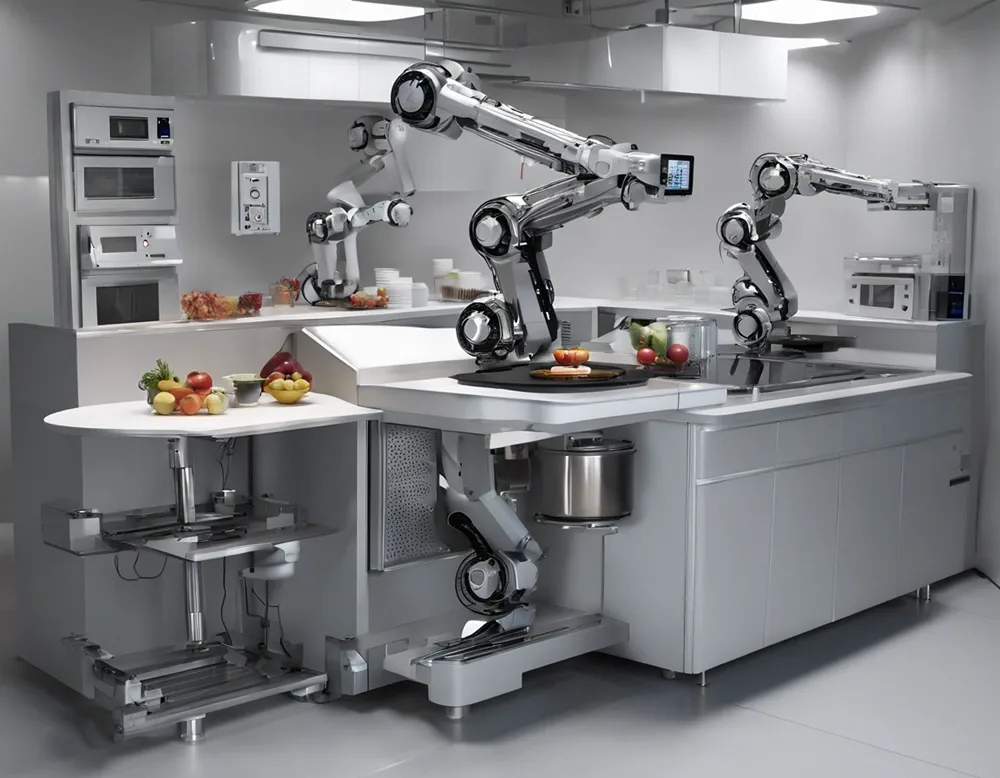
I’ll admit it, I used to be a kitchen tech skeptic. My first sous vide machine sat in its box for months, taunting me from the corner of my Nashville apartment like some overpriced science experiment. “Real cooking happens with fire and intuition,” I’d mutter while stirring a pot of chili that Luna, my rescue cat, would side-eye from her perch on the counter. (Don’t judge. She’s got opinions about food, and she’s not afraid to share them.)
But here’s the thing: after finally unboxing that sous vide circulator, and later, a precision induction burner, a smart spice grinder, and a countertop CVap oven, I realized something unsettling. My skepticism wasn’t about the tech itself. It was about my own fear of admitting that maybe, just maybe, these tools weren’t gimmicks. They were quietly redefining what it means to coax flavor out of ingredients. And if I’m being honest, I was late to the party.
Modern kitchen tech isn’t just about speed or convenience (though, let’s be real, those are nice perks). It’s about control. Not the kind of control that turns cooking into a sterile lab experiment, but the kind that lets you dial in flavors with a level of precision that would make a Michelin-starred chef nod in approval. It’s about uncovering layers of taste in ingredients you thought you knew inside and out. And if you’re not paying attention, you might be missing out on one of the most exciting shifts in home and professional cooking in decades.
In this deep dive, we’re going to explore how today’s kitchen tech is enhancing flavor profiles in ways that would’ve seemed like magic a generation ago. We’ll look at the tools that are changing the game, the science behind why they work, and, most importantly, how you can start using them to elevate your own cooking. Whether you’re a home cook who geeks out over the perfect sear or a professional chef looking to push boundaries, there’s something here for you. And if you’re still on the fence? Well, let’s just say I’ve been there. But trust me: your taste buds will thank you.
The Flavor Revolution: Why Now?
Before we dive into the gadgets and gizmos, it’s worth asking: why is this happening now? Why are we seeing such a surge in kitchen tech that’s specifically designed to enhance flavor? The answer, like most things in the culinary world, is a mix of science, culture, and a little bit of serendipity.
First, there’s the science. Over the past few decades, our understanding of how flavor works has exploded. We now know that taste isn’t just about the five basic flavors, sweet, salty, sour, bitter, umami, but about how those flavors interact with texture, temperature, aroma, and even sound (yes, the crunch of a potato chip plays a role in how we perceive its flavor). Modern kitchen tech is built to manipulate these variables with a level of precision that was once only possible in a research lab. Take precision temperature control, for example. Sous vide cooking doesn’t just cook food evenly; it allows you to target specific textures and doneness levels that unlock flavors you might not even know were there. A steak cooked at 130°F for two hours isn’t just tender, it’s a completely different experience than one seared in a pan, with a depth of beefy flavor that’s almost buttery.
Then there’s the cultural shift. Food isn’t just fuel anymore; it’s an experience. Social media has turned cooking into a form of self-expression, and people are more adventurous than ever. We’re not just eating to survive; we’re eating to explore, to share, to impress. And with that shift comes a demand for tools that help us create flavors that are memorable, unique, and, let’s be honest, Instagrammable. (Though, if we’re being real, the best flavors are the ones that make you close your eyes and sigh, not the ones that look good in a square photo.)
And finally, there’s the tech itself. Advances in materials science, sensors, and connectivity have made it possible to create kitchen tools that are smarter, more responsive, and more intuitive than ever before. We’re no longer limited to analog dials and guesswork. Now, we’ve got AI-powered cooking assistants, smart spice grinders that adjust grind size based on the recipe, and induction burners that can hold a temperature within a degree of what you set. It’s like having a sous chef who never sleeps, never complains, and never burns the garlic.
But here’s the thing I keep coming back to: all this tech is only as good as the person using it. You can have the fanciest gadgets in the world, but if you don’t understand the fundamentals of flavor, how ingredients interact, how heat transforms them, how seasoning works, you’re just spinning your wheels. The real magic happens when you combine modern precision with old-school intuition. And that, my friends, is where things get interesting.
The Tools of the Trade: Gadgets That Are Changing the Flavor Game
1. Sous Vide: The Gateway Drug to Flavor Precision
Let’s start with the one that changed everything for me: sous vide. If you’re not familiar, sous vide is a method of cooking where food is vacuum-sealed in a bag and submerged in a water bath held at a precise temperature. It’s not new, it’s been used in professional kitchens for decades, but recent advancements in countertop models have made it accessible to home cooks. And let me tell you, it’s a game-changer.
The first time I cooked a steak sous vide, I was skeptical. No sear? No char? Just a bag in water? But when I pulled that steak out of the bag, patted it dry, and gave it a quick sear in a screaming-hot cast-iron skillet, I nearly cried. The texture was perfect, edge-to-edge medium-rare, with a tenderness that was almost surreal. But more than that, the flavor was deeper, richer, more concentrated than any steak I’d ever cooked on the stovetop. It was like the beef had been distilled into its purest form.
Here’s why it works: traditional cooking methods rely on high heat to cook food quickly, which can lead to overcooking and moisture loss. Sous vide, on the other hand, cooks food gently and evenly, allowing it to retain its natural juices and flavors. But it’s not just about moisture. By cooking food at lower temperatures for longer periods, you’re breaking down connective tissues and proteins in a way that enhances flavor and texture. A pork shoulder cooked sous vide at 165°F for 24 hours isn’t just tender, it’s a revelation, with a depth of porky flavor that falls apart at the touch of a fork.
And it’s not just for meat. Vegetables, eggs, even desserts, sous vide can transform them all. I’ve made caramelized carrots that taste like candy, poached eggs with yolks so creamy they’re almost liquid, and crème brûlée with a custard so silky it’s like eating a cloud. Is it overkill for weeknight dinners? Maybe. But when you want to create something truly special, sous vide is the tool you reach for.
Of course, it’s not without its challenges. The biggest one? Patience. Sous vide isn’t fast. If you’re used to throwing a steak on the grill and eating it 10 minutes later, the idea of waiting an hour (or more) can feel like torture. And then there’s the sear. Sous vide cooks food evenly, but it doesn’t give you that beautiful crust. You’ve still got to finish it in a pan or with a torch, which means you’re adding another step to the process. Is it worth it? Absolutely. But it’s not for the impatient or the faint of heart.
2. Precision Induction Burners: The Unseen Hero of Flavor Control
If sous vide is the gateway drug to modern kitchen tech, then precision induction burners are the unsung hero. I’ll admit, I didn’t give induction much thought until I moved to Nashville and started cooking in a kitchen with an old, finicky gas range. One day, after yet another battle with uneven heat, I caved and bought a countertop induction burner. And let me tell you, it changed everything.
Induction cooking works by using magnetic fields to heat the cookware directly, rather than heating the air around it like gas or electric burners. The result? Instant, precise heat that responds to your adjustments in real time. No more waiting for a burner to heat up. No more hot spots. No more guessing if the pan is hot enough. With induction, you set the temperature, and the burner holds it, within a degree or two, until you tell it otherwise.
But here’s where it gets really interesting: precision temperature control isn’t just about convenience. It’s about flavor. Take caramelization, for example. When you’re making a pan sauce, the first step is usually deglazing the pan to lift up those browned bits, the fond-that are packed with flavor. With a gas burner, it’s easy to burn the fond if you’re not careful. With induction, you can set the pan to a precise temperature, ensuring that the fond caramelizes just enough to develop deep, complex flavors without burning. The same goes for searing meat, toasting spices, or even making candy. When you can control the heat with that level of precision, you can control the flavor.
And then there’s the speed. Induction burners heat up faster than gas or electric, which means you can get dinner on the table faster. But more importantly, it means you can cook ingredients more quickly without sacrificing flavor. A stir-fry that might take 10 minutes on a gas burner can be done in half the time on induction, with the same (or better) results. And because induction is so responsive, you can adjust the heat on the fly, ensuring that every ingredient is cooked perfectly.
But it’s not all sunshine and rainbows. Induction has its quirks. For one, not all cookware works with it. You need pots and pans with a magnetic base, which means saying goodbye to your beloved copper or aluminum pans unless they’re induction-compatible. And then there’s the learning curve. Cooking with induction is different than cooking with gas. There’s no flame, no visual cue to tell you how hot the pan is. You’ve got to rely on the numbers, which can take some getting used to. And if you’re someone who likes to cook with high heat (looking at you, wok enthusiasts), induction might not get hot enough for your liking. (Though, to be fair, there are now induction burners that can hit temperatures high enough for wok cooking, you just might have to shell out a little extra for them.)
3. Smart Spice Grinders: The Flavor Hack You Didn’t Know You Needed
Here’s a confession: I used to think that smart spice grinders were a gimmick. I mean, how hard is it to twist a pepper mill a few times? But then I got my hands on one, and now I’m a believer. Because here’s the thing: grind size matters. And not just a little. It matters a lot.
Take black pepper, for example. A coarse grind is great for steaks or salads, where you want that big, bold pepper flavor to stand out. But a fine grind? That’s what you want for sauces or soups, where you’re looking for a more subtle, integrated pepper flavor. And if you’re cooking something delicate, like fish or eggs, you might want a grind that’s somewhere in between. The problem? Most pepper mills don’t give you that level of control. You get what you get, and you don’t get upset.
Enter the smart spice grinder. These gadgets let you adjust the grind size with the touch of a button, ensuring that you’re getting the perfect grind every time. But it’s not just about pepper. Smart grinders can handle everything from salt to cinnamon to coffee beans, and they often come with features like dosing control (so you can measure out exactly how much spice you’re using) and automatic grinding (so you don’t have to twist the mill by hand). Some even connect to your phone via Bluetooth, allowing you to save your favorite grind settings or control the grinder remotely.
But why does this matter for flavor? Because grind size affects how quickly and intensely the flavors of your spices are released. A coarse grind will give you a slower, more gradual release of flavor, while a fine grind will give you a quicker, more intense hit. And if you’re cooking something that requires a long simmer, like a stew or a braise, you might want to use a coarser grind so that the flavors don’t dissipate too quickly. On the other hand, if you’re making a quick pan sauce, a fine grind will give you the maximum flavor in the shortest amount of time.
And then there’s the issue of freshness. Pre-ground spices lose their flavor quickly. Like, really quickly. Within a few weeks, they can start to taste dull and lifeless. But whole spices? They can last for months, even years, if stored properly. A smart grinder lets you grind your spices fresh every time, ensuring that you’re getting the maximum flavor from every pinch. And trust me, once you’ve tasted the difference, you’ll never go back to pre-ground spices again.
Of course, smart spice grinders aren’t cheap. And if you’re someone who doesn’t cook with spices all that often, they might not be worth the investment. But if you’re serious about flavor, they’re a game-changer. And let’s be real: if you’re the kind of person who owns a sous vide machine or a precision induction burner, you’re probably the kind of person who cares about this stuff.
4. CVap Ovens: The Secret Weapon of Professional Kitchens
If you’ve ever eaten at a high-end restaurant and wondered how they get their food to taste so consistently perfect, there’s a good chance a CVap oven was involved. CVap (short for Controlled Vapor Technology) is a type of oven that uses a combination of dry heat and moist heat to cook food with unparalleled precision. And while it’s been a staple in professional kitchens for years, it’s only recently started making its way into home kitchens.
Here’s how it works: a CVap oven has two heating elements, one for dry heat and one for moist heat. By adjusting the balance between the two, you can control the humidity inside the oven, which in turn affects how the food cooks. Want a crispy skin on your chicken? Crank up the dry heat. Want a tender, juicy brisket? Increase the moist heat. The result is food that’s cooked to perfection, with flavors and textures that are hard to achieve with traditional cooking methods.
But CVap isn’t just about texture. It’s about flavor, too. Because CVap ovens cook food so gently and evenly, they’re able to preserve the natural flavors of the ingredients in a way that other cooking methods can’t. Take vegetables, for example. When you roast vegetables in a traditional oven, the high heat can cause them to lose moisture and flavor. But in a CVap oven, the gentle heat and controlled humidity help the vegetables retain their natural sweetness and vibrancy. The same goes for meat. A steak cooked in a CVap oven won’t have the same char as one cooked on a grill, but it will have a depth of flavor that’s hard to beat.
And then there’s the issue of consistency. One of the biggest challenges in cooking is getting the same results every time. A few degrees too hot or too cold, a few minutes too long or too short, and your dish can go from perfect to disaster. But with a CVap oven, you can set the temperature and humidity to the exact levels you want, ensuring that your food comes out the same way every time. This is especially useful for professional chefs, who need to be able to replicate their dishes night after night. But it’s also great for home cooks who want to take their cooking to the next level.
Of course, CVap ovens aren’t without their drawbacks. For one, they’re expensive. Like, really expensive. A professional-grade CVap oven can cost thousands of dollars, which puts it out of reach for most home cooks. And even if you can afford one, they’re big and bulky, which means they’re not exactly ideal for small kitchens. And then there’s the learning curve. CVap ovens are more complex than traditional ovens, which means there’s a bit of a learning curve involved. But if you’re serious about flavor, they’re worth the investment.
5. Smart Scales and Measuring Tools: The Unsung Heroes of Flavor Balance
Here’s something I’ve learned the hard way: when it comes to flavor, precision matters. A little too much salt, a little too little acid, and your dish can go from delicious to disaster in the blink of an eye. And while intuition and experience can take you far, there’s no substitute for exact measurements. That’s where smart scales and measuring tools come in.
I’ll admit, I used to be a “eyeball it” kind of cook. A pinch of this, a dash of that, a glug of olive oil, whatever felt right in the moment. And while that approach can work for some dishes, it’s a recipe for inconsistency. One day, your chili is perfect. The next, it’s too salty. One day, your cake is moist and fluffy. The next, it’s dry and dense. And while I’d like to think I’ve got a good palate, the truth is, I’m not always as precise as I think I am.
Enter the smart scale. These gadgets do more than just weigh your ingredients. They connect to your phone or tablet via Bluetooth or Wi-Fi, allowing you to follow recipes with exact measurements, convert units on the fly, and even track your cooking history. Some models, like the Hestan Cue, come with built-in guided cooking features, walking you through each step of a recipe and adjusting the measurements based on the number of servings you’re making. Others, like the Drop Scale, connect to recipe apps, ensuring that you’re using the exact amounts called for in the recipe.
But why does this matter for flavor? Because cooking is a science, and science is all about precision. Take baking, for example. If you’re making a cake, the ratio of flour to sugar to fat to liquid is crucial. Too much flour, and your cake will be dry. Too little sugar, and it won’t be sweet enough. And if you’re not measuring your ingredients by weight, you’re leaving a lot to chance. The same goes for savory dishes. A little too much salt can overpower the other flavors in your dish, while too little can leave it tasting flat. And if you’re not measuring your ingredients precisely, it’s easy to end up with a dish that’s out of balance.
And then there’s the issue of consistency. If you’re cooking the same dish over and over again, you want it to taste the same every time. But if you’re not measuring your ingredients precisely, that’s not always easy to achieve. A smart scale can help you replicate your dishes with the same level of precision every time, ensuring that your flavors are always on point.
Of course, smart scales aren’t for everyone. If you’re someone who likes to cook by feel, they might feel a little too rigid. And if you’re on a budget, they can be a bit of an investment. But if you’re serious about flavor, they’re a game-changer. And let’s be real: if you’re the kind of person who owns a sous vide machine or a precision induction burner, you’re probably the kind of person who cares about this stuff.
The Science of Flavor: How Tech Is Unlocking New Dimensions
6. The Maillard Reaction: Why Precision Heat Matters
If you’ve ever wondered why seared meat tastes so much better than boiled meat, the answer lies in something called the Maillard reaction. Named after the French chemist Louis-Camille Maillard, this chemical reaction occurs when amino acids and reducing sugars are exposed to heat, resulting in the browning and flavor development that we associate with cooked food. It’s what gives steak its crust, bread its golden-brown crust, and coffee its rich, complex flavor.
But here’s the thing: the Maillard reaction is incredibly sensitive to temperature. Too low, and it won’t happen at all. Too high, and you’ll burn your food before the reaction has a chance to develop. That’s where modern kitchen tech comes in. With tools like precision induction burners and CVap ovens, you can dial in the exact temperature needed to trigger the Maillard reaction, ensuring that your food develops maximum flavor without burning.
Take steak, for example. If you’re cooking a steak on a gas grill, the heat is often uneven, which means some parts of the steak will cook faster than others. And if the grill is too hot, you’ll end up with a steak that’s burnt on the outside and raw on the inside. But with a precision induction burner, you can set the temperature to the exact level needed to trigger the Maillard reaction, ensuring that your steak develops a perfect crust without overcooking.
And it’s not just about meat. The Maillard reaction plays a role in everything from roasted vegetables to baked goods. When you roast vegetables in a traditional oven, the high heat can cause them to lose moisture and flavor. But in a CVap oven, the gentle heat and controlled humidity help the vegetables develop a deep, caramelized flavor without drying out. The same goes for baked goods. When you bake bread in a traditional oven, the high heat can cause the crust to brown too quickly, leaving the inside undercooked. But in a CVap oven, the gentle heat ensures that the bread cooks evenly, with a crust that’s perfectly browned and a crumb that’s light and airy.
But here’s the thing: the Maillard reaction isn’t just about temperature. It’s also about time. The longer you cook something at the right temperature, the more the Maillard reaction will develop, resulting in deeper, more complex flavors. That’s why slow-cooked dishes like braised meats and stews often have such rich, intense flavors. And with tools like sous vide and CVap ovens, you can cook your food at the perfect temperature for the perfect amount of time, ensuring that the Maillard reaction develops to its fullest potential.
7. Umami and the Art of Flavor Layering
Umami. It’s the fifth taste, the one that’s often described as savory or meaty. And while it’s been a part of Japanese cuisine for centuries, it’s only recently started to gain recognition in the Western world. But here’s the thing: umami isn’t just a taste. It’s a flavor enhancer, a way to add depth and complexity to your dishes. And with modern kitchen tech, it’s easier than ever to unlock its full potential.
So, what is umami, exactly? It’s the taste of glutamate, an amino acid that’s found in foods like tomatoes, mushrooms, cheese, and soy sauce. When you combine glutamate with other flavors, it enhances them, making them taste richer and more intense. That’s why a dish with a little bit of Parmesan cheese or a splash of soy sauce can taste so much more flavorful than one without.
But here’s where modern kitchen tech comes in. With tools like smart spice grinders and precision scales, you can measure out the exact amount of umami-rich ingredients needed to enhance your dishes. Take miso paste, for example. A little bit goes a long way, but if you use too much, it can overpower the other flavors in your dish. With a smart scale, you can measure out the exact amount needed to add depth and complexity without overwhelming the dish.
And then there’s the issue of layering. Umami isn’t just about adding one umami-rich ingredient to a dish. It’s about combining multiple umami-rich ingredients to create a depth of flavor that’s greater than the sum of its parts. That’s why dishes like ramen, with its combination of miso, soy sauce, and dashi, are so flavorful. And with modern kitchen tech, it’s easier than ever to layer umami flavors in your own cooking.
Take a simple tomato sauce, for example. If you’re making it on the stovetop, you might start by sautéing some onions and garlic, then adding canned tomatoes, and letting it simmer for an hour or so. But with a sous vide machine, you can cook the tomatoes at a precise temperature for a longer period of time, allowing the flavors to develop more fully. And if you add a little bit of Parmesan rind or a splash of fish sauce to the bag, you’ll be layering in umami flavors that will take your sauce to the next level.
But here’s the thing: umami isn’t just about adding ingredients. It’s also about technique. The way you cook your food can affect how much umami is released. For example, roasting vegetables can enhance their natural umami flavors, while boiling them can cause those flavors to leach out into the water. And with tools like CVap ovens and precision induction burners, you can control the cooking process with a level of precision that ensures maximum umami development.
8. The Role of Texture in Flavor Perception
Here’s something you might not have considered: flavor isn’t just about taste. It’s also about texture. The way food feels in your mouth plays a huge role in how you perceive its flavor. A crispy crust on a piece of fried chicken, the creamy texture of a well-made risotto, the crunch of a perfectly roasted vegetable, all of these things contribute to the overall flavor experience. And with modern kitchen tech, it’s easier than ever to control texture in your cooking.
Take sous vide, for example. One of the things I love about sous vide is how it allows you to control the texture of your food with a level of precision that’s hard to achieve with traditional cooking methods. If you’re cooking a steak, you can set the temperature to the exact level needed to achieve the perfect doneness, ensuring that the meat is tender and juicy without being mushy or tough. And if you’re cooking vegetables, you can set the temperature to the exact level needed to achieve the perfect texture, whether that’s crisp-tender or fall-apart soft.
But it’s not just about sous vide. Tools like CVap ovens and precision induction burners also allow you to control texture in your cooking. With a CVap oven, you can adjust the balance between dry heat and moist heat to achieve the perfect texture for your dish. Want a crispy skin on your chicken? Crank up the dry heat. Want a tender, juicy brisket? Increase the moist heat. And with a precision induction burner, you can control the heat with a level of precision that ensures your food is cooked to the perfect texture every time.
And then there’s the issue of consistency. One of the biggest challenges in cooking is getting the same texture every time. A few degrees too hot or too cold, a few minutes too long or too short, and your dish can go from perfect to disaster. But with modern kitchen tech, you can set the temperature and cooking time to the exact levels needed to achieve the perfect texture, ensuring that your food comes out the same way every time.
But here’s the thing: texture isn’t just about how food feels in your mouth. It’s also about how it looks. A dish that’s visually appealing is more likely to be perceived as flavorful, even if the actual taste is the same. That’s why chefs spend so much time plating their dishes, arranging the components in a way that’s pleasing to the eye. And with modern kitchen tech, it’s easier than ever to create dishes that are as beautiful as they are delicious.
9. The Psychology of Flavor: How Tech Is Changing the Way We Eat
Here’s something that might surprise you: flavor isn’t just about what’s happening on your tongue. It’s also about what’s happening in your brain. The way we perceive flavor is influenced by a whole host of psychological factors, from our expectations to our memories to our mood. And with modern kitchen tech, it’s easier than ever to tap into these psychological factors to create dishes that are more flavorful and more memorable.
Take expectations, for example. If you’re expecting a dish to be delicious, you’re more likely to perceive it as delicious, even if the actual taste is the same. That’s why chefs spend so much time describing their dishes on menus, using words like “succulent,” “tender,” and “rich” to prime your brain for a flavorful experience. And with modern kitchen tech, it’s easier than ever to create dishes that live up to those expectations.
Take a simple steak, for example. If you’re cooking it on a gas grill, the heat is often uneven, which means some parts of the steak will cook faster than others. And if the grill is too hot, you’ll end up with a steak that’s burnt on the outside and raw on the inside. But with a precision induction burner, you can set the temperature to the exact level needed to cook the steak evenly, ensuring that it’s perfectly seared on the outside and juicy on the inside. And when you serve that steak to your guests, their expectations will be met, and they’ll perceive it as more flavorful than a steak that’s been cooked unevenly.
And then there’s the issue of memory. The way we perceive flavor is influenced by our past experiences. If you’ve had a dish before and enjoyed it, you’re more likely to enjoy it again, even if the actual taste is slightly different. That’s why chefs often try to recreate dishes from their childhood, tapping into the emotional resonance of those flavors. And with modern kitchen tech, it’s easier than ever to recreate those dishes with a level of precision that ensures they taste just like you remember.
Take a simple tomato sauce, for example. If you’re making it on the stovetop, you might start by sautéing some onions and garlic, then adding canned tomatoes, and letting it simmer for an hour or so. But with a sous vide machine, you can cook the tomatoes at a precise temperature for a longer period of time, allowing the flavors to develop more fully. And if you add a little bit of Parmesan rind or a splash of fish sauce to the bag, you’ll be layering in flavors that will take your sauce to the next level. And when you serve that sauce to your guests, their memories of past tomato sauces will be triggered, and they’ll perceive it as more flavorful than a sauce that’s been cooked on the stovetop.
Putting It All Together: How to Start Enhancing Your Own Flavor Profiles
Okay, so we’ve talked about the tools, the science, and the psychology behind modern kitchen tech. But how do you actually start using this stuff to enhance your own flavor profiles? Where do you even begin? I’ll admit, it can feel overwhelming. There’s so much tech out there, and so many different ways to use it. But the good news is, you don’t have to dive in headfirst. You can start small, experimenting with one tool at a time, and see how it affects your cooking. And trust me, once you start seeing the results, you’ll be hooked.
Here’s my advice: start with sous vide. It’s the tool that changed everything for me, and it’s the one that I think has the most potential to enhance flavor profiles. Why? Because it’s all about precision. With sous vide, you can cook your food at the exact temperature needed to achieve the perfect doneness, ensuring that it’s tender, juicy, and packed with flavor. And it’s not just for meat. You can use it to cook vegetables, eggs, even desserts. Once you start experimenting with sous vide, you’ll start to see how precision temperature control can transform your cooking.
From there, move on to a precision induction burner. If you’re used to cooking on a gas or electric stove, the responsiveness of induction will blow your mind. You’ll be able to control the heat with a level of precision that’s hard to achieve with traditional burners, ensuring that your food is cooked to perfection every time. And once you start using induction, you’ll never want to go back.
And then, if you’re feeling adventurous, start experimenting with other tools. A smart spice grinder can help you get the perfect grind every time, ensuring that your spices are always fresh and flavorful. A CVap oven can help you achieve textures and flavors that are hard to achieve with traditional cooking methods. And a smart scale can help you measure your ingredients with a level of precision that ensures your dishes are always perfectly balanced.
But here’s the thing: you don’t have to buy all this stuff at once. Start with one tool, master it, and then move on to the next. And don’t be afraid to experiment. The whole point of modern kitchen tech is to give you more control over your cooking, so use that control to push the boundaries of what you thought was possible. Try new techniques, new ingredients, new flavor combinations. And most importantly, have fun with it. Because at the end of the day, that’s what cooking is all about.
The Future of Flavor: Where Do We Go From Here?
So, where does all this leave us? What’s the future of flavor in the age of modern kitchen tech? I’ll admit, I don’t have all the answers. But I do have some thoughts. And if I’m being honest, I’m equal parts excited and a little bit terrified.
On the one hand, the possibilities are endless. With tools like AI-powered cooking assistants and smart kitchen systems, we’re entering an era where cooking is more precise, more intuitive, and more flavorful than ever before. Imagine a kitchen where your oven knows exactly when your roast is done, where your spice grinder adjusts the grind size based on the recipe, where your scale measures out the exact amount of each ingredient needed to create the perfect dish. It’s like having a personal chef who knows your tastes inside and out, and who’s always there to help you create something amazing.
But on the other hand, I can’t help but wonder: are we losing something in the process? Cooking has always been a mix of art and science, of intuition and precision. And while modern kitchen tech gives us more control over the science, I worry that it might be taking away from the art. When you rely too much on gadgets and gizmos, do you lose the ability to cook by feel? Do you lose the joy of experimentation, of making mistakes, of discovering something new by accident?
I don’t have the answers. But I do know this: the future of flavor isn’t just about the tech. It’s about how we use it. It’s about finding the balance between precision and intuition, between science and art. And it’s about remembering that at the end of the day, cooking is about more than just creating something delicious. It’s about connection, about sharing, about the joy of bringing people together around a table.
So, where do we go from here? I think the answer is simple: we keep cooking. We keep experimenting. We keep pushing the boundaries of what’s possible. And we keep using modern kitchen tech not to replace the art of cooking, but to enhance it. Because at the end of the day, that’s what it’s all about. Not the gadgets, not the gizmos, but the food. The flavor. The experience. And the people we share it with.
So, what do you think? Are you ready to dive into the world of modern kitchen tech and start enhancing your own flavor profiles? Or are you still on the fence, like I was not so long ago? Either way, I’d love to hear your thoughts. Because at the end of the day, the best part of cooking isn’t the food, it’s the conversation it sparks.
FAQ
Q: Do I really need all this expensive tech to cook great food?
A: Absolutely not. Some of the best meals I’ve ever eaten were cooked with nothing more than a cast-iron skillet and a sharp knife. The tools we’ve talked about here aren’t necessary for great cooking, but they can help you take your food to the next level. Think of them like a musician’s instruments: you don’t need a Stradivarius to make beautiful music, but it sure helps if you’re trying to play at Carnegie Hall. The key is to use the tools that work for you, and not to get too caught up in the gadgets. At the end of the day, the best tool in the kitchen is your own intuition.
Q: What’s the one piece of modern kitchen tech you can’t live without?
A: Hands down, it’s my sous vide circulator. It’s not the most glamorous tool in my kitchen, but it’s the one that’s had the biggest impact on my cooking. Before I got into sous vide, I struggled with overcooked steaks, dry chicken, and vegetables that were either undercooked or mushy. But with sous vide, I can cook everything to the perfect doneness, every time. And the flavors? They’re next-level. A sous vide steak isn’t just tender, it’s a revelation, with a depth of flavor that’s hard to achieve with traditional cooking methods. That said, if I had to pick a close second, it’d be my precision induction burner. The control it gives me over the heat is unmatched, and it’s made a huge difference in everything from searing meat to making caramel.
Q: How do I know if a piece of kitchen tech is worth the investment?
A: Great question. The truth is, not all kitchen tech is created equal, and not all of it is worth the money. So how do you know if a gadget is worth the investment? Here are a few things to consider:
- Does it solve a problem? The best kitchen tech is the kind that solves a specific problem you’re having in the kitchen. If you’re constantly struggling with overcooked steaks, a sous vide circulator might be worth the investment. If you’re tired of burnt garlic, a precision induction burner could be a game-changer. But if you’re buying a gadget just because it’s trendy or because you saw it on Instagram, it might not be worth the money.
- Does it save you time or effort? Some kitchen tech is worth the investment because it saves you time or effort in the kitchen. A smart spice grinder, for example, can save you the hassle of grinding spices by hand. A smart scale can save you the time and effort of measuring out ingredients manually. But if a gadget doesn’t save you time or effort, it might not be worth the investment.
- Does it enhance flavor? At the end of the day, the best kitchen tech is the kind that enhances flavor. If a gadget helps you create dishes that are more flavorful, more tender, or more perfectly cooked, it’s probably worth the investment. But if it doesn’t make a noticeable difference in the flavor of your food, it might not be worth the money.
- Is it built to last? Kitchen tech can be expensive, so you want to make sure you’re investing in something that’s built to last. Look for gadgets that are made from high-quality materials, that have good reviews, and that come with a warranty. And if you’re not sure, do your research. Read reviews, watch videos, and talk to other cooks who’ve used the gadget. The more you know, the better equipped you’ll be to make a smart investment.
At the end of the day, the best way to know if a piece of kitchen tech is worth the investment is to try it out. If you can, borrow one from a friend or rent one from a kitchen supply store. And if you can’t, start with something small and affordable, like a smart spice grinder or a precision thermometer. That way, you can test the waters without breaking the bank.
Q: What’s the biggest mistake people make when using modern kitchen tech?
A: The biggest mistake I see people make is relying too much on the tech and not enough on their own intuition. Modern kitchen tech is amazing, but it’s not a substitute for good cooking skills. You still need to know the basics, how to season food, how to balance flavors, how to cook ingredients properly. The tech is just a tool to help you do those things better. So don’t get so caught up in the gadgets that you forget the fundamentals. And don’t be afraid to experiment. The whole point of modern kitchen tech is to give you more control over your cooking, so use that control to push the boundaries of what you thought was possible. Try new techniques, new ingredients, new flavor combinations. And most importantly, have fun with it. Because at the end of the day, that’s what cooking is all about.
@article{how-modern-kitchen-tech-is-secretly-revolutionizing-flavor-profiles-and-why-you-might-be-missing-out,
    title   = {How Modern Kitchen Tech Is Secretly Revolutionizing Flavor Profiles (And Why You Might Be Missing Out)},
    author  = {Chef's icon},
    year    = {2026},
    journal = {Chef's Icon},
    url     = {https://chefsicon.com/modern-kitchen-tech-enhancing-flavor-profiles/}
}