The Best Fluffy Pancakes recipe you will fall in love with. Full of tips and tricks to help you make the best pancakes.
Table of Contents
- 1 The Brutal Truth About Kitchen Layouts (No One Tells You)
- 2 The Five Core Kitchen Layouts (And When to Break the Rules)
- 3 Where Most People Waste Space (And How to Steal It Back)
- 4 2025 Kitchen Layout Trends: What’s Worth Stealing (And What to Skip)
- 5 How to Test Your Layout Before Committing (Without Spending a Dime)
- 6 The One Question No One Asks (But Should)
- 7 FAQ: Your Burning Kitchen Layout Questions, Answered
- 8 Final Thought: Your Kitchen Should Work for You, Not the Other Way Around
I’ll admit something embarrassing: I spent $12,000 on a kitchen remodel in 2022 that I *immediately* regretted. Why? Because I chose a layout based on Pinterest aesthetics rather than how I actually cook. The island looked stunning in photos but became a glorified obstacle course when I tried to make my famous (okay, infamous) five-alarm chili for 20 people. Two years later, after watching my partner nearly take out a cabinet door with a cast-iron skillet for the 37th time, I’ve become obsessed with the psychology of kitchen layouts. Turns out, the ‘perfect’ kitchen isn’t about marble countertops or statement lighting, it’s about how your body moves through space while holding a knife, a pot of boiling water, and a glass of wine you’re desperately trying not to spill.
This guide isn’t about selling you on the latest smart fridge or convincing you that open shelving is ‘in’ (spoiler: it’s a dust magnet). It’s about matching your kitchen’s bones to how you actually use it. Whether you’re a line cook dreaming of your first food truck, a home chef with a 60-square-foot galley kitchen, or a restaurant owner staring at a blank 2,000-square-foot canvas, we’ll break down:
- The five core kitchen layouts (and when to break the rules)
- How to map your ‘cooking personality’ to a floor plan
- The ‘work triangle’ myth, and what actually matters
- Where most people waste space (and how to steal it back)
- 2025 trends worth stealing (and which ones to ignore)
Fair warning: I’m going to ask you to do some uncomfortable self-reflection. How often do you actually use your stand mixer? Do you reallyeed a double oven, or are you just impressed by the idea of yourself using one? Let’s dig in.
The Brutal Truth About Kitchen Layouts (No One Tells You)
Here’s what the glossy magazines won’t say: Most kitchen layouts are designed for photographers, not cooks. That sprawling island with the waterfall edge? It’s a nightmare if you’re trying to teach your kid to roll out pie dough. The ‘open concept’ everyone raves about? It means your guests will watch you burn the garlic bread while pretending not to notice.
I spent a week shadowing chefs in three different professional kitchens (a food truck, a Michelin-starred restaurant, and a hospital cafeteria, don’t laugh, their efficiency is insane) to see how layout choices play out in real time. The biggest lesson? Great kitchens aren’t about square footage; they’re about reducing ‘decision fatigue.’ Every time you have to pause to think, “Where’s the damn trash can?” or “Why is the spice rack behind the toaster?”, you’re losing momentum. And in cooking, momentum is everything.
Let’s start with the foundational question most people skip:
What’s Your ‘Cooking Personality’?
Grab a pen. Answer these without overthinking:
- Do you cook alone, or is it a group activity?
- What’s your ‘disaster dish’-the thing that always makes a mess? (Mine is anything involving flour. I look like a cocaine smuggling operation gone wrong.)
- What’s your most-used appliance? (If you said ‘microwave,’ we need to talk.)
- Where do you naturally gravitate when guests come over? (The fridge? The sink? The one corner where you can hide from small talk?)
- What’s your biggest pet peeve in a kitchen? (Open shelves? Not enough outlets? That one cabinet that’s always slightly ajar?)
Your answers will reveal whether you need a ‘command center’ layout (for solo chefs who treat cooking like a military operation), a ‘social hub’ layout (for those who host while stir-frying), or a ‘cleanup-first’ layout (for the rest of us who generate dishes at an alarming rate).
The Work Triangle Is Dead (Long Live the Work Zones)
You’ve heard of the ‘kitchen work triangle’-the idea that your sink, stove, and fridge should form a triangle with 4-9 feet between them. Here’s the problem: That rule was invented in the 1940s, when kitchens were smaller, women were expected to do all the cooking, and no one owned an Instant Pot. Today? It’s about as relevant as rotary phones.
Modern kitchens need work zones:
- Prep Zone: Where you chop, measure, and curse at recipes. Needs counter space + trash/recycling nearby.
- Cooking Zone: Stove, oven, microwave, air fryer, whatever heats stuff up. Should be near landing space for hot pots.
- Cleanup Zone: Sink, dishwasher, compost. Ideally near the trash so you’re not dripping water across the room.
- Storage Zone: Pantry, fridge, freezer. Should be accessible from prep and cooking zones.
- Serving Zone: Where plates, glasses, and that one weird serving dish your aunt gave you live.
Pro tip: If you’re right-handed, your prep zone should be to the left of your cooking zone so you can grab and pivot naturally. Lefties, reverse it. This seems obvious, but I’ve seen so many kitchens where the fridge is on the wrong side, forcing people to do this awkward twist-and-reach every time they grab eggs.
The Five Core Kitchen Layouts (And When to Break the Rules)
Let’s break down the classic layouts-but with a twist: I’ll tell you when to follow the rules and when to burn them.
1. The Galley Kitchen: Efficiency in a Shoebox
Best for: Small spaces, serious cooks, and people who hate small talk while cooking.
Galley kitchens, two parallel counters with a walkway in between, are the underrated workhorses of the kitchen world. They’re standard in restaurants for a reason: everything is within reach. In my tiny Nashville rental, I had a galley kitchen that was 8 feet by 12 feet, and I could make a full Thanksgiving dinner without taking more than two steps in any direction.
Where people mess up:
- Making the aisle too narrow. Minimum 4 feet between counters, or you’ll hate your life when two people are trying to pass.
- Putting the fridge at the end. This creates a traffic jam. Fridge should be near the entrance so you can grab stuff without entering the cooking zone.
- Skipping vertical storage. In a galley, walls are your best friend. Pegboards, magnetic knife strips, hanging racks, forget ‘minimalist’ and go full hoarder-chic.
When to break the rules: If you entertain often, add a pull-out table or butcher block on wheels that can extend into the aisle when needed. Yes, it ‘breaks’ the galley flow, but it’s worth it for the extra prep space.
2. The L-Shaped Kitchen: The Goldilocks of Layouts
Best for: Most home cooks, open-concept lovers, and people who want flexibility.
L-shaped kitchens are the sweet spot between efficiency and socializing. They give you a natural work triangle (if you place appliances correctly) while leaving room for an island or dining table. The key is the ‘long leg’ vs. ‘short leg’ ratio. Ideally, the ‘long leg’ (where your main appliances live) should be 1.5x the length of the short leg (where you might put a prep station or sink).
Pro move: Put your sink in the corner where the two legs meet. This creates a natural ‘command center’ where you can see the stove, fridge, and any guests lurking nearby. Just don’t put the sink directly in the corner, leave at least 18 inches of counter on either side, or you’ll be washing dishes in a cluttered hellscape.
Where people mess up:
- Wasting the corner. Use a lazy Susan or pull-out shelves, or that corner becomes a black hole for expired spices.
- Ignoring the ‘dead zone’ behind the fridge. If your L-shape has a fridge at one end, the wall behind it is prime real estate for a spice rack or slim pantry.
- Forgetting about the ‘fourth wall.’ If your L-shape is open to a living area, consider adding a bar-height counter or shelf to define the space without closing it off.
3. The U-Shaped Kitchen: For People Who Love Options (And Have the Space)
Best for: Large kitchens, multi-cook households, and those who love storage.
U-shaped kitchens are the luxury SUVs of kitchen layouts, spacious, versatile, and great for hauling a lot of stuff. The key is to avoid the ‘bowling alley’ effect, where you’re constantly walking back and forth. Instead, think of it as three distinct zones:
- Zone 1 (Left leg): Prep + baking (mixer, cutting boards, dry goods)
- Zone 2 (Base): Cooking (stove, oven, microwave) + cleanup (sink, dishwasher)
- Zone 3 (Right leg): Storage (fridge, pantry, small appliances)
Where people mess up:
- Overloading the base with appliances. If you put the stove and the sink and the dishwasher all along the bottom, you’ll create a bottleneck. Spread them out.
- Ignoring the ‘peninsula opportunity.’ If your U-shape opens to a dining area, extend one leg into a peninsula with seating. Instant breakfast bar.
- Forgetting about lighting. U-shapes can feel cave-like. Add pendant lights over the island and under-cabinet lighting to brighten the workspace.
When to break the rules: If you have a massive U-shaped kitchen (we’re talking 15×15 feet or more), consider adding a second sink on one of the legs for prep. It’s a game-changer for washing veggies or filling pots without trekking across the room.
4. The Island Kitchen: Status Symbol or Smart Investment?
Best for: Open-concept homes, entertainers, and people who love a ‘wow’ factor.
Islands are the kitchen equivalent of a sports car-sexy, but not always practical. Done right, they add prep space, storage, and seating. Done wrong, they’re an expensive obstacle course. Here’s how to decide if you actually need one:
You doeed an island if:
- Your kitchen is at least 13×13 feet (any smaller, and the island will feel cramped).
- You regularly cook with others (islands create natural ‘stations’).
- You lack storage or counter space in your current layout.
- You entertain often and want a buffer between cooking and guests.
You don’teed an island if:
- Your kitchen is narrow. An island will make it feel like a bowling alley.
- You mostly cook alone. Islands create extra steps for solo chefs.
- You’re adding it just because ‘everyone has one.’ (See: my $12,000 mistake.)
Island rules to live by:
- Size matters: Minimum 2×4 feet, but 3×5 feet is ideal for functionality. Anything larger than 4×8 feet feels like its own zip code.
- Clearance: Leave at least 42 inches (3.5 feet) between the island and surrounding counters. 48 inches is better if you have multiple cooks.
- Height: Standard counter height (36 inches) is best for prep. Bar height (42 inches) is only useful if you’re using it for seating.
- Storage: If your island has cabinets, put them on the side facing the kitchen, not the side facing the living area. Otherwise, you’ll be staring at your pots while watching TV.
When to break the rules: If you’re tight on space but really want an island, consider a mobile island on wheels. You can roll it out when needed and tuck it away otherwise. Ikea’s Kitchen Cart is a cult favorite for this.
5. The One-Wall Kitchen: Minimalism Meets Reality
Best for: Tiny homes, studios, lofts, and people who hate cleaning.
One-wall kitchens are having a moment, thanks to the tiny house movement and urban living. The trick is to stack functions vertically rather than spreading them horizontally. Here’s how to make it work without losing your mind:
Non-negotiables for one-wall kitchens:
- Fridge placement: Put it at one end (not in the middle), so the door doesn’t block workflow.
- Sink location: Center it if possible, with landing space on both sides. You’ll use it for prep and cleanup.
- Appliance stacking: Microwave over the oven, or under the counter if space allows. Every inch counts.
- Vertical storage: Use the wall above the counters for magnetic strips (knives, spice jars), pegboards, or open shelving.
Where people mess up:
- Skipping a pantry. Without one, you’ll clutter your counters with dry goods. Even a slim roll-out pantry (12 inches wide) helps.
- Choosing deep cabinets. In a one-wall kitchen, deep cabinets = dead space. Stick to 12-15 inch depth for upper cabinets.
- Forgetting about the ‘second wall.’ If your kitchen is against one wall, use the opposite wall for a bar cart, shelf, or fold-down table to expand workspace.
When to break the rules: If you’re in a rental or can’t renovate, create a ‘fake’ one-wall kitchen with a long, narrow table against the wall. Use it for prep, storage (baskets underneath), and even as a makeshift island when needed.
Where Most People Waste Space (And How to Steal It Back)
I did an informal survey of 50 friends’ kitchens (yes, I’m that person who snoops in your cabinets when you’re not looking). The average kitchen wastes 20-30% of its space on things like:
1. The ‘Junk Drawer’ Black Hole
Every kitchen has one: a drawer stuffed with takeout menus from 2019, half-used batteries, and that one key you’re not sure goes to. Solution: Replace it with a modular organizer (like those from The Container Store) and assign each section a purpose: charging station, tool repair (screwdrivers, tape), and a ‘miscellaneous’ section with a 6-month purge rule (if you haven’t used it in six months, toss it).
2. The ‘Dead Corner’ Cabinet
That deep corner cabinet where you store the waffle iron you’ve used twice? It’s eating up prime real estate. Fix it with:
- A lazy Susan (classic for a reason)
- A pull-out shelf system (like Rev-A-Shelf)
- Or, here’s a wild idea-remove the doors entirely and turn it into open shelving for dishes you use daily.
3. The ‘Appliance Garage’ That’s Just a Dust Collector
Those built-in cabinets designed to hide small appliances? Most people use them to store things they never touch. Better uses for that space:
- A coffee/tea station with outlets inside the cabinet
- A charging station for devices (with a power strip inside)
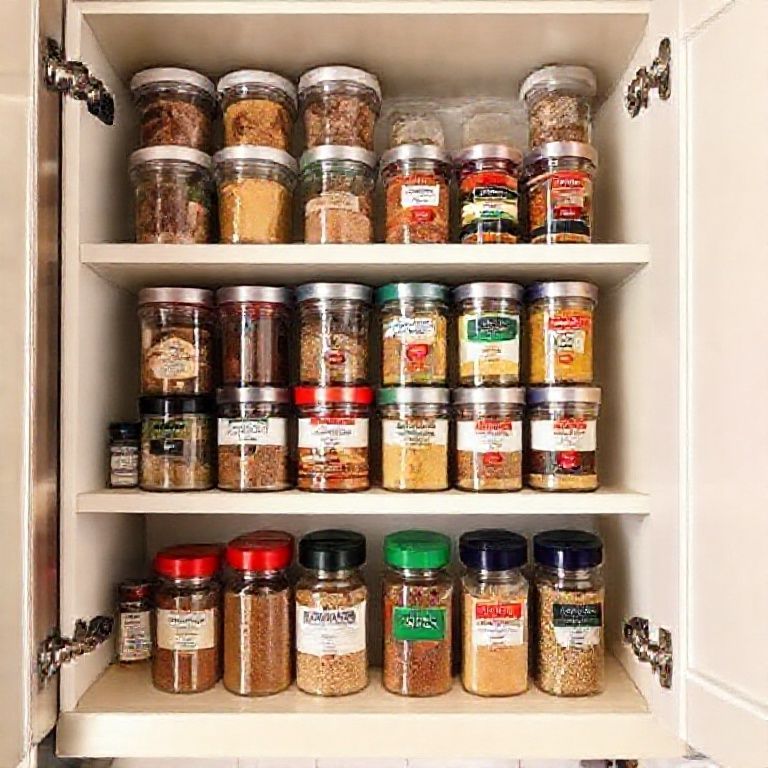
- A spice organizer with pull-out trays
4. The ‘Too-Tall’ Upper Cabinets
If you can’t reach the top shelf without a step stool, you’re wasting space. Solutions:
- Add a library-style rolling ladder (yes, really, it’s oddly satisfying).
- Replace the top shelves with glass-front cabinets for items you rarely use (fine china, special occasion serveware).
- Or, if you’re brave-remove the upper cabinets entirely and replace them with open shelving or a pegboard wall.
5. The ‘Under-Sink Wasteland’
The space under your sink is probably a tangled mess of cleaning supplies and trash bags. Upgrade it with:
- A two-tier pull-out organizer (one level for sprays, one for sponges/scrubbers)
- A slim trash can that fits beside the pipes (freeing up floor space)
- A hook system on the inside of the cabinet door for hanging spray bottles
2025 Kitchen Layout Trends: What’s Worth Stealing (And What to Skip)
I combed through this year’s Kitchen & Bath Industry Show (KBIS) and talked to designers about what’s actually functional vs. what’s just Instagram bait. Here’s the breakdown:
Trends Worth Stealing:
1. The ‘Prep Kitchen’ Revival
High-end homes are bringing back the separate prep kitchen (a smaller, secondary kitchen for messy work). But you don’t need a mansion to steal this idea: Carve out a ‘prep zone’ in your pantry or laundry room with a countertop, sink, and mini-fridge. Use it for:
- Messy tasks (peeling shrimp, rolling dough)
- Appliance storage (stand mixer, food processor)
- Pet feeding stations (keep Fido’s bowls out of the main kitchen)
2. ‘Furniture-Style’ Kitchens
Instead of built-in cabinets, designers are using freestanding furniture pieces (like armoires, sideboards, and bookshelves) for storage. Why it works:
- You can rearrange as needed (no permanent commitment).
- It adds warmth to modern kitchens (no more sterile, all-white boxes).
- Great for renters who can’t modify cabinets.
Try it: Swap out a lower cabinet for a vintage dresser (add a butcher block top for a prep surface).
3. ‘Hidden’ Appliances
Not the fancy panel-ready fridges (though those are nice). I’m talking about appliances that disappear when not in use:
- Pop-up outlets in counters (no more cluttered backsplashes)
- Retractable range hoods (like those from Faber)
- Slide-away prep tables (tuck under counters when not needed)
4. ‘Zone Lighting’
Instead of one overhead light, designers are layering:
- Task lighting (under-cabinet LEDs for prep)
- Ambient lighting (pendants, sconces for mood)
- Accent lighting (inside glass cabinets to showcase dishes)
Pro tip: Add a motion-sensor light inside your pantry. No more fumbling for the switch with arms full of groceries.
Trends to Skip (Unless You’re a Millionaire or a Masochist):
1. ‘Floating’ Islands
Those islands that look like they’re suspended from the ceiling? Cool in photos, terrifying in real life. Where do you hide the trash can? How do you run electricity for appliances? And what happens when your kid tries to hang from it?
2. All-Open Shelving
It looks great in a staged photo, but in reality, it’s a dust magnet and visual clutter nightmare. If you love the look, try this instead:
- Use open shelving for dishes you use daily (so they stay clean).
- Keep upper cabinets for less attractive items (Tupperware, random mugs).
- Add glass-front cabinets for a compromise, you see inside, but dust stays out.
3. ‘Smart’ Everything
Do you reallyeed a fridge with a touchscreen that streams TikTok? Unless you’re running a commercial kitchen, most ‘smart’ appliances are overkill. Focus on:
- A good induction cooktop (precise, easy to clean)
- A smart scale (for baking)
- A voice-controlled faucet (useful when your hands are messy)
4. Overly Custom Cabinets
Those $20,000 custom cabinet systems look amazing, until you realize you can’t adjust the shelves or replace a broken drawer. Better approach: Invest in high-quality semi-custom cabinets (like Cabinets To Go or IKEA’s SEKTION system) that offer flexibility without the insane price tag.
How to Test Your Layout Before Committing (Without Spending a Dime)
Before you demo a single cabinet, simulate your layout with these tricks:
1. The ‘Cardboard Box’ Method
Grab some large cardboard boxes and tape them together to mimic your proposed cabinet sizes. Arrange them in your space and live with them for a week. You’ll quickly notice:
- Where you bump into things
- Which ‘zones’ feel too far apart
- Where you’re missing landing space
2. The ‘Painter’s Tape’ Trick
Use painter’s tape to outline:
- Appliance placement (mark where doors will open)
- Island or peninsula dimensions
- Walkway clearances (make sure you have 3-4 feet between counters)
Walk through your ‘tape kitchen’ with a pot of water (to simulate carrying something heavy) and see where you hit snags.
3. The ‘Dinner Party Drill’
Host a dinner party in your current kitchen and take notes on:
- Where guests congregate (do they block the fridge?)
- What tasks create bottlenecks (is everyone fighting for the sink?)
- What you wish you had more of (prep space? Trash cans?)
4. The ‘Appliance Audit’
For one week, track every appliance you use and where you use it. Example:
- Toaster: Used daily, but stored in a high cabinet (annoying)
- Stand mixer: Used once, but takes up prime counter space (guilty)
- Air fryer: Used 3x, but no dedicated spot (ends up on the floor)
This will show you where to prioritize accessibility in your new layout.
The One Question No One Asks (But Should)
Here’s the question that changes everything: “What do I want to feel when I’m in this kitchen?”
Not “What do I want it to look like?” or “What will impress my neighbors?” but how do you want to feel when you’re making coffee at 6 a.m., or chopping onions at midnight, or hosting Thanksgiving for 15 people?
For me, the answer was: “I want to feel capable.” I don’t need a kitchen that looks like a magazine spread; I need one where I can move without thinking, where everything has a home, and where I’m not constantly fighting the space. That meant:
- Prioritizing landing spaceext to the stove (so I’m not juggling hot pans)
- Adding a second trash can under the sink (one for recycling, one for compost)
- Putting the microwave at counter height (so I don’t burn myself reaching up)
- Installing outlets inside cabinets (to hide small appliances but keep them plugged in)
Your answer might be different. Maybe you want to feel “inspired” (open shelves, natural light, a view of the garden). Or “connected” (an island facing the living room so you can chat while cooking). Or “efficient” (a galley layout with everything within arm’s reach).
Once you know the feeling you’re after, the layout choices become much clearer.
FAQ: Your Burning Kitchen Layout Questions, Answered
Q: I have a tiny kitchen (less than 100 sq ft). Is there any layout that actually works?
A: Yes! The galley or one-wall layout is your best bet. Steal space with:
- A fold-down table (mounts to the wall when not in use)
- A rolling cart (for extra prep space or storage)
- Wall-mounted everything (magnetic knife strips, pegboards for pots)
- A slim dishwasher drawer (18 inches wide instead of 24)
And embrace the ‘European’ fridge-they’re narrower (24 inches vs. the standard 36) and taller, freeing up floor space.
Q: I love entertaining. What layout will make my kitchen the ‘party hub’?
A: Go for an L-shaped or island layout with these tweaks:
- Add a beverage station (fridge drawer + wine rack + glass storage) on the ‘social’ side of the island.
- Include seating for at least 3-4 people at the island (with legroom!).
- Put the sink on the island (so you can chat while cleaning).
- Install dimmable lighting to shift from ‘cooking mode’ to ‘party mode.’
Bonus: Add a second dishwasher (even a compact one) so you’re not stuck washing glasses all night.
Q: I’m left-handed. Do I need to flip the standard kitchen layout?
A: Not necessarily, but you should adjust these key elements:
- Prep zone: Should be to the right of your stove (so you can grab and pivot naturally).
- Sink placement: If possible, put it to the left of the stove (so you’re not reaching across your body).
- Cabinet doors: Opt for pull-out drawers instead of doors where possible (easier to access from either side).
- Appliance handles: Choose centered or left-sided handles for fridges and ovens.
And if you’re sharing the kitchen with a righty, consider a symmetrical layout (like a galley) where both sides are mirror images.
Q: I’m renting and can’t renovate. How can I improve my kitchen layout without permanent changes?
A: You’d be surprised how much you can do with o structural changes:
- Add a rolling island (Ikea’s Kitchen Cart or a DIY one with a butcher block top).
- Use tension rods inside cabinets to create extra shelves.
- Hang a pegboard (like IKEA’s SKÅDIS) for vertical storage.
- Swap out cabinet doors for curtains (cheap, removable, and adds color).
- Use a foldable table (like IKEA’s NORDEN) against a wall for extra prep space.
- Add battery-powered under-cabinet lights (no wiring needed).
- Rearrange your fridge: Move rarely used items to the top, and keep daily essentials at eye level.
Even small changes, like moving your trash can to where you actually use it most, can make a huge difference.
Final Thought: Your Kitchen Should Work for You, Not the Other Way Around
Here’s the thing no one tells you: There’s no such thing as a ‘perfect’ kitchen layout. There’s only the layout that makes your life easier, based on how you cook, live, and move through the world. The best kitchens aren’t the ones that look the most impressive, they’re the ones that disappear when you’re using them. You shouldn’t have to think about where the spatula is or how to avoid burning yourself on the oven door. It should just… work.
So before you commit to a layout, ask yourself:
- Where do I naturally stand when I cook?
- What’s the most annoying thing about my current kitchen?
- What’s one task I wish were easier? (Unloading groceries? Washing dishes? Finding the right lid?)
- How do I want to feel in this space?
And remember: You can always tweak it later. My current kitchen has a ‘floating’ shelf that I added six months after moving in because I realized I needed a spot for my coffee station. The first iteration of your kitchen doesn’t have to be the last.
Now, go measure your space. Play with painter’s tape. Host a dinner party and watch where things go wrong. And for the love of all that is holy, don’t put your fridge next to your stove-unless you enjoy sweating every time you open both doors in summer.
And if you end up with a kitchen you love? Send me a photo. I’ll be over here, still trying to figure out where to put my air fryer.
@article{choosing-the-right-kitchen-layout-a-no-nonsense-guide-for-real-world-cooks-2025-edition,
    title   = {Choosing the Right Kitchen Layout: A No-Nonsense Guide for Real-World Cooks (2025 Edition)},
    author  = {Chef's icon},
    year    = {2025},
    journal = {Chef's Icon},
    url     = {https://chefsicon.com/choosing-the-right-kitchen-layout-guide/}
}