The Best Fluffy Pancakes recipe you will fall in love with. Full of tips and tricks to help you make the best pancakes.
The Ultimate Commercial Kitchen Knife Maintenance Guide for Restaurants
Let me tell you something, I learned the hard way about knife maintenance. Early in my career, I worked a brutal Saturday night shift at a high-volume restaurant in the Bay Area. The kitchen was a warzone: tickets flying, burners roaring, and my hands moving faster than my brain. Then, disaster struck. My favorite 8-inch chef’s knife, the one I’d used for years, slipped while I was breaking down a case of chicken thighs. Not only did it ruin the cut, but the blade chipped, badly. The executive chef, a man of few words, just looked at me, shook his head, and said, “You let that happen. Now you’re on potato duty for a week.” That was the moment I realized: knife maintenance isn’t just about sharpness, it’s about respect, efficiency, and survival in a commercial kitchen.
Fast forward to today, and I’ve spent years talking to chefs, knife makers, and kitchen managers about what really works when it comes to keeping blades in top shape. I’ve seen restaurants where knives last a decade and others where they’re dull within months. The difference? A mix of knowledge, discipline, and a little bit of obsession. This guide isn’t just about sharpening, it’s about understanding the lifecycle of a knife in a professional kitchen, from the moment it’s unboxed to the day it’s retired. You’ll learn how to choose the right tools, train your staff, and build a maintenance routine that actually sticks. Because let’s be honest: in a busy restaurant, the last thing anyone wants to think about is knife care. But if you ignore it, you’re not just risking dull blades, you’re risking safety, consistency, and your bottom line.
So, whether you’re a line cook who’s tired of struggling with a dull edge, a kitchen manager trying to extend the life of your equipment, or an owner looking to cut costs (pun intended), this guide is for you. We’ll cover everything from the science of steel to the psychology of staff training. And don’t worry, I’ll keep it real. No fluff, no jargon, just practical advice you can use tonight. Ready? Let’s dive in.
Why Knife Maintenance Matters More Than You Think
The Hidden Costs of Neglect
I’ll be honest: when I first started in kitchens, I thought knife maintenance was overrated. Why waste time sharpening when you could just buy a new knife? But then I did the math. Let’s say a mid-range commercial chef’s knife costs $80. If you replace it every six months because it’s dull or damaged, that’s $160 a year. Multiply that by 20 knives in a kitchen, and you’re looking at $3,200 annually. And that’s just the cost of the knives, it doesn’t include the lost productivity, the increased risk of injuries, or the inconsistent cuts that can ruin a dish. Dull knives are a silent budget killer.
But the financial cost is just the beginning. Dull knives force cooks to use more force, which increases the risk of slips and injuries. I’ve seen more than one chef slice their hand open because a blade didn’t bite into the food the way it should. And let’s not forget the impact on food quality. A dull knife crushes rather than cuts, bruising herbs, tearing meat, and making precise work nearly impossible. Ever tried to julienne a carrot with a dull knife? It’s like trying to write with a crayon, frustrating and messy.
There’s also the psychological toll. Working with dull knives is demoralizing. It slows you down, makes you second-guess your skills, and turns even simple tasks into a struggle. I remember a sous chef at a restaurant I worked at who refused to sharpen his knives. He’d complain every shift about how nothing worked, how the food wasn’t coming out right, how the kitchen was against him. It wasn’t until the executive chef forced him to sharpen his knives that he realized the problem wasn’t the kitchen, it was his tools. The change was immediate. His cuts were cleaner, his prep was faster, and his attitude improved. Sharp knives don’t just cut better, they make you a better cook.
The Science of Sharpness
So, what exactly makes a knife sharp? It’s not just about the edge, it’s about the steel, the angle, and the way the blade interacts with food. Most commercial knives are made from high-carbon stainless steel, which is a balance of hardness and durability. Harder steels hold an edge longer but can be more brittle, while softer steels are tougher but require more frequent sharpening. The key to sharpness is the edge geometry. A sharp knife has a thin, precise edge that tapers to a fine point. When you cut, that edge slices through food with minimal resistance, like a hot knife through butter.
But here’s the thing: sharpness isn’t permanent. Every time you use a knife, the edge degrades. Tiny bits of metal wear away, the edge rolls over, and microscopic nicks form. This is why maintenance isn’t just about sharpening, it’s about edge retention. The goal is to keep the edge as close to its original geometry as possible for as long as possible. That means regular honing, proper storage, and knowing when to sharpen versus when to hone.
I’ll admit, I used to think honing and sharpening were the same thing. It wasn’t until I spent an afternoon with a master bladesmith that I understood the difference. Honing realigns the edge, keeping it straight and true. Sharpening, on the other hand, removes metal to create a new edge. Think of it like this: honing is like straightening a bent nail, while sharpening is like filing it down to a point. Both are essential, but they serve different purposes. And if you’re not doing both, you’re not maintaining your knives properly.
Choosing the Right Knives for Your Kitchen
Understanding Knife Types and Their Uses
Not all knives are created equal, and not every knife is right for every task. In a commercial kitchen, you need a mix of specialized blades to handle everything from breaking down whole fish to mincing garlic. Here’s a quick breakdown of the essentials:
- Chef’s Knife (8-10 inches): The workhorse of the kitchen. Use it for chopping, slicing, and dicing vegetables, herbs, and proteins. This is the knife you’ll reach for 80% of the time.
- Paring Knife (3-4 inches): For precision work like peeling, trimming, and detailed cuts. Think of it as the scalpel of the kitchen.
- Boning Knife (5-7 inches): Designed to separate meat from bone. A flexible blade is great for fish, while a stiff blade is better for poultry and pork.
- Slicing Knife (10-14 inches): Long, thin blade for slicing large cuts of meat like brisket or ham. The length ensures smooth, even cuts.
- Santoku Knife (5-7 inches): A Japanese-style knife with a flatter blade and granton edge (those little dimples) to reduce sticking. Great for slicing, dicing, and mincing.
- Cleaver (6-8 inches): Heavy, rectangular blade for chopping through bones and tough vegetables. Not for the faint of heart.
But here’s the thing: you don’t need every knife under the sun. In fact, too many knives can be overwhelming and lead to poor maintenance. I’ve seen kitchens with drawers full of specialty blades that no one uses because they’re too niche. The key is to invest in a few high-quality knives that cover 90% of your needs. For most restaurants, that means a chef’s knife, a paring knife, a boning knife, and a slicing knife. Everything else is optional.
Steel Matters: What to Look for in a Commercial Knife
When it comes to steel, there’s a lot of debate. Some chefs swear by high-carbon steel, while others prefer stainless. Some want the hardest steel possible, while others prioritize toughness. So, what’s the right choice? It depends on your kitchen’s needs.
Here’s a quick primer on knife steel:
- High-Carbon Stainless Steel: The most common choice for commercial knives. It’s durable, holds an edge well, and resists corrosion. Brands like Wüsthof and Shun use this type of steel.
- High-Carbon Steel: Harder and sharper than stainless, but prone to rust if not cared for properly. Popular among professional chefs who want the best edge retention. Think of brands like Global or Masamoto.
- Damascus Steel: A layered steel with a beautiful pattern, often used for high-end knives. It’s more about aesthetics than performance, but it can be incredibly sharp.
- Ceramic: Super sharp and lightweight, but brittle. Not ideal for commercial kitchens where knives take a beating.
So, which should you choose? For most restaurants, high-carbon stainless steel is the best balance of sharpness, durability, and ease of maintenance. It’s tough enough to handle the rigors of a commercial kitchen but forgiving enough that you don’t have to baby it. High-carbon steel is great if you have a dedicated maintenance routine, but it’s not ideal for high-volume kitchens where knives might sit wet or dirty for hours.
I’ll never forget the first time I used a high-carbon steel knife. It was like cutting through air, so sharp, so precise. But then I left it in the sink overnight. By morning, it was covered in rust. That’s when I learned that sharpness comes with responsibility. If you’re not willing to put in the effort to maintain a high-carbon steel knife, stick with stainless.
The Daily Grind: Routine Knife Maintenance
Honing vs. Sharpening: What’s the Difference?
Let’s clear up a common misconception: honing and sharpening are not the same thing. Honing is like giving your knife a tune-up, while sharpening is like rebuilding the engine. Honing realigns the edge, keeping it straight and true. Sharpening, on the other hand, removes metal to create a new edge. Both are essential, but they serve different purposes.
Here’s how to hone properly:
- Hold the honing steel vertically, with the tip resting on a stable surface like a cutting board.
- Place the heel of the knife against the steel at a 15-20 degree angle. This is the most common angle for Western-style knives. Japanese knives often use a 10-15 degree angle.
- With light pressure, draw the knife down the steel, pulling it toward you as you move from heel to tip. Imagine you’re trying to slice a thin layer off the steel.
- Repeat on the other side of the blade. Do this 5-10 times per side, alternating sides each time.
- Test the edge by slicing a piece of paper. If it cuts cleanly, you’re good to go. If not, repeat the process or consider sharpening.
Sharpening is a bit more involved. You can use a whetstone, an electric sharpener, or a professional service. I’ll dive into the details of sharpening later, but for now, just remember: honing is for maintenance, sharpening is for restoration. You should hone your knives daily (or even between tasks) and sharpen them every few weeks or months, depending on use.
I’ll admit, I used to skip honing. I thought it was a waste of time, until I saw a chef at a sushi bar hone his knife between every single cut. At first, I thought he was being dramatic. But then I realized: he never struggled. His cuts were effortless, his edges were razor-sharp, and his knives lasted years. That’s when I understood that honing isn’t a chore, it’s a habit.
Cleaning and Sanitizing: The Often-Overlooked Step
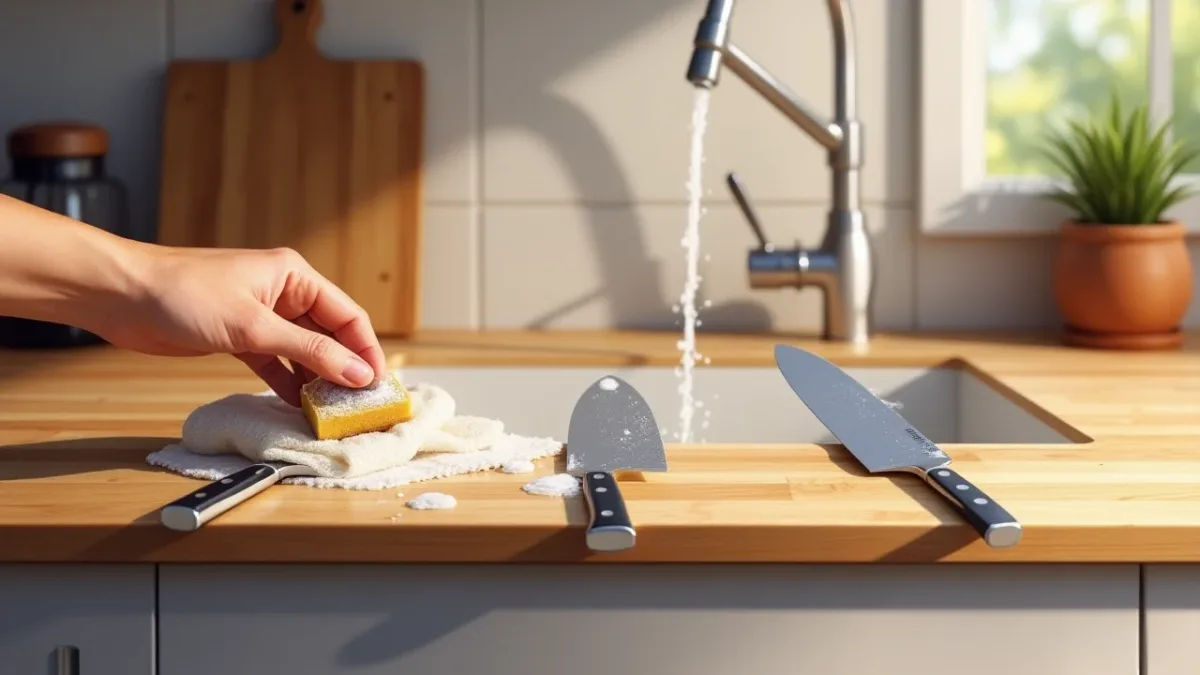
Cleaning your knives might seem like a no-brainer, but you’d be surprised how many kitchens get this wrong. Never, ever leave knives soaking in water. This is the fastest way to ruin a blade. Water causes rust, and prolonged exposure can weaken the steel. Instead, wash knives immediately after use with warm, soapy water and a soft sponge. Avoid abrasive pads or steel wool, they’ll scratch the blade and dull the edge.
Sanitizing is just as important, especially in a commercial kitchen where food safety is paramount. After washing, sanitize your knives with a food-safe solution. You can use a commercial sanitizer or a mixture of water and bleach (1 tablespoon of bleach per gallon of water). Soak the knife for at least 30 seconds, then rinse and dry thoroughly. Never put knives in the dishwasher. The high heat and harsh detergents will damage the blade and handle.
Drying is the final step, and it’s one that’s often rushed. After washing and sanitizing, dry your knives immediately with a clean towel. Don’t let them air-dry, water spots can lead to rust. And if you’re storing knives in a drawer, make sure they’re completely dry first. I’ve seen too many knives ruined by moisture trapped in a drawer overnight.
Here’s a pro tip: keep a dedicated knife towel in your station. Use it to wipe down your knives between tasks, especially if you’re switching between proteins and vegetables. This prevents cross-contamination and keeps your blades clean and dry. It’s a small habit, but it makes a big difference.
Sharpening Like a Pro: Tools and Techniques
Whetstones: The Gold Standard for Sharpening
If you want to sharpen knives like a pro, you need a whetstone. Also known as a sharpening stone, a whetstone is a rectangular block of abrasive material that you use to grind away metal and create a new edge. Whetstones come in different grits, which determine how coarse or fine the abrasive surface is. The lower the grit number, the coarser the stone. Here’s a quick guide to grits:
- Coarse (200-400 grit): For repairing damaged edges or reshaping a blade. Use this if your knife has nicks or a rolled edge.
- Medium (800-1000 grit): For regular sharpening. This is the grit you’ll use most often to maintain a sharp edge.
- Fine (3000-8000 grit): For polishing and refining the edge. Use this after sharpening to remove burrs and create a razor-sharp finish.
Sharpening with a whetstone takes practice, but it’s the best way to get a professional-quality edge. Here’s how to do it:
- Soak the stone in water for 10-15 minutes before use. This prevents the blade from dragging and helps remove metal particles.
- Place the stone on a damp towel or non-slip mat to keep it stable.
- Hold the knife at a 15-20 degree angle (or 10-15 degrees for Japanese knives) and draw the blade across the stone, starting at the heel and ending at the tip. Apply even pressure and keep the angle consistent.
- Repeat on the other side of the blade. Do this 10-15 times per side, alternating sides each time.
- Switch to a finer grit stone and repeat the process to polish the edge.
- Test the edge by slicing a piece of paper. If it cuts cleanly, you’re done. If not, repeat the process.
I’ll be honest: the first time I used a whetstone, I messed up. I didn’t soak the stone long enough, and the blade kept sticking. I didn’t maintain a consistent angle, and the edge came out uneven. It took me a few tries to get it right, but once I did, I never looked back. Sharpening with a whetstone is a skill, and like any skill, it takes practice. Don’t get discouraged if your first few attempts aren’t perfect. Keep at it, and you’ll get the hang of it.
Electric Sharpeners: The Quick Fix
If you don’t have the time or patience for a whetstone, an electric sharpener is a good alternative. Electric sharpeners use rotating abrasive wheels to grind away metal and create a new edge. They’re fast, easy to use, and consistent, but they’re not without drawbacks.
The biggest advantage of electric sharpeners is speed. You can sharpen a knife in minutes, which is great for busy kitchens where downtime is limited. They’re also foolproof, just run the blade through the slots, and the machine does the work for you. But here’s the catch: electric sharpeners remove more metal than necessary. This means your knives will wear out faster if you use them too often. They’re also not as precise as a whetstone, so you won’t get the same level of sharpness.
If you’re going to use an electric sharpener, choose one with multiple stages. Look for a model with a coarse slot for repairing damaged edges, a medium slot for regular sharpening, and a fine slot for polishing. Some high-end models even have a honing slot to realign the edge between sharpenings. Chef’sChoice is a popular brand for commercial kitchens.
Here’s how to use an electric sharpener:
- Plug in the sharpener and turn it on.
- Hold the knife by the handle and place the blade in the first slot (usually the coarse slot).
- Pull the knife through the slot from heel to tip, applying light pressure. Repeat 2-3 times.
- Move to the next slot (medium) and repeat the process.
- Finish with the fine slot to polish the edge.
- Test the edge by slicing a piece of paper. If it cuts cleanly, you’re done.
I’ll admit, I was skeptical of electric sharpeners at first. I thought they were a shortcut for lazy cooks. But then I worked in a kitchen where we had to sharpen 20 knives before every shift. There was no way we could do that with a whetstone, we needed speed. That’s when I realized that electric sharpeners have their place. They’re not a replacement for a whetstone, but they’re a great tool for busy kitchens where time is limited.
Storage Solutions: Protecting Your Investment
Magnetic Strips vs. Knife Blocks vs. Sheaths
How you store your knives is just as important as how you use and maintain them. Poor storage is one of the biggest causes of knife damage. Knives banging around in a drawer will dull the edges, chip the blades, and scratch the handles. So, what’s the best way to store them?
Here are your options:
- Magnetic Strips: Mounted on the wall, magnetic strips keep knives visible, accessible, and safe. They’re great for small kitchens where counter space is limited. Just make sure the strip is strong enough to hold your knives securely. The downside? If the strip isn’t mounted properly, knives can fall and get damaged.
- Knife Blocks: Wooden blocks with slots for each knife. They’re stable, protective, and keep knives organized. But they take up counter space, and if the slots are too tight, they can dull the blades. Look for blocks with wide slots or magnetic inserts to minimize contact with the blade.
- Sheaths or Guards: Plastic or leather covers that protect the blade. Sheaths are great for transporting knives or storing them in a drawer. Just make sure the sheath fits the knife properly, too loose, and the blade can move around and get damaged; too tight, and it can scratch the blade.
- Drawer Inserts: Wooden or plastic trays with slots for knives. They keep knives organized and protected, but they take up drawer space. Look for inserts with non-slip surfaces to prevent knives from moving around.
So, which is best? It depends on your kitchen. For most commercial kitchens, magnetic strips are the way to go. They’re space-efficient, keep knives visible and accessible, and protect the blades from damage. Just make sure the strip is mounted securely and at a height where knives won’t fall or get bumped.
I’ve seen kitchens where knives are stored in every possible way. One restaurant I worked at had a beautiful wooden block on the counter, but the slots were so tight that the knives were always dull. Another had a magnetic strip, but it was mounted too high, and knives would fall off if you weren’t careful. The key is to choose a storage solution that fits your kitchen’s workflow and protects your knives.
Traveling with Knives: What You Need to Know
If you’re a chef who travels with your knives, whether for catering gigs, pop-ups, or competitions, you need to know how to transport them safely. Never toss your knives in a bag with other tools. The blades will get damaged, and you risk injuring yourself when you reach in. Instead, use a dedicated knife roll or case.
Here’s what to look for in a knife roll:
- Padding: The roll should have thick, protective padding to prevent blades from knocking against each other.
- Individual Slots: Each knife should have its own slot to keep it separate from the others.
- Secure Closure: Look for a roll with a sturdy zipper or buckle to keep knives in place.
- Durability: The roll should be made from tough, water-resistant material like nylon or canvas.
When packing your knives, make sure the blades are covered with sheaths or guards. This protects the edges and prevents accidents. If you don’t have sheaths, wrap the blades in a thick towel or cloth. And always pack the roll in a sturdy bag or case to protect it from bumps and drops.
I’ll never forget the time I saw a chef pull his knife roll out of his bag, only to have a 10-inch chef’s knife fall out and clatter to the floor. The blade chipped, and the handle cracked. He was lucky he didn’t cut himself. Traveling with knives is a responsibility, treat it like one.
Training Your Staff: Building a Culture of Knife Care
Why Most Knife Maintenance Programs Fail
Let’s be real: most knife maintenance programs fail because they’re treated like an afterthought. Managers hand out a few whetstones, show staff how to hone, and call it a day. But here’s the problem: knife maintenance isn’t just a skill, it’s a habit. And habits don’t form overnight. They require repetition, reinforcement, and a culture that values them.
I’ve seen it happen time and time again. A kitchen implements a new knife maintenance program, everyone gets excited, and for a week or two, the knives are sharp and well-cared for. Then, slowly but surely, old habits creep back in. Knives get left in sinks, honing is skipped, and before you know it, the program is forgotten. The key to success is making knife maintenance a part of your kitchen’s DNA.
So, how do you do that? It starts with leadership. If the head chef or kitchen manager doesn’t prioritize knife maintenance, neither will the staff. You need to lead by example. Hone your knives in front of your team. Sharpen them regularly. Talk about why it matters. Make it clear that knife care is non-negotiable.
But leadership alone isn’t enough. You also need to make maintenance easy and accessible. Keep honing steels and sharpening tools in visible, convenient locations. Post reminders and instructions near prep stations. And most importantly, hold your team accountable. If someone consistently neglects their knives, address it. If someone does a great job, praise them. Make it clear that knife maintenance is part of the job, not an optional extra.
Creating a Knife Maintenance Checklist
A checklist is one of the simplest and most effective ways to ensure knife maintenance becomes a habit. It’s a visual reminder of what needs to be done and when. Here’s a sample checklist you can adapt for your kitchen:
- Daily:
- Hone knives before each shift.
- Wash and dry knives immediately after use.
- Sanitize knives after washing.
- Store knives properly (magnetic strip, block, or sheath).
- Weekly:
- Inspect knives for damage (nicks, chips, rust).
- Sharpen knives as needed (using a whetstone or electric sharpener).
- Oil wooden handles to prevent cracking.
- Monthly:
- Deep clean knives (remove any built-up grime or rust).
- Check storage solutions for wear and tear.
- Train new staff on knife maintenance procedures.
Post this checklist in a visible location, like near the prep station or by the dishwashing area. Review it with your team regularly, and make sure everyone understands their responsibilities. A checklist isn’t just a piece of paper, it’s a tool for building habits.
I’ll admit, I used to think checklists were overkill. Why waste time writing things down when you could just do them? But then I worked in a kitchen where the head chef insisted on daily checklists for everything, knife maintenance, equipment checks, even opening and closing procedures. At first, it felt like micromanaging. But over time, I realized how much it helped. The checklist kept us organized, reduced mistakes, and made sure nothing fell through the cracks. That’s when I understood that checklists aren’t about control, they’re about consistency.
Troubleshooting Common Knife Problems
Dealing with Rust and Corrosion
Rust is the enemy of any knife, but it’s especially problematic in commercial kitchens where knives are exposed to moisture, acids, and salts. Rust forms when iron in the steel reacts with oxygen and water. It starts as small, reddish-brown spots and can spread quickly if not addressed. The good news? Rust is preventable and treatable.
Preventing rust starts with proper cleaning and drying. Always wash knives immediately after use, and dry them thoroughly with a clean towel. Avoid leaving knives in water or damp environments, and never put them in the dishwasher. If you’re working with acidic ingredients like citrus or tomatoes, rinse the knife immediately afterward to remove any residue.
If rust does appear, don’t panic. Here’s how to remove it:
- Mix a paste of baking soda and water. Apply it to the rusted area and let it sit for 10-15 minutes.
- Scrub the area gently with a soft sponge or cloth. Avoid abrasive pads, they’ll scratch the blade.
- Rinse the knife and dry it thoroughly.
- If the rust is stubborn, try using a rust eraser or a commercial rust remover. Follow the manufacturer’s instructions.
- After removing the rust, apply a thin layer of mineral oil to the blade to protect it from future corrosion.
I’ll never forget the first time I saw a knife covered in rust. It was a beautiful high-carbon steel blade, and the rust had spread like a virus. I thought it was ruined, but a quick Google search led me to the baking soda trick. Within minutes, the rust was gone, and the knife looked almost new. That’s when I learned that rust isn’t the end of the world, it’s just a sign that you need to step up your maintenance game.
Fixing Chips and Nicks
Chips and nicks are the bane of any chef’s existence. They ruin the edge, make cutting difficult, and can even be dangerous. Chips occur when a knife hits something hard, like bone or a cutting board. Nicks are smaller and often caused by improper use or storage. The good news? Both can be fixed with the right tools and techniques.
Here’s how to fix a chipped or nicked blade:
- Start with a coarse whetstone (200-400 grit). Soak the stone in water for 10-15 minutes before use.
- Place the knife on the stone at a 15-20 degree angle. Focus on the area around the chip or nick.
- Draw the knife across the stone, applying even pressure. Work slowly and carefully, removing metal until the chip or nick is gone.
- Switch to a medium grit stone (800-1000 grit) and repeat the process to refine the edge.
- Finish with a fine grit stone (3000-8000 grit) to polish the edge.
- Test the edge by slicing a piece of paper. If it cuts cleanly, you’re done.
Fixing chips and nicks takes time and patience. It’s not something you can rush, and it’s easy to make mistakes if you’re not careful. If you’re not confident in your sharpening skills, take the knife to a professional. It’s better to pay for a repair than to ruin a blade.
I’ll admit, I’ve made my fair share of mistakes when fixing chips. The first time I tried, I removed too much metal and ended up with a blade that was uneven and dull. It took me a few tries to get it right, but once I did, I realized how satisfying it is to restore a damaged knife. There’s something almost therapeutic about taking a blade that’s been through the wars and bringing it back to life. Fixing a chip isn’t just about repairing a knife, it’s about respecting the tool.
When to Retire a Knife: Knowing the Signs
How Long Should a Commercial Knife Last?
This is a question I get a lot: how long should a commercial knife last? The answer depends on a few factors, including the quality of the knife, how often it’s used, and how well it’s maintained. A high-quality commercial knife that’s properly cared for can last 10 years or more. A cheap knife that’s neglected might only last a few months.
But here’s the thing: knives don’t last forever. Even with the best maintenance, they’ll eventually wear out. The blade will thin out, the edge will become too difficult to sharpen, and the handle will start to crack. When that happens, it’s time to retire the knife.
So, how do you know when it’s time? Here are a few signs:
- The blade is too thin: Over time, sharpening removes metal from the blade. If the blade becomes too thin, it can bend or break during use.
- The edge won’t hold: If you sharpen a knife and the edge dulls within a few hours, it’s a sign that the steel has worn out.
- The handle is damaged: Cracked or loose handles are a safety hazard. If the handle can’t be repaired, it’s time to retire the knife.
- The blade is warped: A warped blade can’t be sharpened properly and will make cutting difficult.
- The knife is unsafe: If a knife is chipped, bent, or otherwise damaged to the point where it’s dangerous to use, it’s time to let it go.
I’ll be honest: retiring a knife is hard. Knives become like old friends, they’ve been with you through countless shifts, helped you create dishes you’re proud of, and seen you at your best and worst. But holding onto a knife that’s past its prime isn’t sentimental, it’s reckless. A dull or damaged knife is a liability, and it’s not worth the risk.
What to Do with Old Knives
So, what do you do with a knife that’s reached the end of its life? You have a few options:
- Recycle: Many cities have metal recycling programs that accept knives. Check with your local recycling center to see if they’ll take them.
- Repurpose: Old knives can be turned into art, garden tools, or even jewelry. Get creative!
- Donate: Some organizations accept old knives for training programs or community kitchens. Just make sure the knives are safe to use.
- Dispose: If a knife is too damaged to be used or recycled, wrap it in cardboard or bubble wrap and dispose of it safely. Never throw a knife in the trash without protecting the blade, it’s a hazard for sanitation workers.
I’ll never forget the first knife I had to retire. It was a 10-inch chef’s knife I’d used for years, and it had seen better days. The blade was thin, the edge was dull, and the handle was cracked. I didn’t want to let it go, but I knew it was time. So, I wrapped it in a towel, said my goodbyes, and recycled it. It was bittersweet, but it felt like the right thing to do. Retiring a knife isn’t the end, it’s a chance to start fresh.
Putting It All Together: A Knife Maintenance Routine That Works
Alright, let’s recap. We’ve covered a lot of ground, why knife maintenance matters, how to choose the right knives, the difference between honing and sharpening, storage solutions, staff training, troubleshooting, and knowing when to retire a knife. Now, it’s time to put it all together into a routine that works for your kitchen.
Here’s a step-by-step guide to building a knife maintenance routine:
- Start with the right tools: Invest in high-quality knives, honing steels, whetstones, and storage solutions. Don’t skimp, good tools make maintenance easier.
- Train your staff: Make sure everyone knows how to hone, sharpen, clean, and store knives properly. Use checklists and hold your team accountable.
- Hone daily: Make honing a habit. Do it before each shift, between tasks, and whenever a knife feels dull.
- Sharpen regularly: Use a whetstone or electric sharpener to sharpen knives every few weeks or months, depending on use. Don’t wait until the knife is completely dull.
- Clean and sanitize: Wash knives immediately after use, sanitize them, and dry them thoroughly. Never leave them in water or damp environments.
- Store properly: Use magnetic strips, knife blocks, or sheaths to protect your knives. Keep them visible, accessible, and safe.
- Inspect regularly: Check knives for damage, rust, or wear. Address issues immediately to prevent further damage.
- Retire when necessary: Know the signs that a knife is past its prime, and don’t hesitate to retire it when the time comes.
This routine might seem like a lot, but it’s not as time-consuming as you think. Once it becomes a habit, it’ll feel like second nature. And the payoff is huge: sharper knives, safer kitchens, better food, and lower costs.
I’ll admit, I used to resist routines. I thought they were restrictive, like a cage that limited my creativity. But then I realized that routines aren’t about restriction, they’re about freedom. When your knives are sharp and well-maintained, you’re free to focus on what really matters: the food. You’re not struggling with dull blades, worrying about injuries, or wasting time on repairs. You’re cooking, creating, and doing what you love.
So, here’s my challenge to you: start small. Pick one part of this routine, honing daily, cleaning properly, or inspecting your knives, and commit to it for a week. See how it feels. I bet you’ll notice a difference. And once you do, you’ll want to keep going. Because knife maintenance isn’t just about the knives, it’s about the craft.
FAQ
Q: How often should I sharpen my commercial kitchen knives?
A: It depends on how often you use them, but a good rule of thumb is to sharpen knives every 2-4 weeks for heavy use, or every 2-3 months for lighter use. If you hone your knives daily, you can stretch the time between sharpenings. The key is to sharpen before the knife becomes completely dull, don’t wait until it’s struggling to cut.
Q: Can I use a honing steel on Japanese knives?
A: Yes, but with caution. Japanese knives are often made from harder steel and have a thinner edge than Western knives. This means they’re more prone to chipping if honed improperly. Use a ceramic honing steel instead of a traditional steel rod, and hone at a 10-15 degree angle. If you’re unsure, consult the manufacturer’s guidelines or take the knife to a professional.
Q: What’s the best way to store knives in a small kitchen with limited space?
A: Magnetic strips are your best friend in a small kitchen. They keep knives visible, accessible, and safe without taking up counter or drawer space. Mount the strip on a wall or the side of a cabinet, and make sure it’s strong enough to hold your knives securely. If you don’t have wall space, consider a knife block with a small footprint or a drawer insert with non-slip padding.
Q: How do I know if my knife is too dull to hone and needs sharpening?
A: The easiest way to test a knife’s sharpness is the paper test. Hold a sheet of paper vertically and try to slice through it with the knife. If the knife cuts cleanly, it’s sharp enough. If it tears or struggles to cut, it’s time to sharpen. Another sign is if the knife feels like it’s crushing rather than slicing food, this means the edge is no longer sharp enough to cut cleanly.
@article{the-ultimate-commercial-kitchen-knife-maintenance-guide-for-restaurants-keep-your-blades-sharp-safe-and-lasting-longer,
    title   = {The Ultimate Commercial Kitchen Knife Maintenance Guide for Restaurants: Keep Your Blades Sharp, Safe, and Lasting Longer},
    author  = {Chef's icon},
    year    = {2026},
    journal = {Chef's Icon},
    url     = {https://chefsicon.com/commercial-kitchen-knife-maintenance-guide-restaurants/}
}