
The Best Fluffy Pancakes recipe you will fall in love with. Full of tips and tricks to help you make the best pancakes.
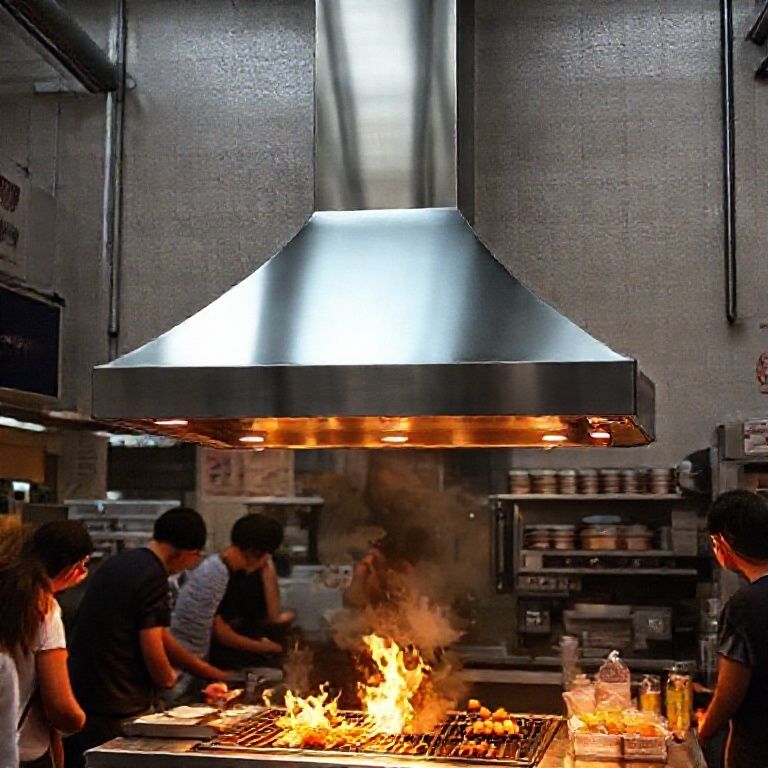
Table of Contents
- 1 Designing Your Commercial Kitchen Exhaust Hood System: What Nobody Tells You (Until It’s Too Late)
- 2 The Unsexy (But Critical) Physics Behind Exhaust Hoods
- 3 Sizing Your Hood: The Goldilocks Problem
- 4 The Fan: The Unsung Hero (or Villain) of Your System
- 5 Makeup Air: The Invisible Partner to Your Exhaust System
- 6 Fire Suppression Systems: Because ‘It Won’t Happen to Me’ Is a Terrible Strategy
- 7 Permits, Codes, and the Bureaucracy You Can’t Ignore
- 8 Energy Efficiency: Because Your Utility Bill Doesn’t Care About Your Profit Margins
- 9 Maintenance: The Thing You’ll Hate (But Can’t Skip)
- 10 Future-Proofing: Because Menus (and Regulations) Change
- 11 Common Mistakes (And How to Avoid Them)
- 12 Putting It All Together: A Step-by-Step Checklist
- 13 Final Thoughts: The Hood as a Metaphor for Your Kitchen
- 14 FAQ
Designing Your Commercial Kitchen Exhaust Hood System: What Nobody Tells You (Until It’s Too Late)
I’ll admit something embarrassing: The first time I walked into a commercial kitchen with a properly designed exhaust hood system, I didn’t even notice it. That’s how good it was. No grease film on the walls, no eye-stinging smoke, no fire marshal threatening to shut the place down. Just… clean air. And that’s the paradox, when it works, you forget it exists. When it doesn’t? You’ll wish you’d paid attention to this article six months ago.
Here’s the thing-designing a commercial kitchen exhaust hood system isn’t just about slapping a stainless steel box over your grill and calling it a day. It’s a high-stakes game of physics, local codes, and the very real threat of your insurance company laughing in your face when your deep fryer turns into a flamethrower. I’ve seen kitchens where the hood was so undersized that the cook line looked like a London fog machine had taken up residence. Others where the CFM was so overkill that the HVAC system couldn’t keep up, and diners needed parkas to eat their salads. Neither scenario ends with a Michelin star.
So let’s break this down. By the end of this, you’ll know:
- How to match your hood to your cooking equipment (spoiler: a wok station is not the same as a pizza oven)
- The hidden costs of cutting corners on ductwork or fans (hint: fire suppression systems don’t pay for themselves)
- Why your local mechanical code isn’t just bureaucracy, it’s the difference between a kitchen that runs smoothly and one that gets shut down
- How to future-proof your system for menu changes, equipment upgrades, or that inevitable pivot to ghost kitchens
And because I’ve been burned (literally, ask me about the time a charbroiler’s flare-up singed my eyebrows), I’ll also share the questions I wish I’d asked before signing off on my first kitchen build-out. Let’s get into it.
The Unsexy (But Critical) Physics Behind Exhaust Hoods
Before we talk sizing or materials, we need to talk about capture and containment. That’s the entire job of your hood: grab the grease, smoke, and heat before it escapes into your kitchen (or your diners’ lungs). The problem? Most people think of hoods as passive devices, just sitting there, doing their thing. Wrong. A good hood is an active participant in your kitchen’s airflow ecosystem.
Here’s the science in plain English:
- Heat rises, but grease particles don’t always play nice. They can linger, cool, and then stick to everything-including your $12,000 ventilation system.
- Airflow matters more than size. A massive hood with weak CFM (cubic feet per minute) is like trying to catch a hurricane with a butterfly net.
- Makeup air is non-negotiable. For every cubic foot of air your hood sucks out, you need to replace it, or your kitchen becomes a vacuum, and your staff starts gasping like they’re on Mount Everest.
I once worked with a chef who insisted on a minimalist hood design for his open-kitchen concept. “I don’t want it to look industrial,” he said. Two weeks after opening, his exposed beams were coated in a glossy layer of grease, and the health inspector handed him a violation longer than his menu. Aesthetics matter, but physics wins every time.
So before you even think about materials or placement, ask:
- What’s the BTU output of my cooking equipment? (A charbroiler pumps out way more heat than a steam table.)
- How much grease-laden vapor will I produce? (Deep fryers = high volume; induction cooktops = almost none.)
- What’s the ceiling height? (Taller ceilings need more powerful systems to pull air upward.)
The Three Types of Hoods (And When to Use Each)
Not all hoods are created equal. Here’s the breakdown:
- Type I Hoods (Grease Extractors): For any equipment that produces grease-laden vapors, grills, fryers, ranges, woks. These are the workhorses. They must have grease filters (usually baffle or mesh) and a fire suppression system. If you’re cooking with oil or fat, this is your only option.
- Type II Hoods (Condensate/Heat Extractors): For equipment like steamers, pasta cookers, or dishwashers. No grease, just moisture and heat. These can often be ducted directly outside without filters.
- Specialty Hoods: Think pizza ovens (high heat, low grease) or charcoal grills (needs extra spark containment). These often require custom solutions.
I’ve seen restaurants try to save money by installing a Type II hood over a fryer. Don’t be that guy. The fire marshal will shut you down faster than you can say “flash point.”
Sizing Your Hood: The Goldilocks Problem
Too small, and your kitchen turns into a sauna. Too large, and you’re wasting energy and money. So how do you find the just-right size?
First, understand that hood sizing isn’t just about the footprint of your cooking equipment. You also need to consider:
- Overhang: The hood should extend at least 6 inches beyond the cooking surface on all sides. For high-output equipment (like a salamander or charbroiler), make it 12 inches.
- Canopy height: The distance between the hood’s bottom edge and the cooking surface. Too high, and it won’t capture effectively; too low, and your chefs will bang their heads. Aim for 6–7 feet for most applications.
- CFM requirements: This is where things get math-y. The general rule is 100–150 CFM per linear foot of hood for light-duty cooking, and 200+ CFM for heavy-duty (like wok cooking or high-volume frying). But this is just a starting point, you’ll need to adjust based on equipment BTUs and local codes.
Here’s a real-world example: A client of mine had a 10-foot hood over a mix of a grill, fryer, and flat-top. The initial quote was for a 1,500 CFM system. But after running the numbers (and accounting for Nashville’s humid summers), we upped it to 2,200 CFM. Overkill? Maybe. But two years later, when they added a second fryer for their new loaded fries menu, they didn’t have to redo the entire system.
Pro tip: If you’re planning to expand your menu or equipment in the next 3–5 years, oversize your hood and ductwork now. Retrofitting is a nightmare.
The Ductwork Dilemma: Straight, Short, and Slope
Your hood is only as good as its ductwork. I’ve seen kitchens with top-tier hoods fail inspections because the ducts were a labyrinth of sharp turns and horizontal runs. Here’s what you need to know:
- Material: Stainless steel is the gold standard (especially for grease ducts). Galvanized steel is cheaper but corroding faster, especially in humid climates. Avoid aluminum unless it’s for a Type II system.
- Slope: Grease ducts must slope downward toward the hood at a minimum of ¼ inch per foot. This prevents grease from pooling and turning your duct into a fire hazard.
- Length and turns: Every elbow or bend reduces airflow efficiency. Aim for the shortest, straightest path to the exhaust fan. If you must turn, use long-radius elbows (not sharp 90-degree bends).
- Access panels: Code requires cleaning access every 12–20 feet (depending on your jurisdiction). Skipping these means you’ll either violate code or pay a fortune for cleaning.
I once inherited a kitchen where the previous owner had run the ductwork through three right-angle turns to avoid “disrupting the dining room aesthetic.” The result? A grease buildup so severe that the fire department made us replace the entire run. Form follows function, people.
The Fan: The Unsung Hero (or Villain) of Your System
Your exhaust fan is the heart of the system. Pick the wrong one, and you’re looking at poor airflow, excessive noise, or a motor that burns out every six months. Here’s how to get it right:
Fan Types and When to Use Them
- Upblast Fans: Mounted on the roof, these are common for single-story buildings. They’re efficient but can be noisy if not properly insulated.
- Inline Fans: Installed within the ductwork, these are quieter and better for multi-story buildings. They’re also easier to service since they’re not on the roof.
- Utility Set Fans: For high-CFM systems (like large hoods over multiple pieces of equipment). These are powerful but require more maintenance.
Belt-drive vs. direct-drive? Belt-drive fans are quieter and easier to repair (you can replace the belt without touching the motor), but direct-drive fans are more efficient and require less maintenance. For most restaurants, I recommend belt-drive for the first 5–10 years, then consider upgrading to direct-drive as part of a major renovation.
CFM vs. Static Pressure: The Battle You Didn’t Know You Were Fighting
Here’s where most people mess up: They pick a fan based on CFM alone, without considering static pressure. Static pressure is the resistance your fan has to overcome, from ductwork, filters, and even the hood itself. A fan that’s rated for 2,000 CFM at 0.1 inches of static pressure might only deliver 1,200 CFM at 0.5 inches.
How to avoid this?
- Work with an engineer to calculate your system’s total static pressure. This includes duct length, turns, filters, and hood design.
- Choose a fan that meets your CFM requirements at your calculated static pressure.
- Add a 10–20% buffer for future changes (like adding a filter or extending ductwork).
I learned this the hard way when a client’s new wood-fired oven added so much resistance that the existing fan couldn’t keep up. We had to install a secondary fan, at triple the cost of doing it right the first time.
Makeup Air: The Invisible Partner to Your Exhaust System
Every time your hood sucks air out of the kitchen, you need to replace it. Otherwise, you create negative pressure, which leads to:
- Doors slamming shut (or refusing to open)
- Drafts that make your dining room feel like a wind tunnel
- Your HVAC system working overtime (and driving up energy bills)
- Carbon monoxide backdrafting from gas appliances (yes, this is as dangerous as it sounds)
There are two main ways to handle makeup air:
- Passive Makeup Air: Relies on gaps under doors or vents to let air in naturally. Cheap, but unreliable, especially in extreme weather.
- Active Makeup Air: Uses a dedicated fan to pull in tempered air (heated or cooled to match your kitchen’s climate). More expensive upfront, but saves on energy costs and keeps your staff from mutinying over the “arctic blast” by the back door.
If you’re in a cold climate (or even somewhere like Nashville, where winters can dip below freezing), active makeup air is non-negotiable. I’ve seen kitchens where the passive system turned the cook line into a meat locker in January. Not exactly conducive to consistent cooking.
Where to Pull Makeup Air From
This is where things get tricky. You can’t just pull air from anywhere, it needs to be:
- Clean: Not from a loading dock or alley where exhaust fumes linger.
- Tempered: Heated or cooled to within 10°F of your kitchen’s target temp.
- Balanced: Distributed evenly so you don’t create dead zones or drafts.
Ideal sources:
- Dedicated outdoor intake (with a filter to keep out bugs and debris)
- Conditioned space adjacent to the kitchen (like a storage room or hallway)
Avoid pulling from:
- The dining room (you’ll drag food smells and noise into the guest area)
- Near dumpsters or loading areas (contaminants = health code violations)
Fire Suppression Systems: Because ‘It Won’t Happen to Me’ Is a Terrible Strategy
Let’s talk about the elephant in the room: kitchen fires. The National Fire Protection Association (NFPA) reports that cooking equipment is the leading cause of restaurant fires. And yet, I still meet owners who see fire suppression as an “optional upgrade.”
Here’s the reality: If you have a Type I hood (and you do, if you’re cooking with grease), fire suppression is mandatory under NFPA 96 and most local codes. But even if it weren’t, would you really risk your business over a few thousand dollars?
How Fire Suppression Works (And Why It’s Not Just a Sprinkler)
A proper system has three components:
- Detection: Heat sensors (usually fusible links that melt at ~360°F) trigger the system.
- Suppression: Nozzles spray a wet chemical agent (like potassium acetate) that cools the fire and creates a soapy barrier to prevent re-ignition.
- Fuel Shutoff: Automatically cuts gas or electricity to the cooking equipment.
Key things to know:
- Your system must be UL 300 listed (a safety standard for commercial cooking equipment).
- It needs to be inspected and serviced every 6 months by a certified technician.
- The suppression agent must be compatible with your cooking fuels (e.g., some agents don’t work well with solid fuel like wood or charcoal).
I once had a client who skipped the suppression system to save $3,500. Six months later, a grease fire in the ductwork caused $87,000 in damages, and the insurance company denied the claim because the system wasn’t up to code. Don’t be that guy.
Permits, Codes, and the Bureaucracy You Can’t Ignore
Here’s where I see even experienced operators get tripped up: assuming their local codes match national standards. Newsflash: They don’t. And the differences can be brutal.
At a minimum, your system must comply with:
- NFPA 96: The bible of commercial kitchen ventilation. Covers everything from hood construction to duct cleaning.
- International Mechanical Code (IMC): Adopted by most states, but often with local amendments.
- Local fire marshal requirements: These can be way stricter than national codes. For example, some cities require double-walled grease ducts for multi-story buildings.
- Americans with Disabilities Act (ADA): If your hood or ductwork affects kitchen clearance, you might need to adjust for accessibility.
Before you finalize any designs, do this:
- Pull the most recent version of your local mechanical code (yes, it changes, Nashville updated theirs in 2024).
- Schedule a pre-construction meeting with your local fire marshal. Bring your hood and duct plans. They’ll redline it for free.
- Check if your insurance provider has additional requirements (some demand sprinklers in the ductwork for wood-fired ovens).
I once had a project in Atlanta where the fire marshal required a secondary containment pan under the entire duct run because the building was over 50 years old. That added $12,000 to the budget, but it was either that or no permit.
Energy Efficiency: Because Your Utility Bill Doesn’t Care About Your Profit Margins
A commercial kitchen exhaust system can account for 20–40% of your total energy use. That’s a massive line item, especially when energy costs are volatile (looking at you, 2025). Here’s how to keep it in check:
Variable Speed Fans: The Secret Weapon
Most exhaust fans run at 100% capacity all the time. That’s like driving your car with the gas pedal floored, even when you’re just idling at a stoplight. Variable frequency drives (VFDs) let you adjust fan speed based on demand.
For example:
- During prep hours (low heat output), the fan runs at 50%.
- At lunch rush (grill and fryers firing), it ramps up to 100%.
- Overnight, it drops to 20% for minimal ventilation.
VFDs can cut energy use by 30–50% and extend the life of your fan motor. The upfront cost is higher (~$1,500–$3,000), but the payback period is usually under 2 years.
Heat Recovery Systems: Free Energy (Sort Of)
Your exhaust system is pumping out hot, humid air-which is exactly what your water heater or HVAC system might need. Heat recovery units capture that waste heat and repurpose it. Options include:
- Air-to-air heat exchangers: Pre-heat incoming makeup air with outgoing exhaust air.
- Air-to-water systems: Use exhaust heat to pre-heat water for dishwashing or sanitation.
In colder climates, these systems can pay for themselves in 3–5 years. In warmer areas (like the South), the ROI is longer, but the environmental benefits are still worth considering.
Maintenance: The Thing You’ll Hate (But Can’t Skip)
Here’s the cold truth: Your exhaust system will fail if you don’t maintain it. And by “fail,” I mean:
- Grease buildup that turns your ducts into a tinderbox.
- Fan motors burning out from overwork.
- Health code violations that shut you down for days.
At a minimum, you need:
- Daily: Wipe down hood filters (if they’re removable).
- Weekly: Inspect for grease buildup in the hood and upper ductwork.
- Monthly: Check fan belts (if applicable) and motor bearings.
- Every 3–6 months: Professional cleaning of the entire system (hood, ducts, fan). This is ot a DIY job, hire a certified company.
- Annually: Inspect and test fire suppression system.
I know a guy in Memphis who skipped cleanings for a year to save $1,200. When the health inspector showed up, the grease in his ducts was so thick that chunks of it had fallen onto the cook line. He had to close for three days for an emergency cleaning, and lost $15,000 in sales. Not worth it.
Future-Proofing: Because Menus (and Regulations) Change
You might be opening a burger joint today, but what if you want to add a wood-fired pizza oven in two years? Or pivot to a ghost kitchen model with double the fryer capacity? Design your exhaust system with flexibility in mind.
Here’s how:
- Oversize your ducts: If you think you’ll add equipment later, install larger ducts now. It’s cheaper than retrofitting.
- Choose modular hoods: Some manufacturers offer hoods with removable sections or adjustable canopies.
- Plan for higher CFM: If you might expand, install a fan that can handle 20–30% more than your current needs.
- Leave space for additional makeup air: If you add equipment, you’ll need more air replacement.
I worked with a brewery in Asheville that started with a small kitchen for pub food. Three years later, they wanted to add a full restaurant. Because we’d oversized their initial ductwork and left room for a second hood, the expansion cost $20,000 instead of $80,000. Think ahead.
Common Mistakes (And How to Avoid Them)
Let’s do a quick rundown of the blunders I see most often:
- Undersizing the hood: “But it looks so big!” Yes, and your insurance claim will look even bigger after a fire. Size for the equipment, not the aesthetic.
- Ignoring makeup air: Negative pressure isn’t just annoying, it’s dangerous. Plan for it from day one.
- Cheaping out on filters: Those $20 mesh filters might save you money upfront, but they clog faster and don’t capture grease as well as baffle filters. Spend the extra $100.
- Forgetting about noise: A poorly balanced system can sound like a jet engine. If your kitchen is open to the dining room, invest in sound-attenuating fans or duct liners.
- Assuming ‘up to code’ means ‘optimal’: Code is the minimum standard. If you want a kitchen that runs smoothly (and doesn’t drive your staff insane), aim higher.
And the biggest mistake of all? Not hiring a professional. I get it, consultants are expensive. But the cost of a bad design is always higher. At minimum, have an engineer review your plans before you start cutting checks.
Putting It All Together: A Step-by-Step Checklist
Ready to design your system? Here’s your roadmap:
- Inventory your equipment: List every piece of cooking equipment, its BTU output, and its grease production level.
- Determine hood type and size: Match to your equipment (Type I for grease, Type II for steam, etc.). Size for overhang and canopy height.
- Calculate CFM needs: Use the 100–200 CFM per linear foot rule as a starting point, then adjust for equipment and climate.
- Design ductwork: Keep it short, straight, and sloped. Plan for access panels every 12–20 feet.
- Select a fan: Choose based on CFM and static pressure. Consider variable speed for energy savings.
- Plan makeup air: Active systems are best for most restaurants. Size it to match your exhaust CFM.
- Add fire suppression: UL 300 listed, with automatic fuel shutoff.
- Check codes: NFPA 96, IMC, and local amendments. Schedule a pre-inspection with the fire marshal.
- Consider energy efficiency: VFDs, heat recovery, or high-efficiency filters can save thousands per year.
- Build in maintenance access: Ensure filters, fans, and ducts can be cleaned without dismantling your kitchen.
- Future-proof: Oversize ducts, leave room for expansion, and choose modular components where possible.
- Get professional sign-off: Have an engineer or certified hood installer review your plans before installation.
Final Thoughts: The Hood as a Metaphor for Your Kitchen
Here’s what I’ve learned after years of designing (and re-designing) commercial kitchens: Your exhaust hood system is a microcosm of your entire operation. When it’s well-designed, it’s invisible, just another part of the machine that lets you focus on food, service, and profit. When it’s not? It becomes the thing that everything else revolves around: health inspections, staff complaints, unexpected costs, and sleepless nights wondering if tonight’s the night your fryer starts a five-alarm fire.
So do it right. Oversize a little. Spend the extra on quality materials. Hire the engineer. Because in the end, the cost of a good exhaust system isn’t just the price of the equipment, it’s the cost of ot having to think about it again for the next decade.
And if you’re standing in your kitchen six months from now, watching the hood silently do its job while your line cooks work without breaking a sweat (or inhaling a lungful of smoke), you’ll know it was worth it.
Now go build something that works as hard as you do.
FAQ
Q: Can I use a residential-range hood in my commercial kitchen?
A: Absolutely not. Residential hoods aren’t designed for the volume, heat, or grease load of commercial cooking. They also don’t meet fire codes or insurance requirements. If you’re running a commercial kitchen, even a small one, you need a commercial-grade Type I or Type II hood.
Q: How often do I really need to clean my grease ducts?
A: NFPA 96 requires cleaning based on usage:
- Monthly: For high-volume operations (24-hour diners, high-output fryers).
- Quarterly: For moderate-volume kitchens (most restaurants).
- Semi-annually: For low-volume or seasonal operations.
But here’s the thing, if you can see grease buildup in your hood or ducts before the scheduled cleaning, you’re overdue. When in doubt, clean more often. The cost of a cleaning ($300–$800) is nothing compared to a fire or failed inspection.
Q: My kitchen is in a historic building with low ceilings. Can I install a shorter hood?
A: Maybe, but it’s tricky. The minimum canopy height is usually 6 feet (measured from the cooking surface to the hood’s bottom edge). If your ceilings are lower than that, you’ll need to:
- Use low-profile hoods designed for tight spaces (but these often have lower CFM ratings).
- Consider down-draft systems (like pop-up hoods or downdraft tables), but these are less effective for grease capture.
- Check with your local fire marshal-some jurisdictions allow exceptions for historic buildings, but you’ll likely need compensatory measures (like additional fire suppression).
Q: I’m opening a food truck. Do I need a full exhaust hood system?
A: Food trucks have different requirements, but you’re not off the hook. Most jurisdictions require:
- A Type I hood if you’re cooking with grease (even a small one).
- A fire suppression system for any open-flame or grease-producing equipment.
- Proper ventilation, which might mean a roof-mounted fan or a side-exhaust system, depending on your setup.
The good news? Food truck hoods are smaller and less complex than full-kitchen systems. The bad news? Space constraints mean you have zero room for error in design. Work with a company that specializes in mobile kitchen ventilation-they’ll help you maximize efficiency in a tiny footprint.
@article{designing-your-commercial-kitchen-exhaust-hood-system-a-no-nonsense-guide-for-2026-and-beyond,
    title   = {Designing Your Commercial Kitchen Exhaust Hood System: A No-Nonsense Guide for 2026 and Beyond},
    author  = {Chef's icon},
    year    = {2025},
    journal = {Chef's Icon},
    url     = {https://chefsicon.com/designing-your-commercial-kitchen-exhaust-hood-system/}
}