The Best Fluffy Pancakes recipe you will fall in love with. Full of tips and tricks to help you make the best pancakes.

Let me start with a confession: I spent three years working in a 250-square-foot food truck kitchen in San Francisco where the only thing more cramped than the space was my patience. The stove was so close to the prep station that I developed a permanent lean to avoid singeing my eyebrows, and don’t even get me started on the time I dropped an entire tray of empanadas because I had to twist like a pretzel just to reach the oven. That experience taught me something critical-compact kitchens aren’t just about fitting everything in; they’re about fitting you in, too.
Now, fast-forward to my current life in Nashville, where I’ve helped design half a dozen compact commercial kitchens (including one in a repurposed shipping container, yes, really). The biggest mistake I see? People treating small kitchens like a game of Tetris, obsessing over where the fridge goes but forgetting that the human body has limits. You can have the most space-efficient layout in the world, but if you’re hunching over a counter for eight hours a day, you’re going to pay for it in chiropractor bills.
So today, we’re diving deep into ergonomic design for compact kitchens-because efficiency shouldn’t come at the cost of your spine, your sanity, or your ability to move without wincing. We’ll cover everything from the golden triangle rule (and why it’s not always golden) to the sneaky psychology of drawer placement. And yes, I’ll share the one piece of equipment I swear by for small spaces (spoiler: it’s not what you think). By the end, you’ll know how to design a kitchen that works with you, not against you.
One quick note before we jump in: If you’re designing a commercial kitchen, suppliers like Chef’s Deal offer free design consultations that factor in ergonomics, something a lot of people overlook when they’re just focused on equipment specs. Their team actually measures workflow patterns, which is a game-changer when you’re dealing with tight spaces. Okay, let’s get into it.
-
The Hidden Cost of Ignoring Ergonomics in Small Kitchens
Here’s the thing about compact kitchens: they amplify every design flaw. A poorly placed sink in a large kitchen is an annoyance; in a small one, it’s a daily torture device. I once consulted for a café where the owner saved $200 by putting the dishwasher in the “only spot it fit”-which happened to be directly across from the coffee machine. The result? Baristas doing a weird side-shuffle dance all day to avoid collisions, spilling drinks, and developing a collective hatred for the word “efficient.”
But the real cost isn’t just spilled lattes. It’s the cumulative strain on your body. The National Institute for Occupational Safety and Health (NIOSH) found that kitchen workers have some of the highest rates of musculoskeletal disorders, think carpal tunnel, lower back pain, and shoulder injuries, largely due to repetitive motions in poorly designed spaces. In a compact kitchen, those risks skyrocket because there’s no room to adjust your posture or change your movement patterns.
Let’s break down the most common ergonomic pitfalls I see in small kitchens:
- The “Reach of Doom”: Cabinets or shelves placed so high or low that you’re constantly stretching or crouching. I’ve seen chefs develop rotator cuff issues from reaching for spices above the stove.
- Twist-and-Shout Layouts: Workstations that force you to pivot your torso repeatedly (like a sink next to a stove with no counter space in between). This is how you herniate a disc.
- Countertop Cliffs: Work surfaces at the wrong height, leading to hunching or wrist strain. Standard counter heights (36 inches) are based on average male heights from the 1950s, not exactly inclusive.
- Traffic Jams: Pathways too narrow for two people to pass, creating a human bottleneck. In a rush, this leads to burns, spills, and the kind of tension that makes Gordon Ramsay look calm.
And here’s the kicker: most of these issues are invisible until you’re living with them. You won’t notice that the prep table is 2 inches too low until your lower back feels like it’s been replaced with a rusty hinge. That’s why we need to design for the body first, and the space second.
-
Why the “Kitchen Work Triangle” Is a Lie (Sometimes)
If you’ve ever Googled kitchen design, you’ve heard of the kitchen work triangle: the idea that your stove, sink, and fridge should form a triangle with no side longer than 9 feet. In theory, this minimizes steps. In practice? It’s a guideline, not a gospel.
In compact kitchens, blindly following the triangle rule can backfire. I once saw a food truck where the “triangle” was so tight that the chef had to do a little hop to avoid the fridge door when moving from the sink to the stove. Not exactly efficient. The real goal isn’t the triangle itself, it’s minimizing unnecessary movement. Sometimes, that means breaking the rules.
For example, in a galley kitchen (two parallel counters), the triangle might not even be possible. Instead, focus on:
- Zoning: Group related tasks. Prep near the fridge, cooking near the stove, cleaning near the sink. This reduces the mental load of switching tasks.
- Flow: Imagine the path of a dish from start to finish. Ingredients → prep → cooking → plating → cleaning. Each step should flow logically to the next.
- Clearances: Leave at least 42 inches of walkway space between counters if two people need to pass. In a one-person kitchen, 36 inches is the absolute minimum.
And here’s a controversial take: in some compact kitchens, the fridge doesn’t belong in the triangle at all. If you’re mostly using prepped ingredients (like in a pizza kitchen), the fridge might be better placed near the prep station, not the stove. The triangle is a starting point, not a straitjacket.
-
Ergonomic Principles for Compact Kitchens (That Actually Work)
1. The 5-Zone System: A Better Way to Organize
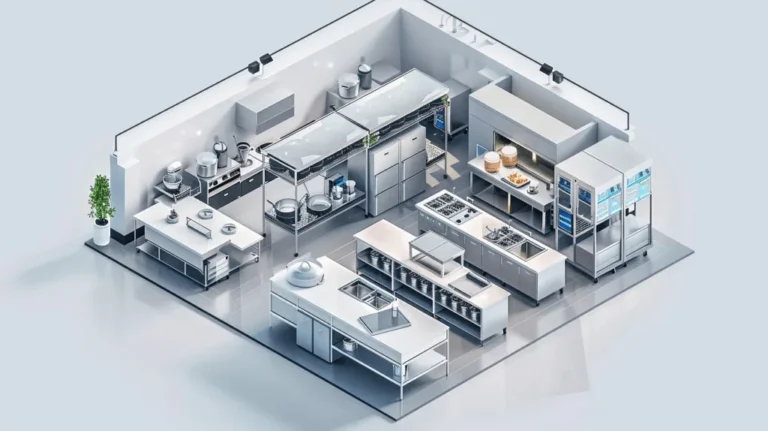
Forget the triangle. In a compact kitchen, think in zones. Here’s how I break it down:
- Storage Zone: Fridge, pantry, dry goods. This is where ingredients live. Place it near the entrance to minimize carrying distance.
- Prep Zone: Cutting boards, knives, mixing bowls. This should be adjacent to storage to reduce steps.
- Cooking Zone: Stove, oven, fryer. Keep this separate from prep to avoid cross-contamination and burns.
- Plating Zone: A dedicated space for finishing dishes. Even a small section of counter near the cooking zone works.
- Cleaning Zone: Sink, dishwasher, trash/recycling. This should be at the end of the flow to avoid dirty dishes crossing paths with fresh food.
Pro tip: If space is tight, combine zones strategically. For example, in a coffee shop, the plating and cleaning zones can overlap if you use a pass-through dishwasher. But never combine cooking and prep, unless you enjoy third-degree burns.
2. Counter Height: The Goldilocks Dilemma
Standard counter height is 36 inches, but that’s based on outdated ergonomics. Here’s the reality:
- For prep work (chopping, mixing), 34–36 inches is ideal for most people.
- For cooking (stirring, flipping), 36–38 inches prevents hunching over a hot stove.
- For baking, some chefs prefer 38–40 inches to avoid bending when lifting heavy dough.
In a compact kitchen, you might not be able to vary heights, so prioritize the task you do most. If you’re a line cook, go higher. If you’re a pastry chef, go lower. And if you’re under 5’4” or over 6’2”, adjust accordingly, your back will thank you.
One hack: Use adjustable-height tables for prep stations. Companies like Chef’s Deal offer commercial-grade models that can be raised or lowered, which is a lifesaver in shared kitchens with staff of varying heights.
3. The “No-Twist” Rule for Appliances
Here’s a rule I stole from physical therapy: never design a kitchen where you have to twist your torso to move between stations. Twisting while carrying weight (like a pot of boiling water) is how you end up with a slipped disc. Instead:
- Place the sink next to the stove (not across from it) so you can slide pots instead of carrying them.
- If the fridge must be opposite the prep station, add a small rolling cart to transport ingredients without twisting.
- Avoid corner sinks or stoves, they force awkward reaches.
I once redesigned a food truck kitchen by rotating the stove 90 degrees. The chef gained 18 inches of counter space and eliminated the need to twist when plating. Small change, huge impact.
4. Storage: The Art of Not Bending or Stretching
In compact kitchens, storage is often an afterthought, until you’re on your hands and knees digging for the immersion blender. The key is placing items where you use them, at heights that don’t require contortionism.
Here’s my storage hierarchy:
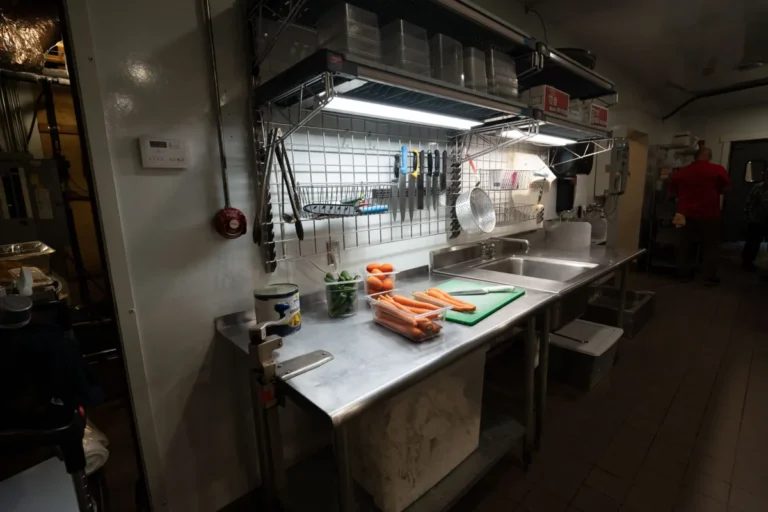
- Eye-level (easiest access): Everyday items like spices, oils, and utensils. Use magnetic strips for knives and tools to free up drawer space.
- Waist to shoulder height: Heavy items like pots, pans, and mixers. Never store these below waist level, lifting from a crouch is a fast track to a herniated disk.
- Below waist (but above knees): Less frequently used items like backup ingredients or specialty tools. Use pull-out shelves to avoid crawling on the floor.
- Above shoulder height: Only for lightweight, rarely used items (like holiday decor). If you’re storing anything heavy up high, you’re doing it wrong.
Pro move: Install toe-kick drawers under cabinets. They’re perfect for flat items like baking sheets and cutting boards, and they use space that’s otherwise wasted.
5. Flooring: The Unsung Hero of Ergonomics
Standing on concrete or tile for 10 hours a day is like giving yourself a stress fracture in slow motion. In compact kitchens, where you’re constantly shifting positions, flooring matters even more. Here’s what to look for:
- Material: Rubber or cork flooring reduces fatigue by absorbing shock. Avoid hard surfaces like tile unless you add anti-fatigue mats.
- Texture: Slightly textured surfaces prevent slips, especially in wet areas near sinks.
- Slope: If possible, include a gentle slope (1–2 degrees) toward drains to prevent water pooling, which is a slipping hazard.
Bonus: If you can’t replace the flooring, invest in high-quality anti-fatigue mats (like those from GelPro or Sky Mats). They’re not just for comfort, they improve circulation, which means less swelling and fatigue by the end of a shift.
-
Equipment Choices That Save Space and Your Sanity
1. The Under-Counter Revolution
In compact kitchens, under-counter equipment is your best friend. Here’s what I recommend:
- Under-counter refrigerators: Models like the True TUC-27 (27 inches wide) fit under standard counters and eliminate the need for a full-height fridge. Chef’s Deal often has these in stock with competitive financing.
- Under-counter dishwashers: A compact pass-through dishwasher (like the Hobart LXe) can handle 30 racks per hour and fits in a 24-inch space.
- Under-counter ice machines: If you’re tight on space but need ice, models like the Manitowoc UY-0300A produce 300 lbs/day and fit under a counter.
Pro tip: If you’re designing from scratch, consider raising the floor in the equipment area by 4–6 inches. This allows you to tuck equipment under counters while keeping the working surface at a comfortable height.
2. The Magic of Modular and Stackable Equipment
Modular equipment is a game-changer for small kitchens because it lets you customize your setup as needs change. Some favorites:
- Stackable ovens: Brands like Blodgett and Vulcan make ovens that can be stacked vertically, saving floor space. Just ensure you have proper ventilation above.
- Modular cooking suites: Companies like Garland offer customizable ranges where you can mix and match burners, griddles, and ovens in a single unit.
- Portable induction burners: If you only need extra cooking space occasionally, a portable induction burner (like the Vollrath Mirage) can be stored when not in use.
One caveat: Stacking equipment can create heat pockets, so ventilation becomes critical. More on that later.
3. The One Piece of Equipment I Swear By: The Worktop Fridge
If I had to pick one piece of equipment that’s a total game-changer for compact kitchens, it’s the worktop fridge. These are essentially refrigerated prep tables with a cutting board surface on top. Brands like True and Traulsen make models that are 24–36 inches wide, combining prep space and refrigeration in one.
Why I love them:
- Eliminates the need to walk back and forth to the fridge for ingredients.
- The cutting board surface is at a comfortable height (usually 34–36 inches).
- Some models have pull-out drawers for easy access to ingredients.
I’ve seen these in food trucks, café kitchens, and even small restaurants. They’re not cheap (expect to pay $3,000–$6,000), but they save so much space and time that they pay for themselves in efficiency. Chef’s Deal often has refurbished models at a discount, which is worth checking out if you’re on a budget.
4. Ventilation: The Invisible Ergonomic Nightmare
Poor ventilation isn’t just a comfort issue, it’s an ergonomic hazard. In a compact kitchen, heat and smoke build up fast, leading to:
- Heat stress (which causes fatigue, dehydration, and even fainting).
- Poor air quality (irritating lungs and eyes, leading to headaches and long-term respiratory issues).
- Grease buildup (a slipping hazard and fire risk).
Here’s how to fix it:
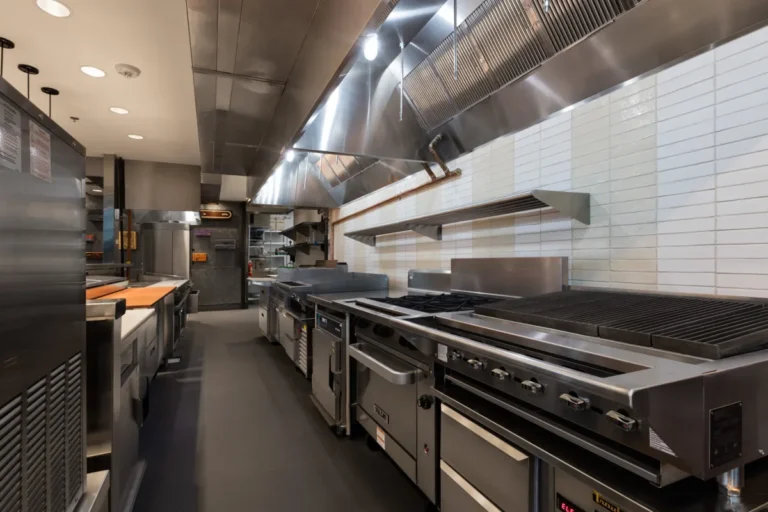
- Updraft ventilation: A canopy hood (like those from Captain Cook) is the gold standard, but in tiny kitchens, a downdraft system (like the Broan Elite) can work if you’re limited on ceiling space.
- Makeup air: For every cubic foot of air your hood exhausts, you need to replace it. In compact kitchens, this often means adding a makeup air unit to prevent negative pressure (which makes doors hard to open and can pull in contaminants).
- Portable solutions: If you’re in a temporary or pop-up kitchen, a high-CFM portable exhaust fan (like the Vodex Air Mover) can help, though it’s not a long-term fix.
Pro tip: If you’re designing a new kitchen, consult a ventilation expert early. I’ve seen kitchens where the hood was installed last, only to realize it blocked the only logical place for the fridge. Chef’s Deal includes ventilation planning in their free design consultations, which can save you a massive headache later.
-
Psychological Ergonomics: How Your Kitchen Layout Affects Your Mood
Ergonomics isn’t just about your body, it’s about your brain. A poorly designed kitchen doesn’t just make you tired; it makes you stressed. Here’s how psychology plays into compact kitchen design:
1. The “Decision Fatigue” Trap
Every time you have to search for a tool, reach around an obstacle, or adjust your workflow because of a bad layout, you’re making a micro-decision. Over an 8-hour shift, those add up to mental exhaustion.
Solution: Design for automaticity. Your kitchen should be so intuitive that you can grab a knife, chop an onion, and toss it in the pan without thinking. That means:
- Keeping tools in the same place every time.
- Using color-coding or labels for storage (e.g., red bins for raw meat, blue for veggies).
- Minimizing “hidden” storage, if you can’t see it, you’ll waste time looking for it.
2. The Power of Sightlines
In a compact kitchen, being able to see what’s happening around you reduces stress. For example:
- If the cook can see the expediter’s station, they can anticipate orders better.
- If the dishwasher can see the sink, they can time their loads more efficiently.
- If the prep cook can see the walk-in fridge, they won’t over-prep ingredients.
I once redesigned a café kitchen by replacing a solid door with a half-wall and pass-through window between the cooking and plating areas. The chef’s stress levels dropped immediately because they could see orders coming in real-time.
3. The “Third Place” Principle
Even in a tiny kitchen, you need a “third place”-a spot that’s not for cooking, prepping, or cleaning, but for breathing. This could be:
- A small stool by the expediter’s station where you can sit for 30 seconds between rushes.
- A window or skylight that lets in natural light (studies show this reduces stress).
- A tiny shelf for a plant or a photo, something that reminds you there’s a world outside the kitchen.
It sounds silly, but in high-stress environments, these small touches lower cortisol levels and help prevent burnout. Trust me, after a 14-hour shift, that little stool becomes sacred.
-
Real-World Examples: Compact Kitchens That Work
1. The Food Truck That Fits Five Stations in 80 Square Feet
I worked with a taco truck in Austin where the kitchen was 8 feet by 10 feet-smaller than some walk-in closets. Here’s how we made it work:
- Vertical storage: We used pegboards on the walls to hang tools, freeing up counter space.
- Stacked cooking: A two-burner range stacked above a small convection oven saved floor space.
- Sliding doors: Instead of swing-out doors (which take up space), we used sliding doors for the fridge and storage.
- Fold-down prep table: A wall-mounted table that folded down when not in use gave extra prep space during service.
Result: The team could pump out 150 tacos/hour without feeling like sardines.
2. The Café Kitchen with a “No-Bend” Policy
A café in Portland had a problem: Their baristas were developing wrist and back pain from constantly bending to grab syrups and milk. We redesigned with:
- Under-counter fridge drawers: Instead of a full-height fridge, we used drawers at waist height for milk and syrups.
- Adjustable-height espresso machine: The machine was mounted on a pneumatic lift so baristas could raise or lower it to their preferred height.
- Foot-operated sinks: To avoid twisting, we installed foot pedals for the sink and soap dispenser.
Within a month, reported pain dropped by 70%. Not bad for a kitchen smaller than a parking spot.
3. The Pop-Up Kitchen in a Shipping Container
Yes, you read that right. A client in Nashville wanted to turn a 40-foot shipping container into a functional kitchen for a pop-up dinner series. The challenges:
- No room for standard equipment.
- Limited ventilation options.
- Need to accommodate 4 staff members.
Our solutions:
- Modular everything: We used stackable induction burners, a combo oven/microwave, and a portable dishwasher.
- Wall-mounted prep: A fold-down stainless steel table served as prep space and doubled as a serving station.
- Roof vent: Since we couldn’t install a full hood, we used a high-powered roof vent paired with a downdraft cooktop.
- Rolling carts: Instead of fixed storage, we used locking caster carts that could be wheeled in and out as needed.
It wasn’t pretty, but it worked, and the team could serve 50 covers a night without wanting to quit.
-
Common Mistakes (And How to Avoid Them)
1. Over-Optimizing for Space (And Forgetting Humans)
The biggest mistake I see? Designing for the space, not the people. For example:
- Putting the sink in a corner because it “fits better,” even though it forces a twist to reach the stove.
- Choosing a fridge that’s 6 inches too tall, forcing staff to stretch every time they grab ingredients.
- Skipping a prep table to save space, then wondering why everything takes twice as long.
Fix: Before finalizing a layout, simulate the workflow. Grab a friend, assign them a task (like making a sandwich), and watch where they struggle. If they’re twisting, reaching, or cursing, redesign.
2. Ignoring the “Dirty Side” of the Kitchen
In compact kitchens, the cleaning zone is often an afterthought, but it’s where most accidents happen. Common issues:
- No dedicated space for dirty dishes, leading to piles that block workflow.
- Trash bins placed where they obstruct movement.
- No splash guard near the sink, leading to wet floors (and slips).
Fix: Treat the cleaning zone like its own mini-kitchen. Include:
- A scrap bin next to the prep station to avoid walking across the kitchen with trash.
- A sink with a high back splash to contain water.
- A drying rack that folds down when not in use.
3. Assuming “Compact” Means “Cheap”
Here’s a hard truth: Compact kitchens often cost more per square foot than larger ones because you need specialized equipment and custom solutions. Skimping on quality to save money usually backfires. For example:
- Buying a residential-grade under-counter fridge that burns out in 6 months.
- Using particleboard cabinets that warp in the humidity of a busy kitchen.
- Skipping professional installation, leading to uneven counters or poor ventilation.
Fix: Prioritize durability and flexibility. Spend more on:
- Commercial-grade compact equipment (it’s smaller but built to last).
- Modular storage that can be reconfigured as needs change.
- Professional design help-companies like Chef’s Deal offer free consultations that can save you thousands in costly mistakes.
-
Actionable Ergonomic Checklist for Your Compact Kitchen
Ready to design or redesign? Here’s your step-by-step checklist:
- Measure everything, twice.
- Door swings (account for clearance).
- Walkway widths (minimum 36 inches for one person, 42 for two).
- Counter heights (adjust for the tallest and shortest users).
- Map your workflow.
- Draw the path of a single dish from start to finish.
- Identify any twists, reaches, or backtracking.
- Zone your kitchen.
- Storage → Prep → Cooking → Plating → Cleaning.
- Keep related tasks within 2–3 steps of each other.
- Choose equipment wisely.
- Prioritize under-counter, stackable, or modular units.
- Invest in a worktop fridge if you do a lot of prep.
- Design for the body.
- No reaching above shoulders or below knees for heavy items.
- Counter heights tailored to primary users.
- Anti-fatigue mats or ergonomic flooring.
- Plan for ventilation.
- Even small kitchens need proper exhaust and makeup air.
- Consider downdraft systems if ceiling hoods aren’t an option.
- Test before you commit.
- Mock up the layout with cardboard boxes or tape on the floor.
- Simulate a busy service to spot bottlenecks.
- Budget for ergonomics.
- Allocate 10–15% of your budget for ergonomic upgrades (adjustable tables, proper flooring, etc.).
- Consider financing options, Chef’s Deal offers payment plans for equipment.
-
Final Thoughts: The Kitchen as an Extension of You
Here’s what I’ve learned after years of designing compact kitchens: The best layouts don’t just fit the space, they fit the people using them. A kitchen that forces you to twist, reach, or hunch is like a shoe that’s too small, it might look fine at first, but after a few hours, you’ll be miserable.
Ergonomics isn’t a luxury; it’s a long-term investment in your health, your staff’s morale, and your business’s efficiency. A well-designed compact kitchen can outperform a larger, poorly laid-out one simply because the team isn’t exhausted by the end of the shift. And in an industry where margins are tight and turnover is high, that’s everything.
So before you finalize your layout, ask yourself:
- Can I (or my team) work here for 8 hours without pain?
- Does the design account for the tallest and shortest person using it?
- Are there any “twist points” that could lead to injury?
- Is the workflow intuitive, or will it require constant adjustment?
And if you’re feeling overwhelmed, remember: You don’t have to figure this out alone. Suppliers like Chef’s Deal offer free design consultations that factor in ergonomics, workflow, and even local health codes. Sometimes, an extra set of eyes can spot the twist you didn’t see.
Now, go forth and design a kitchen that works with you, not against you. And if you end up with a layout that feels like a yoga pose, you know something’s wrong.
-
FAQ
Q: I have a tiny kitchen with no room for a dishwasher. What’s the best alternative?
A: If space is tight, consider a compact under-counter dishwasher (like the Hobart LXe) or a portable dishwasher that can be rolled out when needed. Another option is a three-compartment sink with a drainboard, but this requires more manual labor. If you’re really strapped, disposable compostable dishware might be a temporary solution, though it’s not sustainable long-term.
Q: How do I prevent my compact kitchen from feeling claustrophobic?
A: A few tricks:
- Use light colors on walls and cabinets to create the illusion of space.
- Add mirrors or reflective surfaces (like stainless steel) to bounce light around.
- Maximize natural light with skylights or larger windows if possible.
- Keep the floor and counters clutter-free-visual clutter makes spaces feel smaller.
Also, good lighting (especially task lighting over prep areas) reduces the “cave-like” feel.
Q: What’s the minimum width for a walkway in a compact commercial kitchen?
A: The absolute minimum is 36 inches for a single-person walkway, but 42 inches is ideal if two people need to pass. If you’re tight on space, consider offsetting workstations so people aren’t walking past each other constantly. And always leave 18 inches of clearance in front of appliances (like ovens) that have doors or drawers.
Q: Are there any ergonomic tools you recommend for compact kitchens?
A: Absolutely! Here are my top picks:
- Adjustable-height cutting boards: These let you raise or lower your prep surface to reduce strain.
- Ergonomic knives: Brands like Wüsthof and Shun make knives with handles designed to reduce wrist strain.
- Anti-fatigue mats: Look for ones with beveled edges to prevent tripping (I like the GelPro Comfort Mat).
- Portable induction burners: These are lightweight, easy to move, and safer than gas in tight spaces.
- Magnetic tool strips: Keep frequently used tools within reach without cluttering counters.
Small investments in the right tools can make a huge difference in comfort and efficiency.
@article{ergonomic-design-tips-for-compact-kitchens-how-to-maximize-efficiency-without-losing-your-mind-or-your-back,
    title   = {Ergonomic Design Tips for Compact Kitchens: How to Maximize Efficiency Without Losing Your Mind (or Your Back)},
    author  = {Chef's icon},
    year    = {2025},
    journal = {Chef's Icon},
    url     = {https://chefsicon.com/ergonomic-design-tips-for-compact-kitchens/}
}