The Best Fluffy Pancakes recipe you will fall in love with. Full of tips and tricks to help you make the best pancakes.
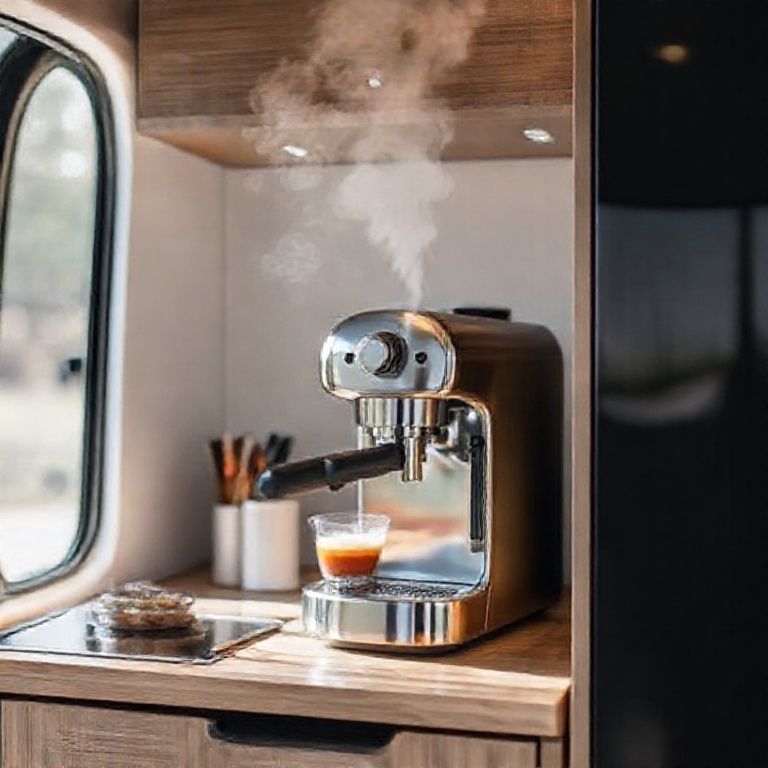
Table of Contents
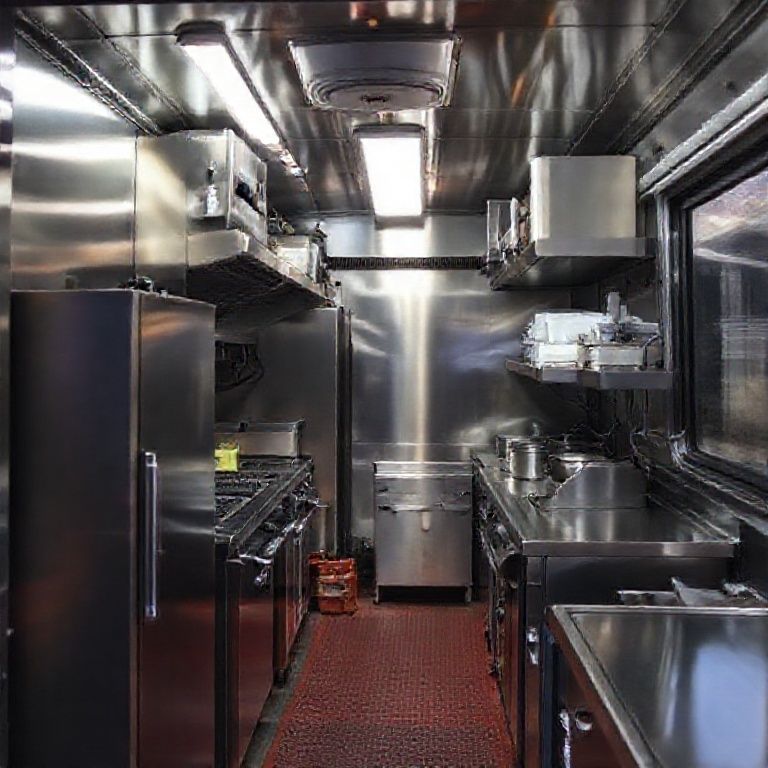
I’ll admit something embarrassing right off the bat: My first attempt at running a mobile kitchen was a disaster. Not because the food was bad, it wasn’t, but because I’d underestimated how much equipment matters when your entire operation is crammed into a space smaller than most people’s walk-in closets. I’d splurged on a fancy espresso machine (because, you know, aesthetic) but forgot to account for the fact that my generator couldn’t handle it and the fryer at the same time. Cue the blown fuse at a food truck festival in front of 200 hungry, increasingly impatient Nashvillians. Luna, my rescue cat, still judges me for it.
That was three years ago. Since then, I’ve talked to dozens of mobile kitchen operators, from food truck veterans to pop-up chefs, about what actually works and what’s just hype. And here’s the thing: The “essential equipment” list you’ll find on most blogs? It’s usually either too vague (“You’ll need a fridge!” Thanks, Captain Obvious) or way too niche (“Invest in a sous vide circulator for your taco truck!” …why?). So today, I’m breaking down the on-negotiables, the ice-to-haves, and the stuff you can skip-with all the messy, real-world caveats that come with running a kitchen on wheels.
By the end of this, you’ll know:
- How to prioritize equipment based on your menu (because a ramen pop-up and a burger truckeed entirely different setups).
- The hidden costs no one talks about (spoiler: propane refills and generator maintenance will haunt your dreams).
- Where to splurge and where to cut corners (hint: cheap knives are a false economy; fancy signage is not).
- How to future-proof your setup for scaling (because if you’re successful, you’ll outgrow your first rig faster than you think).
Let’s dig in. And if you’re currently staring at a blank spreadsheet trying to budget for your mobile kitchen, pour yourself a coffee first. This’ll take a while.
The Core: Non-Negotiable Equipment for Any Mobile Kitchen
1. The Power Source: Generators vs. Battery Systems vs. Shore Power
This is where most newbies mess up. You can have the fanciest equipment in the world, but if you can’t power it reliably, you’re screwed. I’ve seen chefs cry over dead generators mid-service (yes, really). Here’s the breakdown:
Generators: The most common choice, but not all are created equal. You need at least 5,000 watts for a basic setup (fryer, fridge, lights, POS system). If you’re running a wood-fired pizza oven or a commercial espresso machine, bump that to 7,500–10,000 watts. Pro tip: Inverter generators (like Honda or Yamaha) are quieter and more fuel-efficient, but they’re pricier. Also, always bring extra fuel. I once watched a truck shut down because the owner forgot to check the gas level-during a lunch rush.
Battery Systems: These are getting popular with the rise of electric food trucks and solar-powered setups. Companies like Goal Zero or EcoFlow make high-capacity batteries that can run smaller equipment (blenders, induction burners, LED lights) for hours. The upside? No fumes, no noise. The downside? Limited power for heavy-duty gear, and the upfront cost is steep ($2K–$5K for a decent setup). I’d only recommend this if you’re doing low-power operations like cold drinks, prepped food, or acoustic pop-ups.
Shore Power: If you’re parked at a farmers’ market or a commissary kitchen with outlets, you might be able to plug in directly. But don’t rely on this, always have a backup. And for the love of all things holy, bring a heavy-duty extension cord (12-gauge or thicker). The number of times I’ve seen someone’s setup fail because they cheapened out on a $20 cord is embarrassing.
My take: Start with a 7,500-watt inverter generator unless you’re 100% sure your menu can run on batteries. And yes, it’s loud and smelly, but reliability trumps perfection when you’re serving 100 people in 90-degree heat.
2. Refrigeration: The Silent Killer of Profits
Here’s a fun fact: Spoiled food is the #1 reason mobile kitchens fail in their first year. Not bad marketing. Not poor location. Food waste. And it almost always comes down to inadequate refrigeration.
You need two types of cooling:
- Reach-in fridge/freezer: For bulk storage. A commercial-grade unit (like True Manufacturing or Traulsen) is non-negotiable. Domestic fridges won’t cut it, they’re not built for constant opening/closing in hot environments. Aim for at least 20 cubic feet if you’re doing daily service.
- Under-counter or prep-top fridge: For easy access to frequently used ingredients. These are smaller (5–10 cubic feet) but critical for workflow. Ever tried to prep burgers while bending over to dig through a reach-in every 30 seconds? It’s a special kind of hell.
Pro tips:
- If you’re serving seafood or dairy, invest in a separate freezer-cross-contamination is a nightmare.
- Monitor temps religiously. A $20 digital thermometer could save you thousands in wasted product. I once had a fridge fail overnight because the door seal was slightly loose. Lost $800 in brisket. Still stings.
- Consider a generator-powered fridge if you’re doing overnight events. Some units (like Dometic) run on 12V and can keep things cold for 12+ hours without shore power.
Where to splurge: On the compressor. Cheap fridges die fast in mobile kitchens because of vibration and heat. Spend the extra $500 now or replace the whole unit in a year.
3. Cooking Equipment: The Menu Dictates the Machine
This is where things get messy because there’s no one-size-fits-all solution. Your cooking equipment should be 100% dictated by your menu. Let’s break it down by common mobile kitchen types:
For Burgers/Tacos/Street Food:
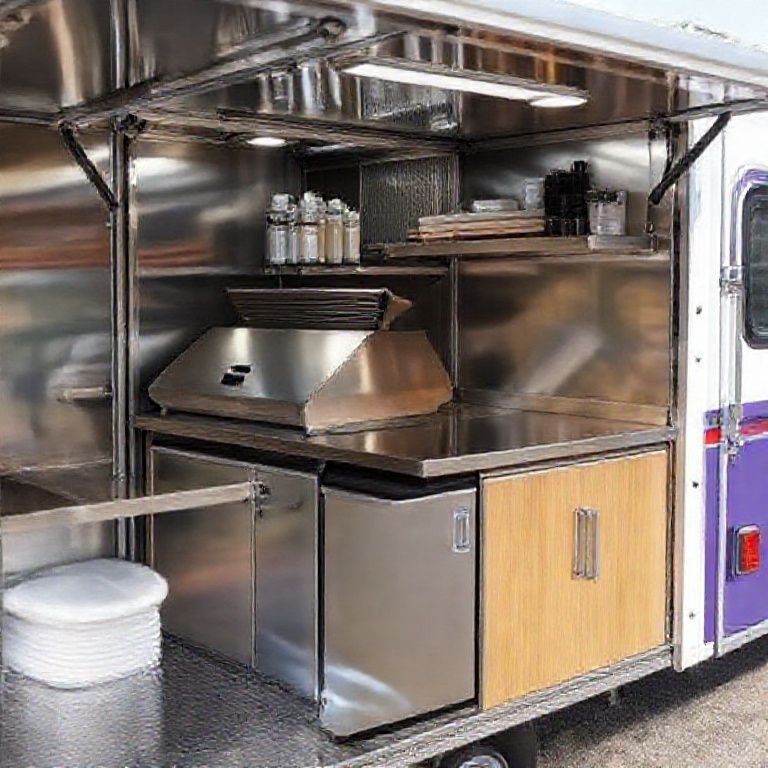
- Flat-top griddle (36” minimum): The workhorse of mobile kitchens. Get one with grease traps and adjustable legs for stability. Garland and Star Manufacturing make solid units.
- Deep fryer (single or double basket): If you’re doing fries, chicken, or churros, this is non-negotiable. Vulcan or Pitco are reliable brands. Pro tip: Filter your oil daily-it’ll last longer and taste better.
- Steam table or heated holding cabinet: For keeping buns, tortillas, or sides warm without drying out.
For Pizza/Wood-Fired Cooking:
- Wood-fired or gas pizza oven: Ooni makes great compact ovens for mobile setups, but if you’re doing high volume, consider a commercial deck oven like Blodgett.
- Dough proofer: If you’re making fresh dough on-site, you’ll need a proofing box. Otherwise, pre-proof your dough and store it cold.
- Infrared burner: For charring peppers or searing proteins quickly.
For Coffee/Drinks:
- Espresso machine: If you’re serious about coffee, a La Marzocco Linea Mini or Rancilio Classe 7 are solid mid-range options. But be warned: These need 20-amp circuits and a good water filtration system.
- Blender: For smoothies or frozen drinks, a commercial-grade Vitamix is worth the investment.
- Under-counter ice machine: If you’re selling cold drinks, you’ll go through ice faster than you think. A Manitowoc or Scotsman under-counter unit is ideal.
For Prep-Heavy Menus (e.g., Bowls, Salads, Sushi):
- Induction burners: More efficient than gas for precise temp control. Vollrath makes great portable units.
- Food processor: A commercial-grade Robot Coupe will save you hours of chopping.
- Vacuum sealer: For sous vide or extending shelf life of prepped ingredients.
The Golden Rule: Every piece of equipment should serve at least two purposes. Example: A combi oven (like a Rational) can steam, bake, and roast, but it’s overkill for most mobile setups. Meanwhile, a high-quality griddle can sear, grill, and even act as a makeshift plancha for veggies.
4. Ventilation: The Invisible Hero
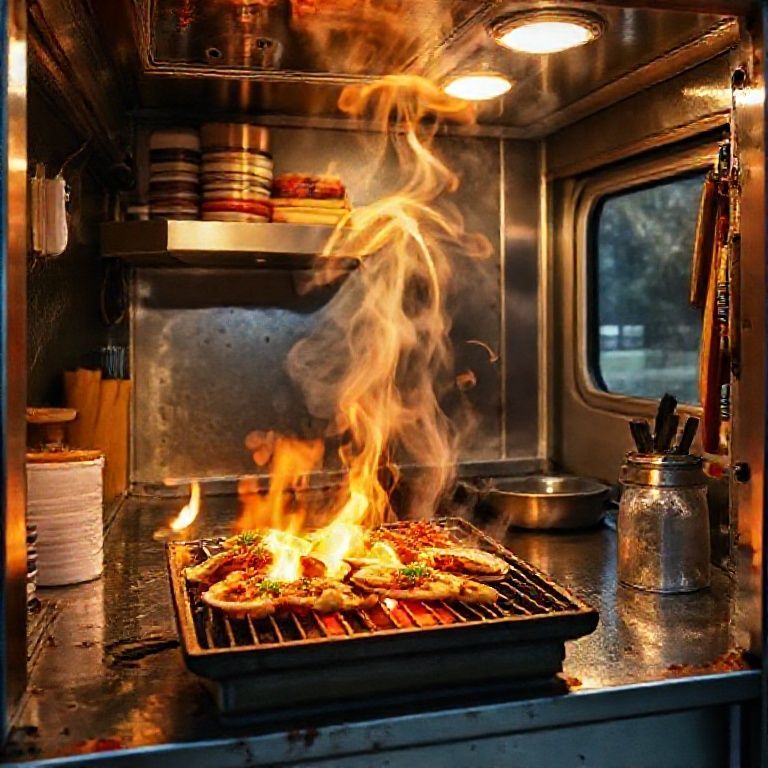
Here’s something no one tells you: Poor ventilation will shut you down faster than bad food. Health inspectors are obsessed with airflow, and for good reason, grease buildup is a fire hazard, and carbon monoxide from generators can be deadly in enclosed spaces.
You need:
- Range hood with fire suppression: Non-negotiable if you’re cooking with open flames or fryers. Ansul systems are the gold standard.
- Exhaust fan: Even if you’re not required to have a full hood, you need some way to vent smoke and steam. A roof-mounted fan or portable vent (like a Ventless Hood) can work for smaller setups.
- Carbon monoxide detector: If you’re using a generator, this is a life-or-death item. Don’t skip it.
Pro tip: If you’re in a food truck, position your cooking equipment so the exhaust vents away from customer lines. Nothing kills appetite like a face full of fryer smoke.
5. Water System: The Overlooked Lifeline
Water is one of those things you don’t think about until you’re out of it mid-service with a line of thirsty customers. Most mobile kitchens need:
- Fresh water tank (20–50 gallons): For cooking, cleaning, and drinking. Never rely on external sources, you don’t know the quality.
- Gray water tank: For disposing of wastewater. Many events require you to pack out your gray water, so plan accordingly.
- Water pump: A 12V demand pump (like a Shurflo) will give you consistent pressure.
- Water heater (optional): If you’re doing dishes on-site or need hot water for drinks, a small tankless heater is clutch.
Critical note: Check local health codes, some states require NSF-certified water systems for mobile food units. And if you’re serving coffee or tea, water quality matters a lot. A simple carbon filter can make or break your drinks.
The “Nice-to-Haves”: Equipment That Elevates (But Isn’t Essential)
6. Tech and POS Systems: Where to Spend (and Save)
I’ll be honest: I resisted digital POS systems for years because I’m old-school. Then I spent an entire Saturday reconciling cash vs. Square payments by hand and nearly cried. Here’s what’s worth it:
Must-haves:
- Tablet + POS software: Square or Toast are the easiest for mobile setups. Get a rugged case-drops happen.
- Portable Wi-Fi hotspot: Because event Wi-Fi is always garbage. A Verizon Jetpack or Starlink Mini (if you’re off-grid) is worth the cost.
- Bluetooth printer: For receipts. Star Micronics makes reliable ones.
Nice upgrades:
- Digital menu boards: If you change specials often, a small LED screen (like a Samsung QMR) is slick.
- Inventory management app: Crafty or MarketMan can track your stock in real time. No more guessing if you have enough buns.
- Customer display: A second screen facing customers to show orders (reduces “Did you get my order?” questions by 90%).
Where to save: Skip the fancy iPad stands. A $20 phone holder from Amazon works just as well.
7. Storage and Organization: The Secret to Sanity
Mobile kitchens are chaos in a box. Without smart storage, you’ll waste time digging for tools, spill ingredients everywhere, and generally want to scream. Here’s how to stay sane:
Essential storage solutions:
- Stackable cambros: For dry goods. Clear ones so you can see what’s inside.
- Magnetic knife strips: Saves counter space and keeps blades safe.
- Under-shelf baskets: Maximize vertical space in fridges.
- Pegboards: For hanging utensils, towels, and small tools. IKEA’s SKÅDIS system is cheap and effective.
- Collapsible bins: For transporting ingredients to/from your commissary.
Pro tip: Label everything. Use a label maker or masking tape and Sharpie. Future you will worship past you when you’re not guessing if that white powder is salt or baking powder at 2 a.m.
8. Safety Gear: Because OSHA Exists for a Reason
Mobile kitchens are accident magnets. Between hot surfaces, sharp knives, and slippery floors, it’s a miracle more of us don’t end up in the ER. Here’s the bare minimum:
Non-negotiables:
- Fire extinguisher (Class K for grease fires): Mount it within reach of your cooking station.
- First aid kit: With burn gel, bandages, and antiseptic. Update it monthly-expired supplies are useless.
- Non-slip mats: For the floor. Fatigue mats (like GelPro) also save your back during long shifts.
- Cut-resistant gloves: If you’re doing a lot of prep. NoCry makes affordable ones.
- Heat-resistant gloves: For handling hot pans or grills. Ove’ Glove is a cult favorite.
Often forgotten:
- Eyewash station: If you’re working with spices or cleaning chemicals.
- Generator safety: Never run it inside the truck. Carbon monoxide kills.
- Sharpie and tape: For labeling hot surfaces (“DO NOT TOUCH”) when you’re in a rush.
9. Branding and Customer Experience: The Intangibles
Here’s where things get subjective. Do you eed a custom-wrapped truck or a neon sign? No. Will they help you stand out? Absolutely. But don’t go into debt for aesthetics. Prioritize:
High-impact, low-cost upgrades:
- Vinyl decals: Cheaper than a full wrap but still eye-catching. Sticker Mule or Vistaprint are great for custom designs.
- LED lighting: A color-changing strip under your awning can set the mood (and is Instagram gold).
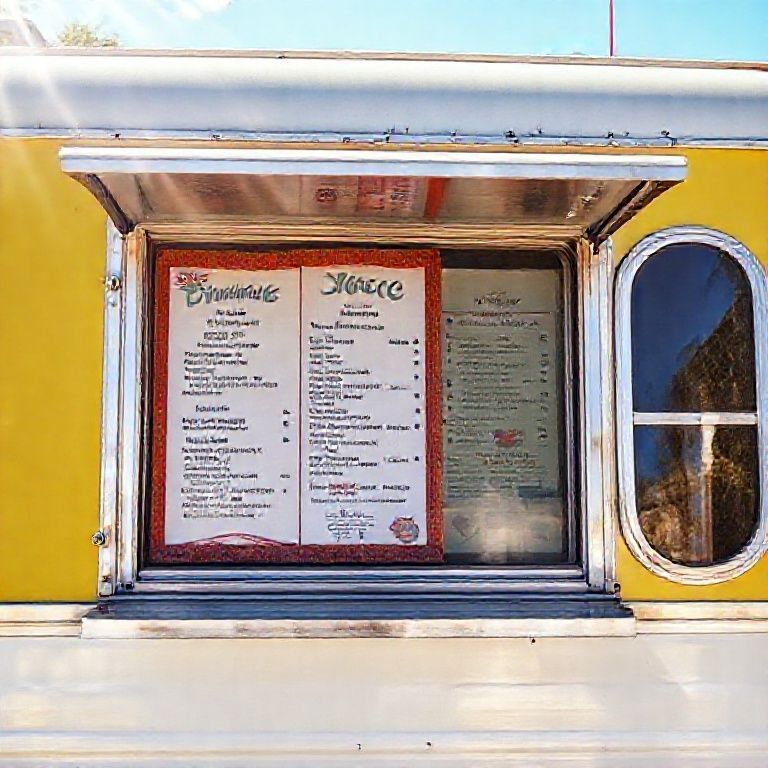
- Chalkboard or digital menu: Easy to update and more engaging than a printed sheet.
- Branded aprons/hats: Makes your team look professional and doubles as free advertising.
Where to splurge (if you can):
- Custom awning: If you’re in sunny climates, shade = more customers lingering (and spending).
- Sound system: A portable Bluetooth speaker (like a JBL Boombox) for ambiance. Just keep it at a reasonable volume, no one wants to yell their order over EDM.
- Sample trays: If you’re introducing new items, free bites = instant fans.
Where to save: Skip the custom-built furniture unless you’re 100% sure about your layout. Your needs will evolve, and that $2K counter might become useless in six months.
10. The Extras: Tools That Solve Problems You Didn’t Know You Had
These aren’t essential, but they’ve saved my bacon (sometimes literally) more times than I can count:
- Portable propane torch: For searing, caramelizing, or fixing plumbing emergencies (don’t ask).
- Immersion blender: For soups, sauces, or even whipping cream in a pinch.
- Mandoline slicer: If you’re doing a lot of veggie prep, this is a game-changer.
- Thermapen: The fastest, most accurate thermometer for checking food temps. Worth every penny.
- Collapsible water jug: For emergencies (or when the event’s water supply is “mysteriously” shut off).
- Zip ties and duct tape: The duct tape of the future. Fixes everything.
- Portable scale: For portion control. Eyeballing gets expensive fast.
- Backup phone charger: Because your POS will die at the worst possible moment.
The Hidden Costs No One Talks About
Alright, let’s get real. The sticker price of equipment is just the tip of the iceberg. Here are the sneaky expenses that’ll drain your budget if you’re not careful:
1. Fuel and Propane:
- Generators guzzle gas. Budget $50–$100 per event for fuel.
- Propane for grills/fryers adds up. A 20 lb tank lasts ~10–15 hours of cooking. Always have a backup.
2. Maintenance and Repairs:
- Fryer oil changes, generator servicing, fridge coil cleaning, it’s endless. Set aside 10% of your equipment budget for upkeep.
- Knife sharpening: Dull blades slow you down and increase injury risk. A professional sharpening every 3 months is cheap insurance.
3. Permits and Inspections:
- Health department fees, fire marshal inspections, event permits, these vary by city but can cost $500–$2,000/year.
- Some events require additional certifications (e.g., ServSafe for food handlers).
4. Insurance:
- General liability ($500–$1,500/year), commercial auto (if you have a truck), and equipment insurance (in case of theft or damage).
- Some venues require $1M+ in coverage to operate. Shop around.
5. Commissary Kitchen Fees:
- Most mobile kitchens are required to prep/store food in a commissary kitchen. Costs range from $200–$800/month depending on location.
- Some charge extra for dry storage, ice, or dishwashing.
6. Unexpected Upgrades:
- You’ll outgrow your first setup faster than you think. That tiny fridge that seemed fine? Suddenly it’s overflowing. The single-basket fryer? Now you need a double. Budget for one major upgrade per year.
7. Theft and Loss:
- Equipment gets stolen. Lock everything down-propane tanks, generators, even your cambros. I’ve heard horror stories of entire setups disappearing overnight at festivals.
- Keep a detailed inventory list with serial numbers for insurance claims.
How to Prioritize: A Step-by-Step Guide
Overwhelmed? Here’s how to tackle this without losing your mind:
Step 1: Finalize Your Menu
- List every item you’ll serve. Be specific. “Tacos” isn’t enough, what kind? Corn or flour tortillas? What proteins? What toppings?
- For each item, note the cooking method (grill, fry, steam, etc.) and storage needs (refrigerated, frozen, dry).
Step 2: Map Your Workflow
- Sketch a rough layout of your kitchen. Where will prep happen? Where will cooking happen? Where will customers order/pick up?
- Identify bottlenecks. If three people need to access the fridge at once, you’ll need a better system.
Step 3: Make a “Must-Have” vs. “Nice-to-Have” List
- Must-haves: Equipment required to legally operate and execute your menu.
- Nice-to-haves: Things that would make life easier but aren’t dealbreakers.
- Dream items: The fancy stuff you’ll upgrade to later (e.g., a combi oven or automated espresso machine).
Step 4: Budget for 20% Overages
- Equipment always costs more than you think. Shipping, taxes, unexpected fees, pad your budget.
- Consider used or refurbished equipment for non-critical items. Facebook Marketplace, Craigslist, and restaurant auctions are goldmines.
Step 5: Test Before You Invest
- Rent equipment before buying. Companies like Catering Equipment Rentals let you test drive gear.
- Do a soft launch with minimal equipment to see what you actuallyeed.
Step 6: Plan for Scaling
- Ask yourself: What happens if I double my sales? Will my fridge hold enough? Can my generator handle the load?
- Invest in modular equipment (e.g., stackable cambros, expandable prep tables) that grows with you.
The “What I Wish I Knew” Section
Here are the lessons I learned the hard way, so you don’t have to:
1. Your First Setup Will Be Wrong
- You’ll buy things you don’t need and miss things you do. That’s okay. Iterate.
- Keep receipts and test equipment within return windows where possible.
2. Weight Distribution Matters
- If you’re in a trailer or truck, uneven weight can make towing dangerous. Heavier items (fridges, generators) should be centered and low.
- Get your rig weighed at a truck stop to ensure you’re not overloading your axle.
3. Noise Is Your Enemy
- Generators, blenders, and exhaust fans are loud. If you’re in a quiet neighborhood or a wedding venue, you’ll get complaints.
- Consider soundproofing (e.g., acoustic panels around the generator).
4. You’ll Hate Your Layout at Some Point
- What works for breakfast service might fail at dinner. Be ready to rearrange constantly.
- Velcro and bungee cords are your friends for temporary reconfigurations.
5. The “Cool Factor” Doesn’t Pay Bills
- That vintage Airstream or custom-painted truck is sexy, but if it doesn’t function well, it’s a money pit.
- Focus on revenue-generating equipment first, aesthetics second.
6. You’ll Become a MacGyver
- Things will break. You’ll learn to fix a clogged propane line with a paperclip and a prayer.
- Keep a toolkit with basics: wrenches, screwdrivers, pliers, electrical tape, and a multimeter (for testing outlets).
7. The Community Is Your Best Resource
- Join Facebook groups like Food Truck Empire or Mobile Cuisine. Veterans will save you thousands in mistakes.
- Attend local food truck meetups. Swap stories, borrow equipment, and learn from others’ disasters.
Final Thoughts: The Mobile Kitchen Mindset
Building a mobile kitchen is like packing for a cross-country road trip where you also have to cook for 100 people a day in a shoebox. You’ll overpack, forget something critical, and at some point, question your life choices. But here’s the beautiful thing: Mobile kitchens are the ultimate test of culinary creativity and operational efficiency. You learn to do more with less, to adapt on the fly, and to turn constraints into advantages.
So where do you start? Pick one thing from this list and take action today. Maybe it’s sketching your menu. Maybe it’s pricing out a generator. Maybe it’s just Googling “commissary kitchens near me.” Momentum is everything.
And when you inevitably hit a snag (you will), remember: Every successful mobile kitchen operator has a story about the time they almost burned down their truck or served raw chicken or cried in the walk-in. The difference between them and the people who quit? They kept going.
Now go build something amazing. And if you see me at a Nashville food truck park, flag me down, I’ll be the one with the cat (Luna) judging your knife skills from a safe distance.
FAQ
Q: Do I really need a commercial-grade fridge, or can I use a residential one?
A: Technically, you can use a residential fridge, but it’s a terrible idea. Commercial fridges are built to handle constant opening/closing, high ambient temps, and vibration. A residential fridge will die within a year, and you’ll end up spending more on replacements than you “saved” upfront. If budget is tight, look for a used commercial unit on Craigslist or at a restaurant auction.
Q: How much should I budget for a complete mobile kitchen setup?
A: It depends on your menu and scale, but here’s a rough breakdown:
- Bare-bones setup (hot dogs, prepped food, drinks): $10K–$20K
- Mid-range (burgers, tacos, basic cooking): $25K–$50K
- High-end (pizza oven, espresso, full prep): $50K–$100K+
Remember: This is just equipment. Add another 20–30% for permits, insurance, and unexpected costs.
Q: Can I run a mobile kitchen out of my home, or do I need a commissary?
A: Legally, most states require mobile kitchens to operate out of a commissary kitchen for prep, storage, and waste disposal. However, some areas allow home-based operations if you meet specific criteria (e.g., cottage food laws for low-risk items like baked goods). Check your local health department’s rules-violations can shut you down fast.
Q: What’s the biggest mistake you see new mobile kitchen owners make?
A: Overcomplicating the menu. It’s tempting to offer 20 items to “appeal to everyone,” but in a mobile kitchen, simplicity = speed = profit. Stick to 5–7 core items you can execute flawlessly, then expand once you’ve nailed the workflow. Also: Not testing equipment before events. Always do a full dry run-cook a full service’s worth of food to spot bottlenecks.
@article{the-unfiltered-truth-about-essential-equipment-for-a-successful-mobile-kitchen-2025-edition,
    title   = {The Unfiltered Truth About Essential Equipment for a Successful Mobile Kitchen (2025 Edition)},
    author  = {Chef's icon},
    year    = {2025},
    journal = {Chef's Icon},
    url     = {https://chefsicon.com/essential-equipment-for-a-successful-mobile-kitchen/}
}