The Best Fluffy Pancakes recipe you will fall in love with. Full of tips and tricks to help you make the best pancakes.
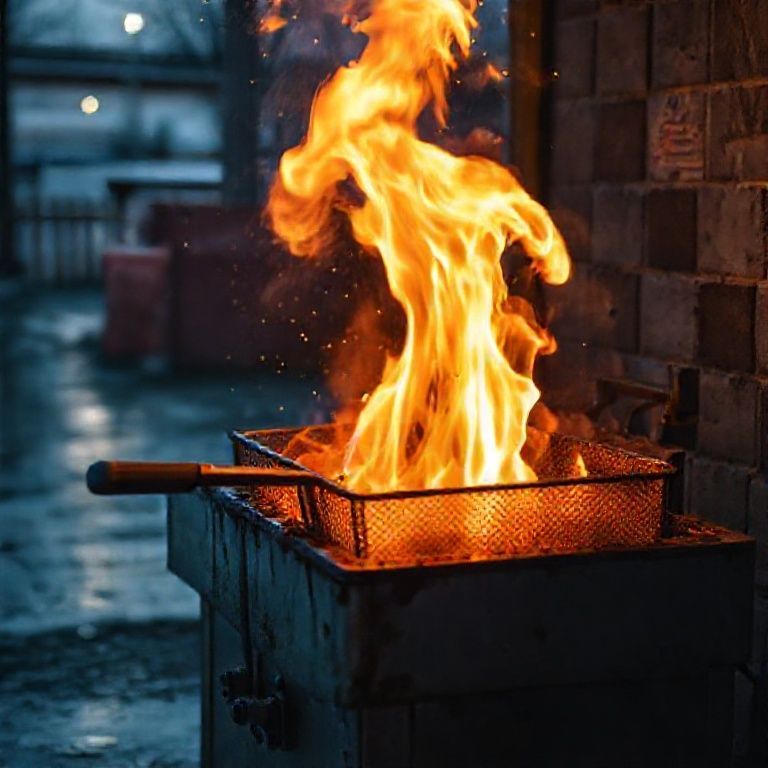
Let me paint you a picture, it’s 9:47 PM on a Saturday, the dinner rush is finally winding down, and your kitchen staff is exhausted but still moving like a well-oiled machine. Then, in the span of three seconds, everything changes. A fryer overflows, a towel too close to the burner catches fire, and suddenly you’re staring down a grease fire while your line cook is screaming for the fire extinguisher. Sound dramatic? It happens more often than you’d think. And here’s the kicker: most commercial kitchen fires, injuries, and health violations could’ve been prevented with basic safety protocols that too many operators still ignore.
I’ve spent the last decade working with restaurant owners, hotel kitchens, and institutional food service operations, first as a consultant, then as an editor digging into the nitty-gritty of what actually keeps kitchens running safely (and legally). And let me tell you, the gap between what’s required by code and what’s actually practiced is wider than a poorly calibrated walk-in fridge door. I’ve seen Michelin-starred kitchens with immaculate safety records and I’ve seen mom-and-pop diners where the only thing separating the deep fryer from a five-alarm fire is sheer luck. The difference? Culture, systems, and a refusal to cut corners.
This isn’t just another checklist of OSHA regulations (though we’ll cover those, because, well, you doeed to know them). This is the stuff they don’t teach you in culinary school, the unwritten rules, the psychological traps that lead to complacency, and the small daily habits that separate a kitchen that’s “getting by” from one that’s truly safe. By the end of this, you’ll know:
- Why your staff’s mindset is just as important as your fire suppression system
- The hidden dangers in “common sense” practices (like how you’re probably storing your chemicals wrong)
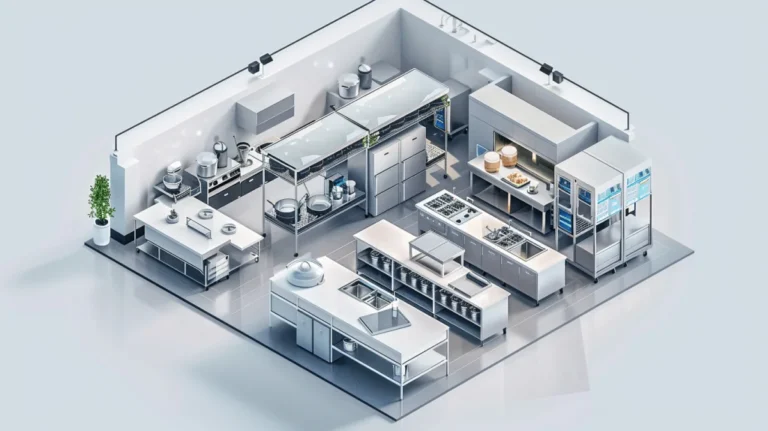
- How to design your kitchen layout to minimize risks (spoiler: it’s not just about workflow)
- What to do when inspectors show up unannounced (and how to avoid panic mode)
- The one safety meeting topic that reduces injuries by 40% (most managers never bring it up)
Fair warning: Some of this might make you uncomfortable. You’ll probably realize you’ve been overlooking a few things (I know I did when I first dug into this). But here’s the good news: Fixing these issues is easier than you think. It’s not about spending a fortune on fancy equipment, it’s about systems, awareness, and consistency. So let’s dive in, and I’ll show you how to turn your kitchen from a liability into a model of safety, without losing your mind (or your profit margins).
The Psychological Game: Why Smart People Ignore Safety (And How to Fix It)
1. The “It Won’t Happen to Me” Fallacy
Here’s a hard truth: The brain is terrible at assessing risk in familiar environments. Think about it, how many times have you seen a cook grab a hot pan with a damp towel because “they’ve done it a hundred times before”? Or a manager skip the daily temperature log because “the fridge is always fine”? This is called normalization of deviance-a fancy term for when we get so used to breaking the rules that we forget they’re rules at all.
I’ll never forget the time I watched a sous chef at a high-end steakhouse literally reach into a running garbage disposal to fish out a dropped spoon. When I asked why, he shrugged and said, “I’ve done it before. It’s fine.” Spoiler: It was ot fine. He lost two fingertips that night. The disposal had been serviced the day before, and the blades were sharper than usual. The scariest part? He wasn’t an idiot, he was a 15-year veteran who’d just gotten complacent.
So how do you fight this? Three words: Make it visible. Post incident reports (anonymized) where everyone can see them. Hold a 5-minute “near-miss” sharing session at the start of each shift. When someone catches a mistake, even a small one, celebrate it. The goal isn’t to shame people; it’s to keep the risks top of mind. Because the moment safety becomes “someone else’s problem,” you’re one bad day away from a lawsuit or worse.
2. The Speed vs. Safety Lie
Every kitchen I’ve ever worked in has had the same unspoken mantra: “Faster is better.” And look, I get it, when you’re in the weeds during a Friday night rush, taking an extra 10 seconds to do something “the safe way” feels like a luxury you can’t afford. But here’s the thing: Most kitchen accidents don’t save time, they waste it. A burn means a worker’s comp claim. A fire means closing for repairs. A foodborne illness outbreak means lawsuits and a PR nightmare.
I once worked with a pizza shop where the owner bragged about his “no-gloves policy” because “it slowed down the line.” Then one of his employees sliced his palm open on a mandoline (because, of course, he wasn’t using the guard). The guy needed 12 stitches, and the shop had to shut down for half a day while OSHA investigated. Total cost? $8,000 in fines and medical bills. The gloves would’ve cost $20.
The fix? Reframe safety as a productivity hack. Example:
- Knife skills training = fewer cuts = fewer delays from injuries
- Proper storage = no cross-contamination = no wasted food from spoilage
- Clean-as-you-go = less clutter = faster service during peak hours
When your team sees safety as something that helps them do their jobs better (not just a nagging rule), compliance goes up. Try this: Next time someone complains about a safety step taking too long, ask them, “How much time will it take if you skip it and something goes wrong?”
Fire Safety: Beyond the Fire Extinguisher
1. The Grease Fire Domino Effect
Let’s talk about grease fires, because they’re the single most misunderstood hazard in commercial kitchens. Most people know you shouldn’t throw water on a grease fire, but here’s what they don’t know: The way you handle grease every single day determines whether a small flare-up turns into a disaster.
Case in point: A sports bar in Nashville (I won’t name names) had a fryer fire that spread to the hood in under 30 seconds. Why? Because:
- The fryer hadn’t been properly cleaned in weeks-grease had caked onto the heating elements.
- The hood filters were clogged, so the suppression system couldn’t activate fast enough.
- The “fire blanket” was buried under a pile of boxes (and expired).
The fire department later told the owner that if the staff had just closed the fryer lid immediately, the fire would’ve smothered itself. But nobody had been trained on that simple step. Here’s your grease fire action plan:
- Prevention: Clean fryers daily (not “when they look dirty”). Use a degreaser, not just hot water.
- Containment: Keep lids nearby and train staff to cover first, then extinguish.
- Suppression: Class K extinguishers only (Class A/B won’t cut it). Check them monthly.
- Escape: Make sure your exit paths are clear. I’ve seen kitchens where the back door was blocked by a pallet of paper towels.
Pro tip: Run a “fire drill” once a quarter. Turn off the lights, set off a (safe) smoke alarm, and see how your team reacts. You’ll be shocked at what you learn.
2. The Hidden Danger of “Clean” Kitchens
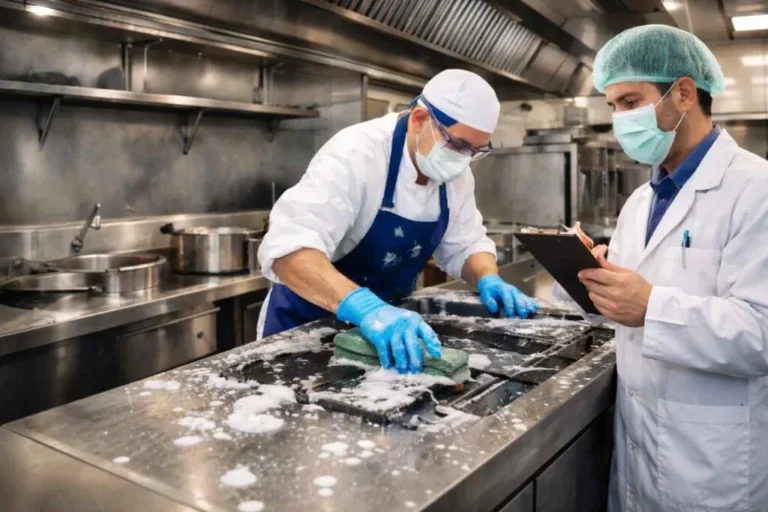
Here’s a counterintuitive truth: Some of the cleanest-looking kitchens are the most fire-prone. Why? Because they’re using flammable cleaning products near heat sources. I’ve lost count of how many times I’ve seen a spray bottle of degreaser sitting on the stove or next to the grill.
The rules for chemicals in a kitchen:
- Store them separately: Keep cleaners, sanitizers, and degreasers in a locked cabinet away from food and heat.
- No spray bottles near open flames: Aerosols can ignite. Use pump bottles instead.
- Check the SDS: Safety Data Sheets aren’t just for OSHA, they tell you if that “all-purpose cleaner” is secretly a fire hazard.
- Train on proper use: A lot of staff don’t realize that mixing bleach and ammonia (common in some cleaners) creates toxic gas.
Real-world example: A café in Portland had to evacuate after a barista mixed two “harmless” cleaners under the sink. The chemical reaction created chlorine gas, sending three people to the hospital. The fix? A simple color-coded system for chemicals and a 10-minute training on what ot to mix.
Slips, Trips, and Falls: The Silent Profit Killer
1. The Floor Is Lava (Literally)
Slip-and-fall accidents are the #1 cause of workers’ comp claims in restaurants. And it’s not just about spilled water, it’s about grease, flour, ice, and the way your staff moves. Here’s what most managers miss:
- Mats matter: Anti-fatigue mats are great, but if they’re not beveled (with sloped edges), they become trip hazards.
- Shoes are non-negotiable: Require slip-resistant footwear. No, Crocs don’t count.
- The 3-second rule: Any spill should be cleaned within 3 seconds of being spotted. Assign a “floor monitor” during rushes.
- Drainage is key: If your floor drains are clogged, water pools. If water pools, someone slips. Clean drains weekly.
Story time: A sushi restaurant in Atlanta had a server break her wrist after slipping on a puddle of soy sauce (yes, really). The kicker? The puddle had been there for 20 minutes because “everyone was too busy.” The lawsuit cost them $120,000. The fix? A $20 wet floor sign and a culture where anyone can call out a hazard without fear.
2. The Ice Machine Trap
Ice machines are death traps in disguise. Between the water leaks, the sharp edges, and the fact that they’re often in high-traffic areas, they’re a lawsuit waiting to happen. Here’s how to ice-proof your kitchen:
- Location, location, location: Don’t put the ice machine where staff have to reach over hot equipment to access it.
- Drip pans: If your machine leaks, you need a drip pan with a drain (not just a bucket).
- Scoop hygiene: Ice scoops should be stored outside the machine (in a sanitized holder) to avoid contamination and prevent hands from reaching into sharp edges.
- Nightly checks: Assign someone to empty and sanitize the bin daily. Moldy ice is a health violation and a slip hazard.
Bonus tip: If your ice machine is more than 5 years old, budget for a replacement. Older models are notorious for leaks and inefficiency.
Knife Safety: Beyond “Cut Away from Yourself”
1. The Myth of the “Safe” Knife
Most kitchen safety training boils down to: “Cut away from your body.” But here’s the thing-most knife injuries happen because of dull blades, poor technique, or rushing. A sharp knife is actually safer than a dull one because it requires less force (and thus, less chance of slipping).
The knife safety hierarchy:
- Storage: Magnetic strips or knife blocks-ever loose in a drawer. (Yes, I’ve seen someone reach into a drawer and come out with a severed tendon.)
- Handling: Always pass a knife handle-first with the blade pointing down. Never hand it to someone blindly.
- Cutting boards: Use a damp towel underneath to prevent slipping. Replace boards when they get deep grooves (they harbor bacteria and make knives slip).
- The “claw” grip: Train your staff to curl their fingers under when holding food. It’s not just for TV chefs, it saves fingertips.
Hard truth: If someone on your team is consistently cutting themselves, it’s not “bad luck”-it’s poor training or bad equipment. Address it before someone loses a finger.
2. The Mandoline Menace
Mandolines are the most dangerous tool in most kitchens, and yet I see them used improperly all the time. The rules:
- Always use the guard. No, you’re not “too experienced” to need it.
- Cut-resistant gloves are a must for high-volume prep.
- Store it properly: A loose mandoline blade in a drawer is an accident waiting to happen. Use a wall-mounted holder or a dedicated case.
- Train before letting someone use it: I’ve seen line cooks hand a mandoline to a new dishwasher with zero instruction. That’s how you end up in the ER.
Personal confession: I sliced my thumb open on a mandoline my second week as a prep cook. The chef’s response? “Welcome to the club.” That’s not a club you want members in.
Food Safety: Where Most Kitchens Fail (Without Realizing It)
1. The Temperature Danger Zone Isn’t Just a Slogan
You know the rule: Keep hot food above 135°F and cold food below 41°F. But here’s what most kitchens get wrong:
- The “two-hour rule” is a myth: Food isn’t safe for two hours at room temp, it’s safe for two hours total, including prep time. If your chicken sat out for 30 minutes while you prepped, it only has 90 minutes left in the danger zone.
- Thermometers lie: That dial thermometer? It’s probably off by 5-10 degrees. Calibrate weekly with an ice bath (32°F) and boiling water (212°F at sea level).
- The “danger zone” is bigger than you think: It’s not just 41°F to 135°F-bacteria grow fastest between 70°F and 125°F. That’s why cooling food properly is critical.
The cooling method that 90% of kitchens get wrong:
- Divide hot food into shallow pans (no more than 2 inches deep).
- Use an ice bath (place the pan in a larger pan with ice and water).
- Stir frequently to distribute heat.
- Once it hits 70°F, you can refrigerate it (but don’t stack pans-air needs to circulate).
True story: A catering company in Chicago lost $50,000 in business after a wedding guest got salmonella from improperly cooled chicken salad. The kicker? They’d taken the temperature-but only in the center of the pan. The edges were still in the danger zone.
2. Cross-Contamination: The Invisible Killer
Cross-contamination isn’t just about raw chicken touching lettuce. It’s about equipment, hands, and even the air. Here’s where most kitchens mess up:
- Cutting boards: Color-coding helps, but if you’re using the same board for raw meat and ready-to-eat food, you’re asking for trouble. Sanitize between uses (not just wash).
- Gloves aren’t magic: Changing gloves doesn’t matter if you touch your phone, then your face, then put on new gloves. Wash hands before gloving.
- The “splash zone”: Ever seen a cook wipe down a counter with a towel, then use the same towel to dry their hands? That’s how norovirus spreads.
- Airborne contamination: If your prep area is near the dish pit, steam can carry bacteria. Separate prep and washing areas if possible.
The one rule that prevents 80% of cross-contamination: “Top to bottom, clean to dirty.” Always prep ready-to-eat foods (like salads) above raw meats in the fridge. Always move from clean tasks (plating) to dirty tasks (trash) in your workflow.
Equipment Safety: The Machines That Bite Back
1. The Deep Fryer Death Trap
Fryers are responsible for more burns and fires than any other piece of kitchen equipment. Here’s how to tame the beast:
- Never overfill: Oil expands when heated. Fill to the “max” line, not the brim.
- Filter regularly: Old oil breaks down and becomes more flammable. Change it at least weekly (more if you’re frying breaded items).
- Use a basket: Dropping food directly into the oil causes splatter (and burns).
- Turn it off when not in use: A fryer left on overnight is a fire waiting to happen.
- Train for emergencies: Every staff member should know how to cut the power and use the fire suppression system.
Warning sign: If your fryer is smoking at normal temps, the oil is way past its prime. Dump it immediately.
2. The Meat Slicer Nightmare
Meat slicers are amputation risks. Period. Non-negotiable rules:
- Only trained staff can use it. No exceptions.
- Always unplug when cleaning or changing blades.
- Use the guard. Yes, it’s slower. No, it’s not optional.
- Never wear gloves while slicing. They can get caught in the blade.
- Store with the blade closed and locked.
Personal story: I knew a deli owner who lost part of his pinky because he was “just quickly slicing one more piece” without the guard. He now has a permanent sign above the slicer: “Is that extra slice worth a finger?”
Chemical Safety: The Silent Hazard
1. The Cleaning Product Roulette
Most kitchens use at least 5 different cleaning chemicals, and most staff have no idea what’s in them. Here’s how to avoid a toxic disaster:
- Label everything. “Blue spray” isn’t a label. “Degreaser, corrosive” is.
- Never mix chemicals. Bleach + vinegar = chlorine gas. Bleach + ammonia = mustard gas. Just don’t.
- Ventilation matters: If you’re using strong cleaners in a small space, open a window or turn on the hood.
- PPE isn’t optional: Gloves, goggles, and aprons for harsh chemicals. No excuses.
Red flag: If your staff complains of headaches or burning eyes after cleaning, your ventilation is inadequate or you’re using the wrong products.
2. The Dish Machine Dilemma
Dish machines are chemical powerhouses, and most kitchens don’t treat them with the respect they deserve. The risks:
- Chemical burns: If the detergent or sanitizer is too concentrated, it can cause skin burns.
- Inhalation hazards: Steam from a dish machine can carry chemical fumes.
- Machine malfunctions: A leaking dish machine can mix water and electricity-a deadly combo.
The fix:
- Train staff on proper chemical dosing (follow the manufacturer’s guidelines).
- Wear gloves and aprons when loading/unloading.
- Inspect hoses and seals weekly for leaks.
- Never reach into a running machine. (Yes, I’ve seen people do this to “speed things up.”)
Ergonomics: The Long-Term Injury No One Talks About
1. The Repetitive Stress Time Bomb
Carpal tunnel, back pain, shoulder injuries-these are the “slow burns” of kitchen work. They don’t happen overnight, but they’ll sideline your best employees if you ignore them. Preventative steps:
- Knife height: Adjust cutting surfaces so elbows are at 90 degrees. No bending!
- Lift with your legs: Yes, it’s basic, but how many times have you seen someone lift a 50-lb bag of flour with their back?
- Anti-fatigue mats: Standing on concrete for 8 hours destroys joints. Invest in good mats.
- Rotate tasks: Don’t let the same person chop veggies for 4 hours straight. Switch it up.
Signs of trouble: If a staff member is constantly shaking out their hands or rubbing their shoulders, they’re on the verge of an injury. Address it now.
2. The “Always Busy” Culture
Here’s the dirty secret of kitchen culture: We glorify pain. “No days off,” “sleep is for the weak,” “if you’re not in pain, you’re not working hard enough.” That mindset leads to burnout, injuries, and high turnover.
How to fix it:
- Mandate breaks. No, “grabbing a smoke” doesn’t count as a break.
- Hydration stations: Dehydration causes fatigue, which leads to mistakes.
- Stretch routines: Start shifts with a 2-minute stretch session. It sounds silly, but it reduces injuries.
- Listen to complaints: If someone says they’re sore, don’t brush it off. Adjust their tasks.
Reality check: A kitchen with high injury rates is not tough, it’s poorly managed. The best chefs I know prioritize their team’s health because they understand: A healthy staff is a fast, efficient staff.
Inspections and Compliance: How to Stay Out of Trouble
1. The OSHA and Health Department Cheat Sheet
Most inspections fail for the same preventable reasons. Here’s what they’re always looking for:
- Temperature logs: If you’re not recording fridge and hot-holding temps daily, you’re asking for a violation.
- Handwashing stations: Must be stocked, accessible, and used properly. No, a bucket of water doesn’t count.
- Food storage: Raw meats must be below ready-to-eat foods. No exceptions.
- Chemical storage: If your cleaners are next to the food, you’re failing.
- First aid kits: Must be stocked and accessible. (And no, a box of Band-Aids doesn’t cut it.)
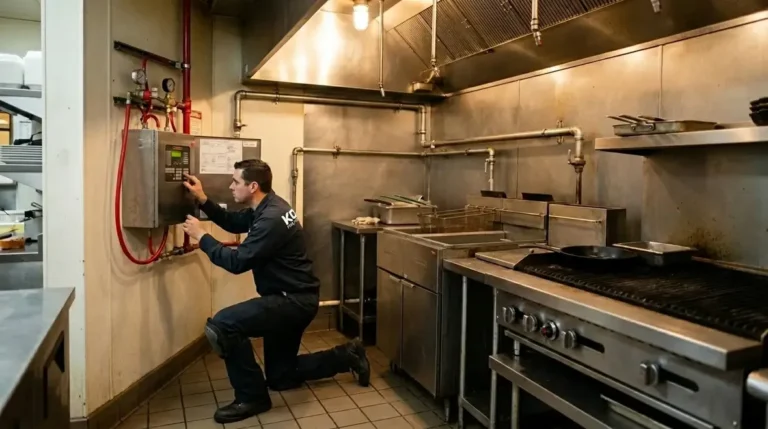
- Fire suppression: Tags must be up to date. If your system was last inspected in 2019, you’re in violation.
Pro tip: Keep a “health inspector checklist” posted in the kitchen. Do a self-inspection weekly so you’re never caught off guard.
2. The “Surprise Inspection” Survival Guide
Here’s how to handle an unannounced inspection without panicking:
- Stay calm. Freaking out makes you look guilty.
- Designate a spokesperson. Only one person should talk to the inspector (usually the manager or chef).
- Have your paperwork ready. Temperature logs, training records, and inspection reports should be organized and accessible.
- Don’t lie. If you don’t know an answer, say, “Let me find out.”
- Fix small issues on the spot. If they point out a missing lid on a trash can, put a lid on it immediately.
- Ask for clarification. If they cite you for something, ask, “What’s the exact regulation I’m violating?” This helps you fix it and shows you’re proactive.
Remember: Inspectors aren’t out to get you, they want you to be safe. If you’re transparent and show effort, they’re more likely to work with you.
Creating a Culture of Safety (Without Being the “Fun Police”)
1. The Safety Meeting That Actually Works
Most safety meetings are boring, repetitive, and ignored. Here’s how to make them engaging and effective:
- Keep it short: 10 minutes max. Longer than that, and people tune out.
- Make it interactive: Instead of lecturing, ask, “What’s one safety hazard you’ve noticed this week?”
- Use real examples: Show photos of burns, cuts, or near-misses (with names blurred). Fear works.
- Reward vigilance: If someone reports a hazard, thank them publicly. If they prevent an accident, give them a small bonus.
- Rotate leaders: Have different staff members lead the meeting. It keeps it fresh and gives everyone ownership.
Topic idea: “What’s the dumbest thing you’ve ever seen someone do in a kitchen?” (You’ll be shocked at the stories, and they’ll stick with people.)
2. The “See Something, Say Something” Rule
The biggest safety risk in any kitchen is silence. If your team is afraid to speak up about hazards, you’re flying blind. Here’s how to fix it:
- Anonymous reporting: Set up a suggestion box (physical or digital) for safety concerns.
- No retaliation: If someone reports a hazard, thank them. Don’t punish them for “slowing things down.”
- Lead by example: If the chef cuts corners, the staff will too. Follow the rules yourself.
- Celebrate near-misses: If someone catches a hazard before it causes an accident, make a big deal out of it.
Hard truth: If your kitchen has a “tough it out” culture, you’re one accident away from a lawsuit. The best kitchens I’ve seen have a “safety first, no questions asked” policy. That means if someone says, “This feels unsafe,” you stop and address it immediately.
Final Thoughts: The Safety Paradox
Here’s the ironic thing about kitchen safety: The safer your kitchen is, the less you’ll notice the safety measures. When everything’s running smoothly, no fires, no injuries, no violations, it’s easy to think, “Maybe we’re overdoing it.” But that’s exactly when safety works best. It’s like a good fire suppression system: You only notice it when it isn’t there.
So here’s my challenge to you: Pick one thing from this article, just one, and implement it this week. Maybe it’s a 10-minute safety huddle. Maybe it’s labeling all your chemicals. Maybe it’s finally replacing that frayed extension cord behind the prep table. Small changes add up. And if you do nothing else, start with this:
- Train like lives depend on it (because they do).
- Inspect like an inspector is coming tomorrow (because they might be).
- Listen to your team (they see the hazards you don’t).
And remember: A safe kitchen isn’t just about avoiding disasters, it’s about creating a place where your team can do their best work without fear. That’s how you build a kitchen that’s not just safe, but great.
Now, if you’ll excuse me, I need to go check on Luna (my cat), who’s currently judging me for typing this instead of feeding her. But before I go-what’s one safety habit you’re going to steal from this article? Drop it in the comments. I’d love to hear what’s working (or not working) in your kitchen.
FAQ: Your Burning (Pun Intended) Safety Questions
Q: How often should we clean the grease traps?
A: At least monthly, but if you’re a high-volume fryer operation, aim for every 2-3 weeks. A clogged grease trap isn’t just a fire hazard, it can back up into your sinks, which is a health code violation. Pro tip: Keep a log with dates and initials so you’re covered during inspections.
Q: What’s the most common OSHA violation in commercial kitchens?
A: Improper chemical storage. OSHA cites kitchens all the time for storing cleaners next to food or not having Safety Data Sheets (SDS) accessible. Fix it: Dedicate a locked cabinet for chemicals, and keep a binder with SDS sheets near the first aid kit.
Q: Do we really need to calibrate our thermometers? They seem fine.
A: Yes. A thermometer that’s off by 5 degrees can mean the difference between safe food and a salmonella outbreak. How to calibrate:
- Fill a glass with ice and water. The temp should read 32°F (0°C).
- Bring water to a rolling boil. At sea level, it should read 212°F (100°C). (Adjust for altitude if needed.)
- If it’s off, adjust the calibration screw or replace the thermometer.
Do this weekly for digital thermometers, monthly for dial types.
Q: How can we get our staff to actually care about safety?
A: Make it personal. Instead of saying, “Wear gloves because OSHA says so,” say, “Wear gloves so you don’t burn your hands and miss your kid’s soccer game.” People care more when they see how safety affects them directly. Also, involve them in solutions. Ask, “What’s one safety issue that drives you crazy?” Then fix it together. Ownership = compliance.
@article{essential-safety-guidelines-for-commercial-kitchens-what-nobody-tells-you-but-should,
    title   = {Essential Safety Guidelines for Commercial Kitchens: What Nobody Tells You (But Should)},
    author  = {Chef's icon},
    year    = {2025},
    journal = {Chef's Icon},
    url     = {https://chefsicon.com/essential-safety-guidelines-for-commercial-kitchens/}
}