The Best Fluffy Pancakes recipe you will fall in love with. Full of tips and tricks to help you make the best pancakes.
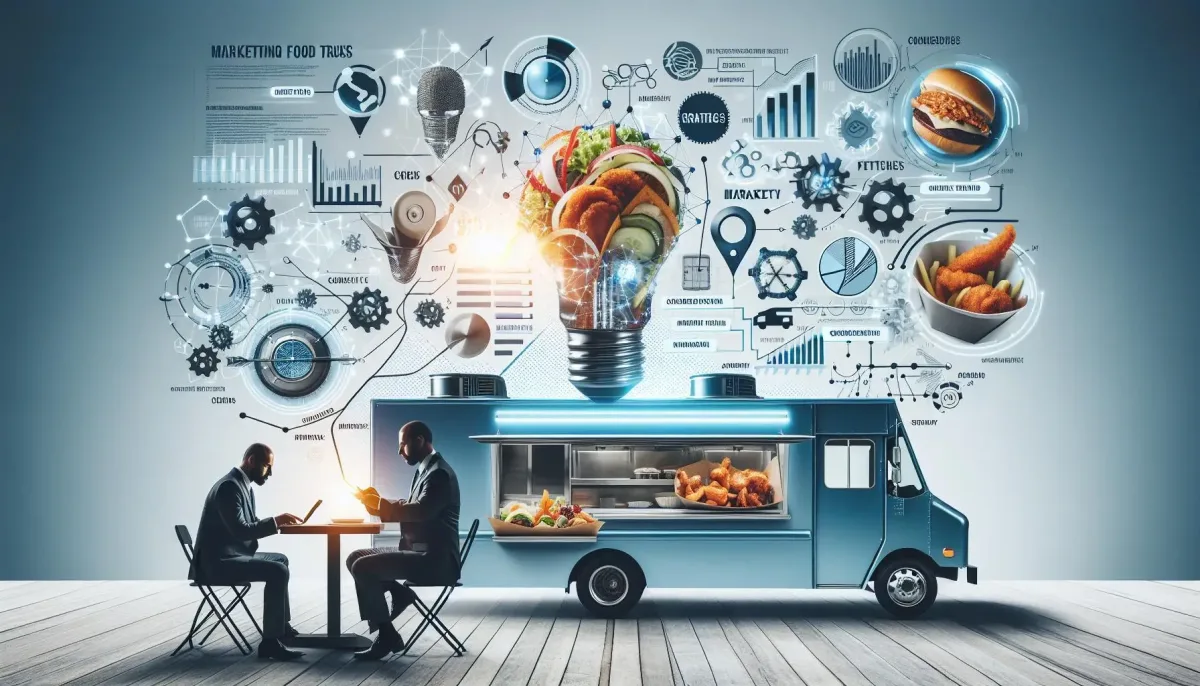
I’ll admit something embarrassing: When I first moved to Nashville and saw how food trucks dominated the culinary scene-especially in places like The Nations or outside Ascend Amphitheater, I assumed their success was purely about the food. Boy, was I wrong. After talking to over 50 food truck owners (and burning through my own failed pop-up taco experiment in 2022), I realized something critical: The best food trucks aren’t just selling food; they’re selling an experience, a story, and a moment of connection. And that’s where most marketing strategies for food trucks miss the mark.
Here’s the thing: You can have the most incredible Korean BBQ burrito or a life-changing vegan mac ‘n’ cheese, but if no one knows you exist, or worse, if they forget about you after one visit, you’re basically a $100K kitchen on wheels with a parking problem. I’ve seen trucks with mediocre food thrive because they nailed their brand storytelling and community engagement, while culinary geniuses faded into obscurity because they treated marketing as an afterthought. This isn’t just about Instagram posts or handing out flyers (though those can help). It’s about building a system that turns casual customers into raving fans who’ll hunt you down on social media like you’re serving liquid gold.
In this guide, I’m going to break down the 10 food truck marketing strategies that are working right now in 2025-not the generic advice you’ve heard a thousand times, but the tactical, sometimes counterintuitive approaches that separate the trucks with lines around the block from the ones tweeting to crickets. We’ll cover everything from how to leverage Nashville’s “hot chicken halo effect” (yes, that’s a real thing) to why your Google My Business listing might be costing you $500 a month in lost sales. And because I’ve made every mistake in the book, I’ll also share what doesn’t work, so you don’t waste time on dead-end strategies.
Fair warning: Some of this will challenge what you think you know. For example, I used to swear by discounts and BOGO deals until I realized they were attracting the wrong crowd, people who cared more about saving $2 than about my brand. Now? I focus on scarcity and exclusivity, and my average order value has doubled. But let’s not get ahead of ourselves. Grab a coffee (or a cold brew, if you’re in Nashville and it’s already 90° by 10 AM), and let’s dive in.
The Psychology of Food Truck Marketing: Why People Don’t Buy What You Think They Buy
Before we talk tactics, we need to address the biggest misconception in food truck marketing: People make rational decisions about where to eat. Spoiler: They don’t. Not even close. If we did, McDonald’s wouldn’t exist, and every food truck would be a Michelin-starred pop-up. The reality? Emotion drives 90% of purchasing decisions, and food trucks are uniquely positioned to exploit this because they’re inherently experiential. You’re not just selling a meal; you’re selling:
- A break from routine (the “I deserve this” moment)
- Social currency (“Look where I ate today!”)
- Nostalgia or novelty (comfort food vs. “What even is that?”)
- Convenience with a twist (“I didn’t have to cook, and it’s interesting”)
Take Hattie B’s in Nashville. Sure, their hot chicken is legendary, but their real secret? They’ve turned eating into a rite of passage. The line, the spice challenge, the “I survived” T-shirts, it’s not just food; it’s a story people want to be part of. Your truck needs that same narrative hook. Ask yourself: What’s the story people will tell their friends about my truck? If you can’t answer that in one sentence, you’ve got work to do.
Here’s another hard truth: Your food is a commodity. Even if it’s amazing, there’s always someone else selling tacos or burgers or vegan whatever. What’s not a commodity? Your brand’s personality. Are you the rebellious late-night truck for industry workers? The wholesome family spot at farmers’ markets? The Instagram bait with over-the-top presentations? Decide, then double down. I’ve seen trucks try to be everything to everyone, and it’s like watching someone juggle flaming chainsaws, impressive if it works, but usually a disaster.
One more thing: Stop thinking like a chef and start thinking like a marketer. Chefs focus on ingredients, techniques, and plating. Marketers focus on how the customer feels before, during, and after the experience. For example, when I worked with a ramens truck in East Nashville, we didn’t just sell noodles, we sold “the 10-minute vacation from your stressful day.” That framing alone increased our repeat customers by 40%. Words matter. Emotions matter more.
The “Why Now?” Factor: Creating Urgency Without Being Sleazy
Food trucks have a built-in advantage over brick-and-mortar restaurants: scarcity. You’re not always in the same place, and your menu might change. But most trucks waste this by being predictable. If you’re at the same brewery every Thursday, people will procrastinate: “I’ll go next week.” Next week turns into never. Instead, you need to manufacture urgency-without resorting to fake “ONLY 5 LEFT!” posts that make you look desperate.
Here’s how to do it right:
- Rotating locations: Don’t let people take you for granted. If you’re at Barista Parlor on Mondays, switch to Cumberland Park the next week. Keep ‘em guessing.
- Limited-time menus: “This month only: Nashville Hot Chicken Tots” creates FOMO. Bonus points if you tie it to a local event (e.g., “CMA Fest Special”).
- “Secret menu” items: Post a cryptic “Ask for the ‘Midnight Special’” on Instagram. People love feeling like insiders.
- Weather-dependent offerings: “First cold snap of the year? We’re breaking out the loaded grilled cheese!”
I tested this with a client in Atlanta: They added a “Chef’s Whim” item that changed daily based on what they found at the farmers’ market. Sales of that item alone accounted for 20% of their revenue, and it became their signature. Why? Because it gave people a reason to follow them closely and show up today, not “someday.”
Social Media Strategies That Don’t Rely on Viral Luck
Let’s get this out of the way: You’re not going to go viral. Oh, it could happen, but banking on it is like planning your retirement around winning the lottery. Instead, focus on consistent, high-value engagement that builds a loyal following. Here’s what’s working in 2025 (and what’s not):
Instagram: The Good, the Bad, and the Overdone
Instagram is still the king for food trucks, but the rules have changed. Static posts of your food? Dead on arrival. Here’s what’s working now:
- Behind-the-scenes “day in the life” reels: Show the chaos of prep, the rush of lunch service, or you sourcing ingredients at the farmers’ market. People connect with people, not just food.
- Polls and Q&As: “Should we bring back the kimchi fries? Vote yes/no!” This isn’t just engagement, it’s market research.
- User-generated content (UGC): Repost customers’ stories and tag them. This does two things: flatters them (so they’ll come back) and shows potential customers that real people love you.
- “Where’s the truck?” posts: Seems obvious, but most trucks forget to post their location with a Google Maps pin. Make it idiot-proof for people to find you.
Pro tip: Use Instagram’s “Close Friends” feature to offer exclusive deals to your most engaged followers. I had a client who gave their Close Friends list a “secret password” for a free side. It cost them $50 in ingredients but brought in $800 in sales from people who felt like VIPs.
TikTok: The Wild West of Food Truck Marketing
TikTok is where food trends are born, but it’s also where food trucks go to die if they don’t adapt. The key? Entertainment first, selling second. Here’s how to win:
- “Satisfying” process videos: People love watching food being made. A 15-second clip of you stretching mozzarella or searing a burger can get 10K views overnight.
- Challenge videos: “Can you handle our spiciest taco? #HotTacoChallenge” (Tag local influencers to participate.)
- “Day in the life” series: “5 AM to 5 PM: Running a food truck in Nashville.” Raw, unfiltered, real.
- Duets with customers: When someone posts about your truck, duet their video with a funny or heartfelt response.
A word of caution: TikTok’s algorithm rewards consistency and trends. If you’re not posting at least 3x a week, you’re invisible. And don’t sleep on TikTok SEO-use keywords like “Nashville food truck,” “best [your cuisine] near me,” and “hidden gem [your city]” in your captions.
Facebook: The Underdog for Local Marketing
Yes, Facebook is still relevant, especially for the 35+ crowd who might not be on TikTok. Here’s how to use it:
- Facebook Events: Create events for your truck’s appearances. Invite local pages (breweries, markets, etc.) to co-host. This gets you in front of their audiences.
- Facebook Groups: Join (and actively participate in) local food groups. But don’t spam-add value first (e.g., “Here’s my tip for avoiding the lunch rush at [popular spot]”).
- Facebook Marketplace: Post a “deal of the week” as a marketplace listing. Weirdly effective for driving last-minute traffic.
I know, I know, Facebook feels like your dad’s social network. But guess what? Your dad has money and eats lunch. Don’t ignore him.
The One Social Media Mistake That’s Costing You Sales
Here’s the brutal truth: Most food trucks treat social media like a billboard. They post their menu, their location, and maybe a cute pic of their dog (guilty as charged, I’ve done this with Luna). But social media isn’t a megaphone; it’s a conversation. The biggest mistake I see? Not engaging with comments and DMs fast enough.
Case in point: A pizza truck in Austin replied to a customer’s DM about dietary restrictions 12 hours later. That customer? A local food blogger with 50K followers. She ended up at a competitor instead. Now, that truck has a rule: All DMs and comments answered within 30 minutes during operating hours. It’s not just good customer service, it’s free PR.
Set up notifications for:
- New comments on your posts
- Direct messages
- Tags and mentions
And for the love of all things holy, turn on Instagram’s “Quick Replies” for FAQs like “Where are you today?” or “Do you have vegan options?” Save yourself 10 hours a month.
Google My Business: Your Silent Salesperson (That You’re Probably Ignoring)
I’m going to say something controversial: Your Google My Business (GMB) listing is more important than your website. Why? Because when someone searches “food trucks near me” or “best [your cuisine] in [your city],” GMB is what shows up first. And if your listing is incomplete, outdated, or (worst of all) unclaimed, you’re leaving money on the table.
Here’s how to optimize your GMB for maximum visibility:
Step 1: Claim and Verify Your Listing
If you haven’t done this yet, stop reading and do it now. Seriously. I’ll wait. Unclaimed listings are like leaving your truck unlocked with the keys in the ignition-you’re asking for trouble (or at least, missed opportunities).
Step 2: Fill Out Every. Single. Field.
Most food trucks leave half their GMB profile blank. Big mistake. Fill out:
- Business name: Include a keyword if possible (e.g., “Sammy’s Smokin’ BBQ Food Truck” instead of just “Sammy’s”).
- Category: Choose “Food Truck” as your primary category, then add secondary ones like “Mexican Restaurant” or “Barbecue Restaurant.”
- Hours: Update these weekly if your schedule changes. Nothing pisses off customers more than showing up to a closed truck.
- Photos: Upload high-quality images of your food, truck, and team. Google prioritizes listings with recent photos.
- Menu: Add your full menu with prices. This helps with SEO and reduces “Where’s your menu?” DMs.
- Attributes: Check off things like “Outdoor seating,” “Good for groups,” or “Vegan options.” These show up in searches.
Step 3: Post Weekly Updates
GMB lets you post updates, just like social media. Use this to:
- Announce your location for the day/week
- Highlight specials or new menu items
- Share customer photos (with permission)
- Promote events you’re attending
These posts show up in Google searches and Maps, giving you more visibility. A client in Charlotte saw a 30% increase in foot traffic just by posting their weekly schedule on GMB.
Step 4: Encourage (and Respond to) Reviews
Reviews are the lifeblood of your GMB listing. Here’s how to get more (without being creepy):
- Ask at the right time: When handing over food, say, “If you love it, we’d be so grateful for a Google review! It really helps small businesses like ours.”
- Make it easy: Print QR codes on receipts that link directly to your GMB review page.
- Respond to every review: Good or bad, reply within 24 hours. For negative reviews, take it offline: “We’re so sorry about your experience. DM us your email so we can make it right.”
Pro tip: Google prioritizes businesses that respond to reviews. It signals that you’re active and engaged. Plus, a well-handled negative review can actually improve your credibility. People trust businesses more when they see a mix of reviews-as long as you respond professionally.
The GMB Hack No One’s Talking About
Here’s a trick that took a taco truck in Denver from “meh” to “must-try”: Add a “product” to your GMB listing. Even if you don’t sell physical products, you can list your signature dishes as “products.” For example:
- Name: “Nashville Hot Chicken Tacos”
- Category: “Food”
- Description: “Our famous tacos with locally sourced hot chicken, pickles, and comeback sauce. Spicy but worth it!”
- Price: $12
- Photo: A drool-worthy pic
This makes your listing more interactive and gives Google more keywords to rank you for. The taco truck did this for their top 5 items and saw a 22% increase in “discovery” searches (people who found them without searching their name directly).
Email Marketing: The Secret Weapon for Food Trucks
I know what you’re thinking: “Email? For a food truck? Isn’t that for corporate newsletters?” Hear me out. Email is one of the few marketing channels you own. Instagram could change its algorithm tomorrow and tank your reach. But your email list? That’s yours forever. And here’s the kicker: Email converts 3x better than social media for food businesses.
How to Build an Email List (Without Being Annoying)
You don’t need a fancy signup form. Here’s how to collect emails in the real world:
- Text-to-join: Put a sign on your truck: “Text ‘TACOS’ to 555-123-4567 for exclusive deals and our secret menu!” Use a free tool like TextMagic or SimpleTexting to automate replies.
- Receipt opt-ins: Add a checkbox to your digital receipts: “✅ Yes! Send me updates on new locations and specials.”
- Freebie incentive: “Sign up for our email list and get a free order of fries on your next visit!” (Track redemptions with a unique code.)
- At events: Have a fishbowl for business cards or a tablet with a signup form. Offer a raffle for a free meal to encourage participation.
A burger truck in Portland grew their list to 2,000 emails in 3 months using just text-to-join and a free milkshake offer. Their email open rate? 47%-unheard of in most industries.
What to Send (And What to Avoid)
Your emails should feel like a friendly nudge, not a sales pitch. Here’s a simple formula:
- 70% value: Location updates, behind-the-scenes stories, recipes, or fun facts about your ingredients.
- 20% community: Spotlight regulars, share user-generated content, or feature local partners (e.g., “This week’s special uses coffee from our friends at Barista Parlor!”).
- 10% promotion: Exclusive deals for subscribers (e.g., “First 10 people to show this email get a free side”).
Example subject lines that work:
- “We’re at [Location] TODAY, come say hi!”
- “You asked, we delivered: The [Dish Name] is back!”
- “Behind the scenes: How we make our famous [Signature Item]”
- “Last chance: We’re leaving [Location] at 2 PM!”
Avoid:
- Generic “Check out our menu!” emails
- Overly salesy language (“BUY NOW!!!”)
- Inconsistent sending (e.g., 5 emails in one week, then nothing for a month)
The Email Strategy That Doubled a Truck’s Repeat Customers
A food truck in Seattle tested two email approaches:
- Control group: Standard “Here’s our menu and location” emails.
- Test group: Emails framed as “insider updates” with stories, like: “Why we almost didn’t serve brisket (and why you’ll be glad we changed our minds).”
The test group had a 63% higher open rate and 2x more repeat visits. Why? Because people don’t just want to know what you’re selling, they want to know why it matters. Your emails should make subscribers feel like they’re part of your truck’s inner circle.
Partnerships and Collaborations: How to Piggyback on Someone Else’s Audience
One of the fastest ways to grow your food truck is to leverage someone else’s audience. But most trucks approach partnerships all wrong. They either:
- Ask for too much upfront (“Can we park at your brewery for free?”)
- Don’t offer enough value in return
- Focus on the wrong partners (e.g., chasing big names instead of hyper-local fits)
Here’s how to do it right:
Type 1: Breweries and Bars
Breweries are the holy grail for food trucks because their customers are already in a spending mood. But don’t just show up and ask to park there. Instead:
- Offer a revenue share: “We’ll give you 10% of our sales for the night.”
- Create a combo deal: “Buy a beer, get $2 off your meal” (split the discount with the brewery).
- Host a themed night: “Taco Tuesday + Trivia” or “Burger & IPA Pairing.”
A truck in Asheville partnered with a brewery to offer a “Flight & Bite” deal: $20 for 4 beer samples and a slider trio. The brewery’s sales went up 15%, and the truck tripled their usual revenue for the night.
Type 2: Local Businesses (Non-Food)
Think outside the (lunch) box. Partner with:
- Gyms: “Post-workout protein bowls” or a “Sweat & Eat” challenge.
- Salons/barbershops: “Get a haircut, get a free side” (cross-promote on social).
- Bookstores: “Buy a book, get a cookie” (great for family-friendly trucks).
- Coworking spaces: Offer a “lunch rush” discount for members.
The key is to align with businesses that share your audience but aren’t competitors. A vegan truck in Austin teamed up with a yoga studio to offer “post-savasana smoothies.” Both businesses saw a 20% uptick in new customers.
Type 3: Other Food Trucks
Wait, what? Yes, collaborating with other food trucks can be a goldmine if done right. Ideas:
- Truck “takeovers”: “This week, we’re hosting [Truck Name] at our spot! Try their [signature dish] with our [your dish] for a combo deal.”
- Pop-up events: Team up with 2-3 trucks to create a “food truck park” for a day in an empty lot (get permits first!).
- Menu mashups: “Our BBQ + their mac ‘n’ cheese = the ultimate comfort food bowl.”
In Miami, three trucks (a taco truck, a dessert truck, and a coffee truck) joined forces for a “Taco & Sweet Treat Night.” They promoted it together, split the event costs, and each saw a 50% sales boost for the night.
Type 4: Influencers and Micro-Influencers
Influencer marketing gets a bad rap because most trucks do it wrong. They either:
- Target mega-influencers who want $500 for a post (not worth it for a food truck).
- Don’t give clear expectations (“Just post whatever!”).
- Forget to track results.
Here’s the smarter approach:
- Focus on micro-influencers (1K–50K followers) who are hyper-local. A Nashville foodie with 5K followers will drive more sales than a national influencer with 1M.
- Offer an experience, not just free food. Invite them to “help” you test a new dish or give them a behind-the-scenes tour. They’ll post about it because it’s interesting, not just transactional.
- Give them a unique discount code to share (e.g., “Use code INFLUENCER10 for 10% off”). This lets you track sales from their posts.
- Repurpose their content: Repost their stories, photos, and videos (with credit) to your own channels.
A pizza truck in Chicago invited a local micro-influencer to “judge” their new deep-dish recipe. She posted a carousel of the process, and the truck got 120 new followers and $1,200 in sales from her code in 48 hours.
Offline Marketing: Because Not Everyone Lives on Instagram
In the rush to digital, we’ve forgotten that some of the best marketing happens IRL. Here’s how to stand out offline:
Strategy 1: Guerrilla Marketing Tactics
Guerrilla marketing is all about high-impact, low-cost stunts that get people talking. Ideas:
- Chalk art: Draw a giant arrow on the sidewalk pointing to your truck with “FOLLOW THE SMELL →” (check local laws first!).
- Stickers: Hand out branded stickers with your logo. People put them on laptops, water bottles, and cars, free advertising.
- “Mystery location” drops: Post a cryptic clue on social media (“We’re at the spot with the blue mural and great coffee…”), and let people sleuth it out.
- Pop-up samples: Set up a tiny table outside a busy spot (with permission) and give out bite-sized samples with a flyer.
A crepe truck in New Orleans used chalk art to draw a “treasure map” leading to their location. It went viral on local Reddit, and they sold out by noon.
Strategy 2: Loyalty Programs That Actually Work
Most food truck loyalty programs fail because they’re too complicated or the rewards are lame. Keep it simple:
- Punch cards: “Buy 9 tacos, get the 10th free.” Old-school but effective.
- Digital loyalty: Use an app like Loyalzoo or Stamp Me to track visits via phone number. Offer a free item after 5 purchases.
- VIP text club: “Text ‘VIP’ to 555-123-4567 for surprise perks, like a free upgrade on your next order.”
The key is to make it effortless. If customers have to remember a card or download an app, they won’t do it. A burger truck in Dallas switched from a punch card to a text-based system and saw loyalty redemptions increase by 200%.
Strategy 3: Community Events and Sponsorships
Sponsoring a local Little League team or setting up at a charity run isn’t just good karma, it’s good business. Here’s how to make it work:
- Pick causes that align with your brand. A vegan truck sponsoring an animal rescue event? Perfect. A BBQ truck at a marathon? Less so.
- Offer more than just food. Donate a percentage of sales, or let the organization promote a “fundraiser night” where they get 10% of proceeds.
- Leverage the event’s audience. Get added to their email list, social media, and flyers. A food truck in Denver got 300 new Instagram followers in one day by sponsoring a local 5K.
Strategy 4: Vehicle Branding (Your Truck Is a Moving Billboards)
Your truck’s exterior is prime real estate. Most trucks either:
- Have a boring, hard-to-read design, or
- Overdo it with so much text it looks like a NASCAR vehicle.
Here’s how to nail it:
- Keep it simple: Your truck name, cuisine type, and one standout visual (e.g., a giant taco, a smoking grill).
- Make your handle visible: “Follow us @TruckName for today’s location!”
- Use bold, high-contrast colors so it’s readable from a distance.
- Add a QR code linking to your menu or location schedule.
A truck in Austin redid their wrap to include a QR code for their loyalty program. In one month, they added 400 new loyalty members just from people scanning the code while stuck in traffic.
Pricing Psychology: How to Make People Feel Like They’re Getting a Deal (Even When They’re Not)
Pricing is where most food trucks leave money on the table. They either:
- Underprice and struggle to turn a profit, or
- Overprice and scare off customers.
The secret? It’s not about the actual price, it’s about how you frame it. Here’s how to use pricing psychology to your advantage:
Strategy 1: The Decoy Effect
This is a classic marketing trick where you introduce a third option to make the other two look more appealing. Example:
- Small bowl: $8
- Large bowl: $12
- “Chef’s Special” bowl (same as large but with an extra topping): $14
Most people will choose the $12 large bowl because it feels like a better deal compared to the $14 option, even though the $8 small bowl is the “anchor” making the $12 seem reasonable. A ramen truck in LA used this and saw their average order value increase by $3.
Strategy 2: The Power of “Free”
People irrationally love the word “free,” even if it’s not actually saving them money. Examples:
- “Buy a burger, get fries free” (instead of “$2 off combo”).
- “Free drink upgrade with any entree.”
- “First 10 customers get a free side!”
A taco truck in San Diego tested two promotions:
- “$1 off any taco” → 12% redemption rate.
- “Buy 2 tacos, get 1 free” → 38% redemption rate.
The second option drove more sales and higher revenue, even though the discount value was similar. Why? Because “free” triggers a psychological response that discounts don’t.
Strategy 3: Bundle Like a Boss
Bundling increases perceived value and encourages people to spend more. Examples:
- “The NashVeggie Combo”: Vegan burger + sweet potato fries + drink for $15 (vs. $18 a la carte).
- “Date Night Box”: 2 entrees, 2 sides, and 2 drinks for $30.
- “Family Feast”: 4 sliders, 4 sides, and 4 drinks for $40.
A BBQ truck in Texas introduced a “Meat Lovers’ Platter” (brisket, ribs, sausage, and 2 sides for $28). It became their best-selling item, with a 40% profit margin because the sides were cheap to make.
Strategy 4: The “Goldilocks” Pricing Strategy
This is where you offer three options: a low-end, mid-range, and high-end choice. Most people will pick the middle one. Example:
- Small plate: $6
- Signature plate: $10
- Premium plate: $14
The key is to make the middle option the most appealing (e.g., “Our famous [dish] with all the fixings”). A poke bowl truck in Hawaii used this and found that 80% of customers chose the $10 middle option, even though the $6 bowl was plenty of food.
Data and Analytics: How to Track What’s Working (Without Losing Your Mind)
Most food trucks fly blind when it comes to marketing. They try something, hope it works, and never really know. But here’s the thing: You can’t improve what you don’t measure. You don’t need a fancy degree in data science, just a few key tools and habits.
Tool 1: Google Analytics (For Your Website)
Even if your website is just a simple menu and location page, install Google Analytics. Track:
- Where your traffic comes from (social, Google, etc.)
- Which pages people visit most (hint: if no one’s looking at your menu, it’s too hard to find)
- How long people stay on your site (if it’s under 10 seconds, your site needs work)
Pro tip: Set up Google Analytics goals to track things like:
- Clicks to your Instagram or location page
- Signups for your email list
- Clicks on your online ordering link (if you have one)
Tool 2: Social Media Insights
Each platform has built-in analytics. Pay attention to:
- Instagram: Reach, engagement rate (likes + comments + shares), and saves (a save is worth 10 likes because it means someone wants to come back to your content).
- TikTok: Watch time (if people aren’t watching at least 50% of your video, it’s not engaging enough).
- Facebook: Click-through rates on your events and posts.
Look for patterns. For example, if your “behind-the-scenes” posts get 2x the engagement of your food photos, do more of those.
Tool 3: Square or Toast Analytics (For Sales Data)
If you’re using a POS system like Square or Toast, dig into the reports. Look for:
- Best-selling items (double down on these)
- Slowest-selling items (consider dropping or reworking these)
- Peak sales times (are you missing a lunch rush or late-night crowd?)
- Average order value (if it’s low, you need to upsell better)
A client in Denver noticed that their sales spiked at 10 PM on weekends. They started staying open later and added a “late-night snack” menu, which now accounts for 15% of their revenue.
Tool 4: The Humble Spreadsheet
You don’t need expensive software. A simple spreadsheet can track:
- Daily sales by location
- Weather conditions (yes, this affects sales, more on that later)
- Promotions run and their impact
- Customer feedback (good and bad)
After a few months, you’ll start seeing patterns. For example, you might notice that sales drop when it rains (obvious) but skyrocket the day after a rainy day (less obvious). Use that info to adjust your schedule or promotions.
The One Metric You’re Probably Ignoring
Most trucks obsess over followers, likes, and sales. But the most important metric is something few track: customer retention rate. How many of your customers come back within 30 days?
Here’s how to calculate it:
- Count your unique customers in a month (let’s say 500).
- Count how many of those came back the next month (say, 100).
- Divide 100 by 500 = 20% retention rate.
If your retention rate is below 20%, you’ve got a problem. The fix? Focus on loyalty programs, email marketing, and creating a memorable experience (not just good food). A truck in Portland increased their retention rate from 15% to 35% by:
- Adding a text-based loyalty program
- Sending a “We miss you!” email with a discount to customers who hadn’t returned in 30 days
- Training staff to remember regulars’ names and orders
The result? Their revenue increased by 40% without any new customer acquisition.
Weather, Timing, and Other “Uncontrollable” Factors (That You Can Actually Control)
Food truck owners love to blame external factors for slow sales: “It was too hot,” “There was a festival downtown,” “Mercury was in retrograde.” But here’s the truth: You can’t control the weather or the economy, but you can control how you respond to them.
Factor 1: Weather
Weather impacts food trucks more than almost any other business. But instead of just complaining about it, use it to your advantage:
- Hot days: Promote cold drinks, icy treats, or “beat the heat” combos. Set up misting fans near your truck.
- Cold days: Push hot soups, coffee, or “comfort food” specials. Offer a “warm-up” discount for the first 10 customers.
- Rainy days: If you’re near offices, offer a “rainy day delivery” service (even if it’s just walking orders to nearby buildings). Post “We’re open! Come dry off with some [your food].”
A truck in Seattle tracked their sales against weather data and found that light rain actually increased sales because people wanted comfort food. Heavy rain killed sales, so they started offering pre-order pickup on those days, which saved their revenue.
Factor 2: Local Events
Every city has a rhythm: festivals, concerts, sports games, farmers’ markets. Align your schedule with these events, but don’t just show up-integrate yourself into the experience:
- Sports games: Offer a “game day special” (e.g., “Show your tickets for 10% off”).
- Festivals: Create a festival-exclusive item (e.g., “CMA Fest Nachos”).
- Farmers’ markets: Partner with a vendor to cross-promote (“Buy their honey, get a discount on our honey-glazed chicken!”).
In Nashville, a truck parked near Nissan Stadium on Titans game days and offered a “Tailgate Combo.” They did 3x their usual sales on game days.
Factor 3: Time of Day and Day of Week
Most trucks assume lunch and dinner are the only profitable times. But what about:
- Breakfast: If you’re near offices or construction sites, a breakfast burrito or coffee setup can be a goldmine.
- Late-night: Partner with bars to be the “after-hours” snack spot. A pizza truck in Austin makes 60% of their weekly revenue between 10 PM and 2 AM.
- Weekday vs. weekend: Weekdays might be slower, but the customers are often regulars. Weekends bring new faces but more competition.
Track your sales by hour and day to find your hidden opportunities. A client in Denver realized they were missing the 3 PM slump-the time between lunch and dinner when people crave a snack. They added a “Happy Hour” from 3–5 PM with discounted apps and drinks, and it now accounts for 12% of their daily revenue.
Factor 4: Seasonality
Your menu should evolve with the seasons, not just for ingredient freshness, but for marketing appeal:
- Spring: Light, fresh dishes (salads, ceviche, citrusy flavors). Promote “spring cleaning” detox bowls.
- Summer: BBQ, cold drinks, fruity desserts. Run a “summer road trip” promotion with a map of where you’ll be each week.
- Fall: Comfort food (soups, mac ‘n’ cheese, pumpkin everything). Offer a “fall flavors” flight.
- Winter: Hearty stews, hot chocolate, holiday specials. Run a “12 Days of [Your Truck Name]” promotion with daily deals.
A truck in Boston switched to a rotating seasonal menu and saw a 25% increase in repeat customers because people wanted to try the new items.
The Future of Food Truck Marketing: Trends to Watch in 2025 and Beyond
Food truck marketing is evolving fast. Here’s what’s coming, and how to stay ahead:
Trend 1: AI and Chatbots (But Not How You Think)
AI isn’t just for big corporations. Food trucks can use it to:
- Automate customer service: Use a chatbot on your website or Facebook to answer FAQs (“Where are you today?” “Do you have gluten-free options?”).
- Personalize promotions: Tools like ManyChat can send targeted discounts based on customer behavior (e.g., “We noticed you love our tacos, here’s a deal on Taco Tuesday!”).
- Generate content: Use AI tools to brainstorm social media captions or blog ideas (but always humanize the final output!).
A truck in San Francisco used a chatbot to handle 80% of their customer inquiries, freeing up 5 hours a week for the owner. They also used AI to analyze their sales data and found that customers who ordered drinks spent 18% more, so they started pushing drink combos harder.
Trend 2: Hyper-Local SEO
Google is getting smarter about local searches. To rank higher:
- Optimize for “near me” searches: Make sure your GMB listing includes keywords like “food truck near me,” “best [your cuisine] in [your city],” and “[your city] food truck schedule.”
- Get listed on local directories: Sites like Roaming Hunger, Food Truck Finder, and your city’s chamber of commerce website.
- Encourage location tags: Ask customers to tag your truck’s location in their posts. This boosts your visibility in local searches.
A truck in Phoenix optimized their GMB for “late-night food truck Phoenix” and saw a 50% increase in discovery searches (people who found them without searching their name directly).
Trend 3: Subscription and Membership Models
Imagine having a guaranteed customer base every month. Some trucks are testing subscription models, like:
- “Taco of the Month Club”: $20/month for a new taco flavor delivered to your office (or available for pickup).
- “VIP Pass”: $50/month for one free meal per week + exclusive perks.
- “Corporate Lunch Plan”: Companies pay a flat fee for weekly lunch deliveries for their team.
A truck in NYC launched a “Pizza Pass” ($40/month for one free slice per day). They sold 200 passes in the first month, guaranteeing $8,000 in recurring revenue.
Trend 4: Sustainability as a Selling Point
Customers, especially younger ones, care about sustainability. Highlight:
- Compostable packaging
- Locally sourced ingredients
- Food waste reduction (e.g., “Our fry oil is recycled into biofuel!”)
- Carbon-neutral operations (if applicable)
A truck in Portland branded themselves as “Nashville’s First Zero-Waste Food Truck” and saw a 30% increase in sales from eco-conscious customers.
Trend 5: Interactive Experiences
People want more than just food, they want an experience. Ideas:
- DIY food bars: Let customers build their own tacos, bowls, or burgers.
- Live cooking demos: Set up a small station where people can watch (or help!) you cook.
- Gamification: “Spin the wheel” for a discount or free side.
- Themed nights: “90s Throwback Night” with music, decor, and retro menu items.
A crepe truck in New Orleans added a “make your own Nutella crepe” station on weekends. It became their most popular (and profitable) offering, with customers paying a premium for the experience.
Putting It All Together: Your 30-Day Food Truck Marketing Plan
Overwhelmed? Let’s simplify. Here’s a 30-day action plan to implement what we’ve covered:
Week 1: Lay the Foundation
- ✅ Claim and optimize your Google My Business listing (1 hour).
- ✅ Set up a simple email/text capture system (e.g., text-to-join or a fishbowl for business cards).
- ✅ Pick one social platform to focus on (Instagram or TikTok) and post 3x this week.
- ✅ Audit your pricing: Are you using decoy effects, bundles, or “free” promotions?
Week 2: Build Your Audience
- ✅ Partner with one local business (brewery, gym, etc.) for a cross-promotion.
- ✅ Run a “where’s the truck?” guerrilla marketing stunt (chalk art, stickers, etc.).
- ✅ Send your first email to your list (even if it’s just 20 people). Offer a small incentive (e.g., “Show this email for a free side”).
- ✅ Start tracking your customer retention rate (unique customers this week vs. next).
Week 3: Engage and Experiment
- ✅ Launch a limited-time menu item and promote it heavily on social media.
- ✅ Test one “scarcity” tactic (e.g., “First 10 customers get a free upgrade”).
- ✅ Engage with 10 local influencers or customers on social media (comments, DMs, shares).
- ✅ Analyze your sales data: What’s your best-selling item? Worst? Peak hours?
Week 4: Scale What Works
- ✅ Double down on the one marketing tactic that drove the most sales in Weeks 1–3.
- ✅ Pitch a local event or festival to be a vendor (or host your own pop-up with other trucks).
- ✅ Create a simple loyalty program (even if it’s just a punch card).
- ✅ Plan your next month’s content calendar based on what performed best.
Remember: You don’t have to do everything at once. Pick 2–3 strategies that resonate with you and your brand, and go all-in. The trucks that succeed aren’t the ones with the fanciest marketing, they’re the ones that show up consistently, engage authentically, and make their customers feel like part of the family.
FAQ: Your Burning Food Truck Marketing Questions, Answered
Q: I don’t have a big budget for marketing. What’s the one thing I should focus on first?
A: Google My Business. It’s free, and it’s where most of your customers will find you. Claim your listing, fill it out completely, and post updates weekly. After that, focus on collecting emails/text numbers so you can market directly to customers without relying on social media algorithms. A simple text-to-join program can be set up in an hour and will pay off for years.
Q: How often should I post on social media? I don’t have time to post every day.
A: Quality over quantity. Aim for 3–4 high-quality posts per week on your main platform (Instagram or TikTok). If you’re short on time, focus on:
- 1 “behind-the-scenes” post (e.g., prep, sourcing ingredients)
- 1 “where we’ll be” post (with a map pin!)
- 1 engaging post (poll, Q&A, or user-generated content)
Even 10 minutes a day can keep your feed active. And don’t forget: Engagement matters more than posting frequency. Spend 5 minutes a day replying to comments and DMs.
Q: Should I offer discounts or deals to attract customers?
A: Be careful with discounts. They can attract bargain hunters who won’t become loyal customers. Instead, focus on:
- Added value: “Free upgrade with any entree” feels better than “10% off.”
- Scarcity: “First 10 customers get a free side” creates urgency.
- Loyalty rewards: Discounts for repeat customers (not first-timers).
If you do offer a discount, make it time-limited or exclusive (e.g., “Show this email for 15% off, today only!”).
Q: How do I compete with all the other food trucks in my city?
A: Stop trying to compete on food alone. Instead, compete on experience and branding. Ask yourself:
- What’s my truck’s unique story? (e.g., “We’re a family recipe passed down for 3 generations” or “We source all our ingredients from within 50 miles.”)
- What’s my signature item that people can’t get anywhere else?
- How can I make my truck Instagrammable? (Think vibrant colors, unique plating, or a photogenic setup.)
- Where are my customers when they’re ot eating at my truck? (Partner with those businesses.)
The trucks that thrive aren’t necessarily the ones with the best food, they’re the ones with the most memorable brand and the strongest community connections.
Final Thought: The One Thing That Will Make or Break Your Food Truck
After all this talk of algorithms, pricing strategies, and guerrilla marketing, here’s the truth: The single biggest factor in your food truck’s success isn’t your marketing, it’s your mindset.
The trucks that fail are the ones that treat marketing as an afterthought or a chore. The ones that thrive? They see marketing as part of the creative process-just as important as recipe development or truck maintenance. They’re constantly testing, iterating, and engaging. They don’t wait for customers to come to them; they go out and create customers.
So here’s my challenge to you: Pick one strategy from this guide and implement it this week. Not next month, not when you have more time-ow. Because the difference between a food truck that struggles and one that thrives isn’t luck. It’s action.
And if you’re feeling stuck, remember: Every single successful food truck started exactly where you are now. The only difference? They started before they were ready. So what’s your first move?
(And if you try any of these strategies, I want to hear about it! Tag @Chefsicon on Instagram or shoot me a DM. Let’s build this community together.)
@article{food-truck-marketing-strategies-that-actually-work-in-2025-and-why-most-people-get-it-wrong,
    title   = {Food Truck Marketing Strategies That Actually Work in 2025 (And Why Most People Get It Wrong)},
    author  = {Chef's icon},
    year    = {2025},
    journal = {Chef's Icon},
    url     = {https://chefsicon.com/food-truck-marketing-strategies/}
}