The Best Fluffy Pancakes recipe you will fall in love with. Full of tips and tricks to help you make the best pancakes.
Let me set the scene: It’s 4:30 AM, the kitchen lights hum to life like a reluctant teenager, and you’re staring at a 60-quart stockpot of chili that somehow tastes like it was seasoned by a spice rack that fell down a flight of stairs. One taste test, just one, and your eyes water like you’ve been chopping onions for a living. The problem? That batch is supposed to feed 200 people at lunch service, and right now, it’s got the heat level of a small sun. Adjusting spice levels in commercial batch cooking isn’t just about adding more or less; it’s about control, consistency, and not accidentally turning your signature dish into a culinary prank.
I’ve been there. More times than I’d like to admit. Back when I was running a pop-up in Oakland, I once misjudged a batch of jerk marinade so badly that even the line cooks refused to taste it. We ended up serving it as a “spicy challenge” special just to save face. Lesson learned: when you’re cooking at scale, small mistakes don’t just double, they multiply like rabbits in a carrot factory. And spice? Spice is the rabbit that never stops breeding.
But here’s the thing: adjusting spice levels in large batches isn’t rocket science. It’s actually closer to alchemy, part science, part intuition, and a whole lot of trial and error. Over the years, I’ve picked up tricks from chefs, line cooks, and even a few grandmothers who could make a pot of gumbo sing without ever looking at a recipe. In this guide, I’m going to walk you through how to dial in heat, balance flavor, and rescue a batch that’s gone rogue, without resorting to dumping it down the drain (or worse, serving it and praying no one notices).
You’ll learn how to scale spice blends accurately, rescue over-seasoned dishes, and build a system so you’re not playing flavor roulette every time you fire up the tilt skillet. And yes, we’ll talk about the one trick I wish I knew back in that Oakland kitchen, the one that could’ve saved me from serving “volcano wings” as a last resort.
The Psychology of Spice: Why Our Brains Betray Us When Cooking at Scale
Why Small Batches Lie to You
You know that moment when you make a perfect single-serving bowl of curry at home, and then you try to scale it up to 50 portions and suddenly it tastes like someone blended a ghost pepper into a glass of water? That’s not your imagination. Spices behave differently in large volumes, and it’s not just about math, it’s about how our senses process flavor when it’s amplified.
When you’re cooking a small batch, the spices are concentrated in a small amount of liquid or fat. That means every bite is packed with flavor. But when you multiply that by 10, 20, or 100, the spices have to spread out. The heat compounds, the flavors dilute, and suddenly, that teaspoon of cayenne that worked in your test batch is now a tablespoon in a 20-gallon pot, and your customers are looking at you like you’ve betrayed them personally.
And here’s the kicker: our taste buds get overwhelmed. When you’re tasting a small amount, you can pick up on subtle notes, smokiness, earthiness, a hint of citrus. But in a large batch, those nuances get lost in the noise. It’s like trying to hear a whisper in a rock concert. Your brain starts focusing on the most dominant flavor, in this case, heat, and everything else fades into the background. That’s why a batch can taste “fine” in small quantities but feel like a war crime when scaled up.
I remember working with a chef in Nashville who refused to taste anything until it was at least 10% of the final batch size. “If you taste it too early,” he’d say, “you’re just lying to yourself.” At the time, I thought he was being dramatic. Now? I get it. Tasting too soon is like judging a book by its first page-you miss the whole story.
The Fear Factor: Why We Overcompensate with Spice
There’s a psychological trap that snags even the most experienced chefs: the fear of blandness. When you’re cooking for hundreds of people, the thought of serving something that tastes like warm nothingness is terrifying. So what do we do? We overcompensate. We add more salt, more heat, more of everything, just to make sure it’s “enough.”
But here’s the thing: blandness is fixable; over-spiced is often not. You can always add more seasoning, but you can’t take it out. And yet, time after time, we err on the side of caution, and end up with a pot of soup that could double as a cleaning agent.
I’ve seen this happen in kitchens of all sizes. A friend of mine runs a catering company in Austin, and she once told me about a client who insisted their chili “needed more kick.” She added a half-cup of chipotle powder to a 50-gallon batch. The result? A dish so spicy that even the servers refused to taste it. The client loved it. The guests? Not so much. They spent the rest of the event chugging water and glaring at the buffet line like it had personally offended them.
The lesson? Spice isn’t just about heat-it’s about balance. And balance is something we often lose when we’re cooking in bulk, especially when we’re afraid of under-seasoning. But here’s the hard truth: most people would rather have something slightly under-seasoned than something that burns their face off. And if you’re cooking for a crowd, you’re not just cooking for the spice lovers, you’re cooking for everyone. That means dialing it back, tasting often, and trusting the process.
Building Your Spice Toolkit: What You Actually Need (And What You Can Skip)
Essential Spices for Batch Adjustments
Let’s talk about the spice pantry essentials for commercial kitchens. You don’t need a wall of jars labeled in six languages to adjust spice levels effectively. What you do need are a few key players that can rescue, balance, or dial back heat without turning your dish into a science experiment.
First up: acid. Lemon juice, vinegar, lime, these are your best friends when a dish is too spicy. Acid cuts through heat like a knife through butter. It doesn’t reduce the actual spice level, but it balances it, making the dish taste less aggressive. I keep a squeeze bottle of lime juice on my station at all times. It’s saved more batches than I can count.
Next: sweetness. Honey, brown sugar, agave, anything that can add a touch of sweetness will help counteract heat. This is why so many spicy dishes (think Thai curries or Mexican salsas) have a sweet component. It’s not just about flavor; it’s about balance. A tablespoon of honey in a pot of over-spiced chili won’t make it taste sweet, it’ll just make it taste less like a punishment.
Then there’s fat. Cream, coconut milk, olive oil, fat coats the palate and dilutes the perception of heat. This is why a spicy dish can feel less intense when served with a dollop of sour cream or a drizzle of olive oil. It’s not magic; it’s science. Fat molecules bind to capsaicin (the compound that makes peppers hot) and wash it away, giving your taste buds a break.
And finally, umami. Soy sauce, fish sauce, miso, mushrooms, these ingredients add depth and complexity, which can help distract from overwhelming heat. I once rescued a batch of over-spiced tomato sauce by adding a few tablespoons of fish sauce. It didn’t reduce the heat, but it added so much umami that the spice became just one part of a more complex flavor profile.
Now, let’s talk about what you don’teed. You don’t need every spice in the book. You don’t need a $200 spice grinder. And you definitely don’t need to buy pre-made spice blends that promise to “solve all your problems.” (Spoiler: They won’t.) What you need are a few reliable tools and the confidence to use them.
The Non-Spice Spices: Ingredients That Save Over-Seasoned Dishes
Sometimes, the best way to fix an over-spiced dish isn’t to add more spices, it’s to add something else entirely. Here are a few on-spice ingredients that can save your batch:
- Dairy: Yogurt, sour cream, milk, or even a splash of heavy cream can work wonders. Dairy contains casein, a protein that binds to capsaicin and helps wash it away. This is why a glass of milk is the go-to remedy for spicy food emergencies. In a commercial kitchen, a few cups of yogurt stirred into a pot of over-spiced curry can make it palatable again.
- Starch: Potatoes, rice, or even bread can absorb some of the heat. If you’ve ever added a raw potato to a pot of soup to reduce saltiness, you know how this works. The same principle applies to spice. A diced potato simmered in an over-spiced stew will absorb some of the capsaicin, making the dish less intense. Just remember to remove it before serving.
- Vegetables: Adding more of the base vegetables (onions, carrots, celery) can dilute the spice level. This is especially useful in soups, stews, and sauces. If your chili is too spicy, add more tomatoes, beans, or bell peppers. It’ll bulk up the dish and spread out the heat.
- Broth or Water: Sometimes, the simplest solution is the best. If your dish is too spicy, adding more liquid can dilute the heat. This works best in soups, sauces, and braises. Just be careful not to water it down too much, you don’t want to end up with a bland, watery mess.
I learned this the hard way during a catering gig in Nashville. We were making a large batch of jambalaya, and the cayenne got away from us. By the time we realized it, the pot was already simmering, and the damage was done. Panicked, we added a gallon of chicken broth and a few diced potatoes. It wasn’t perfect, but it was edible, and that’s all that mattered. The client never knew, and we never made that mistake again.
The Math of Spice: How to Scale Recipes Without Disaster
Why Linear Scaling Doesn’t Work (And What to Do Instead)
Here’s a hard truth: you can’t just multiply your spice measurements by the number of servings and expect it to work. If you do, you’ll end up with a dish that’s either painfully bland or dangerously spicy. Spices don’t scale linearly, and neither do our taste buds. A teaspoon of cayenne in a 4-serving recipe might be perfect, but in a 100-serving batch, it could be a disaster.
So how do you scale spices correctly? The key is to start with less and adjust as you go. Here’s a rule of thumb I’ve picked up over the years: when scaling up, use 70-80% of the spice amount you’d use in a small batch. For example, if your small-batch recipe calls for 1 teaspoon of chili powder per 4 servings, you’d use about 14-16 teaspoons for 100 servings, not 25. This accounts for the fact that spices disperse differently in larger volumes and that our taste buds perceive flavor differently at scale.
But even that’s not foolproof. The best approach is to build your spice blend in stages. Start with 50% of the scaled amount, taste, and then add more in small increments. It’s slower, but it’s the only way to ensure consistency. And trust me, it’s better to spend an extra 10 minutes adjusting than to serve a dish that clears the sinuses of everyone in the room.
I once worked with a chef who had a “spice ratio” for every dish he made. For his famous BBQ rub, he used 1 part spice to 10 parts base (like brown sugar or salt). When scaling up, he’d keep that ratio consistent, no matter the batch size. It wasn’t perfect, but it was a starting point, and that’s what matters. Having a system is better than winging it, even if the system isn’t perfect.
Tools of the Trade: Measuring Like a Pro
In a commercial kitchen, precision is everything. You can’t just eyeball a tablespoon of cayenne when you’re cooking for 200 people. Here are the tools you need to measure spices accurately:
- Digital scale: A good digital scale is worth its weight in gold. Spices vary in density, so measuring by weight (grams or ounces) is more accurate than measuring by volume (teaspoons or tablespoons). For example, a tablespoon of ground cumin weighs less than a tablespoon of cayenne, so if you’re measuring by volume, you’re not getting the same amount of spice. A scale eliminates that variability.
- Adjustable measuring spoons: These spoons let you measure fractions of a teaspoon, which is crucial when you’re adding spices in small increments. If you’re working with potent spices like cayenne or ghost pepper, you’ll want to measure down to the 1/8 or even 1/16 of a teaspoon.
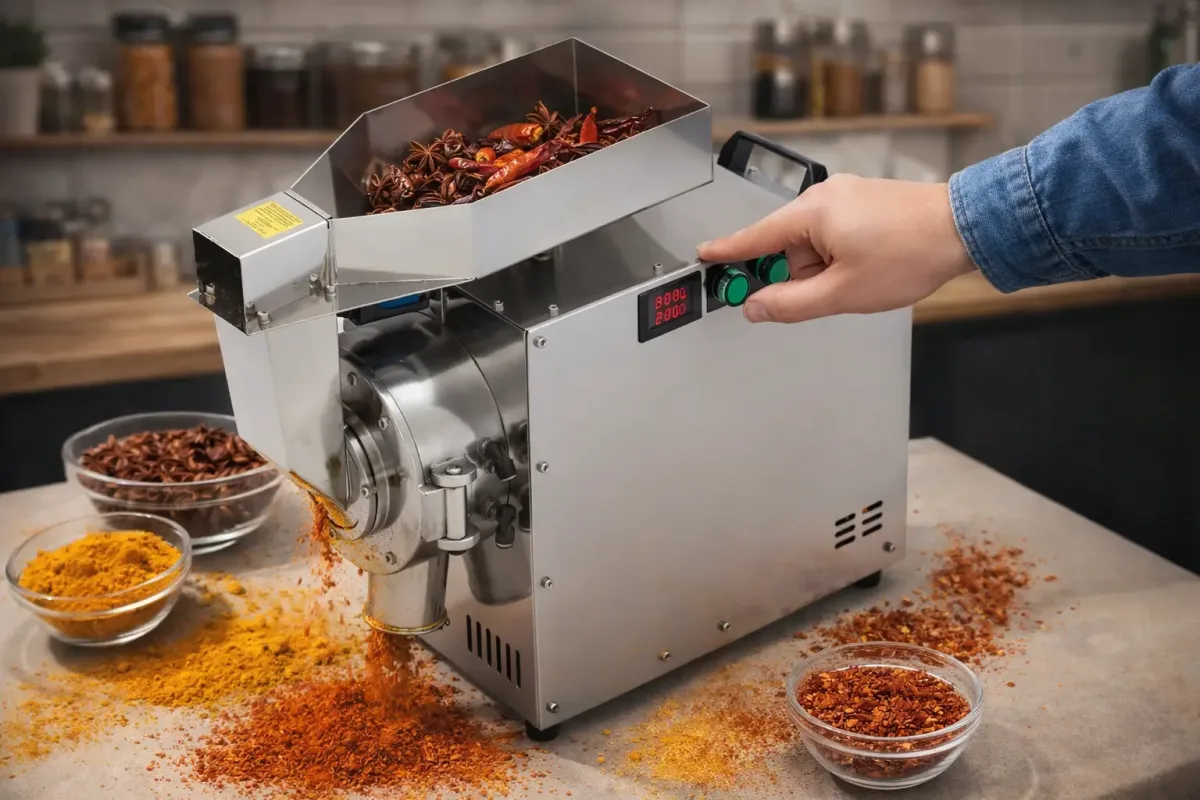
- Spice grinders: Freshly ground spices are more potent than pre-ground ones. If you’re using whole spices, invest in a good spice grinder (or a coffee grinder dedicated to spices). This is especially important for spices like cumin, coriander, and black pepper, which lose their potency quickly once ground.
- Spice dispensers: These are small containers with shaker tops that let you sprinkle spices evenly over large batches. They’re great for adding spices like paprika or garlic powder to a pot of soup or a tray of roasted vegetables. Just make sure to shake them evenly to avoid clumping.
And here’s a pro tip: label everything. In a busy kitchen, it’s easy to lose track of what you’ve added and how much. Keep a notepad or a whiteboard near your spice station and write down every addition. It might seem like overkill, but it’s a lifesaver when you’re trying to replicate a dish later.
I learned this lesson the hard way during a holiday catering rush. We were making a large batch of pumpkin soup, and I added what I thought was a teaspoon of nutmeg. Turns out, I’d grabbed the cinnamon by mistake, and added a tablespoon. The soup tasted like a cinnamon roll had a baby with a Christmas tree. We had to start over, and I vowed never to measure spices without double-checking the labels again.
The Art of Tasting: How to Sample Large Batches Without Ruining Them
Why Your Taste Test Might Be Lying to You
Tasting is the most important part of adjusting spice levels, but it’s also the easiest to get wrong. Your taste buds are not a reliable gauge when you’re sampling from a large batch, and here’s why:
First, temperature matters. Spices taste different when they’re hot versus cold. A dish that tastes perfectly balanced at room temperature might taste bland when it’s hot, or overwhelmingly spicy when it’s cold. That’s why it’s important to taste your dish at the temperature it will be served. If you’re serving a cold salad, taste it cold. If you’re serving a hot soup, taste it hot.
Second, your palate gets fatigued. The more you taste, the less you’re able to detect subtle differences. If you’re constantly sampling from the same pot, your taste buds will start to normalize the flavor, and you’ll lose the ability to tell if it’s too spicy or not spicy enough. To avoid this, take small sips or bites, and rinse your mouth with water between tastings. Some chefs even keep a bowl of plain rice or bread nearby to “reset” their palate.
Third, the way you taste matters. If you’re just dipping a spoon into the pot and taking a sip, you’re not getting the full picture. You need to taste the dish the way your customers will, on a plate, with any garnishes or accompaniments. A spicy sauce might taste fine on its own, but overwhelming when paired with a bland side dish. Always taste the dish in context.
I remember working with a chef who insisted on tasting everything through a straw. At first, I thought he was being ridiculous, but then I tried it. The straw forces you to take a small, controlled sip, which is perfect for large batches. It’s a small trick, but it’s made a big difference in how I taste.
How to Take a Representative Sample
When you’re tasting a large batch, you need to make sure your sample is representative of the whole. That means stirring the pot thoroughly before taking a sample, and taking samples from different parts of the batch. Here’s how to do it:
- Stir the pot: Before you take a sample, stir the pot thoroughly to distribute the spices evenly. This is especially important in large batches, where spices can settle at the bottom or clump together.
- Use a ladle: Don’t just dip a spoon into the pot. Use a ladle to take a sample from the middle of the batch. This ensures you’re getting a mix of ingredients, not just the liquid or solids on top.
- Taste from multiple spots: If you’re cooking something like a stew or a curry, take samples from different parts of the pot. The flavor can vary depending on where you take the sample, so you want to make sure you’re getting an accurate representation.
- Let it sit: After stirring, let the pot sit for a minute or two before taking a sample. This gives the spices time to disperse and the flavors time to meld.
And here’s a trick I picked up from a caterer in Memphis: use a slotted spoon to take your sample. This lets you control how much liquid versus solid you’re tasting, which is especially useful in dishes like chili or gumbo, where the ratio of ingredients can vary.
Once you’ve taken your sample, don’t just taste it-analyze it. Ask yourself: Is the heat level right? Is the dish balanced, or does one flavor dominate? Are there any off notes? If something’s off, don’t panic. Just make a note of what needs to be adjusted and move on.
Rescuing Over-Spiced Batches: When Things Go Wrong (And They Will)
The Emergency Spice Rescue Kit
Let’s be real: no matter how careful you are, sometimes things go wrong. Maybe you misread a label, maybe a line cook added an extra scoop of cayenne, or maybe your supplier sent you a batch of ghost peppers instead of jalapeños. Whatever the reason, you’re now staring at a pot of food that’s inedibly spicy. What do you do?
First, don’t panic. There are ways to rescue an over-spiced batch, and most of them don’t involve starting over. Here’s your emergency spice rescue kit:
- Dilute: The simplest way to reduce spice levels is to add more of the base ingredients. If you’re making a soup, add more broth. If you’re making a sauce, add more tomatoes or cream. If you’re making a stew, add more vegetables or beans. This won’t eliminate the heat, but it will spread it out, making the dish more palatable.
- Balance: As we talked about earlier, acid, sweetness, and fat can all help balance out heat. Add a splash of lemon juice, a spoonful of honey, or a dollop of yogurt to counteract the spice. Just be careful not to overdo it, you don’t want to end up with a dish that’s sweet or sour instead of spicy.
- Absorb: Starchy ingredients like potatoes, rice, or bread can absorb some of the heat. Add a diced potato to the pot and let it simmer for 10-15 minutes, then remove it before serving. This works best in soups, stews, and sauces.
- Mask: If all else fails, you can try to mask the heat with other flavors. Add more garlic, onions, or herbs to distract from the spice. This won’t reduce the heat, but it can make the dish more enjoyable to eat.
I once had to rescue a batch of salsa that was so spicy, it made the line cooks cry. We ended up adding diced mango, a splash of lime juice, and a handful of cilantro. It wasn’t perfect, but it was edible, and the sweetness of the mango helped balance out the heat. The customers loved it, and we turned a potential disaster into a new signature dish.
When to Cut Your Losses (And How to Do It Gracefully)
Let’s be honest: sometimes, a dish is beyond saving. Maybe it’s too spicy, maybe it’s too salty, or maybe it’s just plain bad. When that happens, you have two options: serve it and hope no one notices, or start over. I’ll let you guess which one I recommend.
If you’re going to start over, do it gracefully. Don’t throw out the entire batch, repurpose it. That over-spiced chili? Turn it into a base for a spicy pasta sauce. That too-salty soup? Use it as a braising liquid for meat. There’s almost always a way to salvage something, even if it’s not what you originally intended.
And if you do have to serve a dish that’s less than perfect, own it. Be honest with your customers. Tell them it’s a new recipe, or that you’re experimenting with heat levels. Most people will appreciate the transparency, and some might even enjoy the challenge. Just don’t try to pass off a disaster as intentional, your customers aren’t stupid.
I remember a time when we accidentally served a batch of over-spiced tacos at a food truck in Nashville. Instead of pretending it was intentional, we called it the “Nashville Fire Taco” and offered a free side of sour cream to anyone who dared to try it. People loved it, and we ended up selling out. It was a lesson in turning a mistake into an opportunity, and it’s one I’ve never forgotten.
Building a Spice Adjustment System: How to Never Screw Up Again (Probably)
Creating a Spice Log: Your Secret Weapon
If you want to adjust spice levels consistently, you need a system. And the best system I’ve found is a spice log. This is a simple document (or notebook) where you record every spice addition, every adjustment, and every tasting note. It sounds tedious, but it’s a game-changer.
Here’s how to create a spice log:
- Start with the recipe: Write down the original recipe, including all spice measurements. If you’re scaling up, note the scaled amounts as well.
- Record every addition: Every time you add a spice, write it down. Include the amount, the time, and any notes (e.g., “added 1 tsp cayenne at 10:15 AM”).
- Taste and adjust: After each addition, taste the dish and record your impressions. Is it too spicy? Not spicy enough? Balanced? Write it down.
- Note the final adjustments: Once the dish is finished, record any final adjustments you made. This will help you replicate the dish in the future.
- Review and refine: After service, review your notes. What worked? What didn’t? Use this information to refine your recipe for next time.
A spice log doesn’t have to be fancy. It can be as simple as a notebook or a Google Doc. The key is to be consistent. The more you use it, the more valuable it becomes. Over time, you’ll start to see patterns, maybe your chili is always too spicy on the first batch, or maybe your curry needs more cumin than you thought. These insights will help you adjust spice levels more accurately in the future.
I started keeping a spice log after that disastrous jerk marinade incident. At first, it felt like overkill, but after a few weeks, I noticed something: my dishes were more consistent. I wasn’t guessing anymore, I was following a system. And that made all the difference.
Training Your Team: How to Avoid the “Too Many Cooks” Problem
In a commercial kitchen, you’re not the only one adjusting spice levels. Your line cooks, prep cooks, and even dishwashers might be adding spices, tasting dishes, or making adjustments. If you don’t have a system in place, this can lead to chaos, and a lot of over-spiced dishes.
Here’s how to train your team to adjust spice levels consistently:
- Standardize your measurements: Make sure everyone is using the same measuring tools and techniques. If one cook is using a teaspoon and another is using a tablespoon, you’re going to have problems. Invest in a set of standardized measuring spoons and scales, and make sure everyone knows how to use them.
- Create a tasting protocol: Teach your team how to taste dishes properly. This includes stirring the pot, taking a representative sample, and analyzing the flavor. Make sure they know to taste at the right temperature and to rinse their mouths between tastings.
- Use a spice log: If you’re using a spice log, make sure your team knows how to use it. Encourage them to record every addition and every adjustment. This will help you keep track of what’s happening in the kitchen, even when you’re not there.
- Hold regular training sessions: Spice adjustment isn’t something you can teach once and forget about. Hold regular training sessions to refresh your team’s skills and introduce new techniques. Make it fun, host a “spice challenge” where everyone has to adjust a dish to a specific heat level.
- Encourage communication: Make sure your team feels comfortable communicating about spice levels. If a dish is too spicy, they should feel empowered to speak up. If they’re not sure how to adjust it, they should ask for help. The more open the communication, the fewer mistakes you’ll make.
I once worked in a kitchen where the head chef refused to let anyone else adjust the spices. He was the only one who tasted the dishes, and he was the only one who made adjustments. The result? A kitchen that was constantly behind schedule, because everything had to go through him. It was a bottleneck, and it made the whole operation less efficient.
Don’t be that chef. Trust your team, but give them the tools and training they need to succeed. A well-trained team is the key to consistent spice levels, and a happy kitchen.
Beyond Heat: Balancing Flavor in Spicy Dishes
Why Spice Isn’t Just About Heat
When we talk about adjusting spice levels, we often focus on heat. But spice is about more than just how much your mouth burns. It’s about flavor, balance, and complexity. A dish can be spicy but still taste flat if the other flavors aren’t in harmony. That’s why it’s important to think about spice as part of a larger flavor profile.
Here’s what I mean: Let’s say you’re making a batch of buffalo wings. The heat from the hot sauce is important, but so is the tanginess of the vinegar, the richness of the butter, and the saltiness of the seasoning. If you focus only on the heat, you might end up with wings that are spicy but one-dimensional. But if you balance all the flavors, you’ll end up with wings that are complex, delicious, and memorable.
So how do you balance flavor in spicy dishes? Here are a few tips:
- Start with a base: Every spicy dish should have a base flavor, something that anchors the heat. This could be a rich tomato sauce, a creamy coconut milk base, or a tangy vinegar dressing. The base gives the heat something to play off of, making the dish more balanced.
- Layer your spices: Don’t just dump all your spices in at once. Layer them, adding each one at the right time to maximize its flavor. For example, add whole spices (like cumin seeds or mustard seeds) at the beginning of cooking to infuse the oil, and add ground spices later to preserve their potency.
- Use aromatics: Onions, garlic, ginger, and other aromatics add depth and complexity to spicy dishes. Sauté them at the beginning of cooking to build a flavor foundation.
- Balance with acid: As we’ve talked about before, acid cuts through heat and brightens up a dish. Add a splash of lemon juice, vinegar, or lime to balance the spice.
- Finish with fresh herbs: Fresh herbs add brightness and freshness to spicy dishes. Sprinkle chopped cilantro, parsley, or basil on top just before serving to elevate the flavor.
I learned this lesson while working with a Thai chef in San Francisco. He was making a batch of green curry, and I watched as he added layer after layer of flavor, lemongrass, galangal, kaffir lime leaves, fish sauce, coconut milk. Each ingredient was added at a specific time, and each one built on the last. The result was a curry that was spicy, but also complex, balanced, and deeply flavorful. It wasn’t just heat, it was a symphony.
How to Build a Spice Blend That Works Every Time
If you’re constantly adjusting spice levels on the fly, it might be time to build a custom spice blend. A good spice blend is like a shortcut, it takes the guesswork out of seasoning and ensures consistency every time. But building a spice blend isn’t as simple as throwing a bunch of spices into a bowl. You need to think about balance, potency, and how the spices will interact with each other.
Here’s how to build a spice blend that works:
- Start with a base: Every spice blend needs a base, something that makes up the bulk of the blend. This could be salt, sugar, or a neutral spice like paprika or turmeric. The base gives the blend structure and ensures that the other spices don’t overpower each other.
- Add the dominant spices: These are the spices that will give your blend its primary flavor. For example, if you’re making a taco seasoning, the dominant spices might be cumin, chili powder, and garlic powder. Add these in the right proportions to create the flavor profile you want.
- Include supporting spices: These are the spices that add depth and complexity. They’re not the stars of the show, but they make the dominant spices shine. For example, in a curry blend, the supporting spices might include coriander, fenugreek, and cardamom.
- Balance with heat: If you want your blend to be spicy, add a heat element like cayenne, chili flakes, or black pepper. But be careful, heat can easily overpower the other flavors. Start with a small amount and adjust as needed.
- Test and refine: Once you’ve mixed your blend, test it in a dish. Does it taste balanced? Is the heat level right? If not, adjust the proportions and try again. It might take a few iterations to get it right, but it’s worth the effort.
Here’s a simple spice blend formula I use for chili:
- 4 parts chili powder
- 2 parts cumin
- 1 part garlic powder
- 1 part onion powder
- 1/2 part cayenne (adjust for heat)
- 1/2 part smoked paprika
- 1/4 part black pepper
This blend is balanced, flavorful, and easy to adjust. If I want it spicier, I add more cayenne. If I want it smokier, I add more smoked paprika. And because the proportions are consistent, I know it will work every time.
Building a custom spice blend takes time, but it’s one of the best investments you can make in your kitchen. Once you have a blend you love, you can use it in everything from marinades to rubs to sauces. And the best part? You’ll never have to guess how much spice to add again.
Case Studies: Real-Life Spice Adjustments in Commercial Kitchens
How a Nashville BBQ Joint Fixed Their Over-Spiced Dry Rub
Let me tell you about Big Tom’s BBQ, a Nashville institution that almost lost its reputation because of a spice miscalculation. Big Tom’s is known for its dry-rubbed ribs, which are coated in a secret blend of spices and slow-smoked to perfection. But one day, the head pitmaster made a mistake: he misread the label on a new batch of cayenne and added twice as much as he should have. The result? Ribs that were so spicy, customers were sending them back.
At first, Big Tom’s tried to power through. They served the ribs as usual, hoping no one would notice. But the complaints started rolling in, and soon, they had a full-blown PR crisis on their hands. That’s when the owner, Tom Jr., called me in for a consultation.
Here’s what we did:
- Diluted the rub: We mixed the over-spiced rub with an equal amount of a neutral base (in this case, brown sugar and salt). This cut the heat in half without changing the flavor profile.
- Added a sweet glaze: To further balance the heat, we brushed the ribs with a sweet glaze made from honey, apple cider vinegar, and a touch of mustard. The sweetness helped counteract the spice, and the vinegar added a tangy brightness.
- Offered a “mild” option: We rebranded the original rub as “Big Tom’s Spicy Rub” and introduced a new, milder version called “Big Tom’s Classic Rub.” This gave customers a choice and helped rebuild trust.
- Owned the mistake: Instead of pretending nothing was wrong, Tom Jr. posted a sign in the restaurant explaining what had happened and how they’d fixed it. He even offered a free side of coleslaw to anyone who’d been affected. Customers appreciated the transparency, and many came back to give the new rub a try.
The result? Big Tom’s not only saved their reputation, but they also ended up with two popular rubs instead of one. The “Spicy Rub” became a hit with heat seekers, while the “Classic Rub” appealed to a broader audience. It was a win-win, and a lesson in how to turn a mistake into an opportunity.
Rescuing a 50-Gallon Batch of Over-Spiced Chili
Now, let’s talk about Catering by Claire, a small catering company in Austin that almost went under because of a spice disaster. Claire was catering a corporate event for 300 people, and she was making her famous chili. The recipe called for 2 tablespoons of cayenne for a 10-gallon batch, but Claire misread the instructions and added 2 cups to a 50-gallon pot. By the time she realized her mistake, the chili was already simmering, and the damage was done.
Claire panicked. She didn’t have time to start over, and she didn’t have enough ingredients to make a new batch. So she called me in a frenzy, and we got to work. Here’s what we did:
- Diluted the chili: We added 20 gallons of tomato sauce and 10 gallons of beef broth to the pot. This diluted the heat and gave us more volume to work with. It wasn’t perfect, but it was a start.
- Added dairy: We stirred in 5 gallons of plain yogurt to help balance the heat. The yogurt added creaminess and helped neutralize some of the capsaicin.
- Balanced with sweetness: We added 2 cups of brown sugar to counteract the heat. The sweetness helped round out the flavor and made the chili more palatable.
- Masked with umami: We added 1 cup of soy sauce to add depth and complexity. The umami helped distract from the heat and made the chili taste more balanced.
- Finished with acid: We added the juice of 10 limes to brighten up the flavor. The acid cut through the heat and added a fresh, tangy note.
The result? A chili that was still spicy, but not inedibly so. Claire served it with a warning label (“Spicy!”) and a side of sour cream, and most people loved it. A few complained, but overall, the event was a success. Claire learned a valuable lesson: always double-check your measurements, and never be afraid to ask for help when things go wrong.
The Future of Spice: How Technology Is Changing Batch Cooking
Smart Scales and AI: The Next Frontier in Spice Adjustment
Let’s talk about the future. Technology is changing the way we cook, and that includes how we adjust spice levels in large batches. Smart scales, AI-powered recipe software, and even automated spice dispensers are making it easier than ever to measure, adjust, and perfect your dishes. And while I’m a firm believer in the power of intuition and experience, I can’t deny that these tools are game-changers.
Take smart scales, for example. These scales connect to your phone or tablet and can guide you through a recipe step by step. They’ll tell you exactly how much of each spice to add, and they’ll even adjust the measurements based on the batch size. Some models can even “learn” your preferences over time, making it easier to replicate your favorite dishes.
Then there’s AI-powered recipe software. These programs use machine learning to analyze thousands of recipes and suggest adjustments based on your preferences. For example, if you’re making a batch of curry and you want it spicier, the software can suggest how much extra chili powder to add. It’s not perfect, but it’s a great starting point, and it’s only going to get better.
And let’s not forget automated spice dispensers. These machines can measure and dispense spices with pinpoint accuracy, eliminating the guesswork and reducing the risk of mistakes. They’re expensive, but for large commercial kitchens, they’re a worthwhile investment.
I’ll admit, I was skeptical about these tools at first. I thought they were gimmicks, or that they’d take the artistry out of cooking. But after trying a few of them, I’ve changed my mind. They’re not replacements for experience, they’re tools that can help you cook better. And in a commercial kitchen, where consistency is key, that’s invaluable.
Should You Trust the Machines? A Word of Caution
But here’s the thing: technology is only as good as the person using it. A smart scale can tell you how much cayenne to add, but it can’t tell you if the dish tastes good. An AI program can suggest adjustments, but it can’t taste the dish for you. And an automated spice dispenser can measure spices with precision, but it can’t tell you if the flavor is balanced.
That’s why I believe that the best approach is a hybrid one. Use technology to guide you, but trust your instincts to fine-tune the flavor. Let the smart scale measure your spices, but taste the dish yourself and make adjustments as needed. Let the AI program suggest a starting point, but don’t be afraid to deviate from its recommendations if something doesn’t feel right.
And most importantly, don’t let technology replace your creativity. Cooking is an art, and while tools can help you execute your vision, they can’t replace the human touch. The best dishes are the ones that come from the heart, and no machine can replicate that.
I once worked with a chef who was so reliant on his smart scale that he refused to taste anything until the scale told him to. The result? A kitchen that was efficient, but soulless. The food was technically perfect, but it lacked the passion and creativity that make great cooking truly great. Don’t make that mistake. Use technology as a tool, not a crutch.
Conclusion: Mastering Spice in the Commercial Kitchen
Let’s be real: adjusting spice levels in commercial batch cooking is part science, part art, and a whole lot of trial and error. There’s no one-size-fits-all solution, and even the most experienced chefs get it wrong sometimes. But that’s okay. Because every mistake is a lesson, and every lesson makes you a better cook.
In this guide, we’ve covered a lot of ground. We’ve talked about the psychology of spice, the tools you need to measure accurately, and the techniques for rescuing over-spiced dishes. We’ve explored how to build a spice adjustment system, how to train your team, and how to balance flavor in spicy dishes. And we’ve looked at real-life case studies of spice disasters and how they were fixed.
But here’s the most important thing I want you to take away: spice is about more than just heat. It’s about flavor, balance, and complexity. It’s about creating dishes that are memorable, delicious, and satisfying. And it’s about doing it consistently, batch after batch, without losing your mind in the process.
So the next time you’re standing in front of a 60-quart pot of chili that’s gone rogue, take a deep breath. Remember the tools in your arsenal, acid, sweetness, fat, umami, and use them to bring the dish back into balance. And if all else fails, remember: there’s always a way to salvage something, even if it’s not what you originally intended.
Now, I want to challenge you: pick one dish you make regularly and experiment with adjusting the spice levels. Start with 70% of the spice you’d normally use, taste, and adjust from there. Keep a spice log, and take notes on what works and what doesn’t. And most importantly, have fun with it. Because at the end of the day, cooking is about creativity, passion, and a little bit of chaos. Embrace it.
And if you ever find yourself in Nashville, stop by my kitchen. I’ll make you a bowl of chili, guaranteed not to burn your face off. Probably.
FAQ
Q: What’s the best way to reduce spice in a large batch of soup?
A: The best way to reduce spice in a large batch of soup is to dilute it with more liquid (broth, water, or cream) and balance it with acid (lemon juice, vinegar) or sweetness (honey, sugar). You can also add starchy ingredients like potatoes or rice to absorb some of the heat. Stir the pot thoroughly, taste, and adjust as needed. If the soup is still too spicy, consider repurposing it as a base for another dish, like a spicy pasta sauce or a braising liquid.
Q: How do I know if my spice blend is balanced?
A: A balanced spice blend should have a harmonious flavor profile where no single spice dominates. To test it, mix a small amount of the blend with a neutral ingredient (like oil or yogurt) and taste. Ask yourself: Is the heat level right? Are the flavors complex and layered? Does one spice overpower the others? If something’s off, adjust the proportions and try again. It’s also helpful to test the blend in a dish to see how it performs in context.
Q: Can I use pre-made spice blends in commercial batch cooking?
A: You can use pre-made spice blends in commercial batch cooking, but be cautious. Pre-made blends can vary in potency and quality, and they may not scale well to large batches. If you do use them, start with a small amount and adjust to taste. It’s also a good idea to test the blend in a small batch before committing to a large one. For the best results, consider making your own custom blends tailored to your specific needs.
Q: What’s the most common mistake chefs make when adjusting spice levels in large batches?
A: The most common mistake is overcompensating, adding too much spice too quickly out of fear of blandness. This often leads to dishes that are overwhelmingly spicy or unbalanced. Another common mistake is tasting too early or too infrequently, which can result in missed opportunities to adjust the flavor. To avoid these pitfalls, start with less spice, taste often, and adjust in small increments. And always remember: you can add more, but you can’t take it out.
@article{how-to-adjust-spice-levels-in-commercial-kitchen-batch-cooking-without-losing-your-mind-or-your-customers,
    title   = {How to Adjust Spice Levels in Commercial Kitchen Batch Cooking Without Losing Your Mind (or Your Customers)},
    author  = {Chef's icon},
    year    = {2026},
    journal = {Chef's Icon},
    url     = {https://chefsicon.com/how-to-adjust-spice-levels-in-commercial-kitchen-batch-cooking/}
}