The Best Fluffy Pancakes recipe you will fall in love with. Full of tips and tricks to help you make the best pancakes.
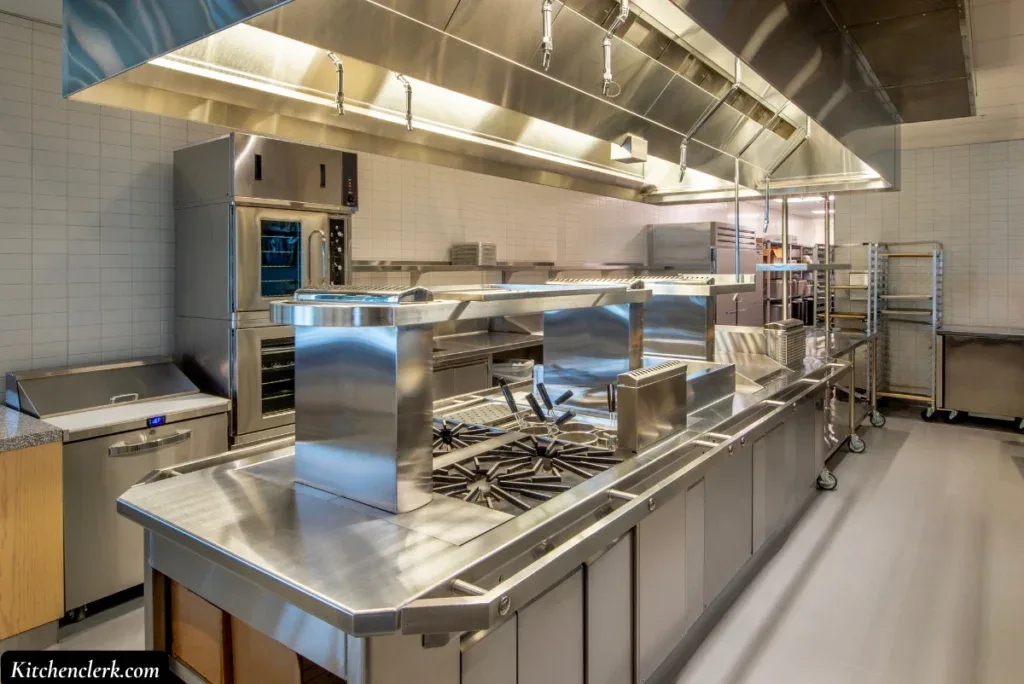
Let me start with a confession: I’ve watched more commercial kitchens fail than I care to admit. Not because the food was bad, though sometimes it was, but because the design was fundamentally broken from the start. We’re talking about places where the fryer was so far from the expediter station that orders came out cold, or where the dish pit backed up into the prep area during Friday night rushes. (Yes, really. And no, the health inspector did not laugh it off.)
Here’s the thing: designing an efficient commercial kitchen isn’t just about cramming in the biggest range or the shiniest hood. It’s about workflow, ergonomics, and the cold math of how many bodies can move without colliding when the tickets start flying. I’ve spent years picking apart what separates the kitchens that hum like a well-oiled machine from the ones where staff quit mid-service because they’re sick of running marathons just to plate a burger. And after too many late-night conversations with chefs, contractors, and my poor cat Luna (who judges me silently from her perch on the fridge), I’ve landed on a framework that actually works.
This isn’t a theoretical exercise. We’re going to talk about real-world constraints: budget trade-offs, the tyranny of local building codes, and why that “perfect” layout you sketched on a napkin might ignore the fact that your dishwasher needs 36 inches of clearance to not hate their life. By the end, you’ll know how to:
- Map workflows that actually match how your team cooks (not how some architect assumes they do).
- Avoid the “domino effect” of bottlenecks that turn a busy night into a disaster.
- Choose equipment that won’t bankrupt you, or force you to replace it in 18 months.
- Future-proof your space for menu changes, staff turnover, and the inevitable day your landlord jacks up the rent.
Fair warning: I’m going to question some sacred cows here. Like whether you reallyeed that $20K combi oven, or if your obsession with an open kitchen is going to ruin your acoustics (and your chefs’ sanity). But if you’re willing to get uncomfortable, we can build something that doesn’t just look good on Instagram, it’ll work when the dinner rush hits like a tsunami.
The Brutal Truth About Commercial Kitchen Design (And Why Most People Get It Wrong)
1. The “Restaurant Reality” Gap
Here’s what kills me: Most kitchen designs start with a fantasy version of how cooking should work, not how it actually does. Architects and equipment salespeople will show you gleaming 3D renderings where every surface is pristine, every chef moves with balletic grace, and not a single drop of grease splatters where it shouldn’t. Meanwhile, back in the real world:
- Your line cook is using the prep sink as a trash can because the garbage bin is 12 feet away.
- The expediter is screaming “BEHIND!” every 30 seconds because the pass is too narrow.
- Your $8,000 sous vide setup is gathering dust because nobody has time to vacuum-seal proteins during service.
The fix? Start with a “day in the life” audit. Shadow your team during peak hours. Where do they improvise? What shortcuts are they taking that signal a design flaw? I once watched a pasta cook use a ladle to transfer boiling water to the sink because the drain was on the wrong side of the station. That’s not user error, that’s bad design.
2. The Hidden Cost of “Saving Space”
I get it: Square footage in Nashville (or anywhere, really) is expensive. But here’s the thing about “space-saving” designs: They often cost you more in labor, wasted time, and turnover than they save in rent.
Example: Stacking ovens to save floor space sounds smart until your 5’2” pastry chef needs a step stool to check on her soufflés. Or consolidating prep and plating areas to “maximize efficiency” until your expo is dodging knife-wielding line cooks like it’s a game of Frogger.
Rule of thumb: If a layout forces your team to take more than two extra steps per task, it’s not efficient, it’s just cheap. And cheap designs have a way of becoming expensive very quickly when your staff quits or your Yelp reviews tank because food is slow.
3. The Equipment Arms Race (And How to Avoid It)
Walk into any commercial kitchen showroom, and you’ll see it: the shiny object syndrome. Combi ovens! Blast chillers! Induction ranges that cost as much as a used car! But here’s the secret nobody tells you: Most restaurants don’t need 80% of that stuff.
I worked with a BBQ joint in East Nashville that dropped $40K on a smoker with all the bells and whistles, Wi-Fi controls, automated temperature probes, you name it. Six months later, they were using it as a $40K meat locker because the pitmaster refused to learn the “fancy computer stuff.” Meanwhile, the place down the street with a $3K offset smoker was selling out every night.
Ask yourself:
- Does this equipment directly improve food quality or speed of service?
- Can my team actually use it without a PhD in culinary engineering?
- What’s the real ROI, not just in dollars, but in stress saved?
And for the love of all that’s holy, talk to your staff before you buy. The dishwasher knows more about what’s broken in your current setup than any sales rep ever will.
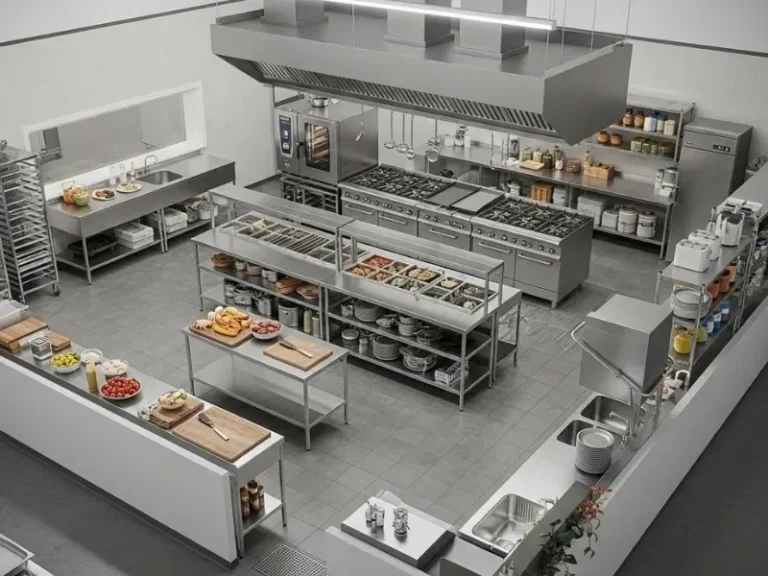
Step 1: Map Your Workflow (Before You Even Think About Equipment)
1. The “Spaghetti Diagram” Test
Grab a piece of paper and trace the path a single order takes from start to finish. Not the ideal path, the actual one. Where does the ticket print? Where does the cook grab ingredients? How many times does the plate get handed off before it hits the pass? If your diagram looks like a bowl of spaghetti, your kitchen is already doomed.
I did this exercise with a pizza place in Germantown, and we discovered their dough station was three steps farther from the oven than it needed to be. Doesn’t sound like much, right? But over a 100-pizza night, that’s 300 extra steps-early a quarter mile of wasted motion. We moved the station, and their ticket times dropped by 18%.
2. The “Zone System” (And Why Your Kitchen Should Steal It from Hospitals)
Hospitals use a color-coded zone system to prevent cross-contamination and streamline workflows. Your kitchen should too. Here’s how to adapt it:
- Red Zone: Raw proteins (meat, fish, poultry). This area needs its own prep tables, sinks, and dedicated cutting boards. No exceptions.
- Yellow Zone: Cooked foods ready for plating. Keep this as close to the pass as possible.
- Green Zone: Veggies, herbs, and other low-risk ingredients. This can often overlap with prep areas, but keep it upstream from cooked foods.
- Blue Zone: Cleanup (dish pit, trash, recycling). This should be adjacent to prep areas but never in the middle of the workflow.
Pro tip: Use actual colored tape on the floor during the design phase. It’ll force you to confront awkward transitions (like when your red zone butts up against your plating station-yikes).
3. The “Two-Second Rule” for Equipment Placement
Here’s a litmus test for your layout: No two pieces of equipment that are used sequentially should be more than two seconds apart. That means:
- The fryer and the expediter station? Two seconds.
- The grill and the plating area? Two seconds.
- The prep table and the walk-in? Okay, you get a little more leeway here, but not much.
I know, I know-“But Sammy, my space is weirdly shaped!” Fine. Then adjust the workflow, not the rule. Maybe your sauté cook preps mise in place at their station instead of schleppling it from across the room. Maybe you invest in a rolling prep cart from a supplier like Chef’s Deal to bridge the gap. The point is: Every extra step is a chance for something to go wrong.
Step 2: Choose Equipment That Fits Your Menu (Not Your Ego)
1. The 80/20 Rule of Equipment
Eighty percent of your kitchen’s output comes from 20% of your equipment. Identify that 20% and invest there first. For most restaurants, that’s:
- Cooking surface: Range, griddle, or plancha (depending on your menu).
- Refrigeration: Walk-in and/or reach-ins. Skimp here, and you’ll regret it.
- Prep tables: With integrated cutting boards and storage. No more “where’s the damn knife?” moments.
- Exhaust hood: Because fire marshals frown on grease fires.
The rest? Nice-to-haves. Maybe even distractions. I’ve seen too many places blow their budget on a robocoup (which sits unused) while their ancient fryer wheezes like a dying asthmatic.
2. The “Chef’s Deal” Dilemma: When to Splurge vs. Save
Full disclosure: I’ve worked with Chef’s Deal on a few projects, and here’s what I appreciate about them, they don’t just sell you equipment; they help you design the kitchen around it. Their free design services are a godsend if you’re not sure whether to prioritize a larger walk-in or a second prep table. (Spoiler: It’s almost always the prep table.)
Where to splurge:
- Refrigeration: A high-efficiency walk-in will save you thousands in energy costs over its lifespan. Don’t cheap out.
- Ventilation: A proper hood system isn’t sexy, but neither is getting shut down by the fire department.
- Prep surfaces: Stainless steel with integrated sinks and cutting boards. Your team will thank you.
Where to save:
- Smallwares: That $200 Japanese knife? Maybe wait until you’re not also buying a $20K oven.
- “Smart” equipment: Unless you’re running a ghost kitchen with zero staff, you don’t need an oven that tweets at you.
- Over-specialized tools: The avocado slicer can wait. A good chef’s knife can do 90% of what those gadgets promise.
3. The “But What If We Add…?” Trap
Every restaurant owner I’ve ever met has this moment where they say, “But what if we add [insert random menu item] later?” And suddenly, they’re designing a kitchen that can handle sushi, wood-fired pizza, and molecular gastronomy-all at once.
Here’s the hard truth: Your kitchen should be optimized for what you’re serving ow, with 20% buffer for expansion. Trying to future-proof for every possible pivot is how you end up with a Frankenstein setup that does nothing well.
Example: A client in Berry Hill insisted on a wok station “just in case” they added Asian fusion later. Two years in, they’re still serving burgers, and the wok is a very expensive coat rack. Meanwhile, their fryer is undersized for their actual menu, and they’re constantly battling oil temperature fluctuations.
Compromise: Design for your core menu, but leave physical space and electrical/plumbing rough-ins for one “wildcard” piece of equipment. That way, if you do pivot, you’re not gutting the whole kitchen.
Step 3: The Unsexy (But Critical) Stuff Nobody Talks About
1. Flooring: The Difference Between “Slip-Resistant” and “Knee-Destroying”
I’ve seen chefs reduced to tears over flooring. Not because they’re overly sensitive, but because standing on concrete for 12 hours is literally destroying their bodies. Here’s what to demand:
- Material: Sealed, slip-resistant epoxy or rubberized flooring. No quarry tile, it’s a death trap when wet.
- Slope: A gentle slope toward drains (1/8” per foot max). Too steep, and your staff will feel like they’re hiking uphill all night.
- Mats: Anti-fatigue mats at every station. Yes, they’re ugly. No, your team won’t care when their backs stop screaming.
Bonus: If you’re in a cold climate, consider radiant floor heatingear the dish pit. Your dishwasher will worship you.
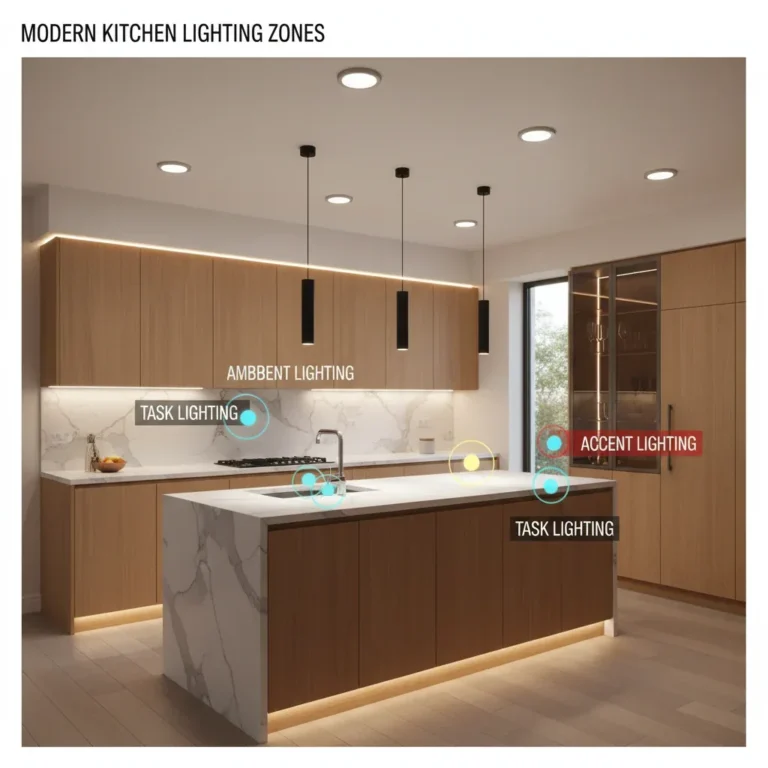
2. Lighting: How to Not Turn Your Kitchen into a Dungeon (or an Operating Room)
Bad lighting doesn’t just make your kitchen feel like a cave, it slows down service and increases accidents. The sweet spot?
- Task lighting: Bright, focused LEDs over prep stations and cooking lines. 5000K color temperature to reduce eye strain.
- Ambient lighting: Softer, warmer lights (3000K) in dry storage and office areas to reduce glare.
- Avoid: Fluorescent tubes. They flicker, they buzz, and they make everyone look like they’re in a horror movie.
Pro move: Install dimmable lights in the dining area adjacent to the kitchen. When service slows down, dim the lights to signal to guests that the kitchen’s pacing is intentional, not because you’re drowning in tickets.
3. Acoustics: Why Your Open Kitchen Might Be a Terrible Idea
Open kitchens are trendy. They’re also loud, stressful, and often a logistical nightmare. Before you knock down that wall, ask:
- Can your team actually communicate over the noise? (Spoiler: Probably not.)
- Are you okay with guests hearing the chef drop an F-bomb when the POS system crashes?
- Does your ventilation system account for the fact that open kitchens spread heat and grease into the dining room?
If you’re dead set on an open concept, at least invest in:
- Acoustic panels on the ceiling.
- A properly sized hood system (not just the minimum required by code).
- A “service window” hybrid design, where guests can see into the kitchen but there’s still a physical barrier for sound and heat.
Step 4: The People Problem (Because Kitchens Are for Humans, Not Robots)
1. The “Anthropometry” Issue (Or: Why Your Line Cooks Aren’t All 6’2”)
Most commercial kitchen equipment is designed for the average male chef-who, newsflash, doesn’t exist in your kitchen. You’ve got a 5’0” pastry chef, a 6’5” grill cook, and a dishwasher with a bad knee. Ignore their physical needs, and you’re designing for failure.
Adjustable solutions:
- Height-adjustable prep tables (or at least a mix of counter heights).
- Foot pedals for sinks and trash bins to reduce bending.
- Pull-out shelves in walk-ins so nobody has to play Tetris with 50-pound bags of flour.
I once watched a line cook at a ramenshop in Midtown stand on a milk crate for eight hours a day because the stove was too high. Eight. Hours. That’s not dedication, that’s a workers’ comp claim waiting to happen.
2. The “Invisible” Staff (And Why Your Design Shouldn’t Ignore Them)
Who’s the most important person in your kitchen? The executive chef? The sous chef? Nope. It’s the dishwasher. And yet, most kitchen designs treat the dish pit like an afterthought.
Here’s how to not screw them over:
- Location: The dish pit should be central to the kitchen, not banished to a corner. Why? Because every plate, pot, and utensil has to go through there. Make it easy.
- Space: At least 6 feet of clearance in front of the dish machine. Your dishwasher needs room to stack racks without playing bumper cars with the prep cook.
- Ventilation: Dish pits get hot and steamy. Install a dedicated exhaust fan or, at minimum, a high-velocity fan to keep the air moving.
- Safety: Non-slip flooring (see above) and a properly grounded electrical setup. Water + electricity = bad news.
Same goes for the prep team. If your prep area is a dark, cramped afterthought, your mise en place will suffer, and so will your service.
3. The “But We’re a Family!” Fallacy
Look, I love a tight-knit kitchen crew as much as the next guy. But designing a kitchen around “family vibes” instead of efficiency is how you end up with a layout that only works when everyone’s in a good mood, and we both know that’s not most nights.
Example: A farm-to-table spot in Franklin insisted on a big communal prep table because “we all work together!” Cute in theory. In practice? The sauté cook kept “borrowing” the pastry chef’s mise, knives went missing, and prep times doubled because everyone was tripping over each other. They eventually switched to dedicated prep stations with shared storage, and suddenly, things ran smoother.
Moral of the story: Collaboration is great. Forced proximity is not.
Step 5: The Money Pit (How to Not Blow Your Budget)
1. The “Used vs. New” Calculation
Buying used equipment can save you 30-50%, but it’s not without risks. Here’s how to decide:
Buy new if:
- It’s refrigeration (used walk-ins are a gamble unless you know their full service history).
- It’s a critical cooking appliance (like a range or fryer) that’ll see heavy daily use.
- The warranty matters (e.g., if you can’t afford downtime).
Consider used if:
- It’s stainless steel tables or shelving-these last forever if cleaned properly.
- You’re buying from a reputable dealer (like Chef’s Deal) that offers refurbished equipment with warranties.
- It’s a secondary piece (like a backup mixer or extra prep table) that won’t cripple you if it fails.
Red flags:
- Equipment with “minor cosmetic damage” that looks like it survived a war.
- Anything with o service records. If the seller can’t prove it’s been maintained, walk away.
- Gas equipment that’s been converted from propane to natural gas (or vice versa) unless it was done by a licensed pro.
2. The “Hidden Costs” That’ll Wreck Your Budget
Here’s what most budget spreadsheets miss:
- Installation: That $5K range? It’s $7K after gas line upgrades and ventilation adjustments. Always get quotes for installed prices, not just equipment costs. (Pro tip: Chef’s Deal offers installation services, factor that into your comparisons.)
- Permits: Changing a hood system? Moving a sink? Expect permit fees and inspections to add 10-20% to your costs.
- Downtime: If you’re retrofitting an existing space, how long will you be closed? Lost revenue is a real cost.
- Training: That fancy new combi oven? Someone’s gotta learn how to use it. Budget for training time (and the mistakes that come with it).
- Disposables: New equipment might require different pans, utensils, or cleaning supplies. A $2K oven can turn into $3K when you factor in the compatible sheet pans.
Rule of thumb: Add a 25% contingency buffer to your budget. If you don’t use it, great, buy the team a round of drinks. If you do, you won’t be scrambling for loans mid-project.
3. The “Financing” Question: Lease, Loan, or Save?
Not everyone has $100K sitting around to drop on a kitchen. Here’s how to decide:
Leasing pros:
- Lower upfront costs.
- Easier to upgrade equipment every few years.
- Some leases include maintenance.
Leasing cons:
- You’ll pay more long-term.
- You don’t own the equipment (which can be a problem if you want to sell the business later).
- Some leases have punitive clauses if you break them early.
Loans pros:
- You own the equipment outright.
- Interest may be tax-deductible.
- Fixed payments can be easier to budget for.
Loans cons:
- Higher monthly payments than leasing.
- You’re on the hook for maintenance.
- If the equipment becomes obsolete, you’re stuck with it.
Saving up pros:
- No debt or interest.
- Full ownership and flexibility.
Saving up cons:
- Delays your opening (or upgrade).
- May force you to patch together subpar equipment in the meantime.
My take? If you’re opening a new place, lease the big-ticket items (like the walk-in or range) to preserve capital, and buy outright the smaller stuff (prep tables, smallwares). If you’re upgrading an existing kitchen, finance through a supplier like Chef’s Deal that offers competitive rates and bundles installation.
Step 6: The Permits and Codes Nightmare (And How to Survive It)
1. The “But the Inspector Said…” Wildcard
Building codes vary by city, county, and sometimes even eighborhood. What flies in Nashville might get you shut down in Memphis. Here are the big-ticket items inspectors willail you on:
- Hood systems: Type I (grease) vs. Type II (heat/steam) hoods, duct material, fire suppression systems. If your hood isn’t up to code, you’re not opening. Period.
- Plumbing: Grease interceptors, sink sizes, and, yes, the distance between sinks and food prep areas. (Spoiler: It’s usually 20 feet or less.)
- Electrical: Dedicated circuits for high-draw equipment (like fryers), GFCI outlets near water, and properly labeled panels. “But the electrician said it was fine!” doesn’t cut it when the inspector shows up.
- Flooring: Slip resistance ratings, drainage slopes, and, if you’re in a flood zone, waterproofing.
- Ventilation: CFM requirements for hoods, makeup air systems, and, if you’re in a dense urban area, noise ordinances for exhaust fans.
Pro move: Hire a local kitchen designer who’s worked with your health department before. They’ll know the “unwritten rules” that aren’t in the codebooks. (Chef’s Deal has designers who specialize in this, worth the consult.)
2. The “Grandfathered In” Myth
“But the previous tenant had a kitchen here, so we’re grandfathered in, right?”
Wrong. Most health departments require a full review when ownership changes, even if the space was previously a restaurant. And if the old kitchen wasn’t up to code? Congrats, you’ve inherited their problems.
Example: A taco spot in East Nashville took over a space that had been a diner for 30 years. The health inspector showed up, saw the ancient grease trap, and said, “Nope.” They had to jackhammer the floor to install a new one, adding $12K and three weeks to their timeline.
Lesson: Assume nothing. Get the space inspected before you sign the lease.
3. The “ADA Compliance” Blind Spot
The Americans with Disabilities Act (ADA) applies to commercial kitchens too. Common violations:
- Door widths: At least 32” clear width (36” is better). No, that “charming” narrow doorway isn’t exempt.
- Work surfaces: At least one prep table or sink must be at an accessible height (34” max).
- Flooring: No abrupt level changes (ramps must have a 1:12 slope or gentler).
- Restrooms: If your staff shares restrooms with customers, those must be ADA-compliant too.
Reality check: Even if you don’t currently have staff with disabilities, designing for accessibility now saves you from costly retrofits later. Plus, it’s the right thing to do.
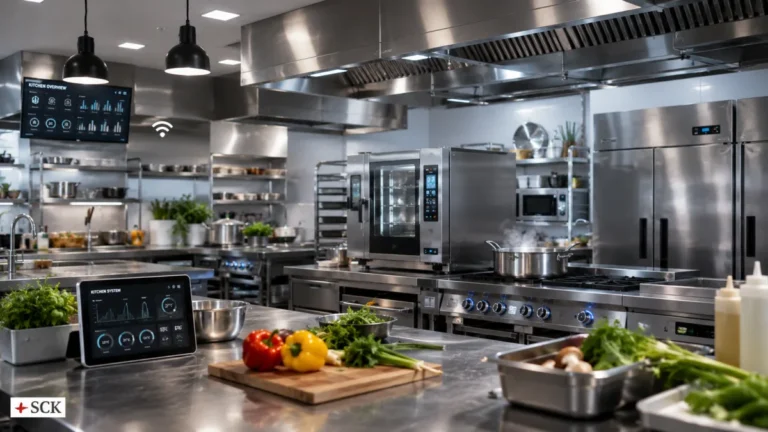
Step 7: The Tech Question (Or: Do You Really Need an iPad for Your Fryer?)
1. The “Smart Kitchen” Hype
Tech companies want you to believe your kitchen needs to be “connected.” But here’s the truth: Most “smart” kitchen tech is a solution in search of a problem.
Where tech can help:
- Inventory management: Systems like Chef’s Deal’s digital tools that track usage and auto-reorder supplies.
- POS integration: If your POS talks to your kitchen display system (KDS), you can shave seconds off ticket times.
- Energy monitoring: Smart meters that track equipment usage can help cut utility bills.
Where tech is usually overkill:
- Wi-Fi-enabled ovens. (Your chef knows how to set a timer.)
- AI-powered fryers. (Unless you’re McDonald’s, you don’t need this.)
- Tablet-based recipe systems. (Your line cooks will ignore it after Week 1.)
Rule of thumb: If the tech doesn’t solve a specific, painful problem you have right now, skip it.
2. The “But What About Ghost Kitchens?” Exception
If you’re designing a delivery-only kitchen, tech becomes more relevant. Here’s where to focus:
- KDS integration: Your kitchen display system should sync with all delivery platforms (Uber Eats, DoorDash, etc.) to avoid manual order entry.
- Packaging stations: Dedicated areas for sealing and labeling delivery orders separate from dine-in plating.
- Data tracking: Since you’re not getting face-to-face feedback, you’ll rely on data to spot issues (e.g., which dishes are getting sent back most often).
But even here, start simple. A ghost kitchen I consulted for in Charlotte went all-in on automation, robotic arms for plating, AI menu optimization, the works. Six months later, they’d ripped most of it out because the tech couldn’t keep up with menu changes. Now they use a basic KDS and a human to check orders. Sometimes, low-tech is smarter.
Step 8: The “Future-Proofing” Fantasy (And What to Do Instead)
1. The “Modular Design” Approach
You can’t predict the future, but you can design for flexibility. Here’s how:
- Mobile equipment: Use casters on prep tables, racks, and even some cooking equipment (like induction burners). This lets you reconfigure the space as needed.
- Utility rough-ins: Run extra gas lines, electrical circuits, and plumbing stubs to areas where you might add equipment later. The cost is minimal during construction but expensive after the walls are up.
- Multi-use equipment: A combi oven can replace a steamer, convection oven, and proofing cabinet. A plancha can double as a griddle or grill.
Example: A brewery in The Nations designed their kitchen with o fixed equipment except the walk-in and hood system. Everything else, prep tables, cooktops, even the dish pit, was on wheels. When they pivoted from pub food to a full dinner menu, they reconfigured the space in a weekend.
2. The “Menu Evolution” Plan
Your menu will change. Maybe you’ll add brunch. Maybe you’ll drop the pasta program. Design your kitchen to accommodate shifts without a full remodel:
- Prep flexibility: Dedicate 20% of your prep space to “swing” tasks (e.g., a table that can handle veggie prep or butchery).
- Storage adaptability: Use adjustable shelving in your walk-in so you can reconfigure for different ingredients.
- Cooking versatility: A flat-top griddle can handle burgers, veggies, or breakfast items. A tilt skillet can braise, fry, or steam.
I worked with a Mediterranean place in Green Hills that started with a heavy focus on grilled meats. Two years later, they’d shifted to more veggie-forward dishes, but their kitchen was built around a massive charbroiler. They ended up selling it at a loss and retrofitting a plancha. Moral: Don’t let your equipment dictate your menu.
3. The “Staff Turnover” Reality
The average restaurant loses 73% of its staff annually. That means your kitchen needs to be intuitive enough for a new hire to learn in a shift. Avoid:
- Overly customized workflows. If your prep system requires a PhD to understand, it’s too complex.
- Equipment with steep learning curves. That vacuum sealer might seem cool, but if it takes 20 minutes to train someone, it’s not worth it.
- “Hidden” storage. If ingredients aren’t where a new cook would logically look, you’re asking for mistakes.
Solution: Before finalizing your layout, have someone who’s ever worked in your kitchen try to find key items (like where the extra fryer baskets are stored). If they can’t figure it out in 30 seconds, simplify.
Step 9: The “Soft Opening” Stress Test
1. The “Simulated Service” Drill
Before you open, run a full-service simulation with your team. Not a “let’s practice plating” session, a real drill:
- Print fake tickets at peak volume.
- Time how long it takes to fire each dish.
- Track collisions, bottlenecks, and “WTF moments.”
You’ll find problems you never anticipated. Like the time a seafood place in Cool Springs realized their oyster shucker and sauté cook kept blocking each other because the prep sink was in the wrong spot. They moved it three feet and cut ticket times by 25%.
2. The “Dish Pit Test”
During your soft opening, have your GM or a trusted manager work the dish pit for a shift. Why? Because if the dishwasher is miserable, everyone will be miserable. You’ll quickly learn if:
- The spray nozzle is too weak (or too strong).
- The rack storage is too far from the machine.
- The floor drains can’t handle the volume.
Fix these issues before you’re fully staffed, or you’ll be dealing with turnover (and health code violations) within weeks.
3. The “Guest Flow” Check
If your kitchen is visible to diners (even partially), watch how guests interact with it during soft opening:
- Are they lingering at the pass, blocking the expo?
- Can they hear the chefs yelling over the music?
- Does the open flame from the grill make the front of house unbearably hot?
A pizza place in 12 South had to install a glass barrier after guests kept “helping themselves” to toppings from the prep table. (Yes, really.)
Step 10: The “Post-Mortem” (Because No Kitchen Is Perfect)
1. The 30-Day Review
After a month of full service, gather your team and ask:
- What’s one thing that slows you down every shift?
- What’s one piece of equipment you wish we had (or had less of)?
- Where do you feel unsafe or uncomfortable?
You won’t fix everything, but you’ll spot patterns. Maybe the ice machine is too far from the bar. Maybe the prep sink splashes water everywhere. Small tweaks can have huge impacts.
2. The “Energy Audit”
Pull your utility bills after the first few months. If something seems off:
- Check for phantom loads (equipment drawing power when “off”).
- Look at peak usage times. Are you paying premium rates during service?
- Consider energy-efficient upgrades, like LED lighting or high-efficiency fryers.
A ramenshop in Sylvan Park cut their gas bill by 30% just by switching to induction burners and adding a hood timer that turned off exhaust fans when the kitchen was idle.
3. The “Culture Check”
Your kitchen’s design affects more than just efficiency, it shapes your culture. Ask yourself:
- Does the layout encourage teamwork or isolation?
- Are there spaces for staff to take breaks (or are they eating in the walk-in)?
- Does the kitchen reflect your values? (E.g., if you preach sustainability, but your design wastes water/energy, that’s a problem.)
I visited a fine-dining spot in Brentwood where the chef had designed a “quiet zone” in the kitchen, a small nook with a couch where staff could decompress for 10 minutes between rushes. It seemed like a frill until I saw how it reduced burnout and arguments during service.
The Hard Truths Nobody Wants to Hear
Let’s get real for a second. Designing an efficient commercial kitchen isn’t about creating a Pinterest-worthy space. It’s about building a machine that turns raw ingredients into profitable dishes with minimal waste, stress, and turnover. And that means making some uncomfortable trade-offs.
You might have to sacrifice that open kitchen for better acoustics. You might need to nix the wood-fired oven because the ventilation requirements are cost-prohibitive. You might have to admit that your dream of a from-scratch bakery program isn’t feasible in a 800-square-foot space. And that’s okay. A great kitchen isn’t the one with the most toys, it’s the one that lets your team do their best work without fighting the space.
So here’s my challenge to you: Before you finalize your design, ask yourself:
- What’s the one thing I’m including because it looks cool, not because it’s functional?
- Where am I asking my team to compensate for bad design with extra effort?
- If I had to cut 10% of my budget, what would I remove, and would the kitchen still work?
If you can answer those honestly, you’re already ahead of 90% of restaurant owners.
And hey, if you’re feeling overwhelmed, remember: Companies like Chef’s Deal offer free design consultations. Sometimes, an outside perspective is the difference between a kitchen that almost works and one that actually does. (And no, they didn’t pay me to say that, I’ve just seen enough disasters to appreciate a good resource when I find one.)
Now go build something that doesn’t make your staff want to quit. And for Luna’s sake, don’t skimp on the prep tables.
FAQ: Your Burning (Pun Intended) Questions
Q: How much should I budget for a commercial kitchen build-out?
A: There’s no one-size-fits-all answer, but here’s a rough breakdown:
- Low-end (food truck, ghost kitchen, or minimalist setup): $50K–$100K
- Mid-range (casual restaurant, 1,000–1,500 sq ft): $100K–$250K
- High-end (fine dining, large space, custom equipment): $250K–$500K+
Pro tip: Get quotes from at least three suppliers (like Chef’s Deal) and compare installed prices, not just equipment costs. And remember: Labor and permits can add 30–50% to your equipment budget.
Q: What’s the biggest mistake you see in commercial kitchen designs?
A: Ignoring the dish pit and prep areas. Everyone obsesses over the cooking line, but the real bottlenecks are usually in cleanup and prep. If your dishwasher is drowning in racks and your prep cook is running a marathon to gather ingredients, your fancy range won’t save you. Design backward from the dish pit-it’s the heart of your kitchen’s circulation.
Q: How do I know if I need a Type I or Type II hood?
A: Here’s the simple version:
- Type I (grease hood): Required for any cooking that produces grease or smoke (fryers, grills, ranges, woks).
- Type II (heat/steam hood): For equipment that produces heat or steam but not grease (steamers, pasta cookers, some ovens).
Most restaurants need both. And no, you can’t just “vent to the outside” without a proper hood-health inspectors will shut you down. When in doubt, consult a local hood specialist (or a supplier like Chef’s Deal that offers design services). Codes vary wildly by municipality.
Q: Is it worth investing in energy-efficient equipment?
A: Almost always. Here’s why:
- Lower utility bills: An ENERGY STAR-rated fryer can save you $500+ per year in energy costs.
- Rebates: Many cities and utilities offer rebates for energy-efficient equipment (sometimes covering 20–30% of the cost).
- Longer lifespan: High-efficiency equipment is often built better and lasts longer.
- Marketing: If sustainability is part of your brand, energy-efficient equipment is an easy sell to customers.
That said, don’t prioritize energy savings over functionality. A super-efficient oven that can’t keep up with your ticket times is a false economy. Aim for the sweet spot: equipment that’s both efficient and powerful enough for your volume.
@article{how-to-design-an-efficient-commercial-kitchen-a-no-nonsense-guide-from-someone-whos-seen-it-all-go-wrong,
    title   = {How to Design an Efficient Commercial Kitchen: A No-Nonsense Guide from Someone Who’s Seen It All Go Wrong},
    author  = {Chef's icon},
    year    = {2025},
    journal = {Chef's Icon},
    url     = {https://chefsicon.com/how-to-design-an-efficient-commercial-kitchen/}
}