The Best Fluffy Pancakes recipe you will fall in love with. Full of tips and tricks to help you make the best pancakes.
Table of Contents
- 1 The Ibérico Difference: Why This Pork Demands Special Tools
- 2 Knives: The Heart of Your Ibérico Toolkit
- 3 Cleavers and Saws: For the Heavy Lifting
- 4 Sharpening and Maintenance: Keeping Your Tools in Top Shape
- 5 Where to Buy: Finding the Right Tools for Your Budget
- 6 Putting It All Together: A Step-by-Step Guide to Breaking Down Ibérico Pork
- 7 Final Thoughts: The Right Tools for the Job
- 8 FAQ
I’ll be honest, when I first started working with Ibérico pork, I thought I knew what I was doing. I’d spent years in professional kitchens, breaking down everything from whole hogs to delicate fish, and I’d invested in what I considered the best commercial cutting tools money could buy. But Ibérico? That was a different beast entirely. The first time I tried to separate the pluma from the secreto with my trusty 8-inch boning knife, I nearly ruined a $200 piece of meat. The fat wasn’t just marbled, it was a living, breathing part of the muscle, clinging to the meat like it was afraid to let go. That’s when I realized: not all cutting tools are created equal, and Ibérico pork demands something special.
Now, I’m not saying you need to spend a fortune to work with this prized Spanish delicacy, but you *do* need to understand what makes a knife, or a cleaver, or a saw, right for the job. Ibérico pork isn’t just meat; it’s a cultural artifact, a product of centuries of tradition, and a testament to the idea that the best things in life require patience, respect, and the right tools. So, how do you choose the best commercial cutting tools for Ibérico pork? Let’s break it down, because I’ve made enough mistakes (and eaten enough amazing jamón) to know what works, and what doesn’t.
In this guide, we’ll cover everything from the anatomy of Ibérico pork to the specific tools that’ll make your life easier (and your cuts cleaner). We’ll talk about the difference between a flexible boning knife and a stiff butcher’s knife, why the angle of your blade matters more than you think, and how to avoid the dreaded “fat smear” that turns a beautiful piece of meat into a greasy mess. By the end, you’ll have a clear idea of what to look for, and what to avoid, when outfitting your kitchen or butcher shop for Ibérico pork. And hey, if I can save you from making the same mistakes I did, I’ll consider this a win.
The Ibérico Difference: Why This Pork Demands Special Tools
What Makes Ibérico Pork Unique?
Before we dive into tools, let’s talk about the star of the show: Ibérico pork. If you’ve ever had the pleasure of tasting a slice of jamón Ibérico de bellota, you know it’s not just pork, it’s an experience. The fat is rich, almost sweet, with a nutty depth that comes from the acorns (bellotas) the pigs feast on during the montanera season. The meat itself is darker, denser, and more marbled than your average pork, which is why it’s so prized (and so expensive).
But here’s the thing: that same marbling that makes Ibérico pork so delicious also makes it tricky to work with. The fat isn’t just sitting on top of the muscle, it’s woven through it, creating a texture that’s somewhere between a steak and a piece of prosciutto. If you’ve ever tried to slice a well-marbled ribeye, you know that the fat can gum up your blade if you’re not careful. Now imagine that, but on steroids. Ibérico pork’s fat is softer, more delicate, and more prone to smearing if your knife isn’t sharp enough or if you’re using the wrong technique. And once that fat starts to smear? You’ve lost the battle. The meat will look greasy, the texture will be off, and all that beautiful marbling will turn into a sad, oily mess.
So, what does this mean for your tools? It means you need blades that are razor-sharp, but also precise. You need tools that can glide through fat without tearing it, that can separate muscle groups without leaving jagged edges, and that can handle the density of the meat without requiring Herculean strength. And, this is key, you need to understand that Ibérico pork isn’t just about slicing. It’s about butchery, and that means you’re going to be doing a lot of breaking down, trimming, and portioning. The right tools will make that process not just easier, but more enjoyable. Because let’s be real: if you’re working with Ibérico pork, you’re not just feeding people, you’re creating an experience. And that starts with the cut.
The Anatomy of Ibérico Pork: Where Your Tools Come Into Play
Ibérico pork is typically broken down into a few key cuts, each with its own challenges and opportunities. Understanding these cuts, and how they differ from standard pork, will help you choose the right tools for the job. Here’s a quick rundown:
- Jamón (Ham): The crown jewel of Ibérico pork. This is where you’ll find the most marbling, and it’s what’s used to make jamón Ibérico. Slicing jamón is an art form, and it requires a long, thin, and incredibly sharp blade to get those paper-thin slices without tearing the fat. A jamón knife (or cuchillo jamonero) is the gold standard here, but we’ll get into that later.
- Paleta (Shoulder): The front leg, which is cured into paleta Ibérica. It’s smaller than the jamón but just as rich in flavor. The shoulder has more connective tissue than the ham, so you’ll need a knife that can handle both fat and tougher muscle.
- Lomo (Loin): The loin is leaner than the ham or shoulder but still has a good amount of marbling. It’s often cured into lomo Ibérico, which is a favorite for tapas. Slicing the loin requires a sharp, thin blade to avoid crushing the meat.
- Secreto: This is the hidden gem of Ibérico pork, a small, triangular cut tucked under the shoulder blade. It’s incredibly tender and fatty, almost like a pork skirt steak. The secreto is delicate, so you’ll need a knife that can make precise cuts without tearing the meat.
- Pluma: Another prized cut, the pluma is a small, tender muscle that runs along the loin. It’s often grilled or seared whole, so you’ll need a knife that can trim it cleanly without wasting any of that precious fat.
- Presa: A larger, more marbled cut from the shoulder, often used for roasting or grilling. The presa has a good balance of fat and meat, so you’ll need a knife that can handle both.
- Panceta (Belly): Ibérico pork belly is a thing of beauty, thick, fatty, and perfect for curing or slow-roasting. The belly has layers of fat and meat, so you’ll need a knife that can separate them cleanly.
Each of these cuts has its own quirks, and that means you’ll need a variety of tools to handle them properly. A boning knife might be perfect for separating the secreto from the shoulder, but it’s not going to be much help when you’re slicing jamón. Similarly, a cleaver might be great for breaking down larger primal cuts, but it’s overkill for trimming the pluma. The key is to match your tool to the task, and to the unique characteristics of Ibérico pork.
Knives: The Heart of Your Ibérico Toolkit
Boning Knives: The Workhorse of Ibérico Butchery
If there’s one knife you absolutely need for working with Ibérico pork, it’s a high-quality boning knife. Boning knives are designed to separate meat from bone, and they come in a few different styles, each with its own strengths. For Ibérico pork, I’d recommend two types: a flexible boning knife and a stiff boning knife.
The flexible boning knife is your best friend when you’re working with smaller, more delicate cuts like the secreto or pluma. The flexibility allows the blade to curve around bones and fat, making it easier to make precise cuts without tearing the meat. Look for a blade that’s about 5 to 6 inches long, any longer and it’ll be too unwieldy for detailed work. The flexibility should be just enough to bend slightly under pressure, but not so much that it feels flimsy. I’ve found that Japanese-style boning knives, like those made by Masamoto or Shun, are particularly well-suited for Ibérico pork because of their sharpness and precision. But if you’re more comfortable with Western-style knives, brands like Wüsthof or Victorinox make excellent options that won’t break the bank.
On the other hand, a stiff boning knife is better for larger cuts like the presa or the shoulder, where you need more control and power. The stiffness gives you the leverage to cut through tougher connective tissue without the blade bending or twisting. A 6 to 7-inch stiff boning knife is ideal for these tasks. I’ve had good luck with the Wüsthof Classic 6-inch Boning Knife, which has just the right amount of stiffness without being too rigid. It’s a bit of an investment, but if you’re serious about working with Ibérico pork, it’s worth every penny.
Now, here’s where I might contradict myself a little: I’ve also had success using a filet knife for some Ibérico cuts, particularly the secreto and pluma. Filet knives are even more flexible than boning knives, and their thin blades make them perfect for making those delicate, precise cuts. The downside? They’re not as durable as boning knives, so you’ll need to be careful not to use them on anything too tough. If you’re going this route, I’d recommend a 6-inch filet knife with a high-carbon stainless steel blade. The carbon gives the blade a sharper edge, while the stainless steel keeps it from rusting. Just be prepared to sharpen it frequently, filet knives lose their edge quickly, especially when working with fatty cuts like Ibérico pork.
Butcher’s Knives: For When You Need Power and Precision
If boning knives are the workhorses of Ibérico butchery, then butcher’s knives are the heavy artillery. These are the knives you reach for when you need to break down larger primal cuts, trim thick layers of fat, or make long, clean slices through dense muscle. Butcher’s knives come in a variety of shapes and sizes, but for Ibérico pork, I’d focus on two types: the cimeter (or scimitar) knife and the breaking knife.
The cimeter knife is a long, curved blade that’s perfect for slicing through large cuts of meat. The curve allows you to make long, smooth strokes, which is ideal for portioning things like the presa or the loin. The blade should be at least 10 inches long, and it should have a slight belly to it, this gives you more control when making those long, sweeping cuts. I’ve found that the Victorinox Fibrox 12-inch Cimeter Knife is a great all-around option. It’s sharp, durable, and affordable, which is a rare combination in the world of professional knives. The Fibrox handle is also comfortable to grip, even when your hands are slippery with fat (and trust me, they will be).
The breaking knife, on the other hand, is a shorter, stiffer blade that’s designed for breaking down larger cuts of meat. It’s not as curved as a cimeter knife, which makes it better for tasks that require more precision, like trimming fat or separating muscle groups. A good breaking knife should be about 8 to 10 inches long, with a blade that’s thick enough to handle tough connective tissue but thin enough to make clean cuts. I’ve had good experiences with the Wüsthof Classic 10-inch Breaking Knife, which has a nice balance of weight and sharpness. It’s not as flashy as some of the Japanese knives out there, but it gets the job done, and that’s what matters most when you’re working with Ibérico pork.
One thing I’ve learned the hard way: don’t skimp on the handle. When you’re working with Ibérico pork, your hands are going to be covered in fat, and that means they’re going to be slippery. A good handle should have a textured grip that gives you plenty of traction, even when things get messy. I’ve tried a lot of different handle materials over the years, wood, plastic, composite, and I’ve found that polyoxymethylene (POM) is the best for this kind of work. It’s durable, easy to clean, and it doesn’t absorb moisture like wood does. Plus, it’s less likely to crack or warp over time, which is a big plus if you’re using your knives every day.
Jamón Knives: The Art of Slicing
If you’re serious about Ibérico pork, you need a jamón knife. There’s no way around it. Slicing jamón is an art form, and it requires a knife that’s specifically designed for the task. A good jamón knife is long (usually between 10 and 14 inches), thin, and incredibly sharp. The blade should be flexible enough to glide through the meat and fat without tearing, but stiff enough to give you control over the slice. And, this is crucial, it should have a rounded tip to prevent accidental punctures (because nobody wants to explain to their boss why there’s a hole in a $500 leg of jamón).
I’ll be honest: I resisted buying a jamón knife for a long time. I thought my trusty cimeter knife would be good enough, but I was wrong. The first time I tried to slice jamón with a jamón knife, I was blown away by the difference. The slices were thinner, cleaner, and more consistent, and the fat didn’t smear at all. It was like night and day. If you’re going to invest in one tool for Ibérico pork, make it a jamón knife. It’s not cheap, but it’s worth every penny.
When shopping for a jamón knife, look for one with a high-carbon stainless steel blade. The carbon gives the blade a sharper edge, while the stainless steel keeps it from rusting. You’ll also want to pay attention to the handle. A good jamón knife should have a comfortable, ergonomic grip that allows you to make long, smooth strokes without straining your hand. I’ve had good luck with the Arcos Jamón Knife, which is a favorite among professional butchers in Spain. It’s not the cheapest option out there, but it’s built to last, and it’s sharp enough to slice through a leg of jamón like it’s butter.
One last thing: if you’re going to be slicing a lot of jamón, consider investing in a jamón stand (or jamonero). This is a wooden or metal stand that holds the leg of jamón in place while you slice, which makes the whole process a lot easier (and safer). Some stands even come with a clamp to hold the knife, which is a nice feature if you’re working alone. It’s not strictly necessary, but it’s a nice upgrade if you’re serious about your jamón.
Cleavers and Saws: For the Heavy Lifting
Cleavers: More Than Just a Meat Tenderizer
When most people think of cleavers, they picture a massive, intimidating blade that’s used for chopping through bones. And while that’s true for some cleavers, there’s a lot more to these tools than meets the eye. A good meat cleaver can be an invaluable part of your Ibérico toolkit, especially when you’re breaking down larger cuts or trimming thick layers of fat. But not all cleavers are created equal, and the one you choose will depend on the tasks you’re using it for.
For Ibérico pork, I’d recommend a medium-weight cleaver with a blade that’s about 6 to 8 inches long. The blade should be thick enough to handle bone but not so heavy that it’s unwieldy. A good cleaver should feel balanced in your hand, with a comfortable grip that gives you plenty of control. I’ve found that the Dexter-Russell V-Lo 6-inch Cleaver is a great all-around option. It’s not too heavy, but it’s still sturdy enough to handle tougher cuts. The V-Lo handle is also comfortable to grip, even when your hands are slippery with fat.
One thing to keep in mind: cleavers aren’t just for chopping. They’re also great for scoring fat, trimming connective tissue, and even portioning larger cuts. The flat side of the blade can be used to tenderize meat, and the spine can be used to crack bones (though I’d recommend a saw for that, more on that later). If you’re working with Ibérico pork, a cleaver is a versatile tool that can save you a lot of time and effort.
That said, cleavers aren’t for everyone. If you’re not comfortable with a larger blade, or if you’re mostly working with smaller cuts, you might be better off sticking with a boning knife or a breaking knife. But if you’re breaking down whole legs or shoulders, a cleaver is a must-have. Just be sure to use it safely, cleavers are sharp, and they can do a lot of damage if you’re not careful.
Bone Saws: When Knives Aren’t Enough
Let’s be real: there are some cuts of Ibérico pork that are just too tough for a knife. The femur bone in the ham, for example, is thick and dense, and trying to cut through it with a knife is a recipe for frustration (and possibly a trip to the ER). That’s where a bone saw comes in. A good bone saw can make quick work of even the toughest bones, and it’s an essential tool if you’re breaking down whole legs or shoulders.
There are a few different types of bone saws to choose from, but for Ibérico pork, I’d recommend a handheld bone saw or a band saw. Handheld bone saws are more affordable and easier to store, but they require a bit more effort to use. Band saws, on the other hand, are more expensive and take up more space, but they’re faster and more precise. If you’re working in a professional kitchen or butcher shop, a band saw is definitely the way to go. But if you’re working at home or in a smaller space, a handheld saw might be a better fit.
When shopping for a bone saw, look for one with a sturdy, comfortable handle and a sharp, durable blade. The blade should be made of high-carbon steel, which will hold its edge longer and resist rust. I’ve had good luck with the Victorinox 12-inch Bone Saw, which is sharp, durable, and affordable. It’s not the fanciest saw out there, but it gets the job done, and that’s what matters most.
One thing to keep in mind: bone saws are loud. Like, really loud. If you’re working in a shared space, you might want to invest in some ear protection (or at least warn your neighbors). And be sure to clean your saw thoroughly after each use, bone dust and fat can build up on the blade, which can lead to rust and dullness over time.
Sharpening and Maintenance: Keeping Your Tools in Top Shape
The Importance of a Sharp Edge
I can’t stress this enough: a dull knife is a dangerous knife. And when you’re working with Ibérico pork, a dull knife is also a recipe for disaster. The fat in Ibérico pork is soft and delicate, and a dull blade will tear it instead of slicing it cleanly. That means more waste, more mess, and, worst of all, less flavor. A sharp knife, on the other hand, will glide through the meat and fat like it’s nothing, giving you clean, precise cuts every time.
But here’s the thing: sharpening knives isn’t as simple as running them over a whetstone a few times. There’s an art to it, and it takes practice to get it right. I’ve been sharpening my own knives for years, and I still mess it up sometimes. The key is to find a method that works for you and to stick with it. For me, that means using a combination whetstone (one side coarse, one side fine) and a honing steel to keep my edges aligned. I’ve also had good luck with electric sharpeners, but I’d recommend sticking with manual methods if you’re just starting out, they give you more control over the angle and pressure.
When sharpening your knives, pay attention to the angle of the blade. Most Western-style knives have a 20-degree angle on each side, while Japanese-style knives have a 15-degree angle. Ibérico pork is delicate, so I’d recommend erring on the side of a sharper angle-15 degrees is ideal for most tasks. Just be careful not to over-sharpen, as that can weaken the blade over time. And always, always hone your knife before and after each use. A honing steel doesn’t actually sharpen the blade, it just realigns the edge, but it’s an essential part of knife maintenance.
One last thing: don’t forget to sharpen your cleaver and saw blades, too. A dull cleaver is just as dangerous as a dull knife, and a dull saw blade will make your job a lot harder. I’ve found that a diamond-coated sharpening stone works well for cleavers, while a file is better for saw blades. Just be sure to follow the manufacturer’s instructions, some saw blades are coated with special materials that can be damaged by certain sharpening tools.
Cleaning and Storage: Protecting Your Investment
If you’ve invested in high-quality cutting tools for Ibérico pork, you’ll want to take care of them. That means cleaning them properly after each use and storing them in a way that protects the blades. I’ve made the mistake of tossing my knives in a drawer with other utensils, and let me tell you, it’s not pretty. The blades get nicked, the edges get dull, and before you know it, you’re back to square one.
First things first: ever put your knives in the dishwasher. The heat and detergent can damage the blade and handle, and the jostling can cause the edge to chip. Instead, wash your knives by hand with warm, soapy water and a soft sponge. Be sure to dry them thoroughly afterward, water can cause rust, especially on high-carbon steel blades. I like to keep a microfiber towel handy for this purpose. It’s soft enough to avoid scratching the blade, and it absorbs water quickly.
When it comes to storage, there are a few options to choose from. The simplest is a knife block, which keeps your knives organized and protected. Just be sure to choose one with slots that are the right size for your knives, if the slots are too tight, you’ll have to force the knives in and out, which can damage the blades. Another option is a magnetic knife strip, which mounts to the wall and holds your knives in place with magnets. This is a great choice if you’re short on counter space, but be sure to mount it securely, you don’t want your knives falling off the wall.
If you’re storing your knives in a drawer, be sure to use a knife guard or a knife roll to protect the blades. Knife guards are plastic or wooden sleeves that slip over the blade, while knife rolls are fabric cases that hold multiple knives. Both options are affordable and easy to use, and they’ll keep your knives safe from damage.
One last tip: if you’re storing your knives for an extended period of time, consider applying a thin layer of food-safe mineral oil to the blade. This will protect the steel from moisture and prevent rust. Just be sure to wipe off any excess oil before using the knife, you don’t want to transfer it to your food.
Where to Buy: Finding the Right Tools for Your Budget
High-End vs. Budget-Friendly Options
Let’s talk money. Because let’s face it: high-quality cutting tools aren’t cheap. A good boning knife can set you back $100 or more, and a top-of-the-line jamón knife can cost upwards of $300. If you’re just starting out, that might seem like a lot of cash to drop on a single tool. But here’s the thing: when it comes to Ibérico pork, the right tools can make all the difference. They’ll save you time, reduce waste, and, most importantly, help you create a better product. So, is it worth investing in high-end tools? In my opinion, yes. But that doesn’t mean you have to break the bank to get started.
If you’re on a budget, there are plenty of affordable options that still offer great performance. Brands like Victorinox and Dexter-Russell make excellent knives that won’t empty your wallet. The Victorinox Fibrox 6-inch Boning Knife, for example, is a favorite among professional chefs, and it’s usually priced under $50. It’s not as fancy as some of the Japanese knives out there, but it’s sharp, durable, and comfortable to use, everything you need for working with Ibérico pork.
That said, if you’re serious about your craft, it’s worth investing in a few high-end tools. A good jamón knife, for example, is a game-changer when it comes to slicing jamón Ibérico. And a high-quality boning knife will make your life a lot easier when you’re breaking down smaller cuts. If you’re going this route, I’d recommend looking at brands like Wüsthof, Shun, and Masamoto. These companies have been making knives for decades (or even centuries, in some cases), and their products are built to last.
One thing to keep in mind: high-end knives often require more maintenance than budget-friendly options. They’re usually made of high-carbon steel, which is sharper but more prone to rust. That means you’ll need to clean and dry them thoroughly after each use, and you might need to sharpen them more frequently. But if you’re willing to put in the effort, the results are worth it.
Where to Shop: Online vs. In-Store
So, where should you buy your cutting tools? The short answer: it depends. If you’re looking for a specific knife or saw, shopping online is often the easiest option. Websites like Chef’s Deal (chefsdeal.com) offer a wide selection of commercial kitchen equipment, including knives, cleavers, and saws. They also provide free kitchen design services, which can be a huge help if you’re outfitting a new space or upgrading your existing setup. Plus, shopping online gives you the opportunity to read reviews and compare prices before making a purchase.
That said, there’s something to be said for shopping in person. If you’re new to the world of professional knives, it can be helpful to hold a few different options in your hand before making a decision. The weight, balance, and grip of a knife can make a big difference in how it feels to use, and that’s something you can’t always gauge from a product description. If you’re lucky enough to live near a specialty kitchen supply store or a butcher shop, it’s worth stopping by to see what they have in stock. Some stores even offer knife sharpening services, which can be a nice perk if you’re not comfortable sharpening your own knives.
If you’re shopping online, be sure to buy from a reputable retailer. Look for websites that offer detailed product descriptions, customer reviews, and clear return policies. And don’t be afraid to reach out to the retailer if you have questions, most are happy to help. I’ve had good experiences with Chef’s Deal, which offers a wide selection of commercial kitchen equipment at competitive prices. They also provide expert consultation and support, which can be a lifesaver if you’re not sure what you need.
One last thing: if you’re buying a knife or saw for the first time, consider starting with a knife set. Sets are often more affordable than buying individual knives, and they give you a chance to try out different styles and sizes. Just be sure to choose a set that includes the tools you’ll need for Ibérico pork, like a boning knife, a breaking knife, and a cleaver. And if you’re not sure which set to choose, don’t be afraid to ask for recommendations, most retailers are happy to help.
Putting It All Together: A Step-by-Step Guide to Breaking Down Ibérico Pork
Step 1: Prep Your Workspace
Before you even pick up a knife, you need to set up your workspace. Working with Ibérico pork is messy, so you’ll want a clean, well-lit area with plenty of room to move. Here’s what I recommend:
- A large, sturdy cutting board: Look for one that’s at least 24 inches long and 18 inches wide. It should be made of a material that won’t dull your knives, like wood or plastic. I prefer wood because it’s gentler on the blade, but plastic is easier to clean and sanitize.
- A damp towel or non-slip mat: Place this under your cutting board to keep it from sliding around. Trust me, you don’t want your board moving when you’re working with a sharp knife.
- A bowl for scraps: You’ll be trimming a lot of fat and connective tissue, so it’s helpful to have a bowl nearby to collect the scraps. You can use them for stocks, sausages, or even dog treats (if you’re into that sort of thing).
- A sharpie or food-safe marker: This is optional, but it can be helpful for labeling cuts if you’re breaking down multiple pieces of meat.
Once your workspace is set up, take a few minutes to familiarize yourself with the cut of meat you’re working with. Ibérico pork is often sold in large primal cuts, like the shoulder or ham, so you’ll need to break it down into smaller, more manageable pieces. If you’re not sure where to start, don’t be afraid to look up a diagram or video, there are plenty of resources online that can guide you through the process.
Step 2: Choose the Right Knife for the Job
Now that your workspace is ready, it’s time to pick up a knife. But which one? That depends on the task at hand. Here’s a quick guide:
- Boning knife: Use this for separating meat from bone, trimming fat, and making precise cuts. A flexible boning knife is best for smaller, more delicate cuts, while a stiff boning knife is better for larger, tougher cuts.
- Breaking knife: Use this for breaking down larger primal cuts, like the shoulder or ham. The stiff blade gives you the control you need to make clean, precise cuts.
- Cimeter knife: Use this for slicing through large cuts of meat, like the presa or loin. The curved blade allows you to make long, smooth strokes.
- Cleaver: Use this for chopping through bone, scoring fat, and portioning larger cuts. A medium-weight cleaver is best for Ibérico pork.
- Jamón knife: Use this for slicing jamón Ibérico. The long, thin blade is designed to glide through the meat and fat without tearing.
If you’re not sure which knife to use, start with a boning knife. It’s the most versatile tool in your kit, and it’s a good choice for most tasks. Just be sure to keep it sharp, dull knives are more likely to slip, which can lead to accidents.
Step 3: Make Your First Cuts
Alright, it’s time to get to work. Let’s say you’re breaking down a whole leg of Ibérico pork (the jamón). Here’s how I’d approach it:
- Remove the skin: Start by using your boning knife to make a shallow cut along the skin, just deep enough to separate it from the fat. Work slowly and carefully, using the tip of the knife to lift the skin as you go. Once you’ve made a small incision, you can use your fingers to pull the skin away from the fat. This is a delicate process, so take your time, you don’t want to tear the fat.
- Trim the fat: Ibérico pork has a thick layer of fat on the outside, which is great for flavor but can be tough to work with. Use your boning knife to trim away any excess fat, leaving just enough to keep the meat moist during cooking. Be careful not to cut into the meat itself, you want to preserve as much of it as possible.
- Separate the ham from the shank: The shank is the lower part of the leg, and it’s often used for stocks or stews. To separate it from the ham, use your breaking knife to make a clean cut through the joint. This can be tricky, so don’t be afraid to use a little force, just be careful not to slip.
- Break down the ham: The ham can be broken down into several smaller cuts, including the top round, bottom round, and sirloin tip. Use your boning knife to separate these cuts, following the natural seams of the meat. This is where a flexible boning knife really shines, it allows you to make precise cuts without tearing the meat.
- Slice the jamón: If you’re making jamón Ibérico, you’ll need to cure the leg whole. But if you’re cooking with it, you can slice it into smaller pieces. Use your cimeter knife to make long, smooth cuts, following the grain of the meat. For thinner slices, switch to your jamón knife.
That’s just one example, but the process is similar for other cuts of Ibérico pork. The key is to work slowly and carefully, using the right tool for each task. And don’t be afraid to make mistakes, even the best butchers had to start somewhere.
Step 4: Store Your Cuts Properly
Once you’ve broken down your Ibérico pork, it’s important to store it properly to preserve its quality. Here are a few tips:
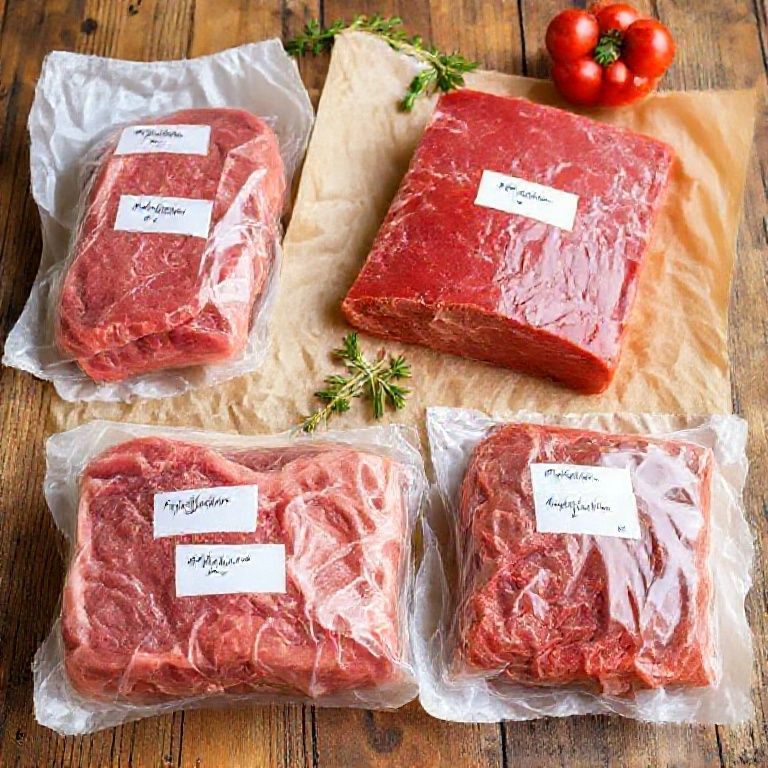
- Vacuum-seal your cuts: This is the best way to keep your meat fresh, especially if you’re not planning to use it right away. Vacuum-sealing removes all the air from the package, which helps prevent freezer burn and extends the shelf life of the meat.
- Use freezer paper: If you don’t have a vacuum sealer, freezer paper is a good alternative. Wrap your cuts tightly in the paper, making sure there are no air pockets. Then, wrap the package in plastic wrap or aluminum foil to provide an extra layer of protection.
- Label everything: It’s easy to forget what’s in your freezer, so be sure to label each package with the name of the cut and the date. This will help you keep track of what you have and ensure you’re using the oldest meat first.
- Store at the right temperature: Ibérico pork should be stored at 40°F (4°C) or below in the refrigerator, or 0°F (-18°C) or below in the freezer. If you’re storing it in the refrigerator, be sure to use it within a few days, fresh pork doesn’t last as long as cured pork.
If you’re curing your Ibérico pork to make jamón or other charcuterie, you’ll need to follow a specific process. Curing involves salting the meat, then hanging it in a controlled environment for several months (or even years, in the case of jamón Ibérico de bellota). This is a complex process that requires a lot of patience and attention to detail, so I’d recommend doing some research before you get started. There are plenty of resources online that can guide you through the process, or you can take a class if you’re serious about learning the craft.
Final Thoughts: The Right Tools for the Job
Working with Ibérico pork is a privilege. It’s a product of centuries of tradition, a testament to the idea that the best things in life require patience, skill, and the right tools. And when you get it right, when you slice into a perfectly cured leg of jamón, or sear a piece of secreto to caramelized perfection, it’s all worth it. The right tools won’t just make your job easier; they’ll help you create something truly special.
But here’s the thing: tools are just that, tools. They’re not a substitute for skill, experience, or passion. You can have the best knives in the world, but if you don’t know how to use them, they’re not going to do you much good. So, take the time to practice. Learn the anatomy of Ibérico pork. Experiment with different techniques. And don’t be afraid to make mistakes, every butcher, chef, and home cook has been there. The key is to keep learning, keep improving, and keep pushing yourself to do better.
And if you’re just starting out? Don’t feel like you need to buy everything at once. Start with a good boning knife and a honing steel, and build your collection from there. As you gain experience, you’ll figure out what works best for you, and what doesn’t. And who knows? Maybe one day, you’ll be the one writing a guide for the next generation of Ibérico enthusiasts.
So, what’s next? If you’re serious about working with Ibérico pork, I’d challenge you to do two things: first, invest in at least one high-quality knife (even if it’s just a boning knife to start). And second, find a mentor, someone who knows their way around a butcher’s block and can teach you the ropes. Whether it’s a local butcher, a professional chef, or even an online community, having someone to guide you can make all the difference.
And hey, if all else fails, just remember: even the best butchers had to start somewhere. So grab a knife, take a deep breath, and get to work. The world of Ibérico pork is waiting for you.
FAQ
Q: What’s the most important tool for working with Ibérico pork?
A: It’s hard to pick just one, but if I had to choose, I’d say a high-quality boning knife. It’s the most versatile tool in your kit, and it’s essential for breaking down cuts, trimming fat, and making precise cuts. A flexible boning knife is great for smaller, more delicate cuts, while a stiff boning knife is better for larger, tougher cuts. If you’re only going to invest in one knife, make it a boning knife.
Q: Do I really need a jamón knife, or can I use a regular slicing knife?
A: You can use a regular slicing knife, but it’s not ideal. Jamón knives are specifically designed for slicing cured ham, with a long, thin, flexible blade that glides through the meat and fat without tearing. A regular slicing knife is shorter and stiffer, which can make it harder to get those paper-thin slices. If you’re serious about Ibérico pork, a jamón knife is a worthwhile investment. That said, if you’re just starting out, a good cimeter knife can work in a pinch.
Q: How often should I sharpen my knives when working with Ibérico pork?
A: It depends on how often you’re using them, but I’d recommend sharpening your knives at least once a week if you’re working with Ibérico pork regularly. The fat in Ibérico pork can dull your blades quickly, so you’ll need to stay on top of maintenance. I also recommend honing your knives before and after each use, a honing steel doesn’t actually sharpen the blade, but it realigns the edge, which helps keep your knives in top shape. If you’re not comfortable sharpening your own knives, most kitchen supply stores offer sharpening services.
Q: Where can I buy commercial cutting tools for Ibérico pork?
A: There are plenty of places to buy commercial cutting tools, both online and in-store. If you’re looking for a wide selection and competitive prices, websites like Chef’s Deal (chefsdeal.com) are a great option. They offer free kitchen design services, professional installation, and expert consultation and support, which can be a huge help if you’re outfitting a new space or upgrading your existing setup. If you prefer to shop in person, check out specialty kitchen supply stores or butcher shops in your area. Some stores even offer knife sharpening services, which can be a nice perk if you’re not comfortable sharpening your own knives.
@article{how-to-select-the-best-commercial-cutting-tools-for-iberico-pork-a-butchers-guide-to-precision-and-tradition,
    title   = {How to Select the Best Commercial Cutting Tools for Ibérico Pork: A Butcher’s Guide to Precision and Tradition},
    author  = {Chef's icon},
    year    = {2026},
    journal = {Chef's Icon},
    url     = {https://chefsicon.com/how-to-select-best-commercial-cutting-tools-iberico-pork/}
}