The Best Fluffy Pancakes recipe you will fall in love with. Full of tips and tricks to help you make the best pancakes.
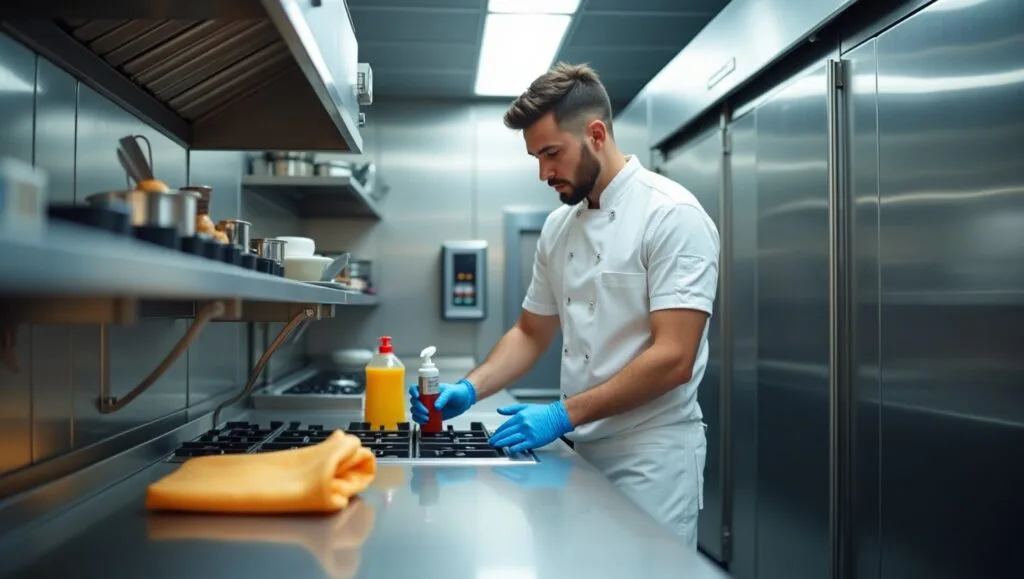
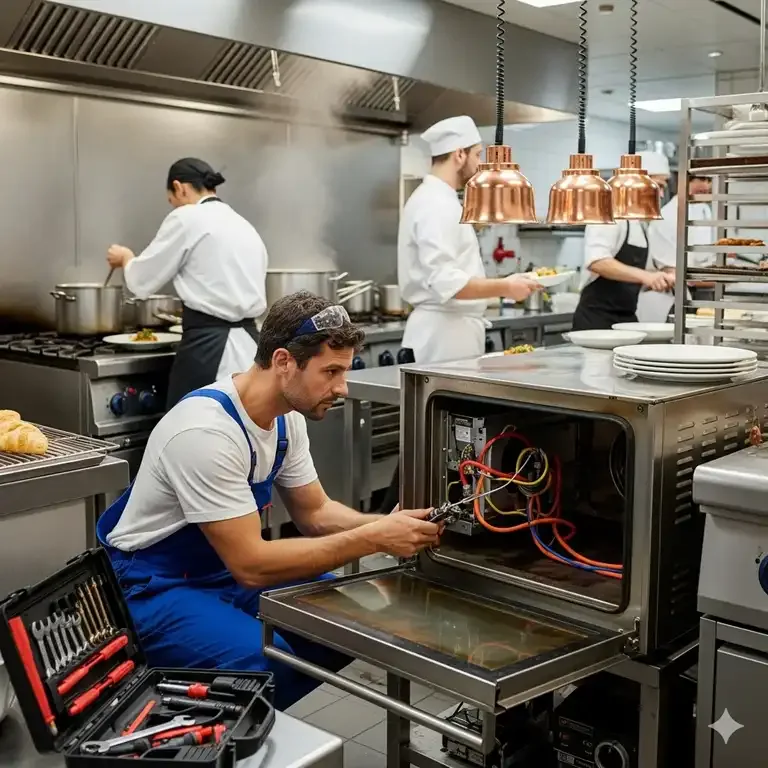
Let me start with a confession: I once ran a pop-up kitchen in Oakland where we nearly burned down the entire operation because we ignored the fryer maintenance schedule for three months straight. The fire marshal’s visit was… educational. That’s when I learned that commercial kitchen equipment isn’t just about cooking, it’s about preventing disasters, saving money, and keeping your staff from staging a mutiny when the ice machine breaks again during Friday night service.
Now, working remotely from Nashville (where the barbecue scene is both a blessing and a curse for kitchen equipment), I’ve seen how proactive maintenance separates the thriving restaurants from the ones constantly playing whack-a-mole with repairs. This guide isn’t just about checking boxes, it’s about understanding why that weird noise in your convection oven matters, how to spot problems before they spiral, and yes, how to actually remember to clean the grease trap (I’m still working on that last one).
We’ll cover everything from daily cleaning rituals to the annual deep dives most operators skip until it’s too late. You’ll learn how to extend the life of your equipment, avoid health code violations that make inspectors twitchy, and, maybe most importantly, how to train your team so you’re not the only one who knows where the water filter wrench is hidden. Because let’s be real: if your dishwasher doesn’t know how to descale the dish machine, you’re one busy Saturday away from a meltdown.
Is this the sexiest topic in food service? No. But is it the difference between a kitchen that hums and one that’s constantly on fire (sometimes literally)? Absolutely. Let’s dig in.
-
The Philosophy of Kitchen Maintenance (Or: Why You Should Care More Than You Do)
1. The Hidden Costs of Neglect (Spoiler: They’re Brutal)
Here’s the thing about commercial kitchen equipment: it’s designed to fail spectacularly if you ignore it. That’s not cynicism, that’s engineering. A clogged grease trap doesn’t just smell bad; it can back up into your prep sinks, shut down your entire operation, and cost thousands in emergency plumbing. A dirty condenser coil in your reach-in fridge doesn’t just make it run hotter; it can triple your energy bills and cut the unit’s lifespan in half. And don’t even get me started on the health department fines for improperly maintained equipment. I’ve seen a single violation for a malfunctioning handwashing sink cost a restaurant $2,500. Twice.
But the real kicker? Downtime. When your combi oven dies mid-service because you skipped the monthly calibration, you’re not just losing the cost of repairs, you’re losing revenue, reputation, and staff morale. Ever tried to explain to a line cook why they have to hand-wash 200 plates because the dish machine’s pump burned out? It’s not a conversation you want to have.
I’m torn between framing this as a financial argument (because it is) and a cultural one. The best kitchens I’ve worked in treated maintenance like mis en place, something you do before you need it, not after. The worst? Well, let’s just say I’ve seen a chef use duct tape to “fix” a leaking steam jacketed kettle. (Pro tip: Don’t do that.)
2. The Psychology of Procrastination (And How to Beat It)
Why do smart, capable operators put off maintenance? Three reasons:
- Out of sight, out of mind. If it’s not broken right now, it’s easy to assume it’s fine. (News flash: Your walk-in evaporator fan is slowly dying a quiet death.)
- The tyranny of the urgent. When you’re short-staffed and the dinner rush is hitting, no one’s thinking about the hood filter that hasn’t been cleaned in 60 days.
- False economy. “We’ll save money by skipping the service contract!” Spoiler: You won’t. That $300 annual inspection could’ve caught the $3,000 compressor failure.
So how do you fight this? Systems. Not sexy, but effective. More on that later.
3. The Equipment Lifecycle: When to Repair, When to Replace
Not all equipment is created equal. Here’s a rough breakdown of lifespans (assuming proper maintenance):
- Stainless steel prep tables: 10–15 years (but the legs rust first)
- Convection ovens: 8–12 years (unless you never clean the fans)
- Gas ranges: 10–15 years (burners last longer than the grates)
- Ice machines: 5–10 years (if you descale religiously)
- Dish machines: 7–10 years (the pumps go first)
- Walk-in coolers: 15–20 years (if you don’t ignore the door gaskets)
But here’s the catch: These numbers assume you’re maintaining the equipment. Skip the maintenance, and you might get half that lifespan. I’ve seen a $12,000 blast chiller last only four years because no one ever cleaned the condenser. Four. Years.
So when do you repair vs. replace? Ask yourself:
- Is the repair cost more than 50% of replacement?
- Is the equipment obsolete (e.g., parts no longer available)?
- Is it energy-inefficient compared to newer models?
- Has it become a safety hazard (e.g., frayed wiring, gas leaks)?
If you answered “yes” to two or more, it’s time to start budgeting for a replacement.
-
The Daily, Weekly, Monthly, and Annual Maintenance Checklist (Yes, You Need All Four)
1. Daily Maintenance: The Non-Negotiables
These are the tasks that should be as automatic as locking the door at night. Assign them to specific staff members and post a checklistear the time clock. Trust me, if it’s not written down, it won’t happen.
Critical daily tasks:
- Clean and sanitize all food contact surfaces (cutting boards, prep tables, slicers). Use quat-based sanitizer-bleach degrades stainless steel over time.
- Empty and wipe down grease traps and strainers. (I cannot stress this enough. The number of kitchens I’ve seen where the grease trap is a science experiment is terrifying.)
- Check refrigerator temperatures with a calibrated thermometer. Log them. If your walk-in is running at 45°F instead of 38°F, you’ve got a problem.
- Inspect hoses and connections on dish machines, steamers, and ice machines for leaks or cracks.
- Run the hood suppression system test (if applicable). Yes, every day. Fire safety isn’t optional.
- Drain and refill the steam well on your combi oven if used. Limescale buildup is a silent killer.
Pro tip: End-of-shift cleaning should include a 10-minute equipment walkthrough. Have your closing manager do a quick lap to spot anything obvious (e.g., a loose door gasket on the reach-in, a clogged drain in the three-compartment sink).
2. Weekly Maintenance: The “I’ll Do It Later” Tasks That Become Disasters
These are the things that seem optional until they’re not. Schedule them for slow days (hello, Monday afternoons).
Non-negotiable weekly tasks:
- Descale coffee machines and espresso equipment. If your coffee tastes bitter or the machine is slower than usual, it’s probably limescale. Use citric acid-based descaler-vinegar isn’t strong enough for commercial machines.
- Clean and inspect fryer filters. If you’re not changing the oil daily (you should be), at least filter and top off the oil. Old oil breaks down into polar compounds that make food taste off and can even become a fire hazard.
- Check and clean pilot lights on gas equipment. A dirty pilot can cause incomplete combustion, leading to carbon monoxide buildup (which, yes, is as dangerous as it sounds).
- Test and clean the dish machine’s spray arms. If they’re clogged, your dishes won’t get sanitized properly, and you’ll fail your next health inspection.
- Inspect and tighten all gas and water connections. A slow gas leak isn’t just a fire risk, it’s an explosion risk.
- Wipe down and sanitize ice machine interiors. Mold loves ice machines. So do health inspectors (to shut you down).
I’m guilty of skipping some of these when things get busy, but here’s the thing: The busier you are, the more you need to do them. A clogged fryer during Friday night service isn’t just an inconvenience, it’s a full-blown crisis.
3. Monthly Maintenance: The Deep Clean You Keep Putting Off
This is where most kitchens fall apart. Monthly tasks require dedicated time, and in this industry, time is the one thing no one has. But trust me, skipping these is like skipping oil changes in your car, eventually, the engine seizes.
Monthly must-dos:
- Deep clean the grease hood and filters. If your filters are caked with grease, your exhaust fan is working overtime, and you’re one spark away from a fire. Use a degreaser designed for hood systems (not just soap and water).
- Calibrate ovens and thermostats. If your oven runs 25°F hotter than it should, you’re burning food and wasting energy. Use an infrared thermometer to check.
- Inspect and clean condenser coils on refrigeration units. Dust and grease buildup force the compressor to work harder, shortening its life. A coil cleaning brush is your best friend here.
- Test and clean the hood suppression system. Pull the fusible links (if your system has them) and check for corrosion. If they’re degraded, replace them, they’re your last line of defense in a grease fire.
- Check and replace worn gaskets on reach-ins and walk-ins. If the seal is broken, your unit is working overtime to maintain temperature, and your energy bill will show it.
- Drain and flush water heaters. Sediment buildup reduces efficiency and can corrode the tank. If you’ve never done this, brace yourself, the water coming out will look like a horror movie.
- Inspect and lubricate door hinges, casters, and moving parts on equipment. A squeaky wheel isn’t just annoying, it’s a sign of wear that can lead to failure.
Maybe I should clarify: These tasks aren’t optional. I’ve seen a restaurant’s walk-in cooler fail during a heatwave because no one ever cleaned the condenser coils. $8,000 in spoiled food, a closed kitchen for two days, and a very angry owner. Don’t be that guy.
4. Quarterly Maintenance: The “I Didn’t Know That Was a Thing” Tasks
These are the tasks that most operators don’t even realize they should be doing. Ignore them at your peril.
Quarterly deep dives:
- Professional hood cleaning. Even if you’re wiping down the filters monthly, the ductworkeeds a professional cleaning every 3–6 months. Grease buildup in the ducts is a major fire hazard, and most insurance policies require documentation of professional cleanings.
- Inspect and clean the drain lines for ice machines, dishwashers, and prep sinks. Biofilm and mold love dark, damp places. A drain line brush and some enzyme cleaner will save you from a clogged drain during service.
- Check and replace air filters in ventilation systems. Dirty filters reduce airflow, making your kitchen hotter and your staff crankier.
- Test and calibrate thermostats on all refrigeration units. If your walk-in is running at 34°F instead of 38°F, you’re freezing your produce and wasting energy.
- Inspect and tighten all electrical connections. Loose wires can cause arcing, which is a fire hazard. If you’re not comfortable doing this, hire an electrician.
- Check the water pressure on your dish machine and prep sinks. Low pressure means dishes aren’t getting cleaned properly, and high pressure can damage hoses.
I didn’t know about half of these until I inherited a kitchen where the previous manager had let things slide. The $1,200 bill to clean the hood ducts (which had never been done in 5 years) was a painful lesson in neglect.
5. Annual Maintenance: The Big-Ticket Items
These are the tasks that require professional help or significant downtime. Plan for them during slow seasons or closures.
Annual essentials:
- Professional refrigeration service. Have a technician check the compressor, evaporator, and refrigerant levels. Low refrigerant doesn’t just reduce cooling, it can damage the compressor.
- Full inspection of gas lines and connections. Gas leaks are silent killers. A licensed technician should check for leaks, corrosion, and proper ventilation.
- Deep clean and descale all steam equipment (combi ovens, steamers, kettles). Limescale buildup reduces efficiency and can damage heating elements.
- Inspect and replace worn belts, pulleys, and motors on equipment like mixers, slicers, and conveyor ovens.
- Test and certify fire suppression systems. Most jurisdictions require annual certification, don’t let this lapse.
- Check and replace worn door seals on all refrigeration units. Even a small gap can cause major energy loss.
- Inspect and clean the exhaust fan and makeup air system. Poor ventilation leads to a hot, uncomfortable kitchen and can even cause carbon monoxide buildup if gas equipment isn’t venting properly.
Is this overkill? Maybe for some operations. But consider this: The average cost of a commercial kitchen fire is $23,000. The average cost of annual maintenance? About $2,000. Do the math.
-
The Equipment-Specific Breakdown (Because Not All Machines Are Created Equal)
1. Refrigeration Units: The Silent Workhorses
Refrigeration is the backbone of your kitchen, and it’s also where most operators drop the ball. Here’s what you’re probably missing:
Common issues and fixes:
- Warm temperatures: Usually caused by dirty condenser coils, a failing door gasket, or a malfunctioning thermostat. Clean the coils first, it’s the cheapest fix.
- Excessive frost buildup: Check the defrost timer and heating element. If the defrost cycle isn’t working, ice will insulate the coils, reducing cooling efficiency.
- Strange noises: A buzzing sound often means the compressor is struggling (check refrigerant levels). A clicking sound could indicate a failing start capacitor.
- Water leaks: Usually a clogged drain line or a broken drain pan. Clean the drain line with a pipe brush and hot water.
Pro tip: If your walk-in is running constantly, it’s not just “working hard”-it’s failing. Call a technician before it dies completely.
2. Cooking Equipment: From Fryers to Flat Tops
Cooking equipment takes a beating. Here’s how to keep it running smoothly:
Fryers:
- Change oil daily if possible (or at least filter and top off). Old oil breaks down into polar compounds that make food taste bitter and can cause acrylamide formation (a potential carcinogen).
- Clean the burner tubes monthly, clogged tubes cause uneven heating.
- Check the high-limit thermostat annually. If it fails, your fryer can overheat and cause a fire.
Ranges and flat tops:
- Clean burner ports weekly with a burner brush. Clogged ports cause uneven flames and can lead to carbon monoxide buildup.
- Check the pilot light monthly. A weak or dirty pilot can cause delayed ignition, which is dangerous (and startling for your line cooks).
- For flat tops, scrape and season the surface daily. Use a griddle stone for deep cleaning, but avoid wire brushes, they can damage the surface.
Ovens (convection, combi, deck):
- Calibrate the thermostat monthly. An oven that runs 25°F off can ruin your cooking times.
- Clean the fan and vents in convection ovens quarterly. Grease buildup on fans reduces airflow and can cause hot spots.
- For combi ovens, descale the steam generator monthly. Limescale buildup can clog the steam nozzle and reduce efficiency.
- Check the door gasket every six months. A loose seal wastes energy and can cause uneven cooking.
3. Dish Machines: The Unsung Heroes (Until They Break)
A broken dish machine can shut down your entire operation. Here’s how to keep it running:
Daily:
- Scrape and rinse dishes before they go into the machine. Food debris clogs the spray arms and drain pump.
- Check the detergent and sanitizer levels. Running low? Your dishes aren’t getting clean.
- Wipe down the door gasket to prevent mold buildup.
Weekly:
- Remove and clean the spray arms. Use a pipe cleaner to clear the jets.
- Check the drain pump for debris. A clogged pump will cause the machine to back up.
- Run a delimer cycle if your machine has one. Limescale buildup reduces water flow and cleaning efficiency.
Monthly:
- Inspect the heating element for scale buildup. If it’s coated in limescale, it won’t heat water efficiently.
- Check the water inlet filter. A clogged filter reduces water pressure, leading to poor cleaning.
- Test the thermostat with a high-temperature thermometer. The final rinse should be at least 180°F to sanitize properly.
Pro tip: If your dish machine starts leaving a white film on dishes, it’s usually due to hard water or too much detergent. Adjust your water softener or detergent levels.
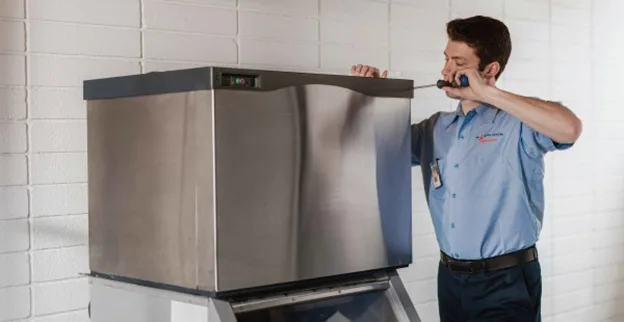
4. Ice Machines: The Mold Factories
Ice machines are otorious for growing mold and bacteria. Here’s how to keep yours clean:
Weekly:
- Empty and sanitize the ice bin. Use a food-safe sanitizer (not bleach, it can corrode the bin).
- Wipe down the exterior and air vents. Dust and grease buildup can reduce efficiency.
- Check the water filter (if your machine has one). Replace it every 6 months or as recommended.
Monthly:
- Run a cleaning cycle with an ice machine cleaner (not vinegar, it’s not strong enough for commercial units).
- Inspect the water distribution tube for scale buildup. If it’s clogged, your machine won’t make ice efficiently.
- Check the condenser coil for dust. Clean it with a coil brush.
Quarterly:
- Have a technician check the refrigerant levels and compressor. Low refrigerant can cause the machine to run constantly, increasing energy costs.
- Inspect the water pump for wear. A failing pump will reduce ice production.
Warning sign: If your ice starts tasting or smelling funny, it’s already too late. Shut it down and deep clean immediately.
5. Ventilation Systems: The Fire Prevention Heroes
Your hood and ventilation system are your first line of defense against fires. Neglect them, and you’re playing with fire, literally.
Monthly:
- Clean the grease filters with a degreaser. Soak them in hot water to loosen grease, then scrub with a stiff brush.
- Check the fan blades for grease buildup. Grease on the blades reduces airflow and increases fire risk.
- Inspect the ductwork for gaps or corrosion. Holes in the ducts can allow grease to accumulate in hidden areas.
Quarterly:
- Have a professional clean the entire duct system. This isn’t a DIY job, grease in ducts is a major fire hazard.
- Test the hood suppression system. Pull the manual release to ensure it activates properly.
- Check the makeup air system. If it’s not balanced with the exhaust, your kitchen will get too hot or too cold, and your gas equipment may not vent properly.
Annually:
- Have a technician inspect the exhaust fan motor and belts. Worn belts reduce airflow and increase fire risk.
- Check the roof exhaust cap for blockages (e.g., bird nests, debris). A blocked cap reduces ventilation efficiency.
- Test the fire suppression system with a certified technician. Most jurisdictions require annual certification.
Red flag: If your hood is vibrating excessively or making grinding noises, the fan motor is likely failing. Replace it before it seizes.
-
Creating a Maintenance Culture (Or: How to Get Your Team to Care)
1. The Checklist System (Because Memory is Unreliable)
You can’t rely on people to remember everything. Checklists work. Here’s how to implement them:
- Create daily, weekly, and monthly checklists for each piece of equipment. Assign tasks to specific staff members.
- Post checklists in a visible location (e.g., near the time clock or in the kitchen office).
- Use a digital system (like Google Forms or a kitchen management app) to track completion. Paper checklists get lost.
- Include a sign-off system so you know who did (or didn’t) complete the tasks.
Pro tip: Tie checklist completion to bonuses or incentives. If the kitchen passes the health inspection with no violations, the team gets a bonus. Suddenly, everyone remembers to clean the grease trap.
2. Training That Sticks (Because “Watch and Learn” Doesn’t Work)
Most training fails because it’s passive. Here’s how to make it active:
- Hands-on demonstrations: Don’t just tell someone how to clean the fryer, make them do it while you watch.
- Shadowing: Have new hires shadow experienced staff for a week before they’re responsible for maintenance tasks.
- Quizzes: Yes, really. A 5-question quiz on fryer safety or dish machine maintenance ensures people actually paid attention.
- Cross-training: Make sure at least two people know how to perform each maintenance task. If your fryer expert calls in sick, someone else should be able to step in.
I once worked in a kitchen where the only person who knew how to fix the combi oven was the chef. When he quit, we were stuck for a week until we could get a technician. Don’t let that be you.
3. The “See Something, Say Something” Rule
Your staff are on the front lines. If they notice something off, a strange noise, a leak, a temperature fluctuation, they should feel comfortable reporting it immediately. Here’s how to encourage that:
- Create a simple reporting system (e.g., a whiteboard in the kitchen or a shared digital doc).
- Recognize and reward staff who catch problems early. A $20 gift card for spotting a loose gas connection is cheap compared to the cost of a repair.
- Hold a monthly “safety meeting” to review any issues that came up and brainstorm solutions.
4. Budgeting for Maintenance (Because It’s Cheaper Than Repairs)
Most operators treat maintenance as an afterthought in their budget. That’s a mistake. Here’s how to plan for it:
- Set aside 1–3% of your annual revenue for equipment maintenance. For a restaurant doing $1M/year, that’s $10,000–$30,000.
- Prioritize based on risk and impact. A broken fryer is more urgent than a squeaky door hinge.
- Consider a service contract for critical equipment (e.g., refrigeration, hood suppression). The peace of mind is worth the cost.
- Track maintenance costs by equipment type. If your ice machine is costing you $1,000/year in repairs, it might be time to replace it.
Is this a lot? Yes. But it’s nothing compared to the cost of a walk-in cooler failure during a heatwave or a health department shutdown because your dish machine wasn’t sanitizing properly.
-
The Tools You Actually Need (And the Ones You’re Wasting Money On)
1. The Essentials (Spend Money Here)
These are the tools every commercial kitchen should have:
- Infrared thermometer: For checking oven temps, fridge temps, and even detecting hot spots in electrical panels.
- Coil cleaning brush: For cleaning refrigerator condenser coils. A stiff-bristle brush works best.
- Grease trap cleaning tools: A scraper, degreaser, and bucket dedicated to this task. Don’t use your food prep buckets for grease.
- Pipe brushes: For cleaning drain lines in sinks, ice machines, and dishwashers.
- Multimeter: For testing electrical connections and voltage. If you’re not comfortable using one, hire an electrician.
- Water filter wrench: For changing filters in ice machines and water dispensers.
- Food-grade sanitizer: Quat-based for most surfaces, iodine-based for ice machines.
- Descaler: Citric acid-based for coffee machines, phosphoric acid-based for steam equipment.
- Fire extinguisher: At least one Class K extinguisher near the cooking line, and a Class ABC extinguisher elsewhere.
- First aid kit: Include burn gel, gloves, and eye wash. Kitchen injuries happen.
2. The “Nice to Have” Tools (If Budget Allows)
These aren’t essential, but they can save time and headaches:
- Ultrasonic cleaner: For deep-cleaning small parts like slicer blades, burner ports, and spray arms.
- Thermal imaging camera: For detecting hot spots in electrical panels or refrigeration systems. Overkill for most, but useful if you manage multiple locations.
- Portable steam cleaner: Great for deep-cleaning greasy equipment like hood filters and fryer exteriors.
- pH strips: For testing the acidity of your dish machine’s wash and rinse cycles. If the pH is off, your dishes aren’t getting clean.
- Refractometer: For testing the concentration of your dish machine detergent and sanitizer. More precise than guesswork.
3. The Waste of Money (Stop Buying These)
Some tools are marketed as “essential” but are really just gimmicks. Save your money:
- “Miracle” cleaning sprays: Most are just rebottled degreasers or sanitizers. Stick with industrial-strength brands like Ecolab or Diversey.
- Cheap thermometers: If it’s not NSF-certified and calibratable, it’s not worth the $10 you “saved.”
- Single-use cleaning wipes: They’re expensive and create waste. Use microfiber cloths and a spray bottle of sanitizer instead.
- Overpriced “restaurant supply” brands: Many tools (like screwdrivers or wrenches) are the same as hardware store versions but marked up 300%. Buy from home improvement stores unless you need NSF-certified tools.
-
When to Call a Professional (And How to Find a Good One)
1. Signs You Need Help (Like, Yesterday)
Some problems are DIY-friendly. Others? Not so much. Call a pro if you see:
- Refrigeration issues: If your walk-in isn’t cooling and you’ve already checked the thermostat, door gasket, and condenser coils, it’s time to call a technician. Common culprits: low refrigerant, failing compressor, or a clogged capillary tube.
- Gas leaks: If you smell gas (it smells like rotten eggs), shut off the gas immediately, evacuate, and call the gas company. Do not turn on lights or use anything that could spark.
- Electrical problems: Flickering lights, tripping breakers, or burning smells mean you’ve got a serious issue. Shut down the equipment and call an electrician.
- Hood suppression system issues: If the system isn’t holding pressure or the fusible links are corroded, call a certified technician. This is not a DIY job.
- Persistent drainage problems: If your sinks or floor drains are constantly backing up, you may have a main line clog or a grease trap failure. A plumber with a sewer camera can diagnose the issue.
- Unusual noises: A grinding sound in your dish machine could mean a failing pump. A high-pitched whine in your refrigeration unit could indicate a refrigerant leak.
2. How to Find a Reliable Technician (Without Getting Scammed)
Not all service techs are created equal. Here’s how to find a good one:
- Ask for referrals: Other restaurant owners are your best resource. Find out who they use and why.
- Check certifications: For refrigeration, look for EPA 608 certification. For fire suppression, ensure they’re factory-trained for your system’s brand.
- Get multiple quotes: Prices can vary wildly. A $500 repair from one company might be $200 from another.
- Ask about warranties: A reputable tech will stand by their work. If they won’t offer a warranty, walk away.
- Look for 24/7 availability: Equipment fails at the worst times. Make sure your tech can respond to emergencies.
- Read reviews: Check Google, Yelp, and industry forums. Look for patterns, if multiple people complain about overcharging or shoddy work, steer clear.
Pro tip: Build a relationship with a local tech. If they know you’re a reliable customer who pays on time, they’ll prioritize your emergencies. I’ve had techs show up at midnight to fix a walk-in because we had a long-standing relationship.
3. Service Contracts: Are They Worth It?
Service contracts can be a lifesaver, or a waste of money. Here’s how to decide:
When a contract makes sense:
- For critical equipment (e.g., walk-in coolers, hood suppression systems).
- If you lack in-house expertise (e.g., you don’t have a staff member who can troubleshoot refrigeration issues).
- If the contract includes preventive maintenance (not just break-fix service).
- If the cost of the contract is less than the potential cost of a major repair (e.g., a $1,000/year contract is worth it if it prevents a $5,000 compressor failure).
When to skip it:
- If the contract only covers labor, not parts (parts can be the most expensive part of a repair).
- If the company has a reputation for slow response times or upselling unnecessary repairs.
- If you have reliable in-house staff who can handle most issues.
- If the equipment is old and near the end of its lifespan (you’re better off saving for a replacement).
I’m a fan of contracts for refrigeration and fire suppression, but I skip them for smaller equipment like mixers or slicers, which are easier to repair in-house.
-
The Future of Kitchen Maintenance: Tech and Trends to Watch
1. Smart Equipment: The Good, the Bad, and the Gimmicky
“Smart” kitchen equipment is everywhere these days. Some of it is useful; some is just hype. Here’s what’s worth considering:
Useful tech:
- Remote temperature monitoring: Sensors that alert you via app if your walk-in temp spikes. Great for preventing spoilage.
- Predictive maintenance software: Some newer equipment can self-diagnose issues and alert you before they become major problems.
- Energy monitoring systems: Track energy usage by equipment type to identify inefficiencies (e.g., a fridge running too often).
- Automated cleaning systems: Some combi ovens and dish machines now have self-cleaning cycles that reduce manual labor.
Overrated (for now):
- Voice-activated equipment: Cool in theory, but impractical in a loud kitchen.
- AI-powered inventory management: Most systems still require too much manual input to be truly “smart.”
- App-controlled ovens: Unless you’re running a ghost kitchen, the benefits are minimal compared to the cost.
My take? Start with remote monitoring. It’s the most practical and cost-effective smart tech for most operations.
2. The Rise of Modular and Leased Equipment
More operators are moving away from traditional ownership models. Here’s why:
- Modular equipment: Systems like plug-and-play cooking suites allow you to swap out components (e.g., swap a griddle for a plancha) as your menu changes. Great for pop-ups or flexible concepts.
- Equipment leasing: Leasing can be cheaper upfront and often includes maintenance. Downside: You don’t own the equipment, and long-term costs can add up.
- Equipment-as-a-service (EaaS): Some companies now offer subscription-based equipment with maintenance included. Ideal for startups or temporary operations.
Is this the future? Maybe. But for most established kitchens, owning and maintaining your own equipment is still the most cost-effective long-term strategy.
3. Sustainability and Maintenance: The Green Angle
Sustainable kitchen practices aren’t just good for the planet, they’re good for your bottom line. Here’s how maintenance ties into sustainability:
- Energy-efficient equipment: Newer models (especially ENERGY STAR-certified ones) use less energy and water. Upgrading can pay for itself in utility savings.
- Water-saving technologies: Low-flow pre-rinse sprayers and high-efficiency dish machines can cut water usage by 30% or more.
- Refrigerant management: Older refrigeration units often use R-22 refrigerant, which is being phased out. Upgrading to units with R-410A or R-290 (propane) is more eco-friendly and future-proof.
- Waste reduction: Properly maintaining equipment (e.g., sealing walk-in doors, calibrating ovens) reduces food waste by keeping ingredients fresher longer.
Bonus: Many utility companies offer rebates for upgrading to energy-efficient equipment. Check with your local provider, you might get thousands back for upgrading your fryer or dish machine.
-
Final Thoughts: The Maintenance Mindset
Here’s the thing about maintenance: It’s not a task. It’s a mindset. The best kitchens I’ve worked in didn’t treat maintenance as a chore, they treated it as part of the cooking process. Just like you wouldn’t skip seasoning your food, you shouldn’t skip seasoning (i.e., maintaining) your equipment.
Will you mess up? Absolutely. I still forget to clean the grease trap sometimes. But the key is to build systems that compensate for human fallibility. Checklists, training, and a culture where everyone takes ownership of the kitchen’s health will save you more time, money, and stress than you can imagine.
So here’s your challenge: Pick one piece of equipment you’ve been neglecting and give it the full maintenance treatment this week. Clean it, inspect it, and fix what’s broken. Then make a plan to keep it that way. Small steps lead to big changes.
And if all else fails? Remember: A stitch in time saves nine. Or in kitchen terms, a $50 service call today saves a $5,000 repair tomorrow.
-
FAQ
Q: How often should I really clean my grease trap? It’s a pain, and it seems fine.
A: I feel your pain, grease traps are the worst. But here’s the deal: Clean it every 1–3 months, depending on usage. If you’re a high-volume fryer operation, aim for monthly. If you’re mostly doing prep with minimal grease, every 3 months might suffice. The rule of thumb? If it smells or the water drains slowly, it’s past due. And yes, it’s a pain, but it’s cheaper than a $10,000 plumbing bill when the trap backs up into your kitchen.
Q: My walk-in cooler is running constantly, and my energy bill is through the roof. What’s the first thing I should check?
A: Start with the basics: Check the door gasket for gaps or tears (a dollar bill should have resistance when you close the door on it). Then, clean the condenser coils-dust and grease buildup are the #1 cause of inefficient cooling. If those don’t fix it, call a tech to check the refrigerant levels and compressor. Pro tip: If the coils are frosting over, you might have a defrost system issue.
Q: Is it worth buying extended warranties on new equipment?
A: It depends. For high-end or critical equipment (like a $20,000 combi oven or a walk-in cooler), an extended warranty can be worth it if it includes preventive maintenance. For cheaper or simpler equipment (like a mixer or food processor), skip it, repairs are usually affordable, and warranties often have so many exclusions they’re not worth the paper they’re printed on. Always read the fine print!
Q: My staff keeps “forgetting” to do maintenance tasks. How do I get them to take it seriously?
A: Ah, the age-old problem. Here’s what works: Tie it to their paycheck. For example, if the kitchen passes the health inspection with no violations, everyone gets a bonus. Or make maintenance part of their performance reviews. Also, lead by example-if they see you skipping tasks, they will too. Finally, make it easy: Post checklists in obvious places, provide the right tools, and assign specific tasks to specific people. Accountability is key.
@article{maintaining-your-commercial-kitchen-equipment-a-practical-guide-and-why-i-keep-forgetting-to-clean-the-grease-trap,
    title   = {Maintaining Your Commercial Kitchen Equipment: A Practical Guide (And Why I Keep Forgetting to Clean the Grease Trap)},
    author  = {Chef's icon},
    year    = {2025},
    journal = {Chef's Icon},
    url     = {https://chefsicon.com/maintaining-your-commercial-kitchen-equipment-a-practical-guide/}
}