The Best Fluffy Pancakes recipe you will fall in love with. Full of tips and tricks to help you make the best pancakes.
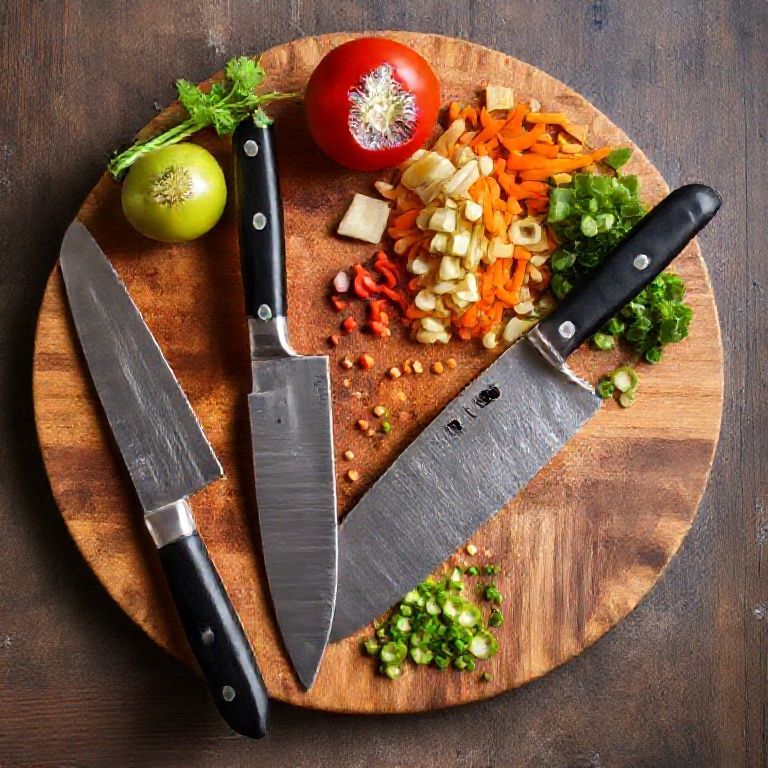
I’ll admit something embarrassing: I spent my first five years of cooking like I was defusing a bomb every time I picked up a chef’s knife. My julienne carrots looked like abstract art, my onions wept more than I did, and I’m pretty sure my poor butcher block still bears the scars of my early death-grip chopping technique. It wasn’t until I forced myself to slow down, way down, that I realized knife skills aren’t about speed or Instagram-worthy precision. They’re about control, confidence, and understanding how food wants to be cut.
Here’s the thing nobody tells you: Mastering knife skills at home isn’t about becoming a line cook. You’re not racing against tickets in a professional kitchen. You’re making dinner after a long day, maybe with a glass of wine in hand and Luna (my judgmental rescue cat) watching your every move. The goal isn’t perfection, it’s efficiency without frustration. A well-honed knife technique means less wasted food, fewer band-aids, and actually enjoying the process of prep work instead of dreading it.
This guide isn’t going to promise you’ll be slicing tomatoes paper-thin by tomorrow. What it will do is break down the fundamentals in a way that sticks, because I’ve been where you are, gripping that knife like it might bite back. We’ll cover everything from how to hold your knife (spoiler: you’re probably doing it wrong) to the psychological trick that’ll make you stop fearing the blade. And yes, we’ll talk about why your $200 Japanese gyuto might be overkill when you’re still mastering the basics.
By the end, you’ll understand not just how to cut, but why certain techniques matter, and which ones you can safely ignore for your home cooking. Because let’s be real: if Julia Child could hack her way through a chicken on live TV with zero pretension, you can absolutely conquer a pile of onions without crying (the emotional kind or the onion kind).
The Knife Skills Myth We All Fall For (And Why It’s Holding You Back)
Before we dive into technique, we need to address the biggest lie the cooking world sells: that knife skills are about speed. Watch any cooking show or scroll through #KnifeSkills on Instagram, and you’ll see chefs moving at warp speed, their blades a blur of motion. Here’s the truth: Speed is the byproduct of good technique, not the goal. When you’re learning, speed is your enemy. It leads to uneven cuts, wasted food, and, let’s be honest, more trips to the first aid kit than you’d like to admit.
I learned this the hard way during my brief stint helping out at a friend’s food truck. The line cook, a guy named Marcus who’d been doing this since he was 16, watched me “chop” an onion with what can only be described as aggressive incompetence. He didn’t say anything at first, just handed me a new onion and said, “Do it slower. Like, painfully slower.” I thought he was messing with me. But when I forced myself to move at half-speed, something clicked. My cuts were cleaner. The onion layers separated like they were supposed to. And I didn’t feel like I was one slip away from losing a fingertip.
Here’s what’s really happening when you slow down:
- Your brain has time to process: At high speed, you’re reacting. At slow speed, you’re observing-how the knife interacts with the food, where your fingers are, how the food moves (or doesn’t).
- The food behaves better: Ever notice how carrots roll away when you hack at them? That’s because you’re not giving the flat side time to settle against the board. Slow = stable.
- You build muscle memory: Your hands learn the correct motions instead of reinforcing bad habits. Speed comes later, when your body knows what to do without thinking.
So before we talk about how to hold a knife or which cuts to practice, make this pact with yourself: For the next two weeks, you will cut everything at 50% of the speed you think you should. Trust me, it’s the fastest way to get better.
The Knife You Actually Need (Hint: It’s Not What You Think)
Walk into any kitchen store, and you’ll be bombarded with options: Japanese gyutos, German chef’s knives, santokus, nakiris, cleavers, paring knives, boning knives, it’s enough to make you want to just grab a butter knife and call it a day. Here’s the unpopular truth: You need exactly one knife to start. And no, it’s not the $300 Shun premier you’ve been eyeing.
For 90% of home cooking, a 8-inch chef’s knife is your workhorse. Not a 10-inch (too unwieldy for most home kitchens), not a 6-inch (too small for anything bigger than a shallot). Eight inches gives you enough length for slicing, enough height for knuckle clearance, and enough versatility to handle everything from mincing garlic to breaking down a chicken. The brand? Almost doesn’t matter at this stage. A $30 Victorinox Fibrox or a $50 Mercer Culinary will outperform a $200 “premium” knife in the hands of a beginner because technique matters more than steel.
Now, about those other knives:
- Paring knife (3-4”): Useful for peeling and detail work, but you can do 80% of those tasks with your chef’s knife if you’re careful.
- Serrated/bread knife: Essential if you bake or eat a lot of crusty bread, but otherwise a “nice to have.”
- Boning knife: Only if you’re breaking down whole chickens or deboning thighs regularly. For the occasional roast, your chef’s knife will suffice.
- Cleaver: Unless you’re butchering whole animals, this is overkill. A heavy chef’s knife can handle most light butchery.
I’ll say it again: One knife. Eight inches. Chef’s style. Master that before you even think about expanding your collection. And for the love of all that’s holy, skip the knife blocks. They’re a gimmick. A magnetic strip or a simple knife guard is all you need to keep your blade safe and accessible.
How to Hold Your Knife (And Why You’re Probably Doing It Wrong)
Alright, let’s talk grip. If you’re holding your knife like a pencil or a hammer, we need to fix that. The two most common grips are the pinch grip and the hammer grip, but one is vastly superior for control and safety. (Spoiler: it’s the pinch grip.)
Here’s how to do it:
- Place the knife on the counter with the blade facing away from you.
- Pick it up by pinching the blade itself-ot the handle-between your thumb and index finger, right where the blade meets the heel (the thickest part of the knife near the handle).
- Wrap your remaining three fingers around the handle for support. Your index finger should be extended along the spine of the blade for stability.
Why this works:
- Control: Pinching the blade gives you direct leverage over the cutting edge, so the knife moves where you want it to, not where momentum takes it.
- Safety: Your fingers are out of the “danger zone” (the path of the blade), and the grip naturally encourages a proper cutting motion.
- Endurance: Less strain on your wrist and forearm, which means you can chop longer without fatigue.
The hammer grip (where you choke up on the handle like you’re holding a hammer) isn’t wrong, but it’s less precise and more tiring over time. It’s also the grip most people default to because it feels “safer”-you’re not touching the blade! but ironically, it often leads to more accidents because you have less control.
Pro tip: If your knife has a bolster (that thick metal collar where the blade meets the handle), your pinch grip should be just in front of it. No bolster? Aim for the spot where the blade starts to widen.
The Other Hand: Your Secret Weapon (Or Your Biggest Liability)
Your knife hand gets all the glory, but your guiding hand (the one holding the food) is just as important, and where most accidents happen. The key here is the claw grip. No, you won’t look like a graceful TV chef. Yes, it’ll feel awkward at first. But it’s the difference between keeping all your fingertips and, well, not.
Here’s how to do it:
- Curl your fingers inward so your fingertips are protected behind your knuckles.
- Use your knuckles as a guide for the knife blade. The side of the blade should rest against your middle knuckle as you cut.
- Keep your thumb tucked behind your fingers, out of the way of the blade.
This does two things:
- Protects your fingers from the blade (obviously).
- Creates a consistent guide for even cuts. The food moves toward the knife, not away from it, so you’re not chasing rolling carrots across the board.
I’ll be honest: the claw grip feels unnatural at first. You’ll feel like a robot. But after a few sessions, it becomes second nature, and you’ll wonder how you ever chopped without it. The alternative? The “flat hand” method, where you press your fingertips flat against the food. Don’t do this. It’s how you lose fingernails. (Ask me how I know.)
The 5 Cuts Every Home Cook Should Master (And Which Ones You Can Skip)
You don’t need to know 20 different cuts to cook well at home. In fact, focusing on too many techniques early on just slows you down. Here are the five essential cuts that’ll cover 95% of your cooking, along with when to use them, and which “fancy” cuts you can safely ignore unless you’re going pro.
1. The Dice (Small, Medium, Large)
Dicing is the workhorse of knife skills. Whether you’re prepping onions for soup, carrots for a stir-fry, or potatoes for a hash, a good dice ensures even cooking and a consistent texture. The key is uniformity-not necessarily perfection, but close-enough sizes so everything cooks at the same rate.
How to do it:
- Start with a stable base: Cut the food in half (for onions, peel and cut off the root end first) so you have a flat side to rest on the board.
- Make parallel vertical cuts (don’t cut all the way through, leave the food attached at one end).
- Turn the food 90 degrees and make perpendicular cuts to create a grid.
- Finally, cut down through the grid to release the dice.
Pro tip: For onions, leave the root end intact until the very end, it helps hold the layers together while you cut. And yes, you’ll cry less if you chill the onion for 30 minutes first and use a sharp knife (crushing cells releases more irritants).
When to use it: Soups, stews, salsas, stir-fries, mirepoix (the onion-carrot-celery base for stocks and sauces).
2. The Julienne (Matchstick Cut)
Julienne gets a bad rap for being “fancy,” but it’s actually one of the most practical cuts for home cooking, especially if you love stir-fries, slaws, or crudité platters. The goal is long, thin strips, about 1/8-inch thick and 2-3 inches long.
How to do it:
- Square off your food: Trim the sides of a carrot or potato to create flat surfaces.
- Cut into 1/8-inch thick planks.
- Stack the planks and cut into 1/8-inch sticks.
Where people mess up: Trying to cut julienne freehand without first creating flat sides. Stability is everything. If your food is rolling, you’re doing it wrong.
When to use it: Stir-fries, salads, garnishes, or any dish where you want quick-cooking, uniform pieces.
3. The Chiffonade (For Herbs and Leafy Greens)
This is the one “fancy” cut worth mastering because it’s stupidly easy and makes you look like a pro. Chiffonade is just a fancy term for thinly sliced herbs or greens, and it’s perfect for basil, spinach, or even kale.
How to do it:
- Stack the leaves on top of each other.
- Roll them tightly into a cigar shape.
- Slice thinly across the roll to create ribbons.
When to use it: Garnishing pasta, soups, or salads; prepping herbs for sauces (like pesto); or making quick-cooking greens for stir-fries.
4. The Mince (For Garlic, Ginger, and Shallots)
Mincing is where people either get way too precious or give up entirely. The goal isn’t microscopic pieces, it’s small, even bits that distribute flavor uniformly without overpowering a dish.
How to do it (for garlic):
- Smash the clove with the flat side of your knife to loosen the skin.
- Peel and trim off the root end.
- Slice thinly lengthwise, then turn and slice thinly crosswise.
- Gather the slices and rock your knife back and forth over them, using the flat of the blade to spread and regather the pieces until they’re finely minced.
Pro tip: Add a pinch of salt to the board, it acts as an abrasive to help break down the garlic and prevents it from sticking to your knife.
When to use it: Sautéing aromatics (garlic, ginger, shallots), making dressings, or any dish where you want flavor distributed evenly.
5. The Rough Chop (The Underrated Hero)
Not everything needs to be perfectly diced. Sometimes, you just need food cut into bite-sized pieces without fuss. This is the “I’m hungry and don’t have time for precision” cut, and it’s perfectly valid for home cooking.
How to do it:
- Cut the food into large chunks (think: quarters for an onion, thirds for a bell pepper).
- Stack the chunks (if stable) and cut into rough 1/2-inch pieces.
- Don’t stress about uniformity, just aim for “close enough.”
When to use it: Hearty soups, rustic stews, roasted veggies, or any dish where texture variation is a feature, not a bug.
The Cuts You Can Skip (For Now)
Unless you’re aiming for a Michelin star, you don’t need to master these yet:
- Brunoise (tiny 1/8-inch dice): Overkill for home cooking. A small dice is fine.
- Tourne (those little football-shaped potatoes): Purely decorative.
- Paysanne (thin, wide slices): Useful in professional kitchens for even cooking in large batches, but unnecessary for home meals.
- Batonnet (thicker julienne): Just use julienne or rough chop.
Focus on the five cuts above, and you’ll cover almost everything you cook at home.
The Sharpness Paradox: Why a Dull Knife Is More Dangerous
Here’s a counterintuitive truth: A sharp knife is safer than a dull one. Why? Because a dull knife requires more force to cut, which leads to slips, uneven cuts, and, eventually, a trip to urgent care. A sharp knife glides through food with minimal pressure, giving you more control.
But “sharp” is relative. Your knife doesn’t need to shave hair off your arm (please don’t test it this way). It just needs to cut through a tomato skin without crushing the flesh underneath. If you’re pressing down hard to slice a ripe tomato, your knife isn’t sharp enough.
How to keep it sharp:
- Honing steel: Use this every time you cook. A few swipes on each side realigns the microscopic teeth of the blade. (No, it doesn’t actually sharpen the knife, it just straightens the edge.)
- Whetstone: For actual sharpening, a 1000/3000-grit stone is plenty for home use. Aim to sharpen every 2-3 months, depending on use.
- Pull-through sharpeners: Better than nothing, but they remove more metal than necessary. Use sparingly.
- Professional sharpening: If you’re not comfortable doing it yourself, find a local sharpener (many hardware stores offer this service).
How to test sharpness:
- Paper test: Hold a sheet of paper by one edge and try to slice through it with the knife. A sharp knife will cut cleanly; a dull one will tear or crumple.
- Tomato test: Press the knife gently against a tomato skin. If it bites in without slipping, it’s sharp.
Warning sign you’re overdoing it: If you’re sharpening more than once a month, you’re either using a crappy steel or pressing too hard when you cut. Let the knife do the work.
The Cutting Board Matters More Than You Think
Your knife is only as good as the surface it’s cutting on. A bad cutting board can dull your blade, make food slip, and turn prep work into a frustration fest. Here’s what to look for:
- Material:
- Wood (maple, walnut, cherry): Gentle on knives, naturally antimicrobial, and heavy enough to stay put. Downside: requires occasional oiling and can’t go in the dishwasher.
- Plastic (HDPE): Dishwasher-safe and cheap, but dulls knives faster and can develop grooves that harbor bacteria. Best for raw meat (you can bleach it).
- Bamboo: Harder on knives than wood, but eco-friendly and durable. A decent middle ground.
- Glass/marble: Avoid. These will ruin your knife edge in weeks.
- Size: At least 12×18 inches for home use. Bigger is better, you want room to pile prepped ingredients without crowding.
- Thickness: 1-1.5 inches thick to absorb impact and prevent warping.
- Non-slip: Look for boards with rubber feet or add a damp towel underneath to prevent sliding.
My personal setup: A large end-grain walnut board for most prep (it’s forgiving on knives and gorgeous) and a thin plastic board for raw meat that I can toss in the dishwasher. I oil the wood board once a month with mineral oil to keep it from drying out.
The Psychological Trick That’ll Make You Better Overnight
Here’s the secret nobody talks about: Knife skills are 80% mental. The physical technique matters, but what really separates confident cooks from hesitant ones is how they think about cutting. There are three mental shifts that’ll improve your knife work immediately:
1. Stop Apologizing to the Food
Watch a nervous cook, and you’ll see them reacting to the food: the onion rolls, so they chase it; the carrot is slippery, so they grip harder; the knife sticks, so they muscle through. The food is in control. A confident cook, on the other hand, dictates the terms. The food moves how they want it to move. The knife goes where they tell it to go.
How to flip the script:
- Before you cut, arrange the food so it’s stable. Trim a flat side if needed.
- If something rolls, stop and reset. Don’t chase it.
- Think of the knife as an extension of your arm. You’re not “cutting”-you’re guiding.
2. Embrace the “Ugly Phase”
Every skill has an ugly phase, that period where you know what “good” looks like, but your hands aren’t cooperating yet. With knife skills, this is the stage where your dice looks like abstract modern art and your julienne resembles a kindergartener’s craft project. This is normal. The mistake is thinking you can skip it.
Here’s how to power through:
- Practice with cheap food: Buy a 5-pound bag of onions or carrots and just cut them. Don’t cook them. Just cut, assess, and cut again.
- Take photos: Snap a picture of your cuts each time. You’ll see progress even when it feels like you’re not improving.
- Compare, don’t critique: Instead of thinking “this looks terrible,” ask “How is this different from last time?”
3. The 80/20 Rule of Knife Skills
You don’t need to master every cut to be a great home cook. In fact, 20% of knife techniques will cover 80% of your cooking. Focus on:
- Dicing onions, carrots, and celery (mirepoix is the base of endless dishes).
- Slicing proteins evenly (so they cook at the same rate).
- Mincing garlic and herbs (flavor foundations).
- Rough-chopping veggies for roasting or soups.
Everything else? Learn it as you need it. Don’t waste time practicing tourne cuts unless you’re making a dish that specifically calls for them.
Common Mistakes That Are Sabotaging Your Progress
Even with good technique, small habits can hold you back. Here are the most common mistakes I see (and have made myself), along with how to fix them:
1. The Death Grip
You’re white-knuckling the knife handle like it’s a lifeline. This tenseness leads to fatigue and less control. Fix it: Relax your grip. The pinch grip should feel firm but not strained. Your fingers should be guiding, not squeezing.
2. Lifting the Knife Too High
You’re not chopping wood. Lifting the knife more than an inch or two between cuts wastes energy and reduces control. Fix it: Keep the tip of the knife on the board and rock the blade for most cuts (like dicing). For slicing (like julienne), use a smooth forward motion with minimal lift.
3. Ignoring Your Stance
If you’re hunched over the cutting board like a question mark, your back will hate you, and your cuts will suffer. Fix it:
- Stand with your feet shoulder-width apart, one foot slightly ahead for balance.
- Keep your shoulders square to the board.
- Bend your knees slightly, don’t hunch your back.
4. Using the Wrong Part of the Blade
The heel (near the handle) is for heavy-duty cutting (like butternut squash). The middle is for most chopping and slicing. The tip is for detail work (like mincing herbs). Using the wrong section makes the job harder. Fix it: Match the part of the blade to the task. For most home cooking, you’ll use the middle 60% of the blade.
5. Not Prepping Your Food
Trying to dice an unpeeled onion or a carrot with the greens still attached is like trying to paint a wall without taping the edges, you’re setting yourself up for frustration. Fix it:
- Peel, trim, and wash food before you start cutting.
- Cut food into manageable pieces first (e.g., halve a large onion before dicing).
- Pat dry leafy greens or wet veggies, slippery food is dangerous food.
6. Rushing the Learning Process
Knife skills are a physical skill, not an intellectual one. You can’t read your way to competence. Fix it:
- Practice for 10 minutes a day, not 2 hours once a week. Consistency > marathons.
- Focus on one cut at a time until it feels natural.
- Film yourself (yes, really). You’ll spot inefficiencies you’d never notice otherwise.
How to Practice Without Wasting Food (Or Your Sanity)
Practicing knife skills doesn’t mean you have to turn your kitchen into a war zone of discarded veggies. Here’s how to get better without wasting food or losing your mind:
1. The “Prep Ahead” Method
Every time you cook, prep extra ingredients and store them for later. Examples:
- Dice 3 onions instead of 1. Freeze the extras in bags for future soups or stews.
- Julienne extra carrots and celery for snacks or stir-fries.
- Mince extra garlic and freeze it in ice cube trays with a little oil.
You get practice, and future-you gets a head start on dinner.
2. The “Ugly Food” Challenge
Pick one “ugly” ingredient (think: misshapen potatoes, bruised apples, wilted celery) and challenge yourself to cut it into something usable. Can you turn a bruised apple into even slices for a tart? Can you salvage a soft potato into a decent dice for soup? This teaches you to adapt to imperfect food, which is most of what you’ll encounter in real cooking.
3. The “Blindfold Test” (Sort Of)
Once you’re comfortable with basic cuts, try this:
- Close your eyes (or wear a sleep mask, no judgment).
- Place your hand on the food and visualize the cuts before you make them.
- Open your eyes and cut. Were your actual cuts close to what you imagined?
This forces you to plan your cuts instead of hacking away blindly. (Note: Only do this with soft foods like mushrooms or zucchini at first. No blindfolded onion chopping, please.)
4. The “One-Knife Meal”
Challenge yourself to cook an entire meal using only your chef’s knife. No paring knives, no scissors, no gadgets. This forces you to get creative with your technique. Examples:
- Peel ginger with the edge of your knife instead of a peeler.
- Smash garlic cloves with the flat side of the blade.
- Use the spine of the knife to crush lemongrass or cardamom pods.
You’ll discover new ways to use your knife and build confidence in its versatility.
5. The “Speed Drill” (Only After Mastering Slow)
Once you’re comfortable with slow, deliberate cuts, try this:
- Set a timer for 2 minutes.
- Dice one onion as evenly as possible.
- Count how many pieces you get. (Aim for 50-60 for a medium onion.)
- Next time, try to beat your count without sacrificing evenness.
This isn’t about racing, it’s about efficient motion. You’ll naturally get faster as you eliminate wasted movement.
When to Break the Rules (Because Sometimes, It’s Okay)
Here’s the thing about knife skills: They’re tools, not laws. Once you understand the fundamentals, you’ll start to see when and how to bend (or break) the rules. A few examples:
1. The “Lazy Dice”
For rustic dishes like chili or chunky salsa, you don’t need perfect dice. A rough chop is faster and gives you more texture. Embrace the imperfection.
2. The “No-Claw” Hold
For soft foods like avocados or ripe tomatoes, the claw grip can be overkill. Instead, use a gentle flat-hand guide, keeping fingers well back from the blade. The risk of slipping is lower with soft foods, so you can relax a bit.
3. The “Sideways Slice”
For things like cucumbers or zucchini, sometimes it’s easier to slice horizontally (with the food vertical) rather than trying to stabilize it flat. This is especially useful for long, narrow veggies.
4. The “No-Knife” Cut
Some foods don’t need a knife at all:
- Tear leafy greens (like basil or lettuce) instead of cutting, they bruise less.
- Break cauliflower or broccoli into florets by hand, it’s faster and creates more surface area for roasting.
- Crush garlic with the flat side of your knife instead of mincing if you want a milder flavor.
5. The “Dull Knife Hack”
If your knife is slightly dull and you don’t have time to sharpen it, use the back of the blade to start cuts. Press down firmly to initiate the cut, then slide the blade through. It’s not ideal, but it’s safer than sawing away with a dull edge.
The key is to know why you’re breaking the rule. Are you doing it for efficiency? Texture? Flavor? Or just because you’re lazy? (We’ve all been there.)
Knife Skills for Specific Foods (Because Not Everything Cuts the Same)
Different foods require different approaches. Here’s a quick guide to handling some of the trickiest (and most common) ingredients:
Onions
- Peel first, then cut off the root end (leave the stem end intact until the end to hold layers together).
- Cut in half through the root, then lay each half flat.
- Make horizontal cuts (not through the root), then vertical cuts, then slice downward.
- For mincing: After dicing, rock your knife over the pile to break it down further.
Garlic
- Smash the clove with the flat of your knife to loosen the skin.
- Slice thinly lengthwise, then crosswise, then rock to mince.
- For paste: Add a pinch of salt and keep rocking until it’s smooth.
Carrots
- Cut into 2-3 inch lengths for stability.
- Square off the sides to create flat surfaces.
- For dice: Cut into planks, then sticks, then cubes.
- For rounds: Roll the carrot a quarter-turn after each cut to maintain a flat side.
Bell Peppers
- Cut off the top and bottom, then stand it up and slice down the sides to remove the core.
- Lay each side flat and slice or dice.
- For thin strips (like for fajitas), cut the pepper into wide flat panels first.
Herbs
- For leafy herbs (basil, mint, cilantro): Stack leaves, roll tightly, and slice thinly (chiffonade).
- For woody herbs (rosemary, thyme): Strip leaves by pulling against the growth direction, then mince.
- Avoid bruising: Use a sharp knife and cut swiftly, don’t saw.
Meat and Poultry
- Chill slightly for easier slicing (but not frozen, that’s dangerous).
- Use the heel of the knife for bone-in cuts to avoid slipping.
- For thin slices (like stir-fry): Partially freeze the meat for 30 minutes first.
- Always cut against the grain for tenderness (look for the direction of the muscle fibers).
Bread
- Use a serrated knife and saw gently-don’t press down.
- For crusty bread, cut at a slight angle to avoid crushing the loaf.
- Wipe the knife clean between slices if you’re cutting multiple types of bread (to avoid cross-contamination of flavors).
How to Know You’re Actually Getting Better (And What to Do Next)
Improvement in knife skills isn’t always obvious. Here’s how to track your progress and decide what to focus on next:
Signs You’re Improving
- You’re cutting with less force-the knife glides more than pushes.
- Your cuts are more uniform without you thinking about it.
- You’re less tired after chopping a lot of veggies.
- You automatically adjust your grip or stance for different foods.
- You otice when your knife is dull before it becomes a problem.
Plateaus and How to Break Through
At some point, you’ll hit a wall where it feels like you’re not getting better. This is normal. Here’s how to push past it:
- Change your practice food: If you’ve been dicing onions for weeks, switch to carrots or potatoes. Different textures challenge you in new ways.
- Add constraints: Try cutting with your non-dominant hand (safely!). Or use a smaller knife. Limitations force creativity.
- Watch others: YouTube is your friend here. Watch how professional chefs move, notice their grip, their stance, how they position food. Don’t copy blindly, but observe what feels efficient.
- Teach someone else: Explaining knife skills to a friend (or even just talking through it out loud) exposes gaps in your own understanding.
When to Level Up
Once you’re comfortable with the basics, here’s how to take your skills further:
- Learn to sharpen: Buy a whetstone and practice. A sharp knife is a game-changer.
- Try a new knife style: If you’ve been using a German-style chef’s knife, borrow a friend’s Japanese gyuto and see how the lighter weight and sharper angle feel.
- Tackle intimidating foods: Break down a whole chicken. Fillet a fish. Peel and devein shrimp. These tasks force you to refine your control.
- Experiment with textures: Try cutting veggies into different shapes (like paysanne for thin slices) to see how it affects cooking time and mouthfeel.
Final Thought: Why Knife Skills Matter More Than You Think
Mastering knife skills isn’t just about making your food look pretty (though that’s a nice bonus). It’s about reclaiming control in the kitchen. When you’re confident with a knife, meal prep becomes faster, cooking becomes more enjoyable, and you waste less food. You start to see recipes as flexible guidelines rather than rigid instructions because you know how to adapt cuts to what you have on hand.
But here’s the deeper truth: Knife skills are a metaphor for how we approach challenges. They teach patience, precision, and the value of deliberate practice. In a world where we’re used to instant gratification, there’s something radical about slowing down to do something well. It’s why I still find chopping onions meditative, even after years of practice. The rhythm, the focus, the tangible progress, it’s a small act of resistance against the chaos of everyday life.
So yes, mastering knife skills will make you a better cook. But it might also make you a more patient person, a more observant thinker, and someone who finds joy in the process, not just the result. And that’s worth a few nicks and bruised onions along the way.
Now, go grab a carrot and start slicing. Slowly.
FAQ
Q: How often should I sharpen my knife?
A: It depends on use, but here’s a rough guide:
- Honing (with a steel): Every time you cook. Seriously. Three swipes per side before you start.
- Sharpening (with a whetstone): Every 2-3 months for home cooks. If you’re cutting through bone or frozen food, sharpen more often.
- Professional sharpening: Once a year if you’re maintaining it yourself.
Signs your knife needs sharpening: It struggles with tomato skin, slides off onion layers instead of cutting cleanly, or requires pressure to slice through soft foods.
Q: My hands are small. Should I use a smaller knife?
A: Not necessarily! A full-sized chef’s knife (8”) is still ideal because the length helps with leverage. Instead, look for a knife with a shorter blade height (the distance from spine to edge) and a lighter weight. Brands like MAC or Shun Premier make knives that are nimble but still long enough for most tasks. Also, try a petty knife (a smaller chef’s knife, usually 5-6”) for detail work if the 8” feels unwieldy.
Q: Is it worth investing in a expensive knife as a home cook?
A: It depends. A $300 knife won’t make you a better cook, but a well-made knife (even a mid-range one) will hold an edge longer and feel more comfortable over long prep sessions. My advice: Start with a $50-80 knife (like a Victorinox Fibrox or Mercer Culinary Genesis). Use it for a year. If you’re still cooking regularly and feel limited by the knife, then upgrade. Most home cooks don’t need more than that. The exception? If you’re cutting a lot of dense veggies (like winter squash) or boning meat, a heavier or more specialized knife might be worth it.
Q: How do I stop crying when cutting onions?
A: Short of wearing goggles (which, honestly, works), here are the best tricks:
- Chill the onion for 30 minutes before cutting (cold temperatures slow the release of irritants).
- Use a sharp knife-crushing cells releases more irritants than clean cuts.
- Cut under a ventilation hood or near an open window to disperse the gases.
- Leave the root end intact until the last cut, the highest concentration of irritants is there.
- Chew gum while cutting, it makes you breathe through your mouth, reducing eye exposure.
And remember: The more confident and quick you are with your knife, the less time the onion has to make you cry. So in a way, mastering knife skills is the ultimate onion defense.
@article{mastering-knife-skills-for-home-cooks-the-unsexy-truth-thatll-change-how-you-cook-forever,
    title   = {Mastering Knife Skills for Home Cooks: The Unsexy Truth That’ll Change How You Cook Forever},
    author  = {Chef's icon},
    year    = {2025},
    journal = {Chef's Icon},
    url     = {https://chefsicon.com/mastering-knife-skills-for-home-cooks/}
}