The Best Fluffy Pancakes recipe you will fall in love with. Full of tips and tricks to help you make the best pancakes.
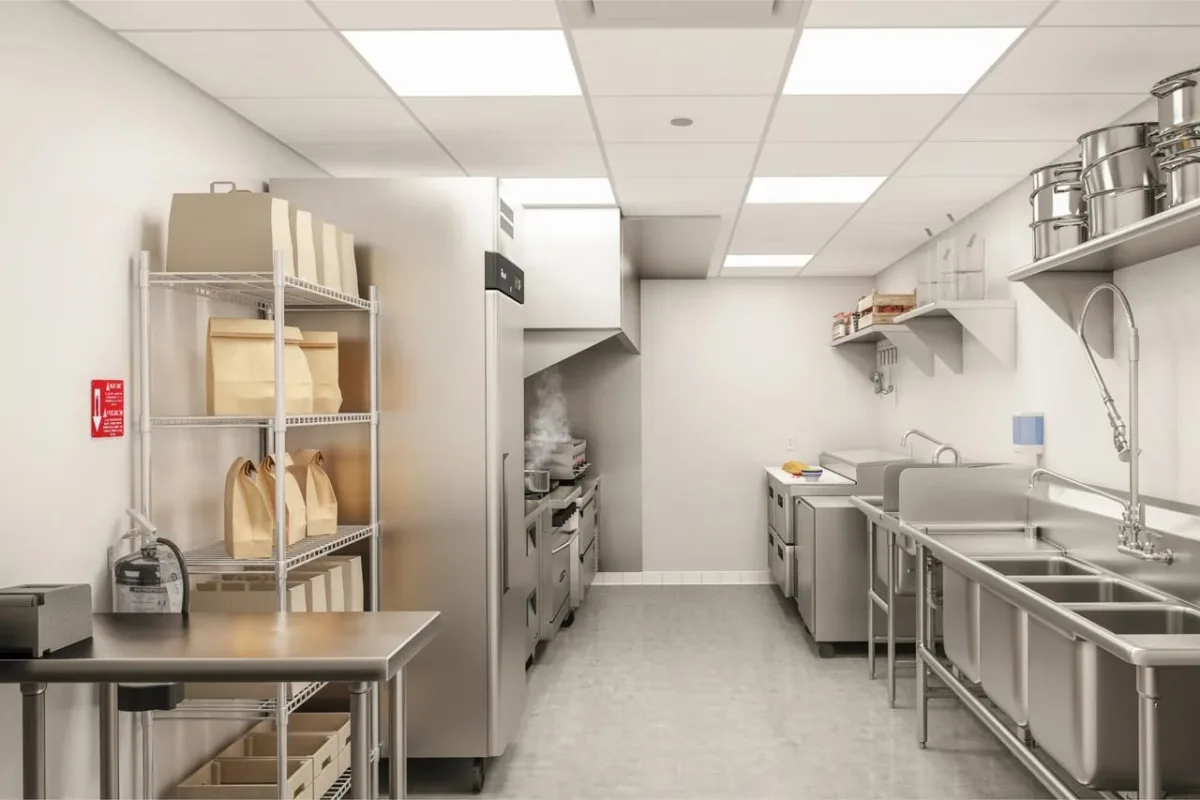
How to Maximize Small Commercial Kitchen Space Efficiency: Because Your 300 Sq. Ft. Kitchen Shouldn’t Feel Like a Clown Car
Let me paint you a picture: It’s 7:45 PM on a Friday, you’ve got 60 covers in the books and another 40 tickets firing out of the printer like confetti at a parade you didn’t sign up for. Your line cook is doing the cha-cha between the flat top and the fryer because, yet again, someone left the speed rack in the *one* spot that makes the expo line look like a Tetris fail. Meanwhile, your prep guy is side-eyeing the walk-in like it’s a Rubik’s Cube he’s been trying to solve since last Tuesday.
Sound familiar? Yeah, me too. I’ve lost count of how many small commercial kitchens I’ve seen where the layout was clearly designed by someone who’s never had to pivot with a 20-pound stock pot of boiling marinara in their hands. Here’s the thing: small kitchen efficiency isn’t about cramming more stuff into less space, it’s about designing systems that move like a well-rehearsed ballet instead of a mosh pit. And after watching (and occasionally crying over) enough kitchen disasters, I’ve picked up a few tricks. Some are obvious. Some are weird. All of them work.
This isn’t just another list of “buy stackable bins” (though, spoiler, you should). We’re diving into the psychology of kitchen flow, the hidden math of equipment placement, and why your trash can location might be costing you 15 minutes of service time every night. By the end, you’ll know how to turn your postage-stamp kitchen into a space that feels, dare I say-*roomy*. Or at least not like a death trap during rush.
Fair warning: Some of these tips require upfront costs. Others are free but demand you unlearn bad habits (looking at you, chef who “temporarily” stores their knives in that one weird drawer for the third year running). Let’s get into it.
-
The Brutal Truth About Small Commercial Kitchens (And Why Most “Solutions” Fail)
1. The “More Storage = Better” Lie
I get it. When space is tight, the instinct is to add shelves, racks, and bins until the walls scream for mercy. But here’s the problem: Every inch of storage you add is an inch of space you now have to navigate around. That extra shelf above the prep table? It’s great until your tallest cook has to do the limbo every time they reach for the salt. The rolling cart you parked “just for today”? It’s been there six months, and now it’s a permanent obstacle in your fry station’s escape route.
The fix isn’t *more* storage, it’s smarter storage. Ask yourself:
- What do I need to access during service vs. what can live in the basement/dry storage?
- Are my most-used tools within one arm’s reach of where they’re used? (If not, you’re wasting steps.)
- Am I storing things where they’re used, or just where they fit?
Example: Your tongs should live ext to the grill, not in a drawer across the kitchen. Your backup napkins? They can chill in the office closet.
2. The Hidden Cost of “Just One More Thing”
Small kitchens suffer from creeping clutter-the slow accumulation of “just in case” items that turn your workspace into a hoarder’s paradise. That extra hotel pan? The third mandoline? The novelty cookie cutter you used once for a Valentine’s special in 2019? Each unused item is stealing space from something that matters.
Try this: Grab a trash bag and a timer. Set it for 10 minutes. Walk through your kitchen and toss (or donate) anything you haven’t used in the last three months. No excuses. If you hesitate, ask: *Would I buy this again today if I didn’t already own it?* If the answer’s no, it goes.
Pro tip: Take photos of your kitchen at the end of every shift for a week. You’ll start noticing patterns, like that corner where everyone dumps their miscellaneous crap, or the prep station that’s always buried under “temporary” items. These are your clutter hotspots, and they’re killing your efficiency.
3. The Flow Problem No One Talks About
Most kitchen layouts are designed for static efficiency-meaning they look good on paper when no one’s moving. But kitchens are dynamic systems. People, food, and equipment are constantly in motion, and if your layout doesn’t account for that, you’re basically playing human Frogger during service.
Here’s how to audit your flow:
- Map the “hot paths”: Where do people walk most often? (Hint: It’s usually between the line, the walk-in, and the expo.) These paths should be clear of obstacles-no trash cans, no stray racks, no “temporary” tables.
- Watch for collisions: If your dish pit and prep station share a traffic lane, you’ve got a bottleneck. Same goes for the pass and the coffee station.
- Time your trips: How many steps does it take to go from the walk-in to the line with a full hotel pan? If it’s more than 10, you’ve got a problem.
I once worked in a kitchen where the ice machine was behind the line. Behind. As in, to get ice for drinks, you had to squeeze past three cooks during rush. It was like designing a highway where the gas stations are in the middle of the freeway. Don’t be that guy.
-
Equipment Placement: The Art of Playing 3D Chess with Your Kitchen
4. The Golden Triangle (And Why Your Kitchen Probably Violates It)
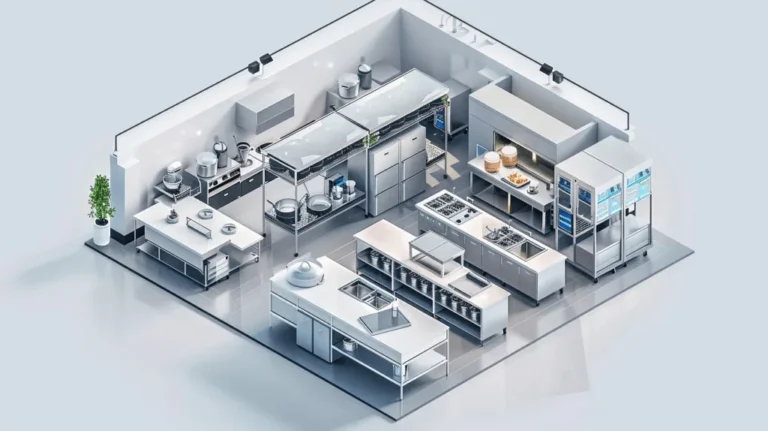
Residential kitchens have the “work triangle” (sink, stove, fridge). Commercial kitchens need the Golden Triangle 2.0: Cooking, Prep, and Storage. In a small space, these three zones should form a tight loop with minimal cross-traffic.
Where most people screw up:
- Putting prep too far from the line: If your prep station is on the opposite side of the kitchen from the grill, you’re adding unnecessary steps every time a cook needs to grab garnishes or portion proteins.
- Ignoring the “handedness” of your staff: Right-handed cooks need their dominant side clear for movement. If your grill is on the right but the prep table is on the left, you’re forcing awkward crosses.
- Forgetting about the dish pit: Dirty dishes should have a straight shot to the wash area. If your dishwasher has to dodge three people to scrape a plate, you’re losing time.
Ideal setup? Prep station adjacent to the line, with storage (walk-in or reach-in) no more than 5 steps away. And for the love of all that is holy, keep your trash and recycling bins along the outer walls, not in the middle of the action.
5. The Under-Appreciated Power of Vertical Space
When floor space is limited, go up. But not like a hoarder with a ladder, strategically. Here’s how:
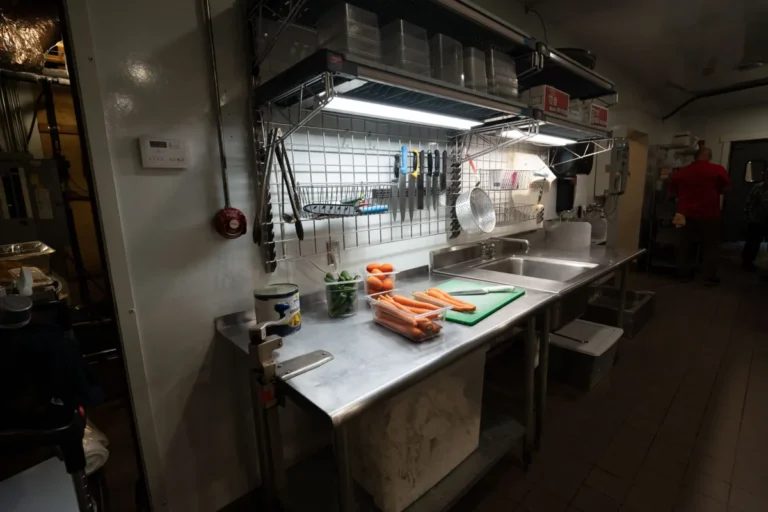
- Wall-mounted racks: For pots, pans, and utensils. But only if they’re within easy reach. No one should need a step stool to grab a sauté pan.
- Overhead storage: For bulk dry goods (flour, sugar, rice). Use clear, labeled bins so you can see inventory at a glance.
- Magnetic strips: For knives and metal tools. Frees up drawer space and keeps essentials visible.
- Stackable equipment: If you’re not using stackable steam table pans or nesting mixing bowls, you’re leaving space on the table.
Caveat: Don’t block light or ventilation. I once saw a kitchen where the owner hung so much stuff from the ceiling that the fire suppression system was basically hidden. That’s how you get shut down.
6. The Equipment You’re Probably Wasting Space On
Small kitchens can’t afford single-purpose tools or overkill appliances. Ask yourself:
- Do you reallyeed that standalone salamander, or could you use the broiler on your range?
- Is your ice machine sized for your actual needs, or did you buy the “just in case” model that takes up half a wall?
- Are you storing a second fryer “for busy nights,” or could you optimize your cooking times to use one?
One of my favorite hacks: Replace bulky equipment with multi-taskers. Example:
- A combi oven can replace a steamer, convection oven, and proofing cabinet.
- A high-quality immersion blender can handle soups, sauces, and even some prep work, saving you from a standalone blender.
- A modular cooking suite (like a range with a built-in griddle and charbroiler) saves space over separate units.
Yes, these cost more upfront. But in a small kitchen, space is currency, and every square foot you free up is an investment in your sanity.
-
Prep Station Optimization: Where Most Kitchens Lose the Efficiency Battle
7. The “Mise en Place” Myth (And How to Actually Do It Right)
Everyone preaches “mise en place,” but in a small kitchen, traditional mise can actually slow you down. Why? Because if your prep station is a graveyard of tiny bowls and ramekins, you’re spending more time hunting for ingredients than cooking.
Better approach:
- Use larger, shallow containers for grouped ingredients (e.g., all your taco toppings in one hotel pan with dividers).
- Color-code your cutting boards (red for meat, green for veg, etc.) to speed up cleanup and prevent cross-contamination.
- Pre-portion proteins and veggies into stackable containers during prep, so line cooks can grab and go.
- Label everything. Yes, even the salt. Because at 9 PM on a Saturday, no one has time to play “Is this kosher or sea salt?”
Pro move: Designate a “dirty prep” zone for trimming, peeling, and other messy tasks. Keep it separate from your “clean prep” area to avoid cross-contamination and slowdowns.
8. The Prep Table Layout That’ll Save You 20 Minutes a Night
Your prep table should be divided into three zones:
- Raw/Unprepped: Where ingredients land straight from the walk-in.
- Active Prep: Where the cutting, portioning, and organizing happens.
- Finished/Mise: Where prepped ingredients are stored until service.
Key rules:
- Left to right flow (for right-handed people; reverse if left-handed).
- Keep tools on the dominant side (knives, peelers, etc.) to minimize reaching across.
- Use the space under the table for bins or a trash can (but make sure it’s on casters so you can move it for cleaning).
- Install a small sink or sanitizer bucket at one end for quick cleanups.
Bonus: If your prep table is against a wall, mount a paper towel holder and a small shelf for oils/vinegars above it. Every inch counts.
9. The Walk-In Fridge Tetris Strategy
Your walk-in isn’t just storage, it’s a time machine. Organize it wrong, and you’ll waste hours a week digging for ingredients. Here’s how to win:
- Zone by temperature needs:
- Top shelves (coldest): Dairy, seafood, delicate greens.
- Middle shelves: Proteins, prepped veggies.
- Bottom shelves: Heavy items (cases of eggs, bulk meats).
- Door: Condiments, drinks, and other frequently accessed items.
- Use the FIFO system religiously (First In, First Out). Label everything with dates, and train your staff to rotate stock.
- Store by meal part: Keep all breakfast items together, lunch together, etc. This speeds up prep and reduces “I can’t find the [x]” panic.
- Invest in clear bins with lids for small items (herbs, citrus, etc.). No more mystery bags.
Hot take: If your walk-in looks like a Jenga tower, you’re doing it wrong. Stacking things precariously might save space in the short term, but when it collapses during rush (and it will), you’ll lose more time cleaning up than you saved.
-
Line Setup: How to Turn Chaos into a Well-Oiled Machine
10. The “One-Touch” Rule for Line Cooks
In a small kitchen, every extra step adds up. The goal is to set up your line so that cooks can grab, cook, and plate with minimal movement. Here’s how:
- Tools stay where they’re used: Tongs by the grill, spoons by the sauces, spatulas by the flat top.
- Plates and bowls stack within arm’s reach of the expo line. No walking to the other side of the kitchen.
- Sauces and garnishes live in squeeze bottles or small containers that fit in a condiment caddy (not scattered across the counter).
- Trash and scrap buckets are at knee level so cooks can sweep scraps in without bending or turning.
I once worked in a kitchen where the plate stack was 10 feet from the expo line. Ten. Feet. During rush, the expediter was basically playing quarterback, tossing plates down the line like a poorly aimed Hail Mary. Don’t be that kitchen.
11. The Secret Weapon: Modular Cooking Stations
In a small space, flexibility is key. Instead of fixed stations, think in modular blocks that can adapt to your menu. Examples:
- Mobile prep carts: Wheeled tables that can be rolled into place for prep and tucked away during service.
- Interchangeable cooktop inserts: Swap out griddle plates, burners, or flat tops based on the shift.
- Stackable induction burners: For extra cooking power when needed, without permanent footprint.
This approach lets you reconfigure your kitchen based on demand. Brunch service? Roll in the griddle cart. Dinner rush? Swap it for a sauté station. It’s like Legos for adults who hate wasting space.
12. The Expo Line Hack That Cuts Ticket Times by 30%
Your expo line is the bottleneck of your kitchen. Optimize it with these tweaks:
- Use a heat lamp with adjustable shelves to keep plates warm without crowding the pass.
- Install a small “ready to fire” shelf above the expo line for plates that are waiting on one component (e.g., a steak resting while the sauce finishes).
- Color-code your ticket times (e.g., red for >15 mins, yellow for 10-15, green for <10) so the expediter can prioritize at a glance.
- Keep a “fixes” stationearby with extra garnishes, sauces, and sides for quick corrections.
And for the love of all things holy, ban the “plate graveyard”-that spot where finished plates pile up because the server is MIA. If a plate sits for more than 90 seconds, it’s getting cold, and your kitchen’s efficiency just took a hit.
-
The Psychological Tricks That Keep Your Kitchen Running Smoothly
13. The “Home Base” Rule for Staff Movement
Ever notice how some cooks seem to teleport around the kitchen while others bump into everything like a pinball? The difference is spatial awareness. Train your team to:
- Pick a “home base” (e.g., the prep station or their line position) and always return to it after completing a task. This prevents the “where did everyone go?” chaos.
- Call out movements in tight spaces (“Behind!” “Corner!” “Hot pan!”). It’s basic, but you’d be shocked how many collisions it prevents.
- Walk the perimeter when moving across the kitchen instead of cutting through the line. Yes, it’s an extra step, but it’s faster than untangling two people who just collided with hot pans.
Bonus: Assign specific paths for specific tasks. Example: “Dish drop-off is always along the back wall,” or “Expo runners take the left side of the pass.” It sounds rigid, but it eliminates the “dance of indecision” that slows everything down.
14. The Power of “Visual Cues” in a Cramped Space
In a small kitchen, clutter isn’t just physical, it’s mental. The more your team has to *think* about where things are, the slower they move. Fix this with:
- Color-coded cutting boards and utensils (e.g., red for raw meat, blue for fish, green for veg).
- Labelled bins and shelves with big, bold text (no tiny handwriting).
- Shadow boards for tools, outlines drawn on the wall or table where each item belongs.
- A “traffic light” system for inventory (green = fully stocked, yellow = running low, red = order now).
I once worked in a kitchen where the chef painted footprints on the floor to mark where each cook should stand during prep. It felt silly at first, but it cut our setup time by half because no one wasted time figuring out where to be.
15. The “5-Minute Reset” That Prevents Nightmare Shifts
Here’s a truth no one wants to admit: Most kitchen disasters start with a messy prep shift. A cluttered station at 3 PM becomes a full-blown crisis at 7 PM. The fix? The 5-Minute Reset:
- Every hour, one person (rotating duty) takes 5 minutes to:
- Clear and wipe down prep surfaces.
- Restock commonly used ingredients.
- Empty trash and scrap buckets.
- Straighten tool stations.
- At the end of every shift, 10 minutes of deep reset:
- Everything gets put back in its home.
- Floors are swept (no “I’ll get it later” excuses).
- Tomorrow’s prep list is posted and reviewed.
Yes, it feels like “wasted time” when you’re in the weeds. But it’s cheaper than the meltdown that happens when your line cook can’t find the diced onions because they’re buried under a pile of used towels.
-
Tech and Tools: The Unsung Heroes of Small Kitchen Efficiency
16. The $20 Tool That Saves Hours a Week
You don’t need fancy gadgets to optimize your kitchen. Some of the best tools are dirt cheap and overlooked:
- Magnetic knife strips: Frees up drawer space and keeps knives visible/accessible.
- Stackable drying racks: For dishes, utensils, and sheet pans. No more wet nests taking up counter space.
- Bungee cords and carabiners: For hanging lightweight items (whisks, ladles) from shelves or racks.
- Chalkboard paint: Turn a wall or the side of a fridge into a live prep list or inventory tracker.
- Under-shelf baskets: Instant extra storage for small items like spices or garnishes.
My personal favorite? A laser thermometer. No more waiting for a probe to stabilize, just point, shoot, and know your temps in seconds. In a small kitchen, every second counts.
17. The Software That Pays for Itself in Saved Space
Tech isn’t just for big kitchens. Even in a 300 sq. ft. space, the right tools can eliminate physical clutter and streamline workflows:
- Inventory apps (like Crafty or BlueCart): Track stock levels digitally so you’re not storing “just in case” ingredients that expire.
- Digital prep lists (Trello, Google Sheets): No more paper lists getting lost or coffee-stained.
- POS with kitchen display systems (KDS): Cuts down on ticket confusion and miscommunication.
- Cloud-based recipes: Store all your recipes and portion guides online so they’re accessible from any device (no more binders taking up shelf space).
I resisted going digital for years because “I like paper.” Then I realized I was wasting 2 square feet of precious real estate on a filing cabinet full of menus from 2012. Don’t be me.
18. The One Piece of Equipment Worth the Splurge
If you’re going to invest in one high-end piece for a small kitchen, make it a combi oven. Here’s why:
- Replaces a steamer, convection oven, and proofing cabinet.
- Cooks faster and more evenly than traditional ovens, reducing backup during rush.
- Can be programmed for consistent results, cutting down on remakes.
- Some models even have self-cleaning functions, saving you hours of scrubbing.
Yes, they’re expensive (expect to drop $10K–$20K for a good one). But in a small kitchen, saving 10 sq. ft. of space and cutting cook times by 30% is worth every penny.
-
Maintenance: Because a Clogged Drain Can Shut Down Your Entire Operation
19. The Weekly 10-Minute Tasks That Prevent Disasters
Small kitchens have zero margin for error. A clogged drain or a broken fridge can shut you down for hours. Prevent this with a weekly 10-minute maintenance blitz:
- Drain care: Pour boiling water + baking soda down drains weekly. Monthly, use an enzyme cleaner (like Bio-Clean) to prevent buildup.
- Grease trap check: Skim it daily, deep clean it weekly. A clogged trap is a health inspector’s favorite reason to shut you down.
- Fridge coils: Dust them monthly with a coil brush. Dirty coils make your fridge work harder, raising your electric bill and shortening its lifespan.
- Hood filters: Soak them in degreaser weekly. Greasy filters are a fire hazard and reduce ventilation efficiency.
- Check seals: On fridges, freezers, and ovens. A loose seal = wasted energy and inconsistent temps.
Pro tip: Assign maintenance tasks to specific staff members and rotate duties. If it’s “someone’s job,” it’ll never get done.
20. The “Emergency Kit” That Saves Your Bacon (Literally)
In a small kitchen, downtime is the enemy. Keep a “kitchen emergency kit” with:
- Spare fuses and lightbulbs (labeled by type).
- A small toolkit with screwdrivers, wrenches, and zip ties (for quick fixes).
- Duct tape and aluminum foil (for temporary patches on vents, seals, etc.).
- Extra O-rings and gaskets for your fryer and steamers.
- A backup thermometer (because yours will fail during a health inspection).
- A list of 24/7 repair contacts (plumber, electrician, fridge tech).
Store it in a clear, labeled bin in an accessible spot (not buried in the back of the dry storage). The goal is to fix problems in minutes, not hours.
-
The Hard Truth: When to Admit Your Kitchen Is Too Small
Look, I’m all for optimizing space, but sometimes the brutal reality is that your kitchen is just too damn small for your volume. How to know when it’s time to upgrade or reorganize your concept:
- You’re consistently running out of prep space during peak hours.
- Your staff is injuring themselves (burns, cuts, strains) because of tight quarters.
- You’re turning away business because you can’t keep up with demand.
- Your equipment is failing prematurely because it’s overworked or poorly ventilated.
- You spend more time working around the space than actually cooking.
If three or more of these apply, it’s time to have a hard conversation. Maybe you need to:
- Shift to a smaller, higher-margin menu (e.g., switch from a full diner to a breakfast/lunch spot).
- Invest in a commissary kitchen for prep, using your space only for final cooking.
- Expand into adjacent space (if possible) or move to a larger location.
- Go delivery/ghost kitchen-only to reduce on-site staffing needs.
I’ve seen too many chefs double down on a losing layout because they’re emotionally attached to the space. Don’t let pride sink your business.
-
Final Thought: Your Kitchen Is a System, Not a Storage Unit
Here’s the thing about small commercial kitchens: They’re not just smaller versions of big kitchens. They’re a different beast entirely, with their own rules, challenges, and opportunities. The key to making them work isn’t just fitting more stuff in-it’s designing systems that move faster, waste less, and adapt on the fly.
Start small. Pick one area (prep, line, storage) and optimize it this week. Then move to the next. Measure your results, not just in space saved, but in time recaptured, mistakes reduced, and stress levels lowered. Because at the end of the day, a well-designed kitchen isn’t just more efficient, it’s more human. And in this industry, that’s the rarest commodity of all.
Now go forth and stop bumping into your coworkers. Your sanity (and your Yelp reviews) will thank you.
-
FAQ: Your Burning Questions About Small Kitchen Efficiency
Q: I have a tiny kitchen but a huge menu. How do I make this work without losing my mind?
A: First, cut your menu by 30%. Focus on dishes that share ingredients and prep steps. Example: If you’re running a burger joint, offer 3 signature burgers instead of 10. Use toppings and sauces to create variety without adding complexity. Second, batch prep like a maniac. Dedicate one day a week to chopping, portioning, and organizing so your line cooks aren’t doing prep during service. Finally, invest in multi-use equipment (like a combi oven) to reduce the number of single-purpose tools clogging your space.
Q: My landlord won’t let me renovate. How can I optimize without structural changes?
A: You’d be amazed what you can do with modular and mobile solutions. Try:
- Swapping fixed shelves for rolling carts that can be reconfigured.
- Using magnetic or pegboard walls for tool storage (no drilling required).
- Replacing bulky equipment with stackable or collapsible versions (e.g., nesting mixing bowls, foldable prep tables).
- Implementing color-coded zones to organize without permanent changes.
Also, talk to your landlord about non-permanent upgrades like better lighting or ventilation, some may approve if it doesn’t alter the structure.
Q: How do I train my staff to keep the kitchen organized when I’m not there?
A: Systems over nagging. Start with:
- A daily reset checklist posted in the kitchen (with assigned roles).
- A “home base” rule where every item has a designated spot (use shadow boards or labels).
- A weekly “clutter audit” where the team identifies one area to improve.
- Positive reinforcement: Reward the shift that leaves the kitchen the cleanest (e.g., first pick of weekend shifts).
And lead by example, if the chef’s station is a mess, no one else will care about organization.
Q: What’s the one thing I can do today to improve my kitchen’s efficiency?
A: Clear your counters. Right now. Grab a bin and remove everything that isn’t used daily. Then, reorganize what’s left by frequency of use (daily items within arm’s reach, weekly items in storage). This single step will instantly reduce clutter and speed up service. Bonus: Take photos of the “before” and “after” to show your team the difference.
@article{how-to-maximize-small-commercial-kitchen-space-efficiency-20-battle-tested-tips-from-a-guy-whos-seen-it-all-go-wrong,
    title   = {How to Maximize Small Commercial Kitchen Space Efficiency: 20+ Battle-Tested Tips from a Guy Who’s Seen It All Go Wrong},
    author  = {Chef's icon},
    year    = {2025},
    journal = {Chef's Icon},
    url     = {https://chefsicon.com/maximizing-small-commercial-kitchen-space-efficiency-tips/}
}