The Best Fluffy Pancakes recipe you will fall in love with. Full of tips and tricks to help you make the best pancakes.
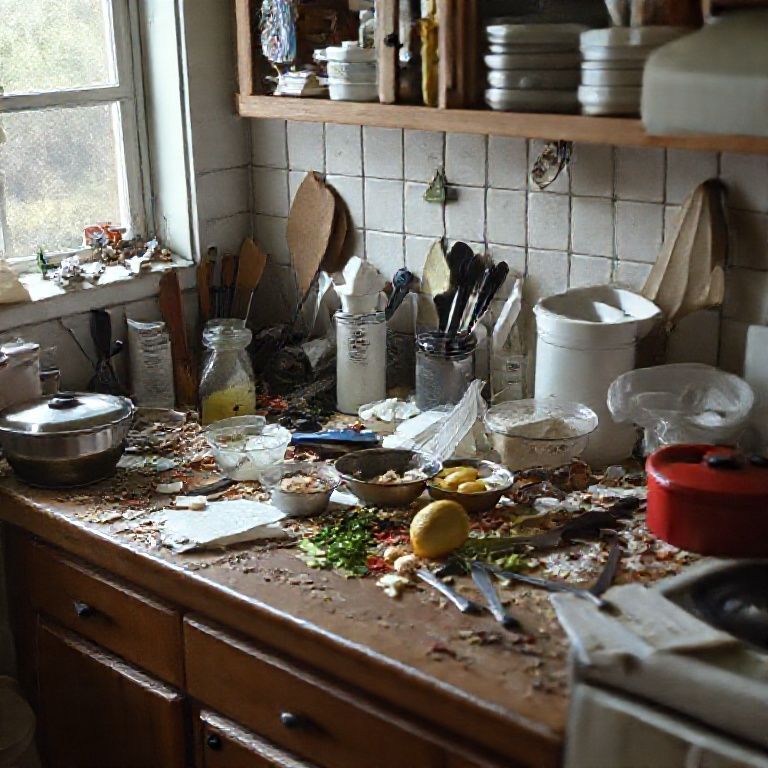
Let me paint you a picture: It’s 7:30 PM on a Saturday night, your kitchen’s the size of a walk-in closet, and you’ve got three cooks, two servers, and a dishwasher all trying to occupy the same four square feet of space. The expediter’s yelling about ticket times, the fryer’s smoking up the room, and someone just dropped a tray of bussing tubs directly in the path between the oven and the pass. Sound familiar? Yeah, me too. That was my life for six months when I helped a friend open a 30-seat ramen shop in East Nashville, where the kitchen was so tight, we joked that breathing too deeply would violate the fire code.
Here’s the thing about optimizing kitchen traffic flow in tight spaces: it’s not just about squeezing more bodies into less square footage. It’s about choreographing chaos. It’s understanding that every extra step a cook takes, every unnecessary cross-path between stations, every second spent waiting for someone to move, it all adds up. In a small kitchen, inefficiency isn’t just annoying; it’s a revenue killer. And after watching too many line cooks do the tango around a misplaced prep table, I got obsessed with figuring out how to make it work. Spoiler: It’s equal parts science, psychology, and accepting that sometimes, the best layout isn’t the one that looks good on paper, it’s the one that doesn’t make your staff want to quit by the end of service.
So, what’s the secret? There isn’t one. But there *are* principles, some borrowed from industrial engineering, others stolen from theater stage managers (seriously, their backstage traffic patterns are *chef’s kiss*), and a few I had to learn the hard way. In this guide, we’re going to break down how to design for movement, not just storage; how to train your team to think like air traffic controllers; and why your equipment placement might be sabotaging your speed. We’ll also talk about the things no one mentions, like how the height of your shelves affects morale, or why the distance between your trash can and your prep station is a silent productivity assassin. By the end, you’ll have a plan to turn your sardine-can kitchen into a (relatively) smooth-running machine. Or at least, you’ll know why it’s not working now.
Fair warning: Some of this might feel counterintuitive. You’ll probably have to unlearn a few “best practices” you’ve heard. And yes, you might need to accept that your dream of a centrally located chef’s table is incompatible with, you know, *not setting the place on fire*. But if you’re willing to get a little uncomfortable, and maybe move that fridge for the third time, we can make this work.
-
The Hidden Costs of a Poor Kitchen Layout (And Why You’re Probably Ignoring Them)
Before we dive into fixes, let’s talk about the problem. And no, it’s not just that your kitchen feels like a clown car. Poor traffic flow has measurable costs, and most operators underestimate them because they’re baked into the daily chaos. You don’t notice the 30 seconds lost every time a cook has to shuffle sideways to let a server through, until you realize that’s 10 minutes of lost productivity per hour, per person. Multiply that by a 6-hour service, and suddenly, you’ve got an entire labor shift disappearing into the ether.
Here’s what bad flow actually costs you:
- Labor waste: Extra steps add up. A study from the Journal of Foodservice Business Research (yes, that’s a real thing) found that in inefficient kitchens, staff can walk up to 5 miles per shift just navigating obstacles. That’s time they’re not cooking, plating, or cleaning, which means you’re either paying for extra labor or losing capacity.
- Food waste: When stations are poorly placed, ingredients sit out longer, prep gets rushed, and mise en place turns into “oh crap, where’s the thyme?” I’ve seen kitchens where the walk-in was so far from the line that cooks would over-prep just to avoid making the trek mid-service. Guess where those extra pounds of trimmed veggies ended up?
- Safety hazards: Slips, trips, and burns aren’t just OSHA nightmares, they’re speed killers. A spilled sauce because someone had to reach over a hot grill? That’s a delayed ticket. A dropped knife because the cutting board was in a high-traffic zone? There goes your workflow.
- Staff turnover: This is the one no one talks about. A kitchen that feels like a maze on fire is demoralizing. I’ve had cooks quit not because of the pay or the hours, but because they were sick of feeling like a “human Tetris piece,” as one put it. And training new staff? That’s another hidden cost.
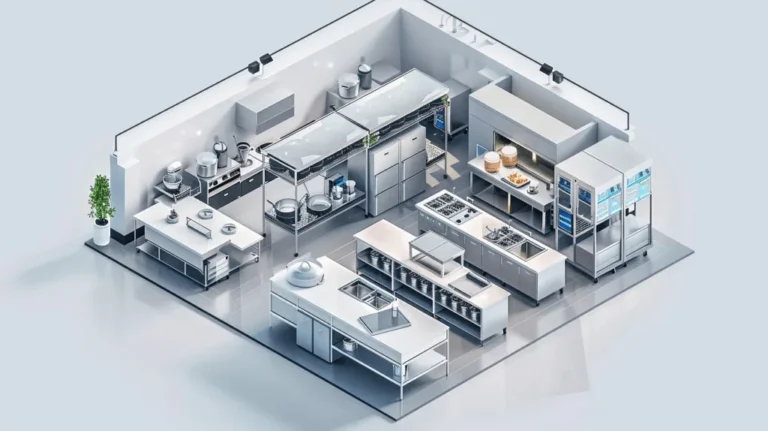
Now, here’s the kicker: Most kitchen layouts are designed for storage, not movement. You’ve got your standard work triangle (sink, stove, fridge), sure, but that’s a residential concept. Commercial kitchens need a work polygon-a dynamic system where every station is a node in a network, and the paths between them are optimized for minimal crossing, maximal efficiency. And no, you can’t just copy the layout from that fancy restaurant you saw on Instagram. Their space, their menu, and their staffing ratios are different. Yours needs to be yours.
So, how do you even start? First, you’ve got to diagnose the bottlenecks. And no, “it’s too small” isn’t a bottleneck, that’s just the reality. Bottlenecks are the specific points where flow breaks down. Maybe it’s the pass, where plates stack up because the expediter and the server keep colliding. Maybe it’s the prep station, where everyone needs to access the same drawer of utensils. Or maybe, brace yourself, it’s you, the chef, standing in the worst possible spot because you like to “keep an eye on things.” (We’ll talk about that later.)
-
Step 1: Map Your Current Traffic Patterns (Yes, Like a Creepy Stalker)
You wouldn’t build a highway without studying traffic patterns, right? So why are you rearranging your kitchen based on a gut feeling? Before you move a single shelf, you need to track how people actually move during service. And I don’t mean just watching for a few minutes, I mean full-on time-and-motion study mode.
Here’s how to do it without losing your mind:
- Grab a floor plan (or sketch one). Mark every station: line, prep, dish, pass, walk-in, dry storage, etc.
- Assign colors to roles. Red for cooks, blue for servers, green for dishwashers, etc. Use different shades if you’ve got multiple people in the same role.
- Track movement during peak service. For at least one full shift, have someone (not you, you’re too biased) plot every time someone moves from one station to another. Use arrows to show direction and frequency. Thicker arrows = more traffic.
- Note collisions and pauses. Every time two people have to sidestep each other, or someone stops to wait for access to a station, mark it. These are your friction points.
What you’ll likely find is that your kitchen has invisible highways-paths that get used way more than you realized, and ghost towns, areas that are barely touched. Maybe your prep station is in the perfect spot, but your trash cans are in the middle of the server’s route to the pass. Or maybe your dishwasher has to do a full lap around the kitchen every time they drop off clean plates. These are the low-hanging fruit.
Pro tip: If you can, film a service from a corner. Watching it back at 2x speed is like seeing your kitchen’s DNA. You’ll notice patterns you’d never catch in real time, like how the sauté cook always pivots left when grabbing pans, or how the server from table 4 always cuts through the line instead of going around. (Spoiler: That server is your canary in the coal mine. If they’re cutting through, your layout is forcing them to.)
Now, here’s where it gets uncomfortable: You’re probably part of the problem. Chefs love to station themselves in the “command center” spot, usually smack in the middle of the kitchen, where they can see everything. But if that spot is also the main thoroughfare, congratulations, you’re a human speed bump. I had to learn this the hard way when my sous chef gently pointed out that my “strategic position” was adding 10 seconds to every plate’s journey to the pass. (I moved. The line speed improved by 15%.)
-
Step 2: The Golden Rule of Tight Kitchens, Minimize Cross-Traffic
In an ideal world, your kitchen would have dedicated lanes for different roles, like a highway. Servers take one path, cooks take another, dishwashers have their own route. But in a tight space, that’s not always possible. So the next best thing is to eliminate cross-traffic-situations where two people’s paths intersect at a 90-degree angle. These are the moments where collisions happen, where plates get dropped, and where tempers flare.
How? By adhering to the “IKEA Rule”: Force movement in one direction. Ever notice how IKEA’s layout makes you walk through the entire store to get to the checkout? That’s not an accident. In a kitchen, you want a similar unidirectional flow:
- Ingredients enter from one side (usually near the walk-in or dry storage).
- Prep happens in a linear progression (wash → chop → portion → store).
- Cooking stations are arranged so that dishes move from raw to cooked to plated in a straight(ish) line.
- Plates exit toward the pass, and dirty dishes return via a separate path.
This isn’t always possible, but the closer you get, the smoother service will run.
Where most kitchens fail is the pass-through points-the spots where multiple roles need to access the same area. Classic examples:
- The prep station that’s also the path to the walk-in.
- The sink that’s between the line and the dish pit.
- The trash cans placed where servers and cooks both need to dump things.
Each of these creates a traffic jam. The fix? Relocate or duplicate. Can’t move the sink? Add a second smaller prep sink elsewhere. Trash cans in the way? Get a compact bin for each station so people aren’t making special trips. Is the walk-in door opening into the main thoroughfare? Swing it the other way (if code allows) or add a spring hinge so it doesn’t linger open.
And here’s a controversial take: Your kitchen might be too democratic. In tight spaces, equality is the enemy of efficiency. If every station has equal access to shared resources (like the fridge or the spice rack), you’ve got a recipe for gridlock. Instead, assign primary and secondary access. Example: The sauté station gets primary access to the reach-in fridge, while the prep cook has to go around. It sounds unfair, but if the sauté cook is touching that fridge 20 times a service and the prep cook touches it twice, it’s the right call.
-
Step 3: The Equipment Placement Domino Effect (And Why Your Fryer Is in the Wrong Spot)
Here’s a hard truth: Your equipment layout is probably based on tradition, not logic. We put fryers next to the line because that’s where they’ve always gone. We stick the prep table by the walk-in because it “makes sense.” But in a tight kitchen, every inch matters, and traditional placements can create cascading inefficiencies.
Let’s talk about the fryer, since it’s the most common offender. In most kitchens, the fryer is placed:
- Next to the line (for easy access to fried items).
- Under a hood (because, you know, fire).
- Near the expediter (so they can see fry times).
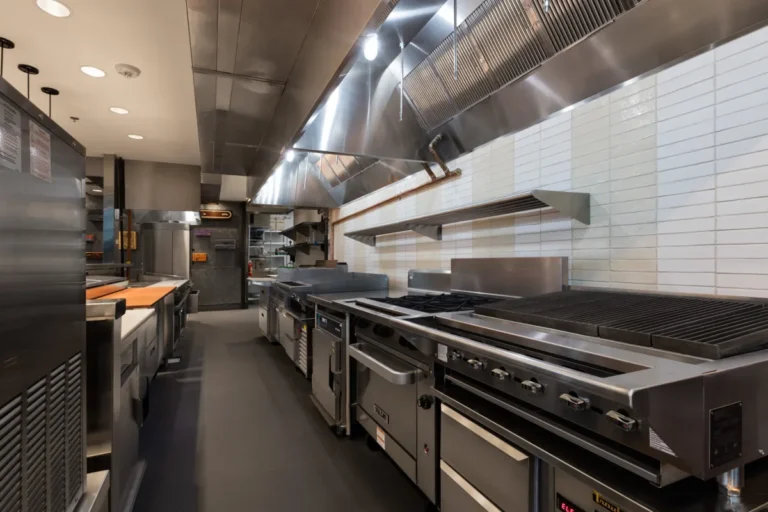
But here’s the problem: Fryers generate heat, grease, and traffic. They’re like the sun in your kitchen’s solar system, everything orbits around them, often poorly. If your fryer is in the middle of the line, you’ve just created a heat island that makes the surrounding stations unbearable. If it’s at the end, you’ve got cooks constantly walking past it to grab other items, risking burns and spills. And if it’s near the pass, your expediter is going to get a face full of fryer smoke every time the door opens.
So where should it go? Ideally:
- Against an exterior wall (to vent heat outside).
- At a corner of the line (so it’s accessible but not central).
- With a clear “landing zone” for fried items (so they’re not sitting in traffic).
And if you’re really tight on space, consider a countertop fryer (like a Frymaster CET or Vulcan CF). They’re less powerful but take up half the footprint. Yes, you’ll sacrifice some capacity, but if it means your sauté cook isn’t doing the limbo under a hood every time they need to grab tongs, it’s worth it.
Same goes for your reach-in fridges. Most kitchens line them up along a wall, but that creates a “fridge gauntlet” where people have to walk the length of the kitchen to access them. Instead, try:
- Staggering them so they’re accessible from multiple stations.
- Placing the most-used fridge nearest the line (even if it’s not the biggest).
- Using under-counter fridges for high-turnover items (like dairy or garnishes) to reduce trips.
And for the love of all that is holy, don’t put your ice machine next to the fryer. I’ve seen it. It’s a war crime.
One more thing: Height matters. In tight kitchens, vertical space is your friend, but only if used wisely. Shelves above 6 feet are great for storage but terrible for daily use, every time someone needs to grab something up high, they’re blocking the space below. Keep frequently used items between waist and shoulder height, and reserve the top shelves for bulk or backup supplies. And if you’ve got a mezzanine or lofted storage, make sure it’s not directly above a high-traffic area. Nothing slows down service like a cook having to duck every time someone walks by with a stack of plates.
-
Step 4: The Psychology of Kitchen Zones (Or Why Your Staff Keeps Bumping Into Each Other)
Here’s something no one tells you: Kitchen traffic flow isn’t just about physics, it’s about psychology. People move in predictable ways based on habit, visibility, and perceived ownership of space. If you don’t account for this, your beautifully designed layout will still feel like a mosh pit.
Let’s start with territoriality. Humans are wired to claim space, even temporarily. In a kitchen, this means:
- Cooks “own” their stations and the immediate area around them.
- Servers treat the pass and the path to it as their domain.
- Dishwashers guard their sink and rack area like dragons on a hoard.
When these territories overlap, like when a server cuts through the line to grab a spoon, it creates micro-conflicts. They’re not full-blown arguments, but they’re little friction points that add up. The fix? Define zones with visual cues.
Some easy ways to do this:
- Floor tape or paint: Mark paths with colored lines (e.g., red for “cook zone,” blue for “server zone”). It sounds silly, but it works, people subconsciously avoid crossing lines.
- Station labels: Label each area (e.g., “Sauté,” “Prep,” “Expo”) so there’s no ambiguity about who belongs where.
- Physical barriers: A low shelf or a rolling cart can act as a gentle divider between zones without blocking flow.
Next up: visibility. If people can’t see where they’re going, they’ll hesitate, which slows everything down. Common visibility killers in tight kitchens:
- Tall equipment blocking sightlines (looking at you, combi oven).
- Poor lighting (especially in corners or under shelves).
- Cluttered prep tables that force people to lean in to see what’s behind them.
Fixes:
- Use equipment with glass doors (like reach-ins) to reduce visual barriers.
- Add under-cabinet lighting or LED strips to brighten dark spots.
- Keep the center of the kitchen clear-no tall stacks of trays or boxes.
Finally, there’s the “path of least resistance” principle. People will always take the shortest route, even if it’s not the intended one. If the fastest way to the walk-in is through the line, that’s where they’ll go, no matter how many times you yell at them. So instead of fighting it, design the shortest paths to be the correct ones. Example: If servers keep cutting through the line to get to the coffee station, move the coffee station to the edge of the kitchen where they naturally walk. Problem solved.
-
Step 5: The “One-Touch” Rule (And Why Your Prep Station Is Lying to You)
In lean manufacturing, there’s a concept called the “one-touch” principle: The ideal workflow is one where each item is only handled once. In a kitchen, this translates to: Every ingredient should move from storage to prep to cooking to plate with minimal handling. But in tight spaces, ingredients often get touched multiple times because stations are too far apart or poorly organized.
Here’s how to audit your flow for one-touch violations:
- Pick a dish, let’s say your best-selling burger.
- Trace its journey from raw ingredients to plate:
- Where does the patty start? (Walk-in? Reach-in?)
- Where does it get seasoned/prepped?
- Where does it get cooked?
- Where does it get plated?
- Where do the buns and toppings come from?
- Count the number of times it’s moved or handed off. Each extra touch is a point of potential delay or error.
In a well-designed kitchen, a burger might go: Walk-in → prep station (season) → line (grill) → plate → pass. That’s 4 touches. In a poorly designed one, it might go: Walk-in → prep table → holding fridge → line → plate → expediter → server. That’s 6 touches, and a much higher chance of something going wrong.
Where most kitchens fail is the prep-to-line handoff. If your prep station is across the room from the line, ingredients have to travel, which means:
- Extra steps for the prep cook to deliver mise.
- Extra containers cluttering the line.
- Extra opportunities for spills or mix-ups.
The fix? Prep as close to the line as possible. Even if it means sacrificing some prep space, having ingredients within arm’s reach of the cook will save more time than you’d think. And if you can’t move the prep station, use mobile carts or cambros to transport mise in batches rather than one item at a time.
Another one-touch killer: shared tools. If your tongs, spoons, or knives are stored in a central location, every time someone needs one, they’re adding a touch. Instead, duplicate essential tools at each station. Yes, it’s more upfront cost, but it’s cheaper than the labor wasted walking back and forth. And no, you don’t need a $200 knife at every station, a few well-placed $20 workhorses will do.
-
Step 6: The Dirty Little Secret of Dish Pits (And How to Stop Them from Ruining Your Flow)
Let’s talk about the dish pit, the most underestimated traffic bottleneck in any kitchen. It’s where clean and dirty collide, literally. In tight spaces, the dish area is often an afterthought, shoved into a corner with little consideration for how it interacts with the rest of the kitchen. But if your dishwasher has to navigate a obstacle course to drop off clean plates, or if dirty dishes pile up in the middle of the line, you’ve got a flow nightmare.
Here’s what a well-designed dish area needs in a tight kitchen:
- A dedicated drop-off and pick-up zone. Dirty dishes should enter from one side (preferably near the servers’ path) and clean dishes should exit from another (near the line or prep area). Never let these paths cross.
- A “landing strip” for clean dishes. A shelf or cart where clean plates, bowls, and utensils can be staged without blocking traffic. This should be within easy reach of the line but not in the main thoroughfare.
- Separate sinks for washing and sanitizing. If you’re using a single compartment sink, you’re creating a bottleneck. Even in tight spaces, a two-compartment sink (or a single sink with a separate sanitizing bucket) will speed things up.
- A clear path to the trash/recycling. If your dishwasher has to walk across the kitchen to scrape plates, you’re wasting time and creating mess. Keep trash and compost bins adjacent to the dish area.
And here’s a pro tip: Your dishwasher is your most important traffic cop. Train them to:
- Stack dishes by type and size (so they’re easy to grab and don’t require rearranging).
- Call out when they’re running low on clean items (so cooks aren’t caught off guard).
- Keep the floor around the dish area clear (a wet floor is a slip hazard and a traffic jam waiting to happen).
If your dishwasher is constantly playing Tetris with plates, your whole kitchen slows down.
One more thing: Dish racks are traffic magnets. Those big, clunky metal racks take up space and force people to maneuver around them. In tight kitchens, switch to stackable plastic bins or wall-mounted drying racks. They’re less obtrusive and can be tucked away when not in use.
-
Step 7: The “5-Second Rule” for Station Design (And Why Your Shelves Are Too Deep)
Here’s a rule I stole from emergency rooms: Anything used more than once per hour should be accessible within 5 seconds. That means no digging, no reaching, no asking someone to hand it to you. If a cook has to pause to grab something, your flow is broken.
Let’s apply this to your stations. Start with the line:
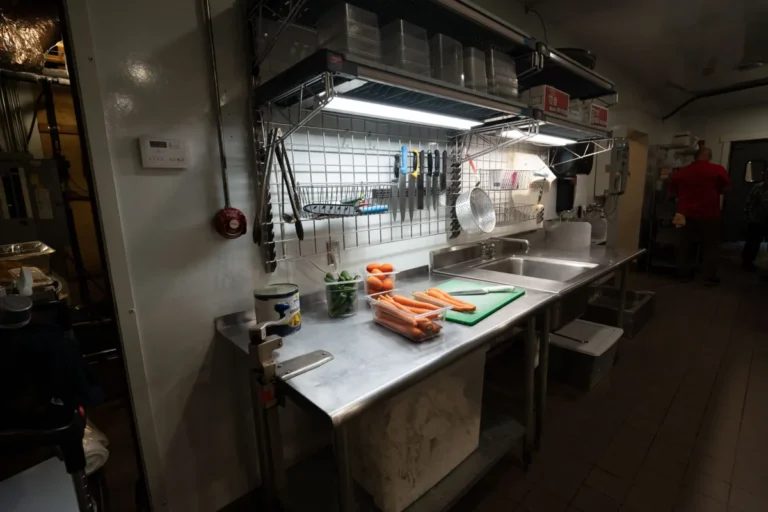
- Primary tools (tongs, spoons, fish spatula): Should be hanging or in a shallow drawer within arm’s reach. No fishing through a utensil crock.
- Oils, salts, and spices: Should be in small, labeled containers (not giant bulk bins) at the front of the station. If you’re using a deep shelf, you’re forcing cooks to reach over hot pans to grab them.
- Backup ingredients: If it’s not for the current ticket, it shouldn’t be on the line. Use a speed rack or under-counter fridge for overflow, not the limited real estate in front of the cook.
Now, let’s talk about shelf depth. Most commercial shelving is 18–24 inches deep, which is great for storage but terrible for daily use. In a tight kitchen, shallower is better. Here’s why:
- Deep shelves encourage stacking items in rows, which means digging to find what you need.
- They force you to reach over other items, blocking access and creating clutter.
- They make it harder to see what you have, leading to over-ordering or spoilage.
Instead, use 12-inch deep shelves for daily-use items. Yes, you’ll lose some storage capacity, but you’ll gain speed and reduce waste. For bulk items, use tall, narrow shelving (like a metro shelf with 6-inch deep tiers) to maximize vertical space without sacrificing accessibility.
And while we’re at it, let’s talk about drawers vs. shelves. Drawers are the unsung heroes of tight kitchens because:
- They hide clutter (a messy shelf looks chaotic; a messy drawer can be closed).
- They allow for divided storage (no more digging through a jumbled pile of lids).
- They can be pull-out (so you’re not reaching into the back of a cabinet).
If you’re using open shelving, add bin dividers or clear containers to keep things organized. Label everything. I mean it. Even if it feels obvious now, at 9 PM on a Saturday, no one will remember where the extra takeout containers are.
-
Step 8: The “Silent Killers” of Kitchen Flow (And How to Spot Them)
Some traffic problems are obvious, a server blocking the line, a misplaced prep table. But the worst offenders are the “silent killers”, the small inefficiencies that add up without you noticing. Here are the big ones:
1. The “Almost Collision”
This is when two people *almost* run into each other but sidestep at the last second. It seems harmless, but it’s a sign that your paths are too intertwined. Over a shift, these near-misses create mental fatigue-your staff starts anticipating collisions, which slows them down. Fix it by widening paths or rerouting one of the roles.
2. The “Waiting Game”
This happens when someone has to wait for access to a shared resource, like the sink, the fryer, or the printer. Example: If your expediter is the only one who can print tickets, and they’re also running food, you’ve created a bottleneck. Solution: Duplicate resources (e.g., a second printer) or assign dedicated roles (e.g., one person handles tickets, another runs food).
3. The “Mystery Item”
This is when someone spends 20 seconds searching for something that should be in a obvious spot, like the tongs, the fire extinguisher, or the damn pen for the ticket times. Every time this happens, flow stops. The fix? A “home” for every item, and a shadow board (a outline of where tools should hang) to make missing items obvious.
4. The “Traffic Jam”
This is when multiple people need to access the same small area at once, like the spice rack, the trash can, or the ice machine. The solution is to decentralize. Instead of one big trash can, have small bins at each station. Instead of one spice rack, have mini containers at each station. Yes, it’s more upfront cost, but it’s cheaper than the time lost to congestion.
5. The “Dead Zone”
This is an area of the kitchen that’s rarely used but still takes up space, like that corner where you stack extra chairs, or the shelf where you keep the “just in case” equipment. Dead zones are opportunity costs. Could that space be a prep station? A plating area? A server alley? If you’re not using it at least once per service, repurpose it.
-
Step 9: Training Your Team to Move Like a School of Fish (Without the Creepiness)
You can have the perfect layout, but if your team doesn’t move efficiently, it’s useless. Traffic flow is a skill, and it needs to be trained like any other. Here’s how to turn your staff into a well-oiled machine:
1. The “Shadow Shift”
Before you change the layout, have your team practice moving in the new flow without cooking. Run a mock service where they pretend to grab ingredients, plate dishes, and run food, just to get used to the paths. It’ll feel silly, but it’ll reveal problems before they cause real delays.
2. The “No Talking” Drill
For one service, challenge your team to communicate without words-just hand signals, nods, and pre-agreed movements. This forces them to anticipate each other’s needs and reduces the “excuse me” dance. (Bonus: It also cuts down on kitchen noise, which reduces stress.)
3. The “Traffic Cop” Role
Assign one person (usually the expediter or sous chef) to actively direct traffic during peak times. Their job isn’t to cook, it’s to spot bottlenecks and reroute people. Example: If the pass is backed up, they might send servers out the back door with food. If the dish pit is swamped, they might redirect clean dishes to a backup station.
4. The “Path of Least Resistance” Rule
Teach your team to always take the longest route if it’s the fastest. Sounds counterintuitive, but if the shortest path is clogged, going the long way around might actually be quicker. Example: If the line is packed, servers should loop around the prep area instead of cutting through.
5. The “Clean as You Go” Mantra
Clutter is the enemy of flow. Train your team to wipe, stack, and stow immediately-not at the end of the shift. A clean station is a fast station. Example: If a cook finishes with a cutting board, it should go straight to the dish pit, not on the counter “for later.”
And here’s the hardest part: You have to lead by example. If you’re the chef and you’re constantly blocking the line to “check on things,” your team will do the same. Pick a spot, preferably near the expediter station, and stay there. Let your cooks own their stations. Trust them to call out if they need you. The less you’re in the way, the smoother everything runs.
-
Step 10: When to Accept That Your Kitchen Is Just Too Small (And What to Do About It)
Okay, let’s be real. Sometimes, the kitchen is just too damn small. You’ve optimized, rearranged, and trained, but it still feels like a shoebox. At that point, you’ve got three options:
1. Shrink the Menu
If your space can’t handle the volume, reduce the number of dishes you offer. Focus on items that:
- Share ingredients (to reduce prep space).
- Use the same equipment (e.g., if you’ve only got one oven, don’t have 5 baked dishes).
- Can be prepped in advance (so you’re not doing everything à la minute).
A smaller menu means fewer stations, less equipment, and more space to move.
2. Go Vertical
If you can’t expand outward, expand upward. Ideas:
- Add a mezzanine for dry storage (check local codes first).
- Use wall-mounted racks for pots, pans, and utensils.
- Install hanging baskets for ingredients (like herbs or garlic).
- Switch to stackable cambros instead of bulky containers.
Just make sure anything above head height isn’t needed mid-service, you don’t want cooks climbing to grab the salt.
3. Outsource Prep
If your kitchen is too small for prep, move it off-site. Options:
- Rent space in a commissary kitchen for chopping, portioning, and marinating.
- Partner with a local prep company to handle base ingredients (like diced onions or stock).
- Use pre-cut or pre-portioned ingredients from your distributor (yes, it’s more expensive, but it might be cheaper than expanding your space).
This frees up your kitchen for cooking and plating, which is where you make money.
And if none of that works? Embrace the chaos. Some of the best kitchens in the world are tiny, think of Tokyo’s standing sushi bars or Naples’ pizza shops. They make it work by:
- Limiting seating (so they’re never overwhelmed).
- Using small, specialized equipment (like a single pizza oven instead of a full line).
- Training staff to move like a single organism (it’s eerie how synchronized some of these teams are).
Sometimes, the constraint is the charm. Lean into it.
-
Final Thoughts: Your Kitchen Is a Living Thing (So Stop Treating It Like a Static Space)
Here’s the thing about optimizing traffic flow: It’s never done. Menus change, staff turns over, and what worked in summer (when you’re doing cold apps) might fail in winter (when everything’s braised). The best kitchens treat their layout like a living system, not a fixed blueprint. They tweak, adjust, and experiment constantly.
So here’s your challenge: Pick one thing to change this week. Move the trash can. Swap two stations. Add a floor tape line. Then watch what happens. Did service get faster? Did your team complain less? Did you stop finding random spoons in the walk-in? If yes, keep it. If not, try something else. The goal isn’t perfection, it’s constant improvement.
And remember: The best kitchen layouts aren’t the ones that look the prettiest on paper. They’re the ones that feel right during the dinner rush. The ones where, even when it’s busy, there’s a rhythm. Where people move like they’re dancing, not dodging. Where the chaos is controlled, not consuming. That’s when you know you’ve nailed it.
Now go move that fryer.
-
FAQ
Q: My kitchen is long and narrow. How do I prevent it from feeling like a bowling alley?
A: Long, narrow kitchens are tricky because they create a single main thoroughfare, which is a traffic nightmare. The key is to break up the space into zones and create parallel paths. Here’s how:
- Divide the kitchen into three sections: prep (at one end), cooking (middle), and plating/pass (other end).
- Add a central island (if space allows) to create two aisles, one for cooks, one for servers. Even a narrow island (2 feet wide) can help.
- Place equipment along the walls to keep the center clear. Think: fridges, shelves, and prep tables against the sides, with the line down the middle.
- Use rolling carts to block off sections during prep (e.g., a cart at the end of the line to prevent servers from cutting through).
If you can’t add an island, paint or tape “lanes” on the floor to guide movement. And consider a one-way flow: servers enter from one end and exit from the other, while cooks move in the opposite direction.
Q: My staff keeps complaining about the heat. How does kitchen layout affect temperature, and what can I do?
A: Heat is a silent flow killer, it slows people down, increases fatigue, and makes tempers flare. In tight kitchens, heat builds up fast because equipment is packed together. Fixes:
- Separate heat sources. Don’t cluster the fryer, grill, and oven together. Spread them out so heat isn’t concentrated in one spot.
- Use equipment with built-in ventilation. Some combi ovens and ranges have integrated exhaust that pulls heat away from the cook.
- Add a portable fan or two. Point them away from stations to push hot air toward vents or doors. Avoid oscillating fans, they create unpredictable airflow.
- Install heat shields. Metal or glass barriers between stations can block radiant heat. Even a hanging chain curtain (like in walk-in coolers) can help.
- Rotate staff positions. If your sauté cook is always by the grill, they’ll burn out (literally). Switch roles mid-shift to distribute heat exposure.
And if all else fails, embrace the “hot zone” mentality: treat the area around heat sources like a danger zone. Limit who goes there, and keep paths around it clear for quick exits.
Q: I’ve heard about “kitchen ballet”-how do I train my team to move like that?
A: “Kitchen ballet” is that beautiful, almost telepathic coordination you see in high-end kitchens where everyone moves in sync. It’s not magic, it’s deliberate practice. Here’s how to cultivate it:
- Start with “shadowing.” Have new hires follow experienced staff for a shift, mimicking their movements. This builds muscle memory for where things are and how to navigate.
- Practice “silent service.” Run a mock service where the team isn’t allowed to talk, only hand signals and eye contact. This forces them to anticipate needs and move intentionally.
- Assign “traffic patterns.” Define who moves where and when. Example: “Servers always stay on the right side of the pass,” or “Prep cooks yield to line cooks.”
- Use call-and-response. Train your team to announce their movements (e.g., “Behind!” “Corner!” “Hot pan!”). It feels excessive at first, but it prevents collisions.
- Debrief after service. Ask: “Where did we get stuck? Where did we waste steps?” Adjust accordingly.
The key is consistency. The more your team moves the same way every service, the more instinctive it becomes. And yes, it’ll feel robotic at first. But robotics is better than chaos.
Q: I’m opening a food truck. How do I apply these principles to such a tiny space?
A: Food trucks are the ultimate test of traffic flow, you’ve got maybe 50 square feet, and every inch counts. Here’s how to adapt:
- Design for one cook. In a truck, more than one person in the kitchen is a recipe for disaster. Optimize for a single cook’s movements.
- Use a “U-shaped” layout. Place the fridge on one side, the cooktop in the middle, and the prep/plating area on the other. This creates a natural flow: grab (fridge) → cook → plate → serve.
- Mount everything. Walls and ceilings are your friends. Hang utensils, spices, and even small prep containers from the ceiling or walls to free up counter space.
- Prep like a airline kitchen. Since space is limited, do as much prep as possible off-site. Pre-cut veggies, pre-portion proteins, and pre-mix sauces in a commissary kitchen.
- Minimize steps with “stations.” Example:
- Left side: fridge + prep (grab and chop).
- Middle: cooktop + fryer (cook).
- Right side: plating + window (serve).
- Use sliding or fold-down surfaces. A fold-down prep table can double your workspace when needed and disappear when not.
- Train for “no-look” cooking. Since space is tight, your cook should be able to grab tools and ingredients without looking (muscle memory is key). Label everything with braille-like dots or textures if needed.
And here’s the golden rule of food trucks: Your menu must fit your space. If your truck is 6 feet wide, don’t offer dishes that require 4 different stations. Stick to one protein, one starch, one veg-simple, repeatable, and compact.
@article{how-to-optimize-kitchen-traffic-flow-in-tight-spaces-without-losing-your-mind,
    title   = {How to Optimize Kitchen Traffic Flow in Tight Spaces (Without Losing Your Mind)},
    author  = {Chef's icon},
    year    = {2025},
    journal = {Chef's Icon},
    url     = {https://chefsicon.com/optimizing-kitchen-traffic-flow-in-tight-spaces/}
}