The Best Fluffy Pancakes recipe you will fall in love with. Full of tips and tricks to help you make the best pancakes.
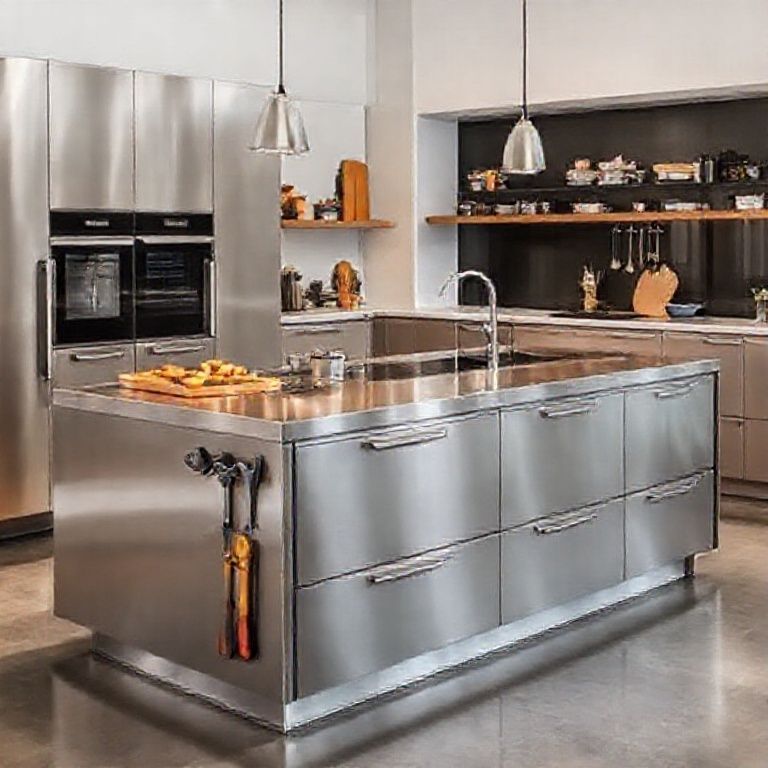
Let me start with a confession: I used to think modular kitchen systems were just a fancy way to sell more gadgets. You know, one of those trends that looks impressive in a showroom but falls apart when you’re knee-deep in dinner service with three burning pans and a line cook who just called in sick. But after redesigning my home kitchen, and then consulting on a few commercial spaces, I’ve completely flipped. Modular systems aren’t just about looking sleek; they’re about rethinking how we move, cook, and even think in the kitchen. And in 2025, with labor shortages still pinching restaurants and home cooks juggling more than ever, this might be the upgrade you didn’t know you needed.
Here’s the thing: most kitchens are designed like a bad IKEA instruction manual, static, rigid, and assuming you’ll only ever cook one way. But real cooking is dynamic. One night you’re searing steaks, the next you’re batch-prepping vegan meal kits. Modular systems let you adapt the space to the task, not the other way around. I’ve seen line cooks shave 20% off ticket times just by rearranging their stations mid-service. And in my own kitchen? I went from ‘where the hell is the peeler?’ to ‘everything has a home, and that home moves with me.’
This isn’t about ripping out your cabinets and starting from scratch (unless you want to, no judgment). It’s about identifying the bottlenecks in your workflow and using modular thinking to smooth them out. We’ll cover everything from plug-and-play prep stations to magnetic tool systems, and yes, even how to convince your skeptical sous chef (or spouse) that this isn’t just another passing trend. By the end, you’ll have a blueprint for a kitchen that bends to your needs, not the other way around.
Fair warning: I’m going to nerd out a bit on ergonomics and spatial psychology here. But stick with me, because when you’re in the weeds during holiday service or trying to get dinner on the table after a 12-hour workday, you’ll thank past-you for optimizing this stuff.
The Philosophy Behind Modular Kitchen Systems
Why ‘Fixed’ Kitchens Are Failing Us
Think about the last time you cooked something complicated, a multi-course meal, or maybe just a fancy weekend brunch. How much time did you spend walking? Not chopping, not sautéing, just moving between the fridge, the sink, the stove, the spice drawer. Most kitchen designs treat movement as an afterthought, but in reality, it’s one of the biggest time-sucks in cooking. A study from the Journal of Ergonomics (yes, that’s a real thing) found that professional chefs spend up to 30% of their time in motion that doesn’t directly contribute to food prep. Thirty percent! That’s like paying a line cook to pace around the kitchen.
Fixed countertops, built-in appliances, and static storage systems force us to adapt to the kitchen’s layout instead of the other way around. And that’s fine if you’re only ever making grilled cheese sandwiches. But for anyone doing serious cooking, whether that’s a Michelin-starred chef or a meal-prepping parent-rigidity is the enemy of efficiency. Modular systems flip this script by treating the kitchen as a dynamic workspace rather than a static room.
The Three Core Principles of Modular Design
Before we dive into specific systems, let’s ground ourselves in the philosophy. Modular kitchen design rests on three pillars:
- Adaptability: The space should reconfigure based on the task. Need more counter space for pastry work? It should appear. Prepping for a dinner party? Your storage should shift to prioritize servingware.
- Scalability: Your kitchen should grow (or shrink) with your needs. Adding a sous vide setup? There should be a place for it without a full renovation.
- Interchangeability: Components should swap in and out easily. A cutting board that becomes a trivet, a shelf that becomes a drying rack-multi-functionality is key.
I’ll admit, when I first heard this, I rolled my eyes. ‘Great, so my kitchen becomes a giant Lego set.’ But after testing it? The difference is night and day. It’s like the difference between typing on a rigid keyboard versus one of those fancy ergonomic ones that adjusts to your hands. At first, it feels unnecessary. Then you try it, and suddenly the old way feels barbaric.
Where Modular Systems Shine (And Where They Don’t)
Not every kitchen needs, or can accommodate, a full modular overhaul. Here’s where it makes the most sense:
- Small spaces: Apartments, food trucks, or tiny home kitchens where every inch counts. Modular systems let you ‘expand’ your workspace virtually by repurposing surfaces.
- Multi-use kitchens: If your space doubles as a baking station, a canning hub, and a weeknight dinner spot, modularity lets you switch modes without chaos.
- High-volume cooking: Restaurants, catering kitchens, or meal-prep operations where speed and organization directly impact profitability.
- Accessibility needs: For cooks with mobility challenges, adjustable-height counters and movable storage can be game-changers.
Where it doesn’t work as well? If you’re someone who cooks the same five meals on rotation and never experiments, or if you have a massive kitchen with dedicated zones for everything. But even then, I’d argue that modular thinking-not necessarily a full modular system, can still improve your workflow. More on that later.
Assessing Your Current Kitchen Workflow
The ‘Pain Point Audit’: Where You’re Losing Time
Before you buy a single modular component, you need to diagnose where your kitchen is failing you. Grab a notepad (or your phone’s voice memo app) and spend a week tracking these:
- Movement patterns: How many steps do you take between the fridge, sink, and stove? Are you constantly circling the island?
- Tool access: Which tools do you use most often? Are they within arm’s reach when you need them?
- Wasted space: That corner cabinet you can never reach? The drawer full of single-use gadgets? Note it.
- Bottlenecks: Where do things pile up? Dirty dishes by the sink? Prepped ingredients waiting for the stove?
- Frustration points: What makes you swear under your breath? The knife block that’s always in the way? The spice rack that requires a step stool?
I did this exercise in my own kitchen and was shocked to realize I was walking an extra 200 feet per meal just because my prep station was on the opposite side of the room from the stove. Two hundred feet! That’s like pacing the length of a basketball court every time I cooked. No wonder I was exhausted.
The ‘Zone’ Method: Rethinking Kitchen Geography
Most kitchens are organized by type of item, pots with pots, spices with spices. But modular design organizes by task. Here’s how to think in zones:
- Prep Zone: Cutting boards, knives, mixing bowls, measuring tools. This should be near your fridge and trash/compost.
- Cooking Zone: Pots, pans, utensils, oils, and spices you use while cooking. Ideally, this wraps around your stove.
- Cleaning Zone: Sink, drying rack, trash, compost, and dish storage. This should be a ‘drop-off’ point, not a place where things linger.
- Serving Zone: Plates, bowls, serving utensils, and napkins. Often overlooked, but crucial for smooth plating.
- Storage Zone: Less frequently used items (specialty bakeware, seasonal appliances). This can be further away.
The goal is to minimize cross-zone travel. If you’re constantly walking from the prep zone to the storage zone to grab a tool, that’s a sign your zones are poorly defined. In a modular kitchen, these zones can shift based on the task. Making pizza? Your prep zone expands to include dough tools. Baking? The mixing zone takes priority.
The 80/20 Rule: Focus on What You Actually Use
Here’s a hard truth: You probably only use 20% of your kitchen tools 80% of the time. The rest is clutter. Before designing your modular system, do a brutal audit:
- Pull everything out of your cabinets and drawers.
- Sort into three piles: Use weekly, Use occasionally, Haven’t used in a year.
- The ‘haven’t used’ pile? Donate or toss it. No excuses.
- The ‘use occasionally’ pile should go into modular storage that can be swapped out as needed.
- The ‘use weekly’ pile deserves prime real estate in your core zones.
I fought this step at first. ‘But what if I need that melon baller someday?’ Spoiler: I didn’t. And freeing up that space let me keep my most-used tools within arm’s reach, which, no exaggeration, cut my prep time by about 15 minutes per meal.
Modular Systems to Transform Your Workflow
1. Magnetic and Rail Systems: The Unsung Heroes
If you take nothing else from this article, install a magnetic knife strip and a rail system. These are the lowest-effort, highest-impact modular upgrades you can make.
- Magnetic knife strips: Frees up drawer space, keeps blades sharp (no banging around in a block), and lets you grab the right knife in one motion. Pro tip: Place it at hip height, not eye level, your arm will thank you after the 50th reach.
- Wall-mounted rails: Hang utensils, towels, or even small baskets for spices. I use a rail above my stove for my most-used wooden spoons and tongs. No more digging through the ‘junk drawer’ mid-sauté.
- Modular hooks: Companies like OXO and SimpleHuman make hooks that slide along a rail. Hang your colander to dry, then move it out of the way when you need the space.
Cost? Less than $100 for a full setup. Time saved? Easily 5-10 minutes per meal just from not searching for tools.
2. Swappable Countertop ‘Pods’
This is where things get fun. Imagine your countertop as a series of interchangeable ‘pods’ that you can swap in and out based on the task. Here’s how to implement it:
- Base layer: A heat-resistant, easy-to-clean surface (like stainless steel or quartz) that covers your entire counter.
- Modular pods: These are removable sections that sit on top of the base. Examples:
- A cutting board pod with built-in compartments for trash and compost.
- A baking pod with a marble surface and flour wells.
- A prep pod with small bowls for mise en place.
- A serving pod with built-in trivets and plate warmers.
- Storage: Pods live on a shelf or in a shallow cabinet when not in use. Swap them out as needed.
I was skeptical until I tried it. Now, I can’t imagine going back. Prepping for a stir-fry? The cutting board pod pops in, with a trash chute right where I’m chopping. Baking bread? The marble pod slides into place with a scale and dough scraper already built in. It’s like having a sous chef who anticipates your every need.
3. Rolling Carts and Islands: The Ultimate Flex Space
If you have the floor space, a rolling kitchen cart is a modular powerhouse. Look for one with:
- Locking wheels (critical for stability when chopping).
- Adjustable shelves or drawers.
- A butcher-block or stainless steel top for durability.
- Hooks or rails on the sides for hanging tools.
Use it as:
- A mobile prep station (roll it next to the fridge for chopping veggies).
- A serving buffet (wheel it to the dining table for family-style meals).
- An appliance garage (store your stand mixer or air fryer on it, then roll it out of the way).
- A cleanup hub (load it with dirty dishes and roll it to the sink).
In commercial kitchens, these are called ‘speed racks,’ and they’re a linchpin of efficient service. At home, they’re a game-changer for small spaces or multi-cook households. My partner and I use one as a ‘neutral zone’ when we’re cooking together, no more elbow wars over counter space.
4. Modular Storage: Drawers That Think for You
Drawers are the workhorses of kitchen storage, but most are woefully under-optimized. Modular drawer inserts let you customize the space to fit exactly what you use.
- Adjustable dividers: For utensils, tools, or even pantry items. No more digging for the fish spatula.
- Pull-out bins: Great for onions, potatoes, or bulk grains. Slide the whole bin out to the counter when you need it.
- Tiered shelves: Double your vertical space for plates or bowls.
- Custom inserts: Companies like Rev-A-Shelf make inserts for everything from spice jars to cutting boards.
The key here is grouping by task, not by type. Instead of a ‘baking drawer’ with all your bakeware, think:
- A ‘cookie day’ drawer with cutters, measuring cups, and sprinkles.
- A ‘weeknight dinner’ drawer with your most-used pans and utensils.
- A ‘breakfast station’ with toaster accessories, mugs, and cereal containers.
This might sound overly granular, but when everything you need for a task lives together, you eliminate the mental load of gathering supplies. It’s like meal kits, but for your entire kitchen.
5. Pegboards and Slatwalls: The Original Modular System
Pegboards aren’t new, Julia Child had one in her famous Cambridge kitchen, but they’ve evolved. Modern systems like IKEA’s SKÅDIS or French Cleat walls let you hang everything:
- Pots and pans (with hooks).
- Spice racks (mounted at eye level).
- Cutting boards (hang vertically to dry).
- Small appliances (like a hand mixer or immersion blender).
- Baskets for fruits, onions, or garlic.
The beauty is in the adjustability. Need more space for a new air fryer? Shift things around. Hosting a party and need extra glassware within reach? Add more hooks. It’s the closest you’ll get to a kitchen that reorganizes itself.
Pro tip: Mount a pegboard above your prep zone and keep your most-used tools there. I’ve got my chef’s knife, peeler, and microplane hanging within arm’s reach, and it’s cut my ‘tool retrieval time’ to near zero.
6. Under-Cabinet and Ceiling-Mounted Systems
When counter and wall space are at a premium, look up. Under-cabinet and ceiling-mounted systems add storage and functionality without eating into your workspace.
- Under-cabinet racks: For spices, oils, or wine glasses. Some even have built-in lighting.
- Ceiling-mounted pot racks: Frees up cabinet space and adds a professional touch. Just make sure your ceiling can handle the weight!
- Magnetic strips: Mounted under cabinets for knives or spice tins.
- Fold-down tables: Tucked under cabinets, these can expand your prep space when needed.
In my tiny Nashville kitchen, I installed a fold-down table under a cabinet. It’s my ‘emergency landing zone’ for when I’m prepping a big meal and run out of counter space. When not in use? It disappears completely.
7. Modular Appliances: The Future of Flexible Cooking
Appliances are getting smarter, and smaller. Modular appliances let you swap out functions based on what you’re cooking. Some innovations to watch:
- Induction burners: Portable, precise, and energy-efficient. Store them in a drawer and pull them out when you need an extra burner.
- Combination ovens: Steam, air fry, bake, and broil in one unit. Some models even have swappable racks for different cooking modes.
- Sous vide sticks: Compact and easy to store, these turn any pot into a precision cooker.
- Modular fridge drawers: Companies like Liebherr make under-counter fridge/freezer drawers that can be installed anywhere, even in an island.
The goal isn’t to own every gadget, but to have the right tool for the job without permanent clutter. I replaced my bulky stand mixer with a compact Ankarsrum model that lives in a cabinet and comes out only when needed. Same power, half the footprint.
8. Smart Modular Systems: When Tech Meets Ergonomics
Yes, we’re talking about ‘smart kitchens,’ but not in the gimmicky way you might think. The best smart modular systems solve real problems:
- Inventory tracking: Modular pantry systems with built-in scales and apps that track what you have (and what’s about to expire).
- Voice-activated lighting: Adjustable under-cabinet lights that respond to commands like ‘prep mode’ or ‘cleaning mode.’
- Modular smart plugs: Control appliances from your phone, or set them to turn off automatically when not in use.
- AI-assisted meal prep: Some high-end systems now suggest modular setups based on the recipe you’re cooking. (Yes, really.)
I’m not saying you need a kitchen that talks to you (though if that’s your jam, go for it). But small smart upgrades can make modular systems even more intuitive. For example, I have a smart plug on my immersion blender. When I’m done, I just say, ‘Hey Google, turn off the blender,’ and it’s one less thing to worry about.
9. DIY Modular Hacks for Renters or Budget-Conscious Cooks
Not everyone can (or wants to) install a full modular system. Here are some low-cost, reversible hacks to get the benefits without the commitment:
- Tension rods: Install inside cabinets to create adjustable shelves for cutting boards or trays.
- Over-the-door organizers: For spices, tools, or cleaning supplies. No drilling required.
- Stackable bins: Use clear bins to group tools by task (baking, grilling, etc.) and stack them in a cabinet.
- Portable islands: A butcher block on casters can serve as a mobile prep station.
- Command hooks and strips: Hang tools, utensils, or even small shelves without damaging walls.
In my first apartment, I used a rolling bar cart as a modular prep station. It held my cutting board, knives, and a small trash bin, and I could wheel it next to the stove when I needed extra space. Total cost? $60 at a thrift store.
10. Commercial-Grade Modular Systems for Pros
If you’re outfitting a restaurant, food truck, or catering kitchen, modular systems aren’t just nice, they’re essential for survival. Here’s what the pros use:
- Modular prep tables: With swappable cutting boards, sinks, and storage underneath. Companies like Vollrath and Cambro make commercial-grade options.
- Speed racks: Rolling racks with adjustable shelves for ingredients, tools, or plated dishes.
- Workstation sinks: Combination prep/sink units that can be moved or reconfigured.
- Modular cooking suites: Some high-end ranges now offer swappable burners, griddles, and planchas.
- Under-counter refrigeration: Drawers that can be installed anywhere, even in an island.
The key in commercial spaces is durability and speed. Every second counts during service, so modular systems must be sturdy enough to handle constant reconfiguration without falling apart. I’ve seen food trucks where the entire kitchen is modular, counters fold down, appliances lock into place, and storage bins double as seating. It’s like a Transformers movie, but with less explosions and more brisket.
Putting It All Together: Designing Your Modular Kitchen
Step 1: Start Small
You don’t need to overhaul your entire kitchen overnight. Pick one pain point and solve it modularly. For example:
- If you’re always searching for tools, start with a magnetic knife strip and a pegboard.
- If counter space is tight, try a rolling cart or a fold-down table.
- If your spices are a mess, install a modular spice rack inside a cabinet door.
I started with a $20 pegboard from the hardware store. Within a week, I’d added hooks for my most-used tools and a small shelf for oils and vinegars. The difference in my daily cooking was immediate.
Step 2: Think in ‘Kits’
Instead of organizing by item type, organize by task. Create ‘kits’ for common cooking scenarios:
- Breakfast kit: Skillet, spatula, coffee grinder, mugs.
- Pasta night kit: Colander, large pot, tongs, grater.
- Baking kit: Mixing bowls, measuring cups, rolling pin, silicone mats.
- Grilling kit: Tongs, meat thermometer, basting brush, grill pan.
Store each kit in a modular bin or drawer insert, so you can grab the whole set at once. This is especially useful if you share a kitchen with others, no more hunting for the whisk someone ‘borrowed’ and didn’t return.
Step 3: Map Your Movement
Grab a piece of paper and sketch your kitchen. Draw arrows showing your typical movement paths for different meals. Look for:
- Crossing paths (do you constantly walk back and forth between two zones?).
- Dead ends (areas where you get ‘stuck’ because the next step is far away).
- Traffic jams (places where multiple people collide).
Then, ask: How can I rearrange or add modular elements to shorten these paths? For example, if you’re always walking from the fridge to the sink to the stove, could a rolling prep cart sit between them to cut down on steps?
Step 4: Prioritize Flexibility Over Perfection
Here’s where I see people get stuck: they wait until they can afford the ‘perfect’ modular system. But the beauty of modular design is that it evolves with you. Start with what you can afford, and upgrade as you go.
For example, my first ‘modular’ setup was a plastic bin with handles that held my baking tools. Not fancy, but it worked. Over time, I replaced it with a custom drawer insert, then added a pull-out shelf for my stand mixer. Each upgrade built on the last, but the core idea, keeping tools grouped by task, stayed the same.
Step 5: Test and Iterate
Your first modular setup won’t be perfect. Treat it like a recipe, tweak as you go. After a few weeks, ask yourself:
- What’s still frustrating me?
- Which modular elements am I not using?
- Where am I still wasting time or space?
Then, adjust. Maybe the pegboard is in the wrong spot, or you need an extra bin for your ‘taco night’ kit. That’s normal! A modular kitchen is a living system, not a static installation.
The Human Factor: Getting Buy-In from Your Team (or Family)
Selling the Idea to Skeptics
If you’re implementing this in a shared kitchen, whether that’s a restaurant or a family home, you’ll likely face resistance. Here’s how to handle it:
- Frame it as a time-saver: ‘This will cut our prep time by 20 minutes a night, imagine what we could do with that!’
- Start with a pilot: Try one modular element (like a magnetic knife strip) and let people see the benefits before scaling up.
- Address the ‘clutter’ concern: Many people assume modular = messy. Show how it actually reduces clutter by giving everything a home.
- Highlight flexibility: ‘If you don’t like where something is, we can move it!’
In my house, my partner was convinced the pegboard would look ‘too industrial.’ Now? He’s the one rearranging the hooks to optimize his coffee-making setup.
Training for Modular Success
Modular systems only work if everyone uses them correctly. Here’s how to onboard your team (or family):
- Create a ‘cheat sheet’: A simple diagram showing where things live and how to reconfigure for common tasks.
- Assign ‘zones’: In a restaurant, assign each cook a modular station they’re responsible for maintaining.
- Hold a ‘modular meeting’: Once a month, gather feedback on what’s working and what’s not.
- Lead by example: If you’re the chef or the primary cook, use the system consistently. Others will follow.
In a professional kitchen, I’ve seen chefs run ‘modular drills’ during slow periods, practicing how to quickly reconfigure stations for different services. It sounds overkill, but when the dinner rush hits, that muscle memory pays off.
Dealing with Pushback
Not everyone will love the change. Here’s how to handle common objections:
- ‘It’s too complicated’: Start with the simplest modular elements (like a knife strip) to build confidence.
- ‘I like things where they are’: Compromise, keep their favorite tools in their usual spots, but modularize the rest.
- ‘It looks messy’: Use uniform bins or containers to keep things looking cohesive.
- ‘We don’t have the budget’: Start with DIY hacks (like tension rods or stackable bins) to prove the concept.
Remember: Change is hard, but inefficiency is harder. Once people experience the time savings, they’ll come around.
Common Mistakes (And How to Avoid Them)
Mistake #1: Over-Engineering
It’s easy to go overboard with modular systems, adding bins within bins, hooks upon hooks, until your kitchen looks like a Rube Goldberg machine. Signs you’ve overdone it:
- You spend more time reorganizing than cooking.
- Guests ask if you’re running a restaurant out of your home.
- You have more empty bins than full ones.
Fix it: Start with the 20% of tools you use 80% of the time. Modularize those first, then expand only if needed.
Mistake #2: Ignoring Ergonomics
A modular kitchen should reduce strain, not create it. Watch out for:
- Hooks or shelves placed too high (leading to shoulder strain).
- Drawers that require deep bending (bad for your back).
- Carts or islands that are too tall or too short for your height.
Fix it: Follow the ‘neutral zone’ rule, keep frequently used items between hip and shoulder height. Test positions before finalizing them.
Mistake #3: Sacrificing Aesthetics for Function
Modular doesn’t have to mean industrial. Ways to keep it stylish:
- Use wood or bamboo for cutting boards and bins to warm up the look.
- Choose cohesive colors for bins and containers.
- Hide less attractive elements (like under-cabinet racks) behind curtains or doors.
- Incorporate plants or decor into your modular setup (e.g., a hanging herb garden on the pegboard).
My kitchen mixes stainless steel pegboards (for durability) with wooden cutting board pods (for warmth). The result is functional but still inviting, no ‘hospital kitchen’ vibes here.
Mistake #4: Forgetting About Cleaning
Modular systems can create more nooks and crannies to clean if you’re not careful. Avoid this by:
- Choosing materials that are easy to wipe down (stainless steel, sealed wood, plastic bins).
- Keeping a small vacuum or duster handy for pegboard hooks.
- Opting for bins with smooth edges (no crevices for crumbs to hide in).
- Scheduling a monthly ‘modular reset’ to deep clean and reorganize.
I learned this the hard way when I installed a pegboard above my stove. Grease splatters + hooks = a cleaning nightmare. Now, I keep the pegboard away from high-splash zones and use a silicone sleeve on hooks to catch drips.
Mistake #5: Not Planning for Growth
Your cooking habits will evolve, so your modular system should too. Future-proof your setup by:
- Leaving empty hooks or shelves for new tools.
- Choosing adjustable systems (like rail-based storage) that can expand.
- Keeping a ‘miscellaneous’ bin for new gadgets until you find them a permanent home.
When I first set up my modular kitchen, I didn’t account for my sudden obsession with fermentation. Now, I have a ‘ferment station’ pod with jars, weights, and a pH meter, something I never would’ve predicted needing two years ago.
The Big Picture: Why Modular Kitchens Are the Future
Look, I get it. Reorganizing your kitchen, let alone redesigning it, sounds like a massive project. And if you’re happy with your current setup, maybe it’s not worth the effort. But if you’ve ever felt frustrated by your kitchen’s limitations, modular systems offer a way out. They’re not just a trend; they’re a response to how we actually cook in 2025:
- We’re cooking more diverse cuisines than ever, requiring different tools and setups.
- Kitchens are shrinking (hello, urban apartments and tiny homes).
- We’re increasingly sharing kitchen space with roommates, partners, or family members.
- Sustainability matters, modular systems let us adapt rather than renovate.
And here’s the kicker: modular design isn’t just about efficiency. It’s about joy. When your kitchen adapts to you, cooking becomes less of a chore and more of a flow. You spend less time searching, cleaning, and cursing, and more time actually creating. That’s worth a few hooks and bins, don’t you think?
So, where to start? Pick one pain point, maybe it’s the spice cabinet that’s always a mess, or the lack of prep space when you’re making big meals. Tackle that one thing with a modular solution, and see how it feels. Chances are, you’ll be hooked. And if not? Well, at least you’ll have a cleaner spice cabinet.
As for me? I’m currently eyeing a modular induction burner that can be installed flush with my countertop when not in use. Overkill? Maybe. But after seeing how much time I’ve saved with just a pegboard and a rolling cart, I’m willing to bet it’ll be worth it. Now, if you’ll excuse me, Luna just knocked over my ‘ferment station’ pod, so I’ve got some cleaning up to do. Such is life in a modular kitchen.
FAQ
Q: I rent my apartment. Can I still use modular systems without losing my security deposit?
A: Absolutely! Stick to no-drill solutions like:
- Over-the-door organizers for spices or tools.
- Tension rods inside cabinets for adjustable shelves.
- Freestanding pegboards (lean against the wall or mount on a rolling cart).
- Command hooks and strips (they remove cleanly when it’s time to move).
- Rolling carts or islands that don’t require installation.
I lived in rentals for years and still managed to create a modular setup with just a $40 IKEA cart and some stackable bins. The key is to focus on portable, non-permanent solutions that you can take with you when you move.
Q: How do I convince my restaurant team to switch to a modular system? They’re resistant to change.
A: Chefs and line cooks are a stubborn bunch, I say this with love. Here’s how to win them over:
- Run a time trial: Track how long it takes to prep a standard dish with the old setup vs. the new modular one. Hard data wins arguments.
- Involve them in the design: Let each cook customize their station’s modular elements. Ownership = buy-in.
- Start with one station: Pilot the system at the prep table or salad station first. Once they see the efficiency, they’ll ask for it everywhere.
- Highlight the WIIFM (‘What’s In It For Me’): Less walking = less fatigue. Less clutter = less stress. Faster prep = more time for breaks.
- Gamify it: Turn reconfiguring stations into a challenge. ‘Who can set up their mise en place the fastest?’
And if all else fails, lead by example. Set up your chef’s station with modular elements and let them see how much smoother your service runs. Peer pressure works wonders.
Q: What’s the most cost-effective way to start with modular systems?
A: If you’re on a budget, focus on high-impact, low-cost modular upgrades:
- $10-$20: Magnetic knife strip or over-the-door spice rack.
- $20-$50: Pegboard panel (cut to size at the hardware store) + hooks.
- $50-$100: Rolling cart (check Facebook Marketplace or thrift stores).
- $100-$200: Modular drawer inserts or a fold-down table.
My first modular upgrade was a $15 tension rod inside a cabinet to hold my cutting boards vertically. It freed up an entire drawer and made my boards easier to grab. Small changes add up!
Q: Are there any modular systems that work well for people with disabilities or mobility issues?
A: Yes! Modular design is a game-changer for accessibility. Here are some adaptations:
- Adjustable-height counters: Electric or manual cranks let users raise or lower the counter to their ideal height.
- Pull-out shelves and drawers: Eliminate the need to reach or bend. Look for ‘full-extension’ slides.
- Wall-mounted workstations: Fold-down tables or cutting boards that can be used from a seated position.
- Magnetic and rail systems: Keep tools within easy reach without requiring grip strength.
- Voice-activated smart systems: For hands-free control of lights, appliances, and even drawer openings.
- Rolling carts with seats: Allow for seated prep work that can be moved around the kitchen.
Organizations like the Christopher & Dana Reeve Foundation and AbleData have great resources for accessible kitchen designs. The key is to focus on flexibility-what works for one person’s needs might not work for another’s, so modularity is ideal.
@article{optimizing-your-kitchen-workflow-with-modular-systems-a-chefs-guide-to-smarter-faster-cooking,
    title   = {Optimizing Your Kitchen Workflow with Modular Systems: A Chef’s Guide to Smarter, Faster Cooking},
    author  = {Chef's icon},
    year    = {2025},
    journal = {Chef's Icon},
    url     = {https://chefsicon.com/optimizing-your-kitchen-workflow-with-modular-systems/}
}