The Best Fluffy Pancakes recipe you will fall in love with. Full of tips and tricks to help you make the best pancakes.
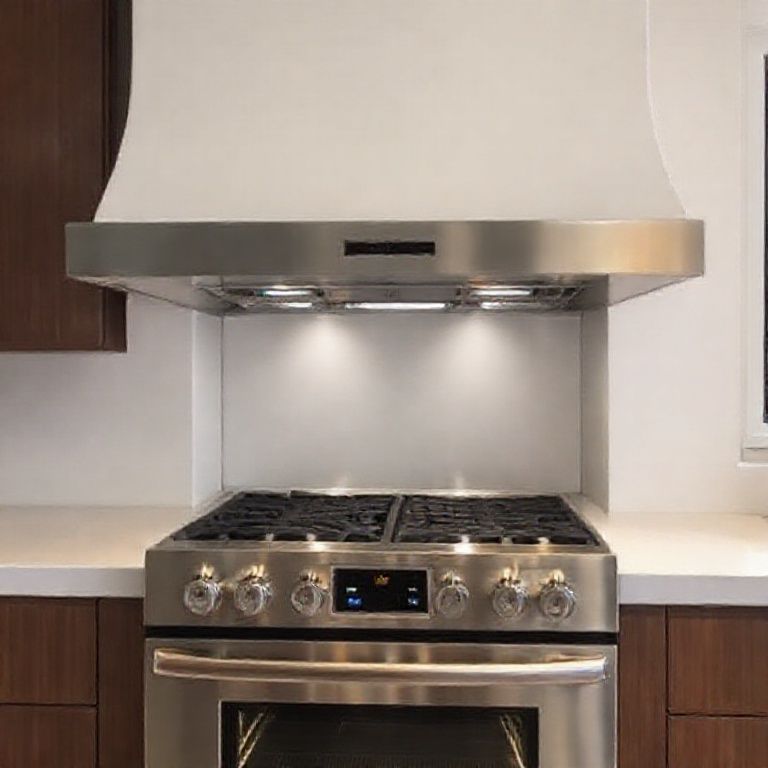
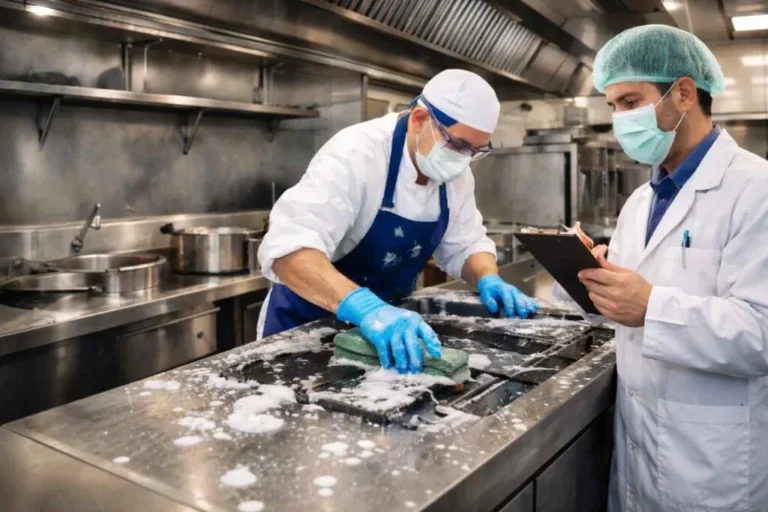
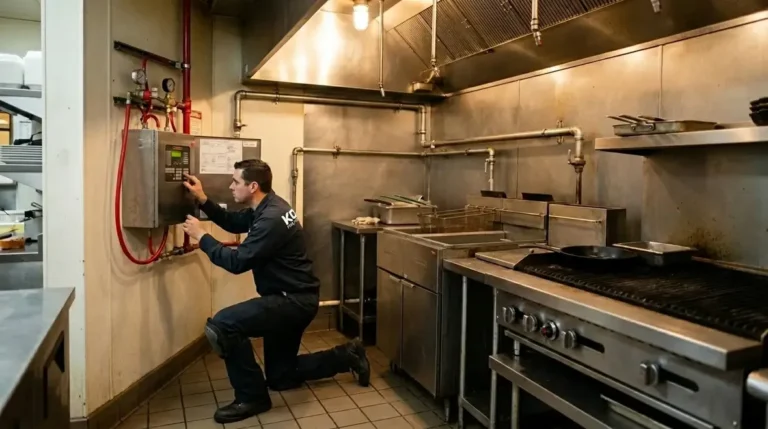
I’ll admit something embarrassing: When I first toured a high-end restaurant kitchen in Nashville back in 2020, I was more dazzled by the shiny $12,000 combi oven than the emergency fire suppression system mounted above it. The chef noticed my gaze and said, dryly, *“That oven’s useless if the place burns down because we skipped the Ansul inspection.”* Oof. Five years later, after watching too many kitchen nightmares (the real kind, not the Gordon Ramsay show), I’ve learned that safety-first commercial kitchen design isn’t just a regulatory checkbox, it’s the difference between a thriving business and a liability lawsuit waiting to happen.
Here’s the thing: Commercial kitchens are essentially controlled chaos zones. You’ve got open flames, slick floors, razor-sharp knives, and a team of people moving at warp speed during rush hour. Throw in a dash of human error (because let’s be real, we’re all exhausted by the third shift), and you’ve got a recipe for disaster, literally. But here’s what most operators don’t realize until it’s too late: Safety isn’t just about preventing accidents; it’s about designing systems that make safety effortless. A well-planned kitchen doesn’t just *reduce* risks, it *eliminates* the conditions that create them in the first place.
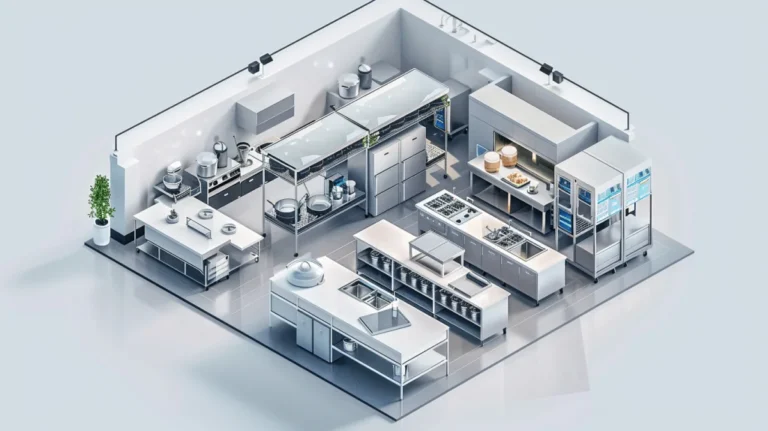
In this article, we’re diving deep into the non-negotiables of safety-first commercial kitchen design, from the obvious (fire suppression) to the overlooked (ergonomic workflows that prevent repetitive stress injuries). I’ll share hard lessons I’ve learned from chefs, health inspectors, and, yes, insurance adjusters after things went sideways. We’ll cover:
- Why OSHA and NFPA compliance is the bare minimum (and how to exceed it)
- The hidden dangers in kitchen layout flaws that slow down service *and* increase injuries
- How equipment placement can turn a minor spill into a worker’s comp claim
- The psychological tricks to design for human error (because we’re all distracted sometimes)
- Where most operators waste money on “safety” gadgets that don’t actually work
Fair warning: Some of this might make you uncomfortable. If you’re currently running a kitchen with extension cords snaking across the floor or a “temporary” fix for that leaky fryer, this is your intervention. Let’s get into it.
The Psychology of Safety: Why “Common Sense” Isn’t Enough
I used to think safety was just about following the rules-posting the right signs, doing the fire drills, keeping a first-aid kit handy. But after talking to a behavioral psychologist who consults for restaurant groups (yes, that’s a real job), I realized: **The biggest safety risks aren’t the ones we *see*-they’re the ones we’ve normalized.
Here’s an example: Ever seen a line cook balance a stack of hot pans in one arm while opening the walk-in door with their elbow? We’ve all done it. It’s “efficient,” right? Wrong. That’s a cultural blind spot-a behavior so ingrained that we don’t even register it as dangerous. The same goes for:
- “Just wiping up” spills without a wet floor sign (because “it’ll dry in a minute”)
- Skipping the hood cleaning “one more week” (until the grease fire happens)
- Using a butter knife to pry open a can (because the can opener’s “too slow”)
Designing for safety means anticipating these shortcuts and making them impossible. That might mean:
- Installing motion-activated floor lights that illuminate spills instantly (no more “I didn’t see it!” excuses)
- Placing can openers at every prep station so they’re always within reach
- Using color-coded cutting boards** not just for food safety, but to train muscle memory (red = raw meat = *always* use the guard)
Is this overkill? Maybe. But here’s the kicker: The kitchens with the fewest accidents aren’t the ones with the most rules, they’re the ones where safe behavior is the path of least resistance.
The “Broken Windows” Theory of Kitchen Safety
There’s a criminology concept called the “broken windows” theory, which suggests that visible signs of disorder (like a broken window) encourage more crime. The same applies to kitchens. If your team sees:
- A frayed extension cord taped to the wall
- A drip tray overflowing under the grill
- A missing guard on the slicer
They’ll subconsciously think, *“Well, if *that’s* okay, then [my unsafe shortcut] must be fine too.”* Safety culture starts with visual cues. If everything looks intentional and well-maintained, your team will mirror that mindset.
Fire Safety: Beyond the Fire Extinguisher
Let’s talk about fire, because 61% of restaurant fires (per NFPA data) start in the kitchen, and most of them are preventable. The problem? Too many operators treat fire safety like a one-and-done installation-hang an extinguisher, install a suppression system, call it a day. But fire prevention is a daily discipline, not a set-it-and-forget-it task.
The Grease Trap Isn’t Just a Suggestion
I once worked with a pizza shop owner who bragged about “saving” $300/month by skipping professional hood cleanings. Six months later, his $25,000 fire damage bill (plus three weeks of lost revenue) made that “savings” look pretty stupid. Here’s the reality:
- Grease fires double in intensity every 60 seconds. That “small flare-up” can engulf your hood in under a minute.
- Most suppression systems fail because they’re clogged with grease or improperly maintained.
- **Insurance companies *will* deny claims if you can’t prove regular cleanings (they check).
Non-negotiable fire safety upgrades:
- Automatic suppression systems (Ansul, Pyro-Chem, etc.) with quarterly inspections-not just annual.
- Grease interlocks on hoods that shut off the gas if the fan fails (this is code in most states, but often ignored).
- Class K fire extinguishers at *every* cooking station (not just one by the exit).
- Thermal fuse links on ductwork that melt at 280°F and trigger the suppression system.
And here’s a pro tip: **Train your team to never-*never*-use water on a grease fire. Post signs, do drills, make it muscle memory. Water turns grease fires into steam explosions that can burn faces and hands.
The Hidden Fire Risk: Electrical Overload
Commercial kitchens are electrical nightmares**. You’ve got refrigerators, ovens, mixers, and POS systems all sucking power from circuits that were maybe-*maybe*-updated in the ‘90s. The #1 cause of non-cooking fires? Electrical failures.
Red flags to fix ASAP:
- Daisy-chained power strips (this is how fires start at 2 a.m.).
- Warm outlets or flickering lights (signs of overloaded circuits).
- Extension cords as permanent solutions (they’re not; they’re a temporary fix that becomes permanent).
Solution: Hire an electrician to:
- Install dedicated circuits for high-draw equipment (like combi ovens).
- Upgrade to GFCI outlets near sinks and prep areas.
- Add surge protectors for sensitive equipment (like POS systems).
Yes, it’s expensive. But rebuilding after an electrical fire is 10x the cost.
Slips, Trips, and Falls: The Silent Profit Killer
Slip-and-fall accidents account for over 3 million emergency room visits yearly (CDC data), and kitchens are ground zero. The crazy part? Most of these are preventable with smart flooring and workflow design.
Flooring: It’s Not Just About “Non-Slip”
I’ve seen kitchens with “non-slip” floors that were so aggressively textured they caused knee and back pain from standing all day. Others had floors so smooth they turned into ice rinks with a single oil spill. The sweet spot?
Ideal kitchen flooring must:
- Have a coefficient of friction (COF) of 0.6 or higher (check the spec sheet).
- Be seamless or welded (grouted tiles harbor bacteria and crack under heavy equipment).
- Include drainage slopes (1/8” per foot minimum) to prevent puddling.
- Use coved bases (where the floor curves up the wall) to eliminate gaps where gunk collects.
Materials to consider:
- Epoxy or urethane coatings (durable, easy to clean, customizable slip resistance).
- Quarry tile (classic, but requires proper sealing).
- Rubber flooring (softer on joints, but can stain).
Pro tip: If you’re renovating, test flooring samples with water and oil to see how slippery they get. What works in a showroom might fail under real-world conditions.
The “3-Second Rule” for Spill Response
Most kitchens have a “clean up spills immediately” rule. But “immediately” is vague. Immediately should mean within 3 seconds. Here’s how to make that happen:
- Station spill kits (absorbent pads, squeegee, wet floor sign) at every prep station.
- Use color-coded mops (red for grease spills, blue for water) to avoid cross-contamination.
- Train staff to “call out” spills (“Wet floor behind you!”) even if they’re not theirs to clean.
And never-*never*-let someone “just wipe it up” with a towel. That’s how you end up with a worker’s comp claim for a torn ACL.
Ergonomics: The Overlooked Safety Hazard
When we think of kitchen injuries, we picture burns and cuts. But repetitive stress injuries (RSIs)-like carpal tunnel, tendonitis, and chronic back pain, are the silent productivity killers. They don’t happen in a dramatic instant; they creep up over years, until suddenly your lead prep cook can’t grip a knife without pain.
The “Reach Zone” Principle
Ever watch a cook stretch over a counter to grab a spice jar, or bend down to pull a heavy pot from a low shelf? Those tiny movements add up. Poor ergonomics don’t just cause injuries, they slow down service.
Design for the “reach zone”:
- Primary work surfaces (cutting boards, prep tables) should be 34–36 inches high (standard counter height is too low for most people).
- Frequently used items (salt, oil, tongs) should be within 18 inches of the workstation-no stretching or turning required.
- Heavy equipment (mixers, food processors) should be at hip height to avoid lifting.
- Shelving should be adjustable so staff of different heights can customize their space.
Test your layout: Have a staff member simulate a full shift in the new design. If they’re constantly reaching, bending, or twisting, reconsider the placement.
The Weight of the Problem
OSHA’s manual handling guidelines suggest that lifting anything over 50 lbs requires two people or a mechanical assist. Yet I’ve seen line cooks heave 60-lb bags of flour like it’s no big deal. Until it is.
Solutions:
- Install wall-mounted or ceiling-track hoists for heavy items (like stock pots or bulk ingredients).
- Use rolling carts with brake locks to transport heavy loads.
- Switch to smaller containers (e.g., 25-lb flour bags instead of 50-lb).
- Train staff on proper lifting techniques (but honestly, the goal should be to eliminate lifting entirely).
Ventilation: More Than Just “Getting Rid of Smoke”
Bad ventilation doesn’t just make your kitchen hot and smoky, it creates long-term health risks (CO poisoning, respiratory issues) and accelerates equipment failure (grease buildup in ducts = fire hazard). Yet so many kitchens treat their hood system as an afterthought.
The CFM Myth
I used to think higher CFM (cubic feet per minute) = better ventilation. Wrong. Too much CFM can actually *pull flames* out of gas burners, creating a fire hazard. The right system depends on:
- Cooking equipment type (charbroilers need more CFM than induction ranges).
- Hood size and placement (island hoods vs. wall-mounted).
- Makeup air balance (if you’re sucking out 2,000 CFM, you need to replace it with fresh air, or you’ll create negative pressure that makes doors hard to open).
Rule of thumb: Your hood should extend 6 inches beyond the cooking equipment on all sides, and the capture velocity (how fast air is pulled into the hood) should be 100–150 FPM at the cooking surface.
The Grease Duct Dilemma
Grease ducts are like the arteries of your kitchen-if they clog, everything stops. And yet, I’ve seen ducts that hadn’t been cleaned in years** (yes, *years*). Here’s what you’re risking:
- Grease fires that spread through the ductwork at terrifying speed.
- Carbon monoxide buildup from poor exhaust (headaches, dizziness, or worse for your staff).
- Equipment overheating (poor airflow = shorter lifespan for your ovens and fryers).
Non-negotiables:
- Monthly visual inspections of ducts (look for grease buildup).
- Quarterly professional cleanings (more often if you’re a high-volume fryer operation).
- Access panels every 12 feet for easy cleaning.
- Fire dampers that automatically close in a fire to contain smoke.
Chemical Safety: The Invisible Threat
We talk a lot about knives and burns, but chemical hazards-from cleaners to sanitizers, are just as dangerous. A single mix-up (like pouring bleach into a spray bottle that once held ammonia) can create toxic gas that sends your team to the ER.
The “No Decanting” Rule
I get it: It’s easier to pour quat sanitizer into a spray bottle than lug around the gallon jug. But decanting chemicals is one of the top causes of accidental poisoning in kitchens. Why?
- Mislabeling** (that spray bottle *looks* like water).
- Cross-contamination (residue from a previous chemical reacts with the new one).
- Dilution errors (too strong = burns; too weak = ineffective).
Solution: Use pre-mixed, color-coded chemical systems (like Ecolab’s portion-pac system) where:
- Each chemical has a unique color and shape.
- Dilution is automatic (no guessing).
- Storage is separate from food and utensils.
The “Never Mix” List
Post this wherever chemicals are stored (and train staff annually):
- Bleach + Ammonia = Chloramine gas (can cause chemical pneumonitis).
- Bleach + Vinegar = Chlorine gas (used in chemical warfare).
- Bleach + Rubbing Alcohol = Chloroform (yes, *that* chloroform).
- Different Sanitizers (e.g., quat + iodine) = Toxic residues on surfaces.
Pro tip: Assign one person per shift to be the “chemical safety officer” responsible for proper storage and use. Rotate the role so everyone stays sharp.
Equipment Safety: Where Most Kitchens Cut Corners
I’ve lost count of how many kitchens I’ve seen with:
- Missing or broken guards on slicers and mixers.
- Frayed cords taped up with electrical tape.
- Improvised fixes (like using a butter knife to hold a broken latch closed).
Here’s the thing: OSHA doesn’t care if the equipment “still works.” If it’s not manufacturer-approved and properly maintained, it’s a violation waiting to happen.
The “If It’s Broken, Fix It” Rule
I get it, budgets are tight. But delaying repairs is a false economy. Example:
- A $200 repair on a fryer’s thermostat prevents a $5,000 fire (or worse, a third-degree burn).
- A $50 replacement blade for a slicer prevents a $20,000 worker’s comp claim for a severed tendon.
Create a “safety repair fund”-even $100/month adds up. And **never-*never*-bypass a safety feature (like removing a guard because it’s “too slow”).
The “Lockout/Tagout” Lifesaver
Lockout/Tagout (LOTO) is an OSHA requirement for a reason: It prevents amputations and electrocutions during equipment maintenance. Yet most kitchens don’t do it because “it takes too long.”
How LOTO works:
- Notify everyone that the equipment is being serviced.
- Shut off the power/gas/water supply.
- Lock the disconnect switch with a personalized padlock (only the person doing the work has the key).
- Tag the equipment with a dated, signed tag explaining the work being done.
- Test the equipment to confirm it’s truly off (e.g., try to turn on the mixer).
- Only the person who locked it can remove the lock.
No exceptions. Even for “quick fixes.”
Staff Training: The Human Firewall
You can have the safest kitchen design in the world, but if your team isn’t trained, it’s useless. The problem? Most safety training is boring, generic, and forgotten by day two.
Make Training “Sticky”
Forget the once-a-year PowerPoint. Safety training should be:
- Short and frequent (5-minute huddles before shifts).
- Scenario-based (“What do you do if the fryer catches fire *right now*?”).
- Gamified (reward teams with the best safety records).
- Peer-led (have experienced staff demo proper techniques).
Example: At one restaurant I consulted for, the GM turned safety into a “mystery audit” game. Once a month, he’d plant a safety violation (like a blocked fire extinguisher) and award a $50 bonus to the first staff member who spotted and reported it. Accidents dropped by 40% in six months.
The “See Something, Say Something” Culture
Most kitchen staff won’t report hazards because:
- They don’t want to “bother” the manager.
- They fear retaliation (e.g., being seen as a “tattletale”).
- They assume “someone else will handle it.”
Fix this by:
- Creating an anonymous reporting system (a physical dropbox or digital form).
- Praising publicly when someone catches a hazard (“Shoutout to Maria for spotting that frayed cord!”).
- Leading by example-if the GM ignores a spill, why should the dishwasher care?
Insurance and Liability: The Fine Print That Can Sink You
Here’s a fun fact: Most commercial kitchen fires result in the business closing within a year. Not because of the fire damage, but because of insurance denials, lawsuits, and lost reputation.
The “Fine Print” That Voids Your Policy
Insurance companies love denying claims. Common reasons:
- Lack of maintenance records (no proof of hood cleanings? Denied.).
- Unapproved modifications (e.g., swapping a gas range for a charbroiler without updating the suppression system).
- Employee negligence (if an untrained staff member misuses equipment).
Protect yourself:
- Document everything. Keep logs of inspections, cleanings, and repairs.
- Update your insurer before making equipment changes.
- Require certifications (e.g., ServSafe, OSHA 10) for all managers.
The “What If?” Scenario Planning
Ask yourself:
- What if a customer slips on a grease spill? (Do you have incident report forms ready?)
- What if a health inspector finds a violation? (Do you have a corrective action plan?)
- What if an employee gets injured? (Do you know your worker’s comp process?)
Run a “disaster drill” once a year. Simulate a fire, a gas leak, or a major injury. Time your team’s response. You’ll find gaps you never knew existed.
The Future of Kitchen Safety: Tech and Trends
Safety tech is evolving faster than most operators realize. Here’s what’s on the horizon:
AI-Powered Hazard Detection
Companies like Notco and Spoiler Alert are testing AI cameras that:
- Detect spills, blocked exits, or unsafe lifting in real time.
- Alert managers via phone notifications when a hazard is spotted.
- Track near-misses to predict accidents before they happen.
Is it Big Brother? Maybe. But if it prevents a $50,000 lawsuit, it’s worth considering.
Smart Equipment with Auto-Shutoff
Newer models of fryers, grills, and ranges now come with:
- Motion sensors that shut off burners if no one’s present.
- Temperature alerts if oil exceeds safe limits.
- Self-diagnostics that flag maintenance issues before they become hazards.
Worth the upgrade? If it prevents one fire or injury, yes.
Wearable Safety Tech
Companies like StrongArm Tech make wearable sensors that:
- Track ergonomic strain (e.g., repetitive motions that lead to RSIs).
- Alert workers when they’re lifting incorrectly.
- Monitor fatigue levels (drowsy workers = more accidents).
It sounds futuristic, but workplace injuries cost restaurants $2 billion annually. If a $200 wearable prevents a $20,000 claim, it’s a no-brainer.
Putting It All Together: Your Safety-First Kitchen Checklist
Overwhelmed? Start here. Prioritize these 10 upgrades based on your biggest risks:
- Fire suppression: Ansul/Pyro-Chem system with quarterly inspections.
- Flooring: COF-rated, seamless, with proper drainage.
- Ventilation: CFM-matched hood with grease interlocks and access panels.
- Ergonomics: Adjustable-height prep tables, no lifting over 50 lbs.
- Chemical safety: No decanting, color-coded systems, separate storage.
- Equipment: No missing guards, LOTO procedures, regular maintenance.
- Slip prevention: Spill kits at every station, 3-second cleanup rule.
- Electrical: No daisy chains, dedicated circuits, GFCI outlets.
- Training: Weekly micro-training, gamified safety drills.
- Insurance: Document everything, update policies before changes.
Pro tip: Use the “5 Whys” technique when an accident (or near-miss) happens. Ask *“Why?”* five times to get to the root cause. Example:
- Why did the cook burn their hand? Because the oven mitt was wet.
- Why was the mitt wet? Because it was stored near the sink.
- Why was it stored there? Because there’s no designated mitt storage.
- Why isn’t there designated storage? Because we didn’t plan for it in the layout.
- Why didn’t we plan for it? Because we prioritized equipment over workflow.
Solution: Add wall-mounted mitt hooks near every oven.
Final Thought: Safety as a Competitive Advantage
Here’s the secret no one talks about: The safest kitchens are also the most profitable. How?
- Fewer accidents = lower insurance premiums (some insurers offer 10–20% discounts for safety certifications).
- Less downtime = higher revenue (no closing for repairs or OSHA inspections).
- Happier staff = lower turnover (people stay where they feel valued and safe).
- Better reputation = more customers (word gets around when a kitchen is clean and professional).
I’ll leave you with this: The next time you’re tempted to skip a safety upgrade because it’s “too expensive,” ask yourself: *“What’s the cost if I don’t?”* More often than not, the answer is far higher than the price tag.
Now, go audit your kitchen. I’ll wait.
FAQ
Q: How often should commercial kitchen hoods be cleaned?
A: Monthly for high-volume fryer operations, quarterly for most others. But check your local fire code, some jurisdictions require weekly cleanings for certain equipment. And always keep the receipts; insurers and fire marshals will ask for proof.
Q: What’s the most common OSHA violation in commercial kitchens?
A: Improper use of electrical equipment (daisy-chained cords, missing ground prongs) and lack of machine guarding (slicers, mixers). OSHA’s “Top 10” list for restaurants also includes blocked exits and no eyewash stations (required if you use harsh cleaners).
Q: Are rubber mats really necessary in front of sinks and prep areas?
A: Yes, but not just any mat. Look for anti-fatigue mats with beveled edges (to prevent tripping) and drainage holes (so they don’t turn into slip hazards themselves). Replace them when they lose their grip (usually every 6–12 months).
Q: How can I convince my boss to invest in safety upgrades?
A: Frame it in dollars. Calculate the cost of one accident (worker’s comp, lost productivity, potential fines) and compare it to the upgrade cost. Example: *“A new Ansul system costs $3,000. A grease fire could cost $50,000 in damages plus $10,000 in lost revenue per day we’re closed. Which is the real ‘expensive’ option?”* Also, check if your insurer offers discounts for safety upgrades, some cover up to 50% of the cost.
@article{safety-first-in-commercial-kitchen-design-why-cutting-corners-costs-more-than-you-think,
    title   = {Safety-First in Commercial Kitchen Design: Why Cutting Corners Costs More Than You Think},
    author  = {Chef's icon},
    year    = {2025},
    journal = {Chef's Icon},
    url     = {https://chefsicon.com/safety-first-in-commercial-kitchen-design/}
}