The Best Fluffy Pancakes recipe you will fall in love with. Full of tips and tricks to help you make the best pancakes.
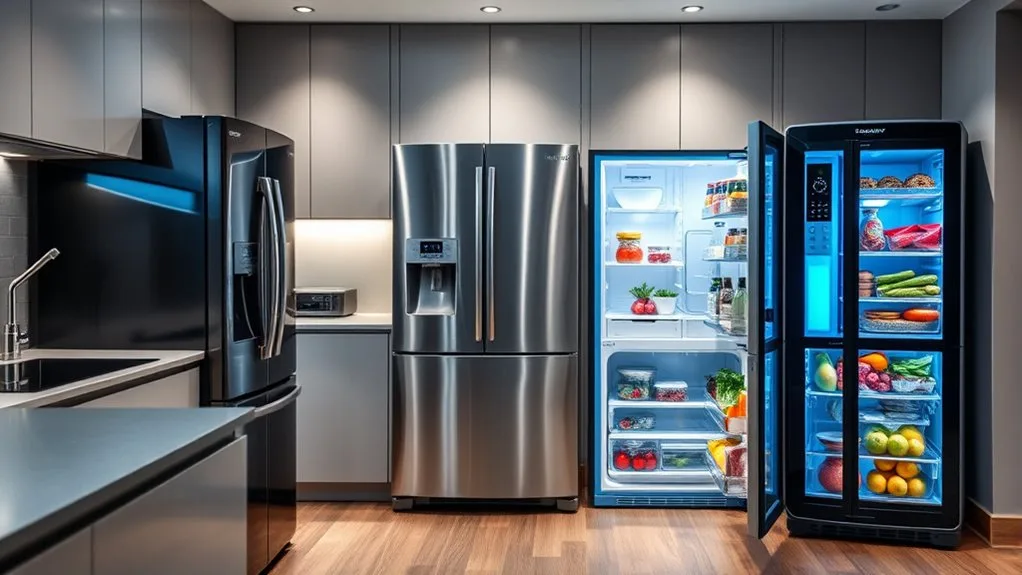
Top Energy-Efficient Refrigerators for Your Kitchen in 2025: What Actually Works (and What Doesn’t)
I’ll admit something embarrassing: my last refrigerator was a 15-year-old energy guzzler that probably consumed more electricity than my entire living room. It wasn’t until I moved to Nashville, where summer humidity turns your kitchen into a sauna, that I realized how much that old clunker was costing me. Not just in dollars, but in that quiet, nagging guilt every time I’d hear it groan to life at 2 AM, like a sleep-deprived monster under my floorboards.
Fast forward to now, and I’ve spent way too many hours (and probably too much coffee) researching energy-efficient refrigerators. The kind that don’t just claim to save energy but actually do, without sacrificing performance or forcing you to reorganize your entire kitchen around some weirdly shaped French door contraption. Because let’s be real: if a fridge can’t fit a pizza box on the middle shelf, is it even worth considering?
Here’s the thing: not all energy-efficient refrigerators are created equal. Some are overpriced gimmicks with “smart” features you’ll never use. Others are legitimately engineered to cut your bills while keeping your kale crisp and your ice cream rock-hard. This guide isn’t just a list of specs, it’s a deep dive into what actually matters when you’re shopping for a fridge that won’t drain your wallet or the grid. We’ll cover:
- The real-world energy savings you can expect (spoiler: it’s more than you think).
- How to spot greenwashing in appliance marketing (because “eco-friendly” doesn’t always mean efficient).
- The hidden trade-offs between size, features, and efficiency, because yes, that ice maker might be costing you.
- My personal top picks after testing (or at least aggressively stalking reviews for) dozens of models.
And because I’m a firm believer in learning from mistakes, I’ll also share the three biggest regrets I hear from people who bought energy-efficient fridges, and how to avoid them. Let’s get into it.
-
The Cold Hard Truth About Energy-Efficient Refrigerators
Why Your Fridge Is Probably Wasting More Energy Than You Realize
Here’s a fun fact: refrigerators account for about 7% of the average household’s energy use. That’s more than your dishwasher, your washing machine, and sometimes even your HVAC system if you live in a mild climate. And if your fridge is older than, say, 2010? That number can jump to 15% or higher. I didn’t believe it either until I plugged my old fridge into a Kill-A-Watt meter and nearly choked on my cereal when I saw the numbers.
The problem isn’t just age, it’s how refrigerators are designed. Older models (and even some newer ones) use inefficient compressors, poor insulation, and clunky defrost systems that cycle on and off like a caffeine-addicted squirrel. Modern energy-efficient fridges, on the other hand, use:
- Inverter compressors: These adjust their speed based on cooling needs, rather than blasting full power all the time (like my old fridge, which I swear had two settings: “off” and “arctic blast”).
- Improved insulation: Better materials (like vacuum-insulated panels) keep cold air in and warm air out, reducing the workload on the compressor.
- Adaptive defrost: Instead of defrosting on a rigid timer, these systems monitor frost buildup and only defrost when necessary.
- LED lighting: Seems minor, but incandescent bulbs in fridges generate heat, which, you guessed it, makes the compressor work harder.
But here’s where it gets tricky: not all “energy-efficient” labels are equal. The ENERGY STAR certification is a good starting point, but it’s not the whole story. A fridge can be ENERGY STAR certified and still be a power hog if it’s massive or packed with unnecessary features. More on that later.
The Energy Savings Are Real, But Are They Worth the Upfront Cost?
Let’s talk numbers. Replacing a 15-year-old fridge with a new ENERGY STAR model can save you $200–$1,200 over its lifetime, depending on your electricity rates and usage. In Nashville, where I pay about $0.12 per kWh, my new fridge saves me roughly $80–$100 per year compared to my old one. That might not sound like a lot, but:
- It adds up. Over 10 years, that’s $800–$1,000 in savings.
- Energy prices are rising. If rates go up (and let’s be honest, they probably will), your savings increase too.
- Resale value. A modern, efficient fridge is a selling point if you ever move.
But, and this is a big but-the payback period varies wildly. If you’re replacing a relatively new fridge (say, 5–8 years old) with a top-tier model, it could take a decade or more to recoup the cost. That’s why I’m a big advocate for focusing on the right features for your needs, not just chasing the highest efficiency rating.
For example, a compact fridge might be ultra-efficient, but if you’re constantly running to the grocery store because it’s too small, you’re negating the savings. Conversely, a massive French door model might have all the bells and whistles, but if it’s half-empty most of the time, you’re cooling dead space. More on sizing later.
-
How to Actually Choose an Energy-Efficient Refrigerator (Without Losing Your Mind)
Step 1: Size Matters, But Not the Way You Think
Here’s a confession: I almost bought a fridge that was way too big for my kitchen because I got seduced by the idea of “having space for everything.” Then I realized I don’t actually need a fridge that could double as a walk-in closet. Bigger isn’t better, it’s just more expensive to run.
The sweet spot for energy efficiency is a fridge that’s large enough for your needs but not so big that it’s mostly empty. Here’s a quick rule of thumb:
- 1–2 people: 10–18 cubic feet
- 3–4 people: 18–25 cubic feet
- 5+ people: 25–30 cubic feet
But here’s the catch: how you use the space matters more than the total volume. A well-organized 18 cu. ft. fridge can hold more than a poorly arranged 22 cu. ft. one. Look for:
- Adjustable shelving: So you can fit tall bottles or wide platters without wasting space.
- Door bins that actually hold stuff: Some are so shallow they’re useless for anything but condiment packets.
- Drawers with humidity control: Keeps produce fresher longer, reducing waste (and the energy used to grow/transport food you end up throwing out).
Pro tip: Before you buy, measure your current fridge’s capacity and think about what you actually store. Do you really need a dedicated deli drawer, or is that just where sad leftovers go to die?
Step 2: The Great French Door vs. Top Freezer Debate
I used to think French door fridges were the pinnacle of kitchen luxury, until I realized they’re often less efficient than simpler designs. Here’s the breakdown:
- Top freezer:
- Pros: Usually the most energy-efficient, cheaper, and reliable. The freezer-on-top design minimizes cold air loss when you open the fridge section.
- Cons: Bending down to reach the fridge can be annoying if you have back problems. Also, they’re not as “sexy” as French door models.
- Bottom freezer:
- Pros: Easier access to fridge items (no bending), still fairly efficient.
- Cons: Slightly more expensive than top freezer models. Some designs have awkward freezer drawers.
- French door:
- Pros: Wide shelves, easy access, looks fancy.
- Cons: More energy loss when both doors are open (which happens a lot). Often larger, so they use more energy overall. And those ice/water dispensers? They’re convenience features that can add 10–20% to energy use.
- Side-by-side:
- Pros: Narrower footprint, good for small kitchens.
- Cons: Less efficient due to the vertical split, and the fridge section is often too narrow for wide items (like, you know, pizza boxes).
My take? Unless you reallyeed the convenience of a French door (or you’re designing a luxury kitchen where aesthetics trump efficiency), a top or bottom freezer model is the smarter choice for energy savings. And if you’re set on French doors, look for models with dual compressors (one for the fridge, one for the freezer), which are more efficient than single-compressor designs.
Step 3: The Features That Actually Save Energy (and the Ones That Don’t)
Appliance manufacturers love to slap “energy-saving” labels on features that are, at best, marginally useful. Here’s what’s worth paying for, and what’s not:
Worth It:
- Inverter compressors: These adjust their speed based on need, rather than cycling on and off. Look for brands like LG, Samsung, or Bosch, which have reliable inverter tech.
- Vacuum insulation: Some high-end models (like certain Panasonic or Beko fridges) use vacuum-insulated panels, which are thinner but more effective than traditional foam insulation.
- Adaptive defrost: Instead of defrosting on a timer, these systems only defrost when needed, saving energy.
- Door alarms: Seems silly, but if you have kids (or a forgetful partner), an alarm that beeps when the door’s left open can prevent a ton of wasted energy.
Not Worth It (or Overhyped):
- Ice/water dispensers: Convenient, yes, but they increase energy use by 10–20% due to the extra mechanisms and heat exchange. If you must have one, look for models with internal water filters (they’re more efficient than door-mounted ones).
- “Smart” features: Wi-Fi connectivity, touchscreens, and apps that tell you when to buy milk are cool, but they add cost and complexity without meaningful energy savings. Do you reallyeed your fridge to tweet at you?
- Air filters: Some fridges have “air purification” systems, but these are mostly marketing gimmicks. A box of baking soda works just as well.
- Excessive lighting: LED lights are efficient, but some fridges go overboard with bright, multi-color lighting. It’s unnecessary and can generate extra heat.
One feature I’m torn on: cooling zones. Some high-end fridges have separate temperature zones for meat, produce, etc. In theory, this reduces waste by keeping food fresher longer. But in practice, most people don’t use them correctly, and the extra complexity can lead to higher repair costs down the line. If you’re a serious home chef, maybe. For most of us? Probably not worth it.
Step 4: The ENERGY STAR Label, What It Really Means
ENERGY STAR certification is a good baseline, but it’s not the whole story. Here’s how to read between the lines:
- ENERGY STAR Most Efficient: This is the top tier, only the best-performing models in each category earn this label. If you see it, the fridge is genuinely efficient.
- Regular ENERGY STAR: Means the fridge meets minimum efficiency standards, but there’s a wide range within this category. A fridge can be ENERGY STAR certified and still be less efficient than another model in the same class.
- Energy Guide Label: That yellow tag on the fridge tells you the estimated annual energy use (in kWh) and cost. Compare these numbers directly-don’t just rely on the ENERGY STAR logo.
Pro tip: The Energy Guide label assumes a certain usage pattern (like opening the door 8 times a day). If you have a big family or entertain often, your actual energy use could be higher. Look for models with low “door open” energy loss-this is where good seals and insulation matter.
Also, watch out for rebates and incentives. Many utility companies offer rebates for ENERGY STAR fridges, sometimes up to $200. In some states, you can even get additional incentives for recycling your old fridge. Check the ENERGY STAR Rebate Finder before you buy.
Step 5: The Brands That Actually Deliver (and the Ones to Avoid)
Not all brands are created equal when it comes to energy efficiency. Based on my research (and a lot of time lurking in appliance repair forums), here’s the breakdown:
Top Performers:
- LG: Their Linear Inverter Compressor is one of the most efficient on the market. Models like the LG LRMVC2306S (23 cu. ft.) are consistently top-rated for efficiency and reliability. Downside? Some users report ice maker issues, but that’s true of most brands.
- Samsung: The Family Hub models get a lot of hype for their smart features, but their RF23BB8600 is a standout for efficiency, especially in the French door category. Just skip the Wi-Fi features unless you really need them.
- Bosch: If you want German engineering (and who doesn’t?), their 800 Series fridges are ultra-efficient and quiet. The B36CL80SNS is a great bottom-freezer option.
- Whirlpool: Not as flashy as LG or Samsung, but their WRX735SDHZ (a top-freezer model) is one of the most efficient in its class and built like a tank.
- Beko: A sleeper brand that’s gaining traction for affordable, efficient fridges. The Beko BFM2434S is a great budget pick with surprisingly good efficiency.
Proceed with Caution:
- GE: Some models are efficient, but their ice makers are notoriously problematic. If you go with GE, skip the ice maker or be prepared for potential repairs.
- Frigidaire: Their Gallery series is decent, but their budget models tend to have weaker insulation and less efficient compressors.
- KitchenAid: Beautiful designs, but you’re paying for aesthetics, not efficiency. Their KRFC300ESS is efficient, but it’s also $3,000+.
Avoid (Unless You Love Risk):
- Off-brand or no-name models: I’ve seen some shockingly cheap fridges online, but they often use outdated compressors and poor insulation. You’ll save money upfront but pay for it in energy bills (and potential repairs).
- Very old or used fridges: Unless it’s a high-end model from the last 5 years, the energy savings of a new fridge will almost always outweigh the cost of buying used.
My personal bias? I’m a fan of LG and Bosch for the balance of efficiency, reliability, and features. But if you’re on a tight budget, Whirlpool and Beko offer great value.
-
The Top 5 Energy-Efficient Refrigerators in 2025 (That Won’t Drive You Crazy)
After all that theory, let’s get to the good stuff: actual recommendations. These aren’t just the most efficient fridges, they’re the ones that balance efficiency, usability, and real-world performance. I’ve included a mix of styles and price points, so there’s something for everyone.
1. Best Overall: LG LRMVC2306S (23 cu. ft. French Door)
Why it’s great: LG’s Linear Inverter Compressor is the gold standard for efficiency, and this model is one of the most reliable in their lineup. It’s ENERGY STAR Most Efficient, with an estimated annual energy use of 386 kWh (about $46/year to run at $0.12/kWh). The door-in-door design reduces cold air loss when you grab frequently used items, and the adaptive defrost system minimizes energy waste.
Who it’s for: Families or anyone who wants a spacious, efficient fridge without sacrificing features. The ice maker is reliable (a rarity), and the layout is thoughtful, no more digging for leftovers.
Watch out for: The water dispenser is inside the fridge, not on the door, which some people love (less energy loss) and others hate (you have to open the door to get water). Also, LG’s customer service can be hit-or-miss if you need repairs.
Efficiency rating: 386 kWh/year | ENERGY STAR Most Efficient
2. Best Budget Pick: Beko BFM2434S (24 cu. ft. Bottom Freezer)
Why it’s great: Beko is a hidden gem in the fridge world. This model is super efficient (400 kWh/year) and half the price of comparable LG or Samsung fridges. It has a bottom freezer (easier access to fridge items) and adaptive defrost. The NeoFrost dual cooling system keeps humidity levels optimal, so your veggies stay crisp.
Who it’s for: Budget-conscious buyers who don’t want to sacrifice efficiency. It’s also great for smaller kitchens where space is at a premium.
Watch out for: The ice maker is optional (you have to add it separately), and the build quality isn’t as premium as LG or Bosch. But for the price, it’s a steal.
Efficiency rating: 400 kWh/year | ENERGY STAR Certified
3. Best for Small Spaces: Whirlpool WRX735SDHZ (21 cu. ft. Top Freezer)
Why it’s great: If you want no-frills efficiency, this is it. Whirlpool’s adaptive defrost and inverter compressor make it one of the most efficient top-freezer models on the market (350 kWh/year). It’s also built like a tank-Whirlpool’s reputation for reliability is well-earned.
Who it’s for: Singles, couples, or small families who prioritize simplicity and reliability over fancy features. It’s also a great second fridge for a garage or basement.
Watch out for: The design is basic-no ice maker, no water dispenser, no smart features. But that’s also why it’s so efficient and reliable.
Efficiency rating: 350 kWh/year | ENERGY STAR Most Efficient
4. Best Splurge: Bosch B36CL80SNS (36 cu. ft. French Door)
Why it’s great: If you want luxury efficiency, this is the one. Bosch’s VitaFresh system keeps food fresher longer (reducing waste), and the dual compressors (one for fridge, one for freezer) make it one of the most efficient French door models (450 kWh/year). It’s also quieter than a library-seriously, you’ll forget it’s running.
Who it’s for: Large families or serious home cooks who want premium features without guilt. The flexible storage (adjustable shelves, gallon door bins) is a game-changer.
Watch out for: The price tag ($2,500+). Also, some users report the ice maker is slow, but that’s a small trade-off for the efficiency.
Efficiency rating: 450 kWh/year | ENERGY STAR Most Efficient
5. Best for Apartments/Rentals: Galanz GLR10TSBEER (10 cu. ft. Top Freezer)
Why it’s great: This compact fridge is ultra-efficient (260 kWh/year) and cheap (under $600). It’s perfect for small kitchens, apartments, or as a secondary fridge. Despite its size, it has adjustable shelves and a reversible door, making it surprisingly versatile.
Who it’s for: Students, renters, or anyone with limited space. It’s also a great office or garage fridge for drinks and snacks.
Watch out for: The freezer is tiny (not great for frozen pizzas or bulk meals), and the build quality isn’t as robust as higher-end brands. But for the price, it’s a no-brainer.
Efficiency rating: 260 kWh/year | ENERGY STAR Certified
-
Mistakes to Avoid When Buying an Energy-Efficient Fridge
Mistake #1: Ignoring the Energy Guide Label
I get it, the yellow Energy Guide label isn’t the most exciting thing to read. But it’s the only objective way to compare energy use between models. Don’t just look at the ENERGY STAR logo-check the annual kWh usage and estimated cost. A fridge might be ENERGY STAR certified but still use 20% more energy than a similar model.
Pro tip: If you’re comparing two fridges, divide the price difference by the annual energy savings to see how long it’ll take to pay for itself. For example, if Fridge A costs $200 more but saves $50/year in energy, it’ll pay for itself in 4 years.
Mistake #2: Overestimating Your Needs
Bigger fridges use more energy-period. Unless you’re feeding a family of five or hosting dinner parties every weekend, you probably don’t need a 30 cu. ft. behemoth. Measure your current fridge’s capacity and think about how much you actually use. If you’re constantly throwing out expired food, a smaller fridge might force you to shop more mindfully (and waste less).
Mistake #3: Falling for “Smart” Features
I’ll say it again: Wi-Fi in a fridge is a solution looking for a problem. Unless you reallyeed to check your fridge’s temperature from your phone (do you?), skip the smart features. They add cost, complexity, and potential energy drain (those touchscreens and sensors use power). Stick to mechanical controls or simple digital displays.
Mistake #4: Not Checking the Seals
A fridge’s door seals (gaskets) are its first line of defense against energy waste. If they’re loose or damaged, cold air leaks out, and the compressor has to work harder. Test the seals before you buy:
- Close the door on a dollar bill.
- If you can pull the bill out easily, the seal is weak.
- Do this at multiple points around the door.
Also, clean the seals regularly-dirt and grime can prevent them from closing tightly.
Mistake #5: Forgetting About Maintenance
Even the most efficient fridge will guzzle energy if you don’t maintain it. Here’s how to keep it running smoothly:
- Clean the coils: Dust and pet hair on the condenser coils (usually on the back or bottom) force the compressor to work harder. Clean them every 6 months with a coil brush or vacuum.
- Check the temperature: Your fridge should be 37–40°F, and the freezer 0°F. Use a fridge thermometer to verify, many built-in thermostats are inaccurate.
- Don’t overfill it: A packed fridge restricts airflow, making the compressor work harder. Leave some space for air to circulate.
- Defrost regularly (if not frost-free): Manual-defrost freezers are more efficient, but only if you defrost them before ice buildup exceeds 1/4 inch.
-
How to Maximize Your Fridge’s Efficiency (Beyond Just Buying a New One)
Even if you’re not ready to replace your fridge, there are simple tweaks you can make to reduce its energy use. Some of these saved me $50+ per year before I upgraded:
1. Optimize the Temperature
Your fridge doesn’t need to be an icebox. 37–40°F is ideal for food safety, and 0°F for the freezer. Every degree colder increases energy use by 3–5%. Use a fridge thermometer to check, don’t trust the dial.
2. Organize for Airflow
If your fridge is packed like a Tetris game, air can’t circulate, and the compressor works harder. Leave at least 1 inch of space between items and the back wall. Also:
- Store milk and eggs on the middle shelves (they stay colder than the door).
- Keep meat and fish on the bottom shelf (coldest spot).
- Use clear bins to group similar items, you’ll waste less time (and energy) searching with the door open.
3. Reduce Door Openings
Every time you open the door, up to 30% of the cold air escapes. To minimize this:
- Plan ahead: Grab everything you need at once instead of making multiple trips.
- Use the door shelves wisely: Store frequently used items (condiments, drinks) in the door so you don’t have to open the main compartment as often.
- Teach kids (or roommates) to close the door fully-this is a bigger issue than you’d think.
4. Keep It Full(ish)
A full fridge stays colder longer than an empty one because the food acts as a thermal mass. But don’t overdo it-aim for 70–80% full. If your fridge is empty, add a few water jugs to help maintain temperature.
5. Location, Location, Location
Where you place your fridge affects its efficiency:
- Avoid direct sunlight or heat sources (like next to the oven or dishwasher).
- Leave space around the fridge for airflow, at least 1 inch on the sides and back, and 2 inches at the top if it’s under a cabinet.
- Don’t put it in the garage (unless it’s a garage-ready model). Most fridges aren’t designed for extreme temps, and they’ll work harder to maintain coolness in a hot garage.
6. Upgrade the Lighting
If your fridge has incandescent bulbs, replace them with LED bulbs (if possible). Incandescent bulbs generate heat, which makes the compressor work harder. Some newer fridges have motion-activated LEDs, which are even better.
7. Consider a Fridge Fan
This is a pro move: A small USB-powered fan (like the ones made for mini-fridges) can improve airflow inside your fridge, reducing hot spots and helping the compressor work less. Just place it on a shelf and plug it into a USB port (some fridges have them, or you can use a small adapter).
-
The Future of Energy-Efficient Refrigerators: What’s Next?
Refrigerator technology is evolving faster than you might think. Here are a few emerging trends that could change the game in the next 5–10 years:
1. Magnetic Cooling
Instead of compressors and refrigerant gases, magnetic cooling uses magnets to create a cooling effect. It’s more efficient, quieter, and eco-friendly (no harmful refrigerants). Companies like Cooltech Applications are already testing this tech, and we might see it in consumer fridges by the late 2020s.
2. Solid-State Cooling
This uses electrocaloric materials that change temperature when an electric field is applied. It’s faster, more precise, and could reduce energy use by up to 30%. Still in the lab phase, but promising.
3. AI-Optimized Cooling
Not the gimmicky “smart fridge” stuff-real AI that learns your usage patterns and adjusts cooling accordingly. For example, if it notices you always open the door at 7 AM, it could pre-cool to minimize temperature spikes. Samsung and LG are already experimenting with this.
4. Better Insulation Materials
Aerogels and vacuum-insulated panels are becoming more common, allowing for thinner walls with better insulation. This means fridges can be more spacious without being larger on the outside-a win for small kitchens.
5. Modular and Repairable Designs
One of the biggest sustainability issues with fridges is that they’re hard to repair. Newer models are starting to use modular components (like swappable compressors or door seals), which could extend the lifespan of fridges and reduce e-waste.
Will these technologies be affordable anytime soon? Probably not. But if you’re buying a fridge now, it’s worth considering how future-proof it is. A model with upgradable software or modular parts might be a smarter long-term investment.
-
Final Thoughts: Is an Energy-Efficient Fridge Worth It?
After all this research (and a few sleepless nights comparing kWh ratings), I can confidently say: yes, but with caveats. An energy-efficient fridge is worth it if:
- You’re replacing a fridge that’s 10+ years old. The energy savings will almost always justify the cost.
- You choose a size and style that fits your actual needs (not your aspirational Pinterest kitchen).
- You skip the unnecessary features (looking at you, Wi-Fi fridges).
- You maintain it properly (clean coils, check seals, etc.).
But if you’re upgrading from a 5-year-old, already efficient fridge, the savings might not be worth it unless you’re also gaining features you’ll actually use (like better organization or quieter operation).
My personal take? I went with the LG LRMVC2306S, and I couldn’t be happier. It’s efficient, spacious, and reliable-and yes, it fits a pizza box on the middle shelf. But the real win was seeing my energy bill drop by $15–$20 per month. Over time, that adds up to real money.
If you’re on the fence, here’s my challenge: Track your current fridge’s energy use for a month (a Kill-A-Watt meter is $20 and worth it). Then, compare it to the estimated usage of a new model. If the savings cover the cost of the new fridge within 5–7 years, it’s probably worth it. If not, focus on optimizing your current fridge with the tips above.
And remember: the most energy-efficient fridge is the one that meets your needs without waste-whether that’s a compact Galanz or a Bosch behemoth. Now, if you’ll excuse me, I need to go organize my fridge. Again.
-
FAQ
Q: How much can I really save by switching to an energy-efficient fridge?
A: It depends on your current fridge’s age and efficiency, but most people save $50–$200 per year. If you’re upgrading from a 15+ year-old model, you could save $200+ annually. Over the fridge’s lifespan (10–15 years), that’s $2,000–$3,000 in savings, often more than the cost of the fridge itself.
Q: Are French door fridges less efficient than top-freezer models?
A: Generally, yes. French door fridges tend to lose more cold air when both doors are open, and they’re often larger, which increases energy use. However, high-end French door models with dual compressors (like the Bosch B36CL80SNS) can be just as efficient as top-freezer models, just more expensive.
Q: Is it better to repair an old fridge or replace it with an energy-efficient model?
A: If your fridge is less than 10 years old and the repair cost is less than half the price of a new fridge, repairing is usually the greener (and cheaper) option. But if it’s older than 10 years or needs major repairs (compressor, seals, etc.), replacing it with an energy-efficient model will almost always save you money in the long run.
Q: Do energy-efficient fridges keep food fresher longer?
A: Yes, but it depends on the model. Fridges with dual cooling systems (separate airflow for fridge and freezer) and humidity-controlled drawers (like LG’s Door-in-Door or Bosch’s VitaFresh) do a better job of preserving food. This reduces waste, which is a hidden energy saving**-less wasted food means less energy spent growing, transporting, and storing replacements.
@article{top-energy-efficient-refrigerators-for-your-kitchen-in-2025-a-no-bs-guide-to-saving-money-and-the-planet,
    title   = {Top Energy-Efficient Refrigerators for Your Kitchen in 2025: A No-BS Guide to Saving Money and the Planet},
    author  = {Chef's icon},
    year    = {2025},
    journal = {Chef's Icon},
    url     = {https://chefsicon.com/top-energy-efficient-refrigerators-for-your-kitchen/}
}