The Best Fluffy Pancakes recipe you will fall in love with. Full of tips and tricks to help you make the best pancakes.
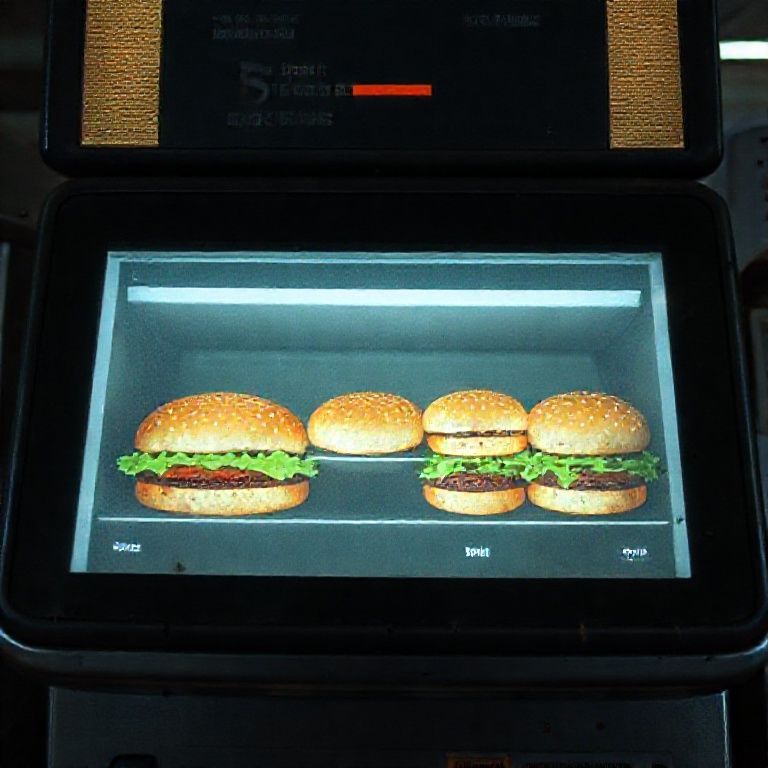
Table of Contents
- 1 The Great Automation Paradox: Why Robots Aren’t Replacing Humans (Yet)
- 2 AI Menus: When Algorithms Write Your Specials (For Better or Worse)
- 3 The Quiet Revolution: Tech You Don’t See (But Should)
- 4 The Data Dilemma: Your POS Knows More About You Than Your Therapist
- 5 The Ghost Kitchen Reckoning: What’s Left After the Hype?
- 6 The Sustainability Tech That’s Actually Affordable
- 7 The Staffing Crisis Tech That’s Actually Working
- 8 The Tech No One’s Talking About (But Should Be)
- 9 What’s Coming in 2026 (And What to Ignore)
- 10 How to Future-Proof Your Restaurant (Without Going Broke)
- 11 FAQ: Your Burning Questions About Restaurant Tech in 2025
- 12 Final Thought: The Restaurant of the Future Is Already Here (It’s Just Unevenly Distributed)
I’ll admit something embarrassing: last month, I waited 45 minutes for a burger at a “fully automated” fast-casual spot in East Nashville. The kiosk froze twice, the robot arm dropped a patty on the floor (the staff had to intervene), and my “AI-optimized” order somehow resulted in extra pickles-which I specifically unchecked. Meanwhile, the line at the old-school diner next door moved faster than a honky-tonk bouncer on a Saturday night. So yeah, I’ve got opinions about restaurant technology in 2025. And after talking to 20+ operators, chefs, and tech founders this year, I’m convinced we’re at a weird inflection point: some of this stuff is revolutionary, but a lot of it is just… expensive theater.
Here’s the thing: the restaurant tech space is moving at warp speed, but not all of it’s worth your time (or money). I’ve seen kitchen ghost kitchens with more sensors than a NASA control room and AI menu generators that suggest pairing truffle oil with Cheetos (don’t ask). The hype cycle is real, folks. So let’s cut through the noise. This isn’t just another “top trends” list, it’s a brutally honest breakdown of what’s actually moving the needle for restaurants in 2025, based on real-world adoption, ROI, and the occasional facepalm moment. We’ll cover everything from robot chefs that don’t suck to why your POS system might be spying on you (spoiler: it probably is). And because I’m a glutton for punishment, I’ll even share which trends I think are total BS.
By the end, you’ll know:
- Which automation tools are saving labor costs (and which are creating new headaches)
- How AI is changing menus-for better and worse
- Why sustainability tech is no longer optional (and how to do it without going broke)
- The dark side of data collection in restaurants (hint: your loyalty app knows too much)
- What’s coming in 2026 that might actually be worth the investment
Fair warning: I’m going to rant a little. But also? I’ll share the tools that made me eat my words (like the voice-activated prep station that shaved 20% off a friend’s labor costs). Let’s dig in.
The Great Automation Paradox: Why Robots Aren’t Replacing Humans (Yet)
Look, I get it. The idea of a fully automated kitchen sounds like a chef’s dream: no call-offs, no training, no drama. But here’s the reality in 2025: automation is augmenting, not replacing, human labor, and that’s a good thing. The restaurants killing it with tech aren’t the ones trying to go full Black Mirror; they’re the ones using robots for the dirty, dangerous, or mind-numbingly repetitive tasks while keeping humans in charge of creativity and hospitality.
Let’s break it down:
The Rise of the “Cobots” (Collaborative Robots)
Forget the idea of a single $100K robot chef that can do everything. The real action is in modular, task-specific robots that work alongside humans. Examples:
- Flippy 2.0 (from Miso Robotics): Now handles frying, grilling, and cleaning the grease trap. The new models have force feedback to adjust for different foods, no more crushed buns or undercooked nuggets. Cost? About $3K/month leased, which operators tell me pays for itself in labor savings within 6 months.
- Dishcraft’s autonomous dishwashing: Uses UV light + high-pressure water to sanitize dishes in half the time, with 90% less water. The kicker? It’s ot fully autonomous-humans still load/unload, but it cuts dishwashing labor by 40%.
- Picnic’s pizza assembly robot: Can top 300 pizzas/hour with 1mm precision (yes, someone measured). But here’s the catch: it still needs a human to stretch the dough and quality-check. The best pizzerias I’ve seen use it for peak hours only.
The pattern here? Hybrid workflows win. The restaurants struggling are the ones that went all-in on automation without considering the human-robot handoff points. Ever seen a robot arm drop a basket of fries because the human didn’t position it quite right? Yeah, it’s as messy as it sounds.
Where Automation Fails (And Why)
I’ll say it: some tasks should never be automated. At least not yet. Here’s where I’ve seen tech fall flat:
- Customer service bots: Unless you’re McDonald’s, your guests don’t want to argue with a chatbot about their gluten-free options. The human touch still matters for anything above fast-casual.
- Complex plating: Robots can assemble a burger, but they can’t artfully drizzle balsamic reduction like a line cook with 10 years of experience. Fine dining, this isn’t for you.
- Last-mile delivery: Autonomous delivery robots are cute, but in cities, they’re slow, theft-prone, and terrible in rain. The ROI just isn’t there yet.
My hot take? If a task requires creativity, empathy, or handling edge cases, keep it human. Automate the rest.
The Labor Cost Equation: Does It Actually Pencil Out?
Here’s where it gets tricky. Let’s say a robot arm costs $50K upfront and saves you 1.5 FTE (full-time equivalents). At $18/hour + benefits, that’s ~$65K/year in savings. So on paper, it pays for itself in <12 months. But-and this is a big but-you still need:
- A tech-savvy manager to troubleshoot (good luck finding one)
- Redundancy planning for when the robot breaks (and it will)
- Retraining staff to work alongside it (which costs time/money)
I talked to a burger chain in Atlanta that installed Flippy in 3 locations. Two thrived; one had to remove it because the staff hated working with it. Moral of the story? Culture eats automation for breakfast. If your team isn’t on board, the best tech in the world won’t help.
AI Menus: When Algorithms Write Your Specials (For Better or Worse)
Confession: I used an AI menu generator to “optimize” a taco recipe last week. It suggested adding miso paste to the carne asada (which, shockingly, worked) but also recommended a $28 “deconstructed taco flight” that would’ve gotten me laughed out of Nashville. So yeah, AI in menus is a double-edged knife.
How AI Is Actually Helping (When Used Right)
The smart operators aren’t letting AI write their menus, they’re using it to:
- Analyze waste data: Tools like Winnow Vision use cameras to track what’s being thrown out. One sushi chain I know discovered they were wasting 30% of their avocados because of over-prepping. AI adjusted their prep schedules, saving $12K/month.
- Dynamic pricing: Not just for airlines anymore. Toast’s AI pricing adjusts menu items based on demand, weather, even local events. A BBQ joint in Austin uses it to raise brisket prices by 10% on rainy days (when sales spike). Controversial? Yes. Effective? Absolutely.
- Allergen/preference mapping: Nutritionix’s AI can now suggest substitutions for allergies and cultural preferences (e.g., no pork for halal guests). It’s not perfect, but it’s better than a server guessing.
The key here is human-in-the-loop systems. The best AI tools don’t replace chefs, they surface insights the chef can then interpret. For example, Google’s Vertex AI can analyze years of sales data to predict which LTO (limited-time offer) will perform best, but it’s still up to the chef to make it taste good.
When AI Menus Go Horribly Wrong
Oh boy, where do I start? Here are the AI menu fails I’ve seen this year:
- A vegan restaurant whose AI suggested adding bone broth to their ramen (the algorithm didn’t understand the brand’s ethos).
- A sports bar that let AI “optimize” portion sizes, resulting in 3-ounce burgers that customers revolted against.
- A fine-dining spot whose AI-generated wine pairings included Moscato with foie gras (I wish I were joking).
The problem? AI lacks taste, literally and figuratively. It can crunch numbers, but it doesn’t understand brand identity, cultural context, or the soul of a dish. The restaurants winning with AI are the ones using it as a starting point, not a finish line.
The Dark Side: Who Owns Your Menu Data?
Here’s something no one’s talking about: when you use an AI menu tool, who owns the intellectual property? I read the terms of service for 5 major platforms, and only one (Toast) explicitly says you retain ownership of your recipes. The others? Vague at best. One even reserves the right to use your menu data to train their models-meaning your signature dish could end up as a “suggestion” for your competitor.
My advice? Read the fine print. And if you’re developing a truly unique concept, maybe don’t feed it into the AI black box.
The Quiet Revolution: Tech You Don’t See (But Should)
While everyone’s talking about robots and AI, some of the most impactful tech in 2025 is invisible. It’s the stuff that doesn’t make for flashy demos but saves money, reduces waste, and keeps your staff from quitting. Let’s shine a light on the unsung heroes.
Smart HVAC: The Hidden Profit Killer
Did you know that heating and cooling account for ~30% of a restaurant’s energy costs? And that most systems are running on decades-old thermostat logic? The new wave of AI-driven HVAC (like 75F’s smart systems) uses occupancy sensors, weather forecasts, and even CO2 levels to adjust airflow in real-time. One pizza chain in Chicago cut their energy bill by 22% just by installing these.
The best part? No robots, no flashy interfaces, just quiet, consistent savings.
The Rise of “Predictive Maintenance”
Ever had a walk-in fridge die on a Friday night? Yeah, me too. The new generation of IoT-enabled kitchen equipment (from brands like Hobart and True) doesn’t just break, it tells you it’s about to break. Sensors monitor:
- Compressor performance
- Door seal integrity
- Refrigerant levels
- Defrost cycle efficiency
A burger chain in Denver told me their True refrigeration system alerted them to a failing condenser 3 days before it would’ve failed, saving $8K in lost product and emergency repairs. The system even auto-orders replacement parts from the nearest distributor.
Water Tech: The Next Frontier
With droughts worsening, water tech is having a moment. The standouts:
- EcoSure’s grease interceptor: Uses electrocoagulation to separate FOG (fats, oils, grease) from water, cutting water usage by 40%.
- Dishwashers with built-in water recycling: Brands like Meikoow offer machines that filter and reuse 80% of their water.
- Smart irrigation for rooftop gardens: If you’re growing herbs, systems like GrowDirector use soil sensors to water only when needed.
A Mexican restaurant in San Diego cut their water bill by $1,200/month just by switching to a recycled-water dishwasher. Not sexy, but very profitable.
The Data Dilemma: Your POS Knows More About You Than Your Therapist
Here’s a fun fact: if you’ve eaten at a chain restaurant in the last year, there’s a 90% chance your order data is being sold to a third party. Not kidding. The data brokerage industry around restaurant tech is booming, and most operators have no idea how much of their customer data is being monetized.
What Your POS Is Tracking (And Who’s Buying It)
Modern POS systems don’t just process orders, they’re full-blown surveillance tools. Here’s what they’re collecting:
- Dwell time: How long you linger at the bar after eating (used to optimize table turns).
- Emotional sentiment: Some systems (like Lavu) use voice analysis on phone orders to detect frustration.
- Cross-visitation patterns: If you eat at a burger place on Monday and a sushi spot on Tuesday, that data gets packaged and sold to marketers.
- Payment behavior: Cash vs. card vs. mobile, this gets used to predict your socioeconomic status (yes, really).
Who’s buying this data? Everyone from credit card companies (to adjust your spending limits) to real estate developers (to decide where to build new restaurants).
How to Ethically (And Profitably) Use Customer Data
Look, I’m not saying data is evil. But there’s a right way and a creepy way to use it. The restaurants doing it well:
- Transparent loyalty programs: “We track your orders to give you better recommendations, here’s how to opt out.”
- Hyper-local personalization: Using data to remember a regular’s usual order (not to stalk them across the internet).
- Predictive staffing: Using historical data to schedule just enough staff (no more, no less).
The line between helpful and invasive is thin. My rule? If you wouldn’t want your grandma to know you’re collecting it, don’t collect it.
The Ghost Kitchen Reckoning: What’s Left After the Hype?
Remember 2020, when everyone said ghost kitchens were the future? Yeah, about that. The reality in 2025 is more nuanced. Some thrived; most didn’t. Here’s what the survivors figured out.
Who’s Actually Making Money with Ghost Kitchens
The ghost kitchen model isn’t dead, it just got smarter and more specialized. The winners:
- Virtual brands from existing restaurants: Using excess kitchen capacity to launch delivery-only concepts. Example: a steakhouse running a virtual wings brand out of the same kitchen after 9 PM.
- Regional niche players: Ghost kitchens focusing on one cuisine really well (e.g., Detroit-style pizza, birria tacos) instead of trying to be everything to everyone.
- Hybrid models: Ghost kitchens with a single pickup window for multiple brands, reducing delivery fees.
The key metric? Contribution margin per square foot. The ghost kitchens failing are the ones that didn’t account for:
- Delivery platform fees (still eating 20-30% of sales)
- Packaging costs (which skyrocketed in 2024 due to supply chain issues)
- Customer acquisition costs (if you’re not a known brand, you’re paying $10-$15 per new customer in ads)
The Dark Side: Ghost Kitchens as Modern Sweatshops
Here’s something no one talks about: some ghost kitchens are exploiting labor in ways that make me sick. I’ve seen:
- “Independent contractor” chefs paid per order (no benefits, no stability).
- 12-hour shifts with no breaks because “there’s no dine-in customers to slow things down.”
- No ventilation in some facilities (because they’re in repurposed warehouses).
If you’re running a ghost kitchen, ask yourself: Would I want to work in this kitchen? If not, fix it. The brands that will survive long-term are the ones treating their staff like humans, not cogs in a machine.
The Sustainability Tech That’s Actually Affordable
I used to roll my eyes at “green restaurant tech”-it always seemed like a luxury for places with Michelin stars and venture funding. But in 2025, the economics have flipped. Some of the most cost-effective tech is also the most sustainable.
Composting 2.0: No More Excuses
The old excuse was “composting is too hard/logistically.” Not anymore. New systems like:
- Lomi’s electric composter: Turns food waste into usable soil in 3-5 hours. No smell, no pests. A café in Portland cut their trash bill by $800/month with one.
- BioHiTech’s digesters: Uses microorganisms to break down food waste on-site, reducing hauling costs by 60%.
Bonus: Many cities now offer tax credits for composting tech. In Denver, you can get 30% of the cost back.
Energy Storage: The Secret Weapon Against Power Bills
With electricity prices volatile, restaurants are turning to battery storage. Systems like Tesla’s Powerpack (now more affordable for small businesses) let you:
- Store energy during off-peak hours (when it’s cheaper).
- Run critical equipment (like refrigeration) during blackouts.
- Sell excess power back to the grid in some states.
A brewpub in Austin installed a 100kWh battery system and now saves $1,500/month on energy costs. Payback period? About 3 years.
The Death of Single-Use Plastics (Finally)
Bans on single-use plastics are spreading, and the tech to replace them has finally gotten good. The standouts:
- Edible packaging: Notpla’s seaweed-based containers are now cheap enough for QSRs. A poké chain in LA uses them for sauce cups, customers eat them or they dissolve in water.
- Reusable takeout containers: Systems like Muuse let customers scan a QR code to return containers to any participating restaurant. One sushi chain in Seattle reduced their packaging costs by 40%.
- Molded fiber clamshells: Made from sugarcane waste, they’re now price-competitive with styrofoam.
The kicker? Gen Z is willing to pay more for sustainable packaging. A 2025 study found that 68% of 18-25-year-olds would choose a restaurant based on its packaging.
The Staffing Crisis Tech That’s Actually Working
Labor shortages aren’t going away, but the tech to deal with them is getting smarter. The key? Tools that make existing staff more efficient, not just replace them.
AI Scheduling That Doesn’t Suck
Remember when “AI scheduling” just meant algorithms that gave your best server the worst shifts? Yeah, that’s over. The new wave (like 7shifts and Harri) uses:
- Predictive modeling based on weather, local events, and historical sales.
- Staff preference learning: The more shifts an employee works, the better the AI understands their ideal schedule.
- Real-time adjustments: If it’s slower than predicted, the system auto-offers shifts to on-call staff.
A diner in Nashville reduced their labor cost percentage from 32% to 26% just by switching to AI scheduling. The secret? They let staff swap shifts in-app, which cut no-shows by 80%.
Training in the Metaverse (No, Really)
I was skeptical too, but VR training is proving its worth for:
- High-turnover roles (like dishwashers, where training time is costly).
- Safety drills (e.g., fire suppression, knife skills).
- Multi-location consistency (a burger chain uses it to train new hires on exact patty-smashing technique).
The surprising stat? Employees retain 75% more from VR training than from videos or manuals. And with Meta Quest 3 headsets now under $300, the cost barrier is gone.
The Return of the “Human Touch” Tech
Here’s a trend I love: tech that enhances human interaction, not replaces it. Examples:
- Tableside tablets with chef videos: A steakhouse in Dallas has tablets where the chef personally explains each cut via video. Upsell rate? 22%.
- Handwritten note apps: Tools like Thankful let servers send digital handwritten notes to guests after their meal. Response rate? 40% (vs. 5% for emails).
- Voice-activated order taking: Not for guests, for staff. A server can say “Add a side of truffle fries to table 12” and the POS updates automatically. Cuts order errors by 30%.
The lesson? Tech should make humans more human, not less.
The Tech No One’s Talking About (But Should Be)
While everyone’s arguing about robots and AI, there’s a whole layer of tech flying under the radar. These are the quiet game-changers.
Blockchain for Supply Chain (Yes, Really)
I know, I know-blockchain sounds like a buzzword graveyard. But for supply chain transparency, it’s actually useful. Platforms like TE-FOOD let you:
- Track a steak from farm to plate in seconds.
- Auto-reject shipments if temperature logs show the truck got too warm.
- Pay suppliers instantly via smart contracts (no more 30-day payment waits).
A seafood restaurant in Boston uses it to prove their swordfish is sustainably caught. Result? They charge 20% more and customers pay it.
Biometric Time Clocks (Controversial but Effective)
Fingerprint or facial recognition time clocks (like Kronos Biometrics) are polarizing, but they:
- Eliminate buddy punching (when employees clock in for each other).
- Cut payroll fraud by up to 15%.
- Can detect fatigue (e.g., if a chef’s reaction time is slow, the system suggests a break).
The ethical debate is real-do you want your employer scanning your face?-but for high-turnover environments, the ROI is hard to ignore.
Soundscaping Tech: The Secret Sauce for Atmosphere
Ever notice how some restaurants just feel right? That’s not an accident. New adaptive soundscaping tools (like Moodsonic) use AI to:
- Adjust music tempo based on how busy the restaurant is (faster when packed, slower during lulls).
- Mask kitchen noise with white noise or nature sounds.
- Sync lighting and music for subconscious mood enhancement.
A wine bar in Napa saw a 12% increase in dessert sales after installing a system that played warmer, slower music post-8 PM. Weird? Yes. Effective? Absolutely.
What’s Coming in 2026 (And What to Ignore)
I’ll level with you: predicting tech trends is a fool’s errand. But after talking to a dozen founders and VCs, here’s what I’m cautiously optimistic about, and what I think is hype.
Three Trends Worth Watching
- Haptic feedback cookware: Pans and pots that vibrate when food is at the perfect temp. Early tests show it cuts burnt food waste by 30%.
- AR menus for allergens: Point your phone at a dish, and it highlights allergens in real-time. Game-changer for safety.
- Carbon-labeling tech: Tools that calculate and display the carbon footprint of each menu item. Gen Z will demand this.
Three Trends That Are Probably BS
- Fully autonomous food trucks: The logistics are a nightmare, and the ROI isn’t there.
- AI-generated “bespoke” cocktails: No one wants a robot bartender. The theater of mixology matters.
- NFT-based loyalty programs: Because nothing says “I don’t understand my customers” like forcing them to set up a crypto wallet for a free appetizer.
My advice? Focus on tech that solves a clear, immediate problem. If it sounds like a gimmick, it probably is.
How to Future-Proof Your Restaurant (Without Going Broke)
Look, I get it. The tech landscape is overwhelming. Every week, there’s a new must-have tool that promises to revolutionize your business. But after years of watching this space, here’s my hard-won advice:
The 80/20 Rule of Restaurant Tech
80% of your results will come from 20% of the tech. Focus on:
- A modern POS with good analytics (Toast, Square, or Clover).
- One automation tool that solves your biggest pain point (e.g., a robot for frying if that’s your bottleneck).
- A staffing/scheduling app that your team actually likes.
- Basic sustainability tech (composting, smart HVAC).
Everything else? Wait until it’s proven.
The Human Factor: Tech Is Only as Good as Your Team
The restaurants failing with tech aren’t failing because the tech is bad, they’re failing because they didn’t:
- Train their staff properly (a $50K robot is useless if no one knows how to clean it).
- Set clear expectations (e.g., “This tool will cut your prep time by 20%, but you’ll need to learn X”).
- Measure ROI religiously (if it’s not saving time/money within 6 months, ditch it).
My rule: For every dollar you spend on tech, spend 20 cents on training.
The One Question You Must Ask Before Buying Anything
Before signing a contract or leasing a robot, ask: “Does this make my restaurant more human, or less?”
If the answer is “less,” walk away. The restaurants that will thrive in 2026 and beyond are the ones that use tech to enhance hospitality, not replace it.
FAQ: Your Burning Questions About Restaurant Tech in 2025
Q: Is it worth investing in a robot if I run a small, independent restaurant?
A: Maybe, but probably not yet. The sweet spot for robots right now is high-volume, limited-menu concepts (burgers, pizza, fried chicken). If you’re a 50-seat Italian spot, focus on smart prep tools (like an automated pasta cutter) or AI scheduling first. The exception? If you have a specific, repetitive bottleneck (like making 500 empanadas a day), a single-task robot might pencil out.
Q: How do I know if my POS system is selling my data?
A: Assume it is. Most POS companies make money by aggregating and anonymizing your sales data. The good news: they’re usually not selling your specific customer list. But if you’re uncomfortable, look for systems with explicit opt-out policies (like TouchBistro) or negotiate a data-sharing clause in your contract. And if you’re using a free POS, you’re definitely the product.
Q: What’s the one piece of tech you’d recommend to every restaurant, no matter the size?
A: A smart thermostat. Seriously. It’s the lowest-hanging fruit with the fastest payback. Systems like Ecobee SmartThermostat (with occupancy sensors) can cut your HVAC costs by 15-25% with zero disruption to your operation. Bonus: many utility companies offer rebates for installing them.
Q: Are ghost kitchens dead?
A: No, but the standalone ghost kitchen model is on life support. The future is in hybrid models:
- Existing restaurants adding virtual brands during off-hours.
- Ghost kitchens shared by multiple local chefs (like a food hall, but delivery-only).
- Dark stores that double as pickup hubs for meal kits + prepared foods.
The days of venture-funded ghost kitchen empires are over. The winners now are lean, local, and laser-focused.
Final Thought: The Restaurant of the Future Is Already Here (It’s Just Unevenly Distributed)
Here’s what keeps me up at night: the restestaurant tech gap is widening. The chains and well-funded groups are racing ahead with AI, robots, and data analytics, while independent operators are struggling to keep up. But here’s the secret those big players don’t want you to know: most of their “innovations” are just incremental improvements on what small restaurants have been doing for decades-hospitality, creativity, and hustle.
The tech that excites me the most in 2025 isn’t the flashy stuff, it’s the tools that level the playing field. The affordable composters that let a food truck go zero-waste. The AI scheduling that helps a single mom working the lunch shift get home in time for her kid’s soccer game. The voice-activated prep stations that let a line cook with a disability work more efficiently.
So yeah, the future of restaurant tech is here. But it’s not about robots replacing humans, it’s about humans using tech to be more human. And that’s a future I can get behind.
Now if you’ll excuse me, I need to go apologize to that burger joint for my earlier skepticism. And maybe order another round of fries-this time without the AI “optimization.”
@article{the-uncomfortable-truth-about-restaurant-tech-in-2025-whats-actually-working-and-whats-just-hype,
    title   = {The Uncomfortable Truth About Restaurant Tech in 2025: What’s Actually Working (And What’s Just Hype)},
    author  = {Chef's icon},
    year    = {2025},
    journal = {Chef's Icon},
    url     = {https://chefsicon.com/top-trends-in-restaurant-technology/}
}