The Best Fluffy Pancakes recipe you will fall in love with. Full of tips and tricks to help you make the best pancakes.
Let me paint you a picture: It’s 11:30 PM on a Tuesday, you’ve got a midterm tomorrow, and your stomach is growling louder than your roommate’s subwoofer. You open your cabinet and, oh. That $15 frying pan you bought freshman year is now a warped, nonstick-less disaster that could double as a Frisbee. Sound familiar?
Here’s the thing, I’ve been there. When I first moved to Nashville (after fleeing the Bay Area’s soul-crushing rent), I thought I could survive on takeout and a microwave. Spoiler: My bank account and my waistline disagreed. So I did what any self-respecting, ramen-nostalgic adult would do: I dove headfirst into the world of budget cookware sets for students, determined to find options that wouldn’t break the bank or my spirit. Two years, three burnt casseroles, and one very judgmental cat (hi, Luna) later, I’ve learned a thing or two.
This isn’t just another list of “cheap pans.” We’re talking about durable, functional, and actually usable cookware that’ll last you from dorm life to your first post-grad apartment, without requiring a side hustle to afford it. I’ve tested, researched, and (let’s be honest) cursed at enough pots and pans to know what’s worth your limited funds. By the end of this, you’ll know:
- What to actually look for in a student cookware set (hint: “nonstick” isn’t enough)
- The best budget-friendly sets in 2025, ranked by durability, performance, and value
- How to avoid the traps of cheap cookware (because no one needs a pan that sheds teflon like a golden retriever in summer)
- When to splurge vs. save-because yes, some things are worth the extra $10
So grab your instant noodles and let’s get into it. (And if you’re reading this in the campus library, maybe bookmark it for later, your RA will not appreciate the sound of me yelling about clad stainless steel at 2 AM.)
Why Most “Budget” Cookware Sets Are a Scam (And How to Spot the Good Ones)
First, let’s address the elephant in the room: Most “cheap” cookware is garbage. Not just “meh” garbage, like, will-actively-make-cooking-worse garbage. I once bought a $20 “10-piece set” from a big-box store, and by piece three, I realized “10 pieces” included the lid handles. The pans warped after two uses, the “nonstick” coating flaked into my eggs, and the “stainless steel” was so thin it cooled faster than my enthusiasm for adulting.
So what separates the legitimately good budget sets from the landfill-bound impostors? Here’s what to watch for:
The Nonstick Lie (And When It’s Actually Worth It)
Nonstick cookware is the siren song of broke students everywhere. “Just $19.99! No oil needed! Cleanup is a breeze!” Except when it’s not. Most ultra-cheap nonstick pans use low-quality PTFE coatings that scratch, peel, or worse, release toxic fumes if overheated (yes, even at “medium” heat on your dorm’s questionable stove).
But here’s the thing: Not all nonstick is created equal. If you’re going to go nonstick, look for:
- Ceramic-coated options (like GreenPan or Caraway’s budget lines)-they’re PTFE-free and last longer if cared for.
- Hard-anodized aluminum bases (more durable than regular aluminum).
- Oven-safe up to at least 400°F (so you can actually, y’know, cook in them).
Pro tip: If the pan feels lighter than a textbook, it’s probably too thin. Heft = heat retention = less burnt food.
Stainless Steel: The Underrated MVP
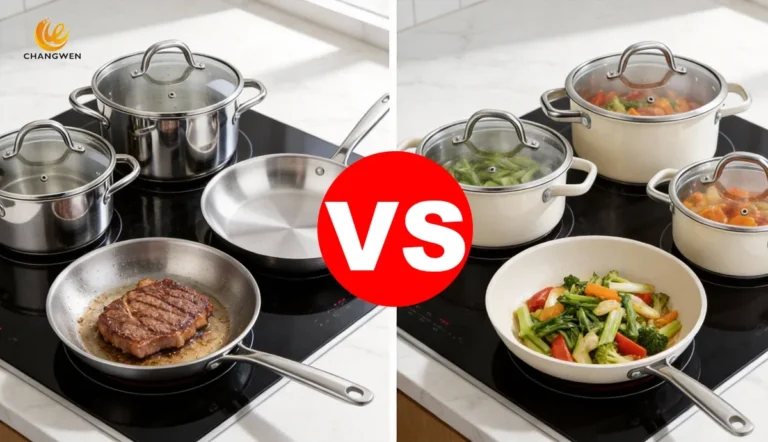
I’ll admit it, I used to side-eye stainless steel. “But Sammy,” you’re thinking, “stainless steel is for fancy chefs who know how to ‘deglaze’ things!” Wrong. Stainless steel is the ultimate student cookware because:
- It’s early indestructible (drop it, scratch it, forget to wash it for a week, it’ll survive).
- It actually improves with age (unlike nonstick, which degrades).
- You can sear, sauté, and even bake in it (one pan, infinite meals).
- It’s dishwasher-safe (because let’s be real, you’re not hand-washing anything).
The catch? It’s not naturally nonstick. But here’s the secret: Heat control and a tiny bit of oil make it work just fine. (And if you burn something, just soak it, stainless steel is forgiving like that.)
The “Set” Trap: Do You Really Need 12 Pieces?
Marketers love selling “15-piece sets” because it sounds impressive. But ask yourself: When was the last time you used a 1-quart saucepan? Most students realistically need:
- A 10-12” frying pan (for eggs, stir-fries, grilled cheese)
- A 2-3 quart saucepan (pasta, soup, ramen upgrades)
- A 5-6 quart pot (for batch cooking or that one time you attempt chili)
- Maybe a small pot if you’re a tea/rice fiend
Everything else? Filler. I’ve seen “sets” include a “steamer insert” (lol) or “mini sauté pan” (double lol). Skip the bloat, focus on quality over quantity.
Material Matters: What’s Actually in Your Pan?
Cheap cookware often cuts corners on materials. Here’s what to avoid and what to seek:
- Avoid: “Aluminum” with no specification (usually thin, warps easily).
- Seek: Hard-anodized aluminum (durable, heats evenly).
- Avoid: “Stainless steel” that’s just a thin layer over aluminum (check for “fully clad” or “encapsulated base”).
- Seek: 18/10 stainless steel (the numbers refer to chromium/nickel content, higher = better corrosion resistance).
- Avoid: Copper or “copper-core” unless you’re ready to polish it weekly (you’re not).
Random thought: Why do so many brands act like “copper” is some magical material? It’s pretty, sure, but it’s also high-maintenance and usually just a thin layer over cheaper metal. Save your money.
The Best Budget-Friendly Cookware Sets for Students in 2025 (Tested and Abused)
Alright, let’s get to the good stuff. I’ve rounded up the best cookware sets under $150 that won’t leave you crying into your instant ramen. These are ranked based on:
- Durability (will it survive a move? a roommate? a semester?)
- Performance (does it cook evenly? hold heat?)
- Value (are you paying for actual quality or just a brand name?)
- Student-Friendliness (easy to clean? lightweight? dishwasher-safe?)
I’ve also included a “Best For” label so you can skip to what fits your cooking style (or lack thereof).
1. Best Overall: Tramontina 10-Piece Stainless Steel Tri-Ply Clad Set (~$120)
If you buy one set to last you through college and beyond, make it this one. Tramontina is the unsung hero of budget cookware, they’re a Brazilian brand that’s been around forever, and their tri-ply clad stainless steel is legit. This set includes:
- 8” and 10” fry pans
- 1.5qt and 2qt saucepans with lids
- 5.5qt Dutch oven (yes, a real Dutch oven)
Why it’s great:
- Fully clad construction (aluminum core sandwiched between stainless steel) = even heating, no hot spots.
- Oven-safe to 500°F (so you can broil, bake, or pretend you’re on Chopped).
- Dishwasher-safe (though hand-washing prolongs its life).
- Lids actually fit (a rarity in budget sets).
Downsides: It’s heavier than nonstick (but that’s a good thing, it means it’s not flimsy). Also, the handles get hot, so use a potholder.
Best for: The student who wants one set to rule them all-whether you’re searing steak (lol, as if) or just making mac and cheese for the third time this week.
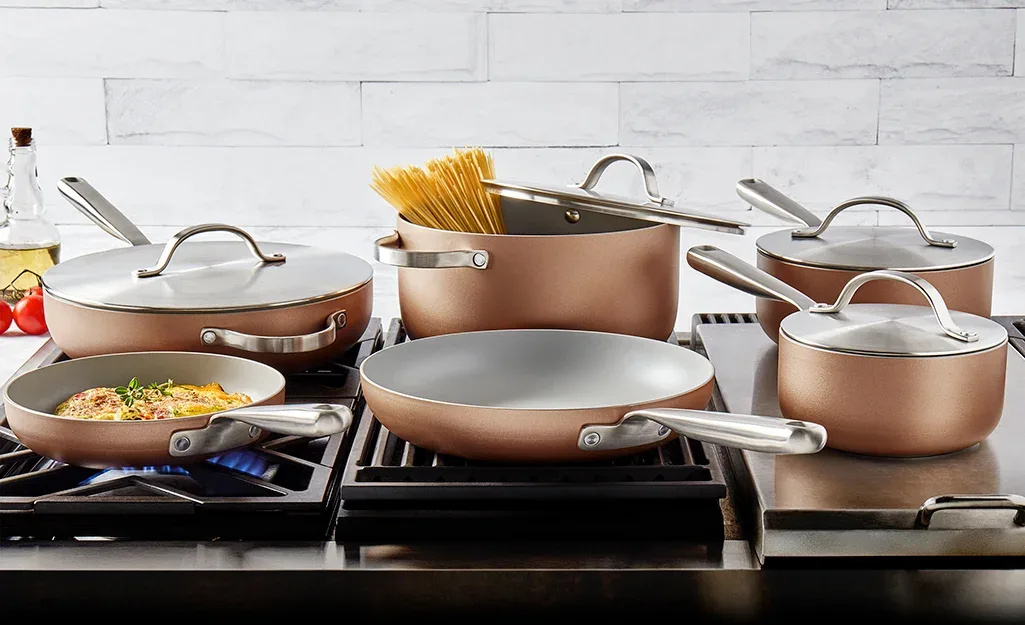
2. Best Nonstick: GreenPan Valencia Pro 10-Piece Ceramic Set (~$130)
If you’re dead set on nonstick (or just terrified of scrubbing pans), this is the one to get. GreenPan’s ceramic nonstick coating is PTFE-free, which means no toxic fumes, and it’s way more durable than the cheap teflon pans floating around dorms.
This set includes:
- 8” and 10” fry pans
- 1qt and 2qt saucepans with lids
- 5qt stockpot with lid
- A steamer insert (which you’ll use once, but hey)
Why it’s great:
- Thermolon ceramic coating is scratch-resistant and lasts 3-5x longer than cheap nonstick.
- Hard-anodized aluminum base heats up fast and evenly.
- Lightweight but not flimsy (easy to maneuver in a tiny kitchen).
- Dishwasher-safe (though hand-washing extends the coating’s life).
Downsides: Ceramic nonstick isn’t asonstick as PTFE, so you’ll still need a little oil. Also, the coating will wear out eventually (but at this price, it’s still a steal).
Best for: The “I burn everything” cook or anyone who wants easy cleanup without the guilt of teflon fumes.
3. Best for Tiny Kitchens: Cuisinart MultiClad Pro Stainless Steel 7-Piece Set (~$100)
If your “kitchen” is a microwave and a hot plate, this compact but mighty set is your best bet. Cuisinart’s MultiClad Pro line is a favorite among home cooks for a reason: it’s durable, heats evenly, and won’t break the bank.
This set includes:
- 8” and 10” open skillets
- 1.5qt saucepan with lid
- 3qt sauté pan with lid
Why it’s great:
- Tri-ply construction (stainless steel + aluminum core) for professional-level performance.
- Oven-safe to 550°F (yes, even the lids).
- Tapered rims for drip-free pouring (no more sauce disasters).
- Dishwasher-safe (but again, hand-washing = longer life).
Downsides: No big pot for pasta or soups, but if you’re cooking for one, the 3qt sauté pan is surprisingly versatile.
Best for: The minimalist student who wants quality over quantity and doesn’t have space for a 12-piece monstrosity.
4. Best for Batch Cooking: Farberware Classic Stainless Steel 17-Piece Set (~$90)
Look, I get it, sometimes you just need a lot of pots. Maybe you meal prep, maybe you cook for your entire floor (bless you), or maybe you just like options. Farberware’s Classic set is the best “big” set for the price, and it’s a staple for a reason.
This set includes:
- 8” and 10” fry pans
- 1qt, 2qt, and 3qt saucepans with lids
- 5qt Dutch oven with lid
- 8qt stockpot with lid (for when you inevitably host Thanksgiving)
- A steamer insert (which you’ll use once, then forget about)
Why it’s great:
- Full capsulated base (aluminum disc sandwiched between stainless steel) for even heating.
- Oven-safe to 350°F (not as high as others, but fine for most student cooking).
- Dishwasher-safe (because ain’t nobody got time for hand-washing 17 pieces).
- Includes a stockpot (rare in budget sets, great for soups, pasta, or emergency ramen upgrades).
Downsides: The stainless steel is thinner than Tramontina or Cuisinart, so it’s not as durable long-term. But for $90? It’s a steal.
Best for: The meal-prep king/queen or anyone who needs versatility on a budget.
5. Best for Beginners: T-fal Ultimate Hard Anodized Nonstick 12-Piece Set (~$80)
If you’re just learning to cook (or, let’s be honest, just learning to ot burn water), T-fal’s Ultimate set is a great starter kit. It’s not fancy, but it’s forgiving, affordable, and gets the job done.
This set includes:
- 8” and 10.25” fry pans
- 1qt and 2qt saucepans with lids
- 5qt Dutch oven with lid
- A “bonus” 10.25” griddle (which you’ll use once to make pancakes, then forget about)
Why it’s great:
- Hard-anodized aluminum is durable and heats up fast.
- T-fal’s “Thermo-Spot” indicator turns red when the pan is preheated (no more guessing!).
- Dishwasher-safe (because you’re still figuring out how to adult).
- Lightweight and easy to maneuver (great for small hands or tiny stoves).
Downsides: The nonstick coating won’t last forever (expect 1-2 years of heavy use). Also, the handles are riveted, which can make cleanup a pain if food gets stuck.
Best for: The “I just need something that works” crowd, no frills, no fuss, just functional cookware.
6. Best for Dorm Life: NutriChef 11-Piece Nonstick Set (~$60)
If your “kitchen” is a hot plate and a mini-fridge, this is the set for you. NutriChef’s 11-piece set is compact, lightweight, and stupidly affordable-without being total garbage.
This set includes:
- 8” fry pan
- 1qt and 1.5qt saucepans with lids
- 2qt “deep fry pan” (aka a small pot)
- 5qt stockpot with lid
- A steamer insert (which you’ll lose within a month)
Why it’s great:
- Super lightweight (easy to store in a tiny space).
- Nonstick actually works (for a while, at least).
- Dishwasher-safe (because you’re not hand-washing anything in a dorm).
- Includes a stockpot (rare at this price point).
Downsides: The pans are thin, so they heat unevenly and warp over time. But for $60? It’s a solid temporary solution.
Best for: The dorm dweller who needs something now and can upgrade later.
7. Best Splurge-Worthy Upgrade: Made In Cookware Stainless Steel 5-Piece Starter Set (~$199, but hear me out)
Okay, I know-$200 is ot “budget” for most students. But if you’re graduating soon, moving into your first apartment, or just tired of replacing cheap pans every year, this set is worth saving up for. Made In is a direct-to-consumer brand that offers professional-grade cookware at a fraction of All-Clad prices.
This set includes:
- 10” fry pan
- 2qt saucepan with lid
- 3.5qt sauté pan with lid
- 8qt stockpot with lid
Why it’s great:
- 5-ply construction (stainless steel + aluminum layers) for perfect heat distribution.
- Oven-safe to 800°F (yes, really).
- Made in the USA (if that matters to you).
- Lifetime warranty (so if you somehow mess it up, they’ll replace it).
- Stays flat (no warping, ever).
Downsides: It’s heavy (but that’s a good thing, it means it’s built to last). Also, the price is steep, but think of it as an investment.
Best for: The soon-to-be grad who wants one set for life and is done with disposable cookware.
How to Make Your Cookware Last Longer (Because Replacing It Sucks)
Even the best cookware will die a sad, early death if you treat it like a frat house beer pong table. Here’s how to extend the life of your pans without losing your mind:
1. The Golden Rule: Don’t Overheat Nonstick
Nonstick coatings (even the good ones) degrade when overheated. That means:
- Never preheat an empty nonstick pan on high. Medium heat is your friend.
- Don’t use cooking sprays, they leave a residue that builds up and ruins the coating. Use a tiny bit of oil instead.
- Hand-wash nonstick when possible (dishwashers are harsh on the coating).
Personal confession: I ruined a perfectly good nonstick pan by trying to “sear” a steak on high heat. It smelled like a chemical fire, and the pan was never the same. Learn from my mistakes.
2. Stainless Steel Care: It’s Easier Than You Think
Stainless steel is low-maintenance, but a little TLC goes a long way:
- Preheat the pan before adding oil (this creates a natural nonstick effect).
- Use medium-high heat for searing, not nuclear blast levels.
- If food sticks, soak the pan in warm, soapy water, it’ll come clean with minimal scrubbing.
- Barkeeper’s Friend is your best friend for stuck-on gunk (it’s like magic).
Pro tip: If your stainless steel pan starts looking dull, a quick vinegar soak will restore its shine.
3. Storage Matters (No, Really)
Stacking pans haphazardly is a great way to scratch them to oblivion. Instead:
- Use pan protectors (those felt-like dividers) or old towels between pans.
- Hang pots and pans if you have space (saves cabinet space and prevents scratches).
- Don’t nest pans inside each other without a barrier (metal-on-metal = bad).
I used to just toss everything in a cabinet until I pulled out a pan and found the bottom looked like it had been attacked by a cheese grater. Don’t be like past Sammy.
4. The Dishwasher Dilemma
Most cookware claims to be dishwasher-safe, but hand-washing extends its life. If you must use the dishwasher:
- Skip the heated dry cycle (heat + detergents = faster wear).
- Place pans on the top rack if possible (less direct heat).
- Avoid crowding (pans need space to avoid banging into each other).
Reality check: I know you’re not hand-washing anything. Just try to be a little gentle with your pans, okay?
5. When to Replace It (And When to Let It Go)
Not all cookware is worth saving. Replace your pans if:
- The nonstick coating is peeling or scratched (it’s unsafe and gross).
- The pan is warped (it won’t heat evenly, and food will burn).
- There’s rust or pitting (especially on stainless steel, this can harbor bacteria).
- The handle is loose or wobbly (a safety hazard).
If your pan is just ugly but still functional? Keep it. Aesthetics don’t affect performance (unless you’re trying to impress a date, in which case… maybe just order takeout).
When to Splurge (And When to Skimp)
Not all cookware deserves the same budget. Here’s where to save and where to spend:
Splurge On:
- A good chef’s knife ($50-80): A sharp knife makes cooking 10x easier and safer. Don’t cheap out here.
- One high-quality pan ($60-100): Even if the rest of your set is budget, having one great pan (like a tri-ply stainless steel skillet) elevates everything.
- A Dutch oven ($50-100): Perfect for soups, bread, and one-pot meals. A good one lasts forever.
Skimp On:
- Specialty tools (avocado slicers, egg separators, etc.): You’ll use them once, then they’ll clutter your drawer.
- “Complete” sets with 20 pieces: You don’t need a 1-quart saucepan. You just don’t.
- Gadgets with one use (like a “pasta boat” or “burger press”): Save your money for groceries.
The $10 Upgrade That Changes Everything
If you’re only going to spend one extra dollar on your cookware setup, make it a $10 silicone spatula. Why?
- Won’t scratch your pans (unlike metal utensils).
- Heat-resistant up to 600°F (so you can stir sauces without melting it).
- Flexible enough to scrape every last bit of food out (no wasted mac and cheese).
I used to use a metal spoon for everything until I realized it was slowly destroying my nonstick pans. A silicone spatula was a game-changer.
Common Cookware Mistakes Students Make (And How to Avoid Them)
We’ve all been there. Here are the most common ways students ruin their cookware-and how to stop:
1. Using Metal Utensils on Nonstick
That fork you’re using to flip your grilled cheese? It’s scratching the hell out of your pan. Stick to wood, silicone, or nylon utensils. Your future self (and your pans) will thank you.
2. Cranking the Heat to “11”
High heat doesn’t cook food faster, it just burns it. Medium heat is your friend, especially with nonstick. If your oil is smoking, your pan is too hot.
3. Soaking Pans for Days
We’ve all left a pot to “soak” and then forgotten about it for 72 hours. Don’t do this. Stainless steel can handle it, but nonstick pans will develop a permanent funk, and aluminum can corrode.
4. Storing Pans While They’re Still Wet
Putting away wet pans = rust. Dry them thoroughly before storing, especially if you’re in a humid dorm.
5. Using Cooking Spray on Nonstick
Cooking spray leaves a sticky residue that’s impossible to clean off and ruins the nonstick coating over time. Use a tiny bit of oil instead.
6. Ignoring the “Oven-Safe” Temp
Not all pans can handle oven heat. If your pan’s handle is plastic or silicone-coated, don’t put it in the oven unless the manual says it’s safe.
Final Verdict: Which Set Should You Buy?
Still overwhelmed? Here’s the TL;DR based on your situation:
- If you want one set to last forever: Tramontina 10-Piece Stainless Steel ($120). It’s the best balance of quality and price.
- If you’re terrified of food sticking: GreenPan Valencia Pro ($130). The ceramic nonstick is forgiving and durable.
- If you have a tiny kitchen: Cuisinart MultiClad Pro 7-Piece ($100). Compact but high-quality.
- If you meal prep or cook for others: Farberware Classic 17-Piece ($90). You get a lot of bang for your buck.
- If you’re on a super tight budget: NutriChef 11-Piece ($60). It’s not perfect, but it’s functional.
- If you’re graduating soon and want to invest: Made In 5-Piece Starter Set ($199). It’ll last a decade.
Personal opinion: If you can swing it, go for the Tramontina or Cuisinart. Stainless steel is the ultimate student-to-adult transition cookware. But if you’re really strapped for cash, the NutriChef set will get you through until you can upgrade.
FAQ: Your Burning (Pun Intended) Cookware Questions
Q: Can I use metal utensils on stainless steel?
A: Yes! Stainless steel is tough enough to handle metal utensils without scratching. Just don’t go crazy with a steel wool pad unless you’re trying to remove stuck-on food.
Q: How do I know if my nonstick pan is unsafe?
A: If the coating is peeling, flaking, or has deep scratches, it’s time to replace it. Also, if it starts smoking at low temps, that’s a sign the coating is breaking down. Don’t risk it, toss it and upgrade.
Q: Is it worth buying a single high-quality pan instead of a set?
A: If you’re really tight on space or cash, yes! A good 10-12” stainless steel or hard-anodized nonstick pan can handle 80% of student meals (eggs, pasta, stir-fries, etc.). Add a small pot for boiling water, and you’re set.
Q: How do I clean burnt-on food from stainless steel?
A: Fill the pan with water, add a splash of vinegar or baking soda, and simmer for 10 minutes. Then scrub with a nylon brush or sponge. For really stubborn gunk, Barkeeper’s Friend is a miracle worker. Avoid steel wool unless absolutely necessary, it can scratch the surface over time.
Parting Thoughts: Cookware as a Metaphor for Life (Yes, Really)
Here’s the thing about cookware: It’s not just about the pans. It’s about learning to take care of the tools you have, even when they’re not perfect. That $20 frying pan you bought freshman year? It taught you that heat control matters. The warped saucepan? It reminded you that quality is worth saving for. And the first time you successfully seared a piece of chicken in a stainless steel pan without it sticking? That’s the moment you realize you’re actually learning how to adult.
So yeah, buy the best cookware you can afford. But also remember: The pan doesn’t make the chef. Some of my best meals were cooked in a dented, hand-me-down skillet with a handle held on by duct tape. What matters is that you’re cooking at all, that you’re feeding yourself, experimenting, and maybe even sharing a meal with friends.
Now go forth, equip your kitchen, and stop burning the ramen.
P.S. If you found this helpful, share it with your equally broke, equally hungry friends. And if you have a cookware horror story (we’ve all got one), drop it in the comments, I live for these tales of culinary woe.
@article{the-ultimate-2025-guide-to-budget-friendly-cookware-sets-for-students-that-wont-fall-apart-by-finals-week,
    title   = {The Ultimate 2025 Guide to Budget-Friendly Cookware Sets for Students (That Won’t Fall Apart by Finals Week)},
    author  = {Chef's icon},
    year    = {2025},
    journal = {Chef's Icon},
    url     = {https://chefsicon.com/best-budget-friendly-cookware-sets-for-students/}
}