The Best Fluffy Pancakes recipe you will fall in love with. Full of tips and tricks to help you make the best pancakes.
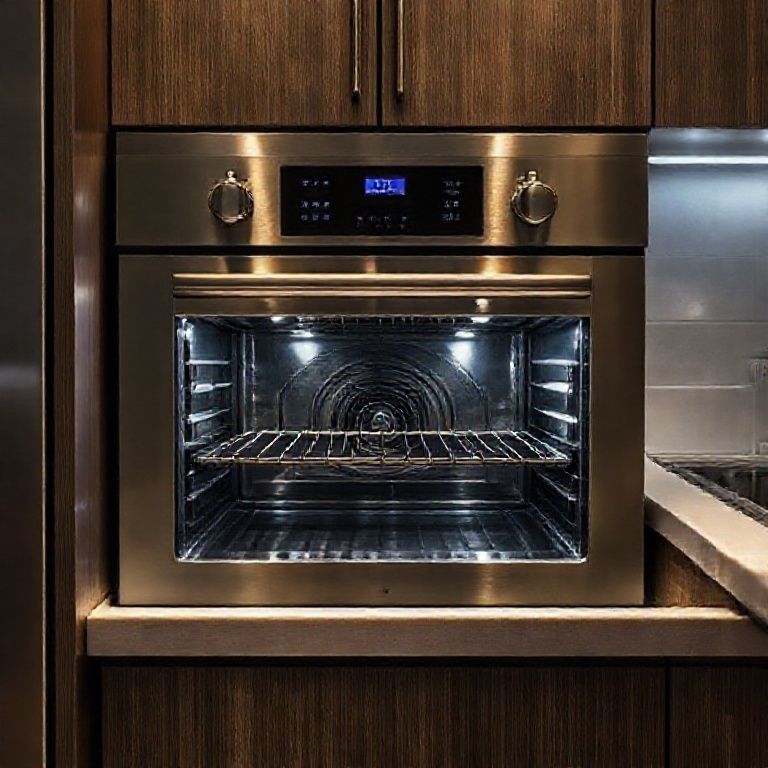
I’ll admit something embarrassing: when I first opened my food truck in Nashville, I bought a commercial oven that was way too big. Like, “barely fits through the door” big. “Requires its own zip code” big. I was so fixated on future-proofing that I didn’t stop to ask: What if my kitchen isn’t the problem, my oven is? Two years and one herniated disc later (thanks, 400-pound mistake), I’ve learned that sizing a commercial oven isn’t just about capacity. It’s about workflow, menu realism, and, let’s be honest, the sheer physics of moving a metal box the size of a SmartCar into your space.
Here’s the thing: no one talks about the psychological toll of oven regret. You either end up with a glorified Easy-Bake Oven that can’t handle rush hour, or a behemoth that turns your kitchen into a sauna and your electric bill into a second mortgage. And unlike residential ovens, commercial models aren’t something you can just “return” when you realize your mistake. They’re permanent fixtures-like a tattoo, but one that affects your profit margins.
In this guide, I’m not just going to throw specs at you. We’re going to dig into the hidden costs of wrong-sizing, the menu myths that trick chefs into overbuying, and the space-time continuum of commercial kitchens (okay, maybe not that last one). By the end, you’ll know:
- How to audit your menu like a forensic accountant to find your true oven needs
- The three types of oven capacity (and why you’re probably ignoring two of them)
- Why ventilation clearance is the silent budget-killer no one warns you about
- How to future-proof without overbuying (yes, it’s possible)
- The psychological traps that make chefs overspend on ovens
Spoiler: If you’re currently eyeing that 10-rack convection oven “just in case,” we need to talk.
Let’s start with the hardest question: What if the oven you think you need is the exact opposite of what you actually require?
The Brutal Truth About Oven Sizing (And Why Most Chefs Get It Wrong)
The “Bigger Is Better” Lie (And Who Profits From It)
Equipment salespeople love to sell you the “grow into it” fantasy. “You’ll expand your menu next year!” “What if you cater a 500-person event?” Here’s the reality: 80% of restaurants never outgrow their original oven capacity, but 100% of them pay for the extra square footage, energy costs, and maintenance forever. I’ve seen pizzerias with deck ovens big enough to land a helicopter, only to use two decks daily. Meanwhile, their walk-in fridge is a Tetris nightmare because they sacrificed storage for oven real estate.
The worst part? Oversized ovens create operational inefficiencies. A half-empty convection oven doesn’t just waste space, it wastes energy, increases preheat times, and makes temperature control finicky. Ever tried to hold a delicate soufflé at 325°F in an oven built to blast 50 sheet pans? It’s like using a flamethrower to light a candle. And don’t get me started on the cleaning nightmare of unused oven cavities. Grease and food particles love to hide in those “just in case” corners.
Here’s a dirty secret: Manufacturers design ovens to be 10–20% larger than necessary because it’s easier to sell “room to grow” than “exactly what you need.” That’s why you’ll see specs like “fits 20 full-size sheet pans” when your actual daily output is six. Ask yourself: When was the last time I used every burner on my home stove? Now scale that logic up.
The Three Types of Capacity (And Why You’re Only Considering One)
Most chefs fixate on physical capacity (e.g., “How many pizzas can fit?”), but that’s just the tip of the iceberg. The real questions are:
- Thermal capacity: Can the oven recover temperature fast enough between batches? A tiny oven might hold 12 racks, but if it drops 50°F every time you open the door, you’re effectively halving your output.
- Workflow capacity: Does the oven’s size match your staff’s ability to load/unload it? I’ve seen kitchens where the oven is so deep that retrieving a tray requires a second person to hold the door. That’s not efficiency, that’s a circus act.
- Energy capacity: Can your kitchen’s electrical/gas infrastructure handle the oven at full load? A 60-amp oven might fit physically, but if your panel’s only rated for 40 amps, you’re looking at a $10,000+ electrical upgrade.
Pro tip: Measure your peak hour, not your dreams. If you’re a bakery that sells 200 croissants by 8 AM but only 50 after noon, your oven needs to match that rhythm, not some hypothetical “someday” demand.
The Space-Time Continuum of Commercial Kitchens
Here’s a physics lesson no one tells you: Ovens don’t just occupy space, they warp it. A 6-foot oven isn’t just 6 feet; it’s:
- 3 feet of clearance in front for safe door swing (OSHA isn’t joking about this)
- 18 inches of ventilation clearance above/below (check local codes, some require 24 inches)
- 12–24 inches of side clearance for maintenance access (ever tried changing a heating element in a zero-clearance install? It’s like performing surgery in a phone booth)
- Additional floor space for landing zones (hot pans need somewhere to go immediately)
I once consulted for a restaurant that bought a stunning La Marzocco deck oven, only to realize it blocked their only fire exit. $25,000 lesson: Always map your kitchen’s “invisible boundaries” before signing the PO.
And let’s talk about vertical space, the most underrated dimension in kitchen design. Stacked ovens seem like a space-saver until you realize:
- Top ovens require step stools or platforms (OSHA frowns on chefs climbing on prep tables)
- Heat rises, so your bottom oven might run 25°F hotter than the top one
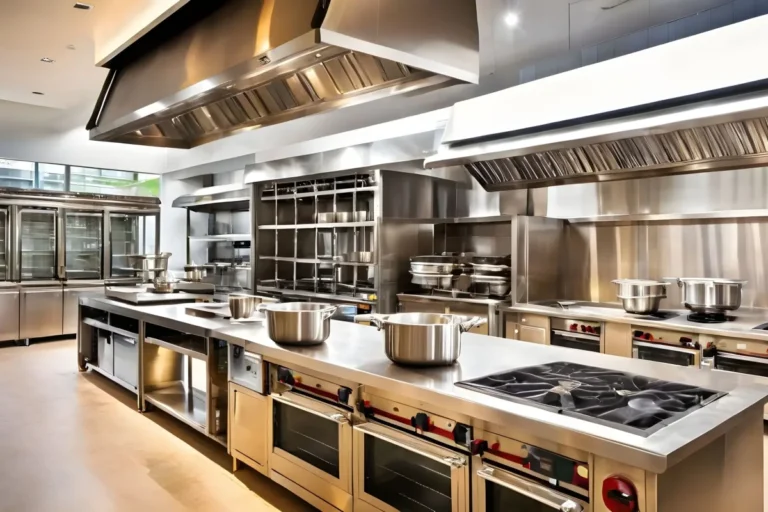
- Ventilation becomes a 3D puzzle (ever seen a hood that looks like a Dr. Seuss hat? That’s poor planning)
The Menu Audit: How to Reverse-Engineer Your Oven Size
Step 1: The “80/20” Menu Rule (And Why You’re Probably Ignoring It)
Most restaurants derive 80% of their revenue from 20% of their menu. Yet when sizing ovens, chefs design for the entire menu. Here’s how to fix that:
- List every item that requires oven time. Be brutal, include garnishes, toasted buns, etc.
- Highlight the top 20% by sales volume. In a pizzeria, this might be Margherita and pepperoni. In a bakery, it’s croissants and sourdough.
- Ask: “If I could only bake these 20% items, how much oven space would I need?” That’s your baseline.
Example: A burger joint might think they need a massive oven for “everything,” but if 90% of their oven use is toasted buns and bacon, a countertop convection oven could handle it, freeing up space for a better grill.
I worked with a Mexican restaurant that insisted on a combo oven for their “expansive menu,” only to realize 70% of their oven use was for tortilla warming. A $3,000 stackable tortilla warmer solved their problem, and saved them $15K.
Step 2: The “Batch Math” Reality Check
Chefs love to think in “per hour” capacity, but ovens work in batches. Here’s how to calculate what you actually need:
- Determine your peak batch size. Example: If you sell 50 pizzas at lunch rush, and each pizza takes 8 minutes, you need an oven that can handle 6–7 pizzas per batch (50 pizzas ÷ (60 minutes ÷ 8 minutes)).
- Add a 20% buffer for delays (late dough, oven recovery, etc.). Now you’re at 7–8 pizzas per batch.
- Check oven specs for real-world capacity. A “10-pizza” oven might only fit 8 if you account for pan spacing and door clearance.
Warning: Manufacturers lie about batch times. That “12-minute cook time” assumes a preheated oven, perfect loading, and no temperature drop. In reality, add 20–30% to their claims.
Here’s a painful truth: Your oven is only as fast as your slowest prep step. If it takes 15 minutes to stretch dough but your oven can bake a pizza in 5, you’ve just wasted 10 minutes of oven capacity. Audit your entire production line, not just the oven.
Step 3: The “What If” Scenarios That Actually Matter
Forget “What if we get a Michelin star?” Here are the real “what if” scenarios to plan for:
- What if your best cook calls in sick? Can your oven be operated safely by one person?
- What if the health inspector shows up? Is there enough clearance for them to access all sides?
- What if your landlord raises the rent? Can you downsize your oven to sublet part of your kitchen?
- What if a pandemic hits? (Too soon? But seriously, can your oven handle a pivot to takeout-only?)
I once helped a café that had a gorgeous double-deck oven, until they pivoted to meal prep during COVID. Turns out, their oven couldn’t fit the deep hotel pans needed for family meals. $8,000 lesson: Flexibility beats raw capacity.
The Hidden Costs of Wrong-Sizing (Spoiler: It’s Not Just the Purchase Price)
The Energy Black Hole You’re Not Calculating
A commercial oven isn’t just a heat source, it’s a money-incinerating machine. Here’s how wrong-sizing affects your bills:
- Oversized ovens: Cost 30–50% more to run than right-sized models. Example: A 10-rack oven might use 60,000 BTU/hour, while a 6-rack uses 35,000. If you’re only using 6 racks, you’re burning $1,000+ extra annually in gas/electricity.
- Undersized ovens: Force you to run multiple cycles, which spikes energy use. A small oven running at full blast for 12 hours can cost more than a larger oven running efficiently for 8.
- Idling costs: Many chefs don’t realize ovens draw “phantom” energy even when “off” to maintain pilot lights or digital controls. A large oven can add $50–$100/month just sitting there.
Pro tip: Look for ovens with “eco modes” or programmable idle settings. Some models (like the Blodgett GT series) can reduce standby energy use by up to 40%.
And let’s talk about ventilation costs, the silent budget-killer. A larger oven requires a more powerful hood, which means:
- Higher upfront hood costs ($5,000–$15,000)
- Increased CFM (cubic feet per minute) requirements, which may necessitate a larger HVAC system
- More frequent filter changes and duct cleaning (add $1,000–$3,000/year)
I’ve seen kitchens where the hood cost more than the oven because they didn’t plan for clearance.
The Labor Domino Effect
An wrong-sized oven doesn’t just affect cooking, it rewrites your staffing needs. Consider:
- Oversized ovens: Require more labor to load/unload, increasing payroll costs. Example: A 10-rack oven might need two people to manage during peak times, while a 6-rack could be handled by one.
- Undersized ovens: Create bottlenecks that force you to hire extra prep cooks to compensate for slower output.
- Ergonomic nightmares: Deep ovens or high stacks can lead to repetitive stress injuries, increasing workers’ comp claims. Ever seen a line cook with “oven shoulder”? It’s not pretty.
Here’s a real-world example: A BBQ joint I consulted for had a massive smoker oven that required two people to load briskets. By switching to a slightly smaller (but deeper) model with roll-in racks, they cut labor costs by $12,000/year.
And don’t forget training costs. A complex, oversized oven might require:
- Extra training hours for new hires
- Specialized maintenance contracts
- Customized SOPs (standard operating procedures) for temperature zoning
The Resale Value Time Bomb
Here’s a harsh truth: Commercial ovens depreciate faster than cars. But wrong-sized ovens depreciate even faster. Why?
- Oversized ovens are harder to resell because most buyers don’t need (or can’t fit) them.
- Undersized ovens are seen as “starter equipment,” fetching pennies on the dollar.
- Custom configurations (like stacked decks with non-standard clearances) are nearly impossible to resell.
I once tried to sell a barely-used 8-deck oven (purchased for $22K) and got offers for $4,500. The buyer’s exact words: “No one wants a monster like this unless they’re opening a prison cafeteria.”
If you’re thinking, “I’ll just keep it forever,” consider this: The average restaurant changes ovens every 7–10 years. Menus evolve, energy standards change, and maintenance costs pile up. That “forever oven” might become a $20,000 paperweight when you pivot to a new concept.
The Psychological Traps That Make Chefs Overspend on Ovens
The “But What If We Get Busy?” Syndrome
Chefs are optimists. We have to be. But optimism is the enemy of smart equipment buying. Here’s how to combat the “what if” spiral:
- Replace “what if” with “at what cost?” Example: “What if we cater a 200-person event?” → “At $500/month in extra energy costs, how many events would we need to break even?”
- Rent before you buy. Many equipment rental companies (like Caterease or LeaseQ) offer short-term oven rentals. Test a larger model during your actual peak times before committing.
- Calculate the “opportunity cost.” That extra $10K spent on oven capacity could’ve gone to a better POS system, staff training, or, here’s a thought-profit.
Ask yourself: “If my oven could talk, would it say ‘You complete me’ or ‘Why did you buy me?’”
The “But the Guy on TV Uses This” Fallacy
I get it. You saw Gordon Ramsay’s kitchen with those gleaming Rational ovens and thought, “That’s what a real chef uses.” News flash: TV kitchens are designed for cameras, not profitability. Those massive ovens? They’re often:
- Sponsored (i.e., free or heavily discounted)
- Used for one specific shot (ever notice how they never show the whole kitchen?)
- Supported by a team of 20 line cooks you don’t have
Reality check: Most successful restaurants use mid-tier ovens (like Vulcan, Southbend, or Blodgett) because they’re reliable, repairable, and right-sized. The fancy European brands? They’re the sports cars of ovens, fun to own, expensive to maintain.
The “I’ll Just Make It Work” Delusion
Chefs are problem-solvers. We MacGyver solutions out of duct tape and hope. But ovens aren’t something you can “make work” if they’re wrong-sized. Here’s why:
- Temperature inconsistencies: An oversized oven will have hot/cold spots that require constant rotation. Undersized ovens struggle to recover heat between batches.
- Safety hazards: Cramming too much into a small oven leads to burns and spills. A too-large oven encourages risky behaviors (like climbing on counters to reach the back).
- Menu limitations: That “versatile” combo oven might not fit your sheet pans, or its racks might be spaced for European trays (600x400mm) instead of American ones (18×26”).
I once watched a chef try to “make work” a residential-grade double oven in a commercial kitchen. By week three, they were using it as a proofing cabinet because it couldn’t hold temps above 350°F under load. $2,500 lesson: Some things can’t be hacked.
How to Future-Proof Without Overbuying (Yes, It’s Possible)
The Modular Approach: Stackable and Swappable Ovens
Instead of buying one massive oven, consider a modular system that grows with you. Examples:
- Stackable convection ovens: Start with one unit, add a second later. Brands like Convotherm or APW Wyott offer matching models.
- Roll-in rack ovens: These let you preload racks in a staging area, then roll them into the oven. Great for high-volume bakeries or banquet kitchens.
- Combi oven + speed oven combo: Use the combi for bulk cooking and the speed oven for à la minute dishes.
Pro tip: Look for ovens with “universal rack spacing.” This lets you adjust shelf heights to accommodate everything from sheet pans to hotel pans.
Bonus: Modular setups are easier to resell or repurpose. A single convection oven has a much bigger secondary market than a custom-built deck oven.
The “Rent, Lease, or Buy Used” Strategy
Not ready to commit? Here are three ways to test-drive your oven size:
- Short-term rentals: Companies like Cortech or Nationwide Boiler rent commercial ovens by the month. Perfect for pop-ups or seasonal businesses.
- Lease-to-own: Many dealers offer 12–36 month leases with purchase options. This lets you upgrade as your needs change.
- Refurbished ovens: Sites like UsedViking.com or RestaurantEquipment.bid sell certified pre-owned ovens at 40–60% off. Just budget for a professional inspection ($200–$500).
Warning: Avoid “as-is” used ovens unless you’re a mechanic. A “great deal” on a $2,000 oven can turn into a $5,000 nightmare if the heating elements are shot.
The “Design for Flexibility” Mindset
Instead of asking, “What oven do I need?” ask:
- “Can this oven handle multiple cooking modes?” Example: A combi oven can steam, bake, and roast, reducing the need for separate equipment.
- “Does it accept third-party racks/pans?” Proprietary accessories lock you into one brand.
- “Is it serviceable?” Can you replace heating elements yourself, or does it require a $200/hour technician?
- “What’s the worst-case scenario?” If this oven fails during Friday night service, do you have a backup plan?
I’m a huge fan of dual-fuel ovens (gas + electric) for this reason. If your gas line fails, you can switch to electric mode while repairs happen.
The Ultimate Commercial Oven Size Checklist (Print This Out)
Before you sign anything, run through this checklist. If you can’t answer “yes” to at least 80% of these, reconsider:
Physical Fit
- Have you measured the doorways, hallways, and elevators the oven must pass through? (Add 2 inches to all dimensions for safety.)
- Is there 36 inches of clearance in front of the oven for safe operation?
- Does your floor support the oven’s weight? (A 10-rack oven can weigh 1,500+ lbs-check your building’s load-bearing specs.)
- If stacking, is there 18+ inches of clearance above the top oven for ventilation?
Operational Fit
- Can your current staff safely load/unload the oven at peak capacity?
- Does the oven’s recovery time match your ticket times? (Test this with a stopwatch.)
- Are the rack positions adjustable to fit your pans?
- If it’s a combo oven, can you switch between modes quickly (e.g., from steam to convection)?
Financial Fit
- Have you calculated the total cost of ownership (purchase + energy + maintenance + resale value)?
- Does the oven’s energy use align with your utility budget? (Ask for an energy audit from the manufacturer.)
- If leasing, is the buyout price at the end of the term reasonable?
- Have you compared ew vs. refurbished prices for the same model?
Future Fit
- Can the oven scale down if your menu simplifies? (Example: Can you remove racks to reduce capacity?)
- Is the brand known for long-term parts availability? (Avoid brands that discontinue models every 2 years.)
- Does the oven support smart controls (like remote monitoring) for future upgrades?
- If you move locations, can the oven be easily relocated without major modifications?
When to Break the Rules (And How to Do It Safely)
Scenario 1: You’re Opening a Ghost Kitchen
Ghost kitchens can downsize aggressively because:
- No dine-in means o peak-hour rushes-just steady batch cooking.
- Menus are highly optimized (no “just in case” items).
- Space is at a premium, so stackable or under-counter ovens make sense.
Example: A ghost kitchen running a single concept (like wings) might only need a countertop convection oven and a fryer. I’ve seen operations with $500K/month revenue using just 20 sq. ft. of oven space.
Shared kitchens (like The Kitchen Door or CloudKitchens) require:
- Portable ovens (like Alto-Shaam’s roll-in models) that can be moved between stations.
- Quick-preheat models (since you can’t leave ovens on 24/7).
- Multi-user programming (so different chefs can save their own presets).
Pro tip: Look for ovens with “lockout modes” to prevent other tenants from accidentally changing your settings.
Scenario 3: You’re a Food Truck or Pop-Up
Mobile operations need:
- Propane-compatible ovens (if not tied to a generator).
- Low-clearance models (many food trucks have only 7 feet of vertical space).
- Vibration-resistant construction (ever tried to bake a cake while driving over potholes?).
I recommend mini rack ovens (like the Blodgett Mini) for trucks, they fit in 24” of space but can handle 6 full-size sheet pans.
Final Thought: The Oven You Need vs. The Oven You Want
Here’s the hard truth: Your oven isn’t a status symbol, it’s a tool. And like any tool, its value comes from how well it solves your actual problems, not how impressive it looks on Instagram.
I’ll leave you with three questions to ask before you buy:
- “Does this oven make my kitchen more efficient, or just more crowded?”
- “If I had to pay for this oven out of my own pocket (not a loan or investor money), would I still buy it?”
- “What’s the worst that could happen if I start smaller and upgrade later?” (Spoiler: It’s usually less costly than starting too big.)
And remember: The right-sized oven isn’t the one that fits your menu, it’s the one that fits your reality. If you walk away from this article with one takeaway, let it be this: Your oven should work for you, not the other way around.
Now go measure your kitchen. Twice.
FAQ
Q: I’m opening a pizzeria. Should I get a deck oven or a conveyor oven?
A: It depends on your volume and style. Deck ovens (like Marsal or Bakers Pride) are best for artisanal, high-heat pizzas (Neapolitan, New York-style) but require skilled labor to rotate pies. Conveyor ovens (like Lincoln or Middleby Marshall) are ideal for high-volume, consistent output (think fast-casual chains) but limit your creativity. Hybrid approach: Many pizzerias now use a smaller deck oven for specialty pizzas and a conveyor for rush hours. Audit your expected mix of dine-in vs. takeout, conveyors excel at to-go orders, while decks shine for sit-down service.
Q: How much clearance do I reallyeed above a commercial oven?
A: The absolute minimum is 18 inches, but here’s the breakdown by oven type:
- Convection ovens: 18–24” (they vent heat upward aggressively)
- Combi ovens: 24” (steam requires extra clearance)
- Deck/pizza ovens: 12–18” (less heat escapes from the front)
- Stacked ovens: 24–30” above the top unit
Pro tip: Check your local fire marshal’s codes, some jurisdictions require 30” clearance for any oven over 60,000 BTU. And if you’re near a sprinkler head, add another 6 inches. Yes, I’ve seen chefs melt sprinkler systems. No, it’s not fun.
Q: Can I use a residential oven in a commercial kitchen if it’s “heavy-duty”?
A: No, and here’s why: Even “pro-style” residential ovens (like Viking or Wolf) fail in commercial settings because:
- They lack NSF/ANSI certification, which health inspectors require.
- Their duty cycles aren’t designed for 12+ hours of daily use. (Most residential ovens are rated for 2–4 hours/day.)
- They lack safety features like auto-shutoff timers or child locks (yes, OSHA considers your line cooks “children” in this context).
- Their warranties void if used commercially.
Exception: Some very small operations (like cottage bakers) can use high-end residential ovens if they’re UL-listed for “light commercial” use (check the model’s spec sheet). But for 99% of restaurants, it’s not worth the risk. I’ve seen health inspectors shut down kitchens over this-$5,000 fine + lost revenue isn’t worth saving $2K on an oven.
Q: How do I calculate the BTU or electrical requirements for my kitchen?
A: This is where most chefs glaze over, but it’s critical. Here’s a simplified method:
- For gas ovens: Add up the BTU ratings of all gas equipment (oven, range, fryer, etc.). Divide by 1,000 to get “MBH” (thousands of BTUs per hour). Example: A 60,000 BTU oven + 40,000 BTU range = 100 MBH.
- Check your gas line size: A standard 1” gas line delivers ~350 MBH. If your total exceeds this, you’ll need a larger line ($$$).
- For electric ovens: Check the amperage. Most commercial ovens require 208V or 240V (not standard 120V). A 50-amp oven needs a dedicated circuit, if your panel is already maxed out, you’re looking at a $3,000–$10,000 electrical upgrade.
- Call your utility company. They’ll do a free load calculation and tell you if your kitchen can handle the oven. Do this before you buy. I’ve seen chefs stuck with ovens they couldn’t plug in.
Rule of thumb: If your oven’s BTU is more than 50% of your kitchen’s total gas load, you’re flirting with problems. Example: In a kitchen with 200 MBH total capacity, a 100 MBH oven will starve your other equipment for gas.
@article{choosing-the-right-size-commercial-oven-the-make-or-break-decision-for-your-kitchen-and-your-sanity,
    title   = {Choosing the Right Size Commercial Oven: The Make-or-Break Decision for Your Kitchen (And Your Sanity)},
    author  = {Chef's icon},
    year    = {2025},
    journal = {Chef's Icon},
    url     = {https://chefsicon.com/choosing-the-right-size-commercial-oven/}
}