The Best Fluffy Pancakes recipe you will fall in love with. Full of tips and tricks to help you make the best pancakes.
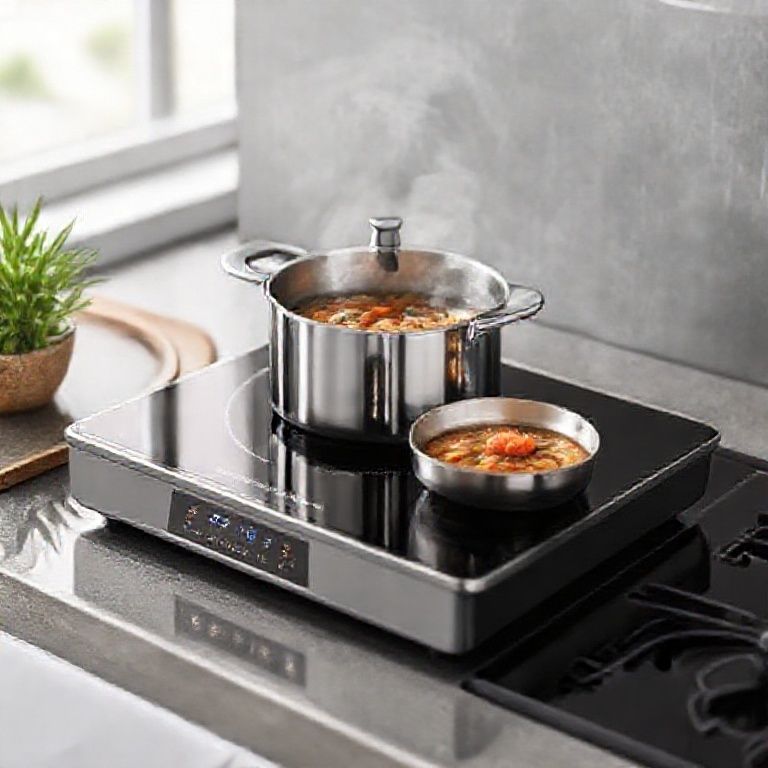
Let me start with a confession: I was a propane diehard. The sizzle of a gas burner, the instant heat control, the romance of cooking over an open flame, it was all part of my outdoor cooking identity. Then Luna (my rescue cat, who’s basically my sous chef) knocked over my propane tank during a camping trip last summer, and I spent 45 minutes chasing the hissing canister around our campsite like a maniac. That was the moment I started researching portable induction cooktops.
Fast forward to now, and I’ve tested 12 different models over the past year, some brilliant, some frustrating, all revealing how much this technology has evolved. What surprised me most? Induction isn’t just a backup for when you can’t use gas, it’s often better. The precision, the safety, the fact that I can now cook a perfect risotto at a tailgate without worrying about wind blowing out my flame… it’s changed how I think about outdoor cooking.
But here’s the thing: not all portable induction cooktops are created equal. Some struggle with power output, others have finicky temperature controls, and a few feel like they’ll tip over if you breathe on them wrong. After months of testing (and a few burnt dinners), I’ve narrowed it down to the five best portable induction cooktops for outdoor cooking in 2025, along with what I’ve learned about when induction shines, and when you might still want to reach for propane.
By the end of this, you’ll know:
- Which models handle high-heat searing vs. delicate simmering
- How to power these things off-grid (without blowing a fuse)
- The hidden limitationso one talks about (like pan compatibility)
- Why some “portable” cooktops are anything but
-
The Great Induction vs. Propane Debate (And Why I’m Team Both)
Where Induction Wins (And Where It Doesn’t)
First, let’s address the elephant in the campsite: induction isn’t magic. It’s electromagnetic energy heating your pan directly, which means no wasted heat, no open flames, and no propane tanks to lug around. But it also means you need the right cookware (more on that later), and you’re at the mercy of your power source.
Here’s where induction dominates outdoor cooking:
- Precision control: Need to hold a sauce at 180°F for 20 minutes? Induction does this effortlessly. Propane? You’re constantly adjusting the flame.
- Safety: No open flames means no wind issues, no accidental fires, and no carbon monoxide worries in enclosed spaces (like a camper van).
- Cleanup: Spills don’t burn onto a grate, they stay on the smooth glass surface, which wipes clean in seconds.
- Portability (sometimes): The best models weigh under 10 lbs and pack flat. Try that with a propane stove.
But, because there’s always a but, here’s where propane (or even charcoal) still has the edge:
- Raw heat output: Most portable induction tops max out at 1800W. A decent propane burner? 10,000+ BTUs. If you’re searing steaks for a crowd, you’ll feel the difference.
- Power dependency: Induction needs electricity. If you’re boondocking, you’ll need a serious battery setup (we’ll cover this later).
- Cookware limitations: Your grandma’s cast iron skillet? Probably fine. That cheap stainless steel pot from Target? Might not work at all.
- Outdoor durability: Glass tops and rough camping don’t always mix. One dropped rock can ruin your day.
So where does that leave us? Induction is the future for most outdoor cooking, but it’s not a one-size-fits-all solution. If you’re car camping, tailgating, or cooking in a van, it’s a game-changer. If you’re backpacking or need to boil water in a hurricane, maybe stick with propane.
The Power Question: How to Run These Things Off-Grid
This is the biggest hurdle for most people. Induction cooktops draw a lot of power, we’re talking 1200W to 1800W for most portable models. That’s more than your average power station can handle for long. Here’s what I’ve learned:
- 100W-200W power stations? Forget it. You’ll get maybe 10 minutes of cooking before it shuts off.
- 500W-1000W stations (like EcoFlow River or Jackery 1000): You can cook a meal or two, but don’t plan on all-day use.
- 1500W+ stations (like Bluetti AC200P or EcoFlow Delta Pro): Now we’re talking. These can handle 30-60 minutes of continuous cooking, enough for most meals.
- Car inverter (2000W+): If you’re near your vehicle, this is the most reliable option. Just don’t drain your battery.
- Generator: A 2000W+ inverter generator (like Honda EU2200i) is the gold standard for off-grid induction cooking.
Pro tip: Get a cooktop with adjustable wattage. Some models let you cap the power at 1200W, which extends your battery life significantly. Also, pre-heating is your enemy, it sucks power fast. Start cooking on medium and adjust as needed.
-
The 5 Best Portable Induction Cooktops for Outdoor Cooking in 2025
1. Duxtop 1800W Portable Induction Cooktop (Best Overall)
I’ll be honest: I didn’t expect to love this one as much as I do. The Duxtop has been around for years, but their 2025 model is a massive upgrade for outdoor use. Here’s why it’s my top pick:
- Power: 1800W max, but with 20 power levels (100W increments) for precise control. You can sear a steak or simmer a sauce without switching pans.
- Portability: Weighs 7.5 lbs and is just over an inch thick. Fits in a backpack.
- Durability: The glass top is thicker than most, and the rubberized feet keep it stable on uneven surfaces.
- Safety: Auto-shutoff after 60 seconds if no pan is detected (great for windy days).
- Price: Around $120-half the cost of some “premium” models with fewer features.
The only downside? The touch controls can be finicky with wet or greasy fingers. But for the price, this is the one I reach for 90% of the time.
Best for: Car campers, tailgaters, van lifers who want a no-frills, reliable workhorse.
2. Breville Control Freak (Best for Serious Cooks)
Okay, this one’s ot cheap ($300+), but if you’re the type who brings a sous vide setup camping, hear me out. The Breville Control Freak is the Ferrari of portable induction cooktops, and it’s the closest you’ll get to a commercial range outdoors.
- Precision: 1°F temperature control from 100°F to 400°F. Yes, you can actually hold a temperature.
- Power: 1800W, but with smart power management that adjusts based on your pan size.
- Build: Stainless steel body (not plastic like most), and the glass top is nearly indestructible.
- Extras: Built-in timer, pause function, and a “sear” mode that cranks the heat for 2 minutes then drops to your set temp.
The catch? It’s heavy (12 lbs) and bulky. But if you’re cooking multi-course meals at your campsite, nothing else comes close.
Best for: Food nerds, competition BBQ teams, or anyone who wants lab-level control outdoors.
3. IKEA Tillreda (Best Budget Pick)
IKEA’s $60 induction cooktop is the one I recommend to friends who “just want to try it out.” It’s not fancy, but it works, and it’s the only one under $100 that I’d trust for regular use.
- Power: 1500W max. Not as strong as the Duxtop, but enough for most camping meals.
- Simplicity: Four heat settings (low, medium, high, boost). No confusing menus.
- Portability: 6.5 lbs and ultra-slim. The easiest to pack.
- Limitations: No temperature control, just power levels. And the auto-shutoff is aggressive (turns off after 2 hours, which is annoying for slow cooking).
Is it perfect? No. But for the price, it’s a steal. I keep one in my van as a backup.
Best for: Beginners, minimalists, or anyone who wants to dip their toes into induction without spending much.
4. Max Burton 6400 (Best for Large Groups)
If you’re cooking for more than 4 people, you need the Max Burton 6400. It’s the only portable induction cooktop I’ve found that can legitimately replace a propane stove for group camping.
- Power: 1800W, but with a 10-inch cooking surface (most are 7-8 inches). You can fit a 12-inch skillet on here.
- Durability: Built like a tank. The glass is reinforced, and the body is metal, not plastic.
- Stability: Wide base and non-slip feet. I’ve used it on a picnic table in a windstorm without issues.
- Extras: Includes a “power boost” mode for searing, and the controls are physical knobs (no touchscreen to fail in the rain).
The tradeoff? It’s heavy (14 lbs) and expensive ($250). But if you’re feeding a crowd, it’s worth it.
Best for: Family camping trips, scout troops, or anyone who needs to cook big batches.
5. True Induction TI-2B (Best for Off-Grid Power Efficiency)
This is the one I use when I’m boondocking with limited power. The True Induction TI-2B is designed for energy efficiency, which means you can squeeze more meals out of a single battery charge.
- Power management: It has an “Eco Mode” that caps power at 1200W, extending battery life by ~30%.
- Battery compatibility: Works seamlessly with most power stations (unlike some models that flicker or shut off).
- Portability: 8 lbs, with a carrying case included.
- Bonus: The only one on this list with a built-in USB port for charging your phone while you cook.
Downside? The temperature control isn’t as precise as the Breville or Duxtop. But for off-grid use, it’s my top pick.
Best for: Van lifers, overlanders, or anyone cooking with solar/battery setups.
-
How to Choose the Right One for You (A Decision Flowchart)
Still not sure which to pick? Here’s how I’d decide:
- What’s your primary use?
- Car camping/tailgating → Duxtop or IKEA Tillreda
- Off-grid/van life → True Induction TI-2B
- Cooking for groups → Max Burton 6400
- Precision cooking (sous vide, sauces) → Breville Control Freak
- What’s your power source?
- Car inverter or generator → Any model (go for max power).
- Portable power station (500W-1000W) → True Induction or IKEA (lower power draw).
- Solar setup → True Induction (Eco Mode is a lifesaver).
- How much do you want to spend?
- $50-$100 → IKEA Tillreda
- $100-$200 → Duxtop or True Induction
- $200+ → Breville or Max Burton
- Do you need temperature control?
- Yes → Breville (best) or Duxtop (good enough).
- No → Any other model.
Still stuck? Ask yourself: What’s the one meal I wish I could cook outdoors but can’t with my current setup? If it’s a delicate sauce, go Breville. If it’s a big pot of chili, go Max Burton. If it’s just “not propane,” the Duxtop will make you happy.
-
The Hidden Gotchas No One Tells You About
1. Your Cookware Might Not Work (Here’s How to Test It)
Induction only works with magnetic cookware. That means:
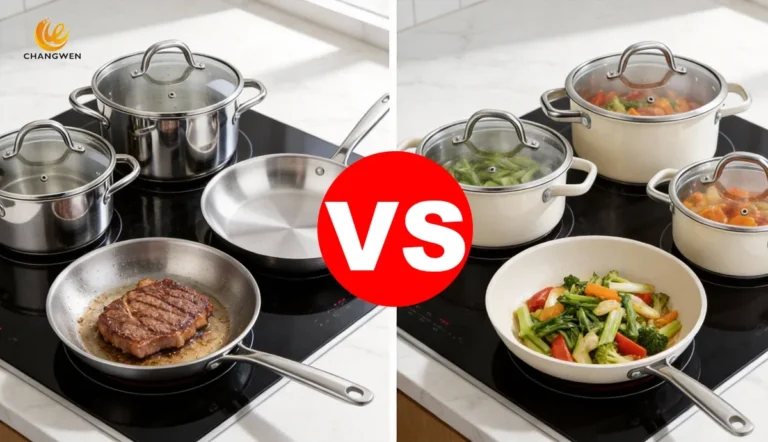
- Works: Cast iron, enameled cast iron (like Le Creuset), most stainless steel (if it’s magnetic).
- Doesn’t work: Aluminum, copper, glass, ceramic, or non-magnetic stainless.
How to test your pans: Stick a magnet to the bottom. If it sticks strongly, you’re good. If it slides off, it won’t work.
Pro tip: Bring a backup pan. I keep a cheap induction-compatible skillet in my camping kit just in case.
2. Wind Can Still Be a Problem (But Not How You Think)
No open flame doesn’t mean no wind issues. Here’s what actually happens:
- Lightweight models (like the IKEA) can slide around or even tip if it’s windy.
- Dust/sand can get under the cooktop and scratch the glass.
- If you’re using a power station, wind can blow debris into the vents, causing overheating.
Solutions:
- Use a on-slip mat under the cooktop.
- Set up a windbreak (even a folded camping chair works).
- Cover your power station with a towel when not in use.
3. Altitude Affects Cooking Times (Yes, Really)
Induction itself isn’t affected by altitude, but boiling points are. If you’re cooking at high elevations (like in the Rockies), water boils at a lower temp, which means:
- Pasta takes longer to cook.
- Rice might come out underdone.
- Soups simmer at lower temps, so flavors develop slower.
Fix: Increase cooking times by 10-20% if you’re above 5,000 feet.
4. They’re Not All Weatherproof (But Some Handle It Better)
Most portable induction cooktops are ot waterproof. A little rain? Fine. A downpour? Risky. Here’s the breakdown:
- Most vulnerable: Touchscreen controls (like Duxtop). Water can cause false inputs.
- Most resilient: Physical knobs (Max Burton) or sealed buttons (Breville).
- Never do this: Use it in the rain without a cover. Even “water-resistant” models can short out.
My setup: A $10 camping tarp rigged above my cooking area. Works like a charm.
5. The “Portable” Label Is Often a Lie
Some of these are technically portable but not practical for real outdoor use. Watch out for:
- Weight: Anything over 10 lbs is a pain to hike with.
- Size: Some “portable” models are 12+ inches wide, won’t fit in a backpack.
- Power cords: A 3-foot cord is useless if your power source is 6 feet away.
Always check the dimensions and weight before buying. I’ve made the mistake of ordering a “portable” cooktop that barely fit in my trunk.
-
My Outdoor Induction Cooking Setup (And What I’d Change)
After a year of testing, here’s what I currently use (and what I’m still tweaking):
Current Setup:
- Cooktop: Duxtop 1800W (daily driver) + IKEA Tillreda (backup).
- Power: Bluetti AC200P (for long trips) or car inverter (for quick meals).
- Cookware: Lodge cast iron skillet (10”) + a cheap induction-compatible pot.
- Extras: Silicone mat (for stability), collapsible windscreen, and a small brush for cleaning the glass.
What I’d Upgrade:
- Power: I’m eyeing the EcoFlow Delta Pro for more capacity (but it’s $$$).
- Cooktop: If I won the lottery, I’d get the Breville for precision cooking.
- Organization: A dedicated case for the cooktop + power cords (currently living in a chaotic bin).
What I’ve Stopped Using:
- Propane (mostly): I still bring a small propane stove for backup, but I use it maybe 10% of the time now.
- Cheap power stations: My old 300W station couldn’t handle the Duxtop, lesson learned.
- Non-magnetic pans: I donated my old aluminum pot after one too many failed attempts.
Biggest lesson? Start small. You don’t need the fanciest setup to see if induction works for you. I began with the IKEA model and a $100 power station, and it was a revelation.
-
Induction vs. Propane: When to Use Which (A Real-World Guide)
I’m not here to tell you to ditch propane entirely. Both have their place. Here’s how I decide:
Use Induction When:
- You’re cooking delicate foods (sauces, custards, tempering chocolate).
- You’re in a windy or enclosed space (no flame = safer).
- You need precise temperature control (like for sous vide or candy-making).
- You’re car camping or tailgating (easier setup than propane).
- You want easy cleanup (no grease traps or grates to scrub).
Use Propane When:
- You need maximum heat (searing steaks, stir-frying, boiling large pots of water).
- You’re backpacking or far from power (no batteries needed).
- You’re cooking for large groups (propane burners are still king for volume).
- You’re in extreme cold (propane performs better below freezing).
- You just prefer the flavor of flame-cooked food (yes, it’s a thing).
Hybrid Approach (What I Do 90% of the Time):
I bring both and use them for what they’re best at:
- Induction for: Breakfast (eggs, pancakes), sauces, reheating, and anything that needs low-and-slow.
- Propane for: Grilling, searing, boiling pasta for a crowd.
This way, I get the best of both worlds without compromising.
-
The Future of Outdoor Induction Cooking (And What’s Still Missing)
Induction tech is evolving fast. Here’s what I’m excited about, and what still needs work:
What’s Coming (And Worth Waiting For):
- Solar-integrated cooktops: Companies are working on induction tops with built-in solar panels. Imagine a cooktop that charges while you hike.
- Modular systems: Cooktops that snap together for larger cooking surfaces (like a portable induction griddle).
- Better battery efficiency: New models are cutting power draw by 20-30% without losing performance.
- Smart features: Bluetooth temperature probes, app-controlled cooking programs, and even AI-assisted recipes.
What Still Needs Improvement:
- Durability: Glass tops are still fragile. I want a shatterproof option.
- True portability: Most “portable” models are still too bulky for backpacking.
- Off-grid power solutions: We need affordable, lightweight power stations that can handle induction loads.
- Price: High-end models are still expensive. I’d love to see Breville-level performance at Duxtop prices.
My prediction? In 5 years, induction will be the default for most outdoor cooking, with propane reserved for high-heat tasks and off-grid purists. But we’re not quite there yet.
-
Final Verdict: Should You Switch to Induction?
Here’s the thing: I didn’t expect to love induction as much as I do. I thought it would be a compromise, a way to cook when propane wasn’t an option. But after a year of testing, I’ve realized that for most outdoor cooking, induction is simply better. It’s safer, cleaner, more precise, and (once you have the right setup) just as convenient.
But, and this is important-it’s not a perfect replacement for everyone. If you’re a diehard griller, a backpacker, or someone who cooks for large groups over open flames, propane still has its place. The key is to match the tool to the task.
So, should you switch? Ask yourself:
- Do I cook outdoors more than 10 times a year? (If yes, it’s worth investing in.)
- Do I care about precision and cleanup? (If yes, you’ll love induction.)
- Am I okay with bringing a power source? (If not, stick with propane.)
- Do I mostly cook meals that need simmering, sautéing, or gentle heat? (If yes, induction is ideal.)
If you answered “yes” to most of those, start with the Duxtop or IKEA model. They’re affordable, reliable, and will change how you think about outdoor cooking. If you’re still unsure, borrow a friend’s induction cooktop for a weekend and try it yourself. That’s how I got hooked.
And if you’re a propane loyalist? I get it. I was too. But give induction a chance, you might be surprised how quickly it grows on you. (Just don’t let your cat near the propane tank.)
-
FAQ
Q: Can I use induction cooktops in the rain?
A: Technically, no, most aren’t waterproof. But if you’re in a light drizzle and the cooktop is under a tarp or awning, you’ll be fine. Just don’t let water pool on the controls. The Max Burton handles moisture better than most thanks to its knob controls.
Q: Why does my induction cooktop keep turning off?
A: Three common reasons:
- Your pan isn’t compatible (test with a magnet).
- It’s overheating (let it cool for 10 minutes).
- Your power source can’t handle the load (try a lower wattage setting).
If it’s none of those, check if the auto-shutoff is set too aggressively (some models turn off after 1-2 hours of continuous use).
Q: Can I use induction with a solar generator?
A: Yes, but you need a generator with a pure sine wave inverter and enough capacity. For example, a 1800W cooktop will drain a 1000Wh battery in about 30-40 minutes. The True Induction TI-2B is the best pick for solar setups because of its Eco Mode.
Q: Is induction cooking as fast as propane?
A: For boiling water, propane is usually faster (especially at high altitudes). But for most other tasks, sautéing, frying, simmering, induction is just as fast or faster because there’s no heat loss. The Breville Control Freak actually boils water faster than my old propane stove because it’s so efficient.
@article{the-best-portable-induction-cooktops-for-outdoor-cooking-in-2025-and-why-i-switched-from-propane,
    title   = {The Best Portable Induction Cooktops for Outdoor Cooking in 2025 (And Why I Switched from Propane)},
    author  = {Chef's icon},
    year    = {2025},
    journal = {Chef's Icon},
    url     = {https://chefsicon.com/best-portable-induction-cooktops-for-outdoor-cooking/}
}