The Best Fluffy Pancakes recipe you will fall in love with. Full of tips and tricks to help you make the best pancakes.
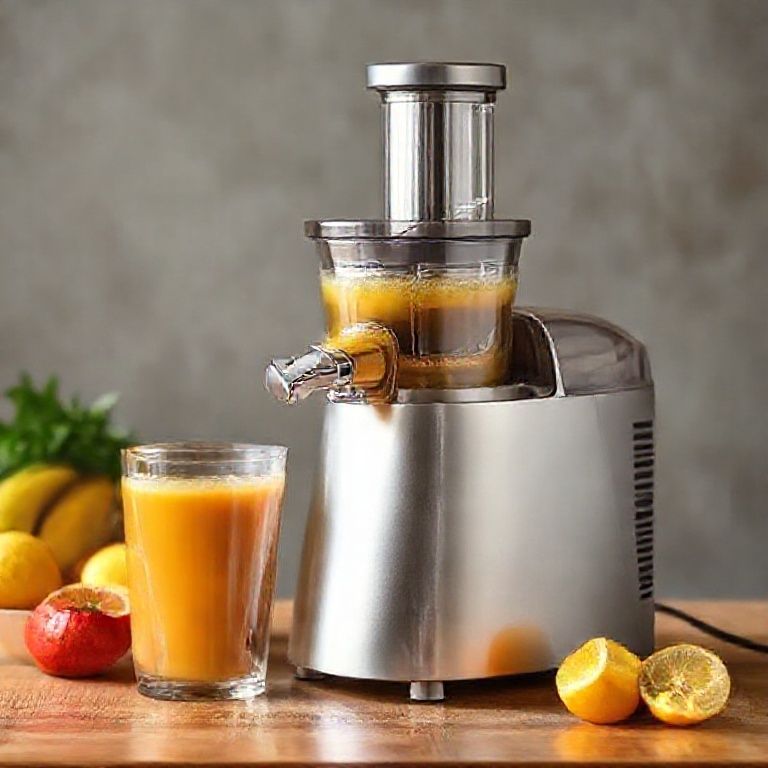
I was standing in the back of Bastion-Josh Habiger’s Nashville gem, when I first saw a chef use a centrifugal juicer to clarify broth in real time. Not for some molecular gastronomy stunt, but because they were out of clarified chicken stock and needed it ow. The entire kitchen paused for three seconds to watch the golden liquid separate from impurities like magic. That moment stuck with me: innovation in cooking isn’t just about flashy techniques anymore, it’s about solving real problems in real time.
Fast forward to 2025, and the culinary landscape feels like it’s moving at warp speed. Between AI-assisted recipe development, ultra-low-temperature cooking that preserves nutrients like never before, and 3D-printed food structures that challenge our definition of texture, it’s easy to feel both exhilarated and overwhelmed. But here’s the thing: most of these techniques aren’t just gimmicks. They’re responding to real demands-shrinking kitchen spaces, labor shortages, sustainability pressures, and a generation of diners who want food that’s both Instagram-worthy and ethically sourced.
So what’s actually working? What’s hype, and what’s here to stay? I’ve spent the last six months digging into this, talking to chefs, testing equipment (my poor cat Luna now flinches at the sound of a sous vide machine), and even attempting some of these techniques in my own kitchen (with mixed results). This isn’t a futurist’s fantasy; it’s a practical guide to the innovations that are changing how we cook, eat, and even think about food. By the end, you’ll know which techniques are worth your time (and budget), which ones are still experimental, and how to start incorporating them, whether you’re running a Michelin-starred kitchen or just trying to upgrade your weeknight meals.
One quick note before we dive in: I’m not here to sell you on every trend. Some of these techniques are game-changers; others feel like solutions in search of a problem. I’ll call out the bullshit where I see it. And if you’re a professional chef or restaurant owner, I’ll flag which innovations might actually save you money or labor in the long run, because let’s be real, that’s what matters most.
The 10 Innovative Techniques Reshaping Kitchens in 2025
1. Precision Fermentation: Beyond Kombucha and Kimchi
Fermentation isn’t new, humans have been doing it for thousands of years. But precision fermentation, where microbes are engineered to produce specific flavors, textures, or even proteins, is turning the technique into a high-tech art form. Companies like Perfect Day are using it to create dairy proteins without cows, while chefs are experimenting with custom fermentation chambers to develop umami bombs in days instead of months.
I tried this at home with a countertop fermentation device (yes, they exist now) and… well, let’s just say my apartment smelled like a science experiment gone wrong for a week. But in professional kitchens? This is a game-changer for reducing waste and creating consistent flavors. Imagine being able to ferment a batch of hot sauce in 48 hours instead of six months, or developing a house-made miso paste with exact flavor profiles. The downside? The equipment isn’t cheap, and there’s a learning curve. But for restaurants looking to differentiate themselves, it’s worth exploring.
Where to start:
- Small-scale: Try a fermentation crock with temperature control (around $200–$400). Brands like Kilner and Lehmann make solid options.
- Pro-level: If you’re outfitting a commercial kitchen, look into modular fermentation chambers from suppliers like Chef’s Deal, which can be customized for your space and needs. Their team can help design a setup that integrates with your existing workflow, because let’s face it, no one wants another clunky appliance taking up precious real estate.
Is this the future? For flavor development and sustainability, absolutely. But it requires patience and a willingness to embrace a little… funk. Literally.
2. Ultra-Low-Temperature Cooking: The Anti-Sous Vide?
Sous vide had its moment, but now chefs are pushing temperatures even lower-sometimes as low as 45°C (113°F)-to cook food for days instead of hours. The result? Meat that’s impossibly tender but still rare, vegetables that retain every bit of crunch and color, and flavors that develop in ways we’re only beginning to understand.
I spoke with a chef in Copenhagen who’s been experimenting with 72-hour low-temp beef. He described the texture as “like butter, but with the integrity of a steak.” The catch? This technique requires precision equipment and a lot of trial and error. You can’t just set it and forget it; you need to monitor pH levels, enzyme activity, and temperature fluctuations. And if you’re running a high-volume kitchen, the time investment might not be feasible.
Where it shines:
- High-end dining: For tasting menus or specialty dishes where texture and flavor are paramount.
- Meal prep: Surprisingly, some home cooks are adopting this for meal prep, cooking proteins at low temps for 12–24 hours, then searing to order. The results are insanely consistent.
- Plant-based cooking: Low-temp techniques can coax umami and depth out of mushrooms, roots, and legumes in ways high heat can’t.
Equipment note: If you’re serious about this, invest in a circulator with precise temperature control (think ±0.1°C). Brands like PolyScience and Joule are leading the charge, but for commercial kitchens, you might want to consult with a supplier like Chef’s Deal to integrate this into your setup without disrupting workflow.
3. 3D Food Printing: More Than Just a Gimmick?
Yes, 3D-printed food still feels like something out of a sci-fi movie. But here’s the thing: it’s not about printing entire meals (yet). The real innovation is in custom textures, intricate designs, and personalized nutrition.
A pastry chef in Barcelona is using a 3D printer to create edible “scaffolds” for desserts, think a lattice of chocolate that holds a mousse in place until it’s served, then dissolves on the tongue. Meanwhile, hospitals and senior living facilities are experimenting with printed purees that look and feel like solid food, helping with swallowing disorders. And yes, there are even printed plant-based steaks with “marbling” made from layered proteins and fats.
The barriers:
- Cost: High-end food printers start around $5,000 and go up from there.
- Speed: Printing a single component can take 20+ minutes, not ideal for service.
- Ingrediants: You can’t just load up any puree; the viscosity and composition have to be just right.
Where it makes sense:
- Fine dining: For one or two standout components per dish.
- Healthcare: Customized textures for medical needs.
- Catering/events: Printed chocolate centerpieces or logos for weddings and corporate events.
My take? This isn’t replacing chefs anytime soon, but it’s a powerful tool for specific applications. And if you’re curious, companies like Natural Machines (makers of the Foodini) offer leasing options to make it more accessible.
4. Cold Plasma Technology: The Sterilization Game-Changer
This one’s a bit out of left field, but bear with me. Cold plasma, ionized gas, is being used to sterilize food, extend shelf life, and even enhance flavors without heat or chemicals. It’s like a supercharged version of UV light, but it can penetrate surfaces and kill bacteria, mold, and viruses in seconds.
Why does this matter?
- Food safety: Restaurants can reduce spoilage and recall risks.
- Sustainability: Less food waste means lower costs and a smaller carbon footprint.
- Flavor preservation: Unlike traditional sterilization methods, cold plasma doesn’t degrade taste or texture.
The tech is still emerging, but some high-end sushi restaurants are already using it to extend the shelf life of raw fish by 2–3 days. And in commercial kitchens, integrated cold plasma systems are starting to appear as add-ons to refrigeration units.
Where to look:
- Companies like Tetra Pak and Steriflow are developing commercial-grade systems.
- For smaller operations, keep an eye on countertop units, though they’re not widely available yet.
Is this ready for prime time? Not quite, but it’s one to watch. If you’re designing a new kitchen, it might be worth future-proofing your space for this tech.
5. AI-Assisted Recipe Development: The Chef’s New Sous Chef
AI isn’t just for writing bad poetry, it’s in the kitchen, too. Tools like PlantJammer and Chef Watson (yes, named after IBM’s Watson) are helping chefs develop recipes based on flavor profiles, dietary restrictions, and even local ingredient availability.
Here’s how it works:
- Input your base ingredients (e.g., “I have beets, goat cheese, and walnuts”).
- Specify dietary needs (vegan, gluten-free, etc.).
- The AI suggests pairings, techniques, and even plating ideas based on millions of data points.
I tested this with a random pantry raid: canned chickpeas, miso paste, and a sad-looking lemon. The AI suggested a chickpea-miso mousse with lemon gel, something I never would’ve thought of. And it was… actually good? The texture was a little off, but the flavor balance was spot-on.
For professionals:
- Menu development: Quickly prototype new dishes without wasting ingredients.
- Cost control: Optimize recipes to reduce food waste.
- Training: Use AI to generate step-by-step guides for new line cooks.
The limitation? AI lacks intuition. It can suggest pairings, but it can’t taste. So think of it as a brainstorming tool, not a replacement for expertise. And if you’re outfitting a kitchen, some suppliers (like Chef’s Deal) now offer AI-integrated inventory systems that track usage and suggest recipes based on what you have in stock. It’s like having a sous chef who’s also a data scientist.
6. Hydrocolloids 2.0: The Texture Revolution
Hydrocolloids, think agar, xanthan gum, and carrageenan, have been around for decades. But chefs are now using them in more subtle, sophisticated ways to create textures that were previously impossible. We’re talking:
- “Fluid gels” that behave like a sauce but hold their shape until disturbed.
- Self-stabilizing foams that don’t collapse after 30 seconds.
- Edible “papers” made from fruit purees and hydrocolloids for wrapping fillings.
The key shift? Chefs are moving away from using hydrocolloids for shock value (remember the spherification craze?) and toward integrating them seamlessly into dishes. A great example: a restaurant in Chicago uses a xanthan-thickened broth to coat noodles, giving them a silky texture without excess oil.
How to experiment:
- Start with agar-agar (it’s forgiving and doesn’t require precise temperatures).
- Try methylcellulose for hot gels that melt when cooled (mind-blowing for desserts).
- For commercial kitchens, bulk hydrocolloids from suppliers like Modernist Pantry or TexturePro are cost-effective.
Word of caution: A little goes a long way. I once turned a batch of pancake batter into rubber by overdoing it with xanthan gum. Learn from my mistakes.
7. Induction 2.0: Smarter, Faster, and More Precise
Induction cooktops aren’t new, but the latest generation is smarter, more responsive, and integrated with other kitchen tech. We’re talking:
- Zoned cooking: Different temperatures on the same burner surface.
- Automated stirring: Some models now have built-in sensors to adjust heat based on the pot’s contents.
- Energy feedback: Real-time data on energy usage to optimize efficiency.
Why this matters for pros:
- Speed: Induction heats up (and cools down) faster than gas or electric.
- Safety: No open flames = lower risk in busy kitchens.
- Precision: Perfect for delicate sauces or tempering chocolate.
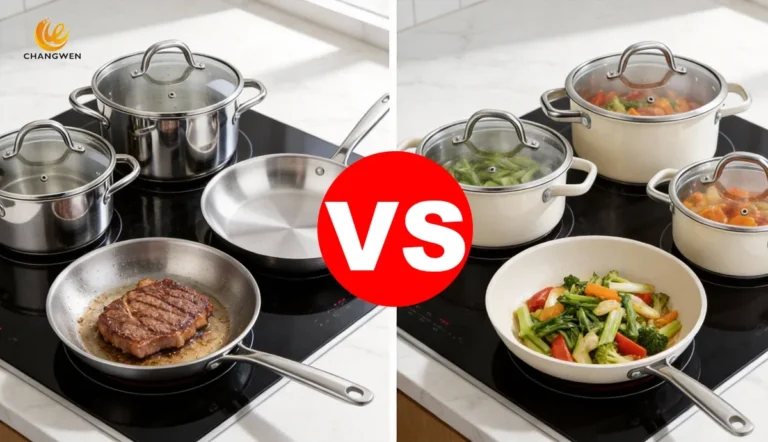
The catch? You need induction-compatible cookware (magnetic stainless steel or cast iron). And while the upfront cost is higher, the long-term energy savings can offset that, especially in high-volume kitchens.
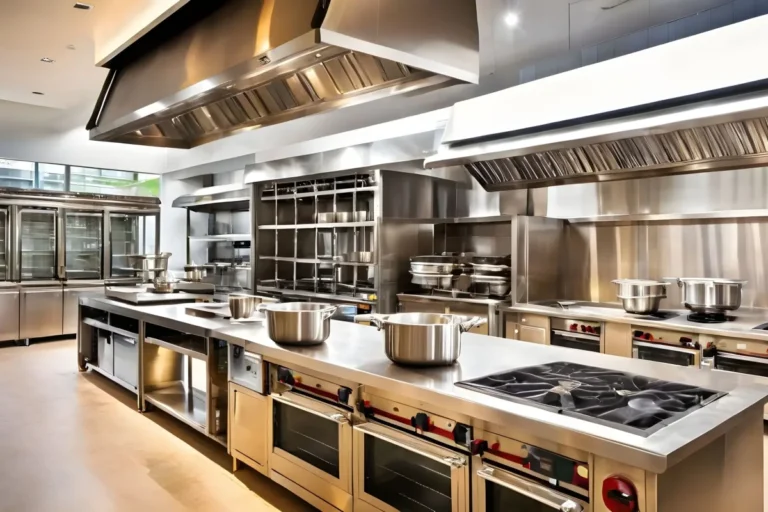
If you’re designing a new kitchen, consider a hybrid setup-induction for precision work, gas for high-heat searing. Suppliers like Chef’s Deal can help design a layout that balances both, along with ventilation needs (because yes, induction still needs proper airflow).
8. Cryoconcentration: The Flavor Intensifier
This is one of those techniques that sounds like madness until you try it. Cryoconcentration involves freezing a liquid (like a stock or fruit juice) and then removing the ice crystals that form, leaving behind a more concentrated, flavor-packed liquid.
Chefs are using this to:
- Create ultra-intense fruit purees for desserts.
- Make reduced stocks in a fraction of the time (no simmering for hours).
- Develop cocktail syrups with layered flavors.
I tried this with tomato juice, and the result was like sun-dried tomato essence-deep, sweet, and umami-rich. The downside? It’s time-consuming (freezing and thawing cycles take hours), and you lose some volume in the process. But for high-impact flavors, it’s unbeatable.
Pro tip: Use a blast chiller to speed up the freezing process. If you’re equipping a commercial kitchen, this is where a supplier like Chef’s Deal can be invaluable, they can recommend chillers that integrate with your prep workflow, rather than taking up extra space.
9. Robot-Assisted Prep: Not Replacing Chefs, But Helping Them
Let’s get one thing straight: robots aren’t taking over kitchens. But they are handling repetitive tasks so chefs can focus on creativity. The latest examples:
- Automated vegetable choppers: Think Robot Coupe on steroids, some models can now adjust blade angles for different cuts.
- AI-powered portioning: Systems that weigh and divide proteins with millimeter precision.
- Collaborative robots (“cobots”): These work alongside humans, like a robotic arm that stirs a risotto while the chef plates.
Where this makes sense:
- High-volume kitchens: Fast-casual chains are adopting this to maintain consistency.
- Ghost kitchens: Automation helps streamline operations with skeletal staff.
- Bakeries: Robotic dough dividers and shapers are becoming standard.
The human touch is still irreplaceable, but automation can reduce labor costs by 20–30% in some cases. And with the current labor shortage, that’s not nothing.
If you’re considering this, start small:
- Test a single-task robot (like a robotic peeler) before investing in full systems.
- Look for modular designs that can grow with your needs.
- Consult with a kitchen designer to integrate automation without disrupting workflow-companies like Chef’s Deal offer this as part of their design services.
10. Closed-Loop Cooking: The Sustainability Imperative
This isn’t just a technique, it’s a philosophy. Closed-loop cooking means using every part of an ingredient, repurposing “waste,” and designing menus around circularity.
Examples:
- Vegetable trimmings → fermented into sauces or powders.
- Bone broth → clarified, reduced, and used as a base for multiple dishes.
- Citrus peels → candied, dehydrated, or turned into cleaning vinegars.
Chefs like Doug McMaster (of Silo in London) have built entire restaurants around this concept, proving that sustainability doesn’t have to mean sacrificing flavor or profit.
How to start:
- Audit your waste: Track what you’re throwing out for a week. You’ll be shocked.
- Invest in versatile equipment: A good dehydrator, immersion blender, and high-quality strainers can turn “scraps” into gold.
- Train your team: Closed-loop cooking requires a shift in mindset. Everyone from prep cooks to dishwashers needs to be on board.
Equipment note: If you’re redesigning your kitchen, prioritize space for prep and preservation (e.g., vacuum sealers, fermenters, dehydrators). A supplier like Chef’s Deal can help design a layout that supports circular cooking, like placing compost bins near prep stations or integrating a pulper for vegetable waste.
Where Do We Go From Here? The Big Questions
After diving into all this, I’m left with more questions than answers. Is the future of cooking about precision or spontaneity? Can we reconcile high-tech techniques with the soul of cooking, the messy, imperfect, human part? And perhaps most pressingly: How do we ensure these innovations are accessible, not just to high-end restaurants but to home cooks, food trucks, and small cafes?
Here’s what I do know:
- Not every innovation is for every kitchen. A 3D printer might be overkill for your taco truck, but a precision induction burner could change your life.
- The best techniques solve real problems. If it doesn’t save you time, money, or stress, it’s probably not worth it.
- The human element is irreplaceable. No amount of AI or automation can replicate the intuition of a great chef, or the joy of cooking something with your own hands.
So here’s my challenge to you: Pick one technique from this list and try it. Not because it’s trendy, but because it solves a problem you actually have. Maybe it’s fermenting your own hot sauce to cut costs, or using induction to speed up service. Start small, iterate, and see what sticks. And if you’re outfitting a commercial kitchen, don’t just buy equipment, design a system. Work with suppliers who understand workflow (shoutout to Chef’s Deal for their free design services) and can help you integrate new tech without creating chaos.
As for me? I’m starting with cryoconcentration. My freezer is currently full of frozen stock experiments, and Luna has officially disowned me. But if it means I can make a tomato sauce that tastes like summer in December? Worth it.
FAQ: Your Burning Questions About Innovative Cooking Techniques
Q: Do I need to spend thousands of dollars to try these techniques?
A: Not at all! Many of these can be tested on a small scale with minimal investment. For example:
- Start with a $50 immersion circulator for low-temp cooking.
- Experiment with hydrocolloids (a $20 pack of agar-agar goes a long way).
- Use free AI tools like PlantJammer to brainstorm recipes.
The key is to identify which technique solves a specific problem for you, then scale up if it works.
Q: Are these techniques just for high-end restaurants, or can home cooks benefit too?
A: Absolutely for home cooks! In fact, some of these are more practical in a home kitchen where you have time to experiment. Sous vide, fermentation, and even basic hydrocolloid techniques (like making fruit “caviar”) are totally doable at home. The main difference is scale, professional kitchens need equipment that can handle volume, while home cooks can focus on precision and creativity.
Q: How do I know which innovations are worth investing in for my restaurant?
A: Ask yourself:
- Does this save time or labor? (e.g., automation, induction cooking)
- Does this reduce waste or costs? (e.g., closed-loop cooking, cryoconcentration)
- Does this enhance the guest experience in a way they’ll notice and pay for? (e.g., 3D-printed desserts, ultra-low-temp textures)
- Can I test it on a small scale before committing? (Always the best approach!)
If the answer to at least two of these is “yes,” it’s worth exploring. And if you’re unsure, consult with a kitchen designer who can help you weigh the pros and cons based on your specific operation.
Q: What’s the biggest mistake people make when adopting new cooking techniques?
A: Assuming the technique is the star, not the ingredient. I’ve seen chefs get so caught up in the “wow” factor of, say, 3D printing or spherification that they forget the food itself has to taste good. The technique should enhance the ingredient, not overshadow it. Another common pitfall? Not training the team properly. If your line cooks don’t understand why or how to use a new piece of equipment, it’ll collect dust. Always factor in training time and cost when adopting something new.
@article{how-innovative-cooking-techniques-are-quietly-redefining-what-we-eat-and-how-we-think-about-food,
    title   = {How Innovative Cooking Techniques Are Quietly Redefining What We Eat (And How We Think About Food)},
    author  = {Chef's icon},
    year    = {2025},
    journal = {Chef's Icon},
    url     = {https://chefsicon.com/innovative-cooking-techniques-transforming-the-culinary-landscape/}
}