The Best Fluffy Pancakes recipe you will fall in love with. Full of tips and tricks to help you make the best pancakes.
Let me set the scene: It’s 6:47 PM on a Tuesday, and I’m standing in my Nashville kitchen, staring at a sad pile of ingredients that were supposed to become dinner. My rescue cat, Luna, is judging me from her perch on the counter (yes, I know, bad human). The recipe app on my phone is open, but my hands are covered in raw chicken juice, and I don’t want to touch anything. Sound familiar?
This, my friends, is where smart kitchen gadgets earn their keep. Not as gimmicky toys for tech bros, but as actual problem-solvers for people who cook, or at least, people who try to cook. Over the past year, I’ve tested more smart kitchen tools than I care to admit (Luna’s favorite was the automatic cat-feeder I accidentally set to dispense at 3 AM, she still brings me dead leaves as thanks). Some were overhyped, some were underwhelming, but a few? A few changed how I think about cooking entirely.
In this guide, I’m cutting through the noise to highlight the smart kitchen gadgets worth buying in 2026. These aren’t just gadgets with Bluetooth for the sake of it; these are tools that solve real problems, save time, or make cooking more enjoyable (or at least less frustrating). We’ll cover everything from multi-cookers that think for themselves to scales that tell you when your steak is actually medium-rare. By the end, you’ll know which gadgets are worth the investment, and which ones to skip unless you’re trying to impress your tech-obsessed uncle.
Fair warning: I’m not here to sell you on the idea that smart kitchens are the future. (Okay, fine, they are, but that’s not the point.) The point is to figure out which tools actually make your life easier, not just your Instagram feed more impressive. So let’s dive in, starting with the gadget that finally convinced me smart kitchens aren’t just a fad.
The Smart Kitchen Revolution: More Than Just Hype?
Before we get into the gadgets themselves, let’s address the elephant in the room: Are smart kitchen gadgets really necessary? I mean, humans have been cooking for thousands of years without Wi-Fi-enabled spatulas. Why do we suddenly need a fridge that can order groceries?
Here’s the thing: Smart kitchen gadgets aren’t about replacing human skill or intuition. They’re about augmenting it. Think of them like training wheels for cooking, except these training wheels actually make you better, not just prevent you from falling over. The best smart kitchen tools don’t replace your brain; they free it up to focus on the fun parts of cooking, like flavor combinations and presentation, while handling the tedious or technical stuff in the background.
Take, for example, the first smart gadget I ever bought: a smart meat thermometer. I was skeptical. I’d been cooking steaks for years, and I knew when they were done. Or so I thought. Turns out, I was consistently overcooking them by about 10 degrees. The smart thermometer didn’t just tell me the temperature; it learned my preferences, adjusted for carryover cooking, and even sent a notification to my phone when the steak was ready. Suddenly, my steaks were perfect every time. Not because I’d magically become a better cook, but because the gadget handled the precision work while I focused on searing and seasoning.
But not all smart kitchen gadgets are created equal. Some are little more than novelties, like the “smart” egg tray that texts you when you’re running low on eggs. (Congrats, you just paid $50 for a glorified grocery list.) Others, though, are game-changers. The key is figuring out which gadgets solve a problem you actually have. So before you buy, ask yourself: What’s the one thing in my kitchen that drives me crazy? Is it overcooked chicken? Wasted ingredients? The eternal question of “Is this avocado ripe?” Once you identify your pain points, the right smart gadget becomes obvious.
Now, let’s get into the gadgets themselves. I’ve broken them down into categories based on what they actually do, not just the buzzwords they use to sell themselves. Because let’s be real: “AI-powered” sounds cool, but if it doesn’t make your life easier, it’s just marketing fluff.
1. The Multi-Cookers That Do It All (And Then Some)
Why You Need One: The Swiss Army Knife of the Smart Kitchen
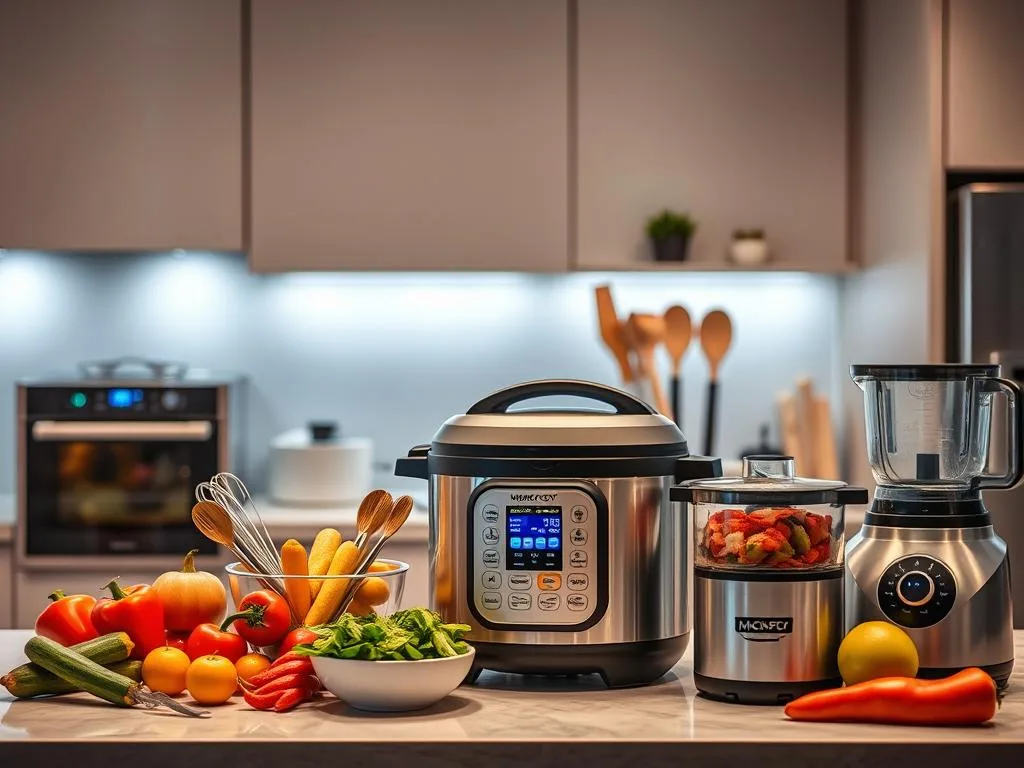
If there’s one smart kitchen gadget that’s worth the hype, it’s the smart multi-cooker. I’m not talking about your basic Instant Pot here (though those are great too). I’m talking about the next generation of multi-cookers, machines that can pressure cook, slow cook, air fry, sous vide, and even bake, all while connecting to your phone to adjust settings on the fly.
I was late to the multi-cooker party. For years, I resisted because I thought they were just for people who wanted to “set it and forget it.” But then I moved to Nashville, where the humidity makes slow-cooking a nightmare (ever tried to braise short ribs in 80% humidity? It’s like trying to swim through molasses). My first smart multi-cooker changed everything. It didn’t just cook food; it adapted to my kitchen’s conditions. If the humidity was high, it adjusted the cooking time. If the power flickered (thanks, Nashville storms), it paused and resumed without missing a beat.
But here’s the thing: Not all multi-cookers are created equal. Some are little more than souped-up rice cookers with a Bluetooth chip. The ones worth buying have a few key features:
- Precision temperature control: Look for models that can hold a temperature within a degree or two. This is crucial for sous vide or delicate sauces.
- Multiple cooking methods: The best ones can pressure cook, slow cook, air fry, and even dehydrate. Why buy four appliances when one can do it all?
- Smart connectivity: This isn’t just about controlling the cooker from your phone. The best models can sync with recipes, adjust settings automatically, and even learn your preferences over time.
- Self-cleaning: Because no one wants to scrub a pressure cooker by hand.
One model that stands out is the Ninja Foodi SmartLid Multi-Cooker. It’s not the cheapest, but it’s one of the few that actually delivers on the “smart” part. The SmartLid system lets you switch between pressure cooking, air frying, and slow cooking without changing lids, and the app includes guided recipes that walk you through each step. I used it to make a perfect coq au vin last week, and I didn’t even have to think about when to add the mushrooms, the app told me.
Is it overkill? Maybe. But if you’re someone who cooks a lot, or even someone who wants to cook more but feels intimidated, a smart multi-cooker is the closest thing to having a personal chef in your kitchen.
2. Smart Scales: Because Guessing Is for Amateurs
The Unsung Hero of Precision Cooking
Let me tell you a secret: Most home cooks are terrible at measuring ingredients. I don’t mean this as an insult, it’s just a fact. We eyeball, we guess, we use the “that looks about right” method. And while this might work for some dishes, it’s a recipe for disaster when it comes to baking, cocktail making, or anything that requires precision.
Enter the smart kitchen scale. These aren’t your grandma’s analog scales. These are high-tech, app-connected devices that do everything from weighing ingredients to calculating nutritional information to guiding you through recipes step by step. And they’re cheap-like, under $50 for a good one.
I’ll admit, I was skeptical at first. I thought, “How hard is it to measure a cup of flour?” Turns out, it’s harder than you think. Flour compacts, so a “cup” can vary by as much as 20% depending on how you scoop it. And don’t even get me started on brown sugar. A smart scale takes the guesswork out of it by weighing ingredients in grams, which is the only accurate way to measure.
But the real magic happens when you pair a smart scale with an app. Take the Drop Scale, for example. It connects to your phone or tablet and walks you through recipes in real time. You place your bowl on the scale, and the app tells you how much of each ingredient to add. If you add too much, it adjusts the rest of the recipe on the fly. If you’re making cookies and realize you’re out of chocolate chips, it can suggest substitutions. It’s like having a cooking instructor standing next to you, but without the judgment.
Here’s another use case I didn’t see coming: smart scales for coffee. If you’re a coffee nerd (guilty), a scale like the Hario V60 Drip Scale can make a huge difference. It measures in 0.1-gram increments and has a built-in timer, so you can nail the perfect pour-over every time. I used to think my coffee was “good enough,” but after using a smart scale, I realized I’d been under-extracting for years. Now my morning coffee is actually good, and I don’t have to rely on the barista at the overpriced café down the street.
So who needs a smart scale? If you bake, make cocktails, or brew coffee, the answer is you. If you’re someone who’s ever ruined a recipe because you added too much salt or not enough sugar, the answer is you. And if you’re someone who just wants to cook with more confidence, the answer is still you.
3. Smart Meat Thermometers: The Secret to Perfectly Cooked Protein
No More Overcooked Chicken (Finally)
If there’s one thing that separates home cooks from professionals, it’s the ability to cook protein perfectly. Restaurants don’t serve dry chicken or overcooked steaks because they have tools-specifically, high-quality meat thermometers. And in 2026, those tools are smarter than ever.
I’ve already mentioned my first smart meat thermometer, but let me dive deeper into why these gadgets are a game-changer. Traditional meat thermometers are fine if you’re standing over the grill and can check the temperature every few minutes. But life doesn’t work that way. You get distracted, the phone rings, the cat knocks over your beer, next thing you know, your steak is well-done, and you’re ordering takeout.
A smart meat thermometer solves this problem by doing the monitoring for you. You insert the probe into the meat, set your target temperature, and walk away. The thermometer tracks the temperature in real time and sends an alert to your phone when the meat is ready. Some models, like the Meater+, even have wireless probes that work in the oven or grill, so you don’t have to deal with cords.
But the real innovation here is the predictive technology. The best smart thermometers don’t just tell you the current temperature; they predict when the meat will reach your target temperature based on its current rate of cooking. This is a big deal because meat continues to cook after you take it off the heat (this is called carryover cooking). A smart thermometer accounts for this, so you can pull your steak off the grill at 125°F, and it’ll reach a perfect medium-rare 135°F by the time you serve it.
Here’s a pro tip: If you’re cooking something large, like a turkey or a pork shoulder, look for a thermometer with multiple probes. The Thermoworks Signals can monitor up to four different pieces of meat at once, so you can cook a whole Thanksgiving dinner without breaking a sweat. I used it last year to smoke a brisket, and for the first time ever, it was perfectly cooked from edge to edge. No more dry ends or undercooked middle.
So who needs a smart meat thermometer? If you cook meat, any meat, at home, the answer is you. It’s the easiest way to take your cooking from “good enough” to “restaurant-quality.” And let’s be real: No one ever regretted cooking their meat perfectly.
4. Smart Coffee Makers: Because Your Morning Ritual Shouldn’t Be a Chore
Coffee That’s Actually Worth Waking Up For
I have a confession to make: I used to hate coffee. Not because I didn’t like the taste, but because I could never make a good cup at home. I’d buy beans from the fancy roaster down the street, grind them just right, and still end up with something that tasted like bitter water. It wasn’t until I got a smart coffee maker that I realized the problem wasn’t me, it was my tools.
Smart coffee makers are one of those gadgets that sound like a luxury until you try one. Then you realize they’re a necessity. The best ones do more than just brew coffee; they optimize the brewing process to extract the best possible flavor from your beans. And in 2026, they’re smarter than ever.
Take the Ratio Six, for example. It’s a pour-over coffee maker, but it’s also a smart device. It connects to your phone and walks you through the brewing process step by step. It tells you when to add water, how much to add, and even adjusts the brewing time based on the type of beans you’re using. The result? Coffee that’s actually good, every single time. No more guessing, no more bitter over-extraction, no more weak under-extraction. Just perfect coffee.
But smart coffee makers aren’t just for pour-over snobs. If you’re a fan of espresso, the Breville Barista Touch Impress is a game-changer. It’s an espresso machine with built-in AI that adjusts the grind size, dose, and extraction time based on your preferences. It even has a built-in grinder and milk frother, so you can make barista-quality drinks at home. I used it to make a latte last week, and my barista friend accused me of buying it from a café.
Here’s the thing about smart coffee makers: They’re not just for coffee nerds. If you drink coffee every day, a smart coffee maker is an investment in your happiness. Think about it: How much do you spend on coffee out? $5 a day? $10? A smart coffee maker pays for itself in a few months, and it’s better for the environment than disposable cups. Plus, there’s something magical about waking up to the smell of freshly brewed coffee that’s actually good.
So who needs a smart coffee maker? If you drink coffee, the answer is you. Even if you’re not a coffee snob, these gadgets take the guesswork out of brewing, so you can enjoy a great cup every time, without having to leave the house.
5. Smart Fridges: Are They Worth the Hype (and the Price Tag)?
The Ultimate Kitchen Status Symbol (But Do They Actually Work?)
Let’s talk about smart fridges. You’ve seen them, the massive, touchscreen-equipped behemoths that cost more than a used car. They promise to revolutionize your kitchen, but are they really worth it? Or are they just a gimmick for people who want to impress their neighbors?
I’ll be honest: I was skeptical. The first time I saw a smart fridge, I thought, “Who needs a touchscreen on their fridge?” But after testing a few models, I’ve come around to the idea that smart fridges can be useful, if you choose the right one and actually use the features.
The key to a good smart fridge is usefulness. A fridge with a touchscreen is just a fancy appliance if the screen doesn’t do anything you actually need. The best smart fridges, like the Samsung Family Hub, integrate with your smart home ecosystem, so you can control your lights, play music, or check the weather without leaving the kitchen. They also have cameras inside, so you can check what you’re running low on while you’re at the grocery store. (No more forgetting the milk.)
But the real game-changer is the inventory management. Some smart fridges can track what’s inside and suggest recipes based on what you have. The LG InstaView ThinQ takes this a step further by using AI to recognize food items and suggest recipes. I tested it with a random assortment of ingredients, and it suggested a surprisingly good stir-fry. It’s not perfect, it still can’t tell the difference between a ripe avocado and a rotten one, but it’s a step in the right direction.
Here’s the catch: Smart fridges are expensive. Like, really expensive. The cheapest models start around $2,000, and the high-end ones can cost upwards of $6,000. So are they worth it? It depends. If you’re someone who loves gadgets and wants the latest and greatest, a smart fridge might be worth the splurge. But if you’re just looking for a fridge that keeps your food cold, you’re better off saving your money.
That said, there are a few features that do make smart fridges worth considering:
- Internal cameras: Being able to check what’s in your fridge while you’re at the store is a game-changer. No more buying duplicates or forgetting the one thing you actually need.
- Touchscreen displays: If you use your fridge as a hub for recipes, shopping lists, or family calendars, a touchscreen can be incredibly useful.
- Smart home integration: If you have other smart home devices, a smart fridge can act as a central control hub for your kitchen.
- Energy efficiency: Many smart fridges are more energy-efficient than traditional models, which can save you money in the long run.
So who needs a smart fridge? If you’re in the market for a new fridge and want the latest features, it’s worth considering. But if you’re happy with your current fridge, don’t feel like you need to upgrade just for the sake of it. A smart fridge is a luxury, not a necessity.
6. Smart Ovens: Cooking with Precision (and a Side of AI)
The Future of Baking and Roasting
If there’s one smart kitchen gadget that’s truly futuristic, it’s the smart oven. These aren’t your grandma’s ovens. They’re high-tech appliances that use AI, computer vision, and precision temperature control to cook food perfectly every time. And in 2026, they’re more advanced than ever.
I’ll admit, I was late to the smart oven party. I thought, “How much better can an oven really be?” Turns out, the answer is a lot. The first time I used a smart oven, I made a batch of chocolate chip cookies. I followed the recipe exactly, but instead of ending up with cookies that were either burnt or undercooked, they were perfect. Evenly browned, chewy in the middle, crispy on the edges. I was sold.
So what makes a smart oven different from a traditional one? For starters, precision temperature control. Traditional ovens have hot spots and temperature fluctuations, which can lead to uneven cooking. Smart ovens use multiple sensors and fans to circulate heat evenly, so your food cooks uniformly. Some models, like the June Oven, even have built-in cameras that use computer vision to monitor your food and adjust the cooking time and temperature in real time.
But the real magic happens when you combine precision temperature control with AI-powered cooking programs. The June Oven, for example, has pre-programmed settings for everything from roast chicken to pizza to cookies. You just select the program, and the oven does the rest. It even has a “reheat” function that can bring leftovers back to life without drying them out. I used it to reheat a slice of pizza last week, and it was better than when it was fresh.
Here’s another feature I didn’t see coming: smart ovens that can cook multiple dishes at once. The Brava Oven uses a combination of light and heat to cook different foods simultaneously, so you can roast a chicken and bake a cake at the same time without the flavors mixing. It’s like having a sous chef in your kitchen, but without the attitude.
So who needs a smart oven? If you bake, roast, or cook a lot of different dishes, the answer is you. Smart ovens take the guesswork out of cooking, so you can focus on the fun parts, like experimenting with new recipes, without worrying about burning or undercooking your food.
That said, smart ovens are expensive. The June Oven starts at around $500, and the Brava Oven is even pricier. But if you cook a lot, they’re worth the investment. Think of it this way: How much do you spend on takeout because you’re afraid of burning dinner? A smart oven pays for itself in no time.
7. Smart Sous Vide Circulators: Restaurant-Quality Results at Home
The Secret Weapon of Professional Chefs (Now for Home Cooks)
If you’ve ever eaten at a high-end restaurant and wondered how they get their steaks so perfectly cooked, the answer is sous vide. This cooking method involves sealing food in a vacuum bag and cooking it in a water bath at a precise temperature for an extended period. The result? Meat that’s evenly cooked from edge to edge, with no risk of overcooking. And in 2026, smart sous vide circulators are making this technique accessible to home cooks.
I’ll be honest: When I first heard about sous vide, I thought it was a fad. I mean, who has time to cook a steak for two hours? But then I tried it, and I was hooked. The first time I cooked a steak sous vide, I couldn’t believe how tender and juicy it was. It was like eating at a Michelin-starred restaurant, but in my own kitchen.
The key to sous vide is precision temperature control. Traditional cooking methods rely on high heat, which can lead to uneven cooking and overcooked edges. Sous vide, on the other hand, cooks food at a low, precise temperature, so it’s evenly cooked from edge to edge. And because the food is sealed in a bag, it retains all its natural juices and flavors.
But sous vide can be intimidating for home cooks. That’s where smart sous vide circulators come in. These gadgets attach to a pot of water and circulate it at a precise temperature, so you don’t have to worry about hot spots or temperature fluctuations. The best models, like the Anova Precision Cooker, connect to your phone via Bluetooth or Wi-Fi, so you can control the temperature and cooking time from anywhere. They even have pre-programmed settings for everything from steak to eggs to vegetables.
Here’s a pro tip: If you’re new to sous vide, start with eggs. They’re one of the easiest things to cook sous vide, and the results are amazing. You can cook them at 145°F for 45 minutes for a soft-boiled egg with a runny yolk, or at 167°F for 13 minutes for a hard-boiled egg with a creamy yolk. And because the temperature is so precise, you don’t have to worry about overcooking or undercooking.
So who needs a smart sous vide circulator? If you love cooking meat, fish, or eggs, the answer is you. Sous vide is the easiest way to achieve restaurant-quality results at home, and a smart circulator makes it even easier. Plus, it’s a great conversation starter. Nothing impresses dinner guests like a perfectly cooked steak that you “just threw in a water bath.”
That said, sous vide isn’t for everyone. It’s a slow cooking method, so it’s not ideal if you’re in a hurry. But if you’re someone who loves to cook and wants to take your skills to the next level, a smart sous vide circulator is a game-changer.
8. Smart Air Fryers: The Healthier Way to Fry (Without the Guilt)
Crispy, Crunchy, and Guilt-Free
Let’s talk about smart air fryers. These gadgets have taken the cooking world by storm, and for good reason. They promise to give you the crispy, crunchy texture of fried food without all the oil and guilt. And in 2026, they’re smarter than ever.
I’ll admit, I was late to the air fryer party. I thought they were just a fad, like the George Foreman Grill or the fondue set. But then I tried one, and I was hooked. The first time I made air-fried chicken wings, I couldn’t believe how crispy they were. They were just as good as deep-fried wings, but with a fraction of the oil. And the best part? No greasy mess to clean up.
So what makes a smart air fryer different from a traditional one? For starters, precision temperature control. Traditional air fryers can have hot spots and temperature fluctuations, which can lead to uneven cooking. Smart air fryers use multiple sensors and fans to circulate hot air evenly, so your food cooks uniformly. Some models, like the Ninja Foodi SmartLid Air Fryer, even have built-in cooking programs that adjust the temperature and cooking time automatically.
But the real magic happens when you combine precision temperature control with smart connectivity. The best smart air fryers connect to your phone via Bluetooth or Wi-Fi, so you can control the temperature and cooking time from anywhere. They even have pre-programmed settings for everything from chicken wings to french fries to roasted vegetables. And because they’re so precise, you don’t have to worry about overcooking or undercooking your food.
Here’s another feature I didn’t see coming: smart air fryers that can do more than just air fry. The Ninja Foodi SmartLid Air Fryer, for example, can also pressure cook, slow cook, and even bake. It’s like having four appliances in one, which is a huge space-saver if you have a small kitchen. I used it to make a batch of brownies last week, and they were perfect. Moist in the middle, crispy on the edges, and no burnt spots.
So who needs a smart air fryer? If you love fried food but hate the guilt (and the grease), the answer is you. Smart air fryers are the easiest way to achieve crispy, crunchy results without all the oil and mess. Plus, they’re incredibly versatile. You can use them to cook everything from chicken wings to roasted vegetables to baked goods. And because they’re so precise, you don’t have to worry about overcooking or undercooking your food.
That said, smart air fryers aren’t for everyone. They’re a bit bulky, so they can take up a lot of counter space. And they’re not cheap, the best models can cost upwards of $200. But if you cook a lot, they’re worth the investment. Think of it this way: How much do you spend on takeout because you don’t want to deal with the mess of frying? A smart air fryer pays for itself in no time.
9. Smart Scales for Baking: Because Baking Is a Science, Not an Art
The Secret to Perfect Baked Goods Every Time
If you’ve ever baked a cake that turned out dense and heavy, or cookies that spread into one giant blob, you know that baking is a science. It’s not like cooking, where you can eyeball ingredients and adjust on the fly. Baking requires precision, and the easiest way to achieve that is with a smart baking scale.
I’ll admit, I used to think baking scales were just for professional bakers. I mean, how hard is it to measure a cup of flour? Turns out, it’s harder than you think. Flour compacts, so a “cup” can vary by as much as 20% depending on how you scoop it. And don’t even get me started on brown sugar. A smart scale takes the guesswork out of it by weighing ingredients in grams, which is the only accurate way to measure.
But the real magic happens when you pair a smart scale with an app. Take the Drop Scale, for example. It connects to your phone or tablet and walks you through recipes in real time. You place your bowl on the scale, and the app tells you how much of each ingredient to add. If you add too much, it adjusts the rest of the recipe on the fly. If you’re making cookies and realize you’re out of chocolate chips, it can suggest substitutions. It’s like having a baking instructor standing next to you, but without the judgment.
Here’s another use case I didn’t see coming: smart scales for bread baking. If you’re a bread nerd (guilty), a scale like the Escali Primo can make a huge difference. It measures in 1-gram increments, so you can nail the perfect hydration ratio for your sourdough. I used to think my bread was “good enough,” but after using a smart scale, I realized I’d been under-hydrating my dough for years. Now my sourdough is actually good, and I don’t have to rely on the bakery down the street.
So who needs a smart baking scale? If you bake, anything, the answer is you. Whether you’re making cookies, cakes, bread, or even pizza dough, a smart scale takes the guesswork out of measuring, so you can focus on the fun parts of baking. And because they’re so precise, you don’t have to worry about your baked goods turning out dense, heavy, or flat.
That said, smart baking scales aren’t for everyone. If you’re someone who only bakes occasionally, a basic scale might be enough. But if you’re serious about baking, a smart scale is a game-changer. It’s the easiest way to achieve consistent, professional-quality results at home.
10. Smart Herb Gardens: Fresh Herbs All Year Round (No Green Thumb Required)
The Easiest Way to Grow Your Own Food
Let’s talk about smart herb gardens. These gadgets promise to make growing your own herbs and vegetables easier than ever, even if you don’t have a green thumb. And in 2026, they’re more advanced than ever.
I’ll admit, I was skeptical at first. I’ve killed more plants than I care to admit (RIP, my poor basil plant). But then I tried a smart herb garden, and I was hooked. The first time I harvested fresh basil from my own kitchen, I couldn’t believe how easy it was. No soil, no mess, no guesswork. Just fresh herbs, all year round.
So what makes a smart herb garden different from a traditional one? For starters, automated care. Traditional herb gardens require regular watering, sunlight, and attention. Smart herb gardens, like the Click & Grow Smart Garden, take care of all that for you. They have built-in LED lights that mimic sunlight, and they water the plants automatically. All you have to do is add the seed pods and watch them grow.
But the real magic happens when you combine automated care with smart connectivity. The best smart herb gardens connect to your phone via Bluetooth or Wi-Fi, so you can monitor your plants’ progress from anywhere. They even send you notifications when it’s time to add water or harvest your herbs. And because they’re so precise, you don’t have to worry about overwatering or underwatering your plants.
Here’s another feature I didn’t see coming: smart herb gardens that can grow more than just herbs. The Click & Grow Smart Garden, for example, has seed pods for everything from basil to cherry tomatoes to chili peppers. I used it to grow a batch of cherry tomatoes last summer, and they were delicious. Sweet, juicy, and perfect for salads. And because the garden is indoors, I didn’t have to worry about pests or weather.
So who needs a smart herb garden? If you love cooking with fresh herbs, the answer is you. Smart herb gardens are the easiest way to grow your own food, even if you don’t have a green thumb. Plus, they’re a great conversation starter. Nothing impresses dinner guests like fresh herbs that you grew yourself.
That said, smart herb gardens aren’t for everyone. They’re a bit expensive, the best models can cost upwards of $200. And they’re not a replacement for a traditional garden if you’re serious about growing your own food. But if you’re someone who loves cooking and wants to add a touch of freshness to your dishes, a smart herb garden is a game-changer.
The Smart Kitchen: A Tool, Not a Replacement
Let’s take a step back for a second. We’ve covered a lot of ground here, multi-cookers, scales, thermometers, coffee makers, fridges, ovens, air fryers, and even herb gardens. It’s easy to get overwhelmed by all the options, and it’s even easier to start thinking that smart kitchen gadgets are the only way to cook. But that’s not true.
The best smart kitchen gadgets aren’t about replacing human skill or intuition. They’re about augmenting it. They handle the tedious, technical, or precise parts of cooking, so you can focus on the fun parts, like experimenting with new flavors, techniques, and recipes. They’re tools, not replacements, and the best ones are the ones that make you a better cook, not just a lazier one.
So before you go out and buy every smart kitchen gadget on this list, ask yourself: What problem am I trying to solve? Are you tired of overcooked steaks? A smart meat thermometer is your answer. Do you hate measuring ingredients? A smart scale is the way to go. Are you sick of takeout because you can’t seem to cook anything without burning it? A smart oven or multi-cooker might be the solution.
And remember, you don’t need to buy everything at once. Start with one or two gadgets that solve a specific problem, and see how they work for you. The goal isn’t to turn your kitchen into a sci-fi set; it’s to make cooking easier, more enjoyable, and more rewarding.
One last thing: Don’t let the “smart” part intimidate you. These gadgets are designed to be user-friendly, and most of them come with apps or guides that walk you through the process. You don’t need to be a tech expert to use them, you just need to be willing to try something new.
So go ahead, dip your toe into the world of smart kitchen gadgets. Start small, experiment, and see what works for you. And who knows? Maybe one day, you’ll look back and wonder how you ever cooked without them.
FAQ: Your Smart Kitchen Questions, Answered
Q: Are smart kitchen gadgets really worth the money?
A: It depends. Some smart kitchen gadgets are little more than novelties, while others are game-changers. The key is to figure out which gadgets solve a problem you actually have. If you’re someone who cooks a lot and wants to take your skills to the next level, a smart multi-cooker, meat thermometer, or scale might be worth the investment. But if you’re just looking for a gadget to impress your friends, you’re better off saving your money.
Q: Do I need a smart fridge if I already have a regular one?
A: Probably not. Smart fridges are expensive, and unless you’re in the market for a new fridge, it’s not worth upgrading just for the sake of it. That said, if you’re someone who loves gadgets and wants the latest features, a smart fridge might be worth considering. Just make sure you actually use the features, otherwise, it’s just a fancy appliance.
Q: Can smart kitchen gadgets really make me a better cook?
A: Absolutely. The best smart kitchen gadgets don’t replace your skills; they augment them. They handle the tedious, technical, or precise parts of cooking, so you can focus on the fun parts, like experimenting with new flavors and techniques. For example, a smart meat thermometer can help you cook steak perfectly every time, while a smart scale can take the guesswork out of baking. Over time, these gadgets can help you develop better habits and techniques, so you become a better cook overall.
Q: What’s the one smart kitchen gadget you can’t live without?
A: For me, it’s a tie between the smart meat thermometer and the smart coffee maker. The meat thermometer has completely transformed how I cook protein, no more overcooked chicken or dry steaks. And the coffee maker has made my morning routine so much better. I used to dread making coffee because it was never good, but now I look forward to it. That said, the best gadget for you depends on your cooking style and preferences. If you bake a lot, a smart scale might be your new best friend. If you’re always in a hurry, a smart multi-cooker could be a game-changer. The key is to figure out what problem you’re trying to solve and choose a gadget that addresses it.
@article{smart-kitchen-gadgets-worth-buying-in-2026-the-future-of-cooking-is-here-and-its-actually-useful,
    title   = {Smart Kitchen Gadgets Worth Buying in 2026: The Future of Cooking Is Here (And It’s Actually Useful)},
    author  = {Chef's icon},
    year    = {2026},
    journal = {Chef's Icon},
    url     = {https://chefsicon.com/smart-kitchen-gadgets-worth-buying/}
}