The Best Fluffy Pancakes recipe you will fall in love with. Full of tips and tricks to help you make the best pancakes.
How to Adapt Slow Cooker Oats for High-Volume Bakery Production Without Losing Your Mind (or Your Profit Margins)
Let me start with a confession: I once tried to make oatmeal for 200 people in a single slow cooker. It was a disaster. The bottom burned, the top stayed stubbornly dry, and somewhere in the middle, there was a sad, gluey layer that could’ve doubled as wallpaper paste. That was the day I learned that scaling up slow cooker oats isn’t as simple as dumping more ingredients into a bigger pot. If you’re running a bakery or commercial kitchen and you’re trying to figure out how to adapt slow cooker oats for high-volume production, whether for oatmeal bars, baked goods, or artisanal granola, you’re in the right place. This isn’t just about making more oats; it’s about making them consistently, efficiently, and deliciously at a scale that won’t leave you pulling your hair out.
I’ve spent the last few years digging into the logistics of commercial kitchen production, and oats are one of those ingredients that seem deceptively simple. They’re not. They’re finicky, temperamental, and have a knack for turning into a brick if you so much as look at them wrong. But here’s the good news: with the right approach, you can adapt slow cooker oats for high-volume bakery production without sacrificing quality or your sanity. In this guide, I’ll walk you through everything I’ve learned, from equipment tweaks to ingredient ratios to workflow hacks, so you can scale up your oat game like a pro. And yes, I’ll include the mistakes I made so you don’t have to repeat them.
By the end of this, you’ll know:
- Why slow cooker oats behave differently at scale (and how to work with that, not against it)
- The best equipment for high-volume oat production (spoiler: it’s not just bigger slow cookers)
- How to adjust liquid ratios, cook times, and mixing techniques for consistent results
- Ways to incorporate oats into baked goods without turning them into hockey pucks
- Tips for storing and reheating oats at scale without losing texture or flavor
- How to troubleshoot common issues (because trust me, they will happen)
So grab a coffee (or tea, if you’re one of those people), and let’s dive in. And if you’re reading this at 3 AM because you’ve got a breakfast rush tomorrow and your current oat situation is looking dire, don’t panic. We’ll get you through this.
The Problem with Scaling Up Slow Cooker Oats: Why Bigger Isn’t Always Better
First, let’s talk about why scaling up oats is trickier than it seems. When you make oatmeal in a slow cooker at home, you’re dealing with a relatively small volume of ingredients. The heat distribution is manageable, the liquid-to-oat ratio is forgiving, and if something goes wrong, you can usually salvage it with a little extra milk or a splash of maple syrup. But when you’re making oats for 100, 200, or even 500 servings, suddenly every little variable becomes a potential disaster. Here’s what changes:
Heat Distribution Becomes Your Worst Enemy (or Best Friend)
Slow cookers are designed for low and slow cooking, but their heat distribution isn’t always even. At home, this isn’t a huge deal, you might get a slightly thicker layer at the bottom, but a quick stir fixes it. In a commercial setting, uneven heat can mean the difference between creamy, perfectly cooked oats and a scorched, lumpy mess. The larger the volume, the more pronounced this issue becomes. I’ve seen batches where the oats at the bottom of the pot are overcooked while the ones at the top are still crunchy. Not ideal.
So how do you fix it? The short answer is stirring, stirring, and more stirring. But we’ll get into the specifics of that later. For now, just know that if you’re scaling up, you can’t treat your oats like a “set it and forget it” situation. You’ll need to monitor and adjust, and that means rethinking your workflow.
The Liquid-to-Oat Ratio Isn’t Linear
Here’s a fun fact: oats absorb liquid at different rates depending on the volume you’re cooking. If you’re making a single serving, you might use a 2:1 liquid-to-oat ratio. But if you’re making 50 servings, you can’t just multiply that ratio by 50 and call it a day. Oats are like sponges, they’ll absorb liquid, but only up to a point. Too much liquid, and you’ll end up with a soupy mess. Too little, and you’ll get something that resembles cement. The key is finding that sweet spot, and it’s not as straightforward as you’d think.
I learned this the hard way when I tried to scale up a recipe for steel-cut oats. I used the same ratio I’d use at home, and by the time the oats were cooked, I had a pot of what looked like oat-flavored wallpaper paste. It was thick, gluey, and utterly inedible. Turns out, when you’re cooking in bulk, oats need more liquid than you’d expect because they continue absorbing moisture even after the heat is turned off. Who knew?
Cook Times Get Weird
At home, you might cook steel-cut oats for 6-8 hours on low or 3-4 hours on high. But in a commercial kitchen, cook times don’t scale linearly. A larger volume of oats will take longer to heat up, and the cooking process itself will be slower because there’s more mass to penetrate. If you’re not careful, you’ll end up with oats that are either undercooked (crunchy and unpleasant) or overcooked (mushy and sad).
This is where things get tricky. You can’t just set a timer and walk away. You’ll need to check the oats frequently, adjust the heat as needed, and be prepared to extend the cook time if necessary. And if you’re cooking multiple batches in a day, this can quickly become a logistical nightmare. But don’t worry, we’ll cover how to streamline this process later.
Equipment Matters: What You’ll Need to Scale Up Oats Like a Pro
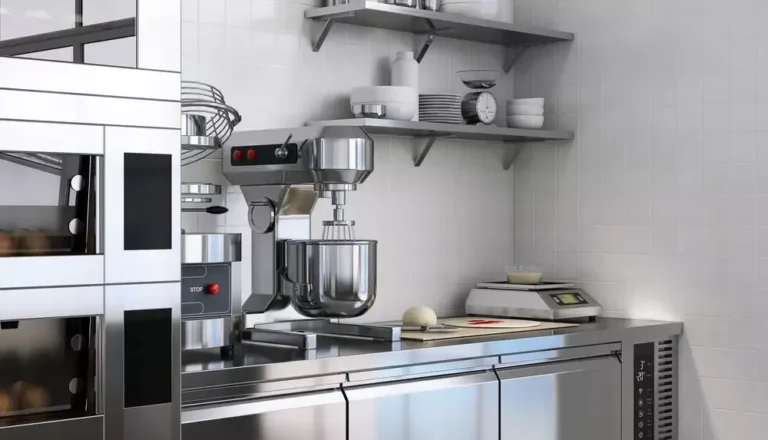
If you’re serious about adapting slow cooker oats for high-volume production, you’re going to need the right tools. A single slow cooker won’t cut it, and neither will your standard restaurant stockpot. Here’s what you should consider investing in (or repurposing) for the job:
Commercial-Grade Steam Jacketed Kettles
If you’re cooking oats in bulk, a steam jacketed kettle is your best friend. These kettles use steam to heat the contents evenly, which solves the heat distribution problem we talked about earlier. They’re also designed for large volumes, so you can cook hundreds of servings at once without worrying about scorching or uneven cooking. The downside? They’re expensive. But if you’re producing oats at scale regularly, they’re worth the investment.
I’ve used these in a few commercial kitchens, and they’re a game-changer. The even heat means you don’t have to stir as frequently, and the temperature control is precise. Plus, they’re versatile, you can use them for soups, sauces, and other bulk cooking tasks, so they’re not a one-trick pony.
Tilting Skillets (or Braising Pans)
A tilting skillet is another great option for cooking oats in bulk. These are essentially giant, flat-bottomed pans with a tilting mechanism that makes it easy to pour out the contents. They’re heated from the bottom, so you’ll still need to stir frequently to prevent scorching, but they’re more affordable than steam jacketed kettles and can handle large volumes.
The tilting feature is a lifesaver when you’re dealing with hundreds of servings. Instead of ladling out oats one scoop at a time, you can tilt the skillet and pour them directly into storage containers. It’s faster, cleaner, and way less backbreaking. If you’re on a budget, this is a solid alternative to a steam kettle.
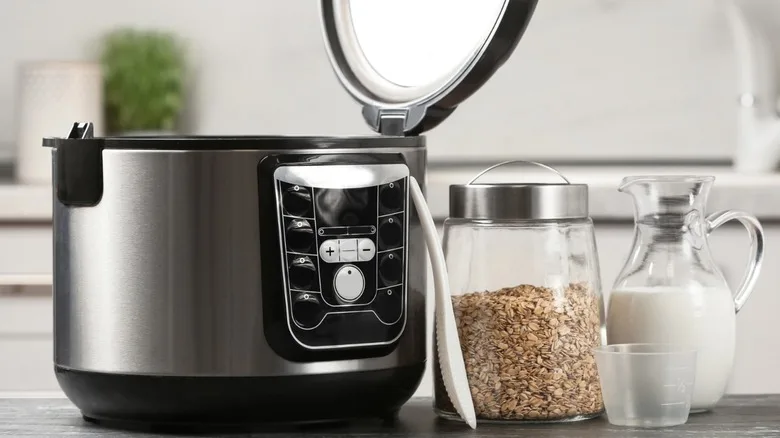
Slow Cookers (Yes, Really, But Not the Ones You’re Thinking Of)
I know I just spent a whole section talking about why slow cookers aren’t ideal for scaling up, but hear me out. If you’re going to use slow cookers for high-volume production, you need to rethink how you use them. First, forget about using a single large slow cooker. Instead, invest in multiple smaller slow cookers (think 6-8 quart capacity) and cook your oats in batches. This gives you more control over heat distribution and cook times, and it’s easier to monitor each batch individually.
Another pro tip: look for slow cookers with removable inserts. These make it easier to transfer the oats to storage containers, and you can even swap out inserts if you’re cooking multiple batches in a row. It’s not the most efficient method, but if you’re just starting out or working with limited equipment, it’s a viable option.
Mixers and Agitators
If you’re cooking oats in a steam kettle or tilting skillet, you’re going to need a way to stir them. Manually stirring hundreds of servings of oats is a recipe for carpal tunnel, so consider investing in a commercial mixer with a paddle attachment or a portable agitator. These tools can save you hours of labor and ensure that your oats are stirred evenly and consistently.
I’ve seen kitchens where they’ve rigged up a drill with a paint mixer attachment to stir oats in a large pot. It’s not pretty, but it works. If you’re on a tight budget, this is a hack worth considering. Just make sure you’re using food-safe materials and cleaning everything thoroughly afterward.
Thermometers and Timers
When you’re cooking oats at scale, precision is key. A digital thermometer will help you monitor the temperature of your oats to ensure they’re cooking evenly and not overheating. You’ll also want a timer with multiple alarms so you can keep track of different batches without losing your mind.
I can’t tell you how many times I’ve seen kitchens rely on guesswork when cooking oats, only to end up with inconsistent results. Don’t be that kitchen. Invest in a good thermometer and use it religiously. Your customers (and your bottom line) will thank you.
Adjusting Liquid Ratios for High-Volume Oat Production
Now that we’ve covered the equipment, let’s talk about the nitty-gritty: liquid ratios. This is where most people go wrong when scaling up oats, and it’s the difference between creamy, delicious oatmeal and a gloopy, unappetizing mess. Here’s how to get it right:
Start with a Baseline Ratio (But Be Prepared to Adjust)
A good starting point for steel-cut oats is a 4:1 liquid-to-oat ratio. For rolled oats, you can go a little lower, around 3:1. But remember, these ratios are just a starting point. When you’re cooking in bulk, you’ll need to adjust based on a few factors:
- Type of oats: Steel-cut oats absorb more liquid than rolled oats, so they’ll need a higher ratio. Quick oats absorb even less, so you can use a lower ratio.
- Cook time: The longer you cook the oats, the more liquid they’ll absorb. If you’re cooking overnight, you’ll need more liquid than if you’re cooking for a few hours.
- Equipment: Steam kettles and tilting skillets evaporate liquid at different rates, so you’ll need to adjust your ratios accordingly.
- Desired texture: If you want your oats to be thick and creamy, use less liquid. If you prefer them thinner, use more.
I’ve found that the best approach is to start with the baseline ratio and then adjust as you go. If the oats are too thick, add more liquid. If they’re too thin, let them cook a little longer. It’s a bit of trial and error, but once you find the right ratio for your setup, you can replicate it consistently.
Account for Evaporation
When you’re cooking oats in bulk, evaporation becomes a bigger factor than it is at home. The larger the volume, the more surface area there is for liquid to evaporate, and the longer the cook time, the more liquid you’ll lose. This is why you can’t just scale up your home recipe and expect it to work.
To account for evaporation, you’ll need to add more liquid than you think you’ll need. I usually start with an extra 10-15% liquid and then adjust as I go. For example, if my baseline ratio is 4:1 for steel-cut oats, I might start with a 4.5:1 ratio when cooking in bulk. It’s better to have a little too much liquid than not enough, you can always cook it down, but you can’t add liquid back once it’s evaporated.
Use a Slurry for Thickening (If Needed)
If you’ve added too much liquid and your oats are too thin, don’t panic. You can thicken them up with a slurry made from oat flour and water. Here’s how:
- Mix 1 part oat flour with 2 parts cold water to form a smooth paste.
- Slowly whisk the slurry into your oats while they’re cooking.
- Let the oats cook for another 5-10 minutes to thicken.
This is a great trick to have up your sleeve, especially if you’re dealing with inconsistent results. Just be careful not to add too much slurry, or you’ll end up with gummy oats. Start with a small amount and adjust as needed.
Consider the Type of Liquid
At home, you might use water, milk, or a combination of the two to cook your oats. But in a commercial kitchen, you’ll need to think about cost, shelf life, and flavor. Here are a few options to consider:
- Water: The most cost-effective option, but it can result in bland oats if you’re not careful. If you go this route, make sure to season your oats well with salt, spices, and other flavorings.
- Milk (dairy or plant-based): Adds richness and creaminess, but it’s more expensive and has a shorter shelf life. If you’re using dairy milk, be careful not to scorch it, it’s more sensitive to heat than water.
- Broth or stock: A great option if you’re making savory oats. Just make sure to use a low-sodium broth to avoid overpowering the oats.
- Coconut milk: Adds a rich, tropical flavor and works well for both sweet and savory oats. It’s more expensive than water, but the flavor payoff can be worth it.
I’ve experimented with all of these, and my go-to for most applications is a combination of water and a small amount of milk (dairy or plant-based). It gives the oats a creamy texture without breaking the bank. But if you’re making something special, like a coconut oatmeal or a savory oat risotto, don’t be afraid to get creative with your liquids.
Cook Times and Temperature Control: The Secret to Consistent Oats
Cook times and temperature control are where most people mess up when scaling up oats. Get this right, and you’ll have creamy, perfectly cooked oats every time. Get it wrong, and you’ll end up with a pot of mush or a batch of crunchy, undercooked oats. Here’s how to nail it:
Low and Slow Is the Way to Go
Oats are delicate, and they need time to soften and absorb liquid. If you cook them too quickly at a high temperature, the outside will overcook while the inside stays crunchy. The key is to cook them low and slow, giving them time to soften evenly.
For steel-cut oats, this means cooking them at 180-190°F (82-88°C) for 4-6 hours. For rolled oats, you can go a little higher, around 190-200°F (88-93°C)-for 2-3 hours. Quick oats cook even faster, so you’ll want to keep the temperature on the lower end to avoid scorching.
I know it’s tempting to crank up the heat to speed things up, but trust me, it’s not worth it. You’ll end up with oats that are unevenly cooked and prone to burning. Patience is key here.
Use a Thermometer (Seriously, Don’t Skip This)
I can’t stress this enough: use a thermometer. Don’t rely on the settings on your equipment or guesswork. Oats are sensitive to temperature fluctuations, and even a few degrees can make a big difference in the final product.
Invest in a good digital thermometer and check the temperature of your oats regularly. If the temperature starts to creep up, lower the heat. If it’s too low, increase it slightly. The goal is to maintain a consistent temperature throughout the cooking process.
I’ve seen kitchens where they’ve tried to cook oats without a thermometer, and the results are always inconsistent. Some batches are perfect, while others are overcooked or undercooked. Don’t let that be you. A thermometer is a small investment that will pay off in spades.
Stir Frequently (But Not Too Frequently)
Stirring is essential when cooking oats in bulk. It helps distribute the heat evenly, prevents scorching, and ensures that all the oats cook at the same rate. But there’s a fine line between stirring enough and stirring too much.
If you stir too frequently, you’ll break up the oats and end up with a mushy texture. If you don’t stir enough, you’ll get uneven cooking and scorching. The sweet spot is to stir every 15-20 minutes for the first hour, and then every 30 minutes after that. This gives the oats time to soften without breaking them down too much.
If you’re using a steam kettle or tilting skillet, you can get away with stirring less frequently because the heat is more even. But if you’re using a slow cooker or a standard pot, you’ll need to stir more often to prevent hot spots.
Let the Oats Rest Before Serving
Here’s a pro tip that most people overlook: let your oats rest after cooking. This gives them time to absorb any remaining liquid and thicken up. If you serve them right away, they might be too thin or watery. But if you let them sit for 10-15 minutes, they’ll reach the perfect consistency.
This is especially important if you’re cooking in bulk. The larger the volume, the longer it takes for the oats to absorb the liquid evenly. I usually let my oats rest for at least 15 minutes before serving, and I’ve found that this makes a big difference in the final texture.
If you’re cooking multiple batches in a day, you can even let the oats rest in the pot while you cook the next batch. Just keep the heat on low to maintain the temperature, and stir occasionally to prevent a skin from forming on top.
Incorporating Oats into Baked Goods: Tips and Tricks for High-Volume Production
Oats aren’t just for oatmeal, they’re a versatile ingredient that can add texture, flavor, and nutrition to a wide range of baked goods. But incorporating oats into high-volume bakery production comes with its own set of challenges. Here’s how to do it right:
Choose the Right Type of Oats
Not all oats are created equal, and the type you choose will depend on the application. Here’s a quick breakdown:
- Steel-cut oats: These are the least processed and have a chewy texture. They’re great for adding a hearty, rustic feel to baked goods, but they can be tough if not cooked properly. If you’re using them in bread or muffins, you’ll need to soak or cook them first to soften them.
- Rolled oats: These are steamed and rolled flat, so they’re softer and cook faster than steel-cut oats. They’re the most versatile and can be used in everything from cookies to bread to granola.
- Quick oats: These are rolled oats that have been cut into smaller pieces, so they cook even faster. They’re great for recipes where you want a softer texture, like muffins or pancakes.
- Oat flour: This is made from ground oats and can be used as a gluten-free flour substitute. It’s great for adding oat flavor to baked goods without the texture of whole oats.
For most bakery applications, rolled oats are the best choice. They’re versatile, easy to work with, and add a pleasant texture to baked goods. But if you’re going for a specific look or feel, don’t be afraid to experiment with other types.
Pre-Cook or Soak Your Oats
If you’re adding oats to baked goods like bread or muffins, you’ll need to pre-cook or soak them first. Raw oats can absorb too much liquid from the batter, leaving you with dry, dense baked goods. Pre-cooking or soaking softens the oats and ensures that they don’t throw off the moisture balance in your recipe.
Here’s how to do it:
- Pre-cook: Cook the oats in water or milk until they’re soft, then drain any excess liquid before adding them to your batter. This is the best option if you want to ensure that the oats are fully softened.
- Soak: Soak the oats in water or milk for at least 30 minutes (or overnight) before adding them to your batter. This softens the oats without cooking them, which can be useful if you want to preserve some texture.
I’ve found that soaking works well for recipes like muffins or pancakes, where you want a little bit of texture. Pre-cooking is better for bread or cookies, where you want the oats to blend in more seamlessly.
Adjust Your Liquid Ratios
When you add oats to baked goods, they’ll absorb liquid from the batter. If you don’t account for this, you’ll end up with dry, dense baked goods. To avoid this, you’ll need to increase the liquid in your recipe by about 10-20%, depending on how many oats you’re adding.
For example, if you’re adding 1 cup of oats to a muffin batter, you might need to add an extra 1/4 to 1/2 cup of liquid to compensate. The exact amount will depend on the type of oats you’re using and the other ingredients in your recipe, so you’ll need to experiment a bit to find the right balance.
I’ve made the mistake of not adjusting the liquid ratios in the past, and the results were disastrous. The muffins were dry, crumbly, and completely unappetizing. Don’t let that happen to you, always account for the extra liquid absorption when adding oats to baked goods.
Use Oats as a Topping or Filling
If you don’t want to mess with the texture of your baked goods, consider using oats as a topping or filling instead. This is a great way to add oat flavor and texture without altering the structure of your recipe.
For example, you can sprinkle rolled oats on top of muffins or bread before baking for a crunchy, rustic look. Or you can use a layer of cooked oats as a filling for bars or pastries. This is a simple way to incorporate oats into your baked goods without having to adjust your recipes too much.
I’ve used this trick for oatmeal bars, and it works like a charm. The oats add a nice contrast to the soft, chewy bar, and they’re a great way to use up leftover cooked oats from breakfast service.
Storing and Reheating Oats at Scale: How to Keep Them Fresh and Delicious
If you’re cooking oats in bulk, you’re going to need a plan for storing and reheating them. Oats don’t hold up well to improper storage, and they can quickly become dry, mushy, or flavorless if you’re not careful. Here’s how to store and reheat oats like a pro:
Cool Your Oats Quickly and Safely
After cooking, you’ll need to cool your oats quickly to prevent bacterial growth. The danger zone for food is between 40°F (4°C) and 140°F (60°C), so you’ll want to get your oats out of this range as fast as possible.
Here’s how to do it:
- Transfer the oats to shallow, wide containers. This increases the surface area and allows the oats to cool faster.
- Place the containers in an ice bath or blast chiller to speed up the cooling process.
- Stir the oats occasionally to help release heat.
- Once the oats are below 70°F (21°C), you can transfer them to the refrigerator or freezer for storage.
I’ve seen kitchens where they’ve left oats to cool at room temperature for hours, and it’s a food safety nightmare. Don’t be that kitchen. Cool your oats quickly and safely to avoid any issues.
Store Oats in Airtight Containers
Once your oats are cooled, you’ll need to store them in airtight containers to prevent them from drying out or absorbing odors from the fridge or freezer. I recommend using food-grade plastic or stainless steel containers with tight-fitting lids. Avoid using aluminum or other reactive materials, as they can impart a metallic flavor to the oats.
If you’re storing oats in the fridge, they’ll keep for 3-4 days. If you’re freezing them, they’ll keep for up to 3 months. Just make sure to label the containers with the date so you can keep track of how long they’ve been stored.
I’ve found that portioning the oats into smaller containers makes them easier to reheat and serve. It also helps prevent waste, as you can thaw only what you need for each service.
Reheat Oats Gently to Preserve Texture
Reheating oats is where most people go wrong. If you reheat them too quickly or at too high a temperature, they’ll become dry and mushy. The key is to reheat them gently and slowly, using a method that preserves their texture and flavor.
Here are a few methods to try:
- Steam kettle: If you’re reheating a large batch, a steam kettle is your best bet. Add a splash of liquid (water, milk, or broth) to the oats and reheat them on low, stirring frequently to prevent scorching.
- Tilting skillet: This is another great option for reheating oats in bulk. Add a little liquid to the oats and reheat them on low, stirring occasionally to ensure even heating.
- Microwave: If you’re reheating individual portions, the microwave is a quick and easy option. Just make sure to use a low power setting and stir the oats frequently to prevent hot spots.
- Stovetop: For smaller batches, you can reheat the oats in a pot on the stovetop. Add a splash of liquid and reheat on low, stirring frequently to prevent sticking.
I’ve found that adding a little extra liquid when reheating helps restore the oats’ creamy texture. Just be careful not to add too much, or you’ll end up with soupy oats.
Avoid Overheating
One of the biggest mistakes people make when reheating oats is overheating them. Oats are delicate, and they can quickly become mushy or dry if they’re reheated at too high a temperature. To avoid this, keep the heat on low and stir frequently to ensure even heating.
If you’re using a steam kettle or tilting skillet, keep the temperature below 160°F (71°C). If you’re using a microwave or stovetop, use the lowest power setting possible and check the oats frequently to prevent overheating.
I’ve seen kitchens where they’ve reheated oats on high, and the results were always the same: a sad, gluey mess. Don’t let that happen to you, reheat your oats gently and slowly for the best results.
Troubleshooting Common Issues in High-Volume Oat Production
No matter how careful you are, things will go wrong when you’re cooking oats at scale. The key is to know how to troubleshoot common issues so you can salvage your batch and prevent the same mistakes in the future. Here are some of the most common problems I’ve encountered and how to fix them:
Problem: Oats Are Too Thick or Gluey
If your oats are too thick or gluey, it’s usually a sign that they’ve absorbed too much liquid or been overcooked. Here’s how to fix it:
- Add more liquid (water, milk, or broth) to thin them out.
- Stir in a slurry made from oat flour and water to thicken them without making them gluey.
- If the oats are already overcooked, consider repurposing them into baked goods (like oatmeal bars or muffins) where the texture won’t be as noticeable.
I’ve had batches where the oats turned out so thick that they were almost solid. In those cases, I’ve found that adding a little extra liquid and reheating them gently can help restore some of their creaminess. But if they’re truly beyond saving, don’t be afraid to repurpose them into something else.
Problem: Oats Are Too Thin or Watery
If your oats are too thin or watery, it’s usually a sign that they haven’t absorbed enough liquid or been cooked long enough. Here’s how to fix it:
- Let them cook longer to absorb more liquid.
- Add a slurry made from oat flour and water to thicken them up.
- If the oats are already cooked, consider using them as a base for a savory dish (like oat risotto) where a thinner texture is desirable.
I’ve had batches where the oats were so thin that they resembled soup. In those cases, I’ve found that letting them cook a little longer or adding a slurry can help thicken them up. But if they’re still too thin, don’t be afraid to get creative with how you use them.
Problem: Oats Are Scorched or Burnt
If your oats are scorched or burnt, it’s usually a sign that the heat was too high or they weren’t stirred frequently enough. Here’s how to fix it:
- Scrape off the burnt layer and discard it.
- Add more liquid to the remaining oats and reheat them gently.
- If the oats are too burnt to salvage, consider repurposing them into a baked good where the burnt flavor won’t be as noticeable (like oatmeal cookies with lots of spices).
I’ve had batches where the bottom of the pot was scorched, and it’s always a bummer. But if the rest of the oats are salvageable, don’t be afraid to scrape off the burnt layer and use the rest. Just be sure to taste them before serving to make sure the burnt flavor hasn’t permeated the entire batch.
Problem: Oats Are Undercooked or Crunchy
If your oats are undercooked or crunchy, it’s usually a sign that they haven’t been cooked long enough or the heat was too low. Here’s how to fix it:
- Let them cook longer to soften.
- Add more liquid to help them absorb moisture.
- If the oats are only slightly undercooked, consider using them in a baked good where they’ll have more time to soften (like oatmeal bread).
I’ve had batches where the oats were still crunchy after cooking, and it’s always frustrating. But if they’re only slightly undercooked, don’t be afraid to let them cook a little longer or use them in a recipe where they’ll have more time to soften.
Workflow Hacks for High-Volume Oat Production
Cooking oats at scale is as much about workflow as it is about technique. If you don’t have a solid plan in place, you’ll quickly find yourself overwhelmed and disorganized. Here are some workflow hacks to help you streamline the process:
Batch Cooking and Par-Cooking
If you’re cooking oats for multiple services, consider batch cooking or par-cooking to save time. Batch cooking involves cooking all your oats at once and then storing them for later use. Par-cooking involves cooking the oats partially and then finishing them off just before service.
Batch cooking is great if you have the storage space and need to serve oats quickly. Par-cooking is better if you want to ensure that the oats are fresh and hot for each service. I’ve used both methods, and they each have their pros and cons. Batch cooking is faster, but par-cooking results in fresher oats.
Pre-Portion Ingredients
If you’re cooking multiple batches of oats in a day, pre-portion your ingredients to save time. Measure out your oats, liquid, and any add-ins (like spices or sweeteners) ahead of time and store them in separate containers. This way, you can quickly assemble each batch without having to measure everything from scratch.
I’ve found that pre-portioning ingredients can save a ton of time, especially if you’re cooking in a busy kitchen. It also helps prevent mistakes, as you’re less likely to mismeasure when everything is already portioned out.
Use a Production Schedule
If you’re cooking oats for multiple services, create a production schedule to keep track of when each batch needs to be started, stirred, and finished. This will help you stay organized and ensure that you’re not scrambling at the last minute.
Here’s an example of what a production schedule might look like for a breakfast service:
- 6:00 AM: Start Batch 1 (steel-cut oats, 4:1 ratio, 180°F)
- 6:30 AM: Stir Batch 1, start Batch 2 (rolled oats, 3:1 ratio, 190°F)
- 7:00 AM: Stir Batch 1 and Batch 2, start Batch 3 (quick oats, 2:1 ratio, 190°F)
- 7:30 AM: Stir all batches, check temperatures, adjust heat as needed
- 8:00 AM: Finish all batches, let rest for 15 minutes, serve
Having a schedule like this can make a huge difference in your workflow. It keeps you organized and ensures that you’re not forgetting to stir or check on your oats.
Delegate Tasks
If you’re cooking oats in a commercial kitchen, don’t try to do everything yourself. Delegate tasks to your team to keep things running smoothly. For example, you might assign one person to stir the oats, another to monitor the temperature, and another to portion out ingredients. This way, everyone knows what they’re responsible for, and the process runs more efficiently.
I’ve seen kitchens where one person tries to handle everything, and it’s always a disaster. Don’t be that person. Delegate tasks to your team and trust them to do their jobs. It’ll make the process smoother and less stressful for everyone.
Final Thoughts: Is Scaling Up Oats Worth the Effort?
After all this, you might be wondering: is scaling up oats really worth the effort? The answer, in my opinion, is a resounding yes-but only if you do it right. Oats are a versatile, nutritious, and cost-effective ingredient that can add value to your menu in a variety of ways. Whether you’re serving them as a breakfast staple, incorporating them into baked goods, or using them as a base for savory dishes, oats have a lot to offer.
But here’s the thing: scaling up oats isn’t as simple as dumping more ingredients into a bigger pot. It requires careful planning, the right equipment, and a willingness to experiment and adjust. If you’re not prepared to put in the work, you’ll end up with inconsistent results and unhappy customers. But if you’re willing to take the time to get it right, the payoff can be huge.
So here’s my challenge to you: take one of the tips or techniques from this guide and try it out in your kitchen. Maybe it’s adjusting your liquid ratios, investing in a steam kettle, or creating a production schedule. Whatever it is, give it a shot and see how it works for you. And if you run into any issues (and you probably will), don’t be afraid to troubleshoot and adjust. That’s how you learn and improve.
And hey, if all else fails, remember that even the best chefs have off days. The important thing is to keep experimenting, keep learning, and keep pushing forward. Because at the end of the day, that’s what being a great chef (or baker, or kitchen manager) is all about.
FAQ: Your Burning Questions About Scaling Up Oats, Answered
Q: Can I use the same slow cooker I use at home for high-volume oat production?
A: Technically, yes, but it’s not ideal. Home slow cookers aren’t designed for the demands of a commercial kitchen, and they can struggle with heat distribution and temperature control when cooking large volumes. If you’re just starting out, you can use multiple home slow cookers to cook in batches, but for true high-volume production, you’ll want to invest in commercial-grade equipment like steam kettles or tilting skillets.
Q: How do I prevent oats from sticking to the bottom of the pot when cooking in bulk?
A: Sticking is a common issue when cooking oats at scale, but there are a few ways to prevent it. First, make sure you’re stirring frequently to distribute the heat evenly. Second, use a pot with a heavy bottom (like a steam kettle or tilting skillet) to minimize hot spots. Third, consider adding a small amount of fat (like butter or oil) to the pot before adding the oats, this can create a barrier that prevents sticking. And finally, if you’re using a slow cooker, look for one with a non-stick or ceramic insert.
Q: What’s the best way to add flavor to oats when cooking in bulk?
A: Flavor is key when cooking oats at scale, and there are a few ways to infuse it without overcomplicating the process. One of my favorite methods is to cook the oats in a flavored liquid, like broth, coconut milk, or spiced water. You can also add aromatics (like cinnamon sticks, vanilla beans, or citrus zest) to the pot while the oats are cooking, then remove them before serving. Another option is to stir in flavorings (like spices, extracts, or sweeteners) at the end of the cooking process. And don’t forget about toppings, fresh fruit, nuts, seeds, and syrups can add a lot of flavor and texture to your oats.
Q: How do I calculate the right amount of oats for a large batch?
A: Calculating the right amount of oats for a large batch can be tricky, but here’s a simple formula to get you started: 1/4 cup of dry oats per serving. For example, if you’re making 100 servings, you’ll need about 25 cups of dry oats. But remember, this is just a starting point, you’ll need to adjust based on the type of oats you’re using, the liquid ratio, and the desired texture. It’s always a good idea to test a small batch first to make sure the ratio works for your setup. And don’t forget to account for shrinkage, oats can lose up to 30% of their volume when cooked, so you’ll need to adjust your serving sizes accordingly.
@article{how-to-adapt-slow-cooker-oats-for-high-volume-bakery-production-a-practical-guide-for-commercial-kitchens,
    title   = {How to Adapt Slow Cooker Oats for High-Volume Bakery Production: A Practical Guide for Commercial Kitchens},
    author  = {Chef's icon},
    year    = {2026},
    journal = {Chef's Icon},
    url     = {https://chefsicon.com/how-to-adapt-slow-cooker-oats-for-high-volume-bakery-production/}
}