The Best Fluffy Pancakes recipe you will fall in love with. Full of tips and tricks to help you make the best pancakes.
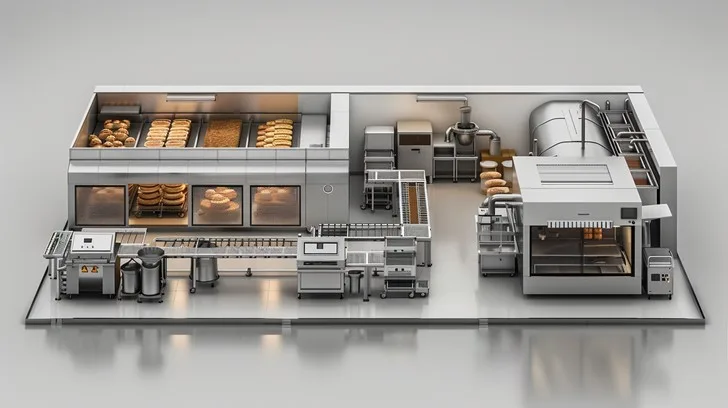
Bakery Equipment Layout Design: Why Your Oven’s Location Might Be Ruining Your Croissants (And How to Fix It)
Let me tell you about the time I walked into a bakery in East Nashville that shall remain nameless, though I will say it rhymes with “Flour Power”-and immediately tripped over a rolling pin someone had left in the middle of the aisle. The baker, a harried woman with flour dusted in her hair like a modern-day Marie Antoinette, sighed and said, “I swear, if I had a dollar for every time someone almost broke their neck in here, I could afford a bigger space.” That moment stuck with me. Because here’s the thing: a bakery’s layout isn’t just about where you put the mixer or how close the proofing cabinet is to the oven. It’s about survival. It’s about not wanting to scream when your pastry chef has to do a three-point turn with a sheet pan full of éclairs because the walk-in is blocking the path to the decorating station.
I’ve spent the last few years talking to bakers, designers, and equipment suppliers, including the folks at Chef’s Deal, who’ve seen more bakery floor plans than I’ve had hot dinners, and what I’ve learned is this: most bakery layouts are designed by accident, not intention. Someone buys a space, shoves in equipment wherever it fits, and hopes for the best. Spoiler alert: it’s not the best. But it *can* be. That’s what this guide is about. Not just how to arrange your bakery equipment, but how to do it in a way that saves time, reduces stress, and maybe, just maybe, lets you sleep through the night without dreaming about dough hooks.
By the end of this, you’ll know:
- Why the “work triangle” you learned in culinary school might be sabotaging your bakery’s flow
- How to design a layout that grows with you (without requiring a second mortgage)
- The sneaky space-saving tricks most bakers overlook (hint: it’s not just about going vertical)
- What equipment suppliers like Chef’s Deal can do for you that you didn’t even know was possible (free design services, anyone?)
- How to avoid the “IKEA effect”-where you fall in love with your layout because you built it, not because it works
So grab a coffee (or a whiskey, no judgment), and let’s talk about how to turn your bakery from a game of Tetris into a well-oiled machine. And if you’re thinking, “I don’t have time for this, I’ve got croissants to bake,” trust me: you don’t have time *not* to do this. Because every second you waste navigating a poorly designed space is a second you’re not spending on what matters, making damn good pastries.
The Psychology of Space: Why Your Bakery Feels Like a Maze (And How to Fix It)
1. The Myth of the “Work Triangle” in Bakeries
If you’ve ever taken a culinary class or read a kitchen design book, you’ve heard of the work triangle. The idea is simple: your sink, stove, and refrigerator should form a triangle to minimize steps. It’s a great concept, for restaurants. But bakeries? Not so much. Here’s why:
Bakeries aren’t linear. They’re cyclical. You’re not just moving from point A to point B; you’re looping between mixing, proofing, baking, cooling, and decorating. And if your layout forces you to zigzag across the room like a pinball, you’re wasting time, energy, and patience. I’ve seen bakeries where the mixer is on one side of the room, the proofing cabinet is in the back, and the oven is in the front. That means every batch of dough is taking a marathon before it even hits the oven. And let’s be real: dough doesn’t have the stamina for that.
So what’s the alternative? Work zones. Instead of a triangle, think of your bakery as a series of interconnected stations, each with its own purpose. For example:
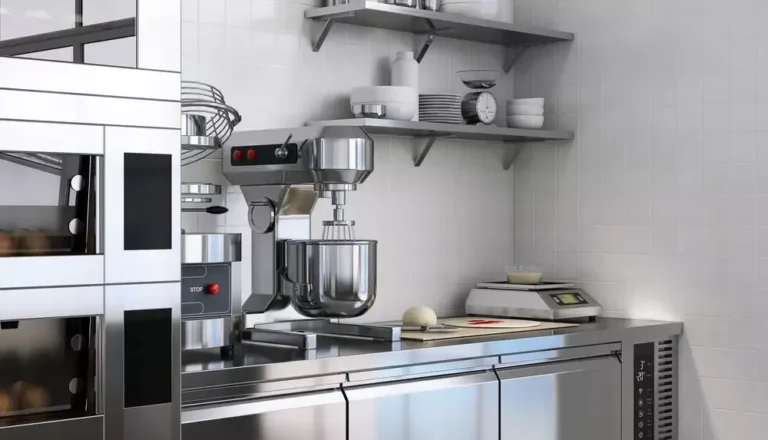
- Mixing Zone: Where all your mixing, scaling, and prepping happens. This is the heart of your bakery, so it should be central and easily accessible.
- Proofing/Resting Zone: Close to the mixing zone, but not so close that the heat from the ovens interferes with your dough’s beauty sleep.
- Baking Zone: Ovens, racks, and cooling stations. This should be near the proofing zone to minimize handling.
- Decorating/Finishing Zone: Where the magic happens, icing, filling, packaging. This should be near the front of the house if you have a retail space.
- Storage Zone: Ingredients, packaging, and tools. This should be easily accessible from all zones but not in the way.
Is this the only way to do it? No. But it’s a starting point. And if you’re working with a supplier like Chef’s Deal, they can help you tweak this based on your specific needs. Because here’s the thing: there’s no one-size-fits-all layout. What works for a sourdough-focused bakery won’t work for a cake shop. And what works for a 500-square-foot space won’t work for a 2,000-square-foot one. But the principle remains the same: design for flow, not just fit.
2. The Hidden Cost of a Bad Layout (Spoiler: It’s Not Just Time)
When I ask bakers about their biggest frustrations, the answers usually fall into two categories: “My oven is possessed” and “I spend half my day walking in circles”. The first one, we can’t help you with (call an exorcist). But the second one? That’s all about layout. And the cost isn’t just time, it’s money, morale, and maybe even your sanity.
Let’s break it down:
- Time: Every extra step you take is time you’re not spending on production. And in a bakery, time is literally money. If your layout forces you to walk 10 extra steps per batch, and you’re making 100 batches a day, that’s 1,000 steps. Over a year, that’s like walking from Nashville to Memphis-without leaving your bakery.
- Energy: A bad layout doesn’t just waste your energy; it wastes your team’s. And when your team is exhausted, mistakes happen. Burnt croissants. Overproofed dough. Decorations that look like a toddler did them. (No offense to toddlers, they’re doing their best.)
- Morale: Nothing kills a team’s spirit faster than a space that feels like an obstacle course. If your bakers are constantly dodging equipment or tripping over each other, they’re not going to be excited to come to work. And let’s be real: a happy team makes better pastries.
- Safety: A cluttered, poorly designed space is an accident waiting to happen. Slips, trips, burns, you name it. And in a bakery, where you’re dealing with hot ovens, sharp knives, and heavy equipment, safety isn’t just a nice-to-have; it’s a must-have.
So how do you avoid this? Start by mapping your workflow. Literally. Grab a piece of paper and draw out how you move through your space. Where do you start? Where do you end up? What are the bottlenecks? If you’re constantly backtracking or crossing paths with your team, that’s a red flag. And if you’re not sure where to start, that’s where suppliers like Chef’s Deal come in. They offer free kitchen design services, which means you can get a professional’s eye on your space without breaking the bank. Because let’s be real: you’re a baker, not an architect. And that’s okay.
3. The “IKEA Effect” and Why You Might Be in Love With a Bad Layout
Here’s a confession: I once spent an entire weekend building a bookshelf from IKEA, only to realize halfway through that I’d put one of the shelves in backward. Did I stop and fix it? No. I finished the damn thing, stepped back, and thought, “Wow, this looks amazing.” That, my friends, is the IKEA effect-the cognitive bias that makes us fall in love with things because we built them, not because they’re actually good.
And it happens in bakeries all the time. You spend months (or years) tweaking your layout, moving equipment around, and making it “work.” And by the end, you’re so invested in it that you can’t see the flaws. Maybe your mixer is too far from the sink. Maybe your proofing cabinet is blocking the walk-in. Maybe your decorating station is in the middle of the high-traffic zone. But you’ve put so much time and effort into it that you can’t bear to change it. Sound familiar?
Here’s how to break free from the IKEA effect:
- Get an outside perspective. Ask a friend, a fellow baker, or even a customer to walk through your space and tell you what feels off. You’d be surprised how much you’re missing because you’re too close to it.
- Time yourself. How long does it take to complete a batch from start to finish? If it’s longer than it should be, your layout might be to blame.
- Ask your team. They’re the ones living in the space every day. If they’re constantly complaining about something, listen to them. They might be onto something.
- Consider a redesign. If your space is really not working, it might be time for a do-over. And if you’re working with a supplier like Chef’s Deal, they can help you design a layout that actually works, not just one that fits.
Look, I get it. Change is hard. But a bad layout is like a bad relationship-it’s draining, it’s frustrating, and it’s holding you back from being your best self. And just like a bad relationship, sometimes you have to walk away.
Space-Saving Hacks: How to Fit a Square Peg Into a Round Bakery
4. The Vertical Revolution (Or: Why You’re Not Using Your Walls Enough)
If you’re like most bakers, you’re probably thinking about your bakery in two dimensions: length and width. But here’s a secret: the third dimension, height, is your best friend. And yet, most bakeries ignore it. They cram everything onto the floor, leaving their walls bare and their ceiling space unused. It’s like trying to fit a week’s worth of groceries into a single bag. It’s not going to work.
So how do you go vertical? Here are a few ideas:
- Wall-mounted shelves: Perfect for storing ingredients, tools, or even small equipment. Just make sure they’re sturdy enough to hold what you’re putting on them. (And for the love of all things holy, don’t put your stand mixer on a flimsy shelf.)
- Overhead racks: Great for cooling baked goods or storing sheet pans. Just make sure they’re not in the way of your team’s heads. (Trust me, no one wants a concussion from a rogue sheet pan.)
- Hanging hooks: For utensils, aprons, or even small equipment like whisks or dough cutters. It’s like a jewelry organizer, but for your bakery.
- Ceiling-mounted storage: If you have high ceilings, consider installing racks or shelves up high. Just make sure they’re accessible-o one wants to climb a ladder every time they need a bag of flour.
But here’s the thing: going vertical isn’t just about adding more storage. It’s about freeing up floor space so you can move more easily. And when you’re not constantly dodging equipment or tripping over bags of sugar, you can focus on what really matters: making amazing pastries.
Now, I know what you’re thinking: “But Sammy, what if my ceilings are low?” Fair point. Not every bakery has soaring ceilings. But even in a small space, you can still go vertical. Think about:
- Stackable equipment: Like stackable proofing cabinets or ovens. These can double your capacity without taking up more floor space.
- Foldable tables: Perfect for small spaces. Use them when you need them, fold them away when you don’t.
- Mobile storage: Carts or racks on wheels that can be moved around as needed. This gives you flexibility without sacrificing space.
And if you’re not sure what will work in your space, that’s where suppliers like Chef’s Deal come in. They can help you design a layout that maximizes every inch of your space, whether you’re working with 500 square feet or 5,000. Because let’s be real: space is a luxury, and you can’t afford to waste it.
5. The Magic of Modular Equipment (Or: Why Your Bakery Should Be Like LEGO)
Here’s a question for you: How often do you rearrange your bakery? If you’re like most bakers, the answer is “not often enough.” And that’s a problem. Because your needs change. Maybe you’re adding a new product line. Maybe you’re expanding your retail space. Maybe you’re just tired of the way things are. But if your equipment is bolted to the floor or built into the walls, you’re stuck.
That’s where modular equipment comes in. Think of it like LEGO: you can rearrange it, add to it, or take it apart as needed. And in a bakery, where flexibility is key, that’s a game-changer. Here’s why:
- Adaptability: Need to make room for a new oven? No problem. Just move your modular racks or tables out of the way.
- Scalability: If you’re growing, modular equipment lets you expand without starting from scratch. Just add more pieces to the puzzle.
- Easy cleaning: Modular equipment is often easier to clean because you can move it around. No more crawling under tables or reaching into tight spaces.
- Cost-effective: Instead of buying all new equipment when your needs change, you can just rearrange what you have.
So what does modular equipment look like in a bakery? Here are a few examples:
- Mobile racks: On wheels, so you can move them around as needed. Perfect for cooling baked goods or storing ingredients.
- Adjustable tables: With legs that can be raised or lowered to fit your needs. Great for prep work or decorating.
- Stackable proofing cabinets: Double your capacity without taking up more floor space.
- Modular shelving: Add or remove shelves as needed. Perfect for ingredient storage or small equipment.
Now, I know what you’re thinking: “But Sammy, modular equipment sounds expensive.” And yeah, it can be. But here’s the thing: it’s an investment. Because when your needs change, and they will, you won’t have to start from scratch. You can just rearrange what you have. And if you’re working with a supplier like Chef’s Deal, they can help you find modular equipment that fits your budget and your space. Because let’s be real: your bakery isn’t static, and your equipment shouldn’t be either.
6. The Art of the “Dead Zone” (Or: Why You Need to Embrace the Empty Space)
Here’s a confession: I used to think empty space was wasted space. If there was a corner of my bakery that wasn’t being used, I’d cram something into it, extra ingredients, a spare mixer, a stack of sheet pans. Because why let it go to waste? But here’s what I learned: empty space isn’t wasted space; it’s breathing room.
In bakery design, we call these “dead zones”-areas that aren’t actively used but serve a purpose. Maybe it’s a corner where you can stack empty trays. Maybe it’s a stretch of wall where you can lean a ladder. Maybe it’s just a spot where your team can take a breather. Whatever it is, dead zones are essential. Because a bakery isn’t just about production; it’s about people. And people need space to move, to think, to breathe.
So how do you incorporate dead zones into your layout? Here are a few ideas:
- Leave a buffer: Between workstations, between equipment, between your team. This gives everyone room to move without bumping into each other.
- Create a break area: Even if it’s just a small table and a couple of chairs. Your team will thank you.
- Use dead zones for storage: But not the kind that’s constantly in use. Think spare equipment, backup ingredients, or seasonal items.
- Keep pathways clear: This is especially important in high-traffic areas. If your team is constantly dodging equipment or ingredients, it’s a recipe for disaster.
Now, I know what you’re thinking: “But Sammy, I don’t have room for dead zones. My bakery is tiny!” And I get it. Space is a luxury, and not everyone has it. But even in a small bakery, you can create dead zones. Maybe it’s just a few inches between your mixer and your sink. Maybe it’s a corner where you can stack empty boxes. Whatever it is, it’s worth it. Because a cluttered space is a stressful space, and a stressful space is a space where mistakes happen.
And if you’re not sure how to incorporate dead zones into your layout, that’s where suppliers like Chef’s Deal come in. They can help you design a space that’s efficient but not cramped, productive but not overwhelming. Because let’s be real: your bakery should be a place where you want to spend time, not a place you can’t wait to escape.
The Equipment You’re Probably Overlooking (And Why It Matters)
7. The Unsung Hero: The Humble Worktable
Let’s talk about worktables. Not the fancy ones with marble tops or built-in scales. The humble, no-nonsense worktables that most bakers take for granted. Because here’s the thing: your worktable is the backbone of your bakery. It’s where you mix, roll, shape, and decorate. It’s where your team gathers to prep. It’s where the magic happens. And yet, most bakers don’t give it a second thought.
But they should. Because your worktable can make or break your workflow. If it’s too small, you’re constantly juggling ingredients and tools. If it’s too big, you’re wasting space. If it’s in the wrong place, you’re adding extra steps to your process. And if it’s not sturdy, you’re one collapsed cake away from a disaster.
So how do you choose the right worktable? Here are a few things to consider:
- Size: Your worktable should be big enough to handle your largest batches, but not so big that it takes up unnecessary space. A good rule of thumb: at least 3 feet by 6 feet for most bakeries.
- Material: Stainless steel is the gold standard, durable, easy to clean, and resistant to bacteria. Butcher block is another option, though it requires more maintenance.
- Height: Your worktable should be at a comfortable height for your team. If it’s too high or too low, it can cause strain and fatigue. A good rule of thumb: 36 inches for most people.
- Mobility: If you’re tight on space, consider a worktable on wheels. This lets you move it around as needed, giving you flexibility without sacrificing functionality.
- Storage: Some worktables come with built-in shelves or drawers. This can be a great way to save space, but make sure it doesn’t interfere with your workflow.
And if you’re not sure what kind of worktable is right for you, that’s where suppliers like Chef’s Deal come in. They can help you find the perfect worktable for your space and your needs, whether you’re looking for something basic or something with all the bells and whistles. Because let’s be real: your worktable is more than just a table, it’s where the magic happens.
8. The Proofing Cabinet: Your Dough’s Happy Place
If you’ve ever baked bread, you know that proofing is on-negotiable. It’s the difference between a light, airy loaf and a dense, sad brick. But here’s the thing: ot all proofing cabinets are created equal. And if you’re using a makeshift setup, like a warm oven or a corner of your kitchen, you’re not doing your dough any favors.
A good proofing cabinet is like a spa for your dough. It provides the perfect environment, warm, humid, and consistent, so your dough can rise to its full potential. And yet, most bakers don’t give it the attention it deserves. They shove it in a corner, crank up the heat, and hope for the best. Spoiler alert: it’s not the best.
So how do you choose the right proofing cabinet? Here are a few things to consider:
- Size: Your proofing cabinet should be big enough to handle your largest batches, but not so big that it takes up unnecessary space. A good rule of thumb: at least 2 feet by 3 feet for most bakeries.
- Temperature control: Look for a cabinet with precise temperature control. You want to be able to set it and forget it, not constantly adjust it.
- Humidity control: Humidity is just as important as temperature when it comes to proofing. Look for a cabinet with a built-in humidifier or the ability to add moisture.
- Mobility: If you’re tight on space, consider a proofing cabinet on wheels. This lets you move it around as needed, giving you flexibility without sacrificing functionality.
- Visibility: Some proofing cabinets come with clear doors or windows. This lets you check on your dough without opening the cabinet and letting out the heat.
And if you’re not sure what kind of proofing cabinet is right for you, that’s where suppliers like Chef’s Deal come in. They can help you find the perfect proofing cabinet for your space and your needs, whether you’re looking for something basic or something with all the bells and whistles. Because let’s be real: your dough deserves the best, and so do you.
9. The Cooling Rack: Where Baked Goods Go to Chill (Literally)
Here’s a question for you: Where do your baked goods go after they come out of the oven? If your answer is “the counter” or “a random shelf”, we need to talk. Because cooling is just as important as baking. If your goods don’t cool properly, they can become soggy, stale, or, worst of all-moldy. And no one wants a moldy croissant.
A good cooling rack is like a recovery room for your baked goods. It allows air to circulate around them, so they cool evenly and quickly. And yet, most bakers don’t give it the attention it deserves. They use whatever they have on hand, a wire rack, a baking sheet, a random shelf, and hope for the best. Spoiler alert: it’s not the best.
So how do you choose the right cooling rack? Here are a few things to consider:
- Size: Your cooling rack should be big enough to handle your largest batches, but not so big that it takes up unnecessary space. A good rule of thumb: at least 2 feet by 3 feet for most bakeries.
- Material: Stainless steel is the gold standard, durable, easy to clean, and resistant to bacteria. Wire racks are another option, though they can be less sturdy.
- Mobility: If you’re tight on space, consider a cooling rack on wheels. This lets you move it around as needed, giving you flexibility without sacrificing functionality.
- Height: Some cooling racks are stackable, which can be a great way to save space. Just make sure they’re sturdy enough to handle the weight.
- Ventilation: Look for a cooling rack with plenty of airflow. This ensures your baked goods cool evenly and quickly.
And if you’re not sure what kind of cooling rack is right for you, that’s where suppliers like Chef’s Deal come in. They can help you find the perfect cooling rack for your space and your needs, whether you’re looking for something basic or something with all the bells and whistles. Because let’s be real: your baked goods deserve the best, and so do you.
Putting It All Together: How to Design a Bakery Layout That Doesn’t Suck
10. The Step-by-Step Guide to a Stress-Free Bakery Layout
Alright, let’s recap. We’ve talked about the psychology of space, the importance of workflow, the magic of modular equipment, and the unsung heroes of the bakery world. Now, it’s time to put it all together. Because designing a bakery layout isn’t just about throwing equipment into a space and hoping for the best. It’s about thoughtful, intentional design. And if you’re feeling overwhelmed, don’t worry, you’re not alone. Even the most experienced bakers get tripped up by layout design. But with a little planning, you can create a space that works for you, not against you.
Here’s a step-by-step guide to designing a bakery layout that doesn’t suck:
- Assess your space: Measure your bakery and sketch out a rough floor plan. Note any obstacles, like pillars, doors, or windows, that might affect your layout.
- Map your workflow: How do you move through your space? Where do you start? Where do you end up? What are the bottlenecks? Draw it out on your floor plan.
- Identify your zones: Based on your workflow, divide your space into zones, mixing, proofing, baking, decorating, storage, etc. Assign each zone a specific area on your floor plan.
- Choose your equipment: What equipment do you need for each zone? Make a list, and note the dimensions of each piece. This will help you figure out what fits where.
- Play with placement: Using your floor plan and equipment list, experiment with different layouts. Move things around, try different configurations, and see what feels right. And if you’re not sure, that’s where suppliers like Chef’s Deal come in. They offer free kitchen design services, which means you can get a professional’s eye on your space without breaking the bank.
- Consider traffic flow: How will your team move through the space? Are there any high-traffic areas that might cause congestion? Make sure your layout allows for smooth, efficient movement.
- Think about storage: Where will you store ingredients, tools, and packaging? Make sure your storage solutions are easily accessible but not in the way.
- Plan for growth: Your bakery isn’t static. It’s going to grow and change. Make sure your layout can adapt with you. This might mean leaving some empty space or choosing modular equipment.
- Test it out: Once you’ve settled on a layout, test it out. Walk through your workflow, time yourself, and see how it feels. If something doesn’t work, don’t be afraid to change it.
- Get feedback: Ask your team for their input. They’re the ones living in the space every day, so their feedback is invaluable. And if you’re still not sure, consider hiring a professional designer. It’s an investment, but it’s one that can pay off in spades.
Now, I know what you’re thinking: “This sounds like a lot of work.” And yeah, it is. But here’s the thing: it’s worth it. Because a well-designed bakery layout can save you time, reduce stress, and maybe, just maybe, let you sleep through the night without dreaming about dough hooks. And if you’re not sure where to start, that’s okay. You don’t have to do it alone. Suppliers like Chef’s Deal can help you design a layout that works for you, not against you. Because let’s be real: your bakery is your livelihood, and it deserves the best.
Conclusion: Your Bakery, Your Rules (But Maybe Listen to the Experts)
Here’s the thing about bakery layout design: there’s no one right way to do it. What works for one bakery might not work for another. What works for a sourdough-focused shop might not work for a cake decorator. What works for a 500-square-foot space might not work for a 2,000-square-foot one. But here’s what *is* universal: a well-designed bakery is a happy bakery.
So whether you’re starting from scratch or just looking to tweak your existing space, remember this: your layout should work for you, not against you. It should save you time, reduce stress, and maybe, just maybe, let you enjoy the process a little more. And if you’re not sure where to start, that’s okay. You don’t have to do it alone. Suppliers like Chef’s Deal can help you design a space that’s efficient, functional, and maybe even a little bit fun. Because at the end of the day, that’s what it’s all about: creating a space where you can do what you love, without the headaches.
So go forth, my fellow bakers. Design your dream bakery. And if you ever find yourself tripping over a rolling pin in the middle of the aisle, remember: it doesn’t have to be this way. With a little planning, a little creativity, and maybe a little help from the experts, you can create a bakery that’s as beautiful as the pastries you make. And who knows? Maybe one day, I’ll walk into your bakery and think, “Damn, this layout is genius.”
FAQ: Your Burning Bakery Layout Questions, Answered
Q: How do I know if my current bakery layout is working?
A: Great question! The easiest way to tell is to time yourself. How long does it take to complete a batch from start to finish? If it’s longer than it should be, your layout might be to blame. Another red flag: constant bottlenecks. If you’re always waiting for someone to finish using the mixer or the oven, that’s a sign your layout isn’t optimized. And if your team is constantly complaining about the space, listen to them. They’re the ones living in it every day, so their feedback is invaluable. If you’re still not sure, consider getting a professional opinion. Suppliers like Chef’s Deal offer free kitchen design services, which can give you a fresh perspective on your space.
Q: What’s the biggest mistake bakers make when designing their layout?
A: Oh, where do I start? The biggest mistake is prioritizing fit over flow. Most bakers cram equipment into their space wherever it fits, without thinking about how they actually move through the space. The result? A layout that’s a nightmare to navigate. Another common mistake: ignoring the future. Your bakery isn’t static, it’s going to grow and change. If your layout doesn’t account for that, you’re going to end up with a space that’s outdated before it’s even finished. And finally, underestimating the importance of storage. If you don’t have enough storage, your space is going to feel cluttered and chaotic. So when you’re designing your layout, think about flow, think about the future, and think about storage. And if you’re not sure how to do that, don’t be afraid to ask for help.
Q: How can I maximize space in a small bakery?
A: Small bakeries are tricky, but they’re not impossible. The key is to think vertically. Most bakers focus on floor space, but the walls and ceiling are just as important. Install shelves, racks, and hooks to free up floor space. Another tip: use modular equipment. Tables, racks, and even ovens on wheels can be moved around as needed, giving you flexibility without sacrificing functionality. And don’t forget about dead zones. Even in a small bakery, you can create breathing room by leaving a few inches between workstations or keeping pathways clear. Finally, consider multi-functional equipment. A worktable with built-in storage, for example, can save you space and reduce clutter. And if you’re not sure what will work in your space, suppliers like Chef’s Deal can help you design a layout that maximizes every inch.
Q: Should I hire a professional to design my bakery layout?
A: It depends. If you’re starting from scratch or making major changes, it might be worth it. A professional designer can help you create a space that’s efficient, functional, and maybe even a little bit beautiful. They can also help you avoid common mistakes, like ignoring workflow or underestimating storage needs. But if you’re just making small tweaks, you might be able to do it yourself. And if you’re not sure, that’s where suppliers like Chef’s Deal come in. They offer free kitchen design services, which can give you a professional’s eye on your space without the hefty price tag. So if you’re feeling overwhelmed, don’t be afraid to ask for help. Because at the end of the day, your bakery is your livelihood, and it deserves the best.
@article{bakery-equipment-layout-design-maximizing-efficiency-space-without-losing-your-sanity,
    title   = {Bakery Equipment Layout Design: Maximizing Efficiency & Space Without Losing Your Sanity},
    author  = {Chef's icon},
    year    = {2026},
    journal = {Chef's Icon},
    url     = {https://chefsicon.com/bakery-equipment-layout-design-maximizing-efficiency-space/}
}