The Best Fluffy Pancakes recipe you will fall in love with. Full of tips and tricks to help you make the best pancakes.
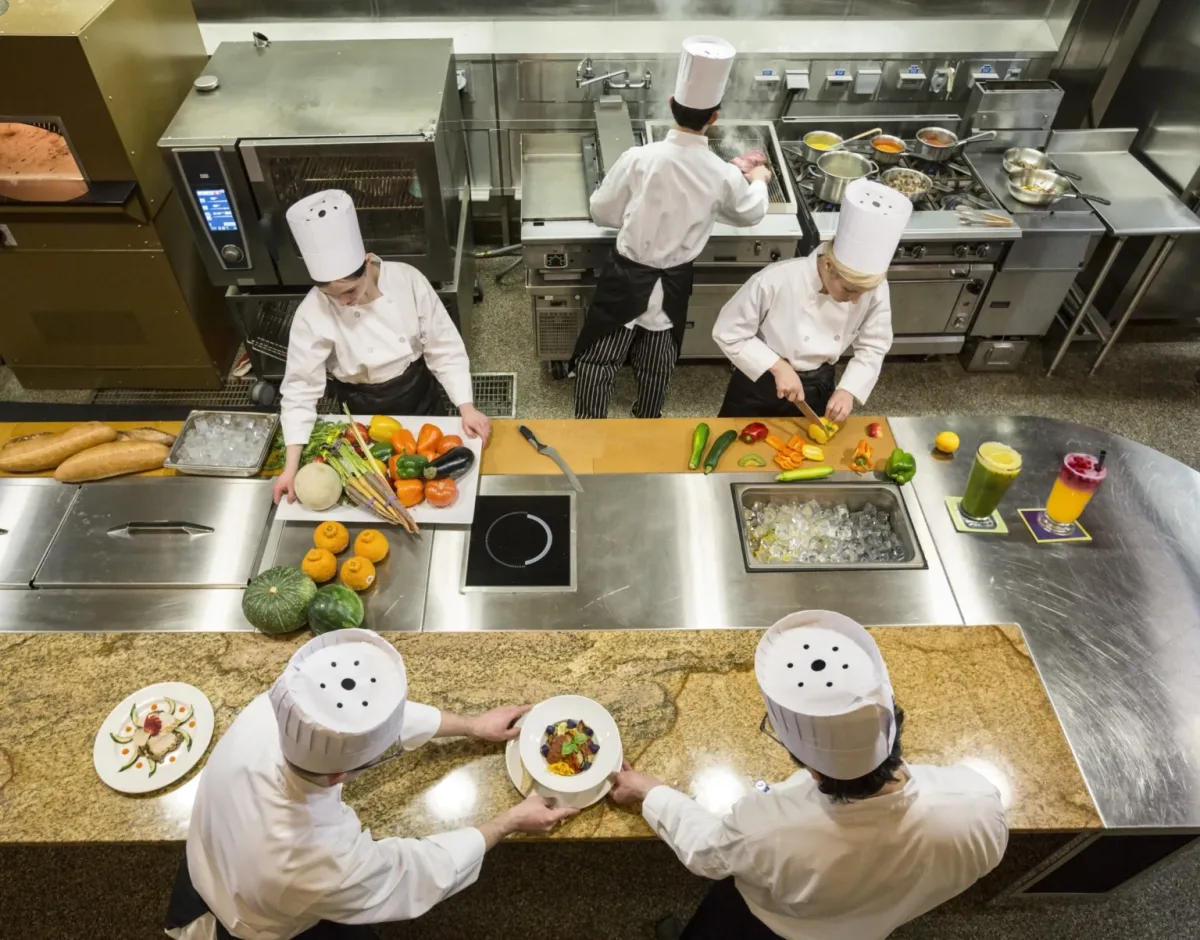
Let me set the scene: It’s 2 AM, I’m standing in the fluorescent glow of a 24-hour diner in Nashville, nursing a cup of coffee that’s been sitting on the warmer too long. Across from me, a line cook, let’s call him Marcus, is wrestling with a 50-pound bag of flour while simultaneously trying to keep an eye on six different orders of chicken and waffles. The smell of maple syrup and fried chicken fat hangs thick in the air, and for a second, I forget I’m in a commercial kitchen that serves 300 covers a night. That plate of waffles in front of me tastes like my grandmother’s kitchen. How the hell does that happen?
This isn’t just about feeding people, it’s about feeding memories. Comfort foods at scale is one of those culinary paradoxes that shouldn’t work, but somehow does. Every time you bite into a fast-casual mac and cheese that tastes like it came from your mom’s stove, or a diner meatloaf that could rival your aunt’s secret recipe, you’re experiencing the result of years of trial, error, and some seriously clever kitchen engineering. But here’s the thing: recreating that homemade authenticity in a high-volume environment isn’t just about bigger pots and more hands. It’s about understanding the psychology of taste, the physics of texture, and the alchemy of nostalgia, all while keeping food safe, consistent, and profitable.
So how do they do it? Is it really possible to mass-produce the soul of home cooking? Or are we all just fooling ourselves, chasing a flavor that can’t be replicated? Let’s pull back the curtain on the commercial kitchen comfort food machine-where science meets sentiment, and efficiency dances with emotion. By the end of this, you’ll never look at your favorite chain restaurant’s mashed potatoes the same way again.
The Psychology of Comfort: Why We Crave What We Crave
Before we dive into the how, we need to talk about the why. Why do certain foods make us feel safe, loved, or even a little bit like kids again? The answer isn’t just in the ingredients, it’s in our brains. Comfort foods aren’t just about taste; they’re about association. That first bite of a perfectly crispy grilled cheese sandwich doesn’t just taste good, it transports you. Maybe it’s to your childhood kitchen, where your dad would make them on rainy afternoons. Maybe it’s to a college dorm room, where it was the only thing you could cook without setting off the fire alarm. Whatever the memory, the food becomes a vessel for emotion.
But here’s the kicker: commercial kitchens don’t have access to your personal memories. So how do they trigger that same emotional response in thousands of people at once? The answer lies in universal comfort cues-textures, temperatures, and flavors that hit our brains in ways that feel familiar, even if we can’t quite place why. Think about it:
- Creaminess (mac and cheese, mashed potatoes) = security and indulgence
- Crispiness (fried chicken, onion rings) = excitement and reward
- Warmth (soup, casseroles) = safety and care
- Sweetness (desserts, glazed meats) = nostalgia and happiness
These aren’t just culinary preferences, they’re psychological shortcuts. And commercial kitchens? They’ve turned exploiting these shortcuts into an art form. But here’s where it gets tricky: how do you replicate the imperfect perfection of home cooking when you’re cooking for hundreds? A home cook might eyeball the salt or let the onions caramelize a little too long. A commercial kitchen can’t afford that kind of variability. So they cheat. And by “cheat,” I mean they use science, precision, and a whole lot of testing to reverse-engineer the feeling of imperfection.
Take crispy fried chicken, for example. At home, you might fry it in small batches, letting the oil temperature fluctuate just enough to create those irregular, craggy crusts that crackle with every bite. In a commercial kitchen, they can’t afford to wait for oil to recover between batches. So what do they do? They use high-volume pressure fryers that maintain consistent oil temps, and they add modified food starches to the batter to mimic the uneven texture of home frying. It’s not *exactly* the same, but it’s close enough to trigger that same dopamine hit. Is this the best approach? Maybe not for purists. But for a restaurant that needs to serve 200 pieces of chicken in an hour? It’s genius.
The Illusion of Imperfection: How Commercial Kitchens Fake Homemade
Let’s talk about the uncanny valley of comfort food. You know the feeling: that moment when you take a bite of something that’s *almost* perfect, but something’s just… off. Maybe the mashed potatoes are too smooth, or the meatloaf is too uniform. It’s like looking at a CGI human that’s just a little too lifelike, it creeps you out. Commercial kitchens spend millions of dollars trying to avoid that feeling. Their goal? To make food that feels handmade, even when it’s made by machines.
So how do they pull it off? It starts with controlled inconsistency. At home, your grandma’s lasagna might have slightly uneven layers, or the cheese might brown in patches. In a commercial kitchen, they can’t leave that to chance. Instead, they use techniques like:
- Layered baking: Some ovens have multiple heating elements that can be controlled independently to create uneven browning, mimicking the hot spots of a home oven.
- Textured molds: Ever notice how some restaurant meatloaves have a slightly irregular shape? That’s not an accident. Some kitchens use molds with subtle imperfections to create the illusion of hand-packed loaves.
- Selective seasoning: Instead of mixing all the salt into a dish, some kitchens will add a portion of it in a way that creates little bursts of flavor, like the uneven seasoning you’d get from a home cook who tastes as they go.
But here’s where it gets really interesting: the role of imperfection in flavor perception. Studies have shown that people actually perceive food as tasting better when it looks slightly imperfect. It’s why a lopsided cookie might taste better than a perfectly round one, even if they’re made from the same dough. Commercial kitchens have caught onto this. Some even use artificial “aging” techniques to make food look more homemade. For example, a chain restaurant might use a slightly darker batter for their pancakes to mimic the look of a home cook who let the batter sit a little too long. Or they might add a touch of caramel color to their mac and cheese to give it that slightly uneven, baked-in-a-rush look.
I’m torn between admiring the ingenuity and feeling a little… manipulated. Is it really so bad that we’re being tricked into feeling comforted? Maybe not. After all, the end result is the same: a plate of food that makes us feel good. But it does make me wonder, are we losing something when we outsource our nostalgia to commercial kitchens? Or are we just evolving how we experience comfort?
The Equipment Behind the Magic: Tools That Turn Home Cooking Into Mass Production
Alright, let’s get nerdy for a second. If you’ve ever tried to make grandma’s famous spaghetti sauce for a crowd, you know how quickly things can go off the rails. What tastes perfect in a small pot can turn into a salty, watery mess when you scale it up. Commercial kitchens don’t have that problem, because they’ve got tools that home cooks can only dream of. But here’s the thing: it’s not just about bigger pots and faster stoves. It’s about precision, consistency, and control at a level that would make a NASA engineer proud.
Take combi ovens, for example. These bad boys combine steam and convection cooking in a way that lets kitchens control humidity, temperature, and airflow with insane precision. Want to roast a turkey that’s crispy on the outside and juicy on the inside, every single time? A combi oven can do that. Need to bake 50 loaves of bread with the exact same crust? Combi oven. These things are the secret weapon behind a lot of the restaurant-quality comfort foods you love. And they’re not just for high-end kitchens anymore, even mid-range chains are using them to up their game.
Then there are braising pans, also known as tilt skillets. These are basically giant, industrial-sized skillets that can hold hundreds of pounds of food at once. They’re perfect for making big batches of stews, soups, or even scrambled eggs (yes, some diners make their scrambled eggs in these things). The beauty of a braising pan is that it can sear, sauté, simmer, and steam, all in one piece of equipment. That means a kitchen can make a giant batch of beef stew that tastes like it simmered for hours on the stovetop, but in a fraction of the time. How? By controlling the temperature and agitation so precisely that the meat breaks down just right, without turning to mush.
But here’s where things get really wild: the role of automation in comfort food. Some commercial kitchens are now using robotic arms to handle repetitive tasks like flipping burgers or assembling sandwiches. At first glance, that might seem like the opposite of “homemade.” But here’s the thing, these robots aren’t replacing the human touch; they’re freeing up cooks to focus on the things that *do* require a human touch, like adjusting seasoning or checking doneness. And in some cases, they’re actually helping to create more consistent results. For example, a robotic arm can flip a burger at the exact same interval every time, ensuring that perfect crust without overcooking. Is it as romantic as a line cook flipping burgers by hand? Maybe not. But is it more reliable? Absolutely.
And let’s not forget about blast chillers. These are like super-powered refrigerators that can cool down massive batches of food in minutes, rather than hours. Why does that matter for comfort food? Because it allows kitchens to prep ahead without sacrificing quality. Take mashed potatoes, for example. At home, you’d make them fresh and serve them right away. But in a commercial kitchen, that’s not always possible. So they’ll make a big batch, blast chill it, and then reheat it as needed. The result? Mashed potatoes that taste fresh, even if they were made hours ago. It’s not *exactly* the same as homemade, but it’s damn close.
The Science of Scaling: Why Bigger Isn’t Always Better (And How Kitchens Work Around It)
Here’s a hard truth: scaling up a recipe isn’t as simple as multiplying the ingredients. Anyone who’s tried to make a double batch of cookies knows this. The texture changes. The bake time changes. The flavor changes. Now imagine trying to scale up grandma’s famous chicken noodle soup to feed 500 people. Suddenly, you’re not just dealing with more ingredients, you’re dealing with more variables. More evaporation. More heat distribution. More opportunities for things to go wrong.
So how do commercial kitchens handle it? They don’t just scale, they re-engineer. Let’s break it down with a classic example: mac and cheese. At home, you might make it in a single pot, melting the cheese into a roux and then mixing in the pasta. Simple, right? But in a commercial kitchen, that approach would be a disaster. The cheese would break, the sauce would separate, and you’d end up with a grainy, oily mess. Instead, they use a multi-step process that looks something like this:
- Pre-cook the pasta: Not just to al dente, but slightly undercooked, because it’ll finish cooking in the oven.
- Make a cheese sauce base: This isn’t just melted cheese, it’s a carefully balanced emulsion of dairy, stabilizers, and seasonings that can hold up to large-scale production.
- Combine and bake: The pasta and sauce are mixed in a giant mixer (yes, like a cement mixer, but for food), then portioned into trays and baked in a convection oven to create that perfect bubbly top.
But here’s the real secret: the role of stabilizers and emulsifiers. These are the unsung heroes of commercial comfort food. They’re what keep the cheese sauce from separating, the gravy from breaking, and the mashed potatoes from turning gluey. At home, you might use a roux or a slurry to thicken your sauces. In a commercial kitchen, they use things like xanthan gum, carrageenan, or modified food starches to achieve the same effect, but on a much larger scale. These ingredients get a bad rap (“chemicals!” people cry), but they’re actually what make it possible to serve consistent, high-quality comfort food to hundreds of people at once.
And then there’s the heat distribution problem. Ever notice how the edges of a casserole at home are always a little crispier than the center? That’s because home ovens have hot spots. Commercial kitchens don’t have that luxury, they need every bite to be the same. So they use convection ovens with precise temperature controls, or even rotisserie-style ovens that rotate the food to ensure even cooking. Some kitchens even use infrared thermometers to check the internal temperature of every single dish before it goes out. It’s overkill for a home cook, but for a restaurant serving 300 covers a night? It’s essential.
But here’s the thing that keeps me up at night: are we sacrificing flavor for consistency? When you’re cooking at this scale, there’s no room for the little imperfections that make home cooking special. No slightly overcooked edge of a lasagna that someone fights over. No unevenly browned crust on the mac and cheese. It’s all… uniform. And while that’s great for quality control, it does make me wonder if we’re losing something in the process. Maybe I should clarify: I’m not saying commercial comfort food is *bad*. Far from it. But it is different. And maybe that’s okay.
The Flavor Factories: How Spices, Fats, and Umami Trick Our Brains
Let’s talk about the dirty little secret of commercial comfort food: flavor enhancement. No, I’m not talking about MSG (though that’s part of it). I’m talking about the sophisticated ways that commercial kitchens manipulate our taste buds to make food taste richer, deeper, and more satisfying than it has any right to be. And before you get all “that’s cheating!” on me, remember this: every cuisine in the world uses flavor enhancement. From the fermented fish sauces of Southeast Asia to the smoked paprika of Spain, humans have been finding ways to make food taste better for centuries. Commercial kitchens are just doing it at scale.
So how do they do it? It starts with the holy trinity of commercial flavor enhancement: fat, salt, and umami. These three elements are the backbone of comfort food, and commercial kitchens use them in ways that would make a home cook’s head spin. Let’s break it down:
- Fat: This is the big one. Fat carries flavor, adds richness, and creates that mouth-coating satisfaction that makes comfort food so… comforting. At home, you might use butter or olive oil. In a commercial kitchen, they use things like rendered chicken fat (schmaltz), beef tallow, or even specialty oils that have been engineered to have a higher smoke point or a more neutral flavor. And they use *a lot* of it. Ever notice how restaurant mashed potatoes are always creamier than yours? That’s because they’re loaded with butter, cream, and sometimes even powdered milk fat to boost the richness without adding too much liquid.
- Salt: Salt isn’t just about making food salty, it’s about enhancing all the other flavors in a dish. Commercial kitchens use salt strategically, adding it at different stages of cooking to build layers of flavor. For example, they might salt the meat before cooking, salt the sauce, and then add a finishing salt on top. And they’re not just using table salt, they’re using things like kosher salt, sea salt, or even specialty salts like smoked salt or truffle salt to add depth. But here’s the kicker: they’re also using salt substitutes like potassium chloride to reduce sodium without sacrificing flavor. It’s a delicate balance, and it’s one of the reasons why restaurant food often tastes more “rounded” than home cooking.
- Umami: This is the fifth taste-that savory, meaty, “I can’t stop eating this” quality that makes foods like mushrooms, soy sauce, and Parmesan cheese so addictive. Commercial kitchens load up on umami-rich ingredients to make their comfort foods more satisfying. Things like soy sauce, Worcestershire sauce, fish sauce, tomato paste, and even yeast extract (yes, like Marmite) are common in commercial recipes. And they’re not just adding them for flavor, they’re adding them to trick your brain into thinking the food is more complex and satisfying than it actually is.
But here’s where it gets really interesting: the role of artificial and natural flavorings. I know, I know-”artificial” is a dirty word in food. But the truth is, natural and artificial flavors are used in *everything*, from your favorite craft beer to that artisanal chocolate bar you bought at the farmers’ market. Commercial kitchens use them to boost flavor without adding bulk. For example, a chain restaurant might use a natural smoke flavoring to give their barbecue sauce that deep, smoky taste without having to actually smoke the meat for hours. Or they might use a butter flavoring to enhance the richness of their mashed potatoes without adding more actual butter (which would make the dish too greasy).
And then there’s the power of aroma. Ever notice how the smell of food can make your mouth water before you even take a bite? That’s not an accident, it’s flavor anticipation, and commercial kitchens use it to their advantage. Things like toasted spices, caramelized onions, and even artificial aromas (like the smell of baking bread that some grocery stores pump into the air) are all designed to trigger your salivary glands and make the food taste better. Some restaurants even use scent diffusers to enhance the dining experience. It’s not just about taste, it’s about creating a multisensory experience that makes the food feel more comforting.
But here’s the thing that gives me pause: are we becoming desensitized to real flavor? When every dish is engineered to hit all the right notes, sweet, salty, fatty, umami, does that make us less able to appreciate the subtle flavors of a simple, home-cooked meal? I’m not sure. Maybe it’s just evolution. Maybe we’re moving toward a world where food is more about emotional satisfaction than pure flavor. Or maybe we’re just all a little too addicted to the dopamine hit of perfectly engineered comfort food. Either way, it’s a fascinating (and slightly terrifying) time to be a food lover.
The Time Crunch: How Commercial Kitchens Serve Comfort Food Faster Than You Can Say “Grandma’s Recipe”
Here’s the thing about comfort food: it’s not supposed to be fast. A proper beef stew needs to simmer for hours. Homemade bread needs time to rise. Slow-cooked pulled pork should fall apart at the touch of a fork. But in a commercial kitchen, time is the one thing they don’t have. So how do they serve restaurant-quality comfort food in a fraction of the time it takes at home? The answer lies in a combination of prep work, shortcuts, and some seriously clever kitchen hacks.
Let’s start with prep work. In a commercial kitchen, the work doesn’t start when the order comes in, it starts hours (or even days) before. Take mashed potatoes, for example. At home, you’d peel, boil, and mash them right before serving. In a commercial kitchen, they’ll often peel and boil the potatoes ahead of time, then blast chill them to stop the cooking process. When an order comes in, they’ll reheat the potatoes with cream and butter, then whip them to order. The result? Mashed potatoes that taste fresh, even if they were prepped hours ago. It’s not *exactly* the same as homemade, but it’s close enough to satisfy.
Then there are the shortcuts. These are the culinary cheats that home cooks might turn their noses up at, but that commercial kitchens rely on to keep things moving. Things like:
- Pre-cut vegetables: No one has time to peel and chop 50 pounds of carrots during the dinner rush. So most commercial kitchens buy their veggies pre-cut, either fresh or frozen.
- Pre-cooked proteins: Some kitchens use sous-vide cooked meats that are pre-cooked to the perfect temperature, then seared to order. This allows them to serve medium-rare steak or juicy pulled pork in minutes, rather than hours.
- Concentrated bases: Instead of making a homemade chicken stock from scratch, many kitchens use concentrated bases or bouillon to add depth of flavor quickly. Is it as good as the real thing? Maybe not. But it’s consistent, and it saves time.
But here’s where it gets really clever: the role of equipment in speeding up comfort food. We’ve already talked about combi ovens and braising pans, but there are a few other pieces of equipment that are absolute game-changers when it comes to fast, high-quality comfort food. Take pressure cookers, for example. At home, you might use an Instant Pot to make a quick weeknight meal. In a commercial kitchen, they use giant pressure cookers that can cook a whole turkey in under an hour or make fall-off-the-bone ribs in 30 minutes. The high pressure and heat break down the connective tissue in meat quickly, resulting in tender, juicy results in a fraction of the time.
And then there are grill presses. You know those perfectly seared grill marks on your restaurant burger or steak? Those aren’t just for looks, they’re a sign that the meat was cooked under high, even pressure, which helps to lock in juices and create a flavorful crust. Some commercial kitchens use automated grill presses that apply the perfect amount of pressure every time, ensuring consistent results. It’s not as romantic as a line cook flipping burgers by hand, but it’s a whole lot faster, and in a busy kitchen, speed is everything.
But here’s the thing that keeps me up at night: are we sacrificing quality for speed? When you’re cooking at this scale, there’s no room for the little imperfections that make home cooking special. No slightly overcooked edge of a lasagna that someone fights over. No unevenly browned crust on the mac and cheese. It’s all… uniform. And while that’s great for consistency, it does make me wonder if we’re losing something in the process. Maybe I should clarify: I’m not saying commercial comfort food is *bad*. Far from it. But it is different. And maybe that’s okay. Maybe we’re just evolving how we experience comfort food, from something that takes all day to make to something that can be on the table in 20 minutes. Is that a bad thing? I’m not sure. But it is a reality.
The Consistency Conundrum: How Commercial Kitchens Ensure Every Bite Tastes the Same (No Matter Who’s Cooking)
Let’s be real: consistency is the holy grail of commercial cooking. When you order your favorite comfort food from a chain restaurant, you expect it to taste the same whether you’re in Nashville, New York, or Nome. But here’s the thing: humans are inconsistent. One cook might salt the soup a little more. Another might let the onions caramelize a little longer. And in a home kitchen, that’s part of the charm. But in a commercial kitchen? It’s a recipe for disaster.
So how do they do it? How do commercial kitchens ensure that every plate of meatloaf, mac and cheese, or mashed potatoes tastes exactly the same, no matter who’s cooking it or where it’s being served? The answer lies in a combination of standardized recipes, precise measurements, and some seriously clever kitchen systems. Let’s break it down.
First up: standardized recipes. These aren’t just your average recipe cards, they’re detailed, step-by-step instructions that leave nothing to chance. A standardized recipe for chicken pot pie, for example, might include:
- The exact brand and type of chicken to use
- The precise measurements for each ingredient (down to the gram)
- The exact cooking times and temperatures
- Detailed instructions for plating and garnishing
- Even the type of pan or dish to use
But here’s the thing: even the best recipe is useless if the cooks don’t follow it. That’s where training and quality control come in. Most commercial kitchens have extensive training programs to ensure that every cook knows exactly how to execute each dish. And they don’t just train once, they retrain regularly to keep skills sharp. Some kitchens even use video training or augmented reality to help cooks visualize the process.
And then there’s the role of technology. We’ve already talked about equipment like combi ovens and pressure cookers, but there are a few other high-tech tools that help ensure consistency. Things like:
- Digital scales: These aren’t your average kitchen scales, they’re precise to the gram, ensuring that every ingredient is measured exactly the same way every time.
- Thermometers: Not just any thermometers-infrared thermometers that can check the temperature of a dish in seconds, or probe thermometers that can monitor the internal temperature of meat as it cooks.
- Timers and alarms: These aren’t just for baking, they’re used for everything from caramelizing onions to simmering sauces, ensuring that every step is timed perfectly.
But here’s where it gets really interesting: the role of automation in consistency. Some commercial kitchens are now using robotic systems to handle repetitive tasks like flipping burgers, assembling sandwiches, or even plating dishes. These robots aren’t replacing human cooks, they’re augmenting them, ensuring that every burger is flipped at the exact same interval or every sandwich is assembled with the exact same amount of filling. And in some cases, they’re actually improving consistency. For example, a robotic arm can portion out the exact same amount of mashed potatoes onto every plate, ensuring that every customer gets the same serving size.
But here’s the thing that keeps me up at night: are we losing the human touch? When every dish is executed with machine-like precision, does that make the food feel… sterile? I’m not sure. Maybe it’s just the price we pay for consistency. Or maybe there’s a way to balance precision with personality. After all, some of the best comfort foods come from kitchens where the cooks put their own spin on things. But in a commercial setting, that kind of creativity can be risky. One cook’s “improvement” could be another customer’s disappointment. So maybe consistency isn’t just about quality control, it’s about managing expectations. And in a world where people crave familiarity, maybe that’s not such a bad thing.
The Cost of Comfort: How Commercial Kitchens Balance Quality and Profitability
Let’s talk about money. Because here’s the thing: comfort food isn’t just about taste, it’s about economics. A plate of homemade mac and cheese might cost a few dollars to make at home. But in a commercial kitchen, that same dish needs to be profitable at scale. And that means making some tough choices. Do you use real cheddar cheese, or a cheaper blend that melts better? Do you make your own pie crust, or buy it pre-made? Do you slow-cook your pulled pork for 12 hours, or use a pressure cooker to speed things up?
These aren’t just culinary decisions, they’re business decisions. And in a commercial kitchen, the bottom line often dictates the menu. So how do they balance quality and profitability? It starts with menu engineering. This is the science of designing a menu that maximizes profits while keeping customers happy. And it’s not as simple as just picking the cheapest ingredients. It’s about understanding food costs, portion sizes, and customer psychology. Let’s break it down.
First up: food costs. Every ingredient in a commercial kitchen has a cost, and those costs add up quickly. A restaurant might spend $5 on ingredients for a dish that sells for $15. That leaves $10 for labor, overhead, and profit. But if the cost of those ingredients goes up, say, because of a bad harvest or a supply chain issue, suddenly, that $10 profit turns into $8. And if that happens across the entire menu, it can be a disaster. So commercial kitchens are always looking for ways to control food costs without sacrificing quality. Things like:
- Bulk purchasing: Buying ingredients in bulk can save money, but it also requires proper storage to prevent waste.
- Seasonal ingredients: Using seasonal produce can save money and improve flavor, but it also means changing the menu regularly.
- Ingredient substitution: Sometimes, a cheaper ingredient can be used without affecting quality. For example, chicken thighs might be used instead of breasts in a stew, or frozen vegetables might be used instead of fresh in a soup.
But here’s where it gets tricky: portion control. In a home kitchen, you might eyeball the amount of cheese on your mac and cheese. In a commercial kitchen, that’s not an option. Every ounce of cheese, every scoop of mashed potatoes, every slice of meat needs to be measured precisely to ensure consistency and control costs. And that’s where portioning tools come in. Things like:
- Portion scoops: These aren’t just for ice cream, they’re used for everything from mashed potatoes to meatloaf, ensuring that every serving is the same size.
- Digital scales: These are used to weigh ingredients like cheese, meat, or vegetables, ensuring that every dish has the exact same amount.
- Pre-portioned ingredients: Some kitchens use pre-portioned ingredients like individually wrapped cheese slices or pre-measured spice packets to save time and reduce waste.
But here’s the thing that keeps me up at night: are we sacrificing quality for profit? When a restaurant cuts costs by using cheaper ingredients or smaller portions, does that affect the taste? I’m not sure. Maybe it’s just the reality of running a business. Or maybe there’s a way to balance quality and profitability without compromising on either. After all, some of the best comfort foods come from kitchens that are both high-quality and profitable. But it’s a delicate balance, and one that’s getting harder to maintain in an era of rising food costs and increasing competition.
The Future of Comfort: Where Do We Go From Here?
So, where does all this leave us? Are we doomed to a future where comfort food is just a carefully engineered facsimile of the real thing? Or is there still room for authenticity, creativity, and soul in commercial cooking? I’m not sure. But I do know this: the way we experience comfort food is changing. And it’s changing fast.
On one hand, we’ve got technology making it easier than ever to recreate homemade flavors at scale. Things like 3D food printing, AI-driven recipe development, and robotic cooking systems are pushing the boundaries of what’s possible in a commercial kitchen. Imagine a future where a robot can make your grandma’s famous lasagna-exactly the way she made it, every single time. Or where a 3D printer can create a perfectly textured mac and cheese that tastes just like the one you grew up with. It’s not as far-fetched as it sounds.
On the other hand, we’ve got a growing movement toward authenticity and transparency. Consumers are becoming more aware of where their food comes from, how it’s made, and what’s in it. And that’s putting pressure on commercial kitchens to clean up their act. Things like clean labels, locally sourced ingredients, and sustainable practices are becoming more important than ever. And that’s a good thing, because it means that comfort food doesn’t have to be a guilty pleasure. It can be both comforting and responsible.
But here’s the thing that gives me hope: no matter how much technology advances, there will always be a place for the human touch. Because at the end of the day, comfort food isn’t just about taste, it’s about emotion. And no robot, no matter how advanced, can replicate the love, care, and creativity that goes into a homemade meal. So maybe the future of comfort food isn’t about replacing the human touch, it’s about enhancing it. Maybe it’s about using technology to free up cooks to focus on the things that really matter-like experimenting with new flavors, perfecting old recipes, and creating dishes that truly nourish the soul.
Or maybe I’m just being naive. Maybe the future of comfort food is a carefully calibrated blend of science and sentiment, where every dish is engineered to hit all the right emotional notes. And maybe that’s okay. After all, if a plate of restaurant mac and cheese can make someone feel just a little bit less homesick, or a fast-casual meatloaf can remind them of Sunday dinners with their family, then maybe it’s worth it. Maybe the illusion of comfort is just as powerful as the real thing.
Final Thoughts: Can Comfort Food Ever Really Be Mass-Produced?
So, can comfort food really be mass-produced? The answer, I think, is yes, but with caveats. Commercial kitchens have gotten incredibly good at recreating the flavors, textures, and emotions of homemade comfort food. They’ve got the equipment, the techniques, and the science to make it happen. But here’s the thing: it’s not the same. It can’t be. Because at its core, comfort food is about more than just taste, it’s about memory, emotion, and connection. And no amount of technology can replicate that.
But maybe that’s okay. Maybe comfort food doesn’t have to be homemade to be comforting. Maybe it just has to feel that way. And if a commercial kitchen can make a plate of mashed potatoes that tastes like your mom’s, or a meatloaf that reminds you of your childhood, then maybe that’s enough. Maybe the illusion of comfort is just as powerful as the real thing.
So the next time you bite into a fast-casual grilled cheese or a chain restaurant’s chicken pot pie, take a second to appreciate the science, the skill, and the sheer ingenuity that went into making it. Because recreating comfort food at scale isn’t easy. It’s a delicate balance of art and science, emotion and efficiency. And if it makes you feel just a little bit less lonely, or a little bit more at home, then maybe it’s worth it.
Now, if you’ll excuse me, all this talk of comfort food has made me hungry. I think I’ll go make myself a grilled cheese sandwich-the old-fashioned way. Luna, my rescue cat, will probably judge me for it. But you know what? Some things are worth the judgment.
FAQ
Q: Why does restaurant comfort food taste different from homemade?
A: Restaurant comfort food tastes different because commercial kitchens use scaled-up recipes, specialized equipment, and flavor enhancers to recreate homemade flavors at a large scale. They also prioritize consistency and speed, which can sometimes mean sacrificing the little imperfections that make home cooking special. But the best commercial kitchens find ways to mimic those imperfections to create food that feels just as comforting as homemade.
Q: Do commercial kitchens use artificial flavors to make comfort food taste better?
A: Some do, but it’s not as simple as just adding “artificial flavors.” Many commercial kitchens use natural and artificial flavorings to enhance taste without adding bulk. For example, they might use a natural smoke flavoring to give barbecue sauce a deeper taste or a butter flavoring to boost the richness of mashed potatoes. The goal isn’t to trick customers, it’s to create a consistent, satisfying flavor that hits all the right notes.
Q: How do commercial kitchens keep comfort food consistent across multiple locations?
A: Consistency is key in commercial kitchens, and they achieve it through standardized recipes, precise measurements, and rigorous training. Many kitchens also use technology like digital scales, thermometers, and automated cooking systems to ensure that every dish is executed the same way, no matter who’s cooking it or where it’s being served. Some even use robotic systems to handle repetitive tasks, ensuring that every burger is flipped at the same interval or every sandwich is assembled with the same amount of filling.
Q: Is it possible to make restaurant-quality comfort food at home?
A: Absolutely! While commercial kitchens have access to specialized equipment and techniques, there are plenty of ways to elevate your home cooking. For example, you can use a digital scale to measure ingredients precisely, or a probe thermometer to check doneness. You can also experiment with flavor enhancers like umami-rich ingredients (soy sauce, Worcestershire sauce, or tomato paste) to make your dishes more satisfying. And don’t forget the power of fat, salt, and warmth-these are the building blocks of comfort food, and they work just as well in a home kitchen as they do in a commercial one.
@article{the-secret-science-behind-how-commercial-kitchens-recreate-comfort-foods-at-scale-without-losing-that-homemade-magic,
    title   = {The Secret Science Behind How Commercial Kitchens Recreate Comfort Foods at Scale (Without Losing That Homemade Magic)},
    author  = {Chef's icon},
    year    = {2026},
    journal = {Chef's Icon},
    url     = {https://chefsicon.com/how-commercial-kitchens-recreate-comfort-foods-at-scale/}
}