The Best Fluffy Pancakes recipe you will fall in love with. Full of tips and tricks to help you make the best pancakes.
When the Health Inspector Showed Up Unannounced (And I Wasn’t Ready)
It was a Tuesday morning in Nashville, Luna, my rescue cat, was batting at a loose thread on my sleeve while I scrambled eggs for breakfast. The kitchen smelled like coffee and slightly burnt toast, which, honestly, felt like a metaphor for my life at the time. Then my phone buzzed. An unknown number. I answered, and a voice said, “This is the Metro Health Department. We’re conducting a routine inspection of your pet treat production facility. We’ll be there in twenty minutes.”
My stomach dropped. Not because I was doing anything *illegal*-I’d read the guidelines, attended the seminars, even framed the certificate, but because I suddenly realized how many little things I’d let slide. The half-empty sanitizer bottle by the sink. The employee who *always* forgot to tie back their hair. The fact that our allergen logs were, well, *creative* in their accuracy. I hung up, shoved the toast in the trash, and sprinted to the commercial kitchen like my livelihood depended on it. (Spoiler: it did.)
If you’re producing pet treats in a commercial kitchen, whether you’re a small-batch artisan or scaling up to supply big-box stores-safety isn’t just about avoiding fines. It’s about protecting the pets who eat your products, the people who make them, and the reputation you’ve worked years to build. And here’s the thing: most of the guidelines aren’t *that* complicated. But they’re easy to overlook when you’re juggling orders, ingredients, and the existential dread of running a small business. So let’s break it down, no jargon, no fluff, just the stuff that’ll keep you out of trouble (and maybe help you sleep at night).
By the end of this, you’ll know:
- Why cross-contamination in pet treat production is scarier than a cat in a cucumber field
- How to sanitize like a pro without turning your kitchen into a chemistry lab
- The allergen control mistakes that’ll get you shut down faster than a Yelp review from a disgruntled Chihuahua owner
- What documentation you *actually* need (hint: it’s more than you think)
- And why employee training might be the most underrated safety tool in your arsenal
Sound overwhelming? It’s not. Or at least, it doesn’t have to be. Let’s start with the basics, and the stuff no one tells you until it’s too late.
The Unsexy Foundation: Why Pet Treat Safety Differs from Human Food
Pets Can’t Tell You When Something’s Wrong
Here’s a truth that’ll keep you up at night: pets can’t say, “Hey, this treat made me sick.” They’ll eat it, lick their chops, and then, if you’re lucky, vomit on your favorite rug. If you’re *unlucky*, the effects are slower, subtler, and way more dangerous. That’s why pet treat production has its own set of rules, even if you’re sharing a kitchen with human food. The FDA’s Current Good Manufacturing Practices (CGMPs) for animal food are similar to human food guidelines, but with a few critical twists:
- Lower tolerance for pathogens: Salmonella in human peanut butter might make a few people sick. Salmonella in pet treats? It can kill. Dogs and cats have different immune systems, and what’s a mild stomachache for us can be life-threatening for them.
- Allergen risks you’ve never considered: Sure, you know about peanuts and wheat. But did you know some pets are allergic to chicken? Or that propylene glycol (a common humectant in soft treats) is toxic to cats? The list of no-nos is longer than you think.
- Labeling lies: Mislabeling human food is bad. Mislabeling pet treats is *worse*. If your “grain-free” treat contains rice flour, you’re not just misleading customers, you’re risking the health of pets with grain allergies. And yes, the FDA *will* come after you.
I learned this the hard way when a batch of my “hypoallergenic” duck treats tested positive for trace amounts of chicken. Turns out, the shared equipment at my co-packer hadn’t been cleaned thoroughly enough. No one got sick, but the recall cost me $12,000 and a chunk of my sanity. Moral of the story? Pet treat safety isn’t just about following rules, it’s about understanding *why* the rules exist.
Where Human and Pet Food Guidelines Collide (And Where They Don’t)
If you’re producing both human and pet food in the same kitchen, you’re walking a tightrope. The FDA allows it, but with *strict* separation requirements. Here’s where most people mess up:
- Shared equipment: You can’t use the same mixer for dog biscuits and human cookies, even if you clean it in between. Why? Because residue lingers. And residue can kill. I once saw a health inspector use a blacklight to show a bakery owner how much flour was still on their “clean” mixer. It looked like a crime scene.
- Storage: Pet ingredients and human ingredients *cannot* share the same shelf. Not even if they’re in sealed containers. Why? Because if a bag of chicken meal (for pet treats) leaks, it can contaminate the flour below it. And suddenly, your artisanal sourdough has a side of salmonella.
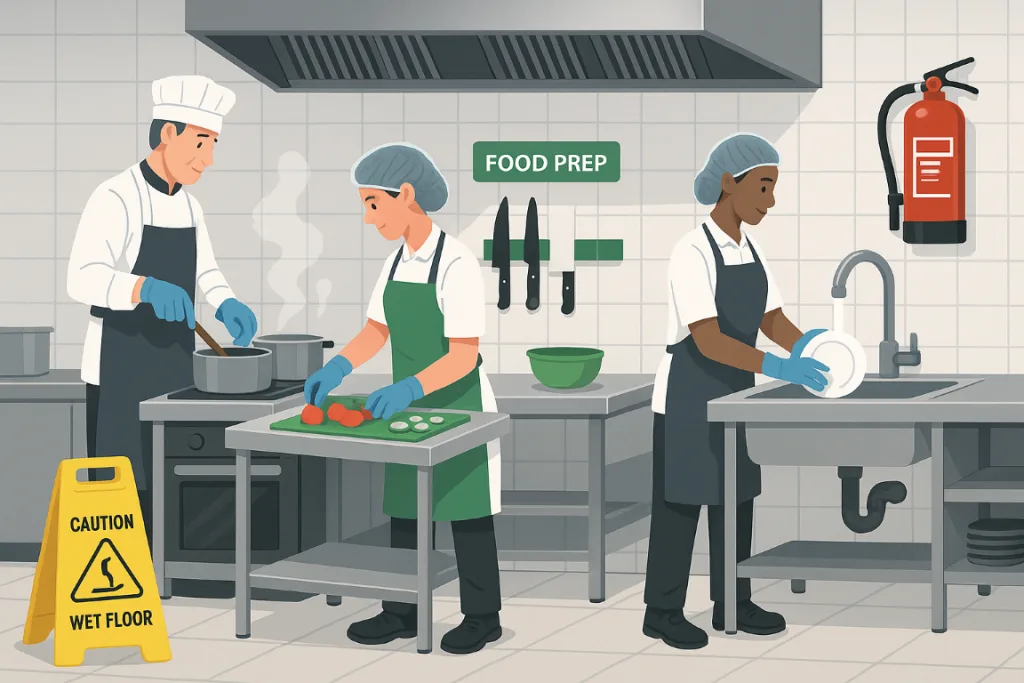
- Employee hygiene: Your staff can’t switch from handling pet ingredients to human ingredients without a full handwashing and glove change. No exceptions. I’ve seen inspectors fail kitchens for less.
Is this overkill? Maybe. But here’s the thing: the stakes are higher for pets. A human might get a stomachache. A pet could die. And if that happens, your business is over. So let’s talk about how to set up your kitchen so you’re not sweating bullets when the inspector walks in.
Designing Your Kitchen for Pet Treat Safety (Or: How to Stop Cross-Contamination Before It Starts)
The Zoning System No One Talks About
Most commercial kitchens are set up like a bad open-concept apartment: everything flows into everything else. That’s a disaster for pet treat production. Instead, think of your kitchen like a biosecurity level lab (but with fewer hazmat suits). Here’s how to zone it:
- Receiving Zone: Where ingredients come in. This should be *separate* from your production area. Why? Because the pallet of chicken meal you just unloaded? It’s covered in dust, bacteria, and possibly the tears of the warehouse worker who packed it. Keep it away from your mixing station.
- Storage Zone: Dry goods (flours, meals, powders) go on one side. Refrigerated/frozen goods (meats, eggs, dairy) go on the other. And *never* the twain shall meet. I once saw a health inspector fail a kitchen because a bag of frozen turkey was stored *next to* a bag of sweet potato flour. “But they’re both sealed!” the owner argued. The inspector’s response? “Seals fail.”
- Prep Zone: This is where you weigh, measure, and chop. It should be *physically separated* from your cooking/baking zone. Why? Because raw ingredients (especially meats) can contaminate cooked treats. And no, your fancy convection oven isn’t a magic bacteria-killing machine.
- Production Zone: Where the magic happens. Mixing, baking, dehydrating, all of it. This area should have its own tools, utensils, and *color-coded* everything. More on that later.
- Packaging Zone: Where treats get bagged, sealed, and labeled. This should be *far* from the receiving zone. Why? Because the last thing you want is dust from incoming ingredients settling on your freshly packaged treats.
I know what you’re thinking: “Sammy, my kitchen is the size of a walk-in closet. How am I supposed to zone it?” Fair point. If space is tight, you can use temporal separation-meaning you do one step at a time, clean *thoroughly* in between, and document the heck out of it. But if you’re scaling up? Invest in a layout that keeps zones separate. Your future self (and your lawyer) will thank you.
Color-Coding: The Cheapest Safety Hack You’re Not Using
Here’s a confession: I used to think color-coding was overkill. Then I watched an employee grab a red cutting board (meat only) to chop carrots for a vegan dog treat. When I asked why, they said, “It was the closest one.” Cue my existential crisis.
Color-coding isn’t just for show. It’s a visual cue that prevents cross-contamination. Here’s how to do it right:
- Red: Raw meat (beef, poultry, fish, etc.)
- Yellow: Cooked meat (for treats that use pre-cooked proteins)
- Green: Fresh produce (carrots, apples, sweet potatoes, etc.)
- Blue: Seafood (if you’re making fish-based treats)
- White: Dairy and eggs (if you use them)
- Brown: Dry ingredients (flours, meals, powders)
- Purple: Allergen-free prep (for treats labeled as hypoallergenic)
And it’s not just cutting boards. Color-code your utensils, containers, even your gloves. Yes, gloves. Because nothing says “I don’t care about safety” like using the same pair of gloves to handle raw chicken and then grab a bag of finished treats.
Pro tip: Buy color-coded sanitizer buckets, too. That way, your employees aren’t guessing which rag to use for which surface. And for the love of all things holy, label everything. A Sharpie is your best friend in a commercial kitchen.
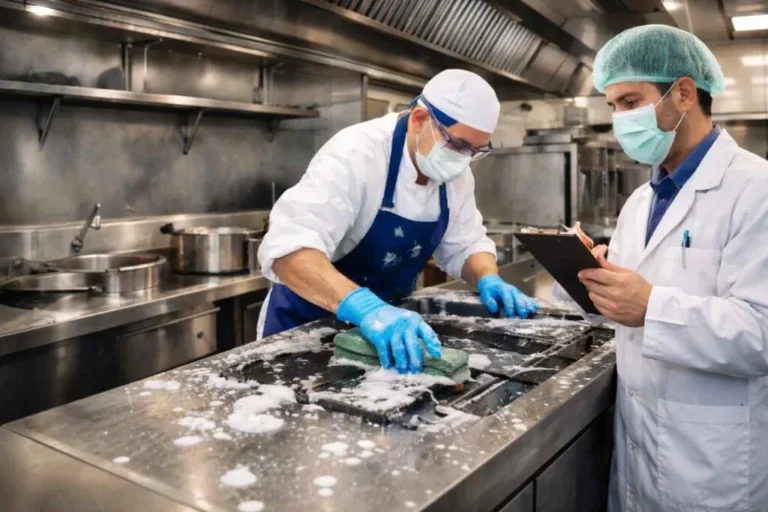
Sanitation: The Difference Between “Clean” and “Clean Enough to Eat Off Of”
Why Your Dishwasher Might Be Lying to You
Commercial dishwashers are like that one friend who *swears* they’re great at karaoke. They *look* impressive, but they’re not always doing the job. Here’s the thing: most dishwashers don’t get hot enough to kill all pathogens. The FDA recommends a final rinse of 180°F (82°C) for at least 10 seconds to sanitize dishes and utensils. But here’s the catch:
- Not all dishwashers reach that temperature.
- Even if they do, scale buildup can insulate bacteria, protecting them from the heat.
- And let’s be real: most employees don’t pre-rinse dishes well enough. (I’ve seen a mixer bowl go through the dishwasher with *visible* dough still clinging to it. It came out *slightly* cleaner.)
So what’s the solution? Chemical sanitizing. And no, I’m not talking about dumping bleach on everything. Here’s how to do it right:
- Pre-wash: Scrape off all food debris. This isn’t optional. If your dishwasher is clogged with dough, it’s not sanitizing anything.
- Wash: Use a commercial detergent at the right concentration. Too little, and it won’t clean. Too much, and it’ll leave residue (which can contaminate your next batch of treats).
- Rinse: Hot water, no soap.
- Sanitize: Use a food-safe sanitizer (like quaternary ammonium or chlorine) at the correct concentration. For chlorine, that’s 50–100 ppm. For quat, it’s 200 ppm. And yes, you *need* test strips to check.
- Air-dry: Never towel-dry. Towels are bacteria magnets.
I know, I know. This sounds like overkill. But here’s the reality: sanitation is the #1 reason pet treat businesses fail inspections. And if you think your dishwasher is enough, ask yourself this: Would you eat off a plate that just went through your dishwasher? Be honest.
The 3-Sink Method: Old-School but Effective
If you’re not using a commercial dishwasher (or even if you are), the 3-sink method is your backup plan. Here’s how it works:
- Sink 1: Wash – Hot water (110°F/43°C or hotter) + detergent. Scrub with a brush to remove all food debris.
- Sink 2: Rinse – Hot water, no soap. This removes detergent residue.
- Sink 3: Sanitize – Hot water (171°F/77°C for 30 seconds) *or* a chemical sanitizer (like chlorine at 50–100 ppm).
Sounds simple, right? But here’s where people mess up:
- Not changing the water often enough. If Sink 1 looks like a science experiment, it’s time to dump it.
- Using the same brush for everything. Color-code your brushes (yes, really). Red for meat, green for produce, etc.
- Skipping the sanitizer. Rinsing isn’t enough. Pathogens are sneaky.
And for the love of all things holy, don’t let your employees “save time” by skipping steps. I once caught a staff member using Sink 1 for both washing *and* rinsing. When I asked why, they said, “It’s faster.” No. Just no.
Allergen Control: The Silent Killer of Pet Treat Businesses
Why Your “Grain-Free” Treat Might Not Be Grain-Free
Allergen control is where most pet treat businesses trip up. And it’s not just about the big allergens (like wheat or soy). It’s about trace amounts that can sneak in from shared equipment, airborne flour, or even your employees’ hands.
Here’s a scenario that’ll give you nightmares: You make a grain-free sweet potato chew. But your shared kitchen also makes wheat-based dog biscuits. Even if you clean the equipment between batches, flour dust can linger in the air and settle on your grain-free treats. Now, a dog with a wheat allergy eats your treat and has a reaction. The owner posts about it online. The FDA gets involved. Your business is over.
So how do you prevent this? Here’s your allergen control checklist:
- Dedicated equipment: If possible, use separate mixers, cutters, and dehydrators for allergen-free treats. If you can’t, schedule allergen-free production first, then clean *thoroughly* before switching to other products.
- Airborne control: Flour dust is the enemy. Use HEPA filters in your production area, and consider negative air pressure to keep dust from spreading.
- Employee hygiene: Employees handling allergens (like wheat) should wash their hands and change gloves before touching allergen-free ingredients. And no, a quick rinse under cold water doesn’t count.
- Labeling: If your facility processes allergens, your labels *must* say so. Even if your treats don’t contain them. Example: “Made in a facility that also processes wheat, soy, and dairy.”
- Testing: If you’re making hypoallergenic treats, test for allergens. Yes, it costs money. But it’s cheaper than a recall.
I learned this the hard way when a batch of my “limited-ingredient” treats tested positive for soy. Turns out, the shared conveyor belt at my co-packer hadn’t been cleaned well enough. The recall cost me $8,000, and I had to rebrand my entire allergen-free line. Lesson learned? If you’re making allergen-free treats, control every step of the process.
The Allergen Log You’re Probably Not Keeping (But Should Be)
Here’s a dirty little secret: most pet treat businesses don’t keep proper allergen logs. And that’s a problem, because the FDA *will* ask for them during an inspection. An allergen log should track:
- What allergens are present in your facility
- When they were used
- What products they were used in
- How equipment was cleaned afterward
- Who performed the cleaning
Here’s a template you can use:
| Date | Allergen Used | Product Made | Equipment Used | Cleaning Method | Employee Initials |
|---|---|---|---|---|---|
| 03/19/2026 | Wheat flour | Peanut Butter Biscuits | Mixer #1, Cutter #2 | Dismantled, washed with 180°F water, sanitized with 100 ppm chlorine | J.D. |
Is this tedious? Yes. Is it necessary? Absolutely. If there’s an allergen incident, this log is your get-out-of-jail-free card. Without it, you’re at the mercy of the FDA’s mercy (and they don’t have much).
Employee Training: The Most Overlooked Safety Tool in Your Kitchen
Why Your Staff Doesn’t Care (And How to Fix It)
Let’s be real: most employees don’t *care* about food safety. They care about their paycheck, their break time, and whether the radio is playing their favorite song. And that’s fine, until it’s not. Because when an employee doesn’t care, your business pays the price.
So how do you make them care? You make it personal. Here’s how:
- Tell stories: Share real-life examples of pet treat businesses that failed because of safety violations. (I have plenty. Want to hear about the company that got shut down because an employee didn’t wash their hands after petting their dog? Yeah. It happened.)
- Make it interactive: Don’t just lecture. Do hands-on training. Have them swab surfaces and test for bacteria. Show them how quickly mold grows on improperly stored treats. Gross them out. It works.
- Tie it to their job security: Remind them that if the business gets shut down, *they* don’t get paid. Suddenly, safety isn’t just about rules, it’s about their livelihood.
- Reward good behavior: Catch employees doing something right and publicly praise them. Example: “Hey team, Sarah caught a temperature issue in the dehydrator yesterday. That’s how we avoid recalls. Thanks, Sarah!”
And here’s the thing: training isn’t a one-time thing. It’s an ongoing process. Here’s your training schedule:
- Onboarding: Every new employee gets a full day of safety training. No exceptions.
- Monthly refreshers: 15-minute meetings to review key safety points. Rotate topics so it doesn’t get stale.
- Quarterly drills: Simulate a recall, an inspection, or a contamination event. Make it real.
- Annual certification: Send employees to a food safety course (like ServSafe). Pay for it. It’s worth it.
I know what you’re thinking: “Sammy, I don’t have time for this.” Neither did I, until I spent a week dealing with a Salmonella scare that turned out to be a false alarm. The stress? The lost productivity? The *sleepless nights*? Not worth it. Train your staff. Or regret it.
The Script You Need for Difficult Conversations
Here’s the thing about employees: they don’t like being told they’re doing something wrong. And if you approach them the wrong way, they’ll get defensive, shut down, or (worst case) quit. So how do you correct them without starting World War III? Use this script:
“Hey [Name], I noticed [specific issue]. I totally get how that could happen, it’s easy to miss. But here’s why it’s a big deal: [explain the risk]. Next time, can we try [specific solution]? I really appreciate you looking out for the team.”
Example:
“Hey Jake, I noticed you didn’t change your gloves after handling the raw chicken. I totally get how that could happen, it’s easy to forget. But here’s why it’s a big deal: if any bacteria gets on the finished treats, it could make a dog sick. Next time, can we try changing gloves *and* washing hands between steps? I really appreciate you looking out for the team.”
See the difference? You’re not attacking them. You’re problem-solving together. And that makes all the difference.
Documentation: The Paper Trail That’ll Save Your Business
Why Your “I’ll Do It Later” Attitude Is a Ticking Time Bomb
Let me tell you something no one else will: documentation is boring. It’s tedious. It’s the last thing you want to do after a 12-hour shift. But here’s the truth: if it’s not documented, it didn’t happen. And if it didn’t happen, the FDA will assume you’re lying.
So what *exactly* do you need to document? Here’s the list:
- Ingredient logs: Where every ingredient came from, when it was received, and its lot number. (Yes, even the “organic, locally sourced” sweet potatoes from your neighbor’s farm.)
- Temperature logs: For refrigerators, freezers, ovens, dehydrators, and *any* equipment that holds or cooks food. Record temperatures twice a day.
- Sanitation logs: What was cleaned, when, how, and by whom. Include before-and-after photos if you’re feeling fancy.
- Allergen logs: As discussed earlier. Track every allergen, every time.
- Employee training records: Who was trained, when, and on what. Include sign-in sheets with signatures.
- Corrective action logs: When something goes wrong (and it will), document what happened, how you fixed it, and how you’ll prevent it in the future.
I know, I know. This sounds like a lot. But here’s the thing: the FDA doesn’t care about your good intentions. They care about proof. And if you don’t have it, you’re screwed.
Pro tip: Use digital logs. Paper logs get lost, spilled on, or “accidentally” thrown away. Digital logs (like those in a food safety software) are searchable, timestamped, and *way* harder to fake. Plus, they’ll send you alerts when something’s out of range. (Example: “Your freezer is at 45°F. Fix it.”)
The One Document That’ll Get You Shut Down (And How to Avoid It)
There’s one document that inspectors *love* to ask for, and most businesses don’t have it: the Food Safety Plan. This isn’t just a suggestion, it’s a legal requirement under the FDA’s Food Safety Modernization Act (FSMA).
Your Food Safety Plan should include:
- Hazard analysis: What are the biological, chemical, and physical hazards in your process? (Example: Salmonella in raw chicken, metal fragments from equipment, etc.)
- Preventive controls: How will you prevent those hazards? (Example: Cooking chicken to 165°F, using metal detectors, etc.)
- Monitoring procedures: How will you *prove* you’re following your preventive controls? (Example: Temperature logs, metal detector tests, etc.)
- Corrective actions: What will you do if something goes wrong? (Example: Hold product, investigate, retrain staff, etc.)
- Verification procedures: How will you *prove* your plan is working? (Example: Third-party audits, environmental testing, etc.)
Is this overwhelming? Yes. Is it necessary? Absolutely. If you don’t have a Food Safety Plan, stop everything and write one. Or hire a consultant to do it for you. Because if the FDA shows up and you don’t have it, they *will* shut you down.
I learned this the hard way when an inspector asked for my Food Safety Plan during a routine visit. I handed her a three-ring binder full of random notes, temperature logs, and a few Post-it reminders. She flipped through it, looked at me, and said, “This isn’t a plan. This is a *hope*.” I got a 48-hour notice to fix it or close. Don’t be like me. Write the damn plan.
Recalls: How to Survive When (Not If) Something Goes Wrong
The Recall Plan You Hope You’ll Never Need (But Absolutely Do)
Here’s a truth no one wants to hear: recalls happen. Even to the best businesses. Even to the ones with *perfect* safety records. Because here’s the thing about food production: you can do everything right and still have something go wrong. A supplier might send you contaminated ingredients. An employee might make a mistake. A piece of equipment might fail.
So what do you do when it happens? You follow your recall plan. And if you don’t have one? You’re screwed.
Here’s what your recall plan should include:
- Recall team: Who’s in charge of what? (Example: Who contacts customers? Who talks to the media? Who handles the FDA?)
- Communication plan: How will you notify customers, retailers, and the public? (Example: Email, social media, press release, etc.)
- Product identification: How will you identify the affected products? (Example: Lot numbers, UPC codes, etc.)
- Product retrieval: How will you get the product back? (Example: Refunds, replacements, disposal, etc.)
- Corrective actions: How will you fix the problem and prevent it from happening again?
And here’s the thing: **your recall plan needs to be *tested*. You can’t just write it and forget it. You need to simulate a recall at least once a year. Why? Because when a real recall happens, you’ll be panicking. And panicking leads to mistakes. Practice makes perfect.
I’ve been through two recalls. The first one was a nightmare. I didn’t have a plan. I didn’t know who to call. I didn’t know how to identify the affected products. I spent three days** in crisis mode, and I *still* messed up. The second one? I followed my plan. It wasn’t *fun*, but it was manageable. And that’s the difference between a recall that kills your business and one that you survive.
How to Talk to Customers During a Recall (Without Sounding Like a Villain)
Here’s the thing about recalls: customers don’t care about your problems. They care about *their* pets. So when you’re communicating during a recall, you need to:
- Be transparent: Tell them *exactly* what happened. No spin. No excuses.
- Take responsibility: Even if it wasn’t *technically* your fault, own it. Example: “We take full responsibility for this issue and are working to prevent it from happening again.”
- Show empathy: Acknowledge their concerns. Example: “We know how scary this must be for you and your pet. We’re doing everything we can to make it right.”
- Offer a solution: Refunds, replacements, vet reimbursements, whatever it takes to make it right.
Here’s a template you can use for your recall announcement:
“Dear [Customer],
We’re writing to inform you of a voluntary recall of [Product Name] with the following lot numbers: [List Lot Numbers]. This recall is being conducted due to [briefly explain the issue, e.g., potential Salmonella contamination].
What You Should Do:
- If you have [Product Name] with one of the affected lot numbers, stop feeding it to your pet immediately.
- Contact us at [Phone Number] or [Email] for a full refund or replacement.
- If your pet has consumed the product and is showing signs of illness (e.g., vomiting, diarrhea, lethargy), contact your veterinarian.
We take the safety of our products *extremely* seriously, and we’re working closely with the FDA to investigate and resolve this issue. We sincerely apologize for any concern or inconvenience this may cause. Your trust is our top priority, and we’re committed to making this right.
For the latest updates, please visit [Website] or follow us on [Social Media]. If you have any questions, don’t hesitate to reach out.
Sincerely,
[Your Name]
[Your Business Name]”
Is this scary? Yes. But here’s the thing: customers respect honesty. If you handle a recall well, you might even build trust. If you handle it poorly? You’ll lose customers *and* your reputation. Choose wisely.
Final Thoughts: The Safety Mindset That’ll Keep You in Business
Here’s the thing about commercial kitchen safety for pet treat production: it’s not about perfection. It’s about consistency. It’s about caring enough to do the little things right, every single day. Because when you do, the big things (like inspections, recalls, and customer trust) take care of themselves.
So here’s my challenge to you: Pick one thing from this article and fix it this week. Maybe it’s your allergen logs. Maybe it’s your employee training. Maybe it’s your Food Safety Plan. Whatever it is, start small. Because small changes add up. And before you know it, safety won’t feel like a chore, it’ll feel like second nature.
And who knows? Maybe next time the health inspector shows up unannounced, you’ll be the one sipping coffee while they nod approvingly. (Okay, maybe not *that* relaxed. But close enough.)
Now, if you’ll excuse me, I need to go check on Luna. She’s been giving me *that look* for the past hour, and I’m pretty sure she’s judging my life choices. Again.
FAQ: Your Burning Questions, Answered
Q: Do I *really* need a separate kitchen for pet treats if I’m only making small batches?
A: Technically, no, but you *do* need strict separation between pet and human food production. That means separate equipment, utensils, storage, and *documented* cleaning procedures between uses. If you’re sharing a kitchen, the FDA will scrutinize your sanitation logs like a detective at a crime scene. My advice? If you’re serious about scaling, invest in a dedicated space. It’s cheaper than a recall.
Q: What’s the most common violation inspectors find in pet treat kitchens?
A: Hands down, poor sanitation. Specifically: not cleaning equipment thoroughly between batches, not documenting cleaning procedures, and not training employees on proper sanitation. Inspectors *love* swabbing surfaces with ATP meters (which detect organic matter). If your “clean” mixer lights up like a Christmas tree, you’re in trouble. Pro tip: Buy an ATP meter and test your own surfaces. It’s a game-changer.
Q: How often should I test my pet treats for pathogens like Salmonella?
A: The FDA doesn’t specify a frequency, but here’s the rule of thumb: test every batch if you’re using high-risk ingredients (like raw meat). For lower-risk treats (like baked biscuits), test quarterly. And always test after a process change (e.g., new equipment, new supplier). Remember: Testing isn’t just about compliance, it’s about protecting pets. If you’re not testing, you’re gambling.
Q: What’s the one thing I can do *today* to improve safety in my pet treat kitchen?
A: Start a sanitation log. Right now. Grab a notebook and write down: what was cleaned, when, how, and by whom. Do this for *one week*. You’ll be shocked at how much you’re missing. And if you’re feeling fancy, take before-and-after photos. Trust me, your future self (and your inspector) will thank you.
@article{commercial-kitchen-safety-guidelines-for-pet-treat-production-what-youre-probably-overlooking,
    title   = {Commercial Kitchen Safety Guidelines for Pet Treat Production: What You’re Probably Overlooking},
    author  = {Chef's icon},
    year    = {2026},
    journal = {Chef's Icon},
    url     = {https://chefsicon.com/commercial-kitchen-safety-guidelines-pet-treat-production/}
}