The Best Fluffy Pancakes recipe you will fall in love with. Full of tips and tricks to help you make the best pancakes.
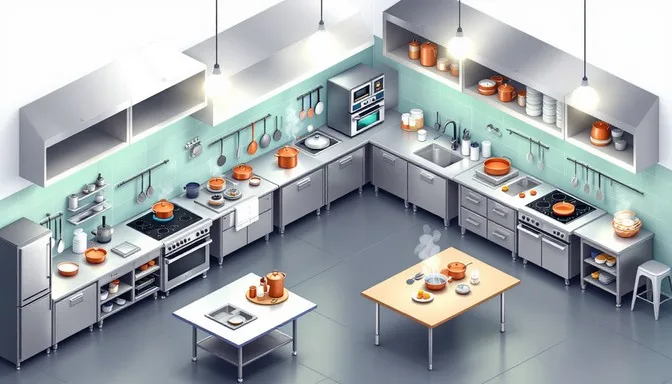
How to Maximize Counter Space with Multi-Functional Prep Equipment (Without Sacrificing Sanity)
Let me set the scene: It’s 6:45 AM, the breakfast rush is about to hit, and your counter looks like a Tetris game gone horribly wrong. There’s a cutting board teetering on the edge of the sink, a food processor that hasn’t been used since last Tuesday taking up prime real estate, and a stack of sheet pans that may or may not topple onto the floor at any moment. Sound familiar? If you’re nodding along, you’re not alone, this is the daily reality for chefs and home cooks alike who are constantly battling the eternal struggle: too much stuff, not enough space.
I remember the first time I walked into a commercial kitchen that actually *worked*. It wasn’t the fanciest place, no Michelin stars or James Beard awards in sight, but the way the chef moved, the way the equipment seemed to *breathe* with the workflow, was nothing short of magic. That’s when it hit me: maximizing counter space isn’t just about cramming more tools onto the surface. It’s about designing a system where every piece of equipment earns its keep, pulling double (or triple) duty without cluttering up your life. And here’s the kicker: you don’t need a complete kitchen overhaul to make it happen. Sometimes, it’s just about swapping out a few key pieces for multi-functional prep equipment that does more with less.
In this guide, I’m going to walk you through how to rethink your counter space, whether you’re running a food truck, a restaurant, or just trying to keep your home kitchen from looking like a war zone. We’ll cover everything from the psychology of kitchen workflows (yes, there’s a science to why some kitchens feel effortless and others feel like a maze) to the specific tools and strategies that can transform your space from chaotic to streamlined. And don’t worry, I’ll include plenty of real-world examples, because let’s be honest: theory is great, but if it doesn’t work when the tickets are piling up, it’s not worth much.
By the end of this, you’ll have a clear roadmap for maximizing counter space with multi-functional prep equipment, along with a few hard-earned lessons (read: mistakes) from my own journey. So grab a coffee, take a deep breath, and let’s dive in.
The Counter Space Conundrum: Why More Isn’t Always Better
1. The Illusion of Infinite Space
Here’s a confession: I used to think that the solution to my counter space problems was simple, just get a bigger kitchen. More square footage, more counters, more room to spread out. But after moving from a cramped apartment kitchen to a slightly less cramped commercial space (and then to a *slightly* larger one), I realized something unsettling: more space doesn’t automatically mean better workflow. In fact, sometimes it makes things worse.
Why? Because when you have more counter space, you tend to fill it. It’s like that old saying about closets: no matter how big they are, they always end up stuffed. The same goes for kitchens. Give a chef an extra two feet of counter, and suddenly there’s a waffle maker, a dehydrator, and a stack of cookbooks taking up residence. The problem isn’t the lack of space, it’s the lack of intentionality in how we use it.
So before you start measuring for a kitchen expansion, ask yourself: What’s the real bottleneck here? Is it the sheer volume of equipment, or is it that the tools you *do* have aren’t pulling their weight? For most of us, it’s the latter. And that’s where multi-functional prep equipment comes in. These are the tools that do more than one job, freeing up space by consolidating tasks that would otherwise require multiple gadgets.
But here’s the catch: not all multi-functional tools are created equal. Some are game-changers. Others are just gimmicks dressed up in shiny packaging. So how do you tell the difference? Let’s break it down.
2. The Multi-Functional Mindset: What to Look For
When I first started researching multi-functional equipment, I made a list of what I *thought* I needed: a food processor that could also spiralize, a blender that doubled as a juicer, a mixer that could knead *and* whip. But after talking to chefs, reading reviews, and, let’s be honest, wasting money on a few duds, I realized that the best multi-functional tools share a few key traits:
- True versatility: It’s not enough for a tool to claim it can do multiple things. It needs to do them *well*. A blender that can also chop ice but turns your soup into a lukewarm puree isn’t versatile, it’s a compromise.
- Space efficiency: If a tool takes up as much room as two separate appliances, it’s not saving you space. Look for compact designs that fit seamlessly into your workflow.
- Ease of transition: The best multi-functional tools don’t require a 20-minute setup to switch between functions. If it takes longer to clean and reconfigure than it would to just use two separate tools, it’s not worth it.
- Durability: This one’s non-negotiable. If a tool is going to pull double duty, it needs to be built to last. Cheap plastic attachments or flimsy motors won’t cut it in a high-volume kitchen.
- Workflow integration: The tool should fit into your existing processes without forcing you to rethink your entire system. If it requires you to move your station or rearrange your kitchen, it’s probably not the right fit.
Now, let’s talk specifics. What are the best multi-functional prep tools for maximizing counter space? Here’s where things get interesting.
Multi-Functional Prep Equipment That Actually Works (And Saves Space)
3. The Food Processor: The Swiss Army Knife of the Kitchen
If there’s one piece of equipment that embodies the multi-functional ethos, it’s the food processor. But not all food processors are created equal. The key is finding one that can handle a variety of tasks without taking up half your counter. Here’s what to look for:
- Multiple blades and discs: A good food processor should come with a S-blade for chopping and pureeing, a shredding disc, a slicing disc, and ideally a dough blade if you’re into baking. Some high-end models even include a citrus juicer attachment or a whisk for light mixing.
- Variable speeds: Not every task requires the same power. A processor with multiple speed settings (or a pulse function) gives you more control over the texture of your food.
- Large capacity: This might seem counterintuitive for saving space, but a larger bowl means you can process bigger batches, reducing the need for multiple rounds of prep. Just make sure it’s not so big that it becomes a storage nightmare.
- Compact footprint: Some food processors are designed to sit on the counter permanently, while others are slim enough to store in a cabinet when not in use. If counter space is at a premium, opt for the latter.
One of my favorite examples is the Robot Coupe R2N, a commercial-grade food processor that’s a workhorse in professional kitchens. It’s not cheap, but it’s built to last and can handle everything from chopping onions to kneading dough. For home cooks, the Cuisinart Custom 14-Cup Food Processor is a solid choice, it’s versatile, durable, and won’t break the bank.
But here’s the thing: a food processor is only as good as the system you build around it. If you’re constantly digging it out of a cabinet, cleaning it, and then putting it away, you’re not saving time or space. The key is to designate a permanent spot for it on your counter (or nearby) and keep it ready to go. Which brings us to our next point…
4. The Stand Mixer: More Than Just a Baking Tool
When most people think of a stand mixer, they picture whipping egg whites or kneading bread dough. But a high-quality stand mixer is one of the most underrated multi-functional tools in the kitchen. With the right attachments, it can do everything from grinding meat to rolling pasta to shredding cheese. And because it’s a countertop appliance, it’s always within arm’s reach when you need it.
Here’s how to get the most out of your stand mixer:
- Invest in attachments: Most stand mixers come with a paddle, whisk, and dough hook, but the real magic happens with the optional attachments. A food grinder can replace a separate meat grinder, a pasta roller eliminates the need for a manual crank, and a vegetable spiralizer can turn zucchini into noodles in seconds.
- Use it for non-baking tasks: A stand mixer isn’t just for sweet treats. Use the paddle attachment to mix meatloaf, the whisk to aerate sauces, or the dough hook to knead pizza dough. The more you use it, the less you’ll need other tools.
- Opt for a tilt-head model: If space is tight, a tilt-head stand mixer (like the KitchenAid Classic) is easier to store than a bowl-lift model. You can keep it on the counter and tilt the head up to save space when not in use.
- Consider a commercial-grade model: If you’re running a high-volume kitchen, a commercial stand mixer (like the Hobart N50) is built to handle heavy use. It’s an investment, but it’ll pay off in durability and versatility.
I’ll admit, I was skeptical about using a stand mixer for anything other than baking at first. But after watching a line cook at a busy brunch spot use one to shred pounds of chicken for tacos in minutes, I was sold. It’s all about rethinking what these tools can do.
5. The Blender-Food Processor Hybrid: One Tool, Two Jobs
If you’re really tight on space, a blender-food processor hybrid might be the answer. These tools combine the high-speed blending power of a blender with the chopping and slicing capabilities of a food processor, all in one compact unit. The trade-off? They’re not quite as powerful as dedicated machines, but for most home cooks (and even some small commercial kitchens), they’re more than enough.
Here’s what to look for in a hybrid:
- Interchangeable containers: The best hybrids come with multiple jars or bowls-one for blending (with a tight-fitting lid) and one for processing (with a feed tube for adding ingredients).
- Strong motor: A weak motor will struggle with tough tasks like kneading dough or crushing ice. Look for at least 600 watts for home use and 1000+ watts for commercial applications.
- Variable speeds and pulse function: This gives you more control over the texture of your food. A pulse function is especially useful for chopping.
- Easy-to-clean design: The last thing you want is a tool that’s a pain to clean. Look for dishwasher-safe parts and a design that doesn’t trap food in hard-to-reach places.
One hybrid that gets a lot of love from chefs is the Vitamix FoodCycler. It’s not cheap, but it’s incredibly versatile and built to last. For a more budget-friendly option, the Ninja Mega Kitchen System is a solid choice, it comes with a blender jar, a food processor bowl, and even a single-serve cup for smoothies.
But here’s the thing: hybrids aren’t for everyone. If you do a lot of heavy-duty blending or processing, you might still want separate machines. But for most people, a hybrid can replace two (or more) appliances, freeing up valuable counter space.
6. The Prep Sink: The Unsung Hero of Counter Space
This one might sound a little out there, but hear me out: your prep sink is one of the most underutilized pieces of multi-functional equipment in your kitchen. Most people think of it as just a place to wash veggies or fill pots with water, but with a little creativity, it can become a secondary prep station that takes pressure off your counters.
Here’s how to make the most of your prep sink:
- Install a cutting board that fits over the sink: This gives you an instant extra prep surface that’s easy to clean. Some cutting boards even come with built-in colanders for washing produce.
- Use a sink strainer or basket: A stainless steel strainer or basket insert can turn your sink into a makeshift colander, freeing up space on your counter for other tasks.
- Add a faucet with a pull-down sprayer: This makes it easier to rinse produce or fill pots without moving them to the counter. Some commercial kitchens even install pre-rinse faucets to speed up dishwashing.
- Use the sink for soaking or thawing: Instead of taking up counter space with a bowl of water for soaking beans or thawing meat, use the sink itself. Just make sure to clean it thoroughly afterward.
I know what you’re thinking: Isn’t this just moving the problem from the counter to the sink? And you’re not wrong. But the key is that the sink is a flexible space-it can be a prep station, a washing station, or even a temporary holding area for dirty dishes. By using it strategically, you can reduce the load on your counters and create a more fluid workflow.
If you’re designing a kitchen from scratch (or working with a supplier like Chef’s Deal, which offers free kitchen design services), think about the placement of your prep sink. It should be centrally located and easily accessible from your main prep area. And don’t skimp on the size, a larger sink gives you more flexibility to use it for multiple tasks.
Designing Your Workflow: How to Arrange Multi-Functional Equipment for Maximum Efficiency
7. The Work Triangle (And Why It Might Be Holding You Back)
If you’ve ever read anything about kitchen design, you’ve probably heard of the work triangle. The idea is simple: your sink, stove, and refrigerator should form a triangle, with each side between 4 and 9 feet long. This minimizes the distance you have to travel between the three main work zones, making your kitchen more efficient.
But here’s the problem: the work triangle was designed for a time when kitchens were simpler. Today, with multi-functional equipment and more complex workflows, the triangle might not be enough. In fact, it might even be limiting your efficiency.
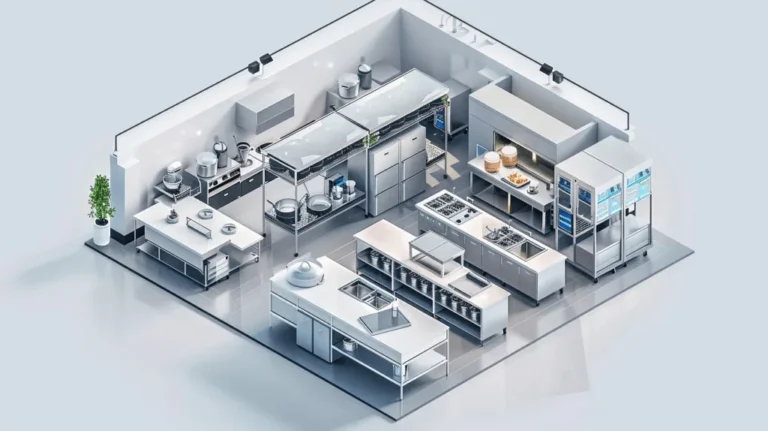
So what’s the alternative? Zones. Instead of thinking in terms of a triangle, think about grouping tasks by function. For example:
- Prep zone: This is where you’ll do most of your chopping, mixing, and measuring. It should include your food processor, stand mixer, and cutting boards, as well as easy access to your sink and refrigerator.
- Cooking zone: This is where your stove, oven, and any cooking tools (like tongs or spatulas) live. It should be close to your prep zone but not so close that it gets in the way.
- Cleaning zone: This includes your sink, dishwasher, and trash/recycling bins. It should be separate from your prep and cooking zones to avoid cross-contamination.
- Storage zone: This is where you keep your dry goods, spices, and non-perishable items. It should be easily accessible from both your prep and cooking zones.
The key to making this work is flexibility. Your zones should be able to adapt to different tasks. For example, if you’re making a soup that requires both chopping and blending, your prep zone should be able to accommodate both activities without forcing you to move around too much.
But how does this tie into multi-functional equipment? Simple: by grouping your tools by function, you can reduce the need for duplicate equipment. For example, if your food processor is in your prep zone, you don’t need a separate blender in your cooking zone. This frees up space and makes your workflow more efficient.
I’ll be honest: this took me a while to figure out. My first kitchen was a mess of random equipment scattered everywhere, and it wasn’t until I started thinking in terms of zones that things started to click. If you’re feeling overwhelmed, start small. Pick one zone (like your prep area) and optimize it for multi-functional use. The rest will follow.
8. The Power of Vertical Space (And Why You’re Probably Ignoring It)
When we talk about maximizing counter space, most of us focus on the horizontal plane-the flat surface where we chop, mix, and plate. But what about the vertical space above and below the counter? This is one of the most underutilized areas in most kitchens, and it’s a goldmine for freeing up counter real estate.
Here’s how to make the most of it:
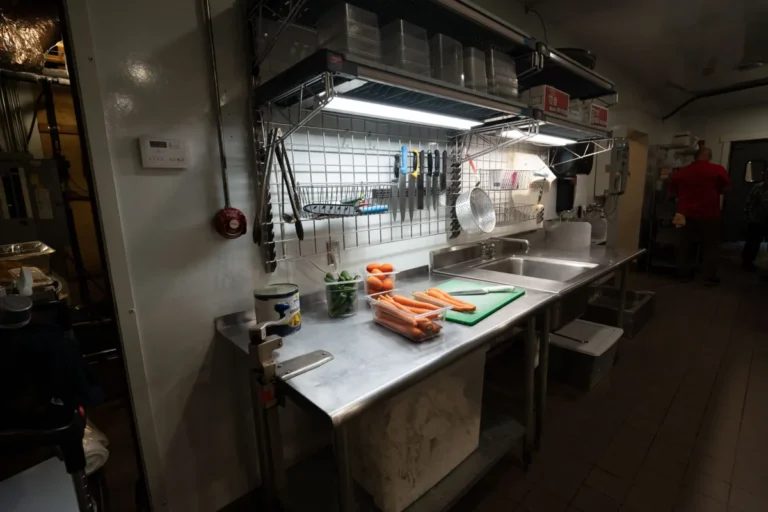
- Wall-mounted racks and shelves: Install stainless steel racks or floating shelves above your counter to store frequently used tools like ladles, tongs, or even small appliances. This keeps them within arm’s reach without taking up counter space.
- Magnetic knife strips: A magnetic knife strip mounted on the wall keeps your knives accessible and frees up drawer space. Just make sure it’s installed at a safe height (away from where people might bump into it).
- Under-cabinet storage: Use hooks, racks, or baskets under your cabinets to store spices, utensils, or even small appliances like a toaster or air fryer. This keeps them off the counter but still easy to access.
- Pegboards: A pegboard is one of the most flexible storage solutions out there. You can hang pots, pans, utensils, and even small appliances on it, and rearrange the hooks as needed. It’s like a customizable wall of storage.
- Overhead pot racks: If you have high ceilings, an overhead pot rack can free up cabinet space and keep your pots and pans within easy reach. Just make sure it’s installed securely, no one wants a cast-iron skillet falling on their head.
But here’s the catch: vertical space isn’t just about storage. It’s also about creating a more efficient workflow. For example, if you mount your spice rack above your stove, you can grab what you need while cooking without having to walk across the kitchen. Or if you install a paper towel holder under the cabinet, you can tear off a sheet without taking your eyes off the stove.
I’ll admit, I was skeptical about vertical space at first. It felt like I was just moving the clutter from the counter to the walls. But after installing a pegboard in my home kitchen, I realized how much of a game-changer it was. Suddenly, everything had a place, and my counters were clear for actual prep work. If you’re tight on space, this is one of the easiest ways to maximize your kitchen’s potential.
9. The Art of the Drop Zone: Where to Put Things You Use Every Day
Let’s talk about the drop zone-the area where you dump things when you walk into the kitchen. Keys, mail, your phone, that random spoon you used to taste the sauce and forgot to put in the sink. We all have one, and for most of us, it’s a black hole of clutter that spills onto the counter and never gets cleaned up.
But what if I told you that your drop zone could actually help maximize your counter space? It’s all about designating a specific spot for these items and keeping it contained. Here’s how:
- Use a tray or basket: A decorative tray or stainless steel basket can corral small items and keep them from spreading across the counter. Bonus points if it’s easy to move when you need to clean.
- Install a wall-mounted organizer: A mail sorter, key hook, or small shelf can keep essentials off the counter but still within reach. This is especially useful in commercial kitchens where staff might need a place to stash their phones or personal items.
- Create a charging station: If you’re constantly charging your phone or tablet in the kitchen, designate a specific spot for it. A wall-mounted charging dock or under-cabinet power strip can keep cords tidy and off the counter.
- Use a pegboard or hook system: If your drop zone includes bags, aprons, or other gear, a pegboard or hook system can keep them organized and off the counter.
The key is to make the drop zone intentional. Instead of letting it sprawl across the counter, give it a defined space that’s easy to manage. This frees up the rest of your counter for actual prep work and makes your kitchen feel less cluttered.
I’ll be the first to admit that my drop zone used to be a disaster. But after designating a small tray for keys and mail (and actually *using* it), I noticed a big difference. It’s a small change, but it adds up, especially when you’re trying to maximize counter space with multi-functional prep equipment.
Putting It All Together: A Step-by-Step Plan for Maximizing Your Counter Space
10. The 5-Step Counter Space Audit (And How to Do It)
Alright, let’s get practical. You’ve read about the tools, the workflows, and the strategies, but how do you actually apply this to your kitchen? The first step is to audit your current setup. This isn’t as scary as it sounds, it’s just about taking a hard look at what’s working and what’s not. Here’s how to do it:
- Clear everything off your counters: Yes, everything. This might feel drastic, but it’s the only way to see what you’re *actually* working with. Pile everything onto the table or floor (or, if you’re in a commercial kitchen, onto a cart).
- Sort items into categories: Group things by function. For example:
- Prep tools (knives, cutting boards, food processor, etc.)
- Cooking tools (spatulas, tongs, pots, pans, etc.)
- Small appliances (toaster, blender, coffee maker, etc.)
- Non-kitchen items (mail, keys, random junk, etc.)
- Decorative items (plants, candles, etc.)
- Ask yourself three questions about each item:
- Do I use this regularly? (Be honest. If you haven’t used it in the last month, it’s probably not essential.)
- Does this need to be on the counter, or can it be stored elsewhere?
- Is there a multi-functional tool that could replace this?
- Measure your counter space: Grab a tape measure and note the dimensions of your counters. This will help you plan your layout and choose equipment that fits.
- Sketch a rough layout: Draw a simple diagram of your kitchen and mark where your zones will be. Don’t worry about making it perfect, this is just a starting point.
This audit might take an hour or two, but it’s worth it. I did this in my home kitchen a few years ago, and it was eye-opening. I realized that half the stuff on my counters was either redundant or unnecessary. For example, I had both a blender and a food processor taking up space, even though my food processor could handle most of the blender’s tasks. By consolidating, I freed up a ton of room.
Once you’ve audited your space, it’s time to make some changes. Here’s a step-by-step plan to maximize your counter space with multi-functional prep equipment:
- Start with the essentials: Identify the tools you use every day and make sure they have a permanent home on or near the counter. This might include your food processor, stand mixer, or cutting board.
- Consolidate with multi-functional tools: Look for opportunities to replace single-use tools with versatile equipment. For example, a stand mixer with attachments can replace a separate meat grinder, pasta roller, and spiralizer.
- Optimize your zones: Arrange your tools by function (prep, cooking, cleaning, storage) and make sure each zone has everything it needs. This reduces the need to move around the kitchen and keeps your counters clear.
- Utilize vertical space: Install wall-mounted racks, pegboards, or shelves to store tools and appliances that don’t need to be on the counter. This frees up valuable real estate for prep work.
- Create a drop zone: Designate a specific spot for non-kitchen items (keys, mail, etc.) to keep them from spreading across the counter. A tray or basket works great for this.
- Test and adjust: Once you’ve made your changes, live with them for a week and see how they feel. Are you using the multi-functional tools as much as you thought? Is your workflow smoother, or are there still bottlenecks? Adjust as needed.
This might feel like a lot of work, but trust me: it’s worth it. A well-organized kitchen isn’t just about aesthetics, it’s about efficiency, safety, and sanity. And when you’re in the middle of a dinner rush or trying to get breakfast on the table before the kids wake up, you’ll be glad you took the time to get it right.
Final Thoughts: The Counter Space Mindset
Here’s the thing about maximizing counter space with multi-functional prep equipment: it’s not just about the tools. It’s about the mindset. It’s about looking at your kitchen and asking, What’s the most efficient way to do this? instead of How can I fit everything in?.
I’ll be honest: I didn’t get this right away. For years, I thought the solution was to buy more stuff, bigger counters, more appliances, fancier gadgets. But the real breakthrough came when I started questioning my assumptions. Do I really need a separate blender and food processor? Can my stand mixer do more than just bake? Is there a way to use my sink as a prep station?
The answers to these questions led me to a simpler, more efficient kitchen. And the best part? It didn’t require a complete overhaul. It just required a shift in perspective.
So here’s my challenge to you: Pick one area of your kitchen to optimize this week. Maybe it’s your prep zone, maybe it’s your drop zone, or maybe it’s just swapping out a single-use tool for something more versatile. Whatever it is, start small and build from there. Because when it comes to maximizing counter space, every little bit counts.
And who knows? Maybe one day, you’ll walk into your kitchen and feel that same sense of magic I did, the feeling that everything has a place, that the workflow is effortless, and that the counters aren’t just a surface, but a system designed to make your life easier.
FAQ: Your Burning Questions About Maximizing Counter Space
Q: What’s the best multi-functional prep tool for a small home kitchen?
A: For most home kitchens, a high-quality food processor is the best place to start. It can handle chopping, slicing, shredding, and even kneading dough, replacing multiple single-use tools. If you bake a lot, a stand mixer with attachments is another great option. The key is to choose tools that fit your specific needs, don’t just buy something because it’s marketed as “multi-functional.”
Q: How do I keep my counters clear when I’m in the middle of cooking?
A: The secret is prep and clean as you go. Before you start cooking, gather all your ingredients and tools and prep them in advance. As you cook, put things away or move them to the sink as soon as you’re done with them. This keeps your counters clear and your workflow smooth. It’s also helpful to designate a “landing zone” for dirty dishes or tools you’re not done with yet, just make sure it’s not on the main prep surface.
Q: I have a tiny kitchen with almost no counter space. What’s the first thing I should do?
A: Start by auditing your current setup. Clear everything off your counters and sort items into categories (prep tools, cooking tools, non-kitchen items, etc.). Then, ask yourself: Do I use this regularly? Does it need to be on the counter? For most people, this process reveals that a lot of counter clutter is unnecessary. Next, focus on vertical space. Install wall-mounted racks, pegboards, or shelves to store tools and appliances that don’t need to be on the counter. Finally, look for multi-functional tools that can replace single-use gadgets. For example, a blender-food processor hybrid can free up space by consolidating two appliances into one.
Q: How do I choose between a food processor and a blender for my kitchen?
A: It depends on what you cook most often. Food processors are better for chopping, slicing, shredding, and kneading dough, while blenders are better for pureeing, liquefying, and making smoothies. If you’re tight on space, consider a hybrid model that combines both functions. For commercial kitchens, you might need both, but for most home cooks, a high-quality food processor is the more versatile choice. If you’re still unsure, think about the tasks you do most often and choose the tool that best fits those needs.
Q: Are there any multi-functional tools that are overrated or not worth the space?
A: Absolutely. Some multi-functional tools are more gimmick than game-changer. For example, a toaster oven that also air fries might sound great, but if it doesn’t toast or air fry as well as dedicated appliances, it’s not worth the counter space. Similarly, a blender with a built-in coffee grinder might not grind coffee as well as a standalone grinder. The key is to look for tools that excel at their primary function while also offering useful secondary features. Read reviews, talk to other chefs, and don’t be afraid to return something if it doesn’t live up to the hype.
@article{how-to-maximize-counter-space-with-multi-functional-prep-equipment-a-chefs-guide-to-smarter-kitchen-workflows,
    title   = {How to Maximize Counter Space with Multi-Functional Prep Equipment: A Chef’s Guide to Smarter Kitchen Workflows},
    author  = {Chef's icon},
    year    = {2026},
    journal = {Chef's Icon},
    url     = {https://chefsicon.com/how-to-maximize-counter-space-with-multi-functional-prep-equipment/}
}