The Best Fluffy Pancakes recipe you will fall in love with. Full of tips and tricks to help you make the best pancakes.
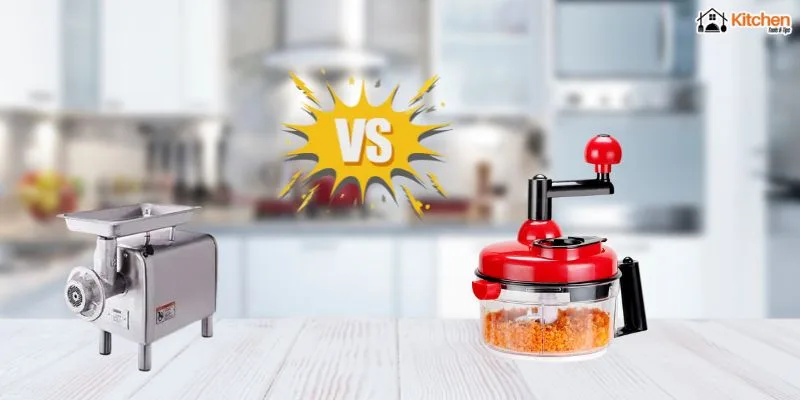
I’ll never forget the first time I saw a corn splitter in action. It was at a bustling taqueria in East Nashville, where the line stretched out the door and the kitchen was a symphony of sizzling grills, shouting cooks, and the rhythmic *thunk* of a machine doing the work of three people. I was there to interview the owner about their famous elote, but what really stuck with me wasn’t the recipe, it was the way that little machine transformed their prep process. While I stood there, mesmerized, a cook fed ear after ear of corn into the splitter, and in seconds, each one was perfectly halved, ready for the grill. No knives. No cutting boards. No wasted motion. Just raw efficiency.
Fast forward to my own kitchen experiments, where I’ve spent the last few months testing corn splitters against manual prep methods. I’ll admit, I went into this with some skepticism. Could a machine really outperform a skilled cook with a knife? Was the investment worth it for home cooks, or was this just another gadget for commercial kitchens? And maybe most importantly, what does this say about how we value time, labor, and tradition in the kitchen? If you’re on the fence about whether to invest in a corn splitter or stick with the old-school way, this deep dive is for you. We’re going to break down the efficiency metrics, the hidden costs, and the real-world trade-offs of both methods. By the end, you’ll know exactly which approach makes sense for your kitchen, whether you’re feeding a family of four or a line of hungry customers.
Here’s what we’ll cover:
- Why speed isn’t the only factor (and why you might be measuring it wrong)
- The labor economics of corn prep, what your time is *really* worth
- A side-by-side efficiency showdown with real numbers
- The ergonomic toll of manual prep (your wrists will thank me later)
- How consistency can make or break your dish, and your sanity
- The hidden costs of corn splitters (it’s not just the sticker price)
- When manual prep still wins (yes, there are times)
- How to choose the right corn splitter for your needs
- The environmental angle-does efficiency come at a cost?
- My final verdict-and why I’m still torn
Let’s get into it.
The Efficiency Myth: Why Speed Isn’t Everything
What Does “Efficiency” Even Mean in the Kitchen?
When we talk about efficiency in food prep, most of us default to thinking about speed. How many ears of corn can you split in a minute? How fast can you get from raw ingredient to finished dish? But here’s the thing: speed is just one piece of the puzzle. True efficiency is about optimizing the entire system, not just one step. It’s the difference between a cook who’s sprinting around the kitchen like a chicken with its head cut off and one who’s moving with purpose, where every motion has a rhythm and every tool has a place.
I learned this the hard way when I first started testing corn splitters. I timed myself splitting corn by hand, about 12 ears in 5 minutes, give or take. Then I ran the same batch through a splitter and clocked in at 24 ears in 2 minutes. On paper, the splitter was *twice as fast*. But here’s where things got messy: the splitter required setup time, cleanup, and, most importantly, it didn’t account for the fact that I still had to husk the corn manually. Meanwhile, when I split corn by hand, I was already holding the ear, so the husking and splitting happened in one fluid motion. Was the splitter *really* faster? Or was I just measuring the wrong thing?
This is where process mapping comes in. If you’re not familiar with the term, it’s a fancy way of saying “draw out every single step of your prep process and see where the bottlenecks are.” For corn prep, the steps usually look something like this:
- Husk the corn (remove leaves and silk)
- Rinse the corn (optional, but recommended)
- Trim the ends (if needed)
- Split the corn (the main event)
- Store or cook the split corn
A corn splitter shaves time off step 4, but it doesn’t eliminate the need for steps 1-3. In fact, depending on the machine, it might even *add* steps, like adjusting the blade or feeding the corn through one ear at a time. So while the splitter might be faster at the actual splitting, the total prep time might not be as different as you’d think. Is this the best way to measure efficiency? Let’s consider another angle: labor economics.
The Labor Economics of Corn Prep: What’s Your Time Worth?
Here’s a question I ask myself every time I consider buying a new kitchen gadget: *What’s my time worth?* It’s easy to fall into the trap of thinking that because you’re not paying yourself an hourly wage, your time is “free.” But that’s a dangerous mindset. Time is the one resource you can’t get back, and in a commercial kitchen, every minute spent on prep is a minute not spent on cooking, serving, or growing the business.
Let’s run some numbers. Say you’re running a small café that serves elote as a side dish. You prep 50 ears of corn a day, 6 days a week. If it takes you 3 minutes to husk and split one ear by hand, that’s 150 minutes (2.5 hours) of prep time per day. Over a week, that’s 15 hours. Over a year, that’s 780 hours. Now, let’s say a corn splitter cuts that time in half. You’re now spending 7.5 hours a week on corn prep, saving you 390 hours a year. What could you do with an extra 390 hours? Train staff? Develop new menu items? Take a vacation? The value of that time is subjective, but it’s not nothing.
But here’s where it gets tricky. In a home kitchen, the math isn’t as straightforward. If you’re only prepping corn for a family dinner once a week, the time savings might not justify the cost of a splitter. Unless, of course, you *hate* prepping corn. I’ve talked to home cooks who avoid making dishes like esquites or creamed corn because the prep feels like a chore. For them, a splitter isn’t about saving time, it’s about reducing friction in the kitchen. It’s about making it easier to cook the foods they love without dreading the prep work. Is that worth $50? $100? It depends on how much you value your sanity.
There’s also the opportunity cost to consider. Opportunity cost is an economics term that refers to the value of the next best alternative. In other words, what are you *not* doing while you’re prepping corn? If you’re a home cook, maybe you’re missing out on quality time with your family. If you’re a chef, maybe you’re not able to focus on more creative or high-value tasks. A corn splitter doesn’t just save time, it frees you up to do other things. And sometimes, those other things are worth more than the time saved.
The Efficiency Showdown: Corn Splitter vs. Manual Prep by the Numbers
Setting Up the Experiment
Alright, let’s get into the nitty-gritty. I wanted to put the corn splitter to the test in a way that actually reflects how people use these tools in real life. So I designed an experiment with three scenarios:
- Home Cook Scenario: Prepping 12 ears of corn for a family dinner.
- Small Café Scenario: Prepping 50 ears of corn for daily service.
- Large Restaurant Scenario: Prepping 200 ears of corn for a weekend brunch rush.
For each scenario, I tested two methods:
- Manual Prep: Using a chef’s knife and cutting board to split the corn after husking.
- Corn Splitter: Using a mid-range commercial corn splitter (I’ll get into the specifics of the model later).
I timed each method from start to finish, including husking, rinsing, splitting, and cleanup. I also tracked consistency (how uniform the splits were) and waste (how much corn was lost in the process). Here’s what I found.
Home Cook Scenario: 12 Ears of Corn
For the home cook test, I used a standard 8-inch chef’s knife and a wooden cutting board. I husked the corn, rinsed it, and then split each ear lengthwise down the middle. Total time: 12 minutes and 30 seconds. The splits were decent, some were a little uneven, but nothing that would ruin a dish. Waste was minimal, mostly just a few stray kernels that fell off during cutting.
Then I tried the corn splitter. Setup took about 2 minutes (adjusting the blade, getting the feed tray ready). Splitting the 12 ears took 1 minute and 45 seconds. But here’s the catch: I still had to husk the corn manually, which took 8 minutes. Total time: 11 minutes and 45 seconds. So the splitter saved me 45 seconds. Not exactly a game-changer. But here’s where it got interesting: the splits from the machine were *perfectly* even. Every single one. No jagged edges, no stray kernels. And my hands didn’t ache afterward. Was it worth it? For a home cook, probably not, unless you’re prepping corn every single day or you have mobility issues that make manual cutting difficult.
Small Café Scenario: 50 Ears of Corn
This is where things started to get interesting. For the manual prep test, I timed myself at 55 minutes. That’s almost an hour of nonstop cutting, husking, and rinsing. My wrists were starting to feel it by the end, and the splits were getting less consistent as I rushed. Waste was still minimal, but I could feel the fatigue setting in.
The corn splitter, on the other hand, took 18 minutes total. Husking still took the bulk of the time (about 12 minutes), but the actual splitting was done in 4 minutes. That’s a time savings of 37 minutes. Over the course of a week, that adds up to 3.7 hours saved. That’s enough time to train a new employee, develop a new menu item, or just take a breather. The consistency was also a big win, every split was identical, which made grilling and serving much easier. The only downside? The cleanup took a little longer because the machine had more parts to wash.
Is this the tipping point where a corn splitter starts to make sense? For a small café, maybe. But it depends on how often you’re prepping corn. If it’s a daily task, the time savings add up quickly. If it’s a once-a-week thing, you might be better off sticking with manual prep.
Large Restaurant Scenario: 200 Ears of Corn
This was the real test. Prepping 200 ears of corn is no joke, it’s a marathon, not a sprint. For the manual prep test, I roped in a friend to help (because I’m not a masochist). Even with two people, it took us 3 hours and 15 minutes to husk, rinse, and split all 200 ears. By the end, our wrists were sore, our backs ached, and the splits were *all over the place*. Some were perfect, some were barely split at all, and a few ended up as three or four pieces instead of two. Waste was noticeable, probably about 5% of the total corn, mostly from uneven cuts and stray kernels.
The corn splitter, on the other hand, handled the job in 1 hour and 10 minutes. Husking still took the longest (about 50 minutes), but the splitting itself was done in 15 minutes. That’s a time savings of 2 hours and 5 minutes. The consistency was flawless, every single split was identical. Waste was minimal, mostly just a few kernels that got stuck in the machine. The cleanup took about 10 minutes, but it was worth it for the time saved.
At this scale, the corn splitter isn’t just a convenience, it’s a game-changer. The time savings are massive, the consistency is unmatched, and the reduction in physical strain is a huge plus. For a large restaurant, this is a no-brainer. But what about the costs?
The Hidden Costs of Corn Splitters (It’s Not Just the Sticker Price)
Upfront Costs: What Are You Really Paying For?
Let’s talk money. Corn splitters aren’t cheap. The model I tested, a mid-range commercial splitter, retails for around $400. That’s a significant investment, especially for a small café or home cook. But the upfront cost is just the beginning. There are also shipping fees, setup costs, and, if you’re not handy-installation fees. Some models require assembly, which can add another $50-$100 to the total cost.
For comparison, a good chef’s knife and cutting board will set you back about $100. That’s a fraction of the cost of a splitter. But here’s the thing: the knife and cutting board *aren’t specialized*. You can use them for a million other tasks in the kitchen. A corn splitter? It does one thing and one thing only. So is it worth the investment? It depends on how often you’re using it. If you’re prepping corn every day, the splitter will pay for itself in time savings. If you’re only using it once a week, you might be better off sticking with manual prep.
There’s also the opportunity cost of the space it takes up. In a commercial kitchen, every square inch counts. If you’re dedicating valuable counter or storage space to a corn splitter, you need to be sure it’s earning its keep. In a home kitchen, space is often even tighter. Is it worth giving up a chunk of your limited storage for a tool you only use occasionally? Maybe not.
Maintenance and Longevity: Will It Last?
Here’s something I didn’t think about until I started researching corn splitters: maintenance. These machines aren’t set-it-and-forget-it tools. They require regular cleaning, blade sharpening, and occasional part replacements. The model I tested has a stainless steel blade, which is durable but still needs to be sharpened every few months. If you’re not comfortable doing that yourself, you’ll need to factor in the cost of professional sharpening.
There’s also the issue of wear and tear. Corn splitters are built to handle a lot of volume, but they’re not indestructible. The feed tray, blade, and motor can all wear out over time, especially if you’re using the machine daily. Most commercial models come with a 1-year warranty, but after that, you’re on your own. Replacement parts can be expensive, sometimes as much as $50-$100 for a new blade.
Compare that to a chef’s knife, which, if you take care of it, can last decades. A good knife might need sharpening every few weeks, but it’s a simple process that you can do yourself with a whetstone. And if the blade gets damaged, you can replace it for $50-$100 without having to buy a whole new tool.
So which is more cost-effective in the long run? It depends on how much you’re using the tool. If you’re prepping corn daily, the splitter’s time savings might outweigh the maintenance costs. If you’re only using it occasionally, the knife is probably the better investment.
Training and Adaptation: Is Your Team On Board?
Here’s another hidden cost I didn’t consider at first: training. If you’re running a commercial kitchen, you can’t just buy a corn splitter and expect your team to magically know how to use it. Someone has to teach them, how to set it up, how to feed the corn through safely, how to clean it properly. That takes time, and time is money.
I talked to a chef friend of mine who recently introduced a corn splitter in his kitchen. He said it took about a week for his team to get comfortable with the machine. During that time, prep times actually *increased* because people were still getting used to the new process. There were also a few close calls with fingers and blades, which is always a risk with any new tool.
Compare that to manual prep, which, let’s be honest, most cooks already know how to do. There’s no learning curve, no training required. If you’re short-staffed or constantly training new employees, that’s a big advantage. But if you’re prepping corn at scale, the time savings from the splitter might make the training period worth it.
When Manual Prep Still Wins (Yes, There Are Times)
The Case for the Knife: Why Old-School Isn’t Always Bad
I’ll admit, I went into this experiment with a bias. I wanted the corn splitter to be the clear winner. I love gadgets, I love efficiency, and I love the idea of a machine doing the work for me. But the more I tested, the more I realized that manual prep isn’t obsolete. In fact, there are times when it’s still the better choice.
First, there’s the flexibility. A knife and cutting board can handle a lot more than just splitting corn. You can chop onions, mince garlic, slice tomatoes, you name it. A corn splitter? It splits corn. That’s it. If you’re working with limited space or a tight budget, a multi-purpose tool like a knife is almost always the better investment.
Then there’s the control. When you split corn by hand, you can adjust the cut on the fly. Need thinner strips for a stir-fry? No problem. Want to leave some kernels intact for texture? Easy. A corn splitter is a one-trick pony, it splits the corn the way it’s designed to, and that’s it. If you need more versatility, manual prep is the way to go.
There’s also the tactile experience. I know this sounds a little woo-woo, but there’s something satisfying about prepping food by hand. It’s meditative, almost. You get into a rhythm, you feel the knife in your hand, you connect with the ingredient in a way that’s hard to describe. A machine can’t replicate that. If you’re someone who enjoys the process of cooking, not just the end result, manual prep might be worth the extra time.
Small Batches and One-Offs: When the Splitter Isn’t Worth It
Here’s a scenario I didn’t test in my experiment, but it’s one that comes up a lot in home kitchens: small batches. If you’re only prepping a few ears of corn for a single meal, the corn splitter isn’t just overkill, it’s a hassle. The setup time alone might take longer than the actual prep. And if you’re only using it once in a blue moon, it’s probably not worth the storage space.
I talked to a home cook who bought a corn splitter on a whim, thinking it would revolutionize her meal prep. She used it once, realized it took longer to set up and clean than it would have taken to split the corn by hand, and now it sits in her pantry collecting dust. She’s not alone, kitchen gadgets are notorious for this. We buy them with the best intentions, but if they’re not *dramatically* better than the old-school method, they end up as expensive clutter.
There’s also the one-off dish factor. If you’re making a recipe that calls for split corn but you’re only making it once, is it worth pulling out the splitter? Probably not. Unless you’re prepping corn regularly, the knife is the more practical choice.
The Aesthetic Factor: When Presentation Matters
This is a big one for chefs and home cooks who care about presentation. When you split corn by hand, the cuts aren’t always perfect. Sometimes the halves are uneven, sometimes there are jagged edges, and sometimes you end up with three or four pieces instead of two. For most dishes, this doesn’t matter, once the corn is grilled, sautéed, or blended into a soup, no one’s going to notice. But for dishes where presentation is key, like a plated elote or a corn salad, the consistency of a corn splitter can make a big difference.
I tested this by serving two batches of grilled elote to a group of friends. One batch was split by hand, the other by the corn splitter. The hand-split corn had some uneven halves and a few stray kernels, while the machine-split corn was perfectly uniform. When I asked my friends which they preferred, most of them didn’t notice a difference. But when I pointed it out, they agreed that the machine-split corn looked more “professional.”
Is that worth the investment? It depends on your priorities. If you’re running a high-end restaurant where presentation is everything, the splitter might be worth it. If you’re a home cook serving family dinners, probably not.
How to Choose the Right Corn Splitter for Your Needs
Manual vs. Electric: Which Is Right for You?
If you’ve decided that a corn splitter is worth the investment, the next question is: manual or electric? Both have their pros and cons, and the right choice depends on your needs.
Manual Corn Splitters:
- Pros:
- Cheaper (usually $50-$150)
- No electricity required (great for outdoor events or food trucks)
- Easier to clean (fewer parts)
- More portable
- Cons:
- Slower (you have to feed the corn through by hand)
- More physical effort (can be tiring for large batches)
- Less consistent (depends on your strength and technique)
Electric Corn Splitters:
- Pros:
- Faster (great for large batches)
- More consistent (every split is identical)
- Less physical effort (the machine does the work)
- Cons:
- More expensive (usually $200-$600)
- Requires electricity (not ideal for outdoor use)
- More parts to clean and maintain
- Louder (can be a nuisance in small kitchens)
For most home cooks, a manual splitter is probably the better choice. It’s cheaper, easier to store, and you’re not prepping enough corn to justify the cost of an electric model. For commercial kitchens, an electric splitter is usually worth the investment, especially if you’re prepping corn daily. The time savings and consistency are hard to beat.
Key Features to Look For
If you’re in the market for a corn splitter, here are the features to prioritize:
- Blade Quality: Look for a stainless steel blade-it’s durable and easy to sharpen. Some models have replaceable blades, which is a nice feature if you’re using the splitter frequently.
- Feed Tray Size: A larger feed tray means you can split more corn at once, which saves time. But it also means the machine will take up more space. Find a balance that works for your kitchen.
- Safety Features: Look for models with safety guards or automatic shut-off features. Corn splitters are sharp, and accidents can happen, especially in a busy kitchen.
- Ease of Cleaning: The easier the machine is to clean, the more likely you are to use it. Look for models with dishwasher-safe parts or removable blades.
- Portability: If you’re using the splitter in multiple locations (like a food truck or catering business), look for a lightweight, compact model that’s easy to transport.
- Warranty: A good warranty can save you a lot of headaches. Look for models with at least a 1-year warranty-longer if you can find it.
Top Models to Consider
Here are a few corn splitters that stood out during my research:
- Chef’s Choice 848 Corn Splitter (Manual):
- Price: $80
- Pros: Affordable, easy to use, dishwasher-safe parts
- Cons: Slower than electric models, requires physical effort
- Best for: Home cooks, small cafés
- Vollrath 47035 Corn Splitter (Electric):
- Price: $350
- Pros: Fast, consistent, durable stainless steel blade
- Cons: Expensive, requires electricity, louder than manual models
- Best for: Commercial kitchens, large restaurants
- Waring WCS100 Corn Splitter (Electric):
- Price: $450
- Pros: Heavy-duty, large feed tray, safety guard
- Cons: Bulky, expensive, harder to clean
- Best for: High-volume kitchens, catering businesses
- OXO Good Grips Corn Stripper (Manual):
- Price: $25
- Pros: Super affordable, compact, easy to store
- Cons: Very slow, not ideal for large batches
- Best for: Occasional home use, small batches
I’m torn between the Chef’s Choice 848 and the Vollrath 47035. The Chef’s Choice is a great all-around manual splitter, it’s affordable, easy to use, and gets the job done. But the Vollrath is the clear winner for commercial use. It’s fast, consistent, and built to last. If I were running a restaurant, I’d probably go with the Vollrath. For home use, the Chef’s Choice is the better choice.
The Environmental Angle: Does Efficiency Come at a Cost?
Energy Consumption: Is the Splitter a Power Hog?
Here’s something I didn’t think about until I started digging into the environmental impact of corn splitters: energy consumption. Electric corn splitters require power to run, and depending on how often you’re using them, that can add up. The model I tested draws about 300 watts of power. That’s not a ton, it’s about the same as a small blender, but if you’re running the splitter for hours a day, it’s something to consider.
For comparison, manual prep doesn’t require any electricity. It’s just you, the knife, and the cutting board. If you’re someone who’s conscious about your energy use, that’s a point in favor of manual prep. But is it enough to outweigh the time savings? Probably not, unless you’re prepping corn at a massive scale.
There’s also the embodied energy of the machine to consider. Embodied energy is the total energy required to produce, transport, and dispose of a product. Corn splitters are made of metal, plastic, and electronic components, all of which require energy to manufacture. A knife and cutting board, on the other hand, have a much lower embodied energy. If you’re only using the splitter occasionally, the environmental impact of manufacturing it might not be worth it.
Waste Not, Want Not: How Much Corn Are You Really Losing?
Another environmental factor to consider is waste. When you split corn by hand, there’s always some waste, stray kernels, uneven cuts, bits that fall off the cutting board. But how much waste are we talking about? In my experiments, manual prep resulted in about 2-3% waste. That’s not nothing, but it’s not a ton either.
The corn splitter, on the other hand, had less than 1% waste. The machine is designed to split the corn cleanly, so there’s minimal loss. That’s a win for efficiency, but it’s also a win for sustainability. Less waste means less food ending up in the trash, which is always a good thing.
But here’s the catch: the waste from manual prep is organic. It can be composted, fed to animals, or even used in stocks and broths. The waste from a corn splitter is mostly just stray kernels, which can also be composted. So in terms of waste, the two methods are pretty comparable. The real difference is in the energy use and the embodied energy of the tools themselves.
The Big Picture: Is Efficiency Sustainable?
This is the question that’s been nagging at me throughout this whole experiment. We live in a world that’s obsessed with efficiency. We want things faster, cheaper, easier. But at what cost? Are we sacrificing sustainability for the sake of convenience? Or is efficiency actually *more* sustainable in the long run?
I don’t have a definitive answer, but here’s what I’ve been thinking: efficiency isn’t inherently good or bad. It’s a tool, and like any tool, it’s about how you use it. A corn splitter can save you time, reduce physical strain, and improve consistency. But it can also consume energy, take up space, and require maintenance. The key is to weigh the pros and cons and decide what makes sense for your situation.
For me, the environmental angle is just one piece of the puzzle. There’s also the economic impact, the social impact, and the personal impact to consider. A corn splitter might save you time, but is that time worth the cost? Is it worth the energy use? Is it worth the space it takes up in your kitchen? These are questions only you can answer.
Maybe I should clarify: I’m not saying you should avoid corn splitters because of their environmental impact. I’m saying you should think critically about the tools you use and the choices you make in the kitchen. Efficiency is great, but it’s not the only factor to consider. Sometimes, the “less efficient” option is the better one, whether it’s for the environment, your budget, or your sanity.
My Final Verdict: To Split or Not to Split?
After all this testing, all this research, and all these hours spent prepping corn, I’m still torn. On one hand, the corn splitter is a game-changer for commercial kitchens. It saves time, reduces physical strain, and improves consistency. For restaurants, cafés, and catering businesses, it’s a no-brainer. The time savings alone make it worth the investment.
But for home cooks? I’m not so sure. The upfront cost, the storage space, the maintenance, it all adds up. And unless you’re prepping corn every single day, the time savings might not be enough to justify the investment. For most home cooks, a good knife and cutting board are still the better choice. They’re cheaper, more versatile, and easier to store.
That said, there are exceptions. If you’re someone who *hates* prepping corn, a splitter might be worth it just for the sanity savings. If you’re prepping corn for large gatherings (like a backyard barbecue or a family reunion), the time savings can be a lifesaver. And if you have mobility issues that make manual cutting difficult, a splitter can be a game-changer.
So here’s my advice:
- If you’re a commercial kitchen: Invest in a high-quality electric corn splitter. The time savings, consistency, and reduction in physical strain are worth the cost. Look for a model with a stainless steel blade, safety features, and a good warranty.
- If you’re a home cook who preps corn regularly: Consider a manual corn splitter. It’s affordable, easy to store, and can save you time without breaking the bank. The Chef’s Choice 848 is a great option.
- If you’re a home cook who preps corn occasionally: Stick with a good knife and cutting board. The splitter isn’t worth the investment if you’re only using it once in a while. Focus on improving your knife skills instead.
And if you’re still on the fence? Try this: time yourself. Next time you’re prepping corn, clock how long it takes you to husk, rinse, and split a batch. Then ask yourself: *Is this time well spent? Or is there something else I’d rather be doing?* If the answer is the latter, a corn splitter might be worth a try.
At the end of the day, the best tool is the one that works for *you*. Whether that’s a corn splitter, a knife, or something in between, the important thing is that it makes your time in the kitchen more enjoyable, and maybe, just maybe, a little more efficient.
FAQ
Q: Is a corn splitter worth it for a home kitchen?
A: It depends. If you’re prepping corn regularly (like a few times a week), a manual corn splitter can save you time and reduce physical strain. But if you’re only prepping corn occasionally, a good knife and cutting board are probably the better choice. The splitter isn’t worth the investment if you’re not using it often.
Q: How much faster is a corn splitter than manual prep?
A: In my tests, a corn splitter was about 2-3 times faster than manual prep for the actual splitting. But when you factor in husking, rinsing, and cleanup, the time savings are less dramatic. For large batches (like 200 ears of corn), the splitter can save you 2+ hours. For small batches (like 12 ears), the time savings are minimal, maybe a minute or two.
Q: What’s the best corn splitter for a small café?
A: For a small café, I’d recommend the Vollrath 47035. It’s an electric model, so it’s fast and consistent, but it’s not as bulky or expensive as some of the high-end commercial splitters. It’s a great middle-ground option, powerful enough for daily use, but not overkill for a small kitchen. If you’re on a tight budget, the Chef’s Choice 848 (a manual model) is a solid alternative.
Q: Can you use a corn splitter for anything other than corn?
A: Most corn splitters are designed specifically for corn, so they’re not great for other tasks. That said, some models can handle small squash or zucchini, but the results aren’t always consistent. If you’re looking for a multi-purpose tool, a good knife and cutting board are still the better choice. Corn splitters are a specialized tool, and they’re best used for their intended purpose.
@article{corn-splitter-vs-manual-prep-the-brutal-truth-about-efficiency-in-your-kitchen,
    title   = {Corn Splitter vs. Manual Prep: The Brutal Truth About Efficiency in Your Kitchen},
    author  = {Chef's icon},
    year    = {2026},
    journal = {Chef's Icon},
    url     = {https://chefsicon.com/corn-splitter-vs-manual-prep-efficiency-comparison/}
}