The Best Fluffy Pancakes recipe you will fall in love with. Full of tips and tricks to help you make the best pancakes.
Maximizing Small Kitchen Workflow for Restaurant Staff: Why Every Inch (and Second) Counts
Let me tell you about the first time I stepped into a tiny restaurant kitchen that was somehow pulling off 200 covers a night. It was in a basement in Brooklyn, no bigger than my current living room, and the line cooks were moving like a well-oiled machine, except the “machine” was just three people, a single six-burner range, and a reach-in fridge that looked like it had seen better days. I remember thinking, How the hell are they not tripping over each other? That night changed how I thought about kitchen workflow forever. Space isn’t just about square footage; it’s about rhythm, intention, and a little bit of controlled chaos.
Fast forward to today, and I’ve seen the same story play out in Nashville’s booming food scene. Restaurants are popping up in repurposed storefronts, food trucks are squeezing gourmet meals into 8×16 trailers, and even established spots are downsizing to cut costs. The common thread? Small kitchens don’t have to mean slow kitchens. But maximizing workflow in tight spaces isn’t just about cramming in more equipment or yelling “BEHIND!” louder. It’s about designing a system where every movement, every tool, and every second serves a purpose. And honestly? It’s harder than it looks.
In this guide, I’m going to break down how to turn a cramped kitchen into a powerhouse of efficiency. We’ll cover everything from ergonomic station layouts to psychological tricks that keep staff sane, plus the small but critical details that most guides overlook (like why your trash can’s location might be sabotaging your entire operation). Whether you’re running a food truck, a pop-up, or a brick-and-mortar with a kitchen the size of a walk-in closet, this is for you. Let’s dive in, because in a small kitchen, every decision matters.
The Psychology of Small Spaces: Why Your Brain Hates Tiny Kitchens (And How to Fix It)
Before we talk about equipment or layouts, let’s talk about the elephant in the room: small kitchens feel stressful. There’s a reason why chefs in tight spaces are more likely to snap at each other, why tickets pile up faster, and why even the most organized staff can devolve into chaos during a rush. It’s not just the lack of space, it’s how our brains process it.
Studies on workplace design (yes, this is a thing) show that cluttered or cramped environments increase cortisol levels-the hormone associated with stress. In a kitchen, that translates to slower reaction times, more mistakes, and a higher chance of burnout. But here’s the kicker: it’s not just about physical space. It’s about perceived space. A 200-square-foot kitchen can feel like a palace if it’s organized well, while a 400-square-foot one can feel like a prison if it’s not. So how do you hack your staff’s psychology to make a tiny kitchen feel bigger? Let’s start with the basics.
1. The Illusion of Space: Lighting, Mirrors, and Color
Ever notice how high-end restaurants use a ton of mirrors and warm lighting? There’s a reason for that. Bright, even lighting makes spaces feel larger, while cool color tones (think soft grays, pale blues) can create the illusion of depth. In a small kitchen, this isn’t just aesthetics, it’s a survival tactic. Here’s what works:
- LED strip lighting under shelves and counters: This eliminates shadows and makes the space feel more open. Plus, it’s great for task lighting, no more squinting at knife cuts.
- Glossy or reflective surfaces: Stainless steel backsplashes, polished countertops, and even high-gloss paint can bounce light around, making the room feel less claustrophobic.
- Avoid dark colors on walls and floors: They absorb light and make spaces feel smaller. Stick to light grays, whites, or soft neutrals.
I’ll admit, I was skeptical about this at first. When I suggested adding mirrors to a food truck kitchen I was consulting for, the owner looked at me like I’d lost my mind. But after installing a small, shatterproof mirror above the prep station, the staff noticed an immediate difference. It wasn’t just about seeing behind them, it was about the feeling of openness. Sometimes, that’s enough to keep morale high during a rush.
2. The Power of Zones (Even When You Don’t Have Room for Them)
In a large kitchen, stations are clearly defined: prep here, cooking there, plating over there. In a small kitchen, those lines blur. But here’s the thing: your brain still craves zones. Without them, staff end up bumping into each other, grabbing tools from the wrong places, and generally feeling like they’re working in a pinball machine.
So how do you create zones in a space that’s barely big enough for one person to turn around? You get creative:
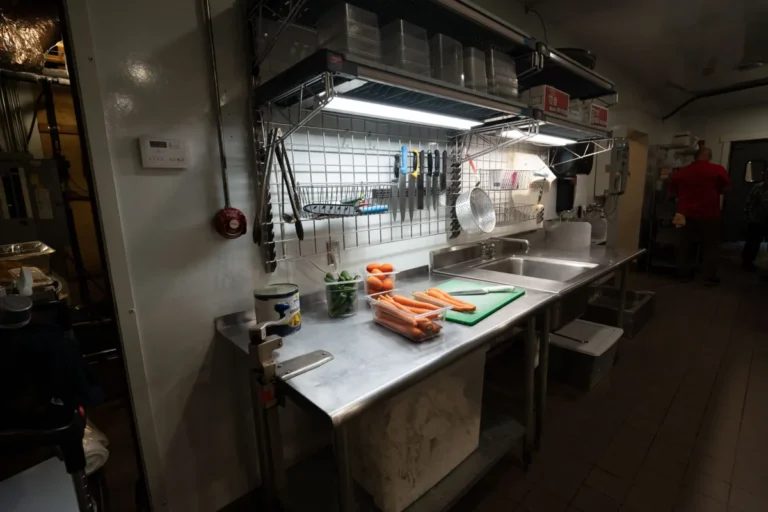
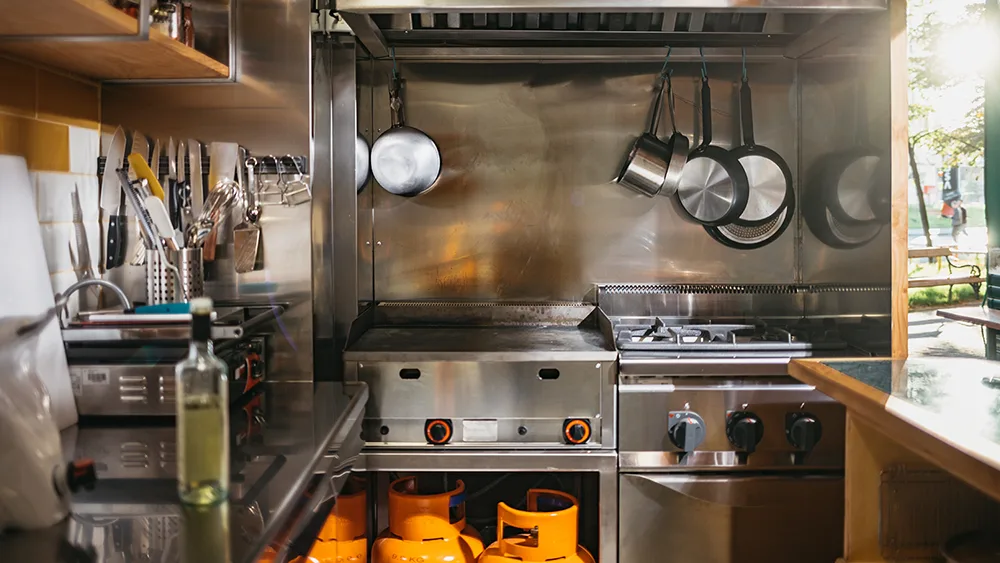
- Vertical space is your friend: Use wall-mounted racks, magnetic strips for knives, and hanging utensil holders to keep tools within reach but off the counter. A chef’s arm span is about 24 inches, design your zones so everything is within that radius.
- Color-code your stations: Use colored tape or paint to mark prep areas, cooking zones, and plating stations. It sounds simple, but it works. When staff can see where they’re supposed to be, they’re less likely to drift into someone else’s space.
- The “one-step rule”: If a task requires more than one step away from your station, it’s in the wrong place. This is a game-changer. I’ve seen kitchens where the salt was kept three steps away from the stove, adding seconds to every dish. Seconds add up.
Is this the most revolutionary advice? Probably not. But it’s the kind of thing that gets overlooked when you’re in the weeds. And in a small kitchen, overlooked details are the difference between smooth service and total meltdown.
Equipment Hacks: How to Fit a Full Kitchen Into a Closet (Without Going Broke)
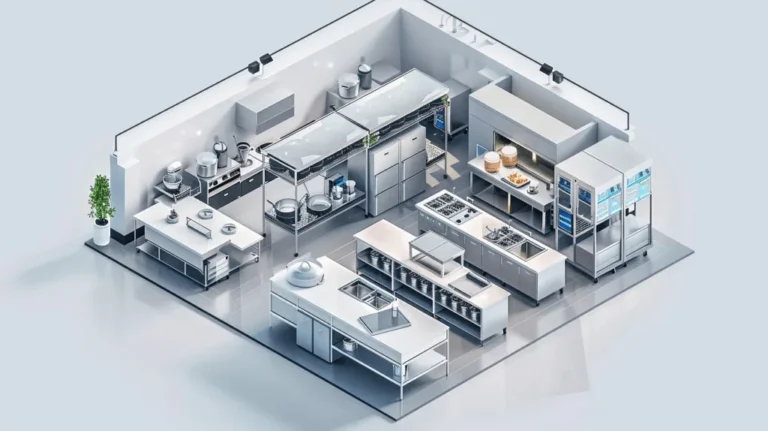
Let’s talk about the elephant in the room: equipment. In a perfect world, every kitchen would have a six-burner range, a double-stack convection oven, and a walk-in fridge the size of a studio apartment. But in the real world? You’re lucky if you’ve got a single induction burner and a mini-fridge that’s older than your head chef.
The good news is that you don’t need a ton of equipment to run a tight ship. What you doeed is the right equipment, tools that multitask, save space, and don’t require a PhD to operate. Here’s how to make it work.
3. The Multitasking Masters: Equipment That Does More Than One Thing
In a small kitchen, every piece of equipment should earn its keep. That means no single-use gadgets, no “nice-to-haves,” and definitely no equipment that sits idle for 90% of service. Here’s what to prioritize:
- Combi ovens: These things are the Swiss Army knives of the kitchen. They can steam, bake, roast, and even sous vide. If you’ve got space for one piece of equipment, make it this. Yes, they’re expensive, but they replace a convection oven, a steamer, and sometimes even a fryer.
- Induction burners: No gas lines? No problem. Induction burners are faster, safer, and more energy-efficient than traditional gas ranges. Plus, they’re portable, you can move them around as needed.
- Countertop grills (like a Plancha): These flat-top grills can sear, sauté, and even act as a griddle. They’re a staple in food trucks for a reason, they’re versatile and take up minimal space.
- Immersion circulators (for sous vide): If you’re doing any kind of batch cooking, these are a lifesaver. They’re small, precise, and can turn a plastic bin into a water bath for perfectly cooked proteins.
I’ll be honest, when I first started working with small kitchens, I was a purist. I thought induction burners were for amateurs and combi ovens were cheating. But after watching a food truck turn out 50 perfectly seared steaks in an hour using nothing but a Plancha and an induction burner, I changed my tune. Sometimes, the right tool isn’t the biggest or the fanciest, it’s the one that does the most with the least.
4. The Art of the Workaround: When You Can’t Buy New Equipment
Not every kitchen has the budget for a $10,000 combi oven. And that’s okay. The best chefs I know are masters of the workaround, using what they’ve got to do what they need. Here are a few of my favorite hacks:
- Turn a rice cooker into a steamer: Rice cookers aren’t just for rice. They can steam vegetables, poach fish, and even cook grains like quinoa. If you’ve got one, use it.
- Use a slow cooker for batch cooking: Slow cookers are great for stocks, braises, and even some desserts. They’re cheap, portable, and free up your burners for more immediate tasks.
- Repurpose a hotel pan as a bain-marie: Need to keep sauces warm? Fill a hotel pan with hot water, place your sauce containers inside, and cover with foil. Boom, instant double boiler.
- Turn a blender into a food processor: Most high-powered blenders can chop, puree, and even knead dough. If you don’t have a food processor, your blender might be able to do the job.
These might seem like small things, but in a tight kitchen, every little bit helps. The key is to think like a MacGyver-what can you repurpose, combine, or hack to make your life easier? Sometimes, the best solutions are the ones you already have.
The Flow: How to Design a Kitchen That Moves Like a Dance (Not a Traffic Jam)
Here’s the thing about small kitchens: they don’t have room for wasted movement. In a larger kitchen, a cook might take five steps to grab a tool and come back. In a small kitchen, five steps is a luxury. Every movement needs to be deliberate, efficient, and, ideally, part of a larger rhythm. That’s where kitchen flow comes in.
Kitchen flow is the difference between a kitchen that hums and one that grinds to a halt. It’s about designing a space where staff can move seamlessly from task to task without bumping into each other, without retracing their steps, and without feeling like they’re working in a maze. So how do you create it? Let’s break it down.
5. The Golden Triangle (And Why It’s Not Just for Home Kitchens)
You’ve probably heard of the kitchen work triangle-the idea that the sink, stove, and refrigerator should form a triangle to minimize movement. It’s a staple of home kitchen design, but it’s just as important in commercial spaces, especially small ones. Here’s how to adapt it for a restaurant kitchen:
- Keep the triangle tight: In a home kitchen, the sides of the triangle can be up to 9 feet long. In a commercial kitchen, aim for 4-7 feet. The closer these three points are, the less time staff spend walking between them.
- Prioritize the stove: In most kitchens, the stove is the bottleneck. It should be the center of your triangle, with the sink and fridge within easy reach.
- Think about workflow: The triangle isn’t just about distance, it’s about sequence. Most tasks follow a pattern: prep (fridge) → cook (stove) → clean (sink). Design your triangle to match that flow.
I’ll admit, I used to think the work triangle was overrated. Then I watched a line cook in a tiny pizzeria kitchen take 12 steps to grab a tomato from the fridge, walk past the stove to the prep station, then back to the stove to cook. Twelve steps for one ingredient. Multiply that by 50 pizzas a night, and you’ve got a recipe for disaster. After rearranging the kitchen to fit the triangle, that same cook was doing the same task in 4 steps. That’s the power of flow.
6. The Rule of Three: How to Organize Stations for Maximum Efficiency
In a small kitchen, stations need to be lean, mean, and multitasking. That means no wasted space, no redundant tools, and no tasks that don’t belong. Here’s how to set them up:
- Prep Station:
- Keep knives, cutting boards, and prep tools within arm’s reach.
- Use wall-mounted racks for spices and frequently used ingredients.
- Store prep containers (like deli cups) in a stackable organizer to save counter space.
- Cooking Station:
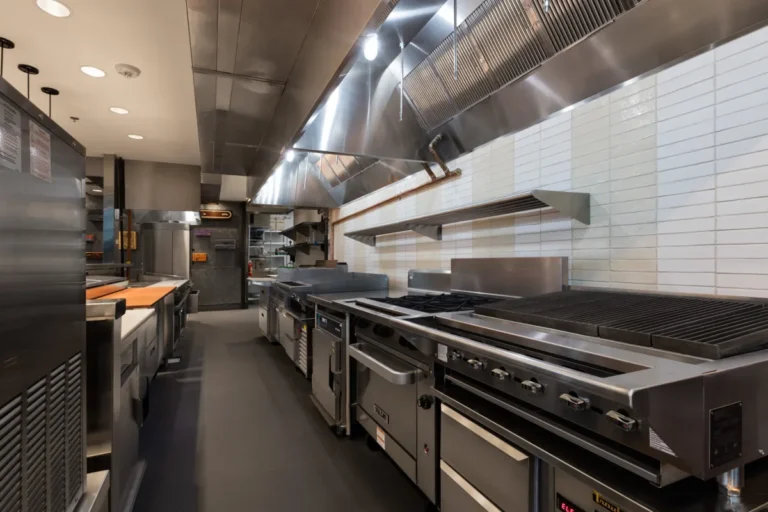
- Group burners, grills, and ovens together to minimize movement.
- Keep utensils (tongs, spatulas, ladles) in a hanging rack above the stove.
- Store sauces and oils in squeeze bottles or small containers to avoid spills.
- Plating Station:
- Keep plates, garnishes, and sauces in a single, organized area.
- Use a small shelf or rack for tools like tweezers, brushes, and squeeze bottles.
- If space allows, add a small mirror above the station to check plating from all angles.
The key here is to eliminate decision fatigue. When everything has a place, staff don’t have to think about where to find things, they just grab and go. And in a small kitchen, that’s half the battle.
7. The Invisible Lines: How to Prevent Collisions Before They Happen
In a small kitchen, collisions aren’t just annoying, they’re dangerous. A cook carrying a hot pan shouldn’t have to dodge a dishwasher unloading racks, and a server grabbing a plate shouldn’t have to squeeze past a prep cook wielding a knife. So how do you prevent it? You design invisible lines-paths that staff naturally follow without thinking about it.
Here’s how:
- One-way traffic: If possible, design your kitchen so staff move in a single direction (e.g., clockwise). This reduces head-on collisions and keeps things flowing smoothly.
- Mark walkways with tape: Use colored tape to mark paths for staff. This might seem excessive, but it works. In one kitchen I worked with, we added yellow tape to mark a “server lane”-a path for front-of-house staff to grab plates without crossing the line. Collisions dropped by 70%.
- Keep high-traffic areas clear: The space between the stove and the pass should be a no-man’s-land for equipment. If it’s not being used constantly, it shouldn’t be there.
- Use visual cues: Hang a small mirror or install a convex safety mirror in corners to help staff see around blind spots.
I know what you’re thinking: This seems like overkill. But trust me, when you’re in the middle of a dinner rush and the kitchen is packed, you’ll wish you’d thought about this sooner. In a small kitchen, every inch of space is a potential hazard. Designing for safety isn’t just about preventing accidents, it’s about keeping the rhythm of service intact.
The Human Factor: How to Keep Staff Sane (and Productive) in a Tiny Kitchen
Let’s be real: small kitchens are stressful. Even the most organized space can feel like a pressure cooker when tickets are piling up and the line is backed up. And while you can’t eliminate stress entirely, you can design a kitchen that minimizes friction and keeps staff from burning out. Here’s how.
8. The 10-Minute Rule: Why Breaks Are Non-Negotiable
In a small kitchen, it’s easy to think that breaks are a luxury. They’re not. Studies show that even a 10-minute break can improve focus and reduce errors by up to 30%. But in a tight space, where do you even put a break area?
Here’s the thing: breaks don’t have to mean leaving the kitchen. In fact, in a small kitchen, they shouldn’t. Instead, create a micro-break zone-a small corner where staff can step away for a minute to reset. Here’s what it might include:
- A small stool or folding chair (even a 5-minute sit-down helps).
- A water cooler or hydration station (dehydration kills focus).
- A whiteboard or notepad for jotting down notes (mental clutter is just as bad as physical clutter).
- A small fan or open window (fresh air is a game-changer).
I’ll admit, I used to think breaks were for the weak. Then I worked a double shift in a food truck during a Nashville summer. By hour six, I was making mistakes I wouldn’t have made on my first day. A 10-minute break to chug some water and sit in the shade changed everything. Breaks aren’t a luxury, they’re a necessity.
9. Communication Hacks: How to Keep Everyone on the Same Page
In a small kitchen, communication isn’t just important, it’s everything. A misheard ticket, a missed call, or a misunderstood instruction can throw off the entire service. So how do you keep everyone on the same page when you’re working elbow to elbow?
Here are a few tricks:
- Use a ticket rail with color-coded clips: Assign a color to each station (e.g., red for grill, blue for sauté). This makes it easy to see who’s responsible for what at a glance.
- Implement a call-and-response system: When a ticket comes in, the expediter calls out the order, and the relevant station repeats it back. This might seem redundant, but it prevents mistakes.
- Use a whiteboard for specials and 86’d items: Keep it updated in real time so staff don’t have to ask questions during service.
- Designate a “quiet zone”: In a small kitchen, noise levels can get out of control. Create a small area (even just a corner) where staff can step to make phone calls or have quick meetings without shouting over the line.
I’ve seen kitchens where the staff communicated entirely through grunts and hand signals. It worked, until it didn’t. Clear communication isn’t just about efficiency; it’s about safety. And in a small kitchen, where one wrong move can mean a burn or a cut, that’s non-negotiable.
10. The Power of Rituals: How Small Habits Keep Chaos at Bay
In a small kitchen, routine is your best friend. When space is limited, habits take over where structure leaves off. That’s why the best small kitchens I’ve worked in all had one thing in common: rituals.
Rituals are small, repeatable actions that keep the kitchen running smoothly. They might seem insignificant, but they add up. Here are a few examples:
- The “reset” at the top of every hour: Every 60 minutes, the entire team takes 30 seconds to wipe down surfaces, restock ingredients, and reorganize tools. It’s a small thing, but it prevents clutter from piling up.
- The “last ticket” call: When the last ticket of the night comes in, the expediter announces it so everyone knows the end is in sight. It’s a psychological trick, but it works, it keeps staff from rushing and making mistakes.
- The “tool check” at shift change: Before a new shift starts, staff do a quick inventory of tools and ingredients. This prevents last-minute scrambles when something goes missing.
- The “thank you” at the end of service: It’s simple, but it matters. A quick “good job, team” at the end of the night goes a long way toward keeping morale high.
I’ll be honest, I used to think rituals were a waste of time. Then I worked in a kitchen where the head chef insisted on a 10-second “reset” every hour. At first, I rolled my eyes. But after a few weeks, I noticed something: the kitchen was always clean, always stocked, and always ready for the next rush. That’s the power of small habits.
Putting It All Together: Your Small Kitchen Workflow Checklist
Alright, let’s recap. Maximizing workflow in a small kitchen isn’t about one big change, it’s about a hundred small ones. It’s about designing a space that works with your staff, not against them. It’s about equipment that multitasks, stations that flow, and habits that keep chaos at bay. And most of all, it’s about remembering that small doesn’t have to mean slow.
So where do you start? Here’s a checklist to get you going:
1. Assess Your Space
- Measure your kitchen and map out current workflows. Where are the bottlenecks?
- Identify high-traffic areas and potential hazards.
- Take note of underutilized spaces (vertical space, corners, etc.).
2. Optimize Your Equipment
- Audit your current equipment. What’s essential? What’s redundant?
- Invest in multitasking tools (combi ovens, induction burners, etc.).
- Repurpose what you already have (slow cookers, rice cookers, etc.).
3. Redesign Your Layout
- Apply the kitchen work triangle to your stove, sink, and fridge.
- Create zones for prep, cooking, and plating.
- Mark walkways and high-traffic areas with tape.
4. Improve Communication
- Implement a call-and-response system for tickets.
- Use a whiteboard for specials and 86’d items.
- Designate a ”quiet zone” for quick meetings.
5. Build in Breaks and Rituals
- Create a micro-break zone for staff to reset.
- Implement a ”reset” ritual at the top of every hour.
- Encourage small habits (like tool checks at shift change) to keep things running smoothly.
Is this everything? Probably not. Every kitchen is different, and what works for one might not work for another. But if you start with these steps, you’ll be well on your way to a kitchen that’s faster, safer, and less stressful-no matter how small it is.
And hey, if all else fails, remember this: the best kitchens aren’t the biggest ones, they’re the ones where the staff moves like a team. So take a deep breath, roll up your sleeves, and get to work. Your kitchen (and your sanity) will thank you.
FAQ: Your Small Kitchen Workflow Questions, Answered
Q: How do I maximize workflow in a kitchen that’s already built? I can’t knock down walls or buy all new equipment.
A: Start small. Focus on organization and habits first. Rearrange your stations to fit the kitchen work triangle, declutter your tools, and implement rituals like the hourly “reset.” Even small changes can make a big difference. If you’ve got a little budget, invest in vertical storage (wall-mounted racks, magnetic strips) to free up counter space. And don’t underestimate the power of communication-a call-and-response system for tickets can prevent mistakes without costing a dime.
Q: What’s the biggest mistake restaurants make when designing a small kitchen?
A: The biggest mistake is prioritizing equipment over flow. I’ve seen kitchens crammed with gadgets but with no clear path between stations. It’s like trying to cook in a maze. Instead, focus on movement first. Ask yourself: Can staff move from the fridge to the stove to the sink without crossing paths? If not, you’ve got a problem. Equipment should fit into your workflow, not the other way around.
Q: How do I keep my small kitchen clean during service? It always gets cluttered and chaotic.
A: The key is prevention. Implement a ”reset” ritual at the top of every hour-30 seconds to wipe down surfaces, restock ingredients, and reorganize tools. Assign a ”clean as you go” rule: if a tool isn’t being used, it goes back to its designated spot. And make sure your trash and compost bins are easily accessible-if staff have to walk across the kitchen to throw something away, they won’t do it. Finally, color-code your stations so staff can see at a glance where tools belong.
Q: What’s the most underrated tool for a small kitchen?
A: Hands down, it’s the immersion circulator. It’s small, precise, and can turn a plastic bin into a water bath for sous vide. It’s perfect for batch cooking proteins, and it frees up your burners for more immediate tasks. Plus, it’s relatively affordable. If you’re not using one, you’re missing out. Other underrated tools include countertop grills (like a Plancha) and magnetic knife strips-they save space and keep tools within reach.
@article{maximizing-small-kitchen-workflow-for-restaurant-staff-a-chefs-guide-to-efficiency-without-the-square-footage,
    title   = {Maximizing Small Kitchen Workflow for Restaurant Staff: A Chef’s Guide to Efficiency Without the Square Footage},
    author  = {Chef's icon},
    year    = {2026},
    journal = {Chef's Icon},
    url     = {https://chefsicon.com/maximizing-small-kitchen-workflow-for-restaurant-staff/}
}