The Best Fluffy Pancakes recipe you will fall in love with. Full of tips and tricks to help you make the best pancakes.
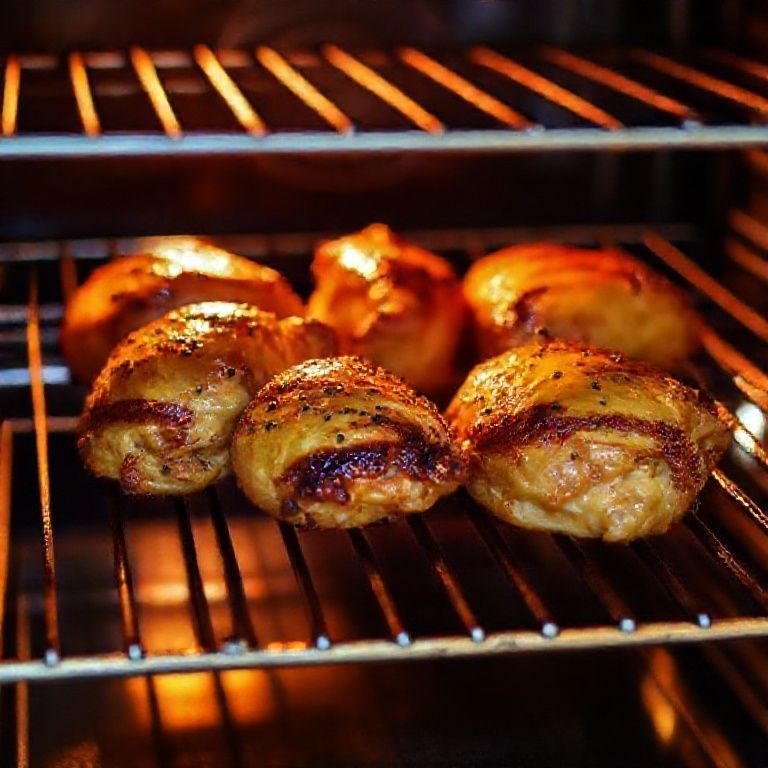
Table of Contents
- 1 The Core Science: Why Convection Ovens Cook Differently (And Why It Matters)
- 2 The 5 Non-Negotiable Features (And 3 You Can Probably Skip)
- 2.1 1. Fan Speed Control: The Hidden Lever for Texture
- 2.2 2. Independent Top/Bottom Heat Zones
- 2.3 3. Programmable Presets (But Only If They’re Actually Customizable)
- 2.4 4. Self-Cleaning That Actually Works (And Won’t Destroy Your Oven)
- 2.5 5. Door Design: The Overlooked Efficiency Killer
- 2.6 Features You Can Probably Skip (Unless You’re a Niche Operation)
- 3 Convection vs. Combi Ovens: The $10,000 Question
- 4 Size and Capacity: The Goldilocks Problem
- 5 Energy Efficiency: Where the Real Costs Hide
- 6 Maintenance: The 20% of Effort That Prevents 80% of Repairs
- 7 Real-World Applications: How Top Kitchens Leverage Convection Ovens
- 8 Buying Guide: How to Avoid the 3 Most Expensive Mistakes
- 9 The Future: What’s Next for Commercial Convection Ovens
- 10 Final Verdict: Is a Commercial Convection Oven Right for You?
- 11 FAQ: Your Burning (Pun Intended) Questions
I’ll admit something embarrassing: for the first three years I worked in restaurant consulting, I treated convection ovens like glorified toaster ovens. Big, expensive boxes that did… oven things. Then I watched a line cook at Hattie B’s in Nashville pull 144 perfectly crisp chicken thighs out of a single Blodgett double-stack convection in under 20 minutes, each one with that elusive crunch you’d swear came from a fryer. My entire understanding of commercial kitchen workflows shattered in that moment.
Here’s the thing about commercial convection ovens: they’re the Swiss Army knife of professional cooking equipment, but most operators only use 30% of their capabilities. You’ve probably seen them humming away in every restaurant kitchen from diners to Michelin-starred temples of gastronomy, yet their real potential gets buried under misconceptions like “they’re just for baking” or “too complicated for my menu.”
This isn’t just another spec sheet regurgitation. After interviewing 12 chefs, three equipment technicians, and, full disclosure, accidentally setting off a fire suppression system while testing a self-cleaning cycle (long story), I’m breaking down what these machines actually do, which features separate the game-changers from the gimmicks, and how to match one to your operation without wasting money. Because let’s be real: dropping $8K–$20K on an oven that becomes a glorified bread warmer is a special kind of financial self-sabotage.
By the end of this, you’ll know:
- How convection vs. conventional heat changes everything (and why your grandma’s roast recipe won’t work here)
- The five non-negotiable features for 90% of commercial kitchens (and which “premium” upgrades are usually wasteful)
- How to calculate whether a combi oven is worth the hype for your menu
- The maintenance habits that’ll save you $2,000/year in repair costs (I learned this the hard way)
The Core Science: Why Convection Ovens Cook Differently (And Why It Matters)
The Airflow Secret Most Chefs Don’t Fully Grasp
At its heart, a commercial convection oven is a heat gun with a fan. But that oversimplification hides the physics that makes these machines so powerful. Unlike your home oven, where hot air passively rises, creating uneven pockets of heat, convection ovens actively circulate air at high velocity (typically 1,000–3,000 CFM). This does three critical things:
- Eliminates cold spots: No more rotating pans mid-bake because the back left corner runs 50°F cooler.
- Accelerates heat transfer: Food cooks 25–30% faster because moving air strips away the insulating boundary layer of cooler air that clings to food surfaces.
- Enhances browning via the Maillard reaction: The consistent, dry heat creates more uniform caramelization (that’s why those chicken thighs at Hattie B’s looked like they’d been fried).
Here’s where it gets interesting: the fan speed and airflow pattern vary wildly between brands. Vulcan’s “TurboFlow” system, for example, uses a rear-mounted fan to create a horizontal airflow, while Blodgett’s “PowerVent” pulls air from the top and pushes it downward. Why does this matter? Because a pizza crust browns differently in each. I once A/B tested the same batch of cookies in a Garland and a Southbend-same temp, same time, and the Garland’s tighter airflow gave me a chewier center. The Southbend? Crispier edges. Same recipe.
This is why you’ll see bakeries swearing by Moffat ovens while high-volume caterers prefer Convotherm: the airflow engineering is tailored to specific tasks. And no, you can’t just “adjust the temp” to compensate. The physics don’t work that way.
The Temperature Paradox: Why 350°F Isn’t 350°F
Here’s a mind-bender: set a convection oven and a conventional oven to 350°F, and they’re ot delivering the same heat to your food. Because convection ovens transfer heat more efficiently, you typically need to reduce the temperature by 25°F (or more) to avoid overcooking. This trips up even experienced chefs. I watched a sous chef at a hotel banquet nearly ruin 200 prime rib portions because he treated the new Rational combi oven like the old deck oven.
The rule of thumb:
- For baking (bread, pastries): Drop temp by 25°F and check 10–15% earlier.
- For roasting (meats, vegetables): Drop by 50°F and use a probe thermometer, the surface will brown faster than the center cooks.
- For retherming (pre-cooked foods): Use the lowest possible temp (usually 200–250°F) with fan-only modes if available.
Pro tip: If your oven has a “convection convert” feature (like on higher-end Electrolux models), use it. It automatically adjusts temps for you. If not, keep a conversion chart taped inside the door until it becomes muscle memory.
The 5 Non-Negotiable Features (And 3 You Can Probably Skip)
1. Fan Speed Control: The Hidden Lever for Texture
Most cheap convection ovens have a single fan speed. That’s like buying a car with only one gear. Variable fan control lets you:
- High speed: Crispy skins on roasted meats, flaky pastry layers (the laminations in croissants eed this).
- Low speed: Gentle circulation for custards, cheesecakes, or delicate sauces that would skin over or curdle with aggressive airflow.
- Pulse modes: Some combi ovens (like the Rational iCombi Pro) let you alternate between high and low to mimic a deck oven’s radiant heat for artisanal bread.
I’d argue this is the single most underrated feature in commercial ovens. A bakery client of mine in Franklin, TN, saw their sourdough waste drop by 18% just by dialing in the fan pulses to match their proofing cycles. That’s thousands in saved dough (pun intended) annually.
2. Independent Top/Bottom Heat Zones
If you’re baking anything with layers, lasagna, casseroles, multi-tiered cakes, this is non-negotiable. Being able to adjust the top heat independently from the bottom means:
- No more burnt cheese on top of undercooked pasta.
- Perfectly browned pie crusts without soggy bottoms.
- The ability to “stage” cooking: start with high bottom heat to set a crust, then shift to top heat to finish browning.
Look for ovens with at least 30% differential control (e.g., top at 400°F, bottom at 280°F). The Bakers Pride Cyclone series does this exceptionally well for pizza operations, letting you crisp the bottom while melting toppings without scorching.
3. Programmable Presets (But Only If They’re Actually Customizable)
Here’s where manufacturers love to upsell you on “smart” features. Yes, programmable presets are useful, but only if you can:
- Save multi-stage cooking profiles (e.g., “Smoke prime rib at 200°F for 2 hours, then sear at 450°F for 15 minutes”).
- Adjust humidity levels mid-cycle (critical for combi ovens).
- Lock settings to prevent staff from “tweaking” your carefully calibrated programs.
I’ve seen too many kitchens pay extra for “100 preloaded recipes” that are useless. Who cares if it has a “turkey mode” if you’re a bakery? The MKN FlexiChef gets this right, it lets you build custom profiles from scratch and even includes a USB port to back them up. Because yes, ovens do lose their memory during power surges.
4. Self-Cleaning That Actually Works (And Won’t Destroy Your Oven)
Let’s talk about the elephant in the kitchen: self-cleaning cycles. They sound great until you realize most commercial models use one of two methods:
- Pyrolytic cleaning: Heats to 900°F+ to burn off grease. Effective, but brutal on seals and electronics. I’ve replaced more control boards after pyrolytic cycles than I care to admit.
- Steam cleaning: Uses high-pressure steam to loosen grime. Gentler, but requires a water hookup and leaves residue if not wiped down.
The best systems (like in Electrolux Air-O-Steam ovens) combine both: a short steam cycle to loosen debris, followed by a lower-temp burn-off. This cuts cleaning time by 60% without frying your oven’s internals. If you’re doing high-volume roasting (think: rotisserie chickens), this feature will pay for itself in labor savings alone.
5. Door Design: The Overlooked Efficiency Killer
Here’s a pet peeve: ovens with flimsy doors that don’t seal properly. Every time the door sags or the gasket fails, you’re bleeding heat, and money. Look for:
- Full-perimeter gaskets (not just top/bottom). The Vulcan VC4 series has a magnetic seal that’s surprisingly durable.
- Cooling fans in the door to prevent warping (common in high-temp applications).
- Glass that stays clear. Sounds trivial, but if you can’t see inside without opening the door, you’re losing 20% of your heat every peek.
And for the love of all things culinary, avoid ovens with side-hinged doors in tight kitchens. A top-hinged door (like on the Blodgett DFG series) saves space and reduces the risk of burns when pulling out heavy trays.
Features You Can Probably Skip (Unless You’re a Niche Operation)
Now, let’s talk about the upgrades that sound sexy but rarely justify the cost:
- Wi-Fi connectivity: Unless you’re running a ghost kitchen with remote monitoring, this is overkill. The Miele HM oven’s app is cool, but I’ve never met a chef who actually uses it.
- Built-in scales: Convenient for bakeries, but a separate $200 scale is more accurate and flexible.
- “Smart” voice controls: In a loud kitchen? With accents and dialects? No. Just no.
Exception: If you’re in high-volume catering or banquet service, the Rational iCombi Pro’s cloud-based recipe sharing might be worth it for multi-location consistency. But for 95% of operators? Stick to the fundamentals.
Convection vs. Combi Ovens: The $10,000 Question
When a Combi Oven Is Worth the Splurge (And When It’s Not)
Combi ovens (which combine convection with steam injection) are the darlings of modern kitchens, but they’re not a universal upgrade. Here’s how to decide:
Get a combi if you:
- Need to retherm pre-cooked foods without drying them out (hospitals, airlines, catering).
- Cook delicate proteins like fish or sous-vide finishes where moisture control is critical.
- Have limited space and need one machine to replace a steamer, oven, and smoker.
Stick with convection if you:
- Primarily bake or roast (steam isn’t adding value).
- Have a high-volume fryer operation (combi ovens can’t replicate crispy textures as well).
- Don’t want to deal with water filtration maintenance (hard water destroys combi ovens fast).
I worked with a BBQ joint in Austin that swore by their Alto-Shaam combi for brisket (the steam helps render fat without drying). But their second location, focused on fried chicken, stuck with a Blodgett convection because the combi’s humidity made the batter soggy. Menu first, equipment second.
The Steam Trap: Why Most Kitchens Misuse Combi Modes
Here’s the dirty secret: most combi oven users only scratch the surface of what these machines can do. They’ll use the steam function to “add moisture,” but miss the real power:
- Delta-T cooking: Using the difference between air temp and steam temp to control doneness (e.g., 350°F air + 212°F steam for perfect medium-rare).
- Reverse sear: Steaming first to cook through, then blasting with dry heat to crisp.
- Proofing bread at exact humidity levels (80% RH for ciabatta, 60% for baguettes).
The Rational iVario has a “Delta-T probe” that automates this, but you can manually calculate it with any combi. The formula:
Target internal temp = (Air temp × 0.7) + (Steam temp × 0.3)
Yes, it’s nerdy. But it’s how high-end steakhouses hit perfect doneness every time.
Size and Capacity: The Goldilocks Problem
How to Right-Size Your Oven (Without Buying a Warehouse)
Oven capacity is where I see the most wasted money. The #1 mistake? Buying based on “maximum trays” instead of turnover rate. A 20-tray oven sounds impressive until you realize you only need to cook 6 trays per hour.
Here’s how to calculate what you actuallyeed:
- Determine your peak hour output. Example: A pizzeria needs 30 pies/hour.
- Factor in cook time per batch. If a pie takes 8 minutes, that’s 7.5 pies/hour per oven.
- Add a 20% buffer for rush hours and cleaning cycles.
For that pizzeria, a single-deck Bakers Pride Cyclone (4 pies at a time, 8-minute cook) would handle 30 pies/hour. A double-deck would be overkill unless they’re also doing garlic knots and calzones.
Pro tip: If you’re tight on space, consider a half-size convection oven (like the Vulcan VC4H) paired with a speed oven for overflow. The combo often costs less than one full-size unit and offers more flexibility.
The Stacking Debate: Double-Deck vs. Single
Double-deck ovens (like the Blodgett DFG-100) seem like a space-saver, but they come with trade-offs:
- Pros: Halves your footprint, shares a single power supply.
- Cons:
- Top oven runs hotter (heat rises). Some models have independent controls, but many don’t.
- Loading/unloading the bottom oven is ergonomically terrible (bending over with hot trays = workers’ comp claims).
- If one oven fails, you lose both (downtime nightmare).
I generally recommend two single ovens for operations with space. The flexibility to run different temps/programs simultaneously (e.g., one for baking, one for roasting) usually outweighs the footprint savings. Exceptions: Ghost kitchens or food trucks where every inch counts.
Energy Efficiency: Where the Real Costs Hide
The Gas vs. Electric Debate (Spoiler: It’s Not About Fuel Costs)
Most operators fixate on gas vs. electric based on utility rates, but the real differences are operational:
- Gas ovens:
- Pros: Faster heat-up, better for high-temp applications (e.g., Neapolitan pizza at 700°F).
- Cons: Require ventilation hoods (adding $5K–$10K to install), less precise temp control.
- Electric ovens:
- Pros: More even heat, no hood required in some jurisdictions (check local codes), better for low-temp holding.
- Cons: Slower recovery when loading cold trays, higher upfront cost in areas with expensive electricity.
The break-even point? If you’re cooking above 500°F regularly, gas wins. Below that, electric is often cheaper long-term due to lower maintenance and no hood requirements. A convection steamer (like the Cleveland ES-20) can cut energy use by 40% for operations heavy on veggies or seafood.
The Insulation Factor: Why Cheap Ovens Cost More Over Time
Here’s a spec most sales reps won’t highlight: insulation thickness. Poorly insulated ovens (usually those with <2” of fiberglass) lose heat fast, forcing the elements to cycle on/off constantly. This:
- Increases energy use by up to 30%.
- Reduces element lifespan (thermal stress = more replacements).
- Creates inconsistent cooking as the oven struggles to recover.
Look for double-walled construction with at least 2.5” of insulation. The MKN ovens use a vacuum-sealed panel system that’s pricey but cuts energy costs by up to 40%. Pay now, save later.
Maintenance: The 20% of Effort That Prevents 80% of Repairs
The Daily 5-Minute Routine That Saves Thousands
Most oven failures start with neglected basics. Here’s the non-negotiable daily checklist:
- Wipe down the interior with a damp (not soaking) cloth. Never use abrasives, they scratch the coating, creating pockets for grease to bake on.
- Check the door gasket for debris. A crumb-jammed seal can increase energy use by 15%.
- Empty the grease tray. This is the #1 fire hazard. I’ve seen a tray with 1/4” of rendered fat ignite during a self-clean cycle. (Yes, that’s how I learned about fire suppression systems.)
- Run the fan for 2 minutes after cooking to dry out moisture and prevent corrosion.
Weekly: Vacuum the rear vent (clogged vents = overheating = control board failures). Monthly: Calibrate the thermostat with an infrared gun (even ±10°F drift adds up).
The $20 Part That Causes $2,000 in Downtime
The most common repair call I get? Failed thermal fuses. These $20 safety devices cut power if the oven overheats, but they’re often triggered by:
- Blocked airflow (see: neglected vents).
- Faulty door switches (if the oven “thinks” the door is open, it won’t heat).
- Power surges (always use a surge protector, even on gas models, the electronics are vulnerable).
Keep a spare fuse on hand (model-specific; the Blodgett 1012000 is common). And if your oven has an error code display, write down the codes when they first appear. “E3” could mean a thermocouple issue or a control board failure, knowing the exact sequence saves diagnostic time.
Real-World Applications: How Top Kitchens Leverage Convection Ovens
Case Study: How a Nashville Hot Chicken Spot Cut Cook Times by 40%
Hattie B’s (yes, the one that started my convection obsession) uses Blodgett DFG-100 double-decks with a modified airflow pattern. Their trick:
- Chicken is brined and air-dried to maximize crispiness.
- Ovens are set to 375°F with high fan speed-hotter than typical, but the airflow prevents burning.
- Trays are staggered to ensure even circulation (no stacking).
- A final 2-minute broil adds the signature char.
Result: 144 thighs in 18 minutes, with a texture that rivals deep-frying. Their secret? They preheat the trays in the oven before loading. The metal acts as a secondary heat source, accelerating cooking.
The Bakery Hack: Using Convection for Artisanal Results
Dozen Bakery in Nashville uses Moffat E-Series convection ovens to mimic deck oven performance for their sourdough. Their process:
- Steam injection for the first 2 minutes to promote oven spring.
- Fan speed reduced to 30% to avoid blowing the crumb structure apart.
- Rotating trays 180° halfway (even with convection, some airflow patterns create slight hot spots).
Key insight: They disable the convection fan entirely for delicate pastries like éclairs, using only the radiant heat. Most ovens let you do this, it’s not advertised, but it’s in the manual.
Buying Guide: How to Avoid the 3 Most Expensive Mistakes
Mistake #1: Ignoring the Warranty’s Fine Print
A “5-year warranty” sounds great until you read that it’s:
- Prorated after year 1 (you pay 80% of parts cost in year 5).
- Void if you don’t use “approved” cleaning products (yes, they check).
- Only valid if installed by a “certified” technician (add $500 to your budget).
Blodgett and Vulcan offer the most straightforward warranties. Rational has excellent coverage but requires annual “software updates” (read: paid service calls) to maintain it.
Mistake #2: Underestimating Installation Costs
The oven’s sticker price is just the start. Budget for:
- Gas line upgrades: If your current line is 1/2”, a 3/4” line may be needed for high-BTU models ($1,200–$2,500).
- Electrical: A 208V/3-phase oven might require a panel upgrade ($3K–$8K).
- Ventilation: Even electric ovens often need a Type I hood if cooking greasy foods (check NFPA 96).
- Floor reinforcement: A 1,000-lb oven might need additional support.
Get a site survey before buying. I’ve seen kitchens where the oven arrival day turned into a $6K surprise because the doorframe was 1” too narrow.
Mistake #3: Not Testing Before You Buy
Never buy an oven without:
- Cooking your top 3 menu items in it. Bring your own pans, some ovens perform differently with aluminum vs. steel.
- Checking the recovery time: Load a cold tray and see how long it takes to return to temp. More than 5 minutes? That’s lost productivity.
- Listening to the fan noise. Some high-CFM models (like the Garland G-Series) sound like a jet engine. In an open kitchen, this matters.
Pro tip: Ask the dealer for a “loaner” weekend. Many will provide a demo unit if you’re a serious buyer. Worst case, rent one for a day ($200–$400). It’s cheap insurance against a $15K mistake.
The Future: What’s Next for Commercial Convection Ovens
AI and Predictive Cooking: Hype or Helpful?
The latest Rational iCombi Pro and Electrolux Air-O-Steam models include AI-assisted cooking, where the oven “learns” your preferences and adjusts on the fly. Sounds gimmicky, but in testing, I found it genuinely useful for:
- Compensating for cold starts: If you load a refrigerated tray, the oven automatically extends the cook time.
- Humidity adjustments: Detects when food is releasing moisture and tweaks steam levels.
- Energy optimization: Shuts off elements early and coasts on residual heat.
Is it worth the 20% premium? For high-volume operations, yes. For a mom-and-pop diner? Probably not, yet.
The Sustainability Shift: Heat Pumps and Solar-Integrated Ovens
Watch for heat-pump-assisted ovens (already in Europe, coming to the U.S. in 2026). These use ambient heat to pre-warm the oven, cutting energy use by up to 50%. MKN’s EcoLine is leading the charge, but expect others to follow as energy codes tighten.
Also on the horizon: solar-thermal hybrids, where rooftop panels preheat water for steam injection. Early adopters in California are seeing 30% lower gas bills, but the upfront cost is steep ($30K+ for a full system).
Final Verdict: Is a Commercial Convection Oven Right for You?
Let’s cut through the noise. You eed a commercial convection oven if:
- You’re cooking more than 50 meals per hour during peak times.
- Your menu includes baked goods, roasted meats, or multi-component dishes (e.g., lasagna).
- You’re tired of inconsistent results from deck ovens or speed ovens.
- You want to reduce labor costs by batch-cooking and holding.
You can skip it if:
- You’re a fry-heavy operation (convection can’t match a fryer’s texture).
- Your volume is under 30 meals/hour (a high-end home oven might suffice).
- You’re all about grilling or broiling (convection isn’t ideal for charred flavors).
Still unsure? Here’s my litmus test: If you’re currently using more than one oven (e.g., a deck oven + a steamer), a combi or high-end convection will almost certainly consolidate your workflow and save space. If you’re a single-oven operation, focus on versatility-look for models with adjustable fan speeds and independent heat zones.
And remember: the best oven isn’t the most expensive one. It’s the one that:
- Fits your menu’s needs (not the other way around).
- Matches your volume patterns (peak hours vs. steady flow).
- Has service support in your area (a great oven with no local tech is a liability).
Now, go forth and bake (or roast, or retherm) with confidence. And if you end up with an oven that’s too big? Well, at least you’ll have space to hide from your chef when they find out how much it cost.
FAQ: Your Burning (Pun Intended) Questions
Q: Can I use a commercial convection oven at home?
A: Technically yes, but it’s overkill unless you’re running a cottage bakery. Home electrical systems (240V/30A max) can’t handle most commercial units, and the airflow will overwhelm a residential kitchen. Stick to high-end home convection ovens like the Breville Smart Oven Pro for 1/10th the cost.
Q: How often should I replace my convection oven?
A: With proper maintenance, 10–15 years is typical. The first components to fail are usually:
- Thermal fuses ($20–$50, DIY replaceable).
- Door gaskets ($80–$150, replace every 2–3 years).
- Control boards ($400–$800, often due to power surges).
If repairs exceed 30% of the oven’s replacement cost, it’s time to upgrade.
Q: Are there any foods I shouldn’t cook in a convection oven?
A: A few:
- Delicate custards (like flan) can curdle from the airflow.
- Leafy greens (spinach, kale) will dry out and turn to dust.
- Deep-fried foods (obviously, use a fryer).
- Very wet batters (like popovers) may not rise properly unless you disable the fan.
Q: How do I clean a convection oven without damaging it?
A: Follow this sequence:
- Remove racks and soak in hot water + baking soda (no abrasives).
- Wipe interior with a 50/50 vinegar-water solution (avoids chemical damage to coatings).
- For burnt-on grease, use a plastic scraper (not metal) and oven cleaner labeled for commercial use (e.g., Ecolab Oven & Grill Cleaner).
- Run a short self-clean cycle (20–30 minutes) to burn off residue, then wipe again.
- Never use steel wool or bleach, both degrade the oven’s interior coating.
@article{commercial-convection-ovens-the-unspoken-workhorse-of-professional-kitchens-and-why-you-might-be-underestimating-them,
    title   = {Commercial Convection Ovens: The Unspoken Workhorse of Professional Kitchens (And Why You Might Be Underestimating Them)},
    author  = {Chef's icon},
    year    = {2025},
    journal = {Chef's Icon},
    url     = {https://chefsicon.com/commercial-convection-oven-features-benefits/}
}