The Best Fluffy Pancakes recipe you will fall in love with. Full of tips and tricks to help you make the best pancakes.
I’ll admit it, I didn’t fully appreciate the complexity of mango processing until I stood in a bustling commercial kitchen last summer, watching a team of chefs turn what looked like a mountain of raw, unripe mangoes into silky purées, tangy chutneys, and perfectly diced cubes for a high-end catering event. The air was thick with the sweet, tropical scent of ripe fruit, but also with the hum of machinery, the clatter of stainless steel, and the occasional curse under someone’s breath as a stubborn pit refused to budge. That’s when it hit me: mangoes aren’t just a fruit; they’re a logistical puzzle. And if you’re running a commercial kitchen, food production facility, or even a large-scale restaurant, processing them efficiently isn’t just about skill, it’s about having the right commercial kitchen equipment for the job.
Now, I’ve spent years writing about kitchen trends, interviewing chefs, and geeking out over the latest in food tech, but mango processing? That was a blind spot for me. So, I did what any self-respecting food nerd would do: I dove in headfirst. I talked to suppliers, toured processing plants, and even tried my hand at a few machines (spoiler: I’m never quitting my day job). What I learned is that mango processing isn’t just about slicing and dicing, it’s a dance of precision, hygiene, and efficiency, where every piece of equipment plays a critical role. And if you’re reading this, chances are you’re either looking to streamline your mango processing or you’re just curious about how the pros do it. Either way, you’re in the right place.
In this guide, we’re going to cover everything you need to know about commercial kitchen equipment for mango processing, from the basics of washing and sorting to the nitty-gritty of pulping, pasteurizing, and packaging. We’ll talk about the machines that make the magic happen, the suppliers who can help you source them, and the little details that separate a smooth operation from a sticky, pit-filled disaster. And don’t worry, I’ll keep it real. There’s no sugarcoating here; some of this stuff is expensive, complicated, and downright messy. But if you’re serious about scaling up your mango game, it’s worth every penny and every headache.
So, grab a mango (or a snack of your choice, no judgment here), and let’s get into it. By the end of this, you’ll either be ready to outfit your kitchen like a pro or at least appreciate the sheer effort that goes into every bite of that mango salsa you love.
The Mango Processing Journey: Where It All Begins
1. Why Mangoes? The Case for Processing This Tropical Powerhouse
Let’s start with the obvious question: why mangoes? I mean, sure, they’re delicious, but so are a lot of fruits. What makes mangoes worth the hassle of commercial processing? Well, for starters, mangoes are one of the most widely consumed fruits in the world. We’re talking over 50 million metric tons produced annually, with India leading the charge (no surprise there), followed by China, Thailand, and Mexico. They’re a staple in cuisines from South Asia to Latin America, and their versatility is unmatched. You can eat them fresh, dry them, purée them, juice them, pickle them, or even turn them into leather (the edible kind, not the jacket kind, though that would be a fun experiment).
But here’s the thing: mangoes are also incredibly perishable. Once they’re ripe, you’ve got a small window, usually a few days, before they start turning into a mushy, fermenting mess. That’s where commercial mango processing comes in. By processing mangoes at scale, you’re not just preserving them; you’re unlocking their potential for year-round use. Think about it: a restaurant in Chicago can serve mango lassi in the dead of winter, a smoothie shop in London can offer tropical blends in February, and a snack company in Texas can sell dehydrated mango slices without worrying about seasonal shortages. Processing turns a fleeting seasonal fruit into a reliable, shelf-stable ingredient.
And let’s not forget the economic angle. Mango processing can be a lucrative business, whether you’re a small-scale producer selling at farmers’ markets or a large facility supplying grocery chains. The global mango market is projected to keep growing, driven by demand for healthy snacks, exotic flavors, and plant-based products. But, and this is a big but, you can’t just wing it. Processing mangoes at scale requires investment, planning, and, yes, the right commercial kitchen equipment. Is this the best approach for everyone? Maybe not. If you’re a tiny café making mango smoothies once a week, you might not need a $20,000 pulper. But if you’re serious about scaling up, it’s non-negotiable.
So, where do you start? That’s what we’re here to figure out. Let’s break it down step by step, starting with the first (and often overlooked) stage of the process: receiving and sorting.
2. Receiving and Sorting: The Unsung Heroes of Mango Processing
Picture this: a truck pulls up to your facility, and out comes a mountain of mangoes, some ripe, some underripe, some overripe, and a few that look like they’ve been through a war. Your first job? Sorting them. And I’m not talking about a quick once-over with your hands. In a commercial setting, this is a high-stakes game of speed, precision, and hygiene. Get it wrong, and you’re either wasting good fruit or contaminating your entire batch. Neither is a great option.
The first piece of equipment you’ll need here is a mango washer. Now, you might be thinking, “Can’t I just rinse them in a sink?” Sure, if you’re processing a dozen mangoes for a family dinner. But if you’re dealing with hundreds or thousands of pounds, you need something more robust. Commercial mango washers come in a few varieties, but the most common is the drum washer. This machine uses a rotating drum with water jets to scrub the fruit clean, removing dirt, pesticides, and any lingering debris. Some models even include brushes or air bubbles to agitate the water and get a deeper clean. The key here is efficiency, you want something that can handle a high volume without damaging the fruit. And trust me, bruised mangoes are a nightmare in processing. They turn to mush faster, and nobody wants a purée that looks like it’s been through a blender twice.
Once your mangoes are clean, it’s time to sort them. This is where things get interesting. Sorting isn’t just about separating the good from the bad; it’s about categorizing mangoes based on ripeness, size, and quality. Why? Because different stages of ripeness are suited for different products. Underripe mangoes might be perfect for pickling or making green mango powder, while overripe ones could be ideal for purées or juices. And size? That matters for slicing and dicing, uniform pieces mean consistent cooking times and a better end product.
So, how do you sort them efficiently? Enter the mango sorting machine. These come in a few flavors (pun intended), but the most common is the weight and size grader. This machine uses a series of rollers or belts with adjustable gaps to separate mangoes by size. Some advanced models even use optical sensors to sort by color and ripeness, which is a game-changer if you’re dealing with large volumes. I’ve seen facilities where this step is still done by hand, and while it’s doable, it’s slow, labor-intensive, and prone to human error. If you’re serious about scaling up, a sorting machine isn’t just a nice-to-have; it’s a must.
Now, I’ll be honest, I’m torn between recommending a fully automated sorting system and a semi-automated one. On one hand, automation saves time and reduces labor costs. On the other, it’s a significant upfront investment, and if you’re just starting out, it might feel like overkill. Maybe I should clarify: if you’re processing less than 1,000 pounds of mangoes a day, a semi-automated system (or even manual sorting with a few helpers) might be enough. But if you’re looking at 5,000 pounds or more? Automate. Trust me, your future self will thank you.
Oh, and one more thing: hygiene. Sorting and washing aren’t just about efficiency; they’re about food safety. Mangoes can carry bacteria like Salmonella or Listeria, especially if they’ve been handled improperly before reaching your facility. That’s why it’s crucial to have a sanitation protocol in place, including regular cleaning of your equipment and proper training for your staff. I’ve seen too many small producers cut corners here, and it’s not worth the risk. A single contamination incident can shut you down faster than you can say “product recall.”
3. Peeling and Pitting: The Messy Middle of Mango Processing
Alright, your mangoes are clean and sorted. Now comes the fun part: peeling and pitting. If you’ve ever tried to peel a mango at home, you know it’s not exactly a walk in the park. The skin is tough, the pit is stubborn, and if you’re not careful, you’ll end up with more fruit on your cutting board than in your bowl. Now imagine doing that a thousand times a day. Yeah, it’s as tedious as it sounds.
In a commercial kitchen, peeling and pitting are where you really start to see the value of specialized mango processing equipment. Let’s start with peeling. There are a few ways to tackle this, but the most common methods are mechanical peeling and steam peeling. Mechanical peelers use blades or abrasive rollers to strip away the skin, while steam peelers use high-pressure steam to loosen the skin before it’s scraped off. Both have their pros and cons. Mechanical peelers are faster and more precise, but they can be rough on the fruit, especially if it’s overripe. Steam peelers are gentler and can handle a wider range of ripeness levels, but they’re slower and require more energy. Which one should you choose? It depends on your volume and the end product. If you’re making mango slices or cubes, a mechanical peeler might be the way to go. If you’re producing purées or juices, steam peeling could be a better fit.
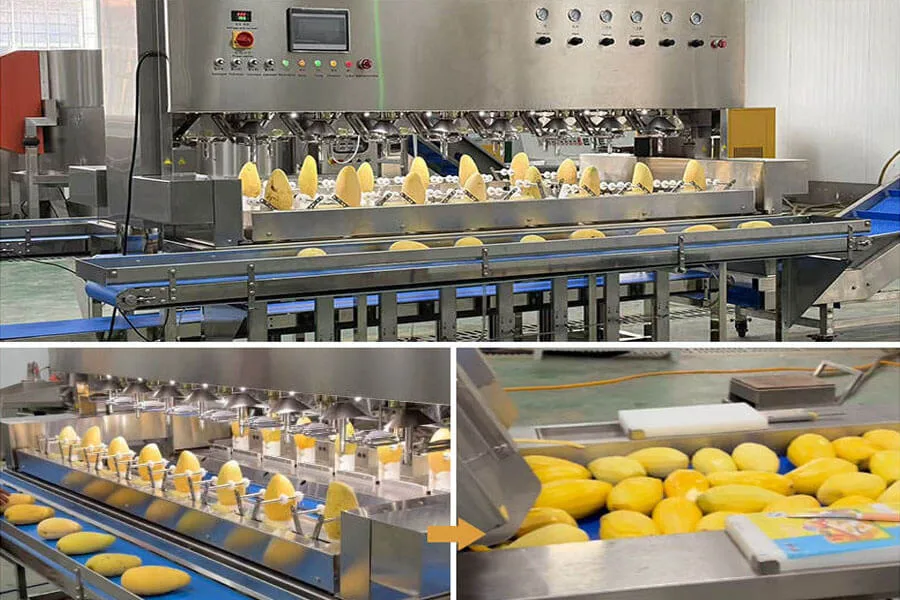
Now, let’s talk about pitting. This is where things get really interesting (and by interesting, I mean frustrating). Mango pits are large, flat, and stubborn. They don’t just pop out like a peach pit; they’re more like a clamshell that refuses to open. In a home kitchen, you’d use a knife to cut around the pit, but in a commercial setting, that’s not an option. Enter the mango depitter. These machines come in a few varieties, but the most common is the centrifugal depitter. This machine uses a spinning blade or roller to cut the flesh away from the pit, leaving you with two halves of mango that are ready for the next step. Some models even include a secondary blade to remove any remaining flesh from the pit, which is a nice touch if you’re trying to minimize waste.
But here’s the thing: not all mango depitters are created equal. Some are designed for specific mango varieties, like the Tommy Atkins or Alphonso, while others are more versatile. And then there’s the issue of efficiency. A good depitter should be able to process hundreds of mangoes per hour without jamming or damaging the fruit. I’ve seen cheap models that struggle with even a small batch, and it’s not pretty. If you’re investing in a depitter, do your research. Talk to suppliers, read reviews, and if possible, see the machine in action before you buy. And don’t forget to factor in maintenance, these machines have a lot of moving parts, and they’ll need regular cleaning and upkeep to keep them running smoothly.
Now, I’ll be the first to admit that peeling and pitting are the least glamorous parts of mango processing. They’re messy, they’re repetitive, and they’re not exactly Instagram-worthy. But they’re also the foundation of everything that comes next. Get this step wrong, and you’re looking at wasted fruit, inconsistent products, and a whole lot of frustration. Get it right, and you’re well on your way to producing high-quality mango products that your customers will love.
Oh, and one more thing: waste. Peeling and pitting generate a lot of it, peels, pits, and trimmings. What do you do with all that? Some facilities compost it, others sell it to companies that turn it into animal feed or biogas. And if you’re feeling really ambitious, you can even extract pectin or fiber from the peels for use in other products. It’s all about thinking creatively and minimizing waste. After all, sustainability isn’t just a buzzword; it’s a smart business practice.
From Pulp to Product: Turning Mangoes into Gold
4. Pulping and Puréeing: The Heart of Mango Processing
Alright, your mangoes are peeled, pitted, and ready for the next step: pulping and puréeing. This is where the magic happens, or at least, where the magic starts to take shape. If you’re making mango juice, nectar, purée, or even mango leather, this is the stage that will define the texture, consistency, and quality of your final product. And let me tell you, not all pulpers are created equal. I’ve seen everything from makeshift blenders to industrial-grade machines that look like they belong in a sci-fi movie. So, what’s the best approach? Let’s break it down.
First, let’s talk about the difference between pulping and puréeing. Pulping is the process of breaking down the mango flesh into a coarse, fibrous mixture, while puréeing takes it a step further, creating a smooth, homogeneous liquid. The equipment you’ll need depends on which one you’re aiming for. For pulping, a mango pulper is your best friend. These machines use a combination of blades and screens to separate the pulp from any remaining fibers or seeds. The result is a thick, textured mixture that’s perfect for products like mango nectar or jam. For puréeing, you’ll want a mango purée machine, which typically includes a finer screen and more powerful blades to create a silky-smooth consistency.
Now, here’s where things get interesting. The quality of your pulp or purée depends on a few key factors: the ripeness of the mangoes, the speed of the machine, and the size of the screen. Overripe mangoes will produce a sweeter, more flavorful pulp, but they’re also more likely to turn mushy if you’re not careful. Underripe mangoes, on the other hand, will give you a firmer texture but might lack the sweetness you’re looking for. It’s a balancing act, and it’s one of the reasons why sorting your mangoes by ripeness earlier in the process is so important.
As for the machines themselves, there are a few options to consider. The most common type of pulper is the rotary pulper, which uses a rotating blade and a perforated screen to separate the pulp from the fibers. These are great for small to medium-scale operations because they’re relatively affordable and easy to maintain. For larger facilities, you might want to look into a continuous pulper, which can handle a higher volume and is designed for 24/7 operation. And if you’re really serious about efficiency, some suppliers, like Chef’s Deal, offer customized pulping solutions that can be tailored to your specific needs. They even provide free kitchen design services to help you integrate the equipment into your existing workflow. It’s worth checking out if you’re in the market for something that’s both high-quality and hassle-free.
But here’s the thing: pulping isn’t just about the machine. It’s also about the process. For example, some facilities pre-cook the mangoes before pulping to soften the flesh and enhance the flavor. Others add citric acid or ascorbic acid to prevent browning and extend shelf life. And then there’s the issue of yield. A good pulper should be able to extract as much pulp as possible from the fruit, but some machines are more efficient than others. I’ve seen facilities where they’re leaving 10-15% of the pulp behind, which is basically money down the drain. If you’re investing in a pulper, make sure it’s one that maximizes yield without compromising quality.
Now, I’ll be honest, I’m still torn on whether to recommend a standalone pulper or a multi-functional machine that can handle pulping, puréeing, and even juicing. On one hand, a standalone pulper is simpler and more reliable. On the other, a multi-functional machine can save you space and money in the long run. Maybe I should clarify: if you’re producing a single product, like mango purée, a standalone machine might be the way to go. But if you’re making a variety of products, a multi-functional machine could be a game-changer. It’s all about your specific needs and budget.
Oh, and one more thing: hygiene. Pulping and puréeing are high-risk stages when it comes to contamination. The last thing you want is bacteria or mold creeping into your pulp, especially if you’re not pasteurizing it immediately. That’s why it’s crucial to clean your equipment thoroughly after every use and to follow a strict sanitation protocol. Some machines are easier to clean than others, so keep that in mind when you’re shopping around. And don’t forget to train your staff, human error is one of the biggest causes of contamination in food processing.
5. Pasteurization and Preservation: Keeping Your Mango Products Safe and Fresh
Alright, you’ve got your mango pulp or purée. Now what? If you’re planning to sell it fresh, you’re done. But if you’re looking to extend its shelf life, whether for a few weeks or a few months, you’ll need to pasteurize it. Pasteurization is the process of heating the pulp to a specific temperature for a set amount of time to kill off any bacteria, yeasts, or molds that could cause spoilage. It’s a critical step in mango processing, and it’s one that can make or break your product.
First, let’s talk about the basics. There are a few different methods of pasteurization, but the most common for mango products are batch pasteurization and continuous pasteurization. Batch pasteurization involves heating the pulp in large vats or kettles, while continuous pasteurization uses a heat exchanger to process the pulp as it flows through the system. Both have their pros and cons. Batch pasteurization is simpler and more affordable, but it’s also slower and less efficient. Continuous pasteurization is faster and more consistent, but it’s also more expensive and requires a higher level of technical expertise.
So, which one should you choose? It depends on your volume and your budget. If you’re a small-scale producer, batch pasteurization might be the way to go. It’s easy to set up, and you can start with a basic steam-jacketed kettle or even a large pot on a stove (though I wouldn’t recommend the latter for anything more than a test batch). For larger operations, a continuous pasteurizer is the gold standard. These machines use a series of plates or tubes to heat the pulp quickly and evenly, ensuring that every drop reaches the required temperature. Some models even include a cooling section to bring the pulp back down to a safe temperature for packaging.
Now, here’s where things get a little tricky. The temperature and time required for pasteurization depend on the type of product you’re making. For example, mango purée typically needs to be heated to 190°F (88°C) for 1-2 minutes, while mango juice might only need to reach 160°F (71°C) for 15-20 seconds. It’s all about balancing safety with quality. Heat the pulp too much, and you’ll end up with a cooked flavor and a dull color. Heat it too little, and you risk spoilage. It’s a fine line, and it’s one that requires careful monitoring.
That’s where pasteurization control systems come in. These systems use sensors and timers to ensure that the pulp reaches the correct temperature for the right amount of time. Some advanced models even include data logging, so you can track the pasteurization process and prove to regulators that your product is safe. If you’re serious about food safety (and you should be), this is a must-have. I’ve seen too many small producers skip this step, and it’s not worth the risk. A single outbreak of foodborne illness can ruin your reputation, and your business, faster than you can say “product recall.”
But pasteurization isn’t the only way to preserve your mango products. There are a few other methods to consider, depending on your needs. For example, aseptic processing involves sterilizing the pulp and packaging separately before combining them in a sterile environment. This method is great for products that need a long shelf life, like shelf-stable mango purée. Another option is high-pressure processing (HPP), which uses extreme pressure to kill off bacteria without heat. HPP is becoming increasingly popular for “clean label” products because it preserves the natural flavor and nutrients of the fruit. The downside? It’s expensive, and it’s not suitable for all products.
Now, I’ll be the first to admit that pasteurization and preservation aren’t the most exciting topics. They’re technical, they’re precise, and they’re not exactly the kind of thing you’d bring up at a dinner party. But they’re also the difference between a product that lasts a week and one that lasts a year. And if you’re running a commercial kitchen or food production facility, that’s a big deal. So, take the time to get it right. Invest in the right equipment, train your staff, and don’t cut corners. Your customers, and your bottom line, will thank you.
Oh, and one more thing: packaging. Pasteurization is only half the battle. Once your pulp is pasteurized, you need to package it in a way that keeps it safe and fresh. That means using food-grade containers that are designed for long-term storage. Some facilities use plastic bags or pouches, while others opt for glass jars or metal cans. The key is to choose a packaging material that’s compatible with your product and your production process. And don’t forget to label it properly, regulations require you to include information like the product name, ingredients, and expiration date. It’s not glamorous, but it’s important.
6. Slicing, Dicing, and Dehydrating: The Art of Mango Transformation
Alright, we’ve covered pulping and puréeing, but what if you’re not making juice or jam? What if you’re producing mango slices, cubes, or even dehydrated mango chips? That’s where slicing, dicing, and dehydrating come in. These processes might seem straightforward, but in a commercial setting, they’re anything but. Let’s dive in.
First up: slicing and dicing. If you’ve ever tried to cut a mango into uniform pieces by hand, you know it’s a challenge. The flesh is slippery, the pit is stubborn, and no two mangoes are exactly the same size. In a commercial kitchen, this is where a mango slicer and dicer comes in handy. These machines are designed to cut mangoes into consistent pieces quickly and efficiently. Some models use a series of blades to slice the mango into strips, while others include a secondary blade to dice the strips into cubes. The result? Perfectly uniform pieces every time, with minimal waste.
But not all slicers and dicers are created equal. Some are designed for specific mango varieties, while others are more versatile. And then there’s the issue of speed. A good slicer should be able to process hundreds of mangoes per hour without jamming or damaging the fruit. I’ve seen cheap models that struggle with even a small batch, and it’s not pretty. If you’re investing in a slicer, do your research. Talk to suppliers, read reviews, and if possible, see the machine in action before you buy. And don’t forget to factor in maintenance, these machines have a lot of moving parts, and they’ll need regular cleaning and upkeep to keep them running smoothly.
Now, let’s talk about dehydrating. Dehydrated mango is a popular snack, and for good reason, it’s sweet, chewy, and packed with flavor. But dehydrating mangoes at scale is a whole different ballgame. In a home kitchen, you might use a food dehydrator or even your oven, but in a commercial setting, you need something more robust. Enter the commercial dehydrator. These machines come in a few varieties, but the most common is the tray dehydrator, which uses a series of trays and a fan to circulate hot air around the fruit. Some advanced models even include temperature and humidity controls, so you can fine-tune the drying process to get the perfect texture.
But here’s the thing: dehydrating mangoes isn’t just about drying them out. It’s also about preserving their color, flavor, and nutrients. That’s why some facilities pre-treat the mangoes with a sulfite solution or ascorbic acid before dehydrating. This helps prevent browning and extends shelf life. And then there’s the issue of yield. A good dehydrator should be able to process a large volume of fruit without overcrowding the trays, which can lead to uneven drying. I’ve seen facilities where they’re trying to cram too much fruit onto a single tray, and the result is a batch of mango chips that are half-dry and half-mushy. It’s not a good look.
Now, I’ll be honest, I’m still on the fence about whether to recommend a standalone dehydrator or a multi-functional machine that can handle dehydrating, baking, and even roasting. On one hand, a standalone dehydrator is simpler and more reliable. On the other, a multi-functional machine can save you space and money in the long run. Maybe I should clarify: if you’re producing a single product, like dehydrated mango chips, a standalone machine might be the way to go. But if you’re making a variety of products, a multi-functional machine could be a game-changer. It’s all about your specific needs and budget.
Oh, and one more thing: packaging. Dehydrated mango is sensitive to moisture and oxygen, so it’s important to package it in a way that keeps it fresh. That means using moisture-proof bags or vacuum-sealed pouches that are designed for long-term storage. Some facilities even include an oxygen absorber in the package to extend shelf life. And don’t forget to label it properly, regulations require you to include information like the product name, ingredients, and expiration date. It’s not glamorous, but it’s important.
Packaging, Storage, and Beyond: The Final Steps in Mango Processing
7. Packaging: The Unsung Hero of Mango Processing
Alright, your mango products are ready. Now what? If you’re planning to sell them, you’ll need to package them in a way that keeps them safe, fresh, and appealing to customers. Packaging might not be the most exciting part of mango processing, but it’s one of the most important. Get it wrong, and you’re looking at spoiled products, unhappy customers, and a whole lot of wasted time and money. Get it right, and you’re well on your way to building a successful business.
First, let’s talk about the basics. The type of packaging you’ll need depends on the product you’re making. For example, mango purée is typically packaged in plastic bags, pouches, or aseptic cartons, while mango slices or cubes might be packed in plastic containers or glass jars. Dehydrated mango chips, on the other hand, are usually packaged in moisture-proof bags or vacuum-sealed pouches. The key is to choose a packaging material that’s compatible with your product and your production process.
But packaging isn’t just about the material. It’s also about the process. For example, if you’re packaging mango purée, you’ll need a filling machine to dispense the product into the containers. These machines come in a few varieties, but the most common is the volumetric filler, which uses a piston or pump to measure and dispense a precise amount of product. Some advanced models even include a capping machine to seal the containers automatically. If you’re packaging mango slices or cubes, you might need a weighing and filling machine, which uses a scale to measure the product before dispensing it into the containers.
Now, here’s where things get interesting. The quality of your packaging depends on a few key factors: the speed of the machine, the accuracy of the fill, and the integrity of the seal. A good filling machine should be able to handle a high volume of containers without jamming or spilling. It should also be able to dispense the product accurately, so you’re not giving away free product or shortchanging your customers. And the seal? That’s critical. A weak seal can lead to leaks, contamination, and spoilage. I’ve seen facilities where they’re using cheap filling machines, and the result is a mess of spilled product and unhappy customers. If you’re investing in a filling machine, do your research. Talk to suppliers, read reviews, and if possible, see the machine in action before you buy.
But packaging isn’t just about the machine. It’s also about the design. The way your product looks on the shelf can make or break its success. That’s why it’s important to invest in high-quality labeling and branding. Some facilities use pre-printed labels, while others opt for direct printing on the packaging. The key is to choose a design that’s eye-catching, informative, and compliant with regulations. And don’t forget to include all the required information, like the product name, ingredients, and expiration date. It’s not glamorous, but it’s important.
Now, I’ll be honest, I’m still torn on whether to recommend a fully automated packaging line or a semi-automated one. On one hand, automation saves time and reduces labor costs. On the other, it’s a significant upfront investment, and if you’re just starting out, it might feel like overkill. Maybe I should clarify: if you’re packaging less than 1,000 units a day, a semi-automated system (or even manual packaging) might be enough. But if you’re looking at 5,000 units or more? Automate. Trust me, your future self will thank you.
Oh, and one more thing: sustainability. Packaging waste is a hot-button issue these days, and for good reason. Consumers are increasingly looking for products that are packaged in eco-friendly materials, like biodegradable plastics or compostable pouches. Some facilities are even experimenting with edible packaging, though that’s still in the early stages. If you’re serious about sustainability, it’s worth exploring your options. And don’t forget to communicate your efforts to your customers, it’s a great way to build brand loyalty and differentiate yourself from the competition.
8. Storage and Distribution: Keeping Your Mango Products Fresh
Alright, your mango products are packaged and ready to go. Now what? If you’re not selling them immediately, you’ll need to store them in a way that keeps them fresh and safe. Storage might not be the most exciting part of mango processing, but it’s one of the most important. Get it wrong, and you’re looking at spoiled products, unhappy customers, and a whole lot of wasted time and money. Get it right, and you’re well on your way to building a successful business.
First, let’s talk about the basics. The type of storage you’ll need depends on the product you’re making. For example, mango purée is typically stored in refrigerated warehouses or cold rooms, while dehydrated mango chips can be stored at room temperature. The key is to choose a storage method that’s compatible with your product and your production process.
But storage isn’t just about the temperature. It’s also about the environment. For example, mango purée is sensitive to light and oxygen, so it’s important to store it in a dark, airtight environment. Some facilities use itrogen flushing to remove oxygen from the packaging before sealing it, which helps extend shelf life. Dehydrated mango chips, on the other hand, are sensitive to moisture, so it’s important to store them in a dry environment. Some facilities even include a desiccant packet in the packaging to absorb any residual moisture.
Now, here’s where things get interesting. The quality of your storage depends on a few key factors: the temperature, the humidity, and the cleanliness of the environment. A good storage facility should be able to maintain a consistent temperature and humidity level, and it should be clean and free of pests. I’ve seen facilities where they’re storing products in a dirty, cluttered warehouse, and the result is a mess of spoiled products and unhappy customers. If you’re investing in a storage facility, do your research. Talk to suppliers, read reviews, and if possible, tour the facility before you commit.
But storage isn’t just about the facility. It’s also about the process. For example, if you’re storing mango purée, you’ll need to rotate your stock regularly to ensure that the oldest products are sold first. This is known as first-in, first-out (FIFO), and it’s a critical part of inventory management. Some facilities use barcode scanners or inventory management software to track their stock and ensure that nothing gets lost in the shuffle. If you’re serious about efficiency, this is a must-have.
Now, I’ll be honest, I’m still torn on whether to recommend a fully automated storage system or a manual one. On one hand, automation saves time and reduces labor costs. On the other, it’s a significant upfront investment, and if you’re just starting out, it might feel like overkill. Maybe I should clarify: if you’re storing less than 1,000 units at a time, a manual system might be enough. But if you’re looking at 10,000 units or more? Automate. Trust me, your future self will thank you.
Oh, and one more thing: distribution. Once your products are stored, you’ll need to get them to your customers. That means investing in logistics and transportation. Some facilities handle this in-house, while others outsource it to a third-party logistics provider. The key is to choose a method that’s reliable, cost-effective, and compatible with your product. And don’t forget to factor in the cost of cold chain logistics if you’re shipping perishable products. It’s not cheap, but it’s essential.
Choosing the Right Equipment: A Buyer’s Guide for Mango Processors
9. What to Look for in Commercial Mango Processing Equipment
Alright, we’ve covered a lot of ground so far, but there’s one question that’s probably been nagging at you: how do you choose the right commercial kitchen equipment for mango processing? It’s a big decision, and it’s one that can have a major impact on your business. Get it wrong, and you’re looking at wasted money, inefficient processes, and a whole lot of frustration. Get it right, and you’re well on your way to building a successful, scalable operation. So, let’s break it down.
First, let’s talk about the basics. When you’re shopping for mango processing equipment, there are a few key factors to consider: capacity, efficiency, durability, and ease of maintenance. Capacity is all about how much fruit the machine can handle in a given amount of time. If you’re processing 1,000 pounds of mangoes a day, you’ll need a machine that can keep up. Efficiency is about how much of the fruit the machine can process without wasting it. A good machine should be able to extract as much pulp, juice, or slices as possible from the fruit. Durability is about how long the machine will last. You want something that’s built to withstand the rigors of a commercial kitchen, not something that’s going to break down after a few months. And ease of maintenance? That’s about how easy the machine is to clean and repair. The last thing you want is a machine that’s a nightmare to maintain.
But here’s the thing: not all machines are created equal. Some are designed for small-scale operations, while others are built for large facilities. Some are versatile and can handle a variety of tasks, while others are specialized for a single purpose. And then there’s the issue of cost. Mango processing equipment can range from a few hundred dollars for a basic slicer to tens of thousands of dollars for a fully automated pulping and pasteurizing line. It’s a lot to take in, and it’s easy to feel overwhelmed.
So, where do you start? I’d recommend beginning with a eeds assessment. What products are you planning to make? How much volume are you expecting? What’s your budget? Once you have a clear idea of what you need, you can start shopping around. And don’t be afraid to ask for help. Suppliers like Chef’s Deal offer expert consultation and support to help you find the right equipment for your needs. They even provide free kitchen design services to help you integrate the equipment into your existing workflow. It’s worth checking out if you’re in the market for something that’s both high-quality and hassle-free.
Now, let’s talk about the different types of equipment. We’ve already covered a lot of ground, but here’s a quick recap:
- Washers and sorters: These are essential for cleaning and categorizing your mangoes before processing.
- Peelers and depitters: These machines strip away the skin and remove the pit, leaving you with clean, ready-to-use mango flesh.
- Pulpers and purée machines: These break down the mango flesh into a coarse pulp or a smooth purée, depending on your needs.
- Pasteurizers: These heat the pulp to kill off bacteria and extend shelf life.
- Slicers and dicers: These cut the mango into uniform pieces for products like mango slices or cubes.
- Dehydrators: These dry the mango to create products like mango chips or leather.
- Filling and packaging machines: These dispense the product into containers and seal them for storage and distribution.
But here’s the thing: you don’t necessarily need all of this equipment. It all depends on what you’re planning to make. For example, if you’re only making mango purée, you might not need a slicer or a dehydrator. If you’re making mango slices, you might not need a pulper or a pasteurizer. It’s all about your specific needs and budget.
Now, I’ll be honest, I’m still torn on whether to recommend new equipment or used equipment. On one hand, new equipment is more reliable and comes with a warranty. On the other, it’s also more expensive. Used equipment, on the other hand, is more affordable, but it comes with its own set of risks. You never know how well it’s been maintained, and there’s always the chance that it could break down sooner rather than later. Maybe I should clarify: if you’re just starting out and you’re on a tight budget, used equipment might be the way to go. But if you’re serious about scaling up, new equipment is a better long-term investment.
Oh, and one more thing: financing. Mango processing equipment can be expensive, and not everyone has the cash to pay for it upfront. That’s where financing options come in. Some suppliers, like Chef’s Deal, offer competitive pricing and financing options to help you get the equipment you need without breaking the bank. It’s worth exploring if you’re serious about growing your business.
10. Where to Buy: Finding the Right Supplier for Your Mango Processing Needs
Alright, you’ve done your research, you’ve assessed your needs, and you’re ready to buy. Now what? Where do you go to find the commercial kitchen equipment you need for mango processing? It’s a big decision, and it’s one that can have a major impact on your business. Get it wrong, and you’re looking at wasted money, unreliable equipment, and a whole lot of frustration. Get it right, and you’re well on your way to building a successful, scalable operation. So, let’s talk about how to find the right supplier.
First, let’s talk about the basics. When you’re shopping for mango processing equipment, there are a few key factors to consider: reputation, quality, price, and customer support. Reputation is all about what other customers have to say about the supplier. Are they reliable? Do they stand behind their products? Do they have a track record of success? Quality is about the equipment itself. Is it built to last? Does it meet industry standards? Price is, well, price. You want something that’s affordable, but you also don’t want to sacrifice quality for the sake of saving a few bucks. And customer support? That’s about what happens after you buy. Do they offer installation services? Do they provide training and education? Do they have a customer service team that’s responsive and helpful?
But here’s the thing: not all suppliers are created equal. Some specialize in small-scale equipment, while others focus on large, industrial-grade machines. Some offer a wide range of products, while others are more specialized. And then there’s the issue of location. If you’re in the U.S., you might want to work with a domestic supplier to avoid long shipping times and import fees. If you’re overseas, you might need to look for a supplier that can handle international shipping. It’s a lot to take in, and it’s easy to feel overwhelmed.
So, where do you start? I’d recommend beginning with a supplier search. Look for companies that specialize in commercial kitchen equipment and have experience with mango processing. Read reviews, ask for references, and if possible, visit their showroom or warehouse to see the equipment in person. And don’t be afraid to ask questions. A good supplier should be able to answer your questions clearly and honestly, and they should be willing to work with you to find the right equipment for your needs.
Now, let’s talk about one supplier in particular: Chef’s Deal. I’ve mentioned them a few times already, and for good reason. They’re a well-known name in the industry, and they offer a wide range of commercial kitchen equipment for mango processing. But what really sets them apart is their comprehensive kitchen design and equipment solutions. They don’t just sell you a machine and send you on your way. They work with you to design a complete processing line that’s tailored to your specific needs. And they offer professional installation services to make sure everything is set up correctly. It’s a level of service that you don’t always get with other suppliers, and it’s one of the reasons why I recommend them to anyone who’s serious about mango processing.
But Chef’s Deal isn’t the only game in town. There are plenty of other suppliers out there, both domestic and international. Some specialize in specific types of equipment, like peelers or pulpers, while others offer a full range of products. The key is to find a supplier that’s a good fit for your needs and your budget. And don’t forget to factor in things like warranty, maintenance, and customer support. A good supplier should stand behind their products and be there to help you if something goes wrong.
Now, I’ll be honest, I’m still torn on whether to recommend a single supplier or to shop around. On one hand, working with a single supplier can simplify the process. You’ll have one point of contact, one invoice, and one customer service team to deal with. On the other hand, shopping around can help you find the best deals and the best equipment for your needs. Maybe I should clarify: if you’re just starting out, it might be worth working with a single supplier to keep things simple. But if you’re serious about scaling up, it’s worth exploring your options and finding the best equipment for each stage of the process.
Oh, and one more thing: financing. Mango processing equipment can be expensive, and not everyone has the cash to pay for it upfront. That’s where financing options come in. Some suppliers offer financing directly, while others work with third-party lenders. Either way, it’s worth exploring if you’re serious about growing your business. Just make sure you read the fine print and understand the terms before you sign on the dotted line.
Putting It All Together: The Future of Mango Processing
Alright, we’ve covered a lot of ground in this guide. From washing and sorting to pulping, pasteurizing, and packaging, we’ve explored the ins and outs of commercial mango processing. But where do we go from here? What does the future of mango processing look like, and how can you stay ahead of the curve? Let’s wrap things up with a few final thoughts.
First, let’s talk about trends. The mango processing industry is evolving, and there are a few key trends to watch. One of the biggest is the rise of sustainable and eco-friendly processing. Consumers are increasingly looking for products that are not only delicious but also good for the planet. That means reducing waste, using energy-efficient equipment, and exploring eco-friendly packaging options. Some facilities are even experimenting with zero-waste processing, where every part of the mango, peels, pits, and all, is used to create new products. It’s a challenging goal, but it’s one that’s worth pursuing.
Another trend to watch is the rise of automation and smart technology. We’ve already seen how automation can streamline the mango processing process, but the future is even more exciting. Imagine a processing line where every machine is connected to a central control system, allowing you to monitor and adjust the process in real-time. Or a sorting machine that uses artificial intelligence to categorize mangoes by ripeness, size, and quality. It’s not science fiction, it’s happening right now, and it’s only going to become more common in the years to come.
But here’s the thing: trends are just that, trends. They come and go, and not all of them are worth pursuing. The key is to focus on what’s right for your business. If sustainability is important to your customers, then it’s worth investing in eco-friendly equipment and packaging. If efficiency is your top priority, then automation and smart technology might be the way to go. And if you’re just starting out, it’s okay to keep things simple. You don’t need the latest and greatest equipment to succeed. You just need the right tools for the job.
Now, I’ll be honest, I’m still figuring this out myself. Mango processing is a complex, ever-evolving industry, and there’s always more to learn. But one thing I know for sure is that the right commercial kitchen equipment can make all the difference. Whether you’re a small-scale producer or a large facility, investing in high-quality equipment is the key to success. And if you’re not sure where to start, don’t be afraid to ask for help. Suppliers like Chef’s Deal offer expert consultation and support to help you find the right equipment for your needs. They even provide free kitchen design services to help you integrate the equipment into your existing workflow. It’s a level of service that can save you time, money, and a whole lot of headaches.
So, what’s next? If you’re serious about mango processing, I’d recommend starting with a eeds assessment. What products are you planning to make? How much volume are you expecting? What’s your budget? Once you have a clear idea of what you need, you can start shopping around for the right equipment. And don’t forget to factor in things like maintenance, training, and customer support. A good supplier should stand behind their products and be there to help you if something goes wrong.
And if you’re feeling overwhelmed, that’s okay. Mango processing is a big, complex industry, and it’s normal to feel a little lost at first. But remember: every expert was once a beginner. The key is to start small, learn as you go, and don’t be afraid to ask for help. Whether you’re making mango purée, slices, or chips, the right equipment and the right approach can make all the difference. So, take a deep breath, roll up your sleeves, and get ready to dive in. The world of mango processing is waiting for you.
FAQ: Your Mango Processing Questions Answered
Q: What’s the most important piece of equipment for mango processing?
A: It really depends on what you’re making. If you’re producing mango purée or juice, a mango pulper is essential. If you’re making slices or cubes, a mango slicer and dicer is a must. And if you’re looking to extend shelf life, a pasteurizer is critical. But if I had to pick one piece of equipment that’s universally important, I’d say a mango washer and sorter. It’s the foundation of the entire process, and it’s one that’s often overlooked.
Q: How much does commercial mango processing equipment cost?
A: The cost of mango processing equipment can vary widely depending on the type of machine, its capacity, and its features. For example, a basic mango washer might cost a few hundred dollars, while a fully automated pulping and pasteurizing line can run into the tens of thousands. If you’re just starting out, you might be able to get by with a few thousand dollars’ worth of equipment. But if you’re serious about scaling up, you could be looking at an investment of $50,000 or more. The key is to start with what you need and expand as your business grows. And don’t forget to explore financing options if you’re on a tight budget.
Q: Can I use the same equipment for different types of fruit?
A: Some mango processing equipment can be used for other fruits, but it’s not always a perfect fit. For example, a mango pulper might work for peaches or apricots, but it might not be as efficient for harder fruits like apples or pears. Similarly, a mango slicer might not be suitable for fruits with a different shape or texture. If you’re planning to process multiple types of fruit, it’s worth looking for versatile equipment that can handle a variety of tasks. And don’t forget to factor in the cost of reconfiguring or cleaning the equipment between uses.
Q: What are the biggest challenges in mango processing?
A: Mango processing comes with its fair share of challenges. One of the biggest is seasonality. Mangoes are a seasonal fruit, and if you’re not careful, you can end up with a glut of fruit one month and a shortage the next. That’s why it’s important to have a plan for preserving and storing your products. Another challenge is waste. Mango processing generates a lot of peels, pits, and trimmings, and it’s important to find a way to use or dispose of them responsibly. And then there’s the issue of food safety. Mangoes can carry bacteria like Salmonella or Listeria, so it’s crucial to follow strict sanitation protocols and invest in the right equipment to minimize the risk of contamination. But with the right approach, these challenges can be overcome.
@article{the-ultimate-guide-to-commercial-kitchen-equipment-for-mango-processing-from-farm-to-fork,
    title   = {The Ultimate Guide to Commercial Kitchen Equipment for Mango Processing: From Farm to Fork},
    author  = {Chef's icon},
    year    = {2026},
    journal = {Chef's Icon},
    url     = {https://chefsicon.com/commercial-kitchen-equipment-mango-processing-guide/}
}