The Best Fluffy Pancakes recipe you will fall in love with. Full of tips and tricks to help you make the best pancakes.
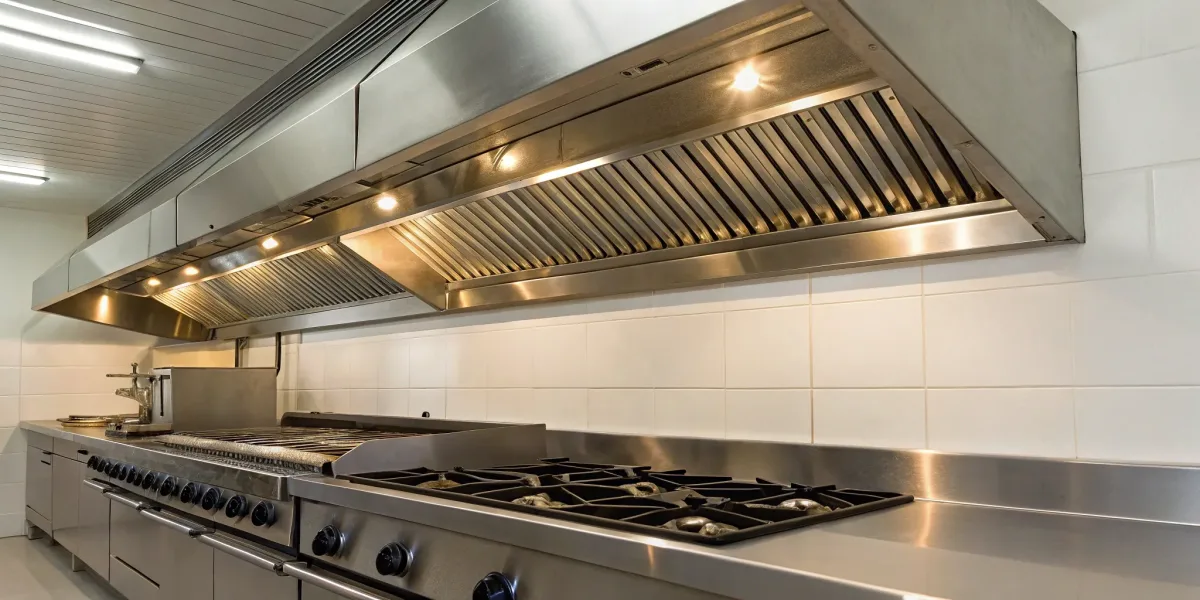
The Hidden Backbone of Every Great Kitchen: A Deep Dive into Commercial Hood Systems
Let me tell you about the time I nearly burned down a perfectly good Nashville food truck. It was 2024, my first real foray into the world of commercial cooking beyond my home kitchen experiments. I’d convinced a local chef to let me document his food truck operation for an article about mobile kitchens – big mistake. The lunch rush hit, the griddle was screaming, and suddenly I noticed something terrifying: the air above us was turning into what looked like a grease-filled cloud straight out of a horror movie. The hood system, which I’d barely registered before, was working overtime but clearly not keeping up. That’s when I learned the first rule of commercial kitchens: if your hood system isn’t working properly, nothing else matters.
Now, two years later, I’ve spent countless hours talking to chefs, inspectors, engineers, and equipment specialists about these unsung heroes of the culinary world. What I’ve discovered is that commercial kitchen hood systems are like the circulatory system of a restaurant – invisible when they’re working well, catastrophic when they fail. They’re not just about removing smoke; they’re about air quality, fire safety, energy efficiency, staff comfort, and even the flavor of your food. And yet, most people – even many restaurant owners – treat them as an afterthought. Today, I want to change that.
In this deep dive, we’re going to explore everything you never knew you needed to know about commercial kitchen hood systems. We’ll cover the different types (and why that matters more than you think), how to size them properly (spoiler: bigger isn’t always better), the hidden costs of poor ventilation, and the latest innovations that are making these systems smarter and more efficient. I’ll share some hard-won lessons from the field, including that food truck near-disaster, and we’ll look at how proper hood system design can actually improve your food quality while saving you money. By the end, you’ll never look at your kitchen the same way again.
Is this the most glamorous topic in the culinary world? Absolutely not. But is it one of the most important? Without a doubt. So let’s roll up our sleeves and get into the greasy, smoky, fascinating world of commercial kitchen ventilation. Trust me – your lungs, your staff, your customers, and your bottom line will thank you.
Demystifying Commercial Kitchen Hood Systems: What They Really Do (It’s More Than You Think)
The Multi-Tasking Marvels Hiding Above Your Head
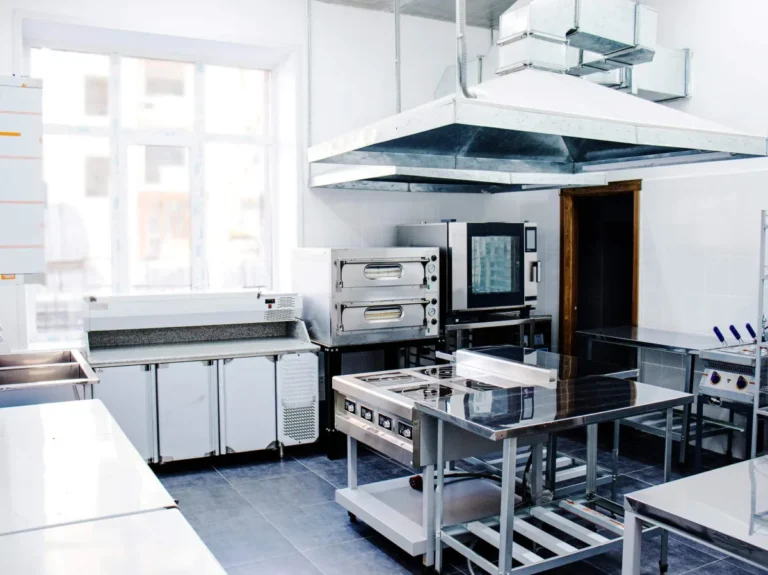
When most people think about commercial kitchen hood systems, they picture a big metal box that sucks up smoke. And yeah, that’s part of it. But that simplistic view misses about 90% of what these systems actually do. A properly designed hood system is essentially the central nervous system of your kitchen’s environment, handling multiple critical functions simultaneously:
- Heat removal: Commercial kitchens can generate as much heat as a small furnace. A good hood system removes this heat before it turns your kitchen into a sauna and your staff into puddles of sweat.
- Grease extraction: Those tiny droplets in the air aren’t just annoying – they’re flammable. Proper grease removal prevents buildup that can turn a small fire into a catastrophic blaze.
- Air quality control: Beyond smoke, kitchens produce carbon monoxide, nitrogen dioxide, and other nasties. A good system keeps these at safe levels for both staff and customers.
- Odor management: Ever walked past a restaurant and gotten a whiff of last night’s fish special? That’s a hood system failing at its job.
- Energy balancing: Modern systems can actually help regulate your kitchen’s temperature, reducing the load on your HVAC system.
- Fire suppression integration: The best systems work hand-in-hand with your fire suppression system to contain and extinguish fires before they spread.
I remember talking to a veteran chef in Austin who put it perfectly: “People think the stove is the heart of the kitchen. It’s not. The hood system is. You can have the best equipment in the world, but if your ventilation isn’t right, you’re basically cooking in a toxic cloud.” This became painfully clear to me during that food truck incident. The chef had invested in top-of-the-line equipment but skimped on the hood system. During peak hours, the air quality degraded so quickly that staff started wearing masks – not exactly the vibe you want for your customers.
But here’s where it gets really interesting: the type of cooking you do determines what kind of hood system you need. And this is where most kitchens get it wrong. A system designed for a pizzeria won’t work for a burger joint. A hood perfect for a sushi restaurant might be overkill for a coffee shop. Let’s break down the main types and when to use them.
Type I vs. Type II: The Great Hood System Divide
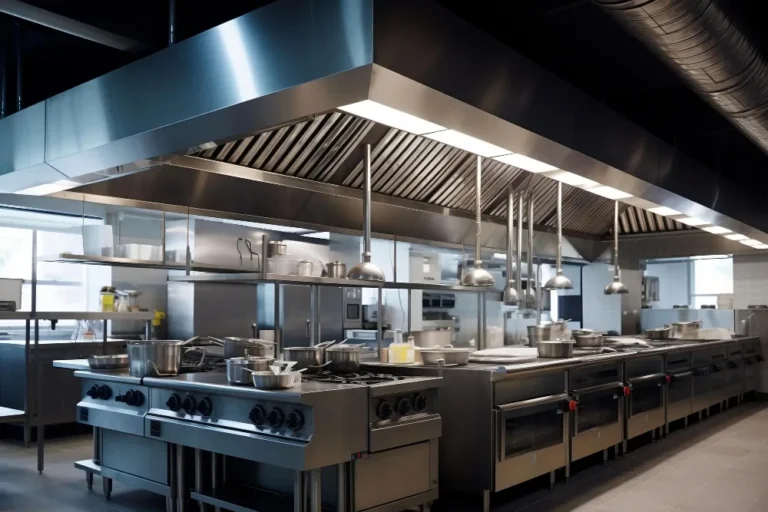
The commercial kitchen world essentially divides hood systems into two main categories, and choosing the wrong one can be a costly mistake. Type I hoods are what most people picture – the big, heavy-duty systems designed for kitchens that produce grease-laden vapors. These are your workhorses, equipped with grease filters, fire suppression systems, and heavy-duty fans. If you’re frying, grilling, charbroiling, or doing any cooking that produces smoke and grease, you need a Type I hood.
Then there are Type II hoods, which are often overlooked but just as important. These are designed for kitchens that produce steam, heat, and odors but minimal grease – think dishwashers, pasta cookers, or coffee machines. They’re simpler, often without grease filters, but still crucial for maintaining air quality and comfort. I’ve seen kitchens install expensive Type I hoods where a Type II would suffice, wasting thousands of dollars on unnecessary equipment.
But here’s where it gets confusing: some kitchens need both. A full-service restaurant might have Type I hoods over the cooking line and Type II hoods over the dish area. And then there are specialty hoods – like those designed for wood-fired ovens or wok stations – that have their own unique requirements. This is why I always cringe when I see restaurants buying hood systems off the shelf without proper consultation. It’s like buying shoes without knowing your size – you might get lucky, but chances are you’ll end up with something that doesn’t fit.
Let me share a quick story that illustrates this point. I was consulting with a new restaurant in East Nashville that was struggling with air quality issues. They had installed what they thought was a top-of-the-line hood system, but the kitchen was still smoky and uncomfortable. After some investigation, we realized they had Type II hoods over their grill and fryer stations. The owner had saved money upfront by going with the simpler system, but was now facing potential health code violations and unhappy staff. The fix? Replacing those hoods with proper Type I systems. The lesson? When it comes to hood systems, you can pay now or pay later – but later is always more expensive.
Sizing Matters: Why Your Hood System Isn’t One-Size-Fits-All
The Goldilocks Principle of Kitchen Ventilation
If there’s one mistake I see more than any other in commercial kitchens, it’s improper sizing of hood systems. And I get it – it’s not exactly the most exciting part of opening a restaurant. When you’re dreaming about your menu, your decor, your concept, the last thing you want to think about is the cubic feet per minute (CFM) of your ventilation system. But here’s the hard truth: a poorly sized hood system will haunt you for the life of your kitchen. It’s like building a house on a bad foundation – no matter how nice everything looks on the surface, the problems will keep coming back.
So how do you get it right? The sizing process starts with understanding your cooking equipment and the heat it produces. Every piece of equipment has what’s called a British Thermal Unit (BTU) rating, which measures how much heat it generates. A small countertop griddle might produce 30,000 BTUs, while a large charbroiler can pump out 300,000 BTUs or more. The hood system needs to be sized to handle the total BTU output of all the equipment it’s covering.
But here’s where it gets tricky: it’s not just about the total BTUs. The type of cooking matters too. Frying produces more grease-laden vapors than grilling, which affects the type of hood and filters you need. The layout of your kitchen plays a role – a long, narrow cooking line might need a different hood configuration than a compact island setup. Even the height of your ceiling matters. I’ve seen kitchens with properly sized hoods that still had ventilation issues because the hood was mounted too high, allowing smoke and heat to escape before it could be captured.
Let me walk you through a real-world example. I worked with a BBQ restaurant in Memphis that was having constant issues with smoke in the dining area. The owner was convinced he needed a bigger, more powerful hood system. But after analyzing his setup, we realized the problem wasn’t the size of the hood – it was the placement. His cooking line was arranged in a way that created cross-drafts, pulling smoke away from the hood. By simply rearranging the equipment and adjusting the hood position, we solved the problem without spending a dime on new equipment. This is why I always tell people: before you upgrade your hood system, make sure it’s optimized for your current setup.
The CFM Conundrum: Finding Your Sweet Spot
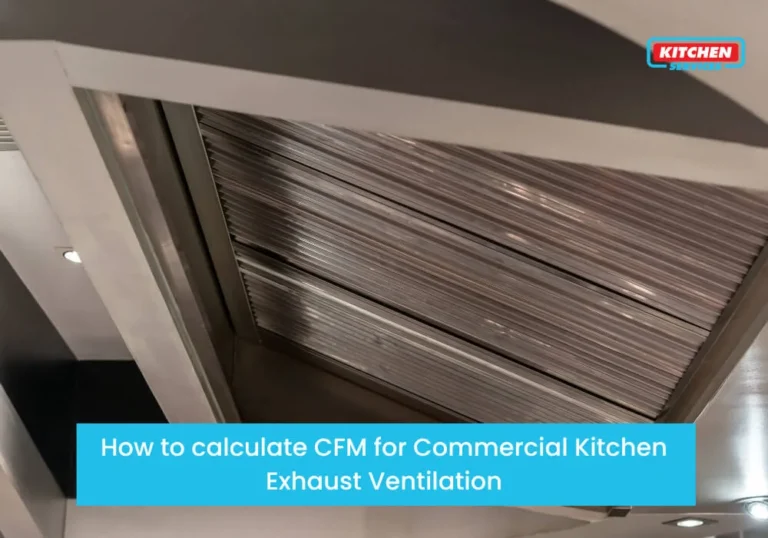
When it comes to hood sizing, CFM (cubic feet per minute) is the magic number. This measures how much air the system can move, and it’s where most sizing mistakes happen. Too little CFM, and your system won’t capture all the smoke and heat. Too much, and you’re wasting energy and potentially creating negative pressure problems in your kitchen.
The industry standard is to calculate CFM based on the capture velocityeeded to contain cooking vapors. For most applications, this means a capture velocity of 50-100 feet per minute at the edge of the hood. But here’s where things get complicated: different types of cooking require different capture velocities. A wok station, for example, needs a much higher capture velocity than a steam table. And the size and shape of your hood affect how much air you need to move to achieve that velocity.
I learned this the hard way when helping a friend design his new restaurant. We used an online calculator to estimate his CFM needs and ended up with a system that was way oversized. The result? His kitchen was so drafty that flames from the stove would flicker sideways, and the negative pressure made it difficult to open doors. We had to install make-up air systems to compensate, adding unexpected costs to the project. The lesson? Online calculators are a starting point, not the final answer. For anything beyond the simplest kitchen, you really need a professional to do the calculations.
But here’s something most people don’t realize: your hood system’s CFM needs can change over time. As your menu evolves, you might add equipment that wasn’t part of the original plan. I’ve seen restaurants start with a simple setup, then add a fryer or a charbroiler later, completely changing their ventilation needs. This is why it’s crucial to build some flexibility into your system. Some modern hoods have variable speed fans that can adjust to different cooking loads, which can be a lifesaver as your menu changes.
And let’s not forget about make-up air – the air that replaces what’s being exhausted by your hood. This is another area where sizing mistakes can cause big problems. If your make-up air system is undersized, you’ll create negative pressure in your kitchen, which can lead to backdrafting of combustion appliances, difficulty opening doors, and even carbon monoxide buildup. On the other hand, if it’s oversized, you’re wasting energy heating or cooling air that’s just being sucked out by the hood.
The bottom line? Sizing a commercial kitchen hood system is part science, part art. It requires understanding not just your equipment, but how you’ll actually use it. This is why I always recommend working with a specialist who can look at your specific situation. Yes, it costs more upfront than just ordering something online. But trust me – it’s a lot cheaper than dealing with ventilation problems for years to come.
The Hidden Costs of Poor Ventilation: Why Your Hood System Affects Your Bottom Line
More Than Just Comfort: The Financial Impact of Bad Ventilation
When I first started researching commercial kitchen ventilation, I assumed the main reasons to invest in a good system were comfort and compliance. And yeah, those are important. But what really opened my eyes was learning about all the hidden costs of poor ventilation – costs that can quietly eat away at your profits year after year. Let me break down the financial impact that most restaurant owners don’t consider.
First, there’s the energy cost. A poorly designed hood system can waste a tremendous amount of energy. If your system is oversized (which is surprisingly common), you’re paying to move more air than you need. If it’s undersized, your HVAC system has to work overtime to compensate for the heat and humidity the hood isn’t capturing. I remember talking to an energy auditor in Chicago who told me about a restaurant that was spending an extra $12,000 a year on energy because of an improperly sized hood system. That’s $12,000 that could have gone to staff, marketing, or menu development.
Then there’s equipment longevity. Heat and grease are the enemies of kitchen equipment. When your hood system isn’t doing its job, that excess heat and grease buildup can shorten the lifespan of everything from your refrigeration units to your cooking equipment. I’ve seen restaurants have to replace equipment years earlier than expected because of poor ventilation. One chef in Atlanta told me his fryers lasted only half as long as they should have because the hood system wasn’t properly capturing the grease-laden vapors. That’s a huge unnecessary expense.
But here’s where it gets really interesting: poor ventilation can affect your food quality. This was a revelation to me. When your kitchen is too hot or smoky, your staff rushes. They don’t take the time to cook things properly. They cut corners. I’ve seen this firsthand in kitchens where the ventilation was inadequate – the food just wasn’t as good. And in today’s competitive restaurant scene, where customers can instantly share their experiences online, that’s a risk you can’t afford to take.
Let’s talk about staff costs. A hot, smoky kitchen is an uncomfortable place to work. And uncomfortable staff are less productive, more likely to call in sick, and more likely to quit. Turnover is one of the biggest expenses in the restaurant industry, and poor working conditions are a major contributor. I’ve consulted with restaurants where improving the ventilation system led to a noticeable decrease in turnover. One owner in Portland told me that after upgrading his hood system, his staff retention improved so much that he saved over $50,000 a year in training and hiring costs.
And we can’t forget about compliance costs. Health departments take ventilation seriously, and for good reason. A kitchen with poor air quality can lead to health code violations, fines, and even temporary closures. I’ve seen restaurants have to shut down for days while they upgraded their ventilation systems – days of lost revenue that could have been avoided with proper planning. Plus, there’s the cost of emergency repairs when something goes wrong. A clogged grease filter or a failing fan motor can bring your kitchen to a standstill if you’re not prepared.
The Insurance Factor: How Your Hood System Affects Your Premiums
Here’s something most restaurant owners don’t realize: your insurance company cares about your hood system. A lot. In fact, your ventilation system can have a significant impact on your insurance premiums. Why? Because fires in commercial kitchens are both common and expensive. According to the National Fire Protection Association, cooking equipment is the leading cause of restaurant fires, accounting for 61% of all restaurant fires between 2010 and 2014.
Insurance companies know this, and they price their policies accordingly. A restaurant with a state-of-the-art hood system and fire suppression setup is going to get better rates than one with an outdated or poorly maintained system. I spoke with an insurance broker who specializes in restaurants, and he told me that upgrading a hood system can sometimes lead to premium reductions of 10-20%. That’s real money that goes straight to your bottom line, year after year.
But it’s not just about the premiums. The right hood system can also affect your deductible and coverage limits. Some insurance companies offer lower deductibles for restaurants with certain types of fire suppression systems. Others might offer higher coverage limits if you have a comprehensive ventilation system. And in the event of a claim, having a well-documented, properly maintained system can make the claims process much smoother.
Here’s a real-world example that illustrates this point. A restaurant in Denver had a small fire in their kitchen. The fire suppression system in their hood activated, containing the fire before it could spread. The damage was minimal, and the restaurant was back up and running within a day. Because they had a properly maintained system, their insurance claim was processed quickly, and they didn’t face any rate increases. The owner told me that the cost of maintaining their hood system was easily offset by the savings from avoiding a major fire and the resulting insurance headaches.
So when you’re looking at the cost of a new hood system, don’t just consider the upfront price. Think about the long-term savings – lower energy costs, longer equipment life, reduced staff turnover, fewer compliance issues, and potentially lower insurance premiums. When you look at it that way, a high-quality hood system isn’t an expense – it’s an investment in your business’s future.
Beyond the Basics: Innovations in Commercial Kitchen Ventilation
From Dumb Boxes to Smart Systems: How Technology is Changing the Game
When I first started researching commercial kitchen hood systems, I assumed they were basically just big metal boxes with fans. And yeah, that’s what many of them are. But what I’ve discovered over the past couple of years is that we’re in the middle of a ventilation revolution. The hood systems of today – and especially of tomorrow – are smarter, more efficient, and more adaptable than ever before. Let me take you on a tour of the innovations that are changing the game.
First up: variable speed fans. This might sound simple, but it’s a game-changer. Traditional hood systems run at a constant speed, which means they’re either moving too much air (wasting energy) or too little (not capturing all the smoke and heat). Variable speed fans adjust automatically based on the cooking load. When you’re just warming up the griddle, the fan runs at a lower speed. When the lunch rush hits and everything’s going at once, it ramps up. I’ve seen restaurants reduce their energy consumption by 30-50% just by switching to variable speed systems.
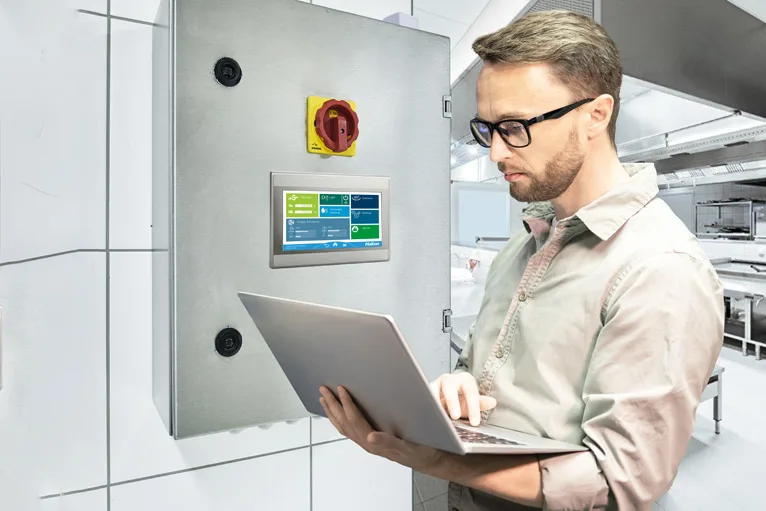
Then there are demand-controlled ventilation systems. These use sensors to detect heat, smoke, and grease particles in the air, automatically adjusting the fan speed to match the actual cooking load. Some systems even use infrared sensors to detect when equipment is turned on or off, adjusting the ventilation accordingly. This isn’t just about energy savings – it’s about creating a more comfortable kitchen environment. No more sudden blasts of cold air when the system kicks into high gear, no more lingering smoke when you’re just doing light prep work.
But here’s where it gets really interesting: predictive ventilation. Some of the newest systems use machine learning to predict your kitchen’s ventilation needs based on historical data. If you always have a rush at noon on Saturdays, the system can start ramping up the ventilation before the cooking even begins. This not only saves energy but also ensures optimal air quality at all times. I talked to an engineer at one of the leading ventilation companies, and he told me that predictive systems can reduce energy consumption by up to 70% compared to traditional systems.
Grease Management: The Next Frontier
If there’s one thing that keeps restaurant owners up at night, it’s grease. Grease buildup is a fire hazard, a maintenance nightmare, and a health code violation waiting to happen. But the latest innovations in hood systems are tackling this problem head-on with some truly impressive technology.
First, there are self-cleaning hoods. These systems use a combination of heat and water to automatically clean the interior of the hood, removing grease buildup without manual scrubbing. Some systems even have automatic filter cleaning, using high-pressure water jets to keep the filters clear. I saw one of these in action at a trade show, and it was like watching a car wash for your hood system. The grease just melted away, leaving the interior sparkling clean.
Then there are grease extraction systems that go beyond traditional filters. Some use electrostatic precipitators, which charge grease particles and then collect them on oppositely charged plates. Others use centrifugal separators, which spin the air to separate out the grease. These systems can capture up to 99% of grease particles, compared to about 50-70% for traditional filters. This means less grease in your ductwork, less fire risk, and less maintenance.
But my favorite innovation in this space is grease monitoring systems. These use sensors to measure grease buildup in real-time, alerting you when it’s time to clean. No more guessing, no more unnecessary cleanings, no more surprise health department violations. Some systems even integrate with your kitchen management software, creating automatic work orders for cleaning when the grease levels get too high. I talked to a restaurant owner in San Francisco who installed one of these systems, and he told me it reduced his cleaning costs by 40% while improving compliance.
The Rise of Modular and Adaptable Systems
One of the biggest challenges with traditional hood systems is that they’re static. Once they’re installed, they’re difficult and expensive to modify. But that’s changing with the rise of modular hood systems. These systems are designed to be easily reconfigured as your kitchen needs change.
I saw a great example of this at a food hall in Nashville. The space was designed to accommodate multiple vendors, each with different cooking needs. Instead of installing separate hood systems for each vendor, they installed a modular system with adjustable capture zones. As vendors come and go, the hood can be reconfigured to match their specific needs. This not only saves money but also makes the space more flexible and adaptable.
Another exciting development is integrated hood systems. These combine ventilation with other kitchen functions, like lighting, fire suppression, and even equipment mounting. Some systems have built-in LED lighting that adjusts based on the time of day, reducing eye strain for staff. Others have integrated fire suppression nozzles that are positioned for optimal coverage. And some even have mounting points for equipment, reducing the need for separate support structures.
But perhaps the most exciting innovation is energy recovery systems. These capture the heat from your exhaust air and use it to pre-heat incoming make-up air. In cold climates, this can significantly reduce your heating costs. In warm climates, some systems can use the exhaust heat to power absorption chillers, providing cooling for your kitchen. I talked to an engineer who calculated that a well-designed energy recovery system can pay for itself in as little as two years through energy savings.
The bottom line? The hood systems of tomorrow are going to be smarter, more efficient, and more adaptable than ever before. And the best part is that many of these innovations are available today. If you’re in the market for a new hood system, it’s worth looking beyond the basics to see what cutting-edge technology can do for your kitchen.
Maintenance Matters: Keeping Your Hood System in Top Shape (Without Going Crazy)
The Forgotten Art of Hood System Maintenance
Let me tell you something that might surprise you: the best hood system in the world is useless if it’s not properly maintained. And yet, maintenance is the aspect of commercial kitchen ventilation that gets overlooked more than any other. I’ve seen restaurants with state-of-the-art systems that are barely functioning because no one bothered to clean the filters or check the fans. It’s like buying a Ferrari and never changing the oil – eventually, it’s going to break down, and it won’t be pretty.
I learned this lesson the hard way during my food truck adventure. Remember that near-disaster I mentioned earlier? Well, it turns out the hood system wasn’t actually undersized – it was just clogged with grease. The filters hadn’t been cleaned in weeks, and the ductwork was coated with a thick layer of grease. Once we cleaned everything out, the system worked like a charm. That experience taught me that maintenance isn’t just about keeping things running – it’s about keeping things running efficiently.
So what does proper hood system maintenance look like? It’s not rocket science, but it does require consistency and attention to detail. Let’s break it down into the key components.
Daily, Weekly, Monthly: Your Hood System Maintenance Schedule
The first rule of hood system maintenance is that different tasks need to be done at different intervals. Some things need to be checked daily, while others can be done weekly or monthly. Here’s a basic maintenance schedule that I recommend to all the restaurants I consult with:
- Daily:
- Check that all fans are running properly
- Inspect filters for visible grease buildup
- Wipe down the exterior of the hood
- Check that fire suppression system nozzles are clear
- Weekly:
- Clean grease filters (either by hand or in a dishwasher)
- Inspect ductwork for grease buildup
- Check fan belts for wear and tension
- Test the fire suppression system (if applicable)
- Monthly:
- Inspect the entire system for grease buildup
- Check all electrical connections
- Lubricate fan bearings (if required)
- Inspect make-up air system
- Quarterly:
- Professional cleaning of the entire system (including ductwork)
- Inspection of fire suppression system by a certified technician
- Performance testing of the ventilation system
Now, I know what you’re thinking: “That’s a lot of work!” And you’re right – it is. But here’s the thing: skipping maintenance is like skipping oil changes in your car. You might get away with it for a while, but eventually, it’s going to cost you. A lot.
Let me share a quick story. I was consulting with a restaurant in Louisville that was having constant issues with smoke in the kitchen. The owner was convinced he needed a new hood system and was prepared to spend $20,000 on an upgrade. But when I inspected the system, I found that the filters were so clogged with grease that they were barely letting any air through. A simple cleaning – which cost less than $200 – solved the problem. The owner was thrilled, but also a little embarrassed. “I can’t believe I was about to spend all that money when all I needed was a good cleaning,” he told me. This is why I always recommend checking your maintenance before considering upgrades.
The Professional Touch: When to Call in the Experts
While there’s a lot you can do yourself, there are some maintenance tasks that should always be left to the professionals. Chief among these is duct cleaning. The ductwork in your hood system can accumulate a surprising amount of grease, and cleaning it properly requires special equipment and expertise. I’ve seen restaurants try to clean their own ducts, only to make the problem worse by spreading grease around or damaging the ductwork.
Most experts recommend having your ductwork professionally cleaned at least every three months. But this can vary depending on your cooking volume and the type of food you’re preparing. A busy burger joint might need monthly cleanings, while a light-duty kitchen might get away with twice a year. The key is to work with a professional who can assess your specific needs.
Another area where professionals are essential is fire suppression system maintenance. These systems are your first line of defense against kitchen fires, and they need to be inspected and tested regularly by certified technicians. Most jurisdictions require this at least twice a year, but I recommend quarterly inspections for busy kitchens. The last thing you want is for your fire suppression system to fail when you need it most.
Then there’s performance testing. Over time, your hood system’s performance can degrade due to wear and tear, grease buildup, or other factors. A professional can test your system’s airflow and capture efficiency, identifying any issues before they become major problems. I recommend having this done at least once a year, or whenever you notice a change in your kitchen’s air quality.
But here’s something most people don’t realize: professional maintenance can actually save you money. A well-maintained system runs more efficiently, which means lower energy costs. It also lasts longer, which means you won’t have to replace it as often. And of course, there’s the cost of avoiding fires, health code violations, and other problems that can come from poor maintenance. When you look at it that way, professional maintenance isn’t an expense – it’s an investment.
Maintenance Hacks: Tips and Tricks from the Pros
Over the years, I’ve picked up some great maintenance tips from chefs, equipment specialists, and ventilation experts. Here are some of my favorites:
- Use disposable filters for busy periods: If you’re in the middle of a rush season, consider using disposable grease filters. They’re not as eco-friendly as reusable ones, but they can save you time and ensure optimal performance when you need it most.
- Keep spare filters on hand: Nothing is worse than discovering your filters are clogged right before a busy service. Always have a set of clean filters ready to go.
- Label your filters: If you have multiple hoods, label your filters so you know which one goes where. This might seem obvious, but I’ve seen kitchens waste time trying to figure out which filter fits which hood.
- Use a grease-cutting dish soap: When cleaning filters by hand, use a dish soap designed to cut grease. It will make the job much easier and more effective.
- Check your fan blades: Grease can build up on fan blades, reducing their efficiency. Regularly check and clean your fan blades to keep your system running smoothly.
- Monitor your energy bills: A sudden spike in your energy costs could indicate a problem with your hood system. Keep an eye on your bills and investigate any unexpected increases.
- Train your staff: Make hood system maintenance part of your staff training. The more eyes you have on the system, the more likely you are to catch problems early.
One of the best maintenance tips I’ve ever received came from a chef in New Orleans. He told me to “listen to your hood system”. “If it starts sounding different – louder, rattling, struggling – that’s your first warning sign,” he said. “Don’t ignore it. Investigate it.” This simple advice has saved me from countless potential problems over the years.
The bottom line? Maintenance isn’t glamorous, but it’s essential. A well-maintained hood system will run more efficiently, last longer, and keep your kitchen safer. And in the long run, that’s going to save you time, money, and headaches. So don’t neglect it – your future self will thank you.
Designing for Success: How Your Kitchen Layout Affects Your Hood System
The Hidden Dance Between Equipment and Ventilation
Here’s something that might blow your mind: the layout of your kitchen can make or break your hood system’s effectiveness. I learned this the hard way when helping a friend design his new restaurant. We spent months perfecting the menu, the decor, the workflow – but we barely thought about the hood system until the equipment was already in place. By then, it was too late to make major changes, and we ended up with a ventilation system that struggled to keep up with the cooking load.
What we should have done – and what I now recommend to every restaurant owner – is design the hood system and kitchen layout together, from the very beginning. The placement of your equipment, the shape of your cooking line, even the height of your ceiling – all of these factors can affect how well your hood system works. Let’s dive into the key design considerations.
Capture Zones: The Invisible Force Fields of Your Kitchen
When it comes to hood system design, capture zones are everything. A capture zone is the area where the hood can effectively capture and remove smoke, heat, and grease. The goal is to position your equipment so that all the cooking happens within these zones. Sounds simple, right? But in practice, it’s where most kitchens go wrong.
The size and shape of your capture zones depend on several factors:
- Hood type: Wall-mounted hoods have different capture zones than island hoods.
- Hood size: A larger hood will have a larger capture zone, but it also requires more airflow.
- Airflow: The speed and direction of the air moving into the hood affect the capture zone.
- Equipment height: Taller equipment can extend the capture zone upward, but it also requires more airflow to maintain the same capture velocity.
I remember working with a restaurant in Chicago that was having constant issues with smoke in the kitchen. The owner was convinced he needed a bigger hood system, but when we analyzed the layout, we realized the problem was the equipment placement. The fryers were positioned just outside the capture zone of the hood, allowing smoke to escape before it could be captured. By simply moving the fryers a few feet, we solved the problem without spending a dime on new equipment.
But here’s where it gets really interesting: the shape of your capture zone isn’t just a straight line. It’s more like a bubble that extends outward from the hood. This means that equipment placed at the edges of the hood might not be fully within the capture zone, even if it’s physically under the hood. This is why I always recommend working with a ventilation specialist who can model your capture zones before finalizing your kitchen layout.
The Art of the Cooking Line: Designing for Efficiency and Ventilation
The layout of your cooking line is one of the most important factors in hood system design. A well-designed cooking line can improve workflow, reduce energy consumption, and make your hood system more effective. Here are some key principles to keep in mind:
- Group similar equipment together: Place equipment that produces similar levels of heat and smoke in the same area. This allows you to use a single hood system for multiple pieces of equipment, reducing costs and improving efficiency.
- Consider the cooking sequence: Arrange your equipment in the order that food is prepared. This reduces cross-traffic and makes your staff more efficient.
- Leave space between equipment: Crowding equipment together can create hot spots and make it harder for the hood to capture all the smoke and heat.
- Think about the height: Taller equipment can block airflow and reduce the effectiveness of your hood system. Consider the height of each piece of equipment when designing your cooking line.
- Plan for flexibility: If possible, design your cooking line to be easily reconfigured. This allows you to adapt to changing menu needs without major renovations.
One of the best cooking line designs I’ve ever seen was in a restaurant in Portland. The chef had arranged the equipment in a gentle curve, with the hottest equipment (the charbroiler) at one end and the coolest (the pass) at the other. This created a natural flow for the staff and allowed the hood system to work more efficiently. The result was a kitchen that was both highly functional and comfortable to work in.
But here’s something most people don’t realize: the shape of your cooking line can affect your hood system’s energy consumption. A long, straight line requires more airflow than a compact, curved line. This is because the capture zone of a straight hood is essentially a rectangle, while the capture zone of a curved hood is more like a semicircle. The curved hood can cover the same amount of equipment with less airflow, which means lower energy costs.
Ceiling Height and Hood Performance: The Overlooked Connection
When it comes to hood system design, ceiling height is one of the most overlooked factors. And yet, it can have a huge impact on your system’s performance. Here’s why: the higher your ceiling, the more air your hood system needs to move to maintain the same capture velocity.
This is because the capture zone of a hood extends outward from the hood itself. A higher ceiling means the capture zone has to extend further to reach the cooking surface. This requires more airflow, which means a larger, more powerful (and more expensive) hood system.
I learned this lesson when working with a restaurant in a converted warehouse space. The ceilings were 20 feet high, and the owner wanted to install a hood system that would look good with the industrial aesthetic. But the high ceilings meant that the hood had to be mounted much higher than usual, reducing its effectiveness. We ended up having to install a much larger system than we would have in a space with standard ceilings, which significantly increased the cost.
But here’s the good news: there are ways to work with high ceilings. One option is to use a low-profile hood, which is designed to be mounted closer to the cooking surface. These hoods have a more compact capture zone, which means they can be more effective in high-ceiling spaces. Another option is to use a canopy hood with adjustable capture zones. These hoods can be configured to focus the airflow on specific areas, making them more effective in spaces with unusual dimensions.
On the flip side, low ceilings can also present challenges. In a space with a very low ceiling, you might not have enough room to mount a standard hood. In this case, you might need to use a back shelf hood, which is designed to be mounted directly behind the cooking equipment. These hoods are more compact and can be a good solution for tight spaces.
The bottom line? Ceiling height matters. When designing your kitchen, consider the height of your space and how it will affect your hood system. And if you’re working with an existing space, be sure to take the ceiling height into account when selecting your hood system. A little planning upfront can save you a lot of headaches (and money) down the road.
The Future of Commercial Kitchen Ventilation: What’s Next?
From Reactive to Predictive: The AI Revolution in Kitchen Ventilation
Let me take you on a little thought experiment. Imagine walking into your kitchen in the morning, and your hood system greets you with a friendly, “Good morning! Based on yesterday’s data, I’ve adjusted my settings for today’s expected cooking load. Also, I noticed that your grease filters are due for cleaning – would you like me to schedule that for tonight?” Sound like science fiction? It’s not. This is the direction that commercial kitchen ventilation is headed, and it’s happening faster than you might think.
The next frontier in hood systems is artificial intelligence and machine learning. These technologies are transforming hood systems from simple, reactive devices into smart, predictive systems that can anticipate your needs and optimize performance in real-time. Let me give you a glimpse of what’s coming.
First, there are AI-powered demand control systems. These systems use sensors and machine learning algorithms to analyze your cooking patterns and adjust the ventilation accordingly. They can predict when you’ll have a rush and ramp up the airflow before the cooking even begins. They can detect when equipment is turned on or off and adjust the ventilation in real-time. And they can learn from your patterns over time, becoming more efficient and effective as they gather more data.
But here’s where it gets really exciting: predictive maintenance. AI systems can analyze data from sensors throughout your hood system to predict when components are likely to fail. They can alert you to potential problems before they become major issues, allowing you to schedule maintenance at a convenient time rather than dealing with emergency repairs. Some systems can even order replacement parts automatically when they detect wear and tear.
Then there’s energy optimization. AI systems can analyze your energy consumption patterns and suggest ways to reduce your costs. They can adjust the ventilation based on the time of day, the weather, and even the price of electricity. In some cases, they can reduce your energy consumption by up to 50% without sacrificing performance.
But perhaps the most exciting development is integrated kitchen management. Imagine a system that connects your hood system, your HVAC system, your equipment, and even your POS system. This system could analyze data from all these sources to optimize your entire kitchen’s performance. It could adjust the ventilation based on what’s being cooked, turn equipment on and off to reduce energy consumption, and even suggest menu changes to improve efficiency. This isn’t just about ventilation – it’s about creating a smarter, more efficient kitchen.
The Rise of the Modular Kitchen
Another major trend in commercial kitchen design is modularity. As restaurants become more flexible and adaptable, the equipment they use needs to keep up. This is especially true for hood systems, which have traditionally been static and difficult to modify.
The future of hood systems is modular – systems that can be easily reconfigured as your kitchen needs change. Imagine a hood system with adjustable capture zones that can be moved to accommodate different equipment layouts. Or a system with interchangeable components that can be swapped out as your menu evolves. This is the direction that the industry is headed, and it’s going to make kitchens more flexible and adaptable than ever before.
One of the most exciting developments in this space is plug-and-play ventilation. These are hood systems that can be easily installed and removed, allowing you to reconfigure your kitchen on the fly. Imagine being able to move your cooking line from one side of the kitchen to the other, or to add a new piece of equipment without major renovations. This is the future of commercial kitchen design, and it’s going to make kitchens more versatile than ever before.
But modularity isn’t just about flexibility – it’s also about scalability. A modular hood system can grow with your business. If you start with a small kitchen and expand over time, you can add components to your hood system to accommodate the additional equipment. This makes modular systems a great choice for startups and growing businesses.
Sustainability: The Green Revolution in Kitchen Ventilation
Sustainability is no longer just a buzzword – it’s a business imperative. And the commercial kitchen industry is taking notice. The next generation of hood systems is being designed with sustainability in mind, from energy-efficient components to eco-friendly materials. Let’s take a look at some of the innovations that are making hood systems greener than ever before.
First, there’s energy recovery. As I mentioned earlier, energy recovery systems capture the heat from your exhaust air and use it to pre-heat incoming make-up air. This can significantly reduce your heating costs, especially in cold climates. But the latest energy recovery systems are even more efficient than ever before. Some use advanced heat exchangers that can capture up to 80% of the heat from the exhaust air. Others use phase-change materials that can store and release heat more efficiently than traditional systems.
Then there’s water conservation. Traditional hood systems can use a lot of water for cleaning, especially in busy kitchens. But the latest systems are designed to minimize water usage. Some use high-pressure, low-volume cleaning systems that use less water while still being effective. Others use water recycling systems that filter and reuse water for cleaning. And some even use dry cleaning methods that eliminate the need for water altogether.
But perhaps the most exciting development in sustainable ventilation is the use of renewable energy. Some hood systems now come with integrated solar panels that can power the fans and other components. Others can be connected to your building’s renewable energy system, allowing you to run your ventilation on clean, green power. And some even use the heat from your exhaust air to generate electricity, turning your hood system into a mini power plant.
And let’s not forget about materials. The latest hood systems are being made from eco-friendly materials that are both durable and sustainable. Some use recycled metals, while others use composite materials that are lighter and more energy-efficient. And some even use biodegradable materials that can be composted at the end of their life.
The bottom line? The future of commercial kitchen ventilation is smarter, more flexible, and more sustainable than ever before. And the best part is that many of these innovations are available today. If you’re in the market for a new hood system, it’s worth looking beyond the basics to see what cutting-edge technology can do for your kitchen.
Wrapping It Up: Your Hood System Action Plan
Alright, let’s take a step back and catch our breath. We’ve covered a lot of ground in this deep dive into commercial kitchen hood systems. From the basics of how these systems work to the latest innovations shaping their future, we’ve explored why these unsung heroes are so crucial to your kitchen’s success. Now, let me leave you with some actionable advice to help you make the most of your hood system – whether you’re designing a new kitchen or optimizing an existing one.
First, audit your current system. If you’re already up and running, take a close look at your hood system. Is it properly sized for your cooking load? Are the filters clean and in good condition? Is the ductwork free of grease buildup? If you’re not sure, consider bringing in a professional to do a thorough inspection. Remember that food truck story I told you about? A simple audit could have saved that owner a lot of headaches – and a lot of smoke.
Second, prioritize maintenance. I can’t stress this enough – a well-maintained hood system is a happy hood system. Create a maintenance schedule and stick to it. Train your staff on the importance of maintenance and how to perform basic tasks. And don’t forget to schedule regular professional cleanings and inspections. Think of it like going to the dentist – it’s not fun, but it’s a lot better than the alternative.
Third, consider an upgrade. If your hood system is outdated or struggling to keep up, it might be time for an upgrade. But don’t just go for the biggest, most expensive system you can find. Work with a specialist to find the right system for your specific needs. And remember – bigger isn’t always better. A properly sized system will be more efficient and cost-effective in the long run.
Fourth, think about the future. When designing or upgrading your hood system, consider how your needs might change over time. Will you be adding new equipment? Changing your menu? Expanding your space? Choose a system that can grow and adapt with your business. And keep an eye on the latest innovations – the hood system of tomorrow might be smarter, more efficient, and more sustainable than anything available today.
Finally, don’t go it alone. Commercial kitchen ventilation is a complex field, and it’s always changing. Work with professionals who can help you navigate the options and make the best choices for your specific situation. Yes, it might cost more upfront, but it will save you time, money, and headaches in the long run. And who knows – you might even learn something new, like I did during that food truck adventure.
So here’s my challenge to you: Take a good, hard look at your hood system. Is it doing everything it should be doing? Is it keeping your kitchen comfortable, safe, and efficient? If not, what can you do to improve it? Remember, your hood system isn’t just a piece of equipment – it’s the backbone of your kitchen. Treat it well, and it will treat you well in return.
And with that, I’ll leave you with one final thought. The next time you’re in a restaurant, take a moment to look up at the hood system. That unassuming metal box is working hard to keep the air clean, the staff comfortable, and the food delicious. It might not be the most glamorous part of the kitchen, but it’s one of the most important. And now that you know what to look for, you’ll never see it the same way again.
FAQ: Your Commercial Kitchen Hood System Questions Answered
Q: How often should I clean my commercial kitchen hood system?
A: The cleaning frequency depends on your cooking volume and the type of food you’re preparing. For most restaurants, I recommend cleaning the grease filters daily or at least weekly. The hood and ductwork should be professionally cleaned at least every three months, but busy kitchens or those doing a lot of frying might need monthly cleanings. Remember, grease buildup isn’t just a fire hazard – it can also reduce your system’s efficiency and lead to health code violations. When in doubt, err on the side of more frequent cleanings. It’s always better to be safe than sorry.
Q: What’s the difference between a Type I and Type II hood, and how do I know which one I need?
A: Great question! The difference comes down to what you’re cooking. Type I hoods are designed for kitchens that produce grease-laden vapors – think frying, grilling, charbroiling, or any cooking that produces smoke. These hoods have grease filters and are typically required to have fire suppression systems. Type II hoods, on the other hand, are for kitchens that produce steam, heat, and odors but minimal grease – like dishwashers, pasta cookers, or coffee machines. They usually don’t have grease filters. Some kitchens need both types. To determine which you need, look at your menu and equipment. If you’re doing any cooking that produces smoke or grease, you’ll likely need a Type I hood. When in doubt, consult with a ventilation specialist or your local health department.
Q: How do I know if my hood system is properly sized for my kitchen?
A: Proper sizing is crucial for your hood system’s effectiveness. A system that’s too small won’t capture all the smoke and heat, while one that’s too large will waste energy. To determine if your system is properly sized, you’ll need to consider several factors: the type and amount of cooking equipment, the total BTU output, the layout of your kitchen, and the height of your ceiling. The industry standard is to calculate the required airflow (in CFM) based on a capture velocity of 50-100 feet per minute at the edge of the hood. But this is where it gets tricky – different types of cooking require different capture velocities. A wok station, for example, needs a much higher capture velocity than a steam table. This is why I always recommend working with a professional who can do the calculations for your specific situation. If you’re noticing smoke or heat escaping from under your hood, or if your kitchen is consistently uncomfortable for staff, those are signs that your system might be undersized.
Q: What are some signs that my hood system isn’t working properly?
A: There are several red flags that your hood system might not be functioning as it should. First, pay attention to air quality. If you’re noticing smoke, steam, or cooking odors in the kitchen or dining area, that’s a clear sign that your system isn’t capturing all the vapors. Second, listen to your system. If it’s making unusual noises – rattling, grinding, or struggling – that could indicate a problem with the fan or motor. Third, check for grease buildup. If you’re seeing grease accumulating on surfaces around the hood, that means your system isn’t capturing all the grease-laden vapors. Fourth, monitor your energy bills. A sudden spike could indicate that your system is working harder than it should be. Finally, pay attention to staff comfort. If your kitchen is consistently too hot or uncomfortable, that could be a sign of poor ventilation. If you notice any of these issues, it’s time to investigate. Start with basic maintenance – clean the filters, check the fans, inspect the ductwork. If the problems persist, consider bringing in a professional for a thorough inspection.
@article{the-unsung-heroes-of-commercial-kitchens-why-your-hood-system-might-be-the-most-important-equipment-youre-not-thinking-about,
    title   = {The Unsung Heroes of Commercial Kitchens: Why Your Hood System Might Be the Most Important Equipment You’re Not Thinking About},
    author  = {Chef's icon},
    year    = {2026},
    journal = {Chef's Icon},
    url     = {https://chefsicon.com/commercial-kitchen-hood-systems/}
}