The Best Fluffy Pancakes recipe you will fall in love with. Full of tips and tricks to help you make the best pancakes.
How to Calculate CFM Requirements for Your Kitchen Hood System Without Losing Your Mind
Let me tell you about the time I nearly set my test kitchen on fire. Okay, that’s a bit dramatic, it was just a lot of smoke, but still. I was testing a new high-BTU wok burner, and my hood system was, well, *not* up to the task. The smoke alarm screamed like a banshee, my rescue cat Luna bolted under the couch, and I spent the next hour waving a towel at the ceiling like some kind of deranged conductor. That’s when I realized: calculating CFM requirements isn’t just about compliance or efficiency, it’s about not turning your kitchen into a sauna of regret.
If you’re reading this, you’re probably standing in a kitchen (or designing one) and wondering, “How the heck do I figure out how much airflow I actually need?” Maybe you’re a chef tired of your staff complaining about the heat, or a designer trying to spec a system that won’t get rejected by the health department. Either way, you’re in the right place. Calculating CFM (cubic feet per minute) for your kitchen hood system isn’t rocket science, but it’s not exactly intuitive either. It’s more like baking a soufflé-follow the steps carefully, and you’ll get something impressive. Skip a step, and well… you’ll end up with a mess.
In this guide, I’m going to walk you through the process of calculating CFM requirements like a pro. We’ll cover everything from the basics of airflow to the nitty-gritty of hood types, cooking equipment, and local codes. And don’t worry, I’ll keep the jargon to a minimum (or at least explain it when I can’t). By the end, you’ll be able to look at your kitchen and say, “Yep, I know exactly how much CFM I need,” instead of crossing your fingers and hoping for the best.
So grab a coffee (or a bourbon, if it’s been one of *those* days), and let’s dive in.
Why CFM Matters More Than You Think
Before we get into the numbers, let’s talk about why CFM is such a big deal. CFM, or cubic feet per minute, is the measurement of how much air your hood system can move. Think of it like the lungs of your kitchen, if it’s not breathing properly, everything else suffers. Too little CFM, and you’ll have smoke, grease, and heat lingering like an unwanted dinner guest. Too much CFM, and you’re wasting energy (and money) on a system that’s overkill.
But here’s the thing: CFM isn’t just about comfort or compliance, it’s about safety. A poorly ventilated kitchen can lead to:
- Poor air quality: Carbon monoxide, grease particles, and other nasties can build up, making it harder for your staff to breathe (and work efficiently).
- Fire hazards: Grease buildup in ducts is a major fire risk. A properly sized hood system helps capture grease before it becomes a problem.
- Equipment damage: Excess heat and moisture can shorten the lifespan of your appliances and even warp cabinets or countertops over time.
- Code violations: Most local health departments and building codes have strict requirements for kitchen ventilation. Fail to meet them, and you could face fines or even shutdowns.
I’ll admit, when I first started digging into this topic, I was overwhelmed. There are so many variables, hood type, cooking equipment, kitchen layout, local codes, and it’s easy to feel like you’re drowning in spreadsheets. But here’s the good news: once you understand the core principles, calculating CFM becomes a lot simpler. It’s like learning to cook a new dish. The first time, it’s intimidating. The tenth time? You’re adjusting seasoning without even thinking about it.
So, let’s break it down. What exactly goes into calculating CFM?
The Core Components of CFM Calculation
Calculating CFM isn’t just about slapping a number on a hood and calling it a day. There are a few key factors you need to consider, and they all play a role in determining how much airflow you actually need. Here’s what you’re dealing with:
1. Hood Type and Size
Not all hoods are created equal. The type of hood you’re using, and how big it is, will have a huge impact on your CFM requirements. Here’s a quick rundown of the most common types:
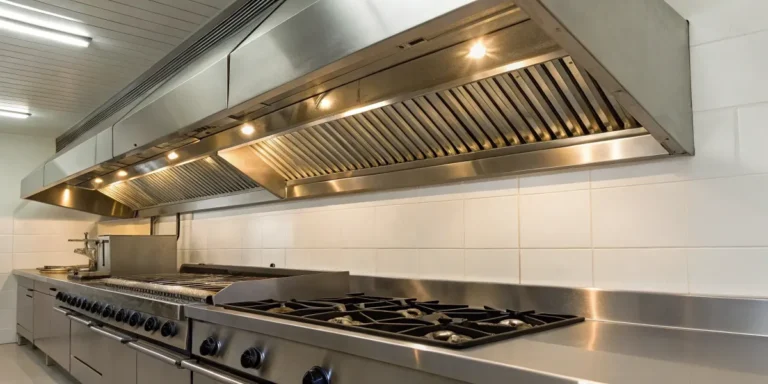
- Type I Hoods: These are designed for cooking equipment that produces grease, smoke, or steam. Think grills, fryers, and ranges. They’re required by code in most commercial kitchens and typically have built-in grease filters.
- Type II Hoods: These are for equipment that produces heat or steam but not grease, like dishwashers or pasta cookers. They’re simpler and usually don’t require grease filters.
- Wall-Mounted Hoods: These are attached to a wall and are common in smaller kitchens. They’re efficient but have limitations in terms of coverage.
- Island Hoods: These hang from the ceiling and are great for open kitchen layouts. They require more CFM because they’re exposed to air currents from all sides.
- Backshelf Hoods: These sit low over the cooking equipment and are often used in fast-casual setups. They’re compact but may require higher CFM to compensate for their smaller size.
So, how does hood type affect CFM? Generally, the more exposed the hood is (like an island hood), the more CFM you’ll need to capture contaminants effectively. A wall-mounted hood, on the other hand, can get away with less CFM because it’s only pulling air from one direction. Makes sense, right?
But it’s not just about the type, it’s also about the size. The rule of thumb is that your hood should extend 6 inches beyond the edge of your cooking equipment on all sides. So if you’ve got a 36-inch range, your hood should be at least 48 inches wide. Why? Because you want to capture all the smoke, grease, and heat before it escapes into the kitchen. Miss this step, and you’ll end up with a hood that’s basically a decorative piece.
2. Cooking Equipment and Heat Output
Here’s where things get a little more complicated. The type of cooking equipment you’re using, and how much heat it produces, will directly impact your CFM requirements. High-BTU equipment (like wok burners or charbroilers) requires more airflow than low-BTU equipment (like steam tables or holding cabinets).
First, let’s talk about BTUs (British Thermal Units). BTUs measure the heat output of your equipment. The higher the BTU, the more heat (and smoke, and grease) your hood needs to handle. For example:
- A standard gas range might produce 30,000 BTUs per hour.
- A high-output wok burner can crank out 100,000 BTUs per hour or more.
- A steam table, on the other hand, might only produce 5,000 BTUs per hour.
So, how do you translate BTUs into CFM? There’s no one-size-fits-all answer, but here’s a general guideline:
- For light-duty equipment (like steam tables or holding cabinets), you’ll need about 100 CFM per linear foot of hood.
- For medium-duty equipment (like griddles or fryers), aim for 150-200 CFM per linear foot.
- For heavy-duty equipment (like charbroilers or wok burners), you’ll need 200-300 CFM per linear foot or more.
But wait, there’s a catch. These numbers are just starting points. You’ll also need to factor in the type of fuel your equipment uses (gas vs. electric), how often it’s used, and even the layout of your kitchen. For example, a gas charbroiler will produce more smoke and grease than an electric one, so it’ll require more CFM. And if your kitchen is packed with high-BTU equipment, you might need to adjust your calculations to account for the cumulative heat output.
I’ll be honest: this part can get a little overwhelming. When I was designing my test kitchen, I spent hours poring over equipment specs, trying to figure out how much CFM I needed for each piece. And then I realized-there’s a simpler way. Most equipment manufacturers provide recommended CFM ratings for their products. It’s not a substitute for doing your own calculations, but it’s a great starting point. If you’re ever in doubt, check the manual or give the manufacturer a call. They’ve done the hard work for you.
3. Kitchen Layout and Airflow Dynamics
Your kitchen’s layout plays a bigger role in CFM calculations than you might think. Airflow isn’t just about how much air your hood can move, it’s about how that air moves through your kitchen. If your kitchen is poorly designed, even the most powerful hood system won’t do you much good.
Here are a few things to consider:
- Cross-drafts: If your kitchen has doors, windows, or even open pass-throughs, air currents can disrupt your hood’s ability to capture contaminants. Island hoods are especially vulnerable to this. If you’ve got a lot of cross-drafts, you’ll need to increase your CFM to compensate.
- Ceiling height: The higher your ceiling, the more air your hood needs to move to capture smoke and grease effectively. Most codes assume a standard ceiling height of 8-10 feet. If your ceiling is higher, you’ll need to adjust your CFM accordingly.
- Kitchen size: A larger kitchen will have more air to displace, which can affect your hood’s performance. If your kitchen is on the larger side, you might need to increase your CFM to ensure proper ventilation.
- Equipment placement: The closer your cooking equipment is to the hood, the more effective your ventilation will be. If your equipment is too far away, you’ll need more CFM to capture contaminants before they escape.
Let me give you an example. I once worked with a chef who had a beautiful open kitchen with a massive island hood. The problem? The kitchen was right next to a busy dining area with a lot of foot traffic. Every time the front door opened, a gust of air would blow smoke right out of the hood’s capture zone. We ended up having to increase the CFM by 20% to compensate for the cross-drafts. Moral of the story: your kitchen’s layout isn’t just about aesthetics, it’s about function.
4. Local Codes and Regulations
Here’s where things get really fun (or really frustrating, depending on your perspective). Local codes and regulations can have a huge impact on your CFM requirements. What works in Nashville might not fly in New York, and vice versa. And if you’re designing a kitchen for a healthcare facility, school, or other specialized setting, the rules can get even more complicated.
Most local codes are based on standards set by organizations like the International Mechanical Code (IMC) or the National Fire Protection Association (NFPA). These standards provide guidelines for everything from hood size to CFM requirements. For example, the IMC typically requires a minimum of 100 CFM per linear foot of hood for light-duty equipment and 200 CFM per linear foot for heavy-duty equipment.
But here’s the kicker: local codes can (and often do) deviate from these standards. Some cities require higher CFM ratings for certain types of equipment, while others have stricter rules about hood placement or ductwork. And if you’re working in a historic building or a facility with unique requirements (like a hospital), you might have to jump through even more hoops.
So, what’s a chef or designer to do? Start by checking with your local building department or health department. They’ll be able to tell you what codes apply to your project and what you need to do to comply. And if you’re working with a contractor or engineer, lean on their expertise. They’ve dealt with this stuff before and can help you navigate the red tape.
I’ll be honest: this is the part of the process that makes me want to pull my hair out. Codes are confusing, they change all the time, and they’re not always consistent. But here’s the thing: they’re there for a reason. They’re designed to keep your kitchen safe, your staff healthy, and your customers happy. So even if they’re a pain, they’re worth paying attention to.
Step-by-Step Guide to Calculating CFM Requirements
Alright, now that we’ve covered the basics, let’s get into the nitty-gritty of calculating CFM. I’m going to walk you through the process step by step, using a hypothetical kitchen as an example. By the end, you’ll have a clear idea of how to apply these principles to your own space.
Step 1: Measure Your Hood and Equipment
First things first: you need to know the size of your hood and the equipment it’s covering. Measure the length of your hood in feet (this is your “linear footage”). Then, measure the length of your cooking equipment. Remember, your hood should extend 6 inches beyond the edge of your equipment on all sides. So if your equipment is 4 feet long, your hood should be at least 5 feet long.
For our example, let’s say we’ve got a 6-foot wall-mounted hood covering a 4-foot gas range and a 2-foot griddle. The hood is the right size (6 inches of overhang on each side), so we’re good to go.
Step 2: Determine Your Equipment’s Heat Output
Next, you need to figure out how much heat your equipment produces. This is where those BTU numbers come into play. Check the specs for each piece of equipment and add up the total BTUs.
In our example:
- The gas range produces 60,000 BTUs per hour.
- The griddle produces 40,000 BTUs per hour.
Total heat output: 100,000 BTUs per hour.
Now, let’s classify the equipment based on its heat output:
- Light-duty: Less than 20,000 BTUs per linear foot.
- Medium-duty: 20,000-40,000 BTUs per linear foot.
- Heavy-duty: More than 40,000 BTUs per linear foot.
In our example, the range is 15,000 BTUs per linear foot (60,000 BTUs ÷ 4 feet), and the griddle is 20,000 BTUs per linear foot (40,000 BTUs ÷ 2 feet). So, we’ve got one medium-duty piece and one light-duty piece. For simplicity, we’ll treat the whole setup as medium-duty.
Step 3: Calculate Base CFM Requirements
Now, let’s calculate the base CFM requirements. For medium-duty equipment, the general rule is 150-200 CFM per linear foot of hood. Since our hood is 6 feet long, we’ll start with 150 CFM per foot:
6 feet × 150 CFM = 900 CFM
But wait, this is just the base requirement. We’ll need to adjust this number based on other factors, like hood type, kitchen layout, and local codes.
Step 4: Adjust for Hood Type
Remember, not all hoods are created equal. Wall-mounted hoods require less CFM than island hoods because they’re less exposed to cross-drafts. For our example, we’re using a wall-mounted hood, so we don’t need to adjust our CFM. But if we were using an island hood, we’d need to increase the CFM by 25-50% to compensate for the extra exposure.
Step 5: Adjust for Kitchen Layout
Next, let’s consider the kitchen layout. In our example, the kitchen is a standard size with an 8-foot ceiling and no major cross-drafts. So, we don’t need to adjust our CFM. But if we were dealing with a larger kitchen or a lot of cross-drafts, we’d need to increase the CFM by 10-30%.
Step 6: Check Local Codes
Now, let’s check local codes. For our example, let’s say we’re in a city that follows the IMC guidelines. The IMC requires a minimum of 100 CFM per linear foot for light-duty equipment and 200 CFM per linear foot for heavy-duty equipment. Since we’re dealing with medium-duty equipment, we’re in the clear with our 900 CFM calculation. But if our local code required 200 CFM per foot, we’d need to increase our CFM to 1,200 CFM.
Step 7: Factor in Makeup Air
Here’s something a lot of people forget: your hood system doesn’t just remove air, it also needs to replace it. This is called makeup air, and it’s crucial for maintaining proper airflow in your kitchen. If you don’t account for makeup air, your hood system won’t work efficiently, and you could end up with negative pressure in your kitchen (which can cause all sorts of problems, like doors slamming shut or exhaust fans not working properly).
Most codes require that 80-100% of the air removed by your hood system be replaced with makeup air. So, if your hood is removing 900 CFM, you’ll need to replace at least 720 CFM (80% of 900).
Makeup air can be supplied through a dedicated system or through natural ventilation (like open windows or doors). But if you’re relying on natural ventilation, you’ll need to make sure it’s consistent and reliable. In most commercial kitchens, a dedicated makeup air system is the way to go.
Step 8: Final Adjustments and Safety Margins
At this point, you’ve got a pretty good idea of your CFM requirements. But before you finalize your numbers, it’s a good idea to add a safety margin. Why? Because kitchens are unpredictable. You might add new equipment, change your menu, or even move things around. A safety margin ensures that your hood system can handle these changes without becoming ineffective.
For our example, let’s add a 10% safety margin to our 900 CFM calculation:
900 CFM × 1.10 = 990 CFM
So, our final CFM requirement is 990 CFM. Rounding up, we’d probably go with a 1,000 CFM hood system.
Common Mistakes to Avoid (And How to Fix Them)
Even with the best intentions, it’s easy to mess up your CFM calculations. Here are some of the most common mistakes I’ve seen (and made) over the years, along with tips on how to avoid them.
1. Underestimating Heat Output
One of the biggest mistakes people make is underestimating how much heat their equipment produces. Just because a piece of equipment is small doesn’t mean it’s low-BTU. For example, a high-output wok burner can produce more heat than a much larger griddle. Always check the specs for your equipment, and don’t assume that bigger = hotter.
How to fix it: Double-check the BTU ratings for all your equipment, and err on the side of caution. If you’re not sure, go with a higher CFM rating. It’s better to have too much airflow than too little.
2. Ignoring Hood Overhang
Another common mistake is not accounting for hood overhang. Your hood should extend 6 inches beyond the edge of your cooking equipment on all sides. If it doesn’t, you’ll end up with smoke and grease escaping into your kitchen. And trust me, you don’t want that.
How to fix it: Measure your equipment and your hood carefully. If your hood is too small, you’ll need to either replace it or adjust your CFM calculations to compensate for the reduced coverage.
3. Forgetting About Makeup Air
I mentioned this earlier, but it’s worth repeating: makeup air is crucial. If you don’t account for it, your hood system won’t work efficiently, and you could end up with negative pressure in your kitchen. This can cause all sorts of problems, from doors slamming shut to exhaust fans not working properly.
How to fix it: Make sure your makeup air system is properly sized and installed. If you’re not sure how to do this, consult an HVAC professional. They’ll be able to help you design a system that works for your kitchen.
4. Overlooking Local Codes
Local codes can be a pain, but they’re there for a reason. Ignoring them can lead to fines, shutdowns, or even safety hazards. And here’s the thing: codes can vary widely from one city to the next. What works in Nashville might not fly in New York.
How to fix it: Always check with your local building department or health department before finalizing your CFM calculations. They’ll be able to tell you what codes apply to your project and what you need to do to comply.
5. Not Accounting for Future Changes
Kitchens evolve. You might add new equipment, change your menu, or even move things around. If you don’t account for these changes in your CFM calculations, your hood system could become ineffective over time.
How to fix it: Add a safety margin to your CFM calculations. A 10-20% buffer will give you some wiggle room for future changes. And if you’re planning a major renovation, consider upgrading your hood system at the same time.
Tools and Resources to Simplify the Process
Calculating CFM doesn’t have to be a solo endeavor. There are plenty of tools and resources out there to help you get it right. Here are a few of my favorites:
1. CFM Calculators
There are a bunch of online CFM calculators that can do the math for you. Just plug in your hood size, equipment type, and other variables, and they’ll spit out a CFM recommendation. Here are a few to check out:
- HoodMart’s CFM Calculator: Simple and straightforward, with options for different hood types and equipment.
- CaptiveAire’s Ventilation Calculator: More detailed, with options for makeup air and local code adjustments.
- Greenheck’s Hood Selection Tool: Great for commercial kitchens, with options for different hood styles and configurations.
These calculators aren’t perfect, but they’re a great starting point. Just remember to double-check their recommendations against your own calculations and local codes.
2. Manufacturer Specs
Most equipment manufacturers provide recommended CFM ratings for their products. These specs are based on real-world testing, so they’re a great resource. Check the manual for your equipment, or give the manufacturer a call. They’ll be able to tell you exactly how much CFM you need for their products.
3. HVAC Professionals
If you’re feeling overwhelmed, don’t hesitate to call in the pros. An HVAC professional can help you design a hood system that meets your needs and complies with local codes. They’ve done this before, and they’ll be able to spot potential issues before they become problems. Plus, they can help you with things like makeup air and ductwork, which can be tricky to figure out on your own.
I’ll admit, I was hesitant to call in an HVAC pro for my test kitchen. I thought I could figure it out on my own. But after a few false starts (and one very smoky afternoon), I realized that sometimes, it’s worth paying for expertise. If you’re not sure, don’t be afraid to ask for help.
4. Local Building Departments
Your local building department is a goldmine of information. They can tell you what codes apply to your project, what permits you need, and what you need to do to comply. And the best part? They’re usually happy to help. Give them a call or stop by their office. They’ll be able to point you in the right direction.
Real-World Examples: CFM in Action
Sometimes, the best way to understand something is to see it in action. So, let’s look at a few real-world examples of CFM calculations in different types of kitchens.
Example 1: Small Café Kitchen
Let’s say you’re designing a small café with a 4-foot wall-mounted hood covering a 3-foot electric range and a 1-foot griddle. Here’s how you’d calculate the CFM:
- Measure the hood and equipment: The hood is 4 feet long, with 6 inches of overhang on each side. The range is 3 feet long, and the griddle is 1 foot long.
- Determine heat output: The range produces 30,000 BTUs per hour, and the griddle produces 20,000 BTUs per hour. Total heat output: 50,000 BTUs per hour.
- Classify the equipment: The range is 10,000 BTUs per linear foot (30,000 ÷ 3), and the griddle is 20,000 BTUs per linear foot (20,000 ÷ 1). So, we’ve got one light-duty piece and one medium-duty piece. We’ll treat the whole setup as medium-duty.
- Calculate base CFM: For medium-duty equipment, we’ll use 150 CFM per linear foot. 4 feet × 150 CFM = 600 CFM.
- Adjust for hood type: It’s a wall-mounted hood, so no adjustment needed.
- Adjust for kitchen layout: The kitchen is small with no major cross-drafts, so no adjustment needed.
- Check local codes: The IMC requires 100 CFM per linear foot for light-duty equipment and 200 CFM for heavy-duty. We’re in the clear with 600 CFM.
- Factor in makeup air: 80% of 600 CFM is 480 CFM. We’ll need to replace at least 480 CFM with makeup air.
- Add a safety margin: 600 CFM × 1.10 = 660 CFM. Rounding up, we’d go with a 700 CFM hood system.
Example 2: Large Restaurant Kitchen
Now, let’s look at a larger restaurant kitchen with a 10-foot island hood covering a 4-foot charbroiler, a 3-foot griddle, and a 3-foot fryer. Here’s how you’d calculate the CFM:
- Measure the hood and equipment: The hood is 10 feet long, with 6 inches of overhang on all sides. The charbroiler is 4 feet long, the griddle is 3 feet long, and the fryer is 3 feet long.
- Determine heat output: The charbroiler produces 120,000 BTUs per hour, the griddle produces 60,000 BTUs per hour, and the fryer produces 50,000 BTUs per hour. Total heat output: 230,000 BTUs per hour.
- Classify the equipment: The charbroiler is 30,000 BTUs per linear foot (120,000 ÷ 4), the griddle is 20,000 BTUs per linear foot (60,000 ÷ 3), and the fryer is 16,667 BTUs per linear foot (50,000 ÷ 3). So, we’ve got one heavy-duty piece and two medium-duty pieces. We’ll treat the whole setup as heavy-duty.
- Calculate base CFM: For heavy-duty equipment, we’ll use 250 CFM per linear foot. 10 feet × 250 CFM = 2,500 CFM.
- Adjust for hood type: It’s an island hood, so we’ll increase the CFM by 30%. 2,500 CFM × 1.30 = 3,250 CFM.
- Adjust for kitchen layout: The kitchen is large with some cross-drafts, so we’ll increase the CFM by 10%. 3,250 CFM × 1.10 = 3,575 CFM.
- Check local codes: The IMC requires 200 CFM per linear foot for heavy-duty equipment. We’re in the clear with 3,575 CFM.
- Factor in makeup air: 80% of 3,575 CFM is 2,860 CFM. We’ll need to replace at least 2,860 CFM with makeup air.
- Add a safety margin: 3,575 CFM × 1.10 = 3,932.5 CFM. Rounding up, we’d go with a 4,000 CFM hood system.
Example 3: Food Truck Kitchen
Finally, let’s look at a food truck kitchen with a 3-foot backshelf hood covering a 2-foot griddle and a 1-foot fryer. Here’s how you’d calculate the CFM:
- Measure the hood and equipment: The hood is 3 feet long, with 6 inches of overhang on each side. The griddle is 2 feet long, and the fryer is 1 foot long.
- Determine heat output: The griddle produces 40,000 BTUs per hour, and the fryer produces 30,000 BTUs per hour. Total heat output: 70,000 BTUs per hour.
- Classify the equipment: The griddle is 20,000 BTUs per linear foot (40,000 ÷ 2), and the fryer is 30,000 BTUs per linear foot (30,000 ÷ 1). So, we’ve got one medium-duty piece and one heavy-duty piece. We’ll treat the whole setup as heavy-duty.
- Calculate base CFM: For heavy-duty equipment, we’ll use 250 CFM per linear foot. 3 feet × 250 CFM = 750 CFM.
- Adjust for hood type: It’s a backshelf hood, which is similar to a wall-mounted hood, so no adjustment needed.
- Adjust for kitchen layout: The kitchen is small with no major cross-drafts, so no adjustment needed.
- Check local codes: The IMC requires 200 CFM per linear foot for heavy-duty equipment. We’re in the clear with 750 CFM.
- Factor in makeup air: 80% of 750 CFM is 600 CFM. We’ll need to replace at least 600 CFM with makeup air.
- Add a safety margin: 750 CFM × 1.10 = 825 CFM. Rounding up, we’d go with an 850 CFM hood system.
Putting It All Together: Your CFM Action Plan
Alright, let’s recap. By now, you should have a pretty good idea of how to calculate CFM requirements for your kitchen hood system. But if you’re feeling a little overwhelmed, don’t worry, here’s a simple action plan to help you get started:
- Measure your hood and equipment: Make sure your hood extends 6 inches beyond the edge of your cooking equipment on all sides.
- Determine your equipment’s heat output: Check the specs for each piece of equipment and add up the total BTUs.
- Classify your equipment: Light-duty, medium-duty, or heavy-duty? This will help you determine your base CFM requirements.
- Calculate base CFM: Use the general guidelines (100 CFM per linear foot for light-duty, 150-200 CFM for medium-duty, 200-300 CFM for heavy-duty).
- Adjust for hood type: Wall-mounted hoods require less CFM than island hoods.
- Adjust for kitchen layout: Consider cross-drafts, ceiling height, and kitchen size.
- Check local codes: Make sure your CFM calculations comply with local regulations.
- Factor in makeup air: Replace 80-100% of the air removed by your hood system.
- Add a safety margin: A 10-20% buffer will give you some wiggle room for future changes.
- Consult the pros: If you’re not sure, don’t hesitate to call in an HVAC professional or check with your local building department.
And remember: calculating CFM isn’t an exact science. There’s a lot of room for interpretation, and what works in one kitchen might not work in another. But if you follow these steps, you’ll be well on your way to designing a hood system that keeps your kitchen safe, comfortable, and compliant.
Final Thoughts: The Art and Science of CFM
At the end of the day, calculating CFM is a mix of art and science. There’s the science part, measuring, calculating, and complying with codes. And then there’s the art part, understanding your kitchen’s unique needs, anticipating future changes, and designing a system that works for you and your staff.
When I was designing my test kitchen, I spent weeks obsessing over CFM calculations. I pored over spreadsheets, consulted with HVAC pros, and even built a small-scale model to test airflow. And you know what? Even with all that work, I still ended up tweaking the system after it was installed. Because here’s the thing: no amount of planning can account for the chaos of a real kitchen. There will always be surprises, equipment that doesn’t perform as expected, staff who don’t use the hood properly, or even just a particularly busy night that pushes your system to its limits.
But that’s okay. The goal isn’t perfection, it’s progress. If you follow the steps in this guide, you’ll be way ahead of the game. You’ll have a hood system that works, a kitchen that’s safe and comfortable, and a staff that can focus on what they do best: cooking amazing food.
So, what’s next? Take a look at your kitchen and ask yourself: is my hood system up to the task? If you’re not sure, now’s the time to find out. Grab a tape measure, check your equipment specs, and start crunching the numbers. And if you get stuck, don’t hesitate to ask for help. There’s no shame in calling in the pros, it’s what they’re there for.
And hey, if you end up with a kitchen that’s smoke-free and comfortable, be sure to send me a photo. I’d love to see your hard work in action. And who knows? Maybe next time I’m in town, I’ll stop by for a meal. Just promise me one thing: no wok burners without proper ventilation. I’ve had enough smoke alarms to last a lifetime.
FAQ: Your CFM Questions Answered
Q: What’s the difference between CFM and static pressure?
A: Great question! CFM measures how much air your hood system can move, while static pressure measures the resistance that air encounters as it moves through your ductwork. Think of it like this: CFM is how much water flows through a hose, and static pressure is how hard the water has to push to get through. Both are important for designing an efficient hood system. If your static pressure is too high, your hood won’t be able to move enough air, even if it’s rated for a high CFM.
Q: Do I need a separate hood for each piece of equipment?
A: Not necessarily. You can often group equipment under a single hood, as long as the hood is large enough to cover everything with 6 inches of overhang. However, there are a few exceptions. For example, if you’ve got a high-BTU piece of equipment (like a charbroiler) next to a low-BTU piece (like a steam table), you might need to adjust your CFM calculations to account for the difference in heat output. And in some cases, local codes may require separate hoods for certain types of equipment.
Q: How often should I clean my hood system to maintain proper CFM?
A: You should clean your hood system regularly to maintain proper airflow and reduce fire hazards. The frequency depends on how often you use your kitchen and what type of cooking you do. For example, a busy restaurant with a lot of frying might need to clean its hood system every month, while a café with light cooking might only need to clean it every 3-6 months. Check with your local health department for specific guidelines, and consider hiring a professional hood cleaning service. They’ll be able to clean your system thoroughly and safely.
Q: Can I use a residential range hood in my commercial kitchen?
A: I get this question a lot, and the answer is almost always no. Residential range hoods are not designed to handle the heat, grease, and smoke produced in a commercial kitchen. They’re typically rated for much lower CFM, and they don’t have the same safety features (like grease filters or fire suppression systems) that commercial hoods do. Plus, using a residential hood in a commercial kitchen is almost always a code violation. If you’re on a tight budget, consider looking for a used commercial hood or exploring financing options. It’s an investment, but it’s one that will pay off in the long run.
@article{how-to-calculate-cfm-requirements-for-your-kitchen-hood-system-a-step-by-step-guide-for-chefs-and-designers,
    title   = {How to Calculate CFM Requirements for Your Kitchen Hood System: A Step-by-Step Guide for Chefs and Designers},
    author  = {Chef's icon},
    year    = {2026},
    journal = {Chef's Icon},
    url     = {https://chefsicon.com/how-to-calculate-cfm-requirements-for-your-kitchen-hood-system/}
}