The Best Fluffy Pancakes recipe you will fall in love with. Full of tips and tricks to help you make the best pancakes.
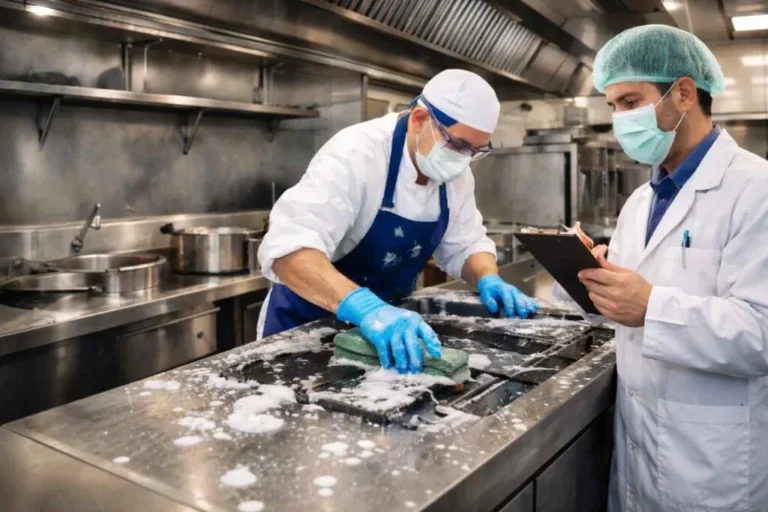
Let me tell you about the time I walked into a high-end Nashville restaurant during a surprise health inspection. The chef, a guy I’d shared beers with at industry events, was sweating bullets as inspectors swabbed his prep station. Turns out, his “quick rinse” policy for cutting boards was about to cost him a violation that would make Yelp headlines. I stood there thinking: *This could happen to anyone.* And it does. Every. Single. Day.
Commercial kitchen hygiene isn’t just about avoiding fines or bad reviews, though those are very real consequences. It’s about protecting your customers, your team, and the reputation you’ve bled for. But here’s the thing: most guides treat sanitation like a checklist. *Do this. Don’t do that.* As if food safety were some robotic process. It’s not. It’s a living, breathing system that requires constant vigilance, a little paranoia, and, let’s be honest, a healthy dose of skepticism about human nature.
In this guide, I’m going to walk you through the essential principles of commercial kitchen hygiene and sanitation-not just the rules, but the *why* behind them. We’ll cover everything from the invisible enemies lurking on your equipment to the psychological tricks that keep your staff from cutting corners. By the end, you’ll have a framework that’s equal parts science, strategy, and survival instinct. Ready? Let’s dive in.
The Invisible War: Understanding the Real Threats in Your Kitchen
Pathogens Aren’t Just in Raw Chicken
We all know about Salmonella and E. coli, but the real villains in commercial kitchens are often the ones you can’t see, or smell. Take Listeria monocytogenes, for example. This bacteria thrives in cold, wet environments like your walk-in fridge or that neglected mop bucket in the corner. Unlike other pathogens, it can grow at refrigerator temperatures, making it a silent saboteur in ready-to-eat foods like deli meats or pre-cut veggies. And here’s the kicker: it’s deadly for pregnant women, the elderly, and immunocompromised folks. One slip-up, and you’re not just facing a recall, you’re facing a lawsuit.
Then there’s Norovirus, the cruise-ship nightmare that’s actually far more common in restaurants. It spreads like wildfire through contaminated surfaces, and it only takes a few viral particles to turn your dinner rush into a public health disaster. The worst part? It’s notoriously hard to kill. Standard sanitizers often don’t cut it, which is why proper handwashing (yes, *proper*-more on that later) is your first line of defense.
But here’s where it gets tricky: not all contamination is microbial. Chemical residues from cleaners, allergens like peanuts or shellfish, and even physical hazards (think: broken glass or metal shavings) can turn your kitchen into a minefield. I once worked with a chef who nearly lost his business after a customer found a bandage in their salad. Turns out, an employee had cut themselves, covered it with a glove, and kept working. *No one noticed until it was too late.*
The Temperature Danger Zone: Your Kitchen’s Achilles’ Heel
You’ve heard of the temperature danger zone (41°F to 135°F), but do you *really* understand it? This isn’t just some arbitrary range, it’s the Goldilocks zone for bacterial growth. At these temperatures, pathogens can double in as little as 20 minutes. That means a batch of chicken salad left on the counter for an hour isn’t just risky; it’s a ticking time bomb.
But here’s the thing most guides don’t tell you: the danger zone isn’t just about food sitting out. It’s also about how you *move* food through your kitchen. For example, if you’re thawing frozen meat in a sink of warm water, you’re essentially creating a bacteria spa. Or if you’re holding soups or sauces at 130°F because your steam table’s thermostat is broken, you’re playing Russian roulette with your customers’ health.
And let’s talk about cooling food properly. This is where even experienced chefs mess up. The FDA recommends cooling hot food from 135°F to 70°F within two hours, and then from 70°F to 41°F within four more hours. But how many kitchens actually do this? I’ve seen restaurants use shallow pans (good) but then stack them in the walk-in (bad), or use ice baths (great) but not stir the food (also bad). It’s not enough to *know* the rules, you have to *enforce* them, every single day.
Equipment Matters: Choosing Tools That Don’t Sabotage Your Sanitation
Why Your Knives Might Be Making You Sick
Let’s start with the basics: your cutting boards. Wood or plastic? The debate rages on, but here’s the truth: it’s not about the material, it’s about how you use and clean it. Wood has natural antimicrobial properties, but it’s porous, which means it can harbor bacteria in deep cuts and grooves. Plastic, on the other hand, is non-porous but can develop knife scars that become breeding grounds for pathogens. The solution? Use color-coded boards (red for raw meat, green for veggies, etc.) and replace them *before* they look like a battlefield.
And while we’re on the topic of knives: a dull knife is a dangerous knife. Not just because it’s more likely to slip and cut someone, but because it crushes food instead of slicing it cleanly. That crushed tissue? It’s a magnet for bacteria. I’ve seen kitchens where the knife sharpener is treated like a sacred relic, and others where it’s collecting dust in a corner. Guess which ones have fewer foodborne illness incidents?
But here’s a question I don’t hear enough: *How often do you sanitize your knife handles?* Think about it. Your hands are all over them, and if you’re switching between raw chicken and herbs without washing (or changing gloves), you’re cross-contaminating everything. A quick wipe with a sanitizer cloth between tasks isn’t enough, you need to fully submerge them in sanitizer or run them through a high-temp dishwasher.
The Hidden Dangers in Your Commercial Equipment
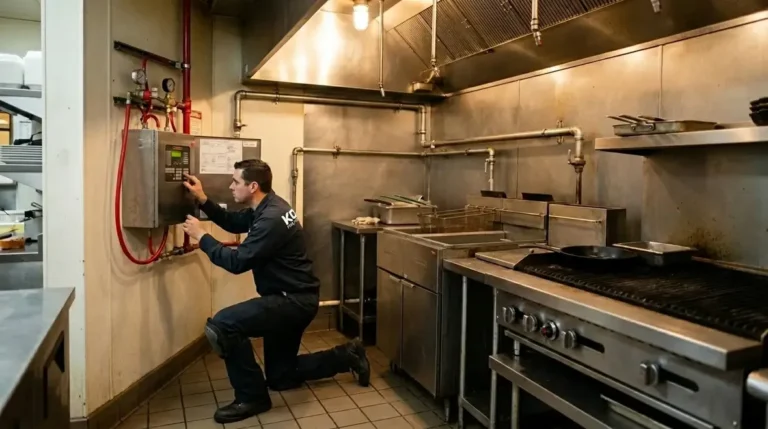
Now, let’s talk about the big-ticket items. Your commercial refrigeration is only as good as its weakest link. That means checking door seals, monitoring temperatures *daily* (not just when the health inspector is coming), and, this is crucial-not overloading it. A fridge packed to the gills can’t circulate air properly, which means some areas might be in the danger zone even if the thermometer says otherwise.
Then there’s your commercial dishwasher. If you’re not using the right detergent or sanitizer, or if the water temperature isn’t hot enough, you’re essentially giving your dishes a *bath* instead of a *sterilization*. And don’t even get me started on the drain plugs. I’ve seen kitchens where the dishwasher’s drain is clogged with food debris, turning it into a Petri dish. Clean it. Every. Day.
But here’s where things get interesting: **some of the most advanced equipment can actually *increase* your risk if you’re not careful**. Take sous vide machines, for example. They’re amazing for precision cooking, but if you’re not pasteurizing your food properly or storing it at the right temps, you’re creating a low-oxygen environment where Clostridium botulinum (the bacteria that causes botulism) can thrive. Or consider blast chillers, great for cooling food quickly, but if you’re not monitoring the process, you could end up with partially frozen food that’s still in the danger zone.
This is where suppliers like Chef’s Deal come in handy. They don’t just sell equipment; they offer free kitchen design services to help you layout your space in a way that minimizes cross-contamination and maximizes efficiency. For example, their team might recommend placing your handwashing station *before* the prep area to ensure staff can’t skip it, or designing a workflow that keeps raw proteins separate from ready-to-eat foods. It’s these kinds of details that can make or break your sanitation efforts.
The Human Factor: Why Your Staff Is Your Biggest Risk (and Greatest Asset)
The Psychology of Cutting Corners
Let’s be real: no one wakes up thinking, “Today, I’m going to poison someone.” But people *do* cut corners. They skip handwashing because the sink is too far away. They reuse gloves because they’re in a rush. They taste food with the same spoon they’re stirring with. Why? Because humans are wired to take the path of least resistance.
Here’s the thing: you can’t just tell your staff to “be careful.” You have to design your kitchen in a way that makes *not* cutting corners the easiest option. For example:
- Handwashing stations should be *everywhere*-not just in the bathroom. Place them near prep areas, by the dish pit, and at every entrance to the kitchen. And make sure they’re stocked with soap, paper towels, and hand sanitizer at all times.
- Color-coded tools (like cutting boards, knives, and even towels) reduce the chance of cross-contamination. If the red board is *only* for raw meat, there’s no excuse for using it for veggies.
- Gloves should be single-use. I’ve seen chefs wear the same pair of gloves for hours, touching raw chicken, then the phone, then the salad bar. That’s not protection, that’s a mobile contamination unit.
But here’s the kicker: even the best systems fail if your staff doesn’t buy in. That’s why training isn’t just a one-and-done thing. It’s an ongoing process that involves:
- Regular refreshers (not just when someone new starts).
- Real-world scenarios (e.g., “What would you do if you saw a coworker not washing their hands after handling raw meat?”).
- Positive reinforcement (catch people doing things right and praise them for it).
And let’s not forget the power of peer pressure. If your head chef is the one enforcing hygiene standards, it’s a lot harder for staff to push back. But if the culture is “we all look out for each other,” you’ll see a lot more compliance.
The Handwashing Paradox: Why We Still Get It Wrong
You’d think handwashing would be the easiest part of kitchen hygiene. It’s not. In fact, studies show that even in hospitals, where lives literally depend on it, handwashing compliance is often below 50%. So what hope do we have in a fast-paced kitchen?
Here’s the problem: most people don’t wash their hands correctly. They do a quick rinse, maybe add some soap, and call it a day. But proper handwashing requires:
- Wet hands with clean, running water (warm or cold, temperature doesn’t matter as much as you’d think).
- Apply soap and lather *everywhere*-backs of hands, between fingers, under nails, and up to the wrists. This should take at least 20 seconds (or the time it takes to hum “Happy Birthday” twice).
- Scrub for at least 20 seconds. This is where most people fail. They do a quick once-over and move on.
- Rinse thoroughly under clean, running water.
- Dry with a clean towel or air dryer. Wet hands spread bacteria more easily.
But here’s the thing: even if your staff knows how to wash their hands, they won’t do it if it’s inconvenient. That’s why you need to:
- Place handwashing stations *within 25 feet* of every work area (that’s the FDA’s recommendation, and it’s a good one).
- Use touchless faucets and soap dispensers to reduce cross-contamination.
- Post reminders and diagrams above every sink. Yes, even if your staff “knows” how to do it.
- Make handwashing a *non-negotiable* part of your kitchen culture. If someone skips it, they’re sent back to do it right, no exceptions.
And let’s talk about gloves. They’re not a substitute for handwashing. In fact, they can give people a false sense of security. I’ve seen chefs wear the same pair of gloves for hours, touching raw meat, then the phone, then the salad bar. That’s not protection, that’s a mobile contamination unit. Gloves should be changed:
- After handling raw meat, seafood, or poultry.
- After touching your face, hair, or phone.
- After handling money or taking out the trash.
- After sneezing, coughing, or using the restroom (yes, some people need to be told this).
- Every *four hours* during continuous use.
The Cleaning Illusion: Why Your Kitchen Might Look Clean But Isn’t
The Difference Between Cleaning, Sanitizing, and Disinfecting
Here’s a hard truth: a kitchen that looks clean can still be a biohazard. That’s because cleaning, sanitizing, and disinfecting are three different things, and most kitchens only do the first one well.
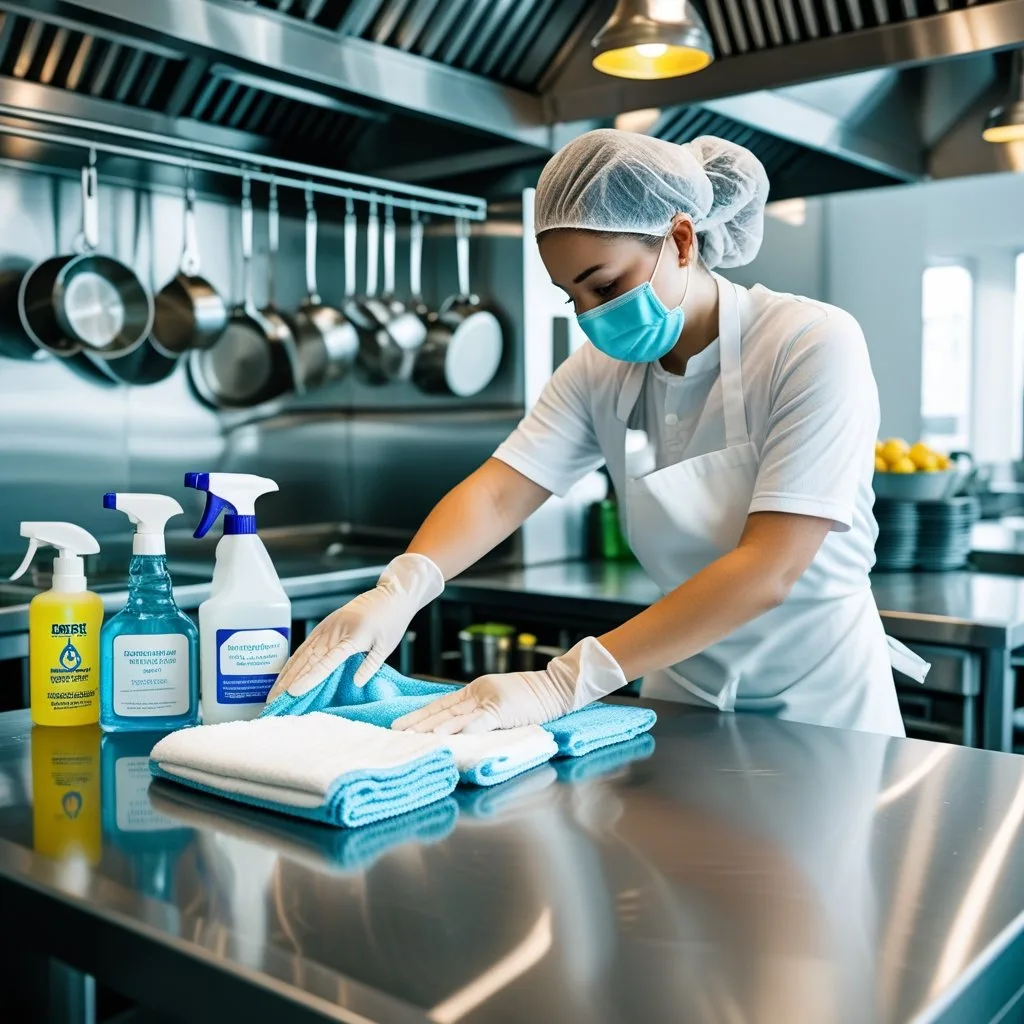
- Cleaning removes visible dirt, grease, and food debris. This is what you do when you wipe down a counter or scrub a pot. It’s essential, but it’s not enough.
- Sanitizing reduces the number of pathogens to a safe level. This is what you do with a chemical sanitizer (like quat or chlorine) or heat (like a high-temp dishwasher).
- Disinfecting kills *all* pathogens (or as close to all as possible). This is what you do in healthcare settings or after a known contamination event.
Most commercial kitchens focus on cleaning and *maybe* sanitizing, but they rarely disinfect. And that’s a problem, because sanitizers don’t kill everything. For example, Norovirus is notoriously resistant to standard sanitizers. That’s why you need to:
- Clean surfaces thoroughly to remove organic matter (food debris, grease, etc.). Sanitizers and disinfectants don’t work well if there’s dirt in the way.
- Use the right sanitizer for the job. Chlorine (bleach) is great for most surfaces, but it can be corrosive. Quaternary ammonium compounds (quats) are gentler but less effective against some viruses. Make sure you’re using the right concentration (too weak, and it won’t work; too strong, and it’s a hazard).
- Follow the contact time. Most sanitizers need to stay wet on a surface for at least 30 seconds to a minute to be effective. If you wipe it off too soon, you’re just spreading germs around.
- Rinse if necessary. Some sanitizers (like chlorine) can leave residues that affect food taste or safety. Check the label.
But here’s where it gets tricky: not all surfaces need the same level of cleaning. For example:
- Food contact surfaces (cutting boards, knives, prep tables) need to be cleaned *and* sanitized after every use.
- Non-food contact surfaces (floors, walls, equipment exteriors) need to be cleaned regularly, but they don’t always need to be sanitized.
- High-touch surfaces (door handles, light switches, faucets) should be cleaned and sanitized frequently, especially during cold and flu season.
The Forgotten Hotspots: Where Pathogens Hide in Plain Sight
You know to clean the obvious places, countertops, cutting boards, knives, but what about the spots you’re *not* thinking about? Here are some of the most common (and most dangerous) overlooked areas:
- Can openers: The blades and gears can harbor food debris and bacteria. Clean and sanitize them after every use.
- Ice machines: Yes, even ice can be contaminated. Clean and sanitize the interior and scoops regularly.
- Spice containers: If you’re seasoning raw meat and then grabbing the salt shaker, you’re cross-contaminating. Use squeeze bottles or single-use packets instead.
- Refrigerator coils: Dust and grease buildup can cause your fridge to work harder, leading to temperature fluctuations. Clean them at least twice a year.
- Drain plugs and grease traps: These are basically bacterial buffets. Clean them *daily* (yes, daily) to prevent clogs and odors.
- Sinks: Ironically, the place where you clean things can be one of the dirtiest spots in your kitchen. Scrub and sanitize them *after every use*.
- Towels and rags: A damp towel is a breeding ground for bacteria. Use disposable towels for cleaning, or launder reusable ones in hot water with bleach.
- Knife blocks: If you’re storing knives in a wooden block, you’re basically giving bacteria a cozy home. Clean the block regularly, or switch to a magnetic strip.
And let’s talk about floors. I’ve seen kitchens where the floors are mopped daily, but the mop water is reused for *weeks*. That’s not cleaning, that’s spreading dirt around. Here’s how to do it right:
- Sweep or vacuum the floor to remove debris.
- Use a degreaser to break down grease and grime.
- Mop with clean water and a disinfectant (not just soap).
- Rinse with clean water if necessary.
- Let the floor air-dry. Don’t walk on it until it’s dry.
- Clean and sanitize your mop and bucket *after every use*.
The Paper Trail: Why Documentation Is Your Best Defense
Logbooks Aren’t Just for Health Inspectors
I get it. No one *likes* paperwork. But in a commercial kitchen, documentation isn’t just busywork, it’s your safety net. Logbooks prove that you’re following proper procedures, and they can save your bacon (pun intended) if something goes wrong.
Here are the key logs you should be keeping:
- Temperature logs: Record the temperatures of your refrigerators, freezers, and hot-holding units *at least twice a day*. This isn’t just for the health inspector, it’s how you catch problems before they become disasters. For example, if your walk-in fridge starts creeping up to 45°F, you can fix it before your entire inventory spoils.
- Cooling logs: When you’re cooling hot food, record the time and temperature at regular intervals to ensure it’s cooling quickly enough. This is especially important for large batches of soups, sauces, or stocks.
- Sanitizer concentration logs: Test your sanitizer solution *daily* to make sure it’s at the right strength. Too weak, and it won’t kill pathogens. Too strong, and it’s a hazard.
- Cleaning schedules: Document when and how you clean each area of your kitchen. This isn’t just for compliance, it’s how you ensure nothing gets overlooked.
- Employee training records: Keep track of who’s been trained on what, and when. This is crucial for both compliance and accountability.
But here’s the thing: logs are only useful if they’re accurate. I’ve seen kitchens where the temperature logs are filled out in perfect, uniform handwriting-*before the shift even starts*. That’s not documentation; that’s fiction. If you’re going to do this, do it right. Use digital tools if you have to (there are plenty of apps that make logging easier), but don’t fake it.
How to Survive a Health Inspection (Without Losing Your Mind)
Let’s be honest: health inspections are stressful. But they don’t have to be. If you’re following proper procedures *every day*, an inspection should be a breeze. Here’s how to prepare:
- Know the rules: Every state and county has its own health codes, but most are based on the FDA’s Food Code. Familiarize yourself with the key points, like:
- Proper holding temperatures (hot food at 135°F or above, cold food at 41°F or below).
- Minimum cooking temperatures for different foods (e.g., poultry at 165°F, ground meats at 155°F).
- Handwashing and glove use requirements.
- Cleaning and sanitizing procedures.
- Food stored at improper temperatures.
- Cross-contamination risks (e.g., raw meat stored above ready-to-eat foods).
- Dirty or damaged equipment.
- Missing or outdated logs.
- Pest activity (droppings, gnaw marks, etc.).
- Answer questions honestly (but not volunteer extra information).
- Show inspectors where things are (e.g., logs, thermometers, sanitizer test strips).
- Not argue with the inspector. If there’s a disagreement, take it up with the health department *after* the inspection.
- Fixing problems *immediately* (e.g., a broken fridge, a leaky faucet).
- Keeping your kitchen clean and organized *at all times*.
- Having all your logs and documentation up to date and easily accessible.
And here’s a pro tip: build a relationship with your inspector. They’re not the enemy, they’re there to help you keep your customers safe. If you’re cooperative and transparent, they’re more likely to work with you if something goes wrong.
The Future of Kitchen Hygiene: Tech, Trends, and What’s Next
How Smart Tech Is Changing the Game
We’re living in the future, folks. And that future includes smart kitchen tech that can help you stay on top of hygiene like never before. Here are some of the most exciting developments:
- IoT-enabled temperature monitoring: Sensors in your refrigerators, freezers, and hot-holding units can alert you *in real time* if temperatures drift into the danger zone. Some systems even send alerts to your phone, so you can fix problems before they become disasters.
- Automated handwashing stations: These stations use sensors to ensure employees wash their hands for the full 20 seconds, with the right amount of soap and water. Some even track compliance and send reports to management.
- UV sanitizing lights: These lights use ultraviolet radiation to kill pathogens on surfaces, equipment, and even the air. They’re not a substitute for cleaning, but they can add an extra layer of protection.
- AI-powered food safety audits: Some companies are using AI to analyze photos of your kitchen and identify potential hygiene risks. For example, an AI might flag a cutting board that looks too worn or a prep area that’s too cluttered.
- Blockchain for supply chain transparency: This might sound like overkill, but blockchain can help you track the origin of your ingredients, ensuring they’re safe and properly handled from farm to table.
But here’s the thing: tech is only as good as the people using it. A fancy temperature monitoring system won’t help if your staff ignores the alerts. An automated handwashing station won’t make a difference if no one uses it. That’s why training and culture are still the most important parts of kitchen hygiene.
Sustainability vs. Sanitation: Can You Have Both?
Here’s a question I hear a lot: *Can I be sustainable and still maintain proper hygiene?* The short answer: yes, but it’s not always easy. The long answer: it depends on what you’re willing to compromise on.
For example, single-use plastics (like gloves, cutlery, and packaging) are a hygiene dream but an environmental nightmare. On the other hand, reusable containers and utensils are great for the planet but require *meticulous* cleaning and sanitizing to be safe. So how do you balance the two?
- Choose reusable items wisely: Opt for materials that are easy to clean and sanitize, like stainless steel or food-grade silicone. Avoid porous materials like wood or bamboo, which can harbor bacteria.
- Invest in high-quality cleaning equipment: A commercial dishwasher with a high-temperature sanitizing cycle can make reusable items safer and more practical. Suppliers like Chef’s Deal offer a range of options, from undercounter models to large conveyor systems, along with professional installation services to ensure they’re set up correctly.
- Use compostable or biodegradable alternatives: If you must use single-use items, opt for compostable or biodegradable options. Just make sure they’re certified for food contact and won’t break down into microplastics.
- Train your staff on sustainable hygiene: Teach them how to clean and sanitize reusable items properly, and how to minimize waste without cutting corners on safety.
And let’s talk about water usage. Commercial kitchens use a *lot* of water, but there are ways to reduce your footprint without compromising hygiene:
- Install low-flow faucets and pre-rinse spray valves to reduce water waste.
- Use water-efficient dishwashers that recycle water or use less per cycle.
- Switch to dry cleaning methods where possible, like scraping plates before washing or using microfiber cloths for cleaning.
- Collect and reuse graywater (water from sinks, dishwashers, etc.) for tasks like mopping or irrigation (where permitted by local codes).
But here’s the bottom line: sustainability should never come at the expense of safety. If a green practice puts your customers at risk, it’s not worth it. Always prioritize hygiene, and look for sustainable alternatives that don’t compromise safety.
Putting It All Together: Your Sanitation Survival Guide
Alright, let’s take a step back. We’ve covered a *lot* of ground here, from the invisible threats in your kitchen to the latest tech trends. But if you take nothing else away from this guide, remember these three things:
- Hygiene is a system, not a checklist. It’s not enough to know the rules, you have to build a culture where everyone follows them, every day.
- Your staff is your biggest risk *and* your greatest asset. Train them, empower them, and hold them accountable.
- Documentation is your safety net. If you’re not logging it, you’re not doing it.
So where do you go from here? Start with an audit of your kitchen. Walk through it with a critical eye, and ask yourself:
- Where are the weak spots in my hygiene practices?
- What’s one thing I can improve *today*?
- How can I make hygiene easier for my staff?
And remember: perfection is impossible, but progress is essential. You’re going to have days where the dishwasher breaks, or the health inspector shows up unannounced, or someone forgets to wash their hands. What matters is how you respond. Do you learn from the mistake and improve, or do you brush it off and hope it doesn’t happen again?
I’ll leave you with this: the best kitchens aren’t the ones with the fanciest equipment or the most Michelin stars. They’re the ones where the staff takes pride in their work, where hygiene is a habit, not a chore, and where every customer leaves happy, and healthy. That’s the kind of kitchen I want to eat in. How about you?
FAQ: Your Burning Questions About Commercial Kitchen Hygiene
Q: How often should I clean my commercial kitchen equipment?
A: It depends on the equipment, but here’s a general rule of thumb: food contact surfaces (like cutting boards, knives, and prep tables) should be cleaned and sanitized after every use. Non-food contact surfaces (like floors, walls, and equipment exteriors) should be cleaned daily, with deep cleaning scheduled weekly or monthly. High-touch surfaces (like door handles and light switches) should be cleaned and sanitized multiple times a day, especially during cold and flu season. And don’t forget about the *hidden* hotspots, like can openers, ice machines, and refrigerator coils. These should be cleaned and sanitized at least weekly.
Q: What’s the best sanitizer for a commercial kitchen?
A: The best sanitizer depends on your needs, but here are the most common options:
- Chlorine (bleach): Effective against a wide range of pathogens, including bacteria, viruses, and fungi. It’s also inexpensive and fast-acting. However, it can be corrosive to some surfaces and loses effectiveness over time, so you need to mix it fresh daily. The recommended concentration is 50-100 ppm (parts per million) for food contact surfaces.
- Quaternary ammonium compounds (quats): Gentler on surfaces and longer-lasting than chlorine, but less effective against some viruses (like Norovirus). Quats are often used in sanitizing wipes and sprays. The recommended concentration is 200-400 ppm.
- Iodine: Effective against bacteria and some viruses, but it can stain surfaces and isn’t as widely used in commercial kitchens. The recommended concentration is 12.5-25 ppm.
- Heat: High-temperature dishwashers (160°F or above) can sanitize dishes and utensils without chemicals. This is a great option for kitchens that want to minimize chemical use.
No matter which sanitizer you choose, make sure to:
- Follow the manufacturer’s instructions for mixing and use.
- Test the concentration *daily* with test strips to ensure it’s at the right strength.
- Allow the sanitizer to stay wet on the surface for the recommended contact time (usually 30 seconds to a minute).
Q: How can I get my staff to take hygiene seriously?
A: Getting your staff to buy into hygiene isn’t about nagging or threats, it’s about creating a culture where cleanliness is a habit, not a chore. Here are some strategies that work:
- Lead by example: If your head chef is the one enforcing hygiene standards, it’s a lot harder for staff to push back. Make sure *everyone*-from the owner to the dishwasher, follows the same rules.
- Make it easy: Place handwashing stations near every work area, use color-coded tools to prevent cross-contamination, and keep sanitizer test strips and logs within easy reach. The easier it is to do the right thing, the more likely people are to do it.
- Train, train, train: Don’t just show your staff how to wash their hands or clean a cutting board, explain *why* it matters. Use real-world examples (like foodborne illness outbreaks) to drive the point home. And make training an ongoing process, not a one-time event.
- Use positive reinforcement: Catch people doing things right and praise them for it. A little recognition can go a long way.
- Make it a team effort: Encourage your staff to hold each other accountable. If someone sees a coworker not washing their hands, they should feel comfortable speaking up.
- Gamify it: Turn hygiene into a competition. For example, you could track handwashing compliance and reward the team with the best record. Or you could do a “mystery shopper” style audit, where someone secretly observes hygiene practices and rewards the best performers.
And remember: **people are more likely to follow rules if they understand the *why* behind them**. Don’t just say, “Wash your hands.” Explain that handwashing is the single most effective way to prevent foodborne illness, and that skipping it puts their coworkers and customers at risk.
Q: What’s the most common hygiene mistake in commercial kitchens?
A: If I had to pick *one* mistake that I see over and over again, it’s improper cooling of hot foods. The FDA recommends cooling hot food from 135°F to 70°F within two hours, and then from 70°F to 41°F within four more hours. But how many kitchens actually do this? Not nearly enough.
Here’s why it’s such a big deal: when hot food is left to cool slowly, it spends too much time in the temperature danger zone (41°F to 135°F), where bacteria can multiply rapidly. A batch of soup that takes six hours to cool isn’t just risky, it’s a potential outbreak waiting to happen.
So how do you cool food properly? Here are some tips:
- Use shallow pans: Spread the food out in shallow, stainless steel pans (no deeper than 2-3 inches) to increase the surface area and speed up cooling.
- Stir frequently: Stirring helps distribute the heat and cool the food more evenly.
- Use an ice bath: Place the pan of hot food in a larger pan or sink filled with ice water. Stir the food frequently to speed up cooling.
- Use a blast chiller: If you have one, a blast chiller can cool food quickly and safely. Just make sure to monitor the process to ensure the food reaches the right temperature.
- Divide large batches: If you’re cooling a large pot of soup or sauce, divide it into smaller portions to speed up the process.
- Monitor the temperature: Use a food thermometer to check the temperature of the food at regular intervals. Record the times and temperatures in your cooling log.
And here’s a pro tip: don’t stack pans in the walk-in. Stacking traps heat and slows down cooling. Instead, leave space between pans to allow air to circulate.
Other common mistakes include:
- Cross-contamination: Using the same cutting board or knife for raw meat and ready-to-eat foods.
- Improper handwashing: Skipping steps or not washing for the full 20 seconds.
- Storing food improperly: Putting raw meat above ready-to-eat foods in the fridge, or not covering food properly.
- Ignoring the danger zone: Holding food at unsafe temperatures (e.g., soups at 130°F instead of 135°F or above).
- Not cleaning and sanitizing properly: Using dirty towels, reusing sanitizer water, or not allowing sanitizer to stay wet on surfaces for the recommended contact time.
The good news? These mistakes are *totally* preventable. With the right training, equipment, and culture, you can keep your kitchen safe and your customers healthy.
@article{the-essential-guide-to-commercial-kitchen-hygiene-and-sanitation-what-every-chef-should-know-but-might-be-too-afraid-to-ask,
    title   = {The Essential Guide to Commercial Kitchen Hygiene and Sanitation: What Every Chef Should Know (But Might Be Too Afraid to Ask)},
    author  = {Chef's icon},
    year    = {2026},
    journal = {Chef's Icon},
    url     = {https://chefsicon.com/essential-guide-to-commercial-kitchen-hygiene-and-sanitation/}
}