The Best Fluffy Pancakes recipe you will fall in love with. Full of tips and tricks to help you make the best pancakes.
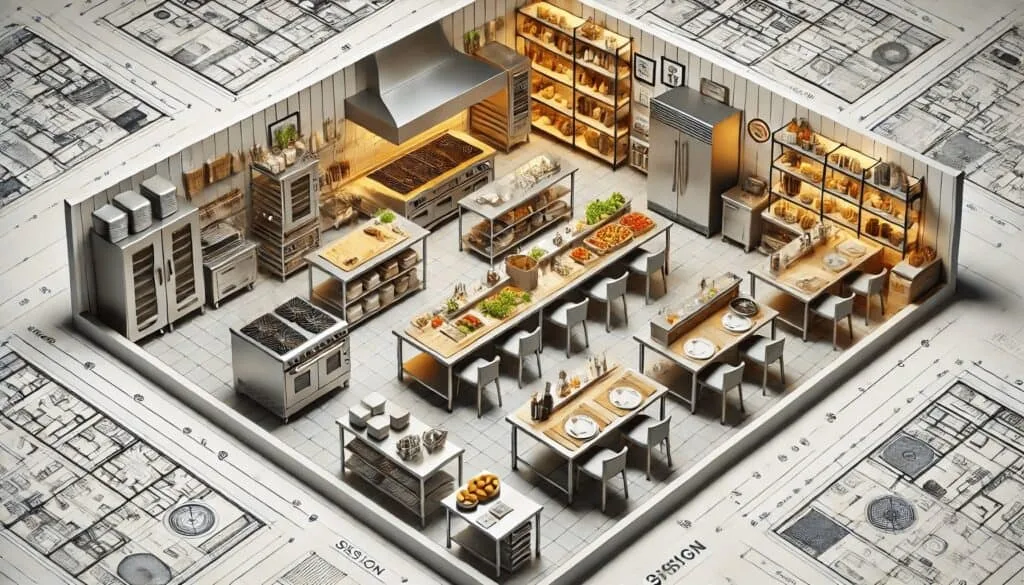
Let me tell you something, I’ve seen more restaurant kitchens than I can count. Some were so tight you’d think they were designed by a sadist with a tape measure. Others were so sprawling they felt like navigating a maze blindfolded. And then there were the ones that just… worked. The kind where chefs moved like dancers, ingredients flowed like water, and tickets cleared faster than a politician’s promises. What’s their secret? It’s not magic. It’s restaurant kitchen design that maximizes space and workflow without making you want to scream into a pot of boiling water.
I remember walking into a tiny bistro in Nashville a few years back. The owner, a friend of mine, was pulling his hair out. “Sammy,” he said, “I can either fit my prep station or my fryer, but not both. And if I move the walk-in, my line cooks will have to walk through the dining room to get to the bathroom.” I took one look at his layout and groaned. It was a classic case of “we’ll figure it out later” syndrome, except later had arrived, and the kitchen was a disaster. We spent the next three days rearranging, measuring, and cursing under our breath. But by the end? It was like watching a symphony. The space breathed. The workflow hummed. And my friend? He stopped threatening to quit.
So, what’s this article about? It’s not just about cramming more stuff into a small space or making your kitchen look like a spread in a design magazine. It’s about creating a kitchen that works for you, not against you. We’ll cover:
- Why workflow efficiency is the backbone of any great kitchen (and how to achieve it without a PhD in logistics).
- The golden rules of kitchen zoning-because throwing everything against the wall and seeing what sticks is a recipe for chaos.
- How to maximize vertical space (yes, even in that tiny hole-in-the-wall you’re convinced has no room for improvement).
- The equipment trade-offso one talks about, like whether that fancy combi oven is worth sacrificing counter space for.
- Real-world examples of kitchens that got it right (and a few that got it very, very wrong).
- And, of course, the psychology of kitchen design-because if your staff hates working in the space, it doesn’t matter how “efficient” it is.
Is this the be-all and end-all guide to kitchen design? Probably not. But it’s the guide I wish I’d had when I was staring at my friend’s kitchen, wondering if I should just start over or accept that some problems can’t be solved. Spoiler: They can. You just have to think like a chef, a designer, and a Tetris master all at once.
The Philosophy of Kitchen Design: Why Most Restaurants Get It Wrong
Before we dive into the nitty-gritty, let’s talk about philosophy. Yes, philosophy. Because restaurant kitchen design isn’t just about measurements and equipment, it’s about how people move, think, and feel in a space. And most restaurants screw this up before they even pick up a tape measure.
Here’s the thing: Most kitchen designs start with the wrong question. They ask, “How much stuff can we fit in here?” when they should be asking, “How do we make this space work for the people who use it every day?” It’s the difference between cramming your closet full of clothes you never wear and curating a wardrobe that makes getting dressed in the morning effortless. One approach leaves you frustrated and overwhelmed. The other makes your life easier.
I’ve seen kitchens where the prep station is on the opposite side of the kitchen from the cooking line. I’ve seen walk-ins that require a treasure map to navigate. I’ve seen dishwashing areas so cramped that staff have to do a little dance just to load a rack. And every single time, the problem isn’t the space, it’s the mindset. These kitchens were designed by people who saw the kitchen as a container for equipment rather than a tool for productivity.
So, what’s the right mindset? It’s this: A great kitchen design is invisible. When it’s working, you don’t notice it. The food comes out fast. The staff moves smoothly. The tickets clear. The only time you dootice the design is when it’s failing, when you’re bumping into each other, when you’re running out of counter space, when you’re cursing the person who put the reach-in fridge on the other side of the kitchen.
Is this starting to sound a little abstract? Maybe. But stick with me. Because once you understand the philosophy, the practical stuff, like where to put your sauté station or how to arrange your storage shelves-becomes a lot easier. And a lot more intuitive.
The Three Pillars of Kitchen Design (That No One Talks About)
Most articles about kitchen design will give you a list of rules: Keep your cooking line within 10 feet of your prep area. Make sure your handwashing stations are accessible. Blah blah blah. And yeah, those things matter. But they’re not the foundation. The foundation is built on three things that most people overlook:
- Flow: How people and ingredients move through the space.
- Flexibility: How easily the space can adapt to changes (new menu items, staffing shifts, equipment upgrades).
- Psychology: How the space makes people feel and behave.
Let’s break these down.
1. Flow: The Invisible Dance
Imagine you’re watching a ballet. The dancers move in perfect sync, never colliding, never hesitating. Now imagine that same ballet, but half the dancers are moving backward, and the other half are trying to do the tango. That’s what a bad kitchen flow looks like.
Good flow means that the most common movements in your kitchen, like grabbing ingredients from the walk-in, prepping them at the station, and firing them on the line, happen in a smooth, logical sequence. There are no bottlenecks. No unnecessary steps. No “excuse me, coming through!” moments. It’s not about making everything as close together as possible. It’s about making the right things close together.
For example, in a fast-casual restaurant, your grill station should be near your holding area and your assembly line. Why? Because those are the steps that happen in quick succession. In a fine-dining kitchen, your sauté station might need to be closer to the pass (where dishes are plated and sent out) than to the prep area, because the final touches happen there.
Is this making sense? Or am I overcomplicating it? Maybe a little. But here’s the thing: If you don’t think about flow before you start arranging equipment, you’ll end up with a kitchen that feels like it was designed by someone who’s never cooked a meal in their life. And trust me, you don’t want that.
2. Flexibility: Because Change Is the Only Constant
Your menu will change. Your staff will change. Your equipment will break (and need to be replaced). A kitchen that’s designed for one specific workflow is a kitchen that’s doomed to fail. That’s why flexibility is the second pillar of great design.
What does flexibility look like in practice? It means:
- Modular equipment: Things like mobile prep tables or adjustable shelving that can be moved or reconfigured as needed.
- Multi-functional spaces: A prep area that can double as a pastry station when needed, or a cooking line that can be rearranged for different menu items.
- Easy access to utilities: Plumbing, electrical outlets, and gas lines that are placed strategically so you can add or move equipment without tearing down walls.
I once worked with a restaurant that had a fixed island in the middle of their kitchen. It looked great in the blueprints. In reality? It was a nightmare. They couldn’t add a new station without completely gutting the kitchen. And when their deep fryer broke down, they had to shut down for three days because there was no room to install a temporary replacement. Don’t be that restaurant.
3. Psychology: Because People Are Not Robots
Here’s a hard truth: No matter how efficient your kitchen is on paper, it won’t work if your staff hates it. And trust me, they’ll hate it if it’s cramped, confusing, or just plain uncomfortable to work in.
Psychology in kitchen design is about more than just making the space “nice.” It’s about:
- Reducing stress: A well-lit, well-ventilated kitchen with clear sightlines is a happier kitchen. No one wants to work in a dungeon.
- Encouraging communication: Open layouts where staff can see and talk to each other reduce mistakes and improve teamwork.
- Minimizing physical strain: Counter heights that are ergonomic, storage shelves that are easy to reach, and flooring that reduces fatigue all make a difference in how your staff feels at the end of a long shift.
I’ve seen kitchens where the exhaust hood was so loud that staff had to shout to be heard. I’ve seen kitchens where the walk-in fridge was so far from the line that cooks had to sprint to grab ingredients. And I’ve seen kitchens where the dishwashing area was so isolated that no one wanted to work there. These aren’t just minor annoyances, they’re morale killers. And a kitchen with low morale is a kitchen with high turnover, more mistakes, and slower service.
So, before you start sketching out your dream kitchen, ask yourself: How will this make my staff feel? If the answer isn’t “happy, efficient, and ready to kick ass,” you might want to rethink your approach.
The Golden Rules of Kitchen Zoning (Or: How to Avoid Turning Your Kitchen Into a Maze)
Alright, let’s get practical. You’ve got your philosophy down. Now it’s time to talk about zoning-the art of dividing your kitchen into logical, functional areas. Think of it like organizing a closet: You wouldn’t put your socks next to your winter coats, right? (Unless you’re into that kind of thing.) The same logic applies to your kitchen.
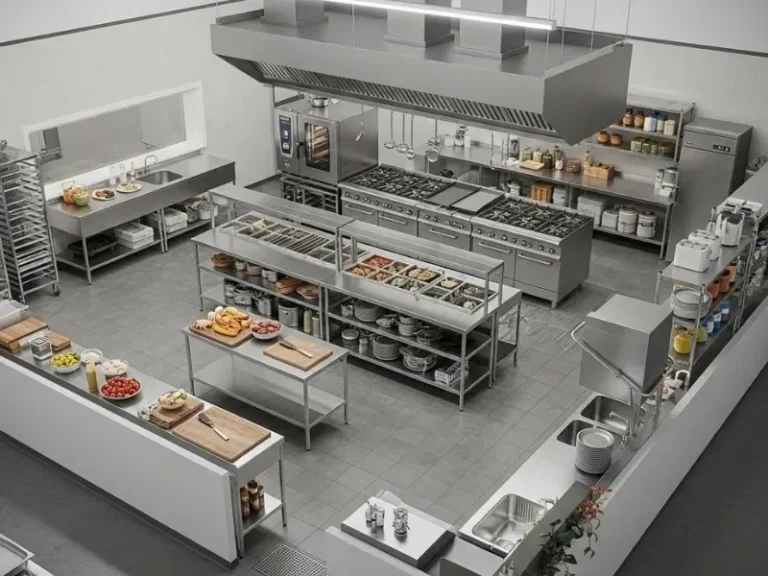
Most kitchens can be divided into five key zones. Some kitchens might have more (like a pastry section in a bakery or a sushi bar in a Japanese restaurant), but these five are the foundation. Let’s break them down.
1. The Receiving and Storage Zone
This is where it all begins. Your receiving area is where deliveries come in, and your storage zone is where you keep everything until it’s needed. Sounds simple, right? Wrong. This is one of the most overlooked, and most problematic, areas in many kitchens.
Here’s the thing: Your receiving area should be as close to your storage as possible. Why? Because no one wants to haul 50-pound bags of flour across the kitchen. And if your walk-in fridge is on the opposite side of the building from your dry storage, you’re wasting time (and energy) every time you need to restock.
But it’s not just about proximity. It’s also about organization. Your storage zone should be:
- Easy to access: No one should have to move a mountain of boxes to get to the canned tomatoes.
- Well-labeled: If your staff has to play “guess the ingredient,” you’re doing it wrong.
- Temperature-controlled: Dry storage should be cool and dry. Refrigerated storage should be, well, refrigerated. And if you’re storing frozen goods, make sure your freezer is up to the task.
- Scalable: Leave room for growth. If you’re planning to expand your menu, make sure you have space to store the new ingredients.
I once consulted for a restaurant where the owner had crammed the receiving area into a tiny alcove near the back door. Deliveries had to be unloaded in the alley, carried through the dining room, and then stored in a walk-in that was so packed you had to move things around just to open the door. It was a disaster. We moved the receiving area to a larger space near the loading dock and added rolling carts to make unloading easier. The result? Deliveries took half the time, and the staff stopped grumbling every time a truck pulled up.
2. The Prep Zone
This is where the magic happens, or at least, where it starts. Your prep zone is where ingredients are washed, chopped, portioned, and otherwise prepped for cooking. It’s the heart of your kitchen, and if it’s not designed well, the rest of your workflow will suffer.
Here’s what a great prep zone looks like:
- Close to storage: You don’t want your prep cooks running back and forth to grab ingredients. The closer your prep station is to your walk-in fridge and dry storage, the better.
- Plenty of counter space: Prep work requires room to spread out. If your counters are cluttered, your prep cooks will be too.
- Easy-to-clean surfaces: Stainless steel is your friend here. It’s durable, easy to sanitize, and won’t harbor bacteria.
- Good lighting: No one wants to chop onions in the dark. Make sure your prep area is well-lit, preferably with task lighting that’s easy on the eyes.
- Access to sinks: You’d be surprised how many kitchens forget this. Prep work requires a lot of washing, of hands, of produce, of utensils. Make sure your handwashing stations and prep sinks are nearby.
One of the biggest mistakes I see in prep zones? Overcrowding. It’s tempting to cram as many prep tables as possible into the space, but that just leads to chaos. Instead, think about how much prep work you actually do. If you’re a fast-casual restaurant with a limited menu, you might only need one or two prep stations. If you’re a fine-dining kitchen with a complex menu, you might need more. But don’t sacrifice space for the sake of having “enough” stations. Quality over quantity, always.
3. The Cooking Zone
This is where the real action happens. Your cooking zone is where ingredients are transformed into dishes, and it’s arguably the most important part of your kitchen. Get this wrong, and your entire operation will suffer.
The key to a great cooking zone? Organization and efficiency. Here’s how to nail it:
- The cooking line should be linear: Most kitchens arrange their cooking stations in a straight line, with the executive chef or expo (expediter) at one end. This makes it easy to pass dishes down the line and keep track of orders.
- Group similar stations together: Your grill station should be near your sauté station, which should be near your fry station. This reduces the amount of movement required to assemble a dish.
- Keep the pass nearby: The pass is where dishes are plated and sent out to the dining room. It should be at the end of the cooking line, so the expo can easily see what’s coming and make sure everything is perfect before it goes out.
- Leave room for plating: If your cooking line is too cramped, your staff won’t have space to plate dishes properly. Make sure there’s enough room for plating stations with all the necessary tools (tongs, spoons, garnishes, etc.).
- Ventilation is key: Cooking generates a lot of heat, smoke, and grease. Make sure your exhaust hood is powerful enough to handle the load, and that your ventilation system keeps the air clean and comfortable.
I’ve seen kitchens where the cooking line was arranged in a U-shape. Sounds efficient, right? Wrong. It created a bottleneck in the middle, and dishes kept getting stuck. We rearranged it into a straight line, and suddenly, the kitchen was humming. Sometimes, the simplest solution is the best one.
4. The Plating and Service Zone
This is where dishes are finalized, garnished, and sent out to the dining room. It’s the last stop before the food reaches the customer, and if it’s not designed well, all your hard work in the prep and cooking zones will go to waste.
Here’s what a great plating and service zone looks like:
- Close to the cooking line: The pass should be at the end of the cooking line, so dishes can be plated and sent out quickly.
- Plenty of space for garnishes and tools: You’ll need room for garnish trays, sauce bottles, tongs, spoons, and any other tools your staff uses to finish dishes.
- Clear sightlines: The expo should be able to see the entire cooking line, so they can keep track of orders and make sure everything is running smoothly.
- Easy access to the dining room: The service window or pickup area should be close to the pass, so servers can grab dishes quickly and get them to the table.
- Good lighting: This is where the final touches happen, so make sure your plating area is well-lit. Adjustable lighting is a plus, so you can tweak the brightness as needed.
One of the biggest mistakes I see in plating zones? Overcomplicating it. Some restaurants try to make their plating area a work of art, with custom garnish stations and plating tools that look like they belong in a museum. But if your staff can’t figure out how to use them, they’re useless. Keep it simple. Keep it functional. And for the love of all that is holy, make sure your expo has enough room to work.
5. The Cleaning and Dishwashing Zone
Last but not least, we have the cleaning and dishwashing zone. This is where dirty dishes go to be washed, sanitized, and put away. It’s not glamorous, but it’s essential. And if it’s not designed well, it can bring your entire operation to a grinding halt.
Here’s what a great cleaning and dishwashing zone looks like:
- Close to the dining room: Dirty dishes should come in from the dining room, get washed, and go back out without having to travel across the kitchen.
- Three-compartment sink: This is a must for washing, rinsing, and sanitizing dishes. Make sure it’s large enough to handle your volume.
- Dishwasher: A commercial dishwasher is a game-changer, but make sure it’s the right size for your needs. If you’re a small café, a under-counter dishwasher might be enough. If you’re a large restaurant, you might need a conveyor dishwasher.
- Drying and storage space: Once dishes are washed, they need to dry and be put away. Make sure you have enough drying racks and storage shelves to keep things organized.
- Trash and recycling bins: These should be easily accessible, but not in the way. No one wants to trip over a trash can while carrying a stack of dirty plates.
- Handwashing station: Dishwashers need to wash their hands too! Make sure there’s a handwashing sinkearby.
I’ve seen kitchens where the dishwashing area was so far from the dining room that servers had to walk through the entire kitchen to drop off dirty dishes. I’ve seen kitchens where the three-compartment sink was so small that dishes had to be washed in batches, creating a backlog. And I’ve seen kitchens where the dishwasher was so loud that no one wanted to work in the area. Don’t make these mistakes. Your dishwashing zone should be efficient, functional, and (relatively) pleasant to work in.
Maximizing Vertical Space: Because You’re Not Building a Bunker
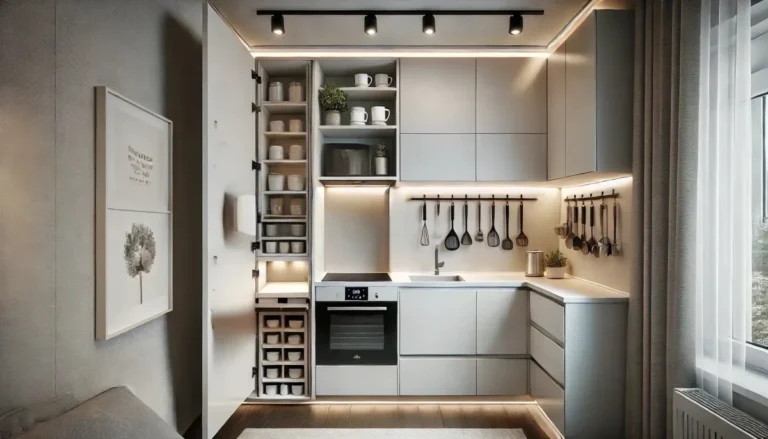
Let’s talk about vertical space. Most kitchens focus on the floor plan, where to put the cooking line, the prep station, the walk-in fridge. But they forget about the space above their heads. And that’s a mistake, because vertical space is your secret weapon for maximizing efficiency in a small kitchen.
Think about it: How much of your kitchen’s square footage is taken up by things that don’t need to be on the floor? Shelving, storage racks, ventilation ducts, lighting. If you’re not using your vertical space effectively, you’re wasting valuable real estate. And in a small kitchen, every inch counts.
1. Shelving: The Unsung Hero of Kitchen Design
Shelving is one of the easiest ways to maximize vertical space. But not all shelving is created equal. Here’s what to look for:
- Adjustable shelves: These allow you to customize the height of each shelf to fit your needs. Need more space for tall stock pots? Adjust the shelf. Need to store small spice jars? Adjust it again.
- Sturdy construction: Your shelves need to hold a lot of weight. Make sure they’re made of durable materials (like stainless steel) and can handle the load.
- Easy to clean: Shelves in a kitchen get dirty. Fast. Make sure they’re easy to wipe down and sanitize.
- Wall-mounted or freestanding: Wall-mounted shelves save floor space, but freestanding shelves can be moved around as needed. Choose the option that works best for your layout.
One of my favorite shelving hacks? Overhead shelving above the cooking line. This is a great place to store spices, oils, utensils, and other frequently used items. It keeps them within easy reach, but out of the way. Just make sure they’re not so high that your staff has to stretch to reach them. No one wants to play “the floor is lava” while cooking.
2. Storage Racks: Because You Can Never Have Too Much Storage
If you’re not using storage racks, you’re missing out. These are like shelving, but on steroids. They’re taller, sturdier, and designed to hold heavier items. Here’s how to use them:
- For dry storage: Use storage racks to hold canned goods, bags of flour, boxes of pasta, and other non-perishable items. This frees up your dry storage shelves for things that need to be more accessible.
- For equipment storage: Got a stand mixer you only use once a week? A food processor that’s gathering dust? Store them on a storage rack instead of taking up valuable counter space.
- For backup supplies: Extra takeout containers, apkins, to-go bags-these can all go on a storage rack until they’re needed.
I once worked with a restaurant that had a storage room so packed with supplies that you had to move things around just to open the door. We installed storage racks along the walls, and suddenly, the room was organized, accessible, and (most importantly) functional. It was like magic. But really, it was just good design.
3. Hanging Racks: Because the Floor Is Not Your Friend
Hanging racks are another great way to maximize vertical space. These are racks that hang from the ceiling or the wall, and they’re perfect for storing pots, pans, utensils, and other frequently used items. Here’s how to use them:
- Above the cooking line: Hang a pot rack above your stove or grill to keep your most-used pots and pans within easy reach.
- Above the prep station: Hang a utensil rack above your prep table to keep knives, spoons, and other tools close at hand.
- Above the dishwashing area: Hang a drying rack above your three-compartment sink to free up counter space.
One word of caution: Don’t overdo it. Hanging racks are great, but if you hang too many things from the ceiling, your kitchen will start to feel like a cave. And no one wants to work in a cave. Keep it functional, but keep it open.
4. Ventilation Ducts: Because You Can’t Cook Without Airflow
Ventilation is a critical part of any kitchen design, but it’s often an afterthought. And that’s a problem, because poor ventilation can make your kitchen hot, smoky, and uncomfortable to work in. But here’s the thing: Ventilation ducts take up a lot of space. And if you’re not careful, they can eat into your vertical real estate.
Here’s how to make the most of your ventilation system:
- Choose the right hood: Your exhaust hood should be the right size for your cooking equipment. Too small, and it won’t capture all the smoke and grease. Too large, and it’ll be a waste of space (and money).
- Optimize duct placement: Ventilation ducts should run as directly as possible from the hood to the outside. The more twists and turns they take, the less efficient they’ll be. And the more space they’ll take up.
- Consider a make-up air system: If your kitchen is tightly sealed, you might need a make-up air system to replace the air that’s being exhausted. This can help keep your kitchen comfortable and reduce the strain on your HVAC system.
I’ve seen kitchens where the ventilation ducts were so poorly designed that they created dead zones, areas where the airflow was so bad that smoke and heat built up. Don’t let that happen to you. Work with a HVAC professional to design a system that’s efficient, effective, and space-conscious.
5. Lighting: Because No One Wants to Cook in the Dark
Lighting is another often-overlooked aspect of kitchen design. But it’s crucial. Poor lighting can make it hard to see what you’re doing, which leads to mistakes, accidents, and frustration. And if your lighting is too harsh, it can create glare and make your kitchen feel like a prison.
Here’s how to get your lighting right:
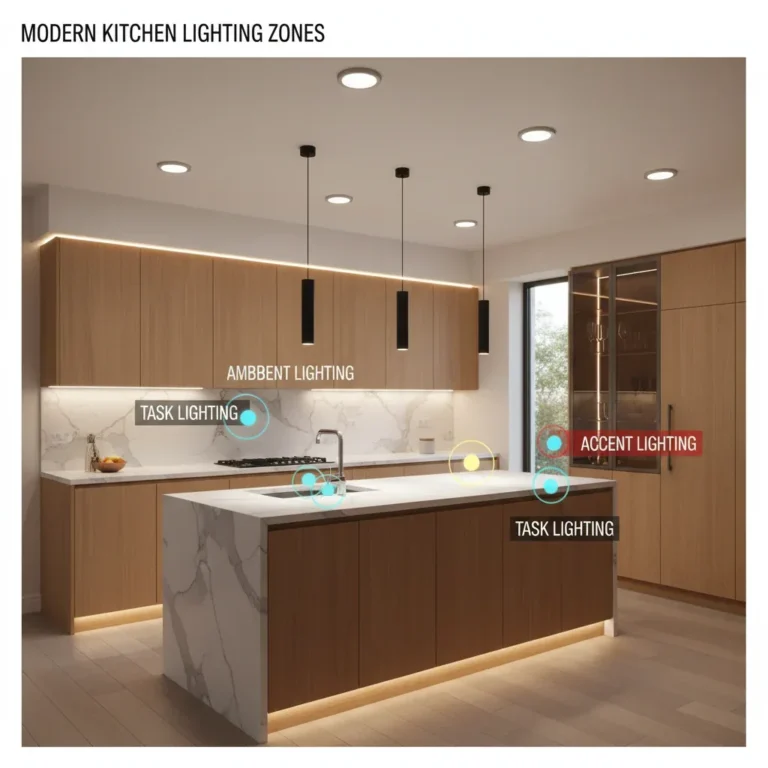
- Layer your lighting: Use a combination of ambient lighting (for general illumination), task lighting (for specific tasks, like prep work), and accent lighting (to highlight certain areas, like the pass).
- Choose the right color temperature: Lighting comes in different color temperatures, measured in Kelvin (K). For kitchens, you want something in the 3500K to 4500K range-warm enough to feel inviting, but cool enough to provide good visibility.
- Use LED lights: They’re energy-efficient, long-lasting, and come in a variety of color temperatures. Plus, they don’t generate as much heat as traditional bulbs, which is a bonus in a hot kitchen.
- Maximize natural light: If your kitchen has windows, use them! Natural light is the best light there is. Just make sure it’s not creating glare on your cooking surfaces.
I’ve seen kitchens where the lighting was so dim that staff had to use flashlights to read tickets. I’ve seen kitchens where the lighting was so harsh that it gave everyone a headache. Don’t make these mistakes. Your lighting should be functional, comfortable, and (dare I say it) a little bit beautiful.
The Equipment Trade-Offs No One Talks About
Let’s talk about equipment. Because here’s the thing: You can’t have it all. No matter how much space you have, no matter how much money you’re willing to spend, you’re going to have to make trade-offs. And that’s okay. The key is to make the right trade-offs, the ones that align with your menu, your volume, and your workflow.
I’ve seen kitchens where the owner splurged on a combi oven but skimped on the prep station. I’ve seen kitchens where the walk-in fridge was massive, but the cooking line was cramped. And I’ve seen kitchens where the dishwasher was top-of-the-line, but the ventilation system was a joke. These are all examples of bad trade-offs. So, how do you make the right ones?
1. Prioritize Your Menu
Your menu should dictate your equipment. Not the other way around. If you’re running a pizzeria, you need a pizza oven. If you’re running a sushi bar, you need a sushi case. If you’re running a fine-dining restaurant, you might need a sous vide machine or a plancha.
Here’s the thing: Every piece of equipment takes up space. And if you’re not using it regularly, it’s just taking up valuable real estate. So, before you buy that crepe maker or wok station, ask yourself: Do we really need this? If the answer is no, skip it. Your kitchen will thank you.
I once worked with a restaurant that had a menu with 50 items. Fifty! And their kitchen was the size of a postage stamp. They had every piece of equipment under the sun, but no room to actually use it. We streamlined their menu, got rid of the equipment they weren’t using, and suddenly, their kitchen was functional. It was a tough pill to swallow, but it was the right call.
2. Think About Volume
How many covers do you do in a night? If you’re a small café doing 50 covers, you don’t need the same equipment as a large restaurant doing 300. It’s that simple.
For example:
- Dishwashers: A small café might get away with an under-counter dishwasher. A large restaurant will need a conveyor dishwasher or even a flight-type dishwasher.
- Refrigeration: A small kitchen might only need a reach-in fridge. A large kitchen will need a walk-in fridge (or two).
- Cooking equipment: A small kitchen might only need one range and one oven. A large kitchen will need multiple ranges, ovens, grills, and fryers.
I’ve seen kitchens where the owner bought a conveyor dishwasher for a café that only did 30 covers a night. It was overkill. And it took up so much space that they had to sacrifice their prep area. Don’t make this mistake. Buy equipment that matches your volume.
3. Consider Multi-Functional Equipment
If you’re tight on space, multi-functional equipment is your friend. These are pieces of equipment that can do more than one thing, which saves you space (and money). Here are a few examples:
- Combi ovens: These can bake, steam, roast, and more. They’re a great way to save space if you need multiple cooking methods.
- Tilt skillets: These can be used as a griddle, a braising pan, or even a stock pot.
- Countertop mixers: These can mix, knead, and even grind meat. They’re a great alternative to a stand mixer if you’re short on space.
I once worked with a food truck that had a tilt skillet instead of a griddle and a braising pan. It was a game-changer. They could cook everything from burgers to soups to stir-fries in one piece of equipment. And it freed up so much space that they were able to add a fryer to their lineup.
4. Don’t Forget About Maintenance
Here’s a hard truth: Equipment breaks. And when it does, you need to be able to fix it (or replace it) quickly. That’s why maintenance access is so important. If your equipment is crammed into a tight space, it’ll be hard to repair. And if it’s hard to repair, you’ll be down for longer.
Here’s what to keep in mind:
- Leave space for repairs: Make sure there’s enough room around your equipment for technicians to access it. This might mean sacrificing a little bit of floor space, but it’s worth it.
- Choose equipment with easy-to-replace parts: Some equipment is designed to be serviced in place. Others require disassembly. Choose the former whenever possible.
- Consider a service contract: If you’re not comfortable maintaining your equipment yourself, consider a service contract with a local technician. It’ll cost you a little extra, but it’ll save you a lot of headaches in the long run.
I’ve seen kitchens where the walk-in fridge was so tightly packed that the compressor was impossible to access. I’ve seen kitchens where the exhaust hood was installed so close to the ceiling that it couldn’t be cleaned properly. Don’t make these mistakes. Leave room for maintenance.
5. Future-Proof Your Kitchen
Your kitchen isn’t static. It’s going to change. Your menu will evolve. Your volume will fluctuate. Your equipment will break (and need to be replaced). That’s why it’s important to future-proof your kitchen as much as possible.
Here’s how:
- Leave room for growth: If you’re planning to expand your menu or increase your volume, make sure your kitchen can handle it. This might mean leaving extra space for new equipment or designing your cooking line to be easily expandable.
- Choose modular equipment: Modular equipment can be reconfigured as your needs change. For example, a modular cooking line can be rearranged to accommodate new stations or equipment.
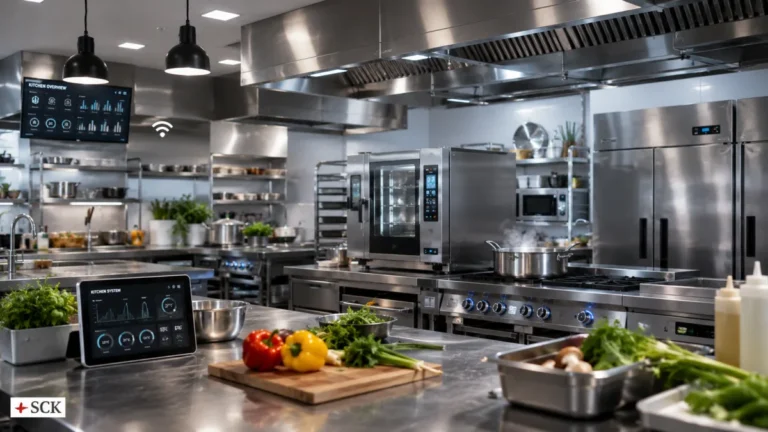
- Plan for technology: Technology is changing the way kitchens operate. From smart ovens to automated inventory systems, make sure your kitchen is ready for the future.
I once worked with a restaurant that had a fixed island in the middle of their kitchen. It looked great in the blueprints, but it was a nightmare when they wanted to add a new station. We had to gut the entire kitchen to make it work. Don’t be that restaurant. Plan for the future.
Real-World Examples: Kitchens That Got It Right (And a Few That Didn’t)
Alright, let’s get real. Theory is great, but nothing beats seeing these principles in action. So, let’s look at a few real-world examples of kitchens that nailed it, and a few that, well, didn’t.
1. The Tiny Bistro That Packed a Punch
This was a small bistro in Nashville, about 1,200 square feet total, with a kitchen that was maybe 400 square feet. The owner, my friend, was convinced it was impossible to make it work. But we did. Here’s how:
- Vertical space: We installed wall-mounted shelves above the cooking line to store spices, oils, and utensils. This freed up counter space and kept everything within easy reach.
- Multi-functional equipment: Instead of a griddle and a grill, we installed a plancha that could do both. We also added a combi oven that could bake, steam, and roast.
- Smart zoning: We arranged the kitchen in a U-shape, with the prep stationear the walk-in fridge, the cooking line in the middle, and the plating areaear the pass. This created a smooth workflow that minimized movement.
- Flexible storage: We used rolling carts for storage, so we could move things around as needed. This was especially helpful during peak hours, when we needed extra space for plating.
The result? A kitchen that was efficient, functional, and (dare I say it) beautiful. The owner was thrilled, the staff was happy, and the customers kept coming back. It was a win-win-win.
2. The Fast-Casual Chain That Lost Its Way
This was a fast-casual chain with a kitchen design that was supposed to be scalable and efficient. In theory, it was. In practice? It was a disaster. Here’s why:
- Overcomplicated workflow: The kitchen was designed with a circular workflow, where dishes moved in a loop from prep to cooking to plating. Sounds efficient, right? Wrong. It created bottlenecks at every turn, and dishes kept getting stuck.
- Poor equipment placement: The fryer was on the opposite side of the kitchen from the holding area, so staff had to walk across the kitchen to grab fries. The grill was next to the walk-in fridge, which made it hard to keep the fridge door open without blocking the grill.
- No flexibility: The kitchen was designed for a specific menu, and when the chain wanted to add new items, there was no room to accommodate them. They had to either cram in new equipment or sacrifice existing stations.
- Terrible ventilation: The exhaust hood was undersized, so the kitchen was always hot and smoky. Staff hated working there, and turnover was high.
The result? A kitchen that was slow, inefficient, and miserable to work in. The chain eventually had to redesign their entire kitchen layout, which cost them a fortune. Don’t be that chain.
3. The Fine-Dining Kitchen That Was a Work of Art
This was a fine-dining restaurant in San Francisco, and their kitchen was a masterpiece. Here’s what they got right:
- Perfect zoning: The kitchen was divided into clear zones-prep, cooking, plating, dishwashing-with plenty of space between them. This created a smooth workflow that minimized movement and confusion.
- Ergonomic design: The counter heights were adjustable, the flooring was anti-fatigue, and the lighting was warm and inviting. Staff loved working there, and turnover was low.
- High-end equipment: They invested in top-of-the-line equipment, like a sous vide machine, a plancha, and a combi oven. This allowed them to execute their complex menu with precision.
- Future-proofing: The kitchen was designed with modular stations, so they could easily add or remove equipment as needed. They also left extra space for new stations, just in case.
The result? A kitchen that was efficient, beautiful, and a joy to work in. The restaurant was a hit, and it’s still going strong today. It’s proof that when you get the design right, everything else falls into place.
Putting It All Together: Your Step-by-Step Guide to a Better Kitchen
Alright, let’s bring this all home. You’ve got the philosophy. You’ve got the principles. You’ve seen the examples. Now it’s time to put it all together. Here’s your step-by-step guide to designing a kitchen that maximizes space and workflow.
Step 1: Assess Your Needs
Before you start rearranging or buying equipment, you need to assess your needs. Ask yourself:
- What’s your menu? What equipment do you need to execute it?
- What’s your volume? How many covers do you do in a night?
- What’s your space? How much square footage do you have to work with?
- What’s your budget? How much can you spend on equipment and design?
- What’s your workflow? How do dishes move through your kitchen?
Write down your answers. This will be your roadmap as you design your kitchen.
Step 2: Sketch Your Layout
Now it’s time to sketch your layout. You don’t need to be an artist, just grab a piece of paper and a pencil and start drawing. Here’s what to include:
- Your zones: Prep, cooking, plating, dishwashing, storage.
- Your equipment: Ranges, ovens, fryers, grills, etc.
- Your workflow: How dishes move through the kitchen.
- Your storage: Shelves, racks, walk-ins, etc.
Don’t worry about making it perfect. This is just a starting point. You’ll refine it as you go.
Step 3: Optimize Your Workflow
Now it’s time to optimize your workflow. Look at your sketch and ask yourself:
- Are your most common movements (like grabbing ingredients from the walk-in and prepping them at the station) happening in a smooth, logical sequence?
- Are there any bottlenecks? Places where dishes or staff get stuck?
- Are there any unnecessary steps? Movements that could be eliminated with a better layout?
If you see any problems, adjust your sketch. Move equipment around. Change the flow. Keep tweaking until it feels right.
Step 4: Maximize Your Space
Now it’s time to maximize your space. Look at your sketch and ask yourself:
- Are you using your vertical space effectively? Could you add shelves, racks, or hanging storage?
- Are there any dead zones? Areas that aren’t being used?
- Are there any wasted spaces? Like empty corners or awkward alcoves?
If you see any opportunities to maximize space, adjust your sketch. Add shelves. Install racks. Hang pots and pans from the ceiling. Get creative.
Step 5: Choose Your Equipment
Now it’s time to choose your equipment. Look at your sketch and ask yourself:
- What equipment do you eed? What’s essential for your menu?
- What equipment do you want? What would make your life easier?
- What equipment can you live without? What’s taking up space but not being used?
Make a list of the equipment you need, the equipment you want, and the equipment you can live without. Then, prioritize your list. Start with the essentials, and add the nice-to-haves if you have the space and budget.
Step 6: Future-Proof Your Kitchen
Now it’s time to future-proof your kitchen. Look at your sketch and ask yourself:
- Is your kitchen flexible? Can it adapt to changes in your menu, volume, or equipment?
- Is your kitchen scalable? Can it grow with your business?
- Is your kitchen technology-ready? Can it accommodate new equipment or systems?
If the answer to any of these questions is no, adjust your sketch. Add modular stations. Leave extra space. Plan for the future.
Step 7: Test Your Design
Now it’s time to test your design. This is where the rubber meets the road. Here’s how to do it:
- Walk through it: Physically walk through your kitchen, following the workflow you’ve designed. Does it feel smooth? Are there any bottlenecks?
- Simulate service: Have your staff act out a busy service, using your new layout. Does it work? Are there any problems?
- Get feedback: Ask your staff for their input. Do they like the new layout? Do they have any suggestions?
If you find any problems, adjust your sketch. Keep testing until it feels right.
Step 8: Implement Your Design
Now it’s time to implement your design. This is where the real work begins. Here’s what to do:
- Order your equipment: Buy the equipment you need, and get rid of the equipment you don’t.
- Rearrange your kitchen: Move your equipment around, following your new layout.
- Install your storage: Add shelves, racks, and hanging storage to maximize your space.
- Train your staff: Teach your staff how to use the new layout. Make sure they understand the workflow and the reasoning behind it.
This is the hardest part, but it’s also the most rewarding. When you see your new kitchen in action, all your hard work will pay off.
The Psychology of Kitchen Design: Because Happy Staff = Happy Customers
We’ve talked a lot about efficiency and workflow, but let’s not forget the most important part of any kitchen: the people who work in it. Because here’s the thing: If your staff hates your kitchen, your customers will too. And no amount of clever design can fix that.
So, let’s talk about the psychology of kitchen design. How do you create a space that your staff loves to work in? How do you reduce stress, improve morale, and keep turnover low? Here are a few tips.
1. Make It Comfortable
No one wants to work in a kitchen that’s hot, cramped, or uncomfortable. So, make it comfortable. Here’s how:
- Temperature control: Make sure your kitchen is well-ventilated and has a good HVAC system. No one wants to work in a sauna.
- Ergonomic design: Use anti-fatigue flooring, adjustable counter heights, and ergonomic tools to reduce physical strain.
- Good lighting: Make sure your kitchen is well-lit, with a mix of ambient lighting and task lighting. No one wants to work in the dark.
I’ve seen kitchens where the exhaust hood was so loud that staff had to shout to be heard. I’ve seen kitchens where the flooring was so hard that staff’s feet ached at the end of the night. Don’t make these mistakes. Make your kitchen comfortable.
2. Encourage Communication
A kitchen is a team sport. If your staff can’t communicate, they can’t work together. So, encourage communication. Here’s how:
- Open layout: Use an open layout that allows staff to see and talk to each other. This reduces mistakes and improves teamwork.
- Clear sightlines: Make sure your expo can see the entire cooking line, so they can keep track of orders and make sure everything is running smoothly.
- Designated communication areas: Create areas where staff can gather to discuss orders, menus, or just vent. This could be a small break area or even just a corner of the kitchen.
I’ve seen kitchens where the cooking line was so cramped that staff had to turn sideways to pass each other. I’ve seen kitchens where the expo was isolated in a corner, unable to see what was happening on the line. Don’t make these mistakes. Encourage communication.
3. Reduce Stress
A kitchen is a high-stress environment. There’s no way around it. But you can reduce stress with good design. Here’s how:
- Clear workflow: A clear, logical workflow reduces confusion and mistakes. Make sure your staff knows where to go and what to do.
- Easy access to tools: Make sure your staff has easy access to the tools they need. No one wants to run across the kitchen to grab a spoon.
- Minimize noise: Loud kitchens are stressful kitchens. Use sound-absorbing materials, like acoustic panels, to reduce noise levels.
I’ve seen kitchens where the dishwashing area was so loud that staff had to wear earplugs. I’ve seen kitchens where the cooking line was so chaotic that staff were constantly bumping into each other. Don’t make these mistakes. Reduce stress.
4. Make It Beautiful
Yes, beauty matters. A beautiful kitchen is a happy kitchen. Here’s how to make your kitchen beautiful:
- Use natural materials: Wood, stone, and metal add warmth and texture to a kitchen. They make it feel more inviting and less industrial.
- Add plants: Plants bring life to a kitchen. They improve air quality and make the space feel more welcoming.
- Use color: A little color can go a long way. Use it to highlight certain areas, like the plating station or the pass.
- Keep it clean: A clean kitchen is a beautiful kitchen. Make sure your staff knows how to keep the space clean and organized.
I’ve seen kitchens that were so ugly, they made me want to cry. I’ve seen kitchens that were so beautiful, they made me want to cook. Don’t make the first mistake. Make your kitchen beautiful.
Final Thoughts: Your Kitchen, Your Rules
Alright, let’s wrap this up. We’ve covered a lot of ground-philosophy, zoning, vertical space, equipment trade-offs, real-world examples, step-by-step guides, and psychology. But here’s the thing: There’s no one-size-fits-all solution to kitchen design. What works for a fast-casual restaurant won’t work for a fine-dining kitchen. What works for a small bistro won’t work for a large chain.
So, what’s the takeaway? It’s this: Design your kitchen for your needs, your menu, and your staff. Don’t copy someone else’s layout. Don’t buy equipment just because it’s trendy. Don’t follow rules just because they’re rules. Question everything. Experiment. And most importantly, listen to your staff. They’re the ones who’ll be working in the space every day. If they’re happy, your customers will be happy. And if your customers are happy, your business will thrive.
Is this the end-all and be-all guide to kitchen design? Probably not. But it’s a start. And if you take nothing else away from this article, take this: A great kitchen is invisible. When it’s working, you don’t notice it. The food comes out fast. The staff moves smoothly. The tickets clear. And the only time you dootice the design is when it’s failing.
So, go forth. Design your kitchen. Make it efficient. Make it beautiful. Make it yours. And if you ever find yourself staring at a blueprint, wondering if you’re doing it right, just remember: There’s no such thing as a perfect kitchen. But there is such a thing as a perfect kitchen for you.
FAQ: Your Burning Questions, Answered
Q: How do I know if my kitchen layout is efficient?
A: The best way to test your kitchen’s efficiency is to simulate a busy service. Have your staff act out a rush, following your current workflow. If they’re constantly bumping into each other, running back and forth, or getting stuck in bottlenecks, your layout isn’t efficient. Another good test? Time how long it takes to complete common tasks, like prepping a dish or plating an order. If it’s taking longer than it should, your layout might be to blame.
Q: What’s the most common mistake restaurants make when designing their kitchens?
A: The most common mistake is overcrowding. Restaurants try to cram as much equipment as possible into their kitchen, thinking that more is better. But in reality, overcrowding creates chaos. It makes it hard for staff to move, hard to work efficiently, and hard to keep the space clean. The key is to prioritize your needs and leave room for movement. Less is often more.
Q: How much should I budget for a kitchen redesign?
A: The cost of a kitchen redesign can vary wildly depending on the size of your kitchen, the equipment you need, and whether you’re doing a full gut renovation or just rearranging what you already have. As a rough estimate, you can expect to spend anywhere from $50 to $200 per square foot for a full redesign. That includes equipment, labor, and materials. If you’re just rearranging your existing equipment, your costs will be much lower, maybe a few thousand dollars for new shelving, racks, or minor modifications. The key is to plan ahead and prioritize your spending. Focus on the areas that will have the biggest impact on your workflow and efficiency.
Q: Can I design my kitchen myself, or do I need to hire a professional?
A: You can design your kitchen yourself, but whether you should depends on your experience, your budget, and the complexity of your project. If you’re just rearranging your existing equipment or making minor modifications, you can probably handle it yourself. But if you’re doing a full redesign, adding new equipment, or making structural changes, it’s a good idea to hire a kitchen designer or consultant. They can help you avoid costly mistakes, optimize your workflow, and make sure your kitchen meets all health and safety codes. Plus, they often have access to discounts on equipment that you won’t get on your own. If you’re on a tight budget, you can also consider hiring a designer for a consultation rather than a full redesign. They can review your plans, suggest improvements, and help you avoid common pitfalls.
@article{restaurant-kitchen-design-maximizing-space-and-workflow-without-losing-your-mind-or-your-sanity,
    title   = {Restaurant Kitchen Design: Maximizing Space and Workflow Without Losing Your Mind (or Your Sanity)},
    author  = {Chef's icon},
    year    = {2026},
    journal = {Chef's Icon},
    url     = {https://chefsicon.com/restaurant-kitchen-design-maximizing-space-and-workflow/}
}