The Best Fluffy Pancakes recipe you will fall in love with. Full of tips and tricks to help you make the best pancakes.
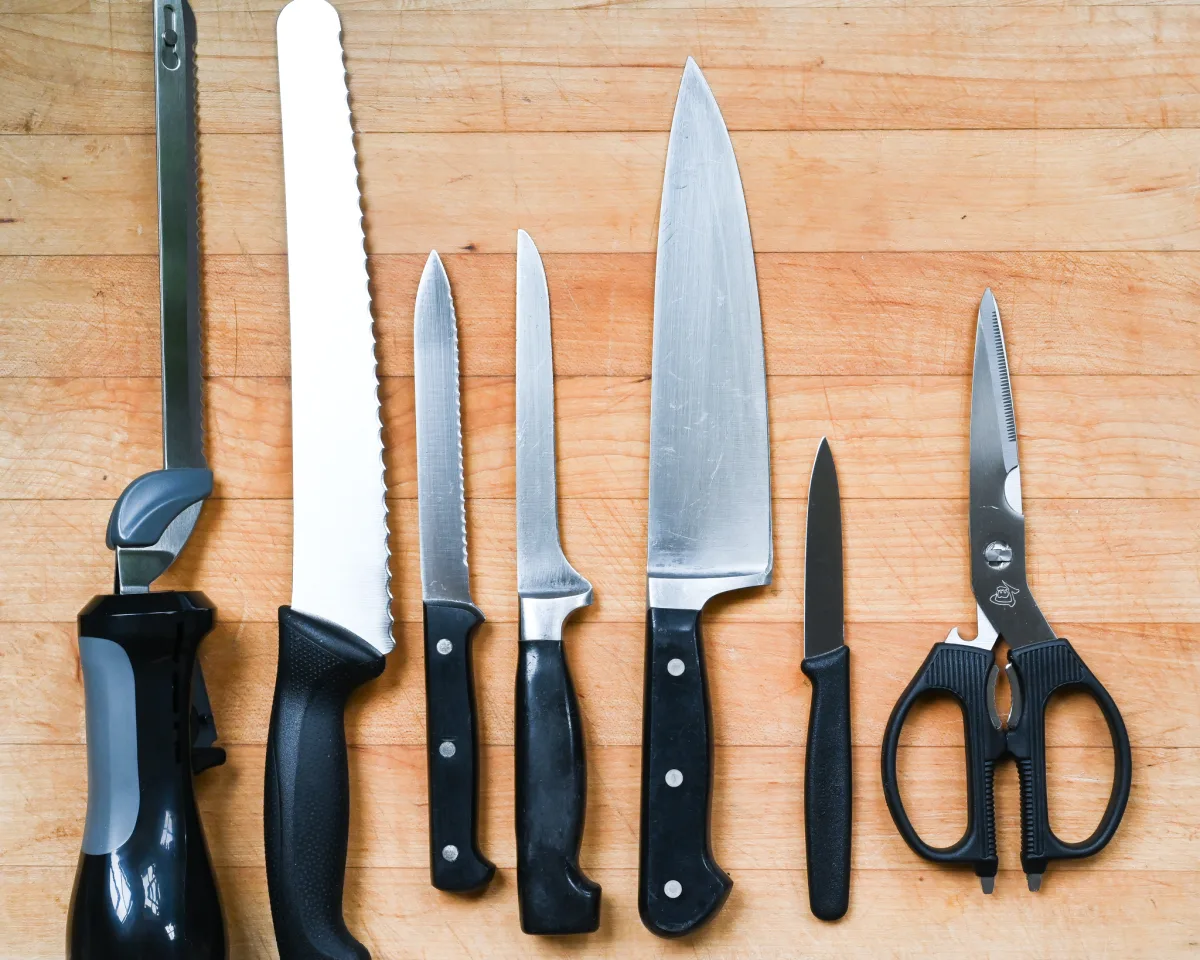
Let me start with a confession: I used to own a knife block that looked like it belonged in a Michelin-starred kitchen. Twelve slots, each one filled with a blade I’d convinced myself was absolutely essential to my culinary existence. There was the akiri for vegetables, the yanagiba for sushi, the cleaver that could double as a doorstop, and, because why not, a cheese knife that saw action maybe twice a year. I was the proud owner of a knife collection that would make a professional chef side-eye me, and yet, 90% of the time, I reached for the same three knives.
Here’s the thing: most of us don’t need a drawer full of specialized blades. What we doeed is a small, well-chosen arsenal of knives that can handle 95% of the tasks we throw at them, without requiring a second mortgage to acquire. After years of testing, overcomplicating, and eventually simplifying, I’ve landed on five knives that cover nearly every cutting, chopping, slicing, and dicing scenario a home cook will encounter. And no, you don’t need to spend a fortune to get them.
In this guide, I’ll break down which knives you actually need, why the others are just taking up space, and how to choose versions that won’t leave your wallet gasping for air. I’ll also share some hard-earned lessons about maintenance, sharpening, and, most importantly, how to stop buying knives you’ll never use. Sound good? Let’s dive in.
The Problem With Most Knife “Essentials” Lists
Before we get into the knives themselves, let’s talk about why so many guides out there are leading you astray. If you’ve ever Googled “essential knives for home cooks,” you’ve probably seen lists that look something like this:
- Chef’s knife
- Paring knife
- Bread knife
- Utility knife
- Boning knife
- Santoku knife
- Cleaver
- Fillet knife
- Steak knives
That’s nine knives. Nine. For a home cook. And sure, if you’re running a restaurant or filming a cooking show, maybe you need all of them. But for the rest of us? It’s overkill. Here’s the reality: most of those knives will sit in a block or drawer, unused, while you default to the same two or three blades. Why? Because specialization comes at the cost of versatility, and most home cooks don’t need (or want) to spend time mastering a dozen different tools.
I’m not saying specialized knives don’t have their place. If you’re breaking down whole fish every weekend, a fillet knife is a godsend. If you’re butchering your own chickens, a boning knife is non-negotiable. But for the average home cook? You’re better off with a smaller set of knives that can do more-and do it well.
So, let’s cut through the noise. Here are the five knives that will cover 95% of your cutting needs, along with the one “bonus” knife I think is worth adding if you’re feeling fancy.
The 5 Essential Knives (And Why They’re All You Need)
1. The Chef’s Knife: Your Workhorse
If you only own one knife, make it a chef’s knife. This is the blade you’ll reach for 80% of the time, whether you’re dicing onions, mincing garlic, chopping herbs, or breaking down a chicken. A good chef’s knife is like an extension of your hand, versatile, balanced, and capable of handling almost any task you throw at it.
Chef’s knives typically range from 6 to 12 inches, but for most home cooks, an 8-inch chef’s knife is the sweet spot. It’s long enough to handle larger tasks (like slicing a butternut squash) but short enough to feel nimble for precision work (like mincing shallots). The blade is usually curved, which allows for a rock-chopping motion-a technique that’s efficient for chopping herbs and vegetables.
Now, here’s where things get controversial: German vs. Japanese chef’s knives. German knives (like those from Wüsthof or Zwilling) tend to be heavier, with a thicker blade and a more pronounced curve. They’re durable, forgiving, and great for tasks that require a bit of force (like chopping through a pumpkin). Japanese knives (like those from Shun or Global), on the other hand, are lighter, sharper, and often made from harder steel. They’re precision instruments, ideal for tasks that require finesse (like slicing sashimi or julienning vegetables).
So, which should you choose? Honestly, it depends on your cooking style. If you’re heavy-handed or tend to tackle tougher ingredients, a German knife might be the way to go. If you prefer lighter, more delicate work, a Japanese knife could be a better fit. That said, there’s no rule saying you can’t have both, but if you’re sticking to just one, I’d lean toward a hybrid (like a Gyuto, which is the Japanese version of a chef’s knife) for its balance of versatility and sharpness.
As for brands, you don’t need to spend a fortune. A $50-$100 chef’s knife from a reputable brand will serve you well for years. Some of my favorites in this range:
- Victorinox Fibrox Pro ($40-$50): A favorite among professional chefs for its razor-sharp edge and ergonomic handle. It’s not the prettiest knife, but it’s a workhorse.
- Mercer Culinary Genesis ($50-$60): Another pro-level knife at a budget price. It’s well-balanced and holds an edge surprisingly well.
- MAC Knife Professional ($80-$100): A step up in quality, with a razor-sharp edge and a comfortable handle. It’s a great middle-ground option.
Is this the best approach? Maybe not for everyone. Some cooks swear by their $300 Japanese knives, and if you’re passionate about knives, by all means, splurge. But for the average home cook? A mid-range chef’s knife will do everything you need it to, and then some.
2. The Paring Knife: The Precision Tool
If the chef’s knife is your workhorse, the paring knife is your scalpel. This small, nimble blade is designed for tasks that require precision, peeling apples, deveining shrimp, segmenting citrus, or trimming fat from a piece of meat. It’s the knife you reach for when a chef’s knife would feel like overkill (or when you’re working with small ingredients that would get lost under a larger blade).
Paring knives typically range from 2.5 to 4 inches, but I find a 3.5-inch paring knife to be the most versatile. It’s small enough to handle delicate tasks but large enough to tackle slightly bigger jobs (like coring a tomato). The blade is usually straight, which makes it ideal for peeling and slicing-though some models have a slight curve for a bit of rock-chopping action.
There are a few different styles of paring knives, each with its own strengths:
- Classic Paring Knife: A straight blade with a pointed tip. This is the most versatile option and the one I recommend for most home cooks.
- Bird’s Beak Paring Knife: A curved blade that’s great for peeling round fruits and vegetables (like potatoes or apples). It’s a bit more specialized, so I’d only recommend it if you do a lot of peeling.
- Sheep’s Foot Paring Knife: A flat blade with a rounded tip. This style is great for slicing (like cutting thin strips of citrus zest) but less ideal for peeling.
When it comes to brands, you don’t need to spend a ton on a paring knife. Since it’s a smaller blade, the materials and craftsmanship don’t need to be as robust as a chef’s knife. Some solid options:
- Victorinox Fibrox Paring Knife ($10-$15): A no-frills, razor-sharp option that punches above its weight.
- Wüsthof Classic Paring Knife ($50-$60): A step up in quality, with a comfortable handle and a sharp edge.
- Shun Premier Paring Knife ($80-$100): A high-end option with a beautiful Damascus-clad blade. It’s overkill for most, but if you love knives, it’s a joy to use.
I’m torn between recommending a budget paring knife and something a little nicer. On one hand, a $10 paring knife will get the job done. On the other, a slightly nicer knife (like the Wüsthof) feels better in the hand and holds an edge longer. Ultimately, I’d say go for the mid-range option if you can swing it, but don’t stress if you can’t.
3. The Bread Knife: The Unsung Hero
Here’s a hill I’m willing to die on: every kitchen needs a bread knife. I don’t care if you think you don’t bake bread or if you’ve never struggled with a crusty loaf. A bread knife isn’t just for bread, it’s for anything with a tough exterior and a soft interior. Think tomatoes, pineapples, watermelons, or even a delicate layer cake. Without a bread knife, you’re left sawing away with a chef’s knife, crushing the soft insides in the process. It’s a mess.
A good bread knife has a long, serrated blade (typically 8 to 10 inches) that allows you to cut through crusty exteriors without compressing the softer insides. The serrations act like tiny saw teeth, gripping the surface and making clean cuts with minimal pressure. And yes, you can use a bread knife for more than just bread, it’s also great for slicing delicate pastries, leveling cakes, or even portioning a roasted turkey (the serrations help grip the skin).
When choosing a bread knife, there are a few things to keep in mind:
- Blade Length: An 8-inch bread knife is the most versatile, but if you frequently work with large loaves or big fruits (like watermelons), a 10-inch knife might be worth considering.
- Serrations: Look for deep, well-spaced serrations. Shallow or tightly packed serrations won’t grip as well and can make cutting more difficult.
- Handle Comfort: Since bread knives are often used for sawing motions, a comfortable handle is key. Look for something ergonomic that won’t slip in your hand.
As for brands, bread knives are one of the few tools where you don’t need to spend a ton to get a great one. Some solid options:
- Mercer Culinary Millennia ($20-$25): A budget-friendly option with deep serrations and a comfortable handle. It’s a workhorse.
- Victorinox Fibrox Bread Knife ($30-$40): Another great budget pick, with a razor-sharp edge and a no-slip handle.
- Wüsthof Classic Bread Knife ($80-$100): A step up in quality, with a razor-sharp edge and a comfortable handle. It’s a bit pricier, but it’ll last a lifetime.
Maybe I should clarify: you can get away without a bread knife if you’re really trying to minimize your collection. But trust me, the first time you try to slice a crusty baguette with a chef’s knife and end up with a squashed mess, you’ll regret it. A bread knife is one of those tools that seems optional, until you actually need it.
4. The Utility Knife: The In-Between Blade
If the chef’s knife is your workhorse and the paring knife is your scalpel, the utility knife is the Swiss Army knife of your collection. It’s the blade you reach for when a chef’s knife feels too big and a paring knife feels too small. Think of it as the Goldilocks of knives: just right for tasks like slicing sandwiches, trimming fat from meat, or cutting medium-sized fruits and vegetables (like apples or bell peppers).
Utility knives typically range from 5 to 7 inches, with a arrow, slightly flexible blade. They’re not as specialized as a boning knife or as heavy-duty as a chef’s knife, but they’re incredibly versatile for everyday tasks. I find myself reaching for my utility knife more often than I expected, especially for tasks that require a bit of finesse but don’t need the heft of a chef’s knife.
There are a few different styles of utility knives, each with its own strengths:
- Classic Utility Knife: A straight blade with a pointed tip. This is the most versatile option and the one I recommend for most home cooks.
- Scalloped Utility Knife: A blade with small serrations, which can be helpful for slicing delicate foods (like tomatoes or citrus) without crushing them.
- Flexible Utility Knife: A blade that’s slightly more flexible, which can be useful for tasks like filleting fish or trimming meat.
When it comes to brands, utility knives are another category where you don’t need to spend a ton. Some solid options:
- Victorinox Fibrox Utility Knife ($15-$20): A no-frills, razor-sharp option that’s great for everyday tasks.
- Wüsthof Classic Utility Knife ($50-$60): A step up in quality, with a comfortable handle and a sharp edge.
- Shun Premier Utility Knife ($80-$100): A high-end option with a beautiful Damascus-clad blade. It’s overkill for most, but it’s a joy to use.
I’m torn between recommending a utility knife and just telling you to make do with your chef’s and paring knives. After all, you can get by without one. But if you’re someone who likes having the right tool for the job, a utility knife is a great addition to your collection. It’s the knife I reach for when I’m not sure which other knife to use, and that happens more often than you’d think.
5. The Serrated Knife (Bonus: The Tomato Knife)
Okay, I know I said five knives, but I’m going to cheat a little and add a sixth: the serrated knife (or, as I like to call it, the tomato knife). This is the knife you reach for when you need to slice something with a delicate skin and a soft interior, think tomatoes, citrus fruits, or even cakes. A serrated knife grips the surface of the food, allowing you to make clean cuts without crushing the insides.
Now, you might be thinking: “Wait, isn’t that what a bread knife is for?” And you’re not wrong, a bread knife can handle tomatoes and other delicate foods. But a dedicated serrated knife is usually smaller (around 5 to 7 inches) and has finer serrations, which makes it better suited for precision tasks. Plus, it’s nice to have a backup serrated blade in case your bread knife is in the dishwasher.
When choosing a serrated knife, look for one with fine, sharp serrations and a comfortable handle. Some solid options:
- Victorinox Fibrox Serrated Knife ($15-$20): A budget-friendly option with sharp serrations and a comfortable handle.
- Wüsthof Classic Serrated Knife ($50-$60): A step up in quality, with a razor-sharp edge and a comfortable handle.
- Shun Premier Serrated Knife ($80-$100): A high-end option with a beautiful Damascus-clad blade. It’s overkill for most, but it’s a joy to use.
Is this knife essential? Probably not. But if you’re someone who loves tomatoes, citrus, or delicate pastries, it’s a game-changer. And at $15-$20, it’s not a huge investment.
Knives You Don’t Need (And Why)
Now that we’ve covered the knives you doeed, let’s talk about the ones you don’t. I’m not saying these knives are useless, far from it. But for the average home cook, they’re more likely to collect dust than get regular use. Here’s why:
1. The Boning Knife
A boning knife is designed for, you guessed it, removing bones from meat. It has a thin, flexible blade that allows you to navigate around joints and connective tissue. If you’re breaking down whole chickens or filleting fish on the regular, a boning knife is a godsend. But if you’re mostly working with pre-portioned cuts of meat (like chicken breasts or pork chops), you can get by with a chef’s knife or a utility knife. The learning curve for a boning knife is also steeper than you’d think, it’s not a tool you can just pick up and use effectively without some practice.
Unless you’re a serious home butcher, skip the boning knife.
2. The Cleaver
A cleaver is a heavy, rectangular knife designed for chopping through bones and tough ingredients. It’s a staple in Chinese cuisine, where it’s used for everything from breaking down chickens to smashing garlic. But for most Western home cooks, a cleaver is overkill. It’s heavy, unwieldy, and not particularly versatile. If you’re chopping through bones, you’re probably better off using a chef’s knife or a dedicated meat cleaver (which is a different beast entirely).
Unless you’re cooking a lot of Chinese cuisine or butchering large cuts of meat, skip the cleaver.
3. The Santoku Knife
A Santoku knife is a Japanese-style knife that’s similar to a chef’s knife but with a flatter blade and a shorter length (typically 5 to 7 inches). It’s great for slicing, dicing, and mincing, and it’s a favorite among home cooks for its versatility. But here’s the thing: if you already have a chef’s knife, a Santoku is redundant. The two knives perform nearly identical tasks, and unless you’re deeply invested in Japanese cuisine, you’re not going to use a Santoku enough to justify the expense.
If you love the Santoku’s design, by all means, add one to your collection. But if you’re trying to keep things simple, stick with a chef’s knife.
4. The Fillet Knife
A fillet knife is a thin, flexible knife designed for filleting fish. It’s an amazing tool if you’re working with whole fish on the regular, but for most home cooks, it’s unnecessary. A chef’s knife or a utility knife can handle most fish-related tasks, and unless you’re filleting a lot of fish, a fillet knife is just taking up space.
Unless you’re a serious home fisherman, skip the fillet knife.
5. Steak Knives
I know, I know, steak knives are a staple in many households. But here’s the thing: they’re not essential. If you’re serving steak at home, you can use your chef’s knife to portion it at the counter and then let guests use their regular knives at the table. Steak knives are nice to have, but they’re not a must-have. Plus, they take up valuable drawer space, and unless you’re hosting steak dinners every week, they’re not going to see much use.
If you love the idea of steak knives, go for it. But if you’re trying to keep your collection minimal, skip them.
How to Choose the Right Knives for You
Now that we’ve covered which knives you need (and which you don’t), let’s talk about how to choose the right ones for you. Because here’s the thing: the “best” knife is the one that feels right in your hand and suits your cooking style. What works for me might not work for you, and that’s okay. Here are a few things to consider when making your choices:
1. Handle Comfort
The handle is the part of the knife you’ll be interacting with the most, so it’s important to choose one that feels comfortable in your hand. Some things to consider:
- Material: Handles can be made from wood, plastic, composite materials, or metal. Wood handles are beautiful but require more maintenance. Plastic handles are durable and low-maintenance but can feel cheap. Composite handles (like those from Victorinox) offer a good balance of durability and comfort. Metal handles (like those from Global) are sleek and durable but can be slippery when wet.
- Shape: Some handles are ergonomic, with contours that fit your hand. Others are more basic. If possible, try holding the knife before you buy it to see how it feels.
- Size: Make sure the handle is the right size for your hand. If you have small hands, a large handle can feel unwieldy. If you have large hands, a small handle can feel cramped.
2. Blade Material
The material of the blade affects its sharpness, durability, and maintenance requirements. Here are the most common options:
- Stainless Steel: The most common material for kitchen knives. It’s durable, resistant to rust, and low-maintenance. However, it’s not as sharp as other materials and can be prone to chipping.
- High-Carbon Stainless Steel: A step up from regular stainless steel, with better edge retention and sharpness. It’s a good middle-ground option.
- Carbon Steel: Extremely sharp and durable, but prone to rust and discoloration. It requires more maintenance than stainless steel but is favored by professional chefs for its performance.
- Damascus Steel: A high-end option with a beautiful, layered pattern. It’s sharp and durable but expensive. It’s more of a showpiece than a workhorse.
For most home cooks, high-carbon stainless steel is the best choice. It’s sharp, durable, and low-maintenance, everything you want in a kitchen knife.
3. Weight and Balance
The weight and balance of a knife can make a big difference in how it feels to use. Some things to consider:
- Weight: Heavier knives (like German chef’s knives) are great for tasks that require force, like chopping through bones or tough vegetables. Lighter knives (like Japanese chef’s knives) are better for precision tasks, like slicing sashimi or julienning vegetables.
- Balance: A well-balanced knife feels comfortable in your hand and doesn’t tip too far forward or backward. To test balance, hold the knife by the handle and see if it feels evenly weighted. If it tips too far in one direction, it might not be the right knife for you.
4. Price
Knives can range in price from $10 to $1,000 or more. So, how much should you spend? Here’s a rough guide:
- $10-$30: Budget knives. These are great for occasional use or if you’re just starting out. They won’t hold an edge as long as more expensive knives, but they’ll get the job done.
- $30-$100: Mid-range knives. These are the sweet spot for most home cooks. They’re well-made, durable, and hold an edge reasonably well. This is where I recommend spending your money.
- $100-$300: High-end knives. These are for serious home cooks or professionals. They’re razor-sharp, beautifully crafted, and built to last a lifetime. If you’re passionate about knives, this is where you’ll find your dream blades.
- $300+: Luxury knives. These are more about aesthetics than performance. They’re beautiful, but unless you’re a collector, they’re probably not worth the investment.
For most home cooks, I recommend spending $50-$100 on a chef’s knife and $20-$50 on the rest of your collection. That’ll give you a set of knives that are sharp, durable, and comfortable to use, without breaking the bank.
Knife Maintenance: How to Keep Your Blades in Top Shape
Owning a great set of knives is only half the battle. The other half? Keeping them sharp, clean, and well-maintained. A dull knife is not only frustrating to use, it’s also dangerous. Dull blades require more force to cut, which increases the risk of slipping and injuring yourself. Here’s how to keep your knives in top shape:
1. Sharpening
Sharpening is the process of removing metal from the blade to create a new edge. It’s different from honing, which realigns the edge of the blade. Here’s what you need to know:
- How Often to Sharpen: It depends on how often you use your knives, but a good rule of thumb is to sharpen them every 3-6 months. If you notice your knives struggling to cut through food, it’s probably time to sharpen them.
- Sharpening Tools: There are a few different tools you can use to sharpen your knives:
- Whetstone: A flat stone used to sharpen knives. It’s the most effective method but requires some skill. If you’re serious about knife maintenance, a whetstone is a great investment.
- Pull-Through Sharpener: A handheld device with slots that guide the knife through sharpening angles. It’s easy to use but not as precise as a whetstone.
- Electric Sharpener: A motorized device that sharpens knives automatically. It’s convenient but can remove more metal than necessary, shortening the life of your knives.
- Sharpening Technique: If you’re using a whetstone, here’s a basic technique:
- Soak the whetstone in water for 10-15 minutes.
- Place the stone on a non-slip surface.
- Hold the knife at a 15-20 degree angle to the stone.
- Draw the blade across the stone in a sweeping motion, starting at the heel and ending at the tip.
- Repeat on the other side of the blade.
- Finish with a finer-grit stone to polish the edge.
If you’re not comfortable sharpening your knives yourself, many kitchen supply stores offer sharpening services. It’s worth the investment to keep your knives in top shape.
2. Honing
Honing is the process of realigning the edge of the blade. It doesn’t remove metal like sharpening, instead, it straightens out the microscopic teeth on the edge of the blade, making it feel sharper. Here’s what you need to know:
- How Often to Hone: Honing should be done every 1-2 uses of your knife. It’s a quick process that takes just a few seconds.
- Honing Tools: The most common honing tool is a honing steel (also called a sharpening steel). It’s a long, cylindrical rod made of steel or ceramic. To use it, hold the steel vertically and draw the blade across it at a 15-20 degree angle, starting at the heel and ending at the tip. Repeat on the other side of the blade.
Honing is a great way to keep your knives feeling sharp between sharpenings. It’s quick, easy, and doesn’t require any special skills.
3. Cleaning
Proper cleaning is essential for keeping your knives in good condition. Here’s what you need to know:
- Hand-Washing: Always wash your knives by hand. Dishwashers can damage the blade and handle, and the high heat can cause the blade to warp.
- Drying: After washing, dry your knives immediately. Leaving them wet can cause rust or corrosion, especially if they’re made of carbon steel.
- Storage: Store your knives in a way that protects the blade. A knife block, magnetic strip, or blade guard are all good options. Avoid tossing them in a drawer, where they can get damaged or dull.
4. Storage
How you store your knives can affect their longevity. Here are a few options:
- Knife Block: A wooden block with slots for your knives. It’s a convenient and safe way to store your knives, but it can take up counter space.
- Magnetic Strip: A strip of magnets that you mount on the wall. It’s a great way to save counter space and keep your knives within easy reach. Just make sure the strip is strong enough to hold your knives securely.
- Drawer Insert: A wooden or plastic insert that fits inside a drawer and holds your knives. It’s a good option if you’re short on counter space, but it can be less convenient than a block or magnetic strip.
- Blade Guards: Plastic or wooden guards that cover the blade. They’re a good option if you need to store your knives in a drawer, but they can be a hassle to put on and take off.
Whatever storage method you choose, make sure it protects the blade and keeps your knives within easy reach.
Final Thoughts: Less Is More
Here’s the thing about knives: more isn’t always better. A drawer full of specialized blades might look impressive, but if you’re not using them, they’re just taking up space. The truth is, most home cooks can get by with just a few well-chosen knives, and the ones I’ve outlined in this guide are all you really need to handle 95% of your cutting tasks.
So, if you’re just starting out, focus on the chef’s knife, paring knife, and bread knife. Those three will cover most of your needs. If you want to expand your collection, add a utility knife and a serrated knife. And if you’re feeling fancy, throw in a Santoku or a cleaver-but only if you’ll actually use them.
At the end of the day, the best knife is the one you reach for most often. So, choose blades that feel good in your hand, suit your cooking style, and make you excited to get in the kitchen. And remember: a sharp knife is a safe knife. Keep your blades in top shape, and they’ll serve you well for years to come.
Now, I’m curious: what’s your go-to knife? Do you have a favorite brand or style? Let me know in the comments, I’m always on the lookout for new recommendations!
FAQ
Q: Do I really need all five knives, or can I get by with fewer?
A: You can absolutely get by with fewer knives! If you’re just starting out, I’d recommend a chef’s knife, a paring knife, and a bread knife. Those three will cover most of your needs. You can always add more knives later if you find yourself needing them.
Q: What’s the best way to test a knife before buying it?
A: If possible, try holding the knife before you buy it. See how it feels in your hand, is it comfortable? Is it well-balanced? If you can’t test it in person, read reviews to get a sense of how the knife performs. Look for reviews that mention the knife’s sharpness, durability, and comfort.
Q: How often should I sharpen my knives?
A: It depends on how often you use your knives, but a good rule of thumb is to sharpen them every 3-6 months. If you notice your knives struggling to cut through food, it’s probably time to sharpen them. In between sharpenings, use a honing steel to keep the edge aligned.
Q: Is it worth investing in a high-end knife, or can I get by with a budget option?
A: It depends on your budget and how much you care about knives. A high-end knife will be sharper, more durable, and more comfortable to use, but it’s not necessary for most home cooks. A mid-range knife (like the Victorinox Fibrox or Mercer Culinary Genesis) will serve you well for years. If you’re passionate about knives, though, a high-end option might be worth the investment.
@article{the-only-5-essential-knives-every-home-cook-actually-needs-and-why-youre-probably-overcomplicating-it,
    title   = {The Only 5 Essential Knives Every Home Cook Actually Needs (And Why You’re Probably Overcomplicating It)},
    author  = {Chef's icon},
    year    = {2026},
    journal = {Chef's Icon},
    url     = {https://chefsicon.com/essential-knives-for-every-home-cook/}
}