The Best Fluffy Pancakes recipe you will fall in love with. Full of tips and tricks to help you make the best pancakes.
Ninja Combi vs Instant Pot: Which Multi-Cooker Should Rule Your Kitchen in 2026?
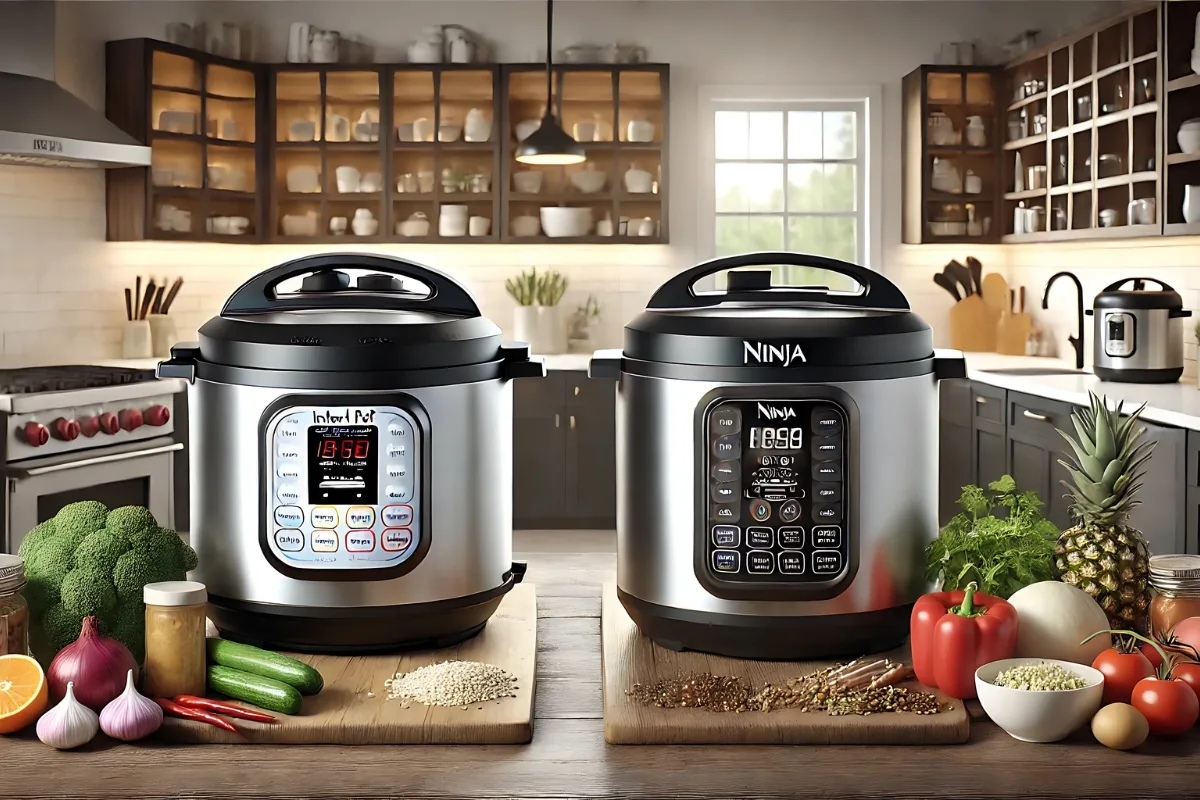
I’ll be honest, I didn’t see this coming. A few years ago, the Instant Pot was the undisputed king of the countertop, the multi-cooker that launched a thousand meal-prep TikToks and turned “pressure cooking” from a relic of grandma’s kitchen into a modern culinary movement. But then the Ninja Combi rolled in like a sleek, black-clad challenger, promising not just to match the Instant Pot’s versatility but to *outpace* it. Now, as we settle into 2026, the question isn’t just “Which one should I buy?”-it’s “Do I even need both?” And honestly? I’m still figuring that out myself.
Here’s the thing: I’ve owned an Instant Pot since 2018. It’s the workhorse of my kitchen, the appliance I reach for when I’m too tired to think, too busy to babysit a stove, or too ambitious to settle for takeout. But when the Ninja Combi landed on my doorstep last month (thanks, impulse buy), I’ll admit I was skeptical. Could it really do everything the Instant Pot does, and then some, or was this just another case of “new and shiny” syndrome? After putting both through their paces (and burning a few meals along the way), I’m ready to break it all down. Not as an infallible expert, but as someone who’s spent way too much time staring at manuals, Googling error codes, and wondering if I’m using these things *right*.
By the end of this, you’ll know:
- How the Ninja Combi’s air frying and dehydrating features stack up against the Instant Pot’s tried-and-true pressure cooking.
- Whether the learning curve for either appliance is worth the payoff (spoiler: one is *much* easier to master).
- The hidden costs-like accessories, energy use, and counter space, that no one talks about.
- Which one actually saves you time (because let’s be real, that’s why we buy these things).
- And, most importantly, which multi-cooker fits *your* cooking style, not just mine.
So, let’s dive in. And if you’re already team #InstantPotForever or #NinjaCombiCrew, stick around, I might just change your mind. Or at least make you question everything you thought you knew about multi-cookers.
The Basics: What Are These Things, Anyway?
Instant Pot: The OG Multi-Cooker
The Instant Pot isn’t just an appliance; it’s a cultural phenomenon. Since its debut in 2010, it’s sold over 30 million units worldwide, spawned Facebook groups with hundreds of thousands of members, and turned phrases like “dump and go” into a legitimate cooking strategy. At its core, the Instant Pot is a 7-in-1 (or 9-in-1, or 10-in-1, depending on the model) electric pressure cooker that also slow cooks, sautés, steams, warms, and even makes yogurt. The latest models, like the Instant Pot Pro Crisp (which confusingly has *nothing* to do with the Ninja Combi’s air frying), have added sous vide and cake-making functions, but the bread-and-butter remains the same: pressure cooking that cuts traditional cook times by up to 70%.
What I love about the Instant Pot is its simplicity. The interface is intuitive (once you get past the initial learning curve), the manual is surprisingly helpful (yes, I’ve read it), and there’s a recipe for literally everything online. Want to make cheesecake in 30 minutes? Done. Need to cook a whole chicken in under an hour? Easy. Forgot to thaw the ground beef for taco night? The Instant Pot doesn’t care, it’ll cook it from frozen. It’s the ultimate set-it-and-forget-it appliance, and for busy home cooks, that’s a game-changer.
But, and this is a big but, it’s not perfect. The Instant Pot’s lack of air frying is its biggest limitation. Sure, you can buy an air fryer lid attachment for some models, but it’s clunky, takes up extra space, and doesn’t perform as well as a standalone air fryer (or, as we’ll see, the Ninja Combi’s built-in air fryer). And while the pressure cooking is lightning-fast, some dishes, like crispy chicken wings or dehydrated fruit, just aren’t in its wheelhouse. That’s where the Ninja Combi comes in.
Ninja Combi: The New Kid on the Block
If the Instant Pot is the reliable sedan of the multi-cooker world, the Ninja Combi is the sleek, turbocharged SUV. Released in 2023, the Ninja Combi is a 11-in-1 multi-cooker that does *everything* the Instant Pot does, pressure cooking, slow cooking, steaming, sautéing, yogurt-making, the works, and then throws in air frying, dehydrating, and even proofing dough for good measure. It’s like someone took an Instant Pot, an air fryer, and a dehydrator, shoved them into a single appliance, and said, “Here, now go make dinner.”
The first thing you’ll notice about the Ninja Combi is its size. It’s bigger and heavier than most Instant Pot models, with a larger footprint that’ll dominate your countertop. But that extra space isn’t just for show, it houses a dual-zone cooking system that lets you cook two dishes at once, each with its own temperature and time settings. Want to air fry chicken wings while pressure cooking rice? No problem. Need to dehydrate apple slices while slow-cooking pulled pork? The Ninja Combi can handle it. It’s the kind of versatility that makes you feel like a kitchen MacGyver, even if you’re just reheating leftovers.
But (you knew there’d be another but) the Ninja Combi isn’t without its quirks. The interface is more complex than the Instant Pot’s, with a touchscreen display and multiple cooking modes that can feel overwhelming at first. The manual is… let’s just say it’s not as user-friendly as Instant Pot’s. And while the air frying and dehydrating functions are impressive, they’re not *quite* as good as standalone appliances. But more on that later.
Performance Showdown: Which One Actually Cooks Better?
Pressure Cooking: The Instant Pot’s Crown Jewel
Let’s start with the function that put the Instant Pot on the map: pressure cooking. If you’ve ever cooked a pot roast in 60 minutes instead of 4 hours, or made risotto in 20 minutes without stirring, you know the magic of pressure cooking. The Instant Pot excels here, no question. Its sealing mechanism is foolproof (well, almost, more on that in a bit), and the pressure release valve is easy to use, even if you’re nervous about the whole “high-pressure steam” thing. I’ve made everything from fall-off-the-bone ribs to perfectly al dente pasta in my Instant Pot, and it’s never let me down.
The Ninja Combi’s pressure cooking function is… fine. It works, and it’s just as fast as the Instant Pot, but it doesn’t feel as refined. The sealing process is a little more finicky, you have to make sure the lid is locked in *just* right, or it’ll throw an error code. And while the Ninja Combi’s pressure cooking times are comparable to the Instant Pot’s, I’ve noticed that it doesn’t always build pressure as quickly. Is it a dealbreaker? Not really. But if pressure cooking is your main reason for buying a multi-cooker, the Instant Pot still has the edge.
Air Frying: The Ninja Combi’s Secret Weapon
Here’s where the Ninja Combi pulls ahead. The Instant Pot *can* air fry if you buy the separate air fryer lid, but it’s a clunky workaround. The Ninja Combi, on the other hand, has built-in air frying that’s nearly as good as a standalone air fryer. I’ve made crispy french fries, juicy chicken wings, and even reheated pizza (yes, it’s possible to make leftover pizza taste good) in the Ninja Combi, and the results have been consistently impressive. The rapid air circulation does a great job of crisping up food without drying it out, and the included air fryer basket is large enough to cook a decent batch of food at once.
That said, the Ninja Combi’s air frying isn’t *perfect*. The basket is a little shallower than a standalone air fryer’s, which means you can’t fit as much food in at once. And while the results are crispy, they’re not *quite* as crispy as what you’d get from a dedicated air fryer. But if you’re tight on space and don’t want to clutter your kitchen with another appliance, the Ninja Combi’s air frying is more than good enough.
Slow Cooking: A Tie, But With Caveats
Both the Instant Pot and the Ninja Combi have slow cooking functions, and honestly, they’re pretty comparable. The Instant Pot’s slow cooker is reliable and easy to use, with three temperature settings (low, medium, high) that give you plenty of control. The Ninja Combi’s slow cooker is similar, but it has a “keep warm” function that automatically switches on after cooking, which is a nice touch if you’re prone to forgetting about dinner (no judgment).
That said, neither appliance is a *true* replacement for a dedicated slow cooker. The Instant Pot’s slow cooker runs a little hotter than most standalone models, so you might need to adjust your recipes accordingly. The Ninja Combi’s slow cooker is better, but it’s still not as precise as a Crock-Pot. If slow cooking is your main priority, you might be better off sticking with a traditional slow cooker. But if you’re looking for a multi-cooker that can *also* slow cook, both the Instant Pot and the Ninja Combi will get the job done.
Sautéing: The Ninja Combi’s Surprising Strength
I’ll admit, I didn’t expect the Ninja Combi to outperform the Instant Pot in sautéing, but it does. The Instant Pot’s sauté function is fine, it gets the job done when you need to brown meat or soften onions, but it’s not exactly a powerhouse. The Ninja Combi, on the other hand, has a “sear/sauté” function that gets *much* hotter, which means you can get a better sear on meat and caramelize onions more effectively. It’s a small difference, but if you’re someone who likes to build layers of flavor in your dishes (and let’s be real, who doesn’t?), it’s a noticeable upgrade.
Dehydrating: The Ninja Combi’s Wild Card
Here’s where the Ninja Combi really sets itself apart. The Instant Pot *can’t* dehydrate food, at least, not without a third-party accessory that’s basically just a fancy heating element. The Ninja Combi, on the other hand, has a built-in dehydrating function that lets you make everything from beef jerky to dried apple chips to herb blends for cooking. It’s not as powerful as a dedicated dehydrator, but it’s a great option if you want to experiment with dehydrating without buying another appliance.
The dehydrating process is simple: just arrange your food on the included dehydrating tray, set the temperature and time, and let the Ninja Combi do its thing. I’ve made crispy banana chips and spicy beef jerky in mine, and while it took a few tries to get the timing right (dehydrating is more art than science), the results were impressive. If you’re into meal prepping or just love the idea of making your own snacks, this feature alone might be worth the price of admission.
The User Experience: Which One Is Easier to Live With?
Ease of Use: Instant Pot Wins (For Now)
Let’s talk about the learning curve. The Instant Pot is *designed* to be user-friendly. The buttons are clearly labeled, the manual is straightforward, and there are *thousands* of tutorials online if you get stuck. Even if you’ve never used a pressure cooker before, you can probably figure out the Instant Pot in an afternoon. The Ninja Combi, on the other hand, is a little more intimidating. The touchscreen interface is sleek, but it’s not as intuitive as the Instant Pot’s physical buttons. There’s a bit of a learning curve, especially when you’re trying to figure out how to switch between cooking modes or adjust settings on the fly.
That said, the Ninja Combi’s interface *does* have some advantages. The dual-zone cooking feature, for example, lets you cook two dishes at once with different settings, which is something the Instant Pot can’t do. And the touchscreen is easier to clean than physical buttons (no more gunk stuck in the crevices). But if you’re someone who just wants to plug in your multi-cooker and go, the Instant Pot is still the easier choice.
Cleaning: A Mixed Bag
Cleaning is one of those things you don’t think about until you’re elbow-deep in soapy water, scrubbing burnt-on cheese off a stainless steel pot. Both the Instant Pot and the Ninja Combi are dishwasher-safe (well, most parts are), but they each have their quirks.
The Instant Pot’s inner pot is a breeze to clean, it’s nonstick, so most food slides right off. The sealing ring, on the other hand, is a pain. It’s made of silicone, which means it absorbs odors like a sponge. I’ve tried everything to get rid of the lingering smell of curry or garlic, baking soda, vinegar, even leaving it in the sun for a day, and while it helps, the smell *always* comes back. Pro tip: buy a second sealing ring and designate one for savory dishes and one for sweet.
The Ninja Combi’s inner pot is also nonstick, but it’s a little harder to clean because it’s deeper and has more nooks and crannies. The air fryer basket is a pain to scrub, especially if you’ve cooked something greasy like bacon or wings. And while the dehydrating tray is easy to clean, it’s another part to keep track of. On the plus side, the Ninja Combi’s lid is easier to clean than the Instant Pot’s because it doesn’t have a sealing ring that traps food and odors.
Noise Level: The Ninja Combi Is Surprisingly Quiet
If you’ve ever used an Instant Pot, you know the sound it makes when it’s building pressure: a loud, hissing noise that can be a little alarming if you’re not used to it. It’s not *terrible*, but it’s definitely noticeable, especially if you’re cooking in an open kitchen. The Ninja Combi, on the other hand, is much quieter. It still makes some noise when it’s building pressure, but it’s more of a gentle hum than a loud hiss. And when it’s air frying or dehydrating, it’s almost silent. If you’re sensitive to noise (or just don’t want to wake up the whole house when you’re making breakfast), the Ninja Combi is the better choice.
Counter Space: The Ninja Combi Is a Beast
Here’s the thing about the Ninja Combi: it’s big. Like, *really* big. It’s taller and wider than most Instant Pot models, and it weighs a ton (the exact weight varies by model, but it’s easily 20+ pounds). If you have a small kitchen or limited counter space, the Ninja Combi might feel like overkill. The Instant Pot, on the other hand, is more compact and easier to store when you’re not using it. That said, if you’re planning to use the Ninja Combi’s air frying and dehydrating functions regularly, you might find that it replaces multiple appliances, freeing up space in the long run. It’s a trade-off, and one you’ll need to consider before pulling the trigger.
The Hidden Costs: What No One Tells You
Accessories: The Rabbit Hole You Didn’t See Coming
Here’s the dirty little secret of multi-cookers: the accessories add up. Both the Instant Pot and the Ninja Combi come with the basics, a trivet, a measuring cup, maybe a spoon, but if you want to get the most out of your appliance, you’ll need to invest in some extras. For the Instant Pot, that might mean a glass lid for slow cooking, a yogurt strainer for making Greek yogurt, or a stackable steamer basket for cooking multiple things at once. For the Ninja Combi, it might mean an extra air fryer basket for larger batches, a dehydrating tray for bigger projects, or a silicone lid for storing leftovers.
And then there are the third-party accessories. A quick Amazon search will turn up hundreds of Instant Pot and Ninja Combi accessories, from egg racks to cake pans to silicone molds for making everything from cheesecake to meatloaf. Some of these are game-changers (I *love* my Instant Pot egg bites mold), but others are just gimmicks. The point is, if you’re not careful, you can easily spend as much on accessories as you did on the appliance itself.
Energy Use: The Ninja Combi Is a Power Hog
Both the Instant Pot and the Ninja Combi are energy-efficient compared to traditional cooking methods, but the Ninja Combi uses more power because of its additional functions. The air frying and dehydrating modes, in particular, draw a lot of electricity, which means your energy bill might take a hit if you use them frequently. The Instant Pot, on the other hand, is more energy-efficient because it relies on pressure cooking, which uses less power than air frying or dehydrating.
That said, the difference isn’t *huge*-we’re talking a few dollars a month, depending on how often you use each appliance. But if you’re someone who’s conscious about energy use (or just wants to keep your utility bills low), it’s something to keep in mind.
Durability: The Instant Pot’s Track Record Speaks for Itself
The Instant Pot has been around for over a decade, and in that time, it’s built a reputation for durability. Sure, there are horror stories about Instant Pots exploding (thanks, sensationalist news headlines), but the vast majority of users have had positive experiences. The Ninja Combi, on the other hand, is still relatively new, so its long-term durability is a bit of an unknown. That said, Ninja is a reputable brand with a strong track record in the kitchen appliance space, so I’m not *too* worried about the Combi breaking down anytime soon.
One thing to note: both appliances have warranties (usually 1 year for the Instant Pot, 2 years for the Ninja Combi), so if something does go wrong, you’re covered. But if you’re someone who likes to buy appliances that last for *decades*, the Instant Pot’s track record might give you more peace of mind.
Which One Should You Buy? The Ultimate Verdict
Okay, let’s cut to the chase: Which one should you buy? The answer, as with most things in life, is: it depends. But here’s my best attempt at a definitive answer, based on my own testing and the feedback I’ve gathered from other home cooks.
Buy the Instant Pot If…
- You’re a beginner or just want a simple, no-fuss multi-cooker.
- You primarily use pressure cooking (for things like soups, stews, rice, and quick weeknight meals).
- You have a small kitchen or limited counter space.
- You’re on a budget (the Instant Pot is usually cheaper than the Ninja Combi).
- You want an appliance with a proven track record and tons of online resources.
The Instant Pot is the safe choice. It’s reliable, easy to use, and does everything it promises. If you’re not sure whether you’ll use all the extra functions of the Ninja Combi, the Instant Pot is the way to go.
Buy the Ninja Combi If…
- You want air frying and dehydrating built into your multi-cooker.
- You cook for a crowd and want the ability to cook two dishes at once.
- You’re willing to learn a slightly more complex interface for the sake of versatility.
- You have the counter space for a larger appliance.
- You’re experimenting with meal prep and want to try dehydrating or proofing dough.
The Ninja Combi is the more ambitious choice. It’s not as beginner-friendly as the Instant Pot, but if you’re willing to put in the time to learn its quirks, it’s an incredibly versatile appliance that can replace multiple kitchen gadgets. If you’re someone who loves to experiment with new cooking techniques (or just hates clutter), the Ninja Combi is worth the investment.
Buy Both If…
Yes, I’m going there. If you have the space and budget, the Instant Pot and the Ninja Combi can actually complement each other. Use the Instant Pot for pressure cooking and slow cooking, and the Ninja Combi for air frying, dehydrating, and dual-zone cooking. It’s overkill for most people, but if you’re a serious home cook (or just really, *really* love kitchen gadgets), it’s a combo worth considering.
Final Thoughts: The Multi-Cooker of the Future?
So, where does this leave us? The Instant Pot is still the king of pressure cooking, and for most home cooks, it’s the better choice. It’s simpler, more affordable, and has a proven track record. But the Ninja Combi is the future of multi-cookers. It’s more versatile, more powerful, and packed with features that the Instant Pot can’t match. If you’re someone who loves to cook and wants an appliance that can do it all, the Ninja Combi is the way to go.
But here’s the thing: o appliance is perfect. The Instant Pot has its limitations (no air frying, no dehydrating), and the Ninja Combi has its quirks (complex interface, larger footprint). The best multi-cooker for you is the one that fits your cooking style, your kitchen, and your budget. And if you’re still on the fence? Try borrowing one from a friend or buying a used model to test it out before committing. Because at the end of the day, the best multi-cooker is the one you’ll actually use.
Now, if you’ll excuse me, I have a batch of air-fried buffalo wings to attend to. And maybe, just maybe, I’ll finally figure out how to make the perfect Instant Pot cheesecake. Wish me luck.
FAQ: Your Ninja Combi vs Instant Pot Questions, Answered
Q: Can the Ninja Combi replace my Instant Pot?
A: Technically, yes, the Ninja Combi can do everything the Instant Pot can (pressure cooking, slow cooking, sautéing, etc.), plus air frying and dehydrating. But if you’re already comfortable with your Instant Pot and don’t need the extra functions, there’s no urgent reason to switch. The Ninja Combi is a great upgrade if you want more versatility, but it’s not a *necessary* replacement.
Q: Is the Ninja Combi harder to use than the Instant Pot?
A: Yes, but not by much. The Ninja Combi’s touchscreen interface and additional functions make it slightly more complex than the Instant Pot, which has a simpler, button-based design. That said, once you get the hang of it, the Ninja Combi is just as easy to use. If you’re a beginner, the Instant Pot is the more forgiving choice.
Q: Can I use Instant Pot recipes in the Ninja Combi?
A: Absolutely! Most Instant Pot recipes (like soups, stews, and rice dishes) will work in the Ninja Combi with little to no adjustment. The main difference is that the Ninja Combi’s pressure cooking function might take slightly longer to come to pressure, so you may need to add a few extra minutes to your cook time. For air frying or dehydrating, you’ll need to find recipes specifically designed for those functions.
Q: Which one is better for meal prepping?
A: It depends on what you’re prepping. If you’re making large batches of soups, stews, or grains, the Instant Pot is the better choice because of its larger capacity and faster pressure cooking. But if you’re prepping snacks (like dehydrated fruit or air-fried veggies) or want to cook multiple dishes at once, the Ninja Combi’s dual-zone cooking and dehydrating functions give it the edge. For most people, the Instant Pot is still the go-to for meal prep, but the Ninja Combi opens up more possibilities.
@article{ninja-combi-vs-instant-pot-the-ultimate-multi-cooker-showdown-for-home-chefs-in-2026,
    title   = {Ninja Combi vs Instant Pot: The Ultimate Multi-Cooker Showdown for Home Chefs in 2026},
    author  = {Chef's icon},
    year    = {2026},
    journal = {Chef's Icon},
    url     = {https://chefsicon.com/ninja-combi-vs-instant-pot/}
}