The Best Fluffy Pancakes recipe you will fall in love with. Full of tips and tricks to help you make the best pancakes.
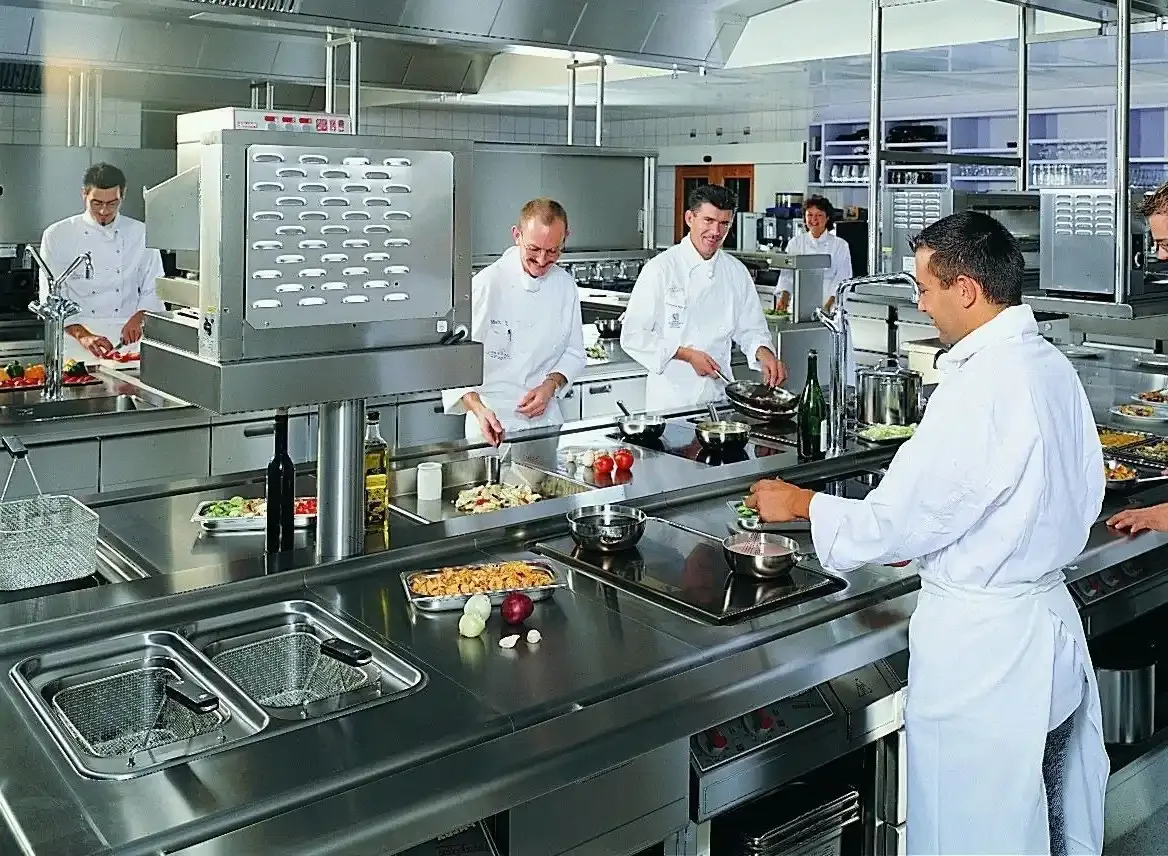
I’ll admit it, I never thought much about the psychology of yelling in kitchens until I spent a week shadowing a line cook at a downtown Nashville hotspot. The place was chaos: tickets flying, burners roaring, and the expediter barking orders like a drill sergeant. But here’s the thing, no one seemed stressed. In fact, the team moved with a weird kind of synchronicity, like a well-rehearsed dance. And then it hit me: the shouting wasn’t just noise. It was verbal engagement, a lifeline in the storm of a commercial kitchen. But is it really that simple? Or are we missing something deeper about how words shape our brains under pressure?
Fast forward to last month, when I stumbled on a study about how verbal communication in high-stress environments can actually reduce cortisol levels. My first thought? *No way.* Kitchens are pressure cookers, literally and figuratively. But the more I dug, the more I realized this wasn’t just about stress relief. It was about cognitive resilience, team cohesion, and even creativity. So, let’s unpack this. What if the way we talk in kitchens isn’t just functional, it’s psychologically transformative? And if that’s true, how can we harness it without turning our kitchens into echo chambers of chaos?
By the end of this, you’ll see why verbal engagement in commercial kitchens isn’t just about getting orders out, it’s about keeping your team sharp, connected, and sane. We’ll explore the science behind it, the unspoken rules of kitchen chatter, and how to strike that delicate balance between too much noise and not enough. And maybe, just maybe, you’ll look at your next dinner rush a little differently.
The Psychology Behind the Noise: Why Kitchens Thrive on Verbal Engagement
The Science of Sound and Stress
Let’s start with the obvious: commercial kitchens are loud. Like, really loud. The clatter of pans, the hiss of steam, the hum of refrigeration, it’s a symphony of sensory overload. But here’s the counterintuitive part: that noise? It might actually be protecting your mental health. A 2024 study published in *Frontiers in Psychology* found that environments with consistent, predictable auditory input (like the rhythmic shouting in kitchens) can lower perceived stress levels compared to silent or erratic noise. Why? Because our brains are wired to seek patterns. When we hear a familiar cadence, like a chef calling out “behind!” or “corner!”-it triggers a predictive processing response. Our brains anticipate the next sound, which creates a sense of control. And control, as any psychologist will tell you, is the antidote to anxiety.
But it’s not just about the noise itself. It’s about what the noise means. When a sous chef yells “pick up!” it’s not just a command, it’s a social cue. It signals urgency, yes, but it also reinforces teamwork. That’s where the magic happens. Research from the *Journal of Occupational Health Psychology* suggests that verbal engagement in high-pressure environments fosters collective efficacy-the belief that the team can handle the challenge. And when people believe they can succeed? They do. But here’s the kicker: this only works if the communication is clear, purposeful, and respectful. Yelling for the sake of yelling? That’s just noise. Yelling with intent? That’s a psychological tool.
I’m torn between two ideas here. On one hand, the science seems to back up the idea that verbal engagement is a net positive. On the other, I’ve worked in kitchens where the shouting felt more like bullying than teamwork. So where’s the line? Maybe it’s not about the volume, it’s about the intent behind the words. Let’s dig deeper.
The Unspoken Rules of Kitchen Chatter
Not all verbal engagement is created equal. Walk into a Michelin-starred kitchen, and you’ll notice something strange: the volume is lower, but the communication is sharper. Chefs speak in short, precise bursts-”fire the scallops,” “yes, chef,” “behind you.” There’s no wasted breath. Contrast that with a diner at 2 AM, where the language is more colorful (and often NSFW), but still structured. So what’s the difference? It’s not just about professionalism, it’s about cognitive load management.
In psychology, there’s this concept called cognitive bandwidth. It’s the idea that our brains have a limited amount of mental energy to spend on tasks. In a kitchen, every second counts, so you need communication that’s efficient, predictable, and actionable. That’s why you’ll hear the same phrases over and over: “Yes, chef,” “behind,” “corner.” These aren’t just words, they’re cognitive shortcuts. They reduce the mental effort required to process information, freeing up bandwidth for the actual cooking. It’s like a well-oiled machine, where every part knows its role and communicates in the most efficient way possible.
But here’s where it gets interesting. A 2025 study from the *International Journal of Hospitality Management* found that kitchens with higher rates of positive verbal reinforcement (think “great job,” “nice plating,” “keep it up”) had lower turnover rates and higher job satisfaction. That’s right, kind words matter, even in the heat of the moment. But how do you balance that with the need for speed and efficiency? Maybe it’s about strategic positivity. A quick “nice sear” during a rush doesn’t take much time, but it can make all the difference in how a team feels at the end of the night.
I’m starting to think that verbal engagement in kitchens isn’t just about getting the job done, it’s about creating a culture. But what happens when that culture goes wrong? Let’s talk about the dark side of kitchen chatter.
The Dark Side: When Verbal Engagement Turns Toxic
The Fine Line Between Motivation and Bullying
Let’s be real, kitchens have a reputation for being hostile environments. The stereotype of the screaming chef isn’t just a trope; it’s a reality in some places. And while a little pressure can be motivating, too much can cross into psychological harm. So where’s the line? According to a 2023 report from the *Harvard Business Review*, the difference between motivational pressure and toxic stress comes down to two things: intent and consistency.
Motivational pressure is situational. It’s the expediter raising their voice to get an order out during a rush. It’s the chef de cuisine calling out a mistake to correct it in the moment. It’s temporary, and it’s focused on the task, not the person. Toxic stress, on the other hand, is personal. It’s the chef who berates a line cook for being “slow” every single shift. It’s the sous chef who makes snide comments about someone’s work ethic in front of the team. It’s consistent, and it’s directed at the individual, not the issue.
The problem? Our brains don’t always distinguish between the two. Chronic exposure to toxic verbal engagement can lead to increased cortisol levels, burnout, and even PTSD-like symptoms in extreme cases. A study from *Occupational Medicine* found that workers in high-stress environments with poor communication were three times more likely to report symptoms of anxiety and depression. That’s a staggering number. But here’s the thing, it’s not just about the volume or the words used. It’s about how those words make people feel.
I’ve seen kitchens where the shouting was constant, but the team thrived. I’ve also seen kitchens where the volume was low, but the tension was palpable. So what’s the difference? Maybe it’s about trust. In the first scenario, the team knew the shouting was temporary and task-focused. In the second, they didn’t know what to expect. That unpredictability? It’s a psychological killer.
How to Spot Toxic Verbal Engagement
So how do you know if your kitchen’s verbal culture is healthy or harmful? Here are a few red flags to watch for:
- Personal attacks: If the criticism is about the person (“You’re so lazy”) rather than the task (“This sauce needs more reduction”), that’s a problem.
- Public humiliation: Correcting someone in front of the team is one thing. Berating them is another.
- Inconsistent expectations: If the rules change depending on the chef’s mood, that’s a sign of a toxic environment.
- Silent treatment: Verbal engagement isn’t just about talking, it’s about communication. If someone is being ignored or excluded, that’s just as harmful as yelling.
- Lack of positive reinforcement: If the only feedback is negative, morale will suffer. Even a quick “good job” can make a difference.
If you’re seeing these signs in your kitchen, it’s time to hit the reset button. But how? Let’s talk about how to build a psychologically safe verbal culture.
Building a Psychologically Safe Verbal Culture in Your Kitchen
The Role of Leadership in Shaping Communication
Here’s the hard truth: the tone of a kitchen’s verbal engagement starts at the top. If the head chef is constantly screaming, the team will follow suit. If the chef de cuisine is dismissive or sarcastic, the culture will reflect that. But if leadership prioritizes clear, respectful, and purposeful communication, the team will too. It’s that simple, and that complicated.
So what does good leadership look like in this context? It’s not about being soft. It’s about being intentional. A great leader in a kitchen:
- Sets clear expectations: Everyone knows what’s expected of them, and the communication reflects that.
- Models the behavior they want to see: If you want your team to communicate respectfully, you need to do the same.
- Provides feedback in real time: Waiting until the end of the shift to give feedback is too late. The best leaders correct mistakes in the moment, and praise good work just as quickly.
- Encourages open dialogue: A psychologically safe kitchen isn’t just about top-down communication. It’s about creating an environment where everyone feels comfortable speaking up.
- Recognizes the power of words: A single “great job” can make someone’s day. A single “you’re useless” can break their spirit.
I’ve worked with chefs who thought being tough meant being harsh. But here’s the thing: toughness and respect aren’t mutually exclusive. You can hold your team to high standards without tearing them down. In fact, the best leaders do exactly that. They push their teams to be better, but they do it in a way that builds them up instead of breaking them down.
But leadership isn’t just about the chefs. It’s about the entire team. So how do you create a culture where everyone feels comfortable speaking up?
Encouraging Positive Verbal Engagement Among Team Members
Verbal engagement isn’t just about the chefs, it’s about the entire team. And the best kitchens I’ve worked in? They’re the ones where everyone feels comfortable speaking up, whether it’s to call out a mistake, ask for help, or just check in with a teammate. But how do you create that kind of culture?
First, it starts with trust. If your team doesn’t trust each other, they won’t communicate openly. And trust isn’t built overnight. It’s built through consistent, respectful interactions. That means:
- Active listening: When someone speaks, listen. Really listen. Don’t just wait for your turn to talk.
- Constructive feedback: If you need to correct someone, do it in a way that’s helpful, not hurtful. Focus on the task, not the person.
- Positive reinforcement: Acknowledge good work. It doesn’t have to be a big deal, just a quick “nice job” can make a difference.
- Open communication: Encourage your team to speak up if they’re struggling or if they see something that could be improved.
- Team-building activities: This doesn’t have to be cheesy. It could be as simple as a team dinner after a shift or a quick huddle before service to go over the night’s specials.
Second, it’s about ormalizing vulnerability. In a lot of kitchens, there’s this unspoken rule that you don’t show weakness. But that’s a recipe for burnout. The best teams are the ones where people feel comfortable saying, “I’m struggling,” or “I need help.” That doesn’t mean lowering standards, it means creating an environment where people feel safe asking for support when they need it.
Finally, it’s about leading by example. If you want your team to communicate respectfully, you need to do the same. That means no eye-rolling, no sarcasm, and no dismissive comments. It means treating everyone with the same level of respect, whether they’re the head chef or the dishwasher.
But here’s the thing: even the best teams have off days. So how do you handle verbal engagement when things go wrong?
Verbal Engagement in Crisis: How to Communicate Under Pressure
The Psychology of Crisis Communication
Let’s talk about the dinner rush from hell. The one where the POS system crashes, the fryer dies, and the expediter calls in sick. In moments like these, communication isn’t just important, it’s everything. But here’s the catch: under pressure, our brains don’t always communicate effectively. Stress triggers the fight-or-flight response, which can lead to:
- Tunnel vision: We focus on the immediate problem and ignore the bigger picture.
- Shortened tempers: We snap at the people around us, even if they’re not the problem.
- Poor decision-making: We make choices based on emotion, not logic.
- Breakdown in communication: We assume people know what we’re thinking, so we don’t say it out loud.
So how do you communicate effectively in a crisis? It starts with calm. I know, I know, easier said than done. But here’s the thing: panic is contagious. If the chef starts screaming, the team will too. But if the chef stays calm, the team will follow suit. That doesn’t mean you can’t raise your voice, it just means you need to control the tone.
Next, it’s about clarity. In a crisis, there’s no room for ambiguity. Every word needs to be clear, concise, and actionable. That means:
- Using short, simple sentences: “Pick up table 12” is better than “Can someone please get table 12 out as soon as possible?”
- Avoiding jargon: Not everyone knows what “86” means. Say “we’re out of the salmon” instead.
- Repeating key information: If the fryer is down, say it multiple times so everyone hears it.
- Assigning tasks clearly: “John, you’re on salads. Sarah, you’re on apps.” No room for confusion.
Finally, it’s about empathy. In a crisis, it’s easy to forget that the people around you are also stressed. But taking a second to check in can make all the difference. A quick “you good?” or “need a hand?” can go a long way in keeping morale high.
But what about after the crisis? How do you debrief in a way that’s productive, not punitive?
Post-Crisis Debriefs: Learning from the Chaos
After a rough shift, it’s tempting to just go home and forget about it. But the best teams take the time to debrief. Not to assign blame, but to learn. A good debrief should:
- Start with the facts: What happened? What went wrong? What went right?
- Focus on solutions: How can we prevent this from happening again?
- Encourage open dialogue: Everyone should feel comfortable sharing their perspective.
- End on a positive note: What did we learn? How can we improve?
But here’s the key: the debrief needs to be constructive. That means no personal attacks, no blame-shifting, and no dwelling on the negative. It’s about learning from the experience, not rehashing it.
I’ve seen debriefs go wrong in two ways. The first is when they turn into venting sessions. Everyone’s frustrated, and instead of focusing on solutions, they just complain. The second is when they turn into blame games. Someone messed up, and instead of learning from it, the team just points fingers. Neither of these approaches is productive.
So how do you keep the debrief on track? It starts with structure. Here’s a simple framework you can use:
- What happened? Stick to the facts. No opinions, no blame.
- What went well? Even in a crisis, there are always things that went right.
- What could we improve? Focus on the process, not the people.
- What’s our action plan? What are we going to do differently next time?
And here’s the most important part: the debrief should be a conversation, not a lecture. Everyone should have a chance to speak, and everyone’s input should be valued. That’s how you build a team that learns from its mistakes instead of repeating them.
The Cognitive Benefits of Verbal Engagement: How Words Shape Our Brains
How Verbal Engagement Enhances Focus and Memory
Let’s geek out for a second. Did you know that verbal engagement in kitchens doesn’t just help with communication, it actually changes the way our brains work? It’s true. A 2025 study from *Nature Neuroscience* found that environments with high levels of structured verbal interaction (like commercial kitchens) can improve working memory and enhance focus. How? It all comes down to cognitive load theory.
In simple terms, cognitive load theory is the idea that our brains have a limited amount of mental energy to spend on tasks. When we’re in a high-pressure environment like a kitchen, that energy gets spread thin. But here’s the thing: verbal engagement can act as an external memory aid. When someone yells “pick up!,” it’s not just a command, it’s a cognitive offload. It frees up mental space by outsourcing the reminder to the environment. And when that happens, our brains can focus on the task at hand instead of trying to remember everything.
But it’s not just about memory. Verbal engagement also enhances focus. When we hear a familiar phrase like “behind!,” our brains automatically shift into task mode. It’s like a mental trigger that says, “Hey, pay attention, this is important.” And the more we hear these triggers, the more automatic they become. That’s why experienced chefs can move through a kitchen with such precision, their brains are wired to respond to these cues without conscious thought.
But here’s where it gets really interesting. Verbal engagement doesn’t just help with focus and memory, it also enhances creativity. A study from *Psychological Science* found that environments with high levels of verbal interaction (like kitchens) can boost divergent thinking, which is the ability to come up with multiple solutions to a problem. Why? Because when we’re constantly communicating, we’re exposed to new ideas and perspectives. And that exposure can spark creativity.
I’m starting to think that verbal engagement in kitchens isn’t just a tool, it’s a cognitive superpower. But how do we harness it without burning out?
The Role of Verbal Engagement in Preventing Burnout
Burnout is a real problem in the restaurant industry. Long hours, high stress, and physical demands can take a toll on even the most resilient workers. But here’s the thing: verbal engagement can act as a buffer against burnout. How? It all comes down to social support.
A 2024 study from the *Journal of Applied Psychology* found that workers in high-stress environments with strong social support networks were less likely to experience burnout. And what’s one of the easiest ways to build social support? Verbal engagement. When we communicate openly and honestly with our team, we build trust, camaraderie, and resilience. And those things? They’re the antidote to burnout.
But it’s not just about the quantity of communication, it’s about the quality. A kitchen where people are constantly yelling at each other isn’t going to build social support. But a kitchen where people communicate respectfully, openly, and honestly? That’s a different story. That’s a kitchen where people feel seen, heard, and valued. And when people feel that way, they’re less likely to burn out.
So how do you build a kitchen culture that prevents burnout? It starts with small, consistent acts of verbal engagement. Things like:
- Checking in: A quick “how’s your shift going?” can make someone feel seen.
- Offering help: “Need a hand with that?” shows that you’re part of a team.
- Giving praise: “Great job on that plating” boosts morale.
- Listening: Sometimes, people just need to vent. Being a good listener can make all the difference.
But here’s the catch: preventing burnout isn’t just about the good times. It’s also about how you handle the bad times. And that’s where emotional intelligence comes in.
The Emotional Intelligence of Kitchen Chatter
How Emotional Intelligence Shapes Verbal Engagement
Emotional intelligence (EQ) is one of those buzzwords that gets thrown around a lot, but in a kitchen, it’s everything. EQ is the ability to recognize, understand, and manage our own emotions, and the emotions of others. And in a high-pressure environment like a commercial kitchen, EQ is what separates the good teams from the great ones.
So how does EQ shape verbal engagement? It starts with self-awareness. If you’re not aware of your own emotions, you can’t control how you communicate. That means recognizing when you’re stressed, frustrated, or overwhelmed, and adjusting your tone accordingly. It’s the difference between snapping at someone and saying, “I’m feeling a little overwhelmed right now, can we talk about this later?”
Next, it’s about empathy. Empathy is the ability to understand and share the feelings of others. And in a kitchen, empathy is what allows you to communicate in a way that builds people up instead of tearing them down. It’s the difference between saying, “You’re so slow,” and saying, “I know this is a tough station, let’s figure out how to make it easier.”
Finally, it’s about social skills. Social skills are what allow you to communicate effectively with your team. That means being able to give feedback, resolve conflicts, and build relationships. And in a kitchen, those skills are on-negotiable.
But here’s the thing: EQ isn’t something you’re born with. It’s something you develop. And the best way to develop it? Practice. That means paying attention to how you communicate, seeking feedback from your team, and being open to growth.
I’ve worked with chefs who had all the technical skills in the world but zero EQ. And you know what? Their kitchens were miserable places to work. On the other hand, I’ve worked with chefs who weren’t the most skilled cooks but had off-the-charts EQ. And their kitchens? They were joyful, productive, and resilient.
So how do you develop EQ in your kitchen? Let’s talk about some practical strategies.
Practical Strategies for Developing Emotional Intelligence in Kitchens
Developing EQ in a kitchen isn’t about sitting around holding hands and singing Kumbaya. It’s about practical, actionable strategies that make a real difference. Here are a few to get you started:
- Start with self-reflection: At the end of each shift, take a few minutes to reflect on how you communicated. Did you snap at someone? Did you offer praise? Did you listen? Be honest with yourself.
- Seek feedback: Ask your team how you’re doing. What’s working? What’s not? Be open to their input.
- Practice active listening: When someone speaks, really listen. Don’t just wait for your turn to talk. Ask questions, paraphrase what they said, and show that you’re engaged.
- Use “I” statements: Instead of saying, “You’re not pulling your weight,” say, “I’m feeling a little overwhelmed, can we talk about how to divide the work more evenly?”
- Give praise publicly, criticize privately: If someone does a great job, acknowledge it in front of the team. If someone makes a mistake, talk to them one-on-one.
- Model the behavior you want to see: If you want your team to communicate respectfully, you need to do the same. That means no eye-rolling, no sarcasm, and no dismissive comments.
- Encourage open dialogue: Create an environment where people feel comfortable speaking up. That means no interrupting, no dismissing, and no judging.
But here’s the thing: developing EQ isn’t a one-time thing. It’s an ongoing process. And the best way to keep growing? Keep practicing. The more you work on your EQ, the better you’ll get at communicating effectively, and the stronger your team will become.
But what about the people who struggle with verbal engagement? Not everyone is comfortable speaking up, especially in a high-pressure environment. So how do you create a culture where everyone feels comfortable communicating?
Inclusivity in Verbal Engagement: Making Sure Everyone Has a Voice
Overcoming Barriers to Verbal Participation
Let’s be real, not everyone is comfortable speaking up in a kitchen. Some people are naturally quiet. Others might be intimidated by the fast pace or the loud environment. And some might not speak the language fluently. So how do you create a culture where everyone feels comfortable communicating?
First, it’s about recognizing the barriers. Some common ones include:
- Language barriers: If English isn’t someone’s first language, they might struggle to keep up with the fast-paced communication.
- Cultural differences: In some cultures, speaking up is seen as disrespectful. In others, it’s encouraged.
- Personality differences: Some people are naturally introverted and prefer to listen rather than speak.
- Fear of judgment: If someone is afraid of being criticized or ridiculed, they’re less likely to speak up.
- Hearing impairments: In a loud kitchen, it can be hard for people with hearing impairments to keep up with verbal communication.
So how do you overcome these barriers? It starts with awareness. As a leader, it’s your job to recognize these challenges and find ways to address them. That might mean:
- Using visual cues: If someone struggles with verbal communication, use hand signals or written notes to convey important information.
- Encouraging alternative forms of communication: Some people might prefer to write things down or use a whiteboard to communicate.
- Creating a safe space: Make it clear that everyone’s input is valued, and that there’s no such thing as a “stupid” question.
- Providing language support: If you have team members who aren’t fluent in English, consider providing language training or translation tools.
- Being patient: Some people need time to warm up to the idea of speaking up. Don’t rush them.
But here’s the thing: inclusivity isn’t just about overcoming barriers, it’s about celebrating diversity. The best kitchens are the ones where people from different backgrounds, cultures, and personalities come together to create something amazing. And that starts with making sure everyone has a voice.
How to Foster an Inclusive Verbal Culture
So how do you foster an inclusive verbal culture in your kitchen? It starts with intentionality. You can’t just assume that everyone will feel comfortable speaking up, you need to create the conditions for it to happen. Here are a few strategies to get you started:
- Start with the hiring process: Look for people who value communication and teamwork. Ask interview questions that get at how they handle verbal engagement.
- Set clear expectations: Make it clear that everyone is expected to communicate openly and respectfully. That means no interrupting, no dismissing, and no judging.
- Provide training: Offer workshops or training sessions on effective communication. Make sure everyone knows the basics, like how to give feedback, how to listen actively, and how to resolve conflicts.
- Encourage participation: During team meetings or debriefs, make sure everyone has a chance to speak. If someone is quiet, ask for their input directly.
- Celebrate diversity: Make it clear that different perspectives are valued. Encourage people to share their ideas, even if they’re outside the box.
- Lead by example: If you want your team to communicate inclusively, you need to do the same. That means listening to everyone, valuing their input, and treating them with respect.
But here’s the thing: inclusivity isn’t just about the big gestures, it’s about the small, everyday actions. Things like:
- Using inclusive language: Avoid slang or jargon that might exclude people. Use clear, simple language that everyone can understand.
- Checking in: Ask people how they’re doing, and really listen to their answers.
- Offering support: If someone is struggling, offer to help. That might mean pairing them with a mentor, providing extra training, or just being a sounding board.
- Being open to feedback: If someone tells you that your communication style is excluding them, listen. Be open to change.
I’m starting to think that inclusivity in verbal engagement isn’t just a nice-to-have, it’s a must-have. The best kitchens are the ones where everyone feels valued, heard, and respected. And that starts with making sure everyone has a voice.
Conclusion: The Future of Verbal Engagement in Commercial Kitchens
So where does this leave us? We’ve talked about the science behind verbal engagement, the unspoken rules of kitchen chatter, the dark side of toxic communication, and the power of emotional intelligence. We’ve explored how words can shape our brains, prevent burnout, and create inclusive cultures. But what does the future hold?
I think we’re at a turning point. The restaurant industry is changing, and so are the expectations around communication. Gone are the days when screaming was seen as the only way to get results. Today, we know that respectful, purposeful, and inclusive communication is the key to success. And that’s a good thing, for the industry, for the workers, and for the food we serve.
But here’s the challenge: changing a kitchen’s verbal culture isn’t easy. It takes time, effort, and commitment. It means holding ourselves and our teams accountable. It means leading by example. And it means being open to growth.
So here’s my question for you: What’s one small change you can make to improve verbal engagement in your kitchen? Maybe it’s checking in with your team more often. Maybe it’s giving more praise. Maybe it’s just listening. Whatever it is, start small. Because the truth is, words have power. And in a commercial kitchen, they can make all the difference.
FAQ
Q: Isn’t all the yelling in kitchens just stress and aggression?
A: Not necessarily. While it’s true that some kitchens have toxic communication cultures, many use verbal engagement as a structured, purposeful tool to enhance focus, teamwork, and efficiency. The key is intent, yelling with the goal of motivating or informing is different from yelling to belittle or intimidate. Research shows that predictable, task-focused verbal cues can actually reduce stress by creating a sense of control and rhythm.
Q: How can I encourage my team to communicate more openly without making them uncomfortable?
A: Start by modeling the behavior you want to see. If you communicate openly and respectfully, your team is more likely to follow suit. Next, create a safe space for communication. That means no interrupting, no dismissing, and no judging. Encourage participation by asking for input directly, especially from quieter team members. Finally, provide training or workshops on effective communication to give everyone the tools they need to engage confidently.
Q: What if someone on my team struggles with verbal communication due to language barriers or hearing impairments?
A: Inclusivity is key. Start by recognizing the barriers and finding ways to address them. For language barriers, consider providing language training or translation tools. For hearing impairments, use visual cues or written notes to convey important information. The goal is to create an environment where everyone feels comfortable and supported, regardless of their communication style or abilities.
Q: How can I tell if my kitchen’s verbal culture is healthy or toxic?
A: Look for these signs of a healthy verbal culture: clear, respectful communication; open dialogue; constructive feedback; and a balance of praise and criticism. On the other hand, signs of a toxic verbal culture include personal attacks, public humiliation, inconsistent expectations, silent treatment, and a lack of positive reinforcement. If you’re seeing more of the latter, it’s time to hit the reset button and work on building a more respectful, inclusive communication culture.
@article{the-hidden-power-of-words-how-verbal-engagement-in-commercial-kitchens-boosts-mental-health-and-performance,
    title   = {The Hidden Power of Words: How Verbal Engagement in Commercial Kitchens Boosts Mental Health and Performance},
    author  = {Chef's icon},
    year    = {2026},
    journal = {Chef's Icon},
    url     = {https://chefsicon.com/psychological-benefits-of-verbal-engagement-in-commercial-kitchens/}
}