The Best Fluffy Pancakes recipe you will fall in love with. Full of tips and tricks to help you make the best pancakes.
Let me tell you about the time I nearly ruined a dinner service at a Nashville pop-up I was consulting for. It was a sweltering August evening, the kind where the AC struggles to keep up with the heat radiating off the line. The chef had just introduced a new aioli-based sauce-raw egg yolk, garlic, lemon, and a generous pour of raw milk to thin it out. Sounds simple, right? By the third batch, I noticed the sauce was sitting at room temperature for nearly an hour while the team prepped other components. My stomach dropped. I pulled the chef aside and asked, “You’re not actually serving this raw dairy sauce without pasteurization, are you?” The look on his face told me everything I needed to know. We tossed it. Every. Last. Drop.
That night stuck with me, not just because of the close call, but because it highlighted how easily raw dairy sauce safety gets overlooked in commercial kitchens. We spend so much time obsessing over cross-contamination with proteins or proper cooling for stocks, but raw dairy? It’s the silent risk that slips through the cracks. Whether you’re running a high-volume restaurant, a boutique catering operation, or even a food truck, the rules (and risks) around raw dairy sauces aren’t just guidelines, they’re your first line of defense against foodborne illness outbreaks. And let’s be real: no one wants to be the next headline for all the wrong reasons.
So, what’s the deal with raw dairy in sauces? Why does it matter more than, say, a cooked béchamel? And how do you balance flavor integrity with food safety compliance without driving your team insane? That’s what we’re diving into today. By the end of this, you’ll know:
- Why raw dairy sauces are a higher-risk ingredient than you might think
- The FDA and local health department regulations you’re probably misinterpreting (or ignoring)
- Practical, no-nonsense temperature control and storage protocols that actually work in a real kitchen
- How to train your staff so they don’t roll their eyes every time you mention “time and temperature”
- Alternatives and workarounds for when you *have* to use raw dairy but can’t risk it
Let’s start with the basics, because I’ve got a feeling some of this might surprise you.
The Raw Truth: Why Dairy Sauces Are a Bigger Deal Than You Think
1. The Science Behind the Risk (Or: Why Your Grandma’s Recipe Might Get You Shut Down)
Raw dairy, whether it’s milk, cream, or even cultured products like crème fraîche, is a pathogen magnet. Unlike cooked sauces, where heat kills off bacteria, raw dairy sauces provide the perfect environment for microbes to thrive: moisture, protein, and a neutral pH. The big three you need to worry about? Salmonella, Listeria monocytogenes, and E. coli. And here’s the kicker: these bacteria don’t just make people sick, they can multiply rapidly at temperatures as low as 41°F (5°C). That’s right. Your walk-in might not be as safe as you think.
I remember a conversation with a chef friend who insisted that because his raw milk aioli was made with “fresh, local dairy,” it was inherently safer. That’s a dangerous assumption. Even the cleanest, most carefully sourced raw dairy can harbor pathogens. The FDA’s Food Code doesn’t care if your milk comes from a farm with a cute Instagram account, if it’s unpasteurized and sitting at room temperature for more than four hours, you’re playing Russian roulette with your customers’ health. And your reputation.
But here’s where it gets tricky. Some chefs argue that cultured dairy products (like buttermilk or yogurt) are safer because the fermentation process creates an acidic environment that inhibits bacterial growth. Is that true? Partially. While the acidity does slow down some pathogens, it’s not a silver bullet. Listeria, for example, can survive and even grow in acidic conditions. So, no, you can’t just swap raw milk for buttermilk and call it a day. The rules still apply.
2. The Regulatory Minefield: What the FDA (and Your Local Health Inspector) Actually Require
Let’s talk about the FDA Food Code, because if you’re not familiar with it, you’re already behind. The Food Code is the bible for food safety in commercial kitchens, and it’s updated every few years to reflect new science and risks. As of 2026, here’s what you need to know about raw dairy sauces:
- Temperature Control: Raw dairy sauces must be held at 41°F (5°C) or below, or 135°F (57°C) or above. The “danger zone” between those temperatures? That’s where bacteria throw a party. And no, your “quick chill” in the blast freezer for 10 minutes doesn’t count. The Food Code requires that foods pass through the danger zone quickly, ideally within two hours, to minimize risk.
- Time Limits: If your raw dairy sauce is held at room temperature (say, for plating or prep), it can’t sit out for more than four hours. But here’s the catch: if the ambient temperature is above 90°F (32°C), that window shrinks to just one hour. In a busy kitchen, that’s easier to exceed than you’d think.
- Labeling: This is where a lot of kitchens slip up. If you’re storing raw dairy sauces in the fridge, they need to be labeled with the date of preparation and a discard date. The Food Code doesn’t specify how long raw dairy sauces can be stored, but most health departments recommend no more than seven days. And if you’re using unpasteurized dairy? Some states require an additional warning label for customers.
- Pasteurization Requirements: If you’re using raw milk or cream in a sauce that won’t be cooked, the FDA requires that the dairy be pasteurized. There are exceptions for certain artisanal products (like some cheeses aged over 60 days), but for sauces? Assume pasteurization is non-negotiable unless you’ve got a very specific exemption, and even then, you’re walking a tightrope.
Now, here’s where things get messy. The FDA Food Code is a model code, which means states and localities can adopt it as-is, modify it, or ignore it entirely. Some states, like California and New York, have stricter rules around raw dairy, while others are more lenient. I’ve seen kitchens get shut down in one county for a practice that was perfectly legal in the next town over. So, what’s a chef to do? Know your local regulations inside and out. Call your health department. Ask for their interpretation of the rules. And when in doubt, err on the side of caution. Trust me, it’s cheaper than a lawsuit.
3. The Temperature Game: Why Your Walk-In Might Be Betraying You
Let’s talk about refrigeration, because this is where even the most well-intentioned kitchens go wrong. You’ve got a walk-in set to 38°F (3°C), so you’re golden, right? Not so fast. Here’s the thing: refrigerator temperatures fluctuate. A lot. Every time the door opens, warm air rushes in. If your walk-in is packed to the gills (and whose isn’t?), airflow gets restricted, creating hot spots. And if your thermometer is mounted on the wall near the door? It might not reflect the actual temperature where your sauces are stored.
I learned this the hard way during a health inspection at a restaurant I was managing. The inspector pulled a container of raw cream-based sauce from the back of the walk-in and stuck a thermometer in it. 45°F (7°C). My heart sank. We’d just calibrated the walk-in thermometer the week before, and it read 38°F. Turns out, the sauce had been pushed to the back, near a fan that wasn’t circulating properly. The inspector wrote us up, and we had to toss the entire batch. Lesson learned: don’t trust the built-in thermometer. Invest in a digital probe thermometer and check your sauces in multiple spots, especially the ones that get buried.
Here’s another pro tip: use shallow containers for raw dairy sauces. The deeper the container, the longer it takes for the sauce to chill evenly. If you’re making a large batch, divide it into smaller portions before refrigerating. And if you’re in a rush, use an ice bath to bring the temperature down quickly. Just make sure the ice water is circulating, stagnant water won’t do you any favors.
4. The Four-Hour Rule: Why Your “Quick Taste Test” Could Be a Disaster
You know that moment when you’re tweaking a sauce, and you dip a spoon in for a taste, then set it down on the counter while you adjust the seasoning? Yeah, that’s a problem. The four-hour rule isn’t just about how long a sauce sits in the fridge, it’s about cumulative time at unsafe temperatures. Every minute your raw dairy sauce spends above 41°F (5°C) counts toward that four-hour limit. And if you’re in a hot kitchen? That time gets cut to one hour.
I get it. Tasting is part of the process. But there are ways to do it safely. Here’s what I recommend:
- Use a clean spoon every time. No double-dipping. Ever. Keep a stack of spoons nearby and toss them after one use.
- Work in small batches. If you’re making a large quantity of sauce, divide it into smaller portions and only work with one at a time. The rest stays in the fridge until you’re ready for it.
- Keep a timer. I know, it’s annoying. But set a timer for 30 minutes and stick to it. When it goes off, either return the sauce to the fridge or toss it. No exceptions.
- Designate a “tasting station.” This is a spot in the kitchen where sauces can be safely held at the correct temperature while you work. A small refrigerated prep table or even a chilled metal bowl on ice works.
And here’s a hard truth: if you’re making a raw dairy sauce for a large event or catering gig, you might need to prep it in stages. That means making smaller batches throughout the day rather than one big batch all at once. It’s more work, but it’s also the only way to stay within the time limits. Is it ideal? No. Is it necessary? Absolutely.
Beyond the Basics: Advanced Strategies for Raw Dairy Sauce Safety
5. The Pasteurization Loophole (And Why It’s Not as Scary as It Sounds)
Let’s say you’re dead set on using raw dairy in your sauces. Maybe it’s for a signature dish, or maybe you’re catering to a crowd that demands artisanal, farm-to-table ingredients. Is there a way to do it safely? The answer is yes, but it requires pasteurization.
Now, before you roll your eyes and say, “But Sammy, pasteurization kills the flavor!” hear me out. There are two types of pasteurization that are practical for commercial kitchens:
- Low-Temperature, Long-Time (LTLT): This involves heating the dairy to 145°F (63°C) for 30 minutes. It’s gentler on the flavor and texture, but it’s also time-consuming. You’ll need a precision sous vide setup or a double boiler to maintain the temperature consistently.
- High-Temperature, Short-Time (HTST): This is the method most commercial dairies use. The dairy is heated to 161°F (72°C) for 15 seconds. It’s faster, but it can alter the flavor and texture more than LTLT. You’ll need a commercial pasteurizer or a very precise stovetop setup to pull this off.
I’ve worked with chefs who swear by LTLT pasteurization for their raw milk sauces. One chef in Portland uses it for a cultured cream sauce that’s become a customer favorite. The key? He pasteurizes the milk before culturing it, which preserves the tangy flavor while eliminating pathogens. It’s a bit of a workaround, but it works.
But here’s the catch: pasteurization isn’t a one-and-done deal. Once you’ve pasteurized your dairy, you still need to follow all the same storage and handling rules as unpasteurized dairy. That means keeping it cold, labeling it, and monitoring time and temperature. Pasteurization reduces the risk, but it doesn’t eliminate it.
6. The Acid Test: How pH Can Be Your Secret Weapon
Here’s something most chefs don’t realize: acidity can inhibit bacterial growth. That’s why so many traditional raw dairy sauces, like aioli, remoulade, or even some vinaigrettes-include acidic ingredients like lemon juice, vinegar, or buttermilk. The lower the pH, the harder it is for pathogens to survive.
The magic number? A pH of 4.6 or below. At that level, most bacteria (including Listeria) can’t grow. But, and this is a big but-pH alone isn’t enough to guarantee safety. You still need to control temperature and time. Think of acidity as an extra layer of protection, not a replacement for proper handling.
I’ve seen chefs experiment with citric acid or lactic acid to lower the pH of their sauces. One caterer I know adds a splash of vinegar to her raw cream-based soups to buy herself a little extra time during service. It’s not a perfect solution, but it’s a smart hack for high-volume operations.
If you’re going this route, invest in a pH meter. Don’t guess. And remember: the pH of your sauce can change over time, especially if it’s sitting out. Test it at the beginning and end of service to make sure it’s still in the safe zone.
7. The Staff Training Problem: Why Your Team Keeps Messing Up (And How to Fix It)
Let’s be honest: no one gets into cooking because they love food safety. Most line cooks would rather spend their time perfecting a reduction or plating a dish than memorizing temperature logs. But here’s the thing: food safety is part of the job. And if your team doesn’t understand the risks of raw dairy sauces, they’re going to keep making mistakes.
So, how do you train them without putting them to sleep? Here’s what’s worked for me:
- Make it real. Don’t just recite the rules. Tell stories. Show them photos of foodborne illness outbreaks. Explain what happens when a customer gets sick from your sauce. Fear isn’t the best motivator, but it’s a start.
- Gamify it. Turn food safety into a competition. Who can chill a sauce the fastest? Who can spot a temperature violation first? Offer small rewards (like a free coffee or an extra break) for the winners.
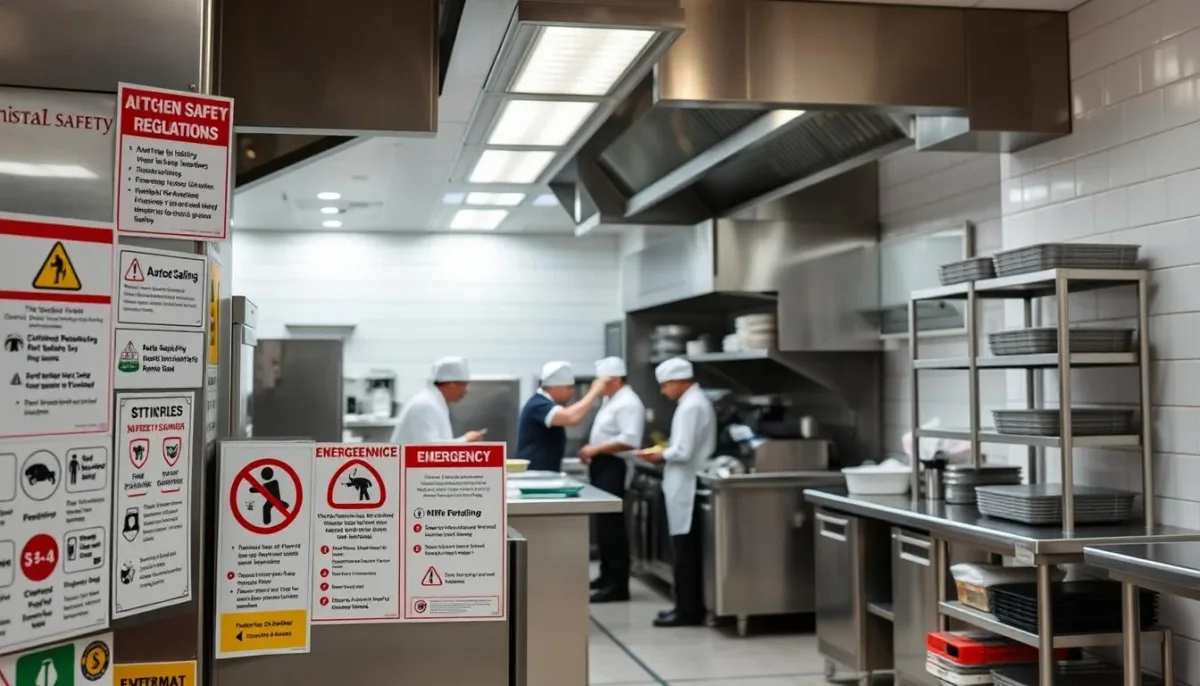
- Use visuals. Hang posters in the kitchen with the four-hour rule and danger zone temperatures. Color-code your containers (e.g., red for raw dairy, blue for cooked sauces). The easier it is to remember, the more likely they’ll follow the rules.
- Lead by example. If your team sees you cutting corners, they will too. Be the chef who always checks the temperature, labels containers, and tosses questionable sauces. They’ll follow your lead.
- Refresh often. Food safety training isn’t a one-and-done deal. Schedule monthly refresher sessions, especially if you’ve had turnover or near-misses. And don’t just lecture, make it interactive. Ask them to identify risks in real-time during service.
And here’s a hard truth: some people won’t get it. No matter how much you train them, they’ll keep making the same mistakes. If that’s the case, it’s time to have a serious conversation about whether they’re the right fit for your team. Because at the end of the day, their mistakes could cost you your business.
8. The Alternatives: When Raw Dairy Just Isn’t Worth the Risk
Let’s say you’ve read this far and you’re thinking, “This is way more trouble than it’s worth.” I don’t blame you. Raw dairy sauces are delicious, but they’re also a pain in the ass to manage. So, what are your options?
Here are a few alternatives that give you similar flavors and textures without the risk:
- Pasteurized dairy: This is the obvious choice. Most commercial kitchens already use pasteurized milk, cream, and butter. It’s safe, consistent, and widely available. The downside? It might not have the same depth of flavor as raw dairy, but with the right techniques (like reducing it or infusing it with aromatics), you can get close.
- Dairy substitutes: Coconut milk, cashew cream, and oat milk can mimic the richness of dairy in sauces. They’re not perfect substitutes, but they’re a great option for vegan or allergy-friendly menus. Just be aware that some substitutes (like coconut milk) have a stronger flavor that can overpower delicate sauces.
- Cooked sauces: If you’re making a béchamel, velouté, or cheese sauce, you’re already cooking the dairy, which kills off pathogens. The key is to make sure the sauce reaches and maintains a safe temperature (165°F/74°C for 15 seconds) before serving or storing.
- Fermented dairy: Products like yogurt, kefir, and crème fraîche are cultured, which gives them a tangy flavor and a lower pH. While they’re not risk-free, they’re generally safer than raw milk or cream. Just remember: the rules for temperature control and time limits still apply.
- Clarified butter or ghee: These are great for sauces that need a rich, buttery flavor without the moisture of dairy. They’re shelf-stable and don’t require refrigeration, which makes them a low-risk option. The downside? They lack the creaminess of dairy, so they’re not a perfect substitute for every sauce.
I’ve worked with chefs who’ve completely eliminated raw dairy from their menus, and their customers haven’t noticed. One chef in Austin replaced his raw cream-based salad dressing with a pasteurized version infused with herbs and shallots. The flavor was almost identical, and he didn’t have to worry about temperature control during service. Another chef swapped raw milk in his aioli for pasteurized milk and added a touch of lemon zest for brightness. Problem solved.
Is it as romantic as using raw, artisanal dairy? No. But is it smarter? Absolutely.
9. The Documentation Dilemma: Why You Need to Track Everything (And How to Do It Without Losing Your Mind)
Here’s the part no one likes to talk about: documentation. If you’re using raw dairy sauces in your kitchen, you need to keep records. Why? Because if there’s ever an outbreak or a health inspection, those records are your proof that you followed the rules. And if you don’t have them? You’re screwed.
So, what do you need to track? Here’s a quick list:
- Temperature logs: Record the temperature of your walk-in, reach-in, and any sauces you’re holding at service. Do this at least twice a day (morning and evening), and more often if you’re in a high-volume kitchen.
- Prep times: Note when you made the sauce, when it went into the fridge, and when it came out. If you’re holding it at room temperature for plating, track that too.
- Discard dates: Label every container with the date it was made and the date it needs to be tossed. And actually toss it when that date arrives, no “just one more day” exceptions.
- Staff training records: Keep a log of who’s been trained on raw dairy safety, when they were trained, and what they were trained on. If someone misses a session, make a note of it and schedule a make-up.
- Corrective actions: If something goes wrong (e.g., a sauce sits out too long, a fridge fails), document what happened and what you did to fix it. This shows the health department that you’re proactive about food safety.
I know, I know. It sounds like a lot. But here’s the good news: you don’t need a fancy system. A simple spreadsheet or even a notebook works fine. The key is to make it easy. If your system is too complicated, no one will use it. And if no one uses it, it’s useless.
Here’s what I recommend:
- Use a digital tool. Apps like ComplianceMate, Safefood 360, or even Google Sheets can streamline the process. Some of these tools even sync with your kitchen’s thermometers, so you don’t have to manually record temperatures.
- Assign a point person. Designate one person (or a small team) to be responsible for documentation. This ensures consistency and accountability.
- Keep it visible. Post your logs in a central location (like near the walk-in) so everyone can see them. This also makes it easy for the health inspector to review them during an inspection.
- Review regularly. Once a week, go through your logs and look for patterns. Are sauces consistently sitting out too long? Is the walk-in temperature creeping up? Use this data to make adjustments.
And here’s a pro tip: make documentation part of your kitchen culture. When you’re prepping sauces, have someone call out the start time. When you’re holding sauces at service, have the expediter check the temperature every hour. The more ingrained it is in your routine, the less of a hassle it’ll feel.
10. The Future of Raw Dairy in Commercial Kitchens: Trends, Tech, and What’s Next
So, what’s the future of raw dairy sauces in commercial kitchens? Honestly, I’m torn. On one hand, the demand for artisanal, farm-to-table ingredients isn’t going anywhere. Customers want authenticity, and raw dairy delivers that in spades. On the other hand, the risks are real, and the regulatory landscape is only getting stricter. So, where does that leave us?
Here are a few trends I’m watching:
- More precise temperature control: I’ve seen kitchens investing in smart refrigeration systems that monitor and adjust temperatures in real-time. Some even send alerts to your phone if the temperature goes out of range. It’s pricey, but it could be a game-changer for high-volume operations.
- Alternative pasteurization methods: Technologies like high-pressure processing (HPP) and UV pasteurization are becoming more accessible. These methods kill pathogens without altering the flavor or texture of the dairy as much as traditional pasteurization. I’ve talked to a few chefs who swear by HPP for their raw milk sauces, it’s not cheap, but it’s effective.
- Stricter regulations: As foodborne illness outbreaks make headlines, I expect to see more states cracking down on raw dairy. Some might ban it outright in commercial kitchens, while others will impose stricter labeling and documentation requirements. Either way, it’s a good idea to stay ahead of the curve.
- Consumer education: More restaurants are being transparent about their use of raw dairy. Some are even putting warning labels on menus or explaining their safety protocols to customers. It’s a smart move, it builds trust and shows that you’re taking food safety seriously.
- Cultural shifts: As plant-based diets become more popular, I wonder if the demand for raw dairy will decline. Maybe we’ll see more chefs experimenting with dairy-free sauces that mimic the richness of dairy without the risk. Or maybe raw dairy will become a niche ingredient, reserved for high-end restaurants that can afford the extra safety measures.
I don’t have a crystal ball, but here’s what I do know: the kitchens that succeed will be the ones that prioritize safety without sacrificing flavor. That might mean pasteurizing their dairy, investing in better equipment, or finding creative workarounds. But one thing’s for sure: ignoring the risks isn’t an option.
So, where does that leave you? Maybe you’re feeling overwhelmed. Maybe you’re questioning whether raw dairy sauces are worth the hassle. Or maybe you’re already thinking about how to implement some of these strategies in your own kitchen. Whatever you’re feeling, I get it. Food safety isn’t sexy, but it’s essential. And at the end of the day, it’s what keeps your customers coming back, and your doors open.
Final Thoughts: The Raw Dairy Sauce Safety Checklist (Because You Probably Need One)
Alright, let’s bring this home. If you take nothing else away from this article, remember this: raw dairy sauces are high-risk, but they’re not impossible to manage. It’s all about control, temperature control, time control, and process control. If you can master those three things, you’ll be ahead of 90% of the kitchens out there.
Here’s your raw dairy sauce safety checklist. Print it out. Hang it in your kitchen. Make it part of your daily routine.
- Source safely: Use only pasteurized dairy unless you have a specific exemption (and even then, think twice). If you’re using raw dairy, work with a supplier who follows strict safety protocols and provides documentation.
- Store correctly: Keep raw dairy sauces at 41°F (5°C) or below. Use shallow containers for even cooling, and check temperatures in multiple spots in your walk-in.
- Monitor time: Don’t let raw dairy sauces sit at room temperature for more than four hours (or one hour if it’s above 90°F/32°C). Use timers, and toss anything that’s been out too long.
- Label everything: Every container should have the date it was made and the date it needs to be discarded. And actually discard it when that date arrives.
- Train your team: Make sure everyone understands the risks and the rules. Use stories, visuals, and gamification to keep them engaged.
- Document everything: Keep temperature logs, prep times, and corrective actions. If something goes wrong, write it down and fix it.
- Consider alternatives: If raw dairy is too risky or too much of a hassle, explore pasteurized dairy, dairy substitutes, or cooked sauces. You might be surprised by how close you can get to the real thing.
- Stay informed: Regulations change. New technologies emerge. Keep up with the latest trends and adjust your practices as needed.
And here’s my final challenge to you: audit your kitchen this week. Walk through your prep process, check your storage temperatures, and review your documentation. Are you following the rules? Are there areas where you could improve? Be honest with yourself. Because at the end of the day, food safety isn’t about perfection, it’s about progress. And the more progress you make, the safer your customers (and your business) will be.
Now, I’d love to hear from you. What’s your biggest struggle with raw dairy sauces? Are you team pasteurized or team raw? Drop a comment below, I’m always up for a good debate.
FAQ: Raw Dairy Sauce Safety in Commercial Kitchens
Q: Can I use raw milk in sauces if it’s from a trusted local farm?
A: While sourcing from a trusted farm is a good start, it doesn’t eliminate the risk of pathogens. The FDA and most health departments require that dairy used in commercial kitchens be pasteurized unless you have a specific exemption. Even if your state allows raw milk sales, using it in sauces may still violate food safety regulations. Always check with your local health department before proceeding.
Q: How long can I safely store raw dairy sauces in the fridge?
A: The FDA doesn’t specify a maximum storage time for raw dairy sauces, but most health departments recommend discarding them after seven days. However, this can vary depending on the sauce’s pH, ingredients, and storage conditions. Always label your sauces with the date they were made and a discard date, and when in doubt, toss it out. It’s not worth the risk.
Q: What’s the best way to quickly chill a large batch of raw dairy sauce?
A: The safest method is to divide the sauce into shallow, stainless steel containers and place them in an ice bath. Stir the sauce occasionally to ensure even cooling. You can also use a blast chiller if your kitchen has one. The goal is to bring the temperature down to 41°F (5°C) or below within two hours. Avoid putting hot sauces directly into the walk-in, as this can raise the temperature of other foods and create hot spots.
Q: Are there any raw dairy sauces that are lower risk than others?
A: Sauces with a lower pH (like those made with buttermilk, yogurt, or vinegar) are generally lower risk because the acidity inhibits bacterial growth. However, they’re not risk-free. Listeria, for example, can survive in acidic environments. Additionally, sauces that are cooked (like béchamel or cheese sauce) are safer because the heat kills pathogens. If you’re looking to minimize risk, opt for pasteurized dairy or cooked sauces whenever possible.
@article{raw-dairy-sauce-safety-in-commercial-kitchens-what-youre-probably-getting-wrong-and-how-to-fix-it,
    title   = {Raw Dairy Sauce Safety in Commercial Kitchens: What You’re Probably Getting Wrong (And How to Fix It)},
    author  = {Chef's icon},
    year    = {2026},
    journal = {Chef's Icon},
    url     = {https://chefsicon.com/raw-dairy-sauce-safety-standards-commercial-kitchens/}
}