The Best Fluffy Pancakes recipe you will fall in love with. Full of tips and tricks to help you make the best pancakes.
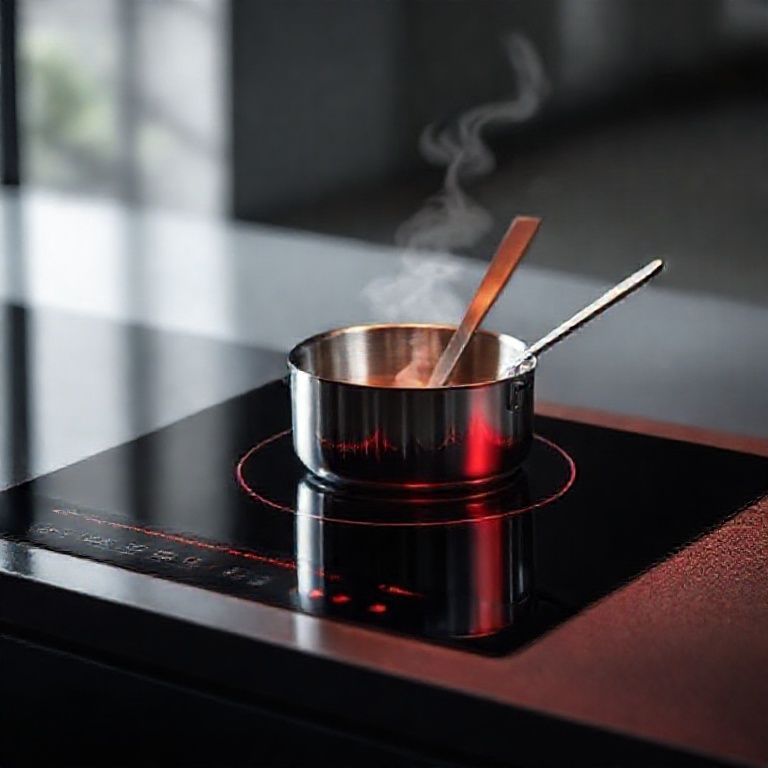
Table of Contents
- 1 The Gas vs. Induction Debate: Why the Tides Are Turning
- 2 The Hidden Costs (and Savings) of Going Induction
- 3 How Commercial Kitchens Are Adapting (or Resisting)
- 4 The Next 5-10 Years: Where Is Induction Headed?
- 5 Should You Switch to Induction? A Reality Check
- 6 Final Thoughts: The Induction Revolution Is Here (But It’s Not One-Size-Fits-All)
- 7 FAQ
I’ll admit it, I was late to the induction party. When I first moved to Nashville and started exploring the local food scene, I’d walk into these sleek, modern kitchens and see chefs working on what looked like glass stovetops with no flames, no coils, just… a faint red glow under their pans. My first thought? This looks like a prop from a sci-fi movie. But after talking to enough chefs, especially those running high-volume restaurants where every second counts, I realized induction isn’t just a gimmick. It’s the future. And in 2025, that future is arriving faster than most of us expected.
Here’s the thing: induction cooking isn’t new. It’s been around for decades in Europe and Asia, but in the U.S., it’s only now hitting its stride, especially in commercial kitchens. Why? Because the stars are aligning: energy costs are skyrocketing, sustainability isn’t just a buzzword anymore, and chefs are demanding precision and speed like never before. But, and this is a big but, it’s not as simple as swapping out your gas range for an induction cooktop. There’s a learning curve, infrastructure hurdles, and, let’s be honest, a lot of stubbornness in an industry that’s slow to change.
So, what does the future of induction cooking really look like? Is it all smooth sailing, or are we heading for a bumpy transition? I’ve spent the last few months digging into this, talking to chefs, equipment suppliers (shoutout to the team at Chef’s Deal, who’ve been fielding my endless questions about induction setups), and even a few utility experts. What I found surprised me. Some of it’s exciting. Some of it’s frustrating. And all of it matters if you’re running a kitchen, or even just curious about where food tech is headed.
In this article, we’re going to break down:
- Why induction is finally having its moment (and why gas isn’t dead yet)
- The hidden costs and benefits no one talks about
- How commercial kitchens are adapting (or resisting)
- What the next 5-10 years could look like for induction tech
- Whether it’s worth the investment for your operation
Fair warning: I’m still wrestling with some of this myself. There are days I’m convinced induction is the only way forward, and others where I miss the raw, tactile feel of a gas flame. But that’s the point, this isn’t a black-and-white issue. It’s messy, it’s evolving, and it’s worth understanding.
The Gas vs. Induction Debate: Why the Tides Are Turning
The Cultural Shift: Why Chefs Are (Slowly) Letting Go of Gas
Let’s start with the elephant in the room: chefs love gas. There’s a romance to it, the visible flame, the instant heat control, the sizzle of a steak hitting a screaming-hot cast-iron skillet. For decades, gas was the gold standard in professional kitchens. But here’s the thing: nostalgia doesn’t pay the bills. And in 2025, the bills, especially energy bills, are getting harder to ignore.
I talked to a chef in Portland last month who switched his entire line to induction two years ago. His words? *“I fought it for years. I thought it was bullshit. But after the first week, I realized I could hold a temperature within one degree, my kitchen was 20 degrees cooler, and my gas bill dropped by 40%. Now? I’d never go back.”* That’s the kind of testimonial that makes other chefs sit up and listen.
But it’s not just about cost. There’s a generational shift happening. Younger chefs, especially those coming up in culinary schools now, are being trained on induction. They don’t have the same emotional attachment to gas. For them, it’s about precision, efficiency, and sustainability. And let’s not forget the health angle: no combustion means no carbon monoxide, no nitrogen dioxide, and better air quality in the kitchen. That’s a big deal when you’re working 12-hour shifts.
Still, old habits die hard. I’ve seen chefs refuse to even try induction because *“it doesn’t feel right.”* And honestly? I get it. Change is uncomfortable. But the data is hard to ignore. A study from the American Council for an Energy-Efficient Economy found that induction cooktops are twice as energy-efficient as gas. When you’re running a restaurant where margins are razor-thin, that kind of efficiency isn’t just nice, it’s necessary.
The Regulatory Push: Cities and States Are Forcing the Issue
Here’s where things get sticky. In 2023, New York City passed a law banning gas hookups in new buildings. California, Washington, and a handful of other states followed with similar measures. The goal? Reduce greenhouse gas emissions by phasing out fossil fuels in buildings. For restaurants, this means one thing: if you’re opening a new location or renovating, you might not have a choice but to go electric.
Now, I’m not here to debate climate policy (that’s a rabbit hole for another day). But the reality is, these regulations are accelerating the shift to induction whether chefs like it or not. And that’s causing some serious growing pains. I’ve heard horror stories from restaurant owners who had to scrap their entire kitchen design last minute because their city suddenly changed the rules. Others are scrambling to retrofit their spaces for induction, only to realize their electrical panels can’t handle the load.
This is where working with a kitchen design expert (like the team at Chef’s Deal, who offer free design consultations) becomes crucial. They’ve seen this transition a hundred times and can help you avoid costly mistakes, like realizing too late that your 200-amp service isn’t enough to power a full induction line.
But here’s the kicker: even in places where gas is still allowed, the writing’s on the wall. Natural gas prices are volatile, and the infrastructure is aging. Meanwhile, renewable energy is getting cheaper. At some point, the economics will tip so far in favor of electric that gas will become the “legacy” option. The question is, how long will that take?
The Tech Gap: Why Induction Isn’t a Perfect Replacement (Yet)
Okay, let’s be real. Induction isn’t magic. It has limitations, and if you’re used to gas, some of them are going to drive you crazy. Here’s the big one: not all cookware works. Induction requires ferromagnetic metals-think cast iron or stainless steel with a magnetic base. Copper? Aluminum? Forget it. And if you’ve spent years curating a collection of high-end copper pans, that’s a tough pill to swallow.
Then there’s the learning curve. Gas gives you instant visual feedback, the size of the flame tells you everything. With induction, you’re staring at a flat surface with maybe a digital display. It feels… abstract. Chefs I’ve talked to say it takes about a week to get comfortable with the lack of visual cues. And for techniques like flambéing or charring over an open flame? Yeah, that’s not happening on induction.
But, and this is a big but, the tech is improving fast. Newer induction burners now have “flame simulation” modes that mimic the responsiveness of gas. Some even have adjustable “hot zones” that let you move pans around like you would on a gas range. And companies are rolling out hybrid systems that combine induction with traditional electric or even gas for specialty tasks.
Is it perfect? No. But it’s getting closer. And for most day-to-day cooking, the differences are negligible once you adapt. The real question is, how much are you willing to adjust your techniques for the sake of efficiency and sustainability?
The Hidden Costs (and Savings) of Going Induction
Upfront Costs: Why the Sticker Shock Is Real (But Misleading)
Let’s talk money, because that’s where a lot of restaurant owners get stuck. A high-end induction range can cost 2-3x more than a comparable gas range. For a small restaurant, that’s a massive capital expense. And if you’re retrofitting an existing space, you might need to upgrade your electrical panel, which can add $5,000-$15,000 to the bill. Ouch.
But here’s what most people miss: the total cost of ownership. Gas might be cheaper upfront, but over time, induction often wins. Why?
- Energy savings: Induction is 90% efficient (meaning 90% of the energy goes into cooking), compared to 30-55% for gas. That adds up fast.
- Lower ventilation costs: Induction produces far less heat and no combustion byproducts, so you can downsize your hood system. That’s a big capital savings.
- Rebates and incentives: Many utilities and local governments offer thousands in rebates for switching to induction. In some cases, this can cover 30-50% of the cost.
- Longer equipment life: Induction burners have fewer moving parts and no open flames, so they tend to last longer with less maintenance.
I ran the numbers for a hypothetical mid-sized restaurant in Nashville (because, you know, I’m a nerd like that). Assuming a $20,000 upfront cost for induction vs. $10,000 for gas, but factoring in energy savings, rebates, and reduced ventilation needs, the induction setup paid for itself in about 3.5 years. After that? Pure savings. Of course, your mileage may vary, but the math is compelling.
Still, the upfront cost is a barrier. That’s why companies like Chef’s Deal offer financing options-because they know this transition isn’t optional for much longer. If you’re on the fence, it’s worth crunching the numbers for your specific situation.
Operational Savings: Where Induction Really Shines
Beyond the obvious energy savings, induction offers some less obvious operational benefits that add up over time:
1. Faster cooking times. Induction heats up twice as fast as gas. That means shorter ticket times, especially during rushes. I’ve seen line cooks shave 10-15 seconds per dish just from the instant heat response. Multiply that by hundreds of dishes a night, and you’re talking real efficiency gains.
2. Cooler kitchens. Gas ranges turn kitchens into saunas. Induction keeps the heat where it belongs, in the pan. That means less AC usage (another cost saving) and happier staff. Anyone who’s worked a summer shift in a 100-degree kitchen knows how big a deal this is.
3. Easier cleaning. No grates, no burners, no grease traps to scrub. Just a flat glass surface. Chefs I’ve talked to say they save 30-60 minutes a day on cleanup. That’s labor cost you’re not paying.
4. Safety benefits. No open flames means fewer burns (a big deal for insurance costs) and no gas leaks. Plus, induction burners automatically shut off when a pan is removed, reducing fire risks.
But, because there’s always a but, these benefits depend on proper training. I’ve seen kitchens where the staff hated induction because they didn’t understand how to use it efficiently. That’s why suppliers like Chef’s Deal include training and support as part of their packages. It’s not just about selling equipment; it’s about making sure it works for your team.
The Elephant in the Room: What Happens When the Power Goes Out?
This is the #1 objection I hear from skeptics: *“What if the power goes out? With gas, I can still cook.”* Fair point. Power outages are a real risk, especially in areas with unreliable grids. But here’s the thing: most commercial kitchens already rely on electricity for refrigeration, lighting, POS systems, and more. If the power’s out, you’re probably closed anyway.
That said, some high-end induction systems now come with battery backup options. And for critical operations (like hospitals or disaster relief kitchens), hybrid systems that combine induction with a small gas backup are becoming more common. It’s not a perfect solution, but it’s a workaround.
Ultimately, this comes down to risk assessment. If you’re in an area with frequent outages, you might need a contingency plan. But for most urban restaurants, the risk is overblown.
How Commercial Kitchens Are Adapting (or Resisting)
The Early Adopters: Who’s All-In on Induction?
Not all kitchens are created equal when it comes to induction adoption. Some segments are embracing it faster than others:
1. Fast-casual and QSR chains. Places like Sweetgreen and Chipotle-style concepts are leading the charge. Why? Because speed and consistency are everything. Induction’s precise temperature control is a game-changer for high-volume, repetitive cooking.
2. Hotels and resorts. Big properties with hundreds of rooms are switching to induction for energy savings and safety. No open flames in guest-facing kitchens = fewer liability risks.
3. Ghost kitchens and delivery-only concepts. When your entire business is built around efficiency, induction’s speed and lower venting requirements make it a no-brainer.
4. High-end fine dining (yes, really). Some Michelin-starred restaurants are quietly switching to induction for temperature precision. Sous vide? Induction does it better. Delicate sauces? No more scorching.
But here’s the interesting part: the chefs in these kitchens often don’t even realize they’re using induction. The equipment is integrated into custom suites that look and feel like traditional ranges. That’s how you know the tech has matured, when it becomes invisible.
The Holdouts: Why Some Kitchens Are Digging In Their Heels
Not everyone’s on board. Here’s where the resistance is coming from:
1. Steakhouses and live-fire concepts. If your brand is built around charcoal grills and wood-fired ovens, induction isn’t replacing that. Hybrid setups (induction for prep, gas/wood for finishing) are the most likely compromise.
2. Old-school diners and breakfast spots. Places that rely on griddles and deep fryers are slower to switch. The good news? Induction griddles and fryers are improving fast.
3. Budget-conscious independents. If you’re running a mom-and-pop shop with razor-thin margins, the upfront cost is a tough sell. But, again-financing and rebates can help bridge the gap.
4. Chefs who “just don’t like it.” Some will never be convinced, and that’s okay. Change takes time.
What’s fascinating is watching how equipment suppliers are responding to these objections. Companies like Chef’s Dealow offer modular induction setups that let you replace one burner at a time, easing the transition. Others are designing hybrid ranges that give chefs the best of both worlds.
The Training Gap: Why Some Kitchens Fail with Induction
Here’s a dirty little secret: most induction failures aren’t the fault of the tech, they’re the fault of poor training. I’ve seen kitchens where the staff was never properly onboarded, so they treated induction like gas, leading to burnt food, frustrated cooks, and eventually, the equipment getting blamed.
Induction requires a different mindset. For example:
- You can’t “crank it to high” and walk away. Induction heats up too fast, so you need to be more attentive.
- Pans must be flat and properly sized. A warped pan won’t make good contact, leading to uneven cooking.
- You need to preheat differently. Induction reaches temp almost instantly, so preheating is more about stabilizing the pan than waiting for the burner.
The good news? The learning curve is steep but short. Most chefs adapt within a week or two. The key is hands-on training-not just a quick demo. That’s why, if you’re considering induction, you should work with a supplier that offers on-site training and support. (Again, Chef’s Deal is one of the few that includes this as part of their package.)
The Next 5-10 Years: Where Is Induction Headed?
The Tech Pipeline: What’s Coming Down the Line
Induction isn’t standing still. Here’s what’s on the horizon:
1. Smarter induction. Expect to see AI-powered burners that adjust heat automatically based on what you’re cooking. Imagine a burner that “knows” when your sauce is about to scorch and dials it back.
2. Portable and modular systems. Pop-up restaurants and food trucks are driving demand for compact, high-powered induction units that can run off batteries or generators.
3. Better hybrid solutions. We’ll see more gas-induction combos that let chefs use both without sacrificing space.
4. Improved cookware compatibility. New “induction-ready” coatings will let you use copper and aluminum pans on induction burners.
5. Wireless induction. Yes, you read that right. Companies are experimenting with cordless induction burners that charge like a phone. It’s early days, but the potential for outdoor cooking is huge.
Most of these innovations are already in development. The question is, how quickly will they trickle down to commercial kitchens?
The Sustainability Angle: Can Induction Really Help the Planet?
Here’s where things get complicated. Induction is more energy-efficient than gas, but the source of that electricity matters. If your power comes from coal, you’re not doing the planet any favors. But as the grid gets greener (thanks to solar, wind, and nuclear), induction’s environmental benefits will only grow.
Some cities are even tying induction adoption to renewable energy incentives. For example, restaurants that switch to induction and install solar panels can get double the rebates. That’s a smart way to accelerate the transition.
But let’s be real: most chefs don’t care about carbon footprints. They care about cost, performance, and reliability. The good news is, induction delivers on all three-and happens to be better for the planet. That’s a win-win.
The Wildcard: Will Hydrogen or Other Tech Disrupt Induction?
Induction isn’t the only game in town. Hydrogen-powered cooking is getting a lot of buzz in Europe, and some U.S. startups are experimenting with it. The idea is simple: burn hydrogen (which produces only water vapor) instead of natural gas. It’s zero-emission, and chefs love it because it behaves like gas.
So, is hydrogen a threat to induction? Maybe. But there are big hurdles:
- Hydrogen is expensive and hard to store.
- The infrastructure doesn’t exist yet in most places.
- Safety concerns (hydrogen is highly flammable).
For now, hydrogen is a niche solution for high-end or eco-focused restaurants. But if the tech improves and costs drop, it could become a real competitor to induction. My bet? Induction will dominate the next 10 years, but hydrogen could be a player in the long term.
Should You Switch to Induction? A Reality Check
The Case for Switching Now
If you’re in one of these situations, induction is probably a smart move:
- You’re opening a new location (especially in a city with gas bans).
- You’re renovating your kitchen and already facing electrical upgrades.
- You run a high-volume, fast-paced kitchen where speed and consistency matter.
- You’re in an area with high gas prices or unreliable supply.
- You want to future-proof your kitchen against upcoming regulations.
In these cases, the long-term savings and operational benefits outweigh the upfront costs. Just make sure you:
- Work with a kitchen designer who understands induction (like the team at Chef’s Deal).
- Factor in rebates and financing to offset costs.
- Train your staff before the switch, not after.
The Case for Waiting
On the other hand, you might want to hold off if:
- You’re in a rented space with a short lease (the ROI might not be worth it).
- Your electrical panel can’t handle the load without a costly upgrade.
- You’re a small, low-volume operation where the savings won’t justify the cost.
- Your menu relies heavily on open-flame techniques (like charring or flambéing).
In these cases, a hybrid approach (keeping gas for some stations while switching others to induction) might be the best compromise.
The Middle Ground: Hybrid Kitchens
For many restaurants, the future isn’t all induction or all gas-it’s a mix of both. Here’s how some kitchens are making it work:
- Induction for prep and sauces, gas for searing and grilling.
- Induction cooktops for the line, a gas salamander for finishing.
- All-induction for daytime service, gas fired up for dinner rushes.
This approach lets you test induction without fully committing, and it’s a great way to ease your team into the transition. Plus, it gives you redundancy-if the power goes out, you still have gas as a backup.
Suppliers are catching on to this trend. Chef’s Deal, for example, now offers custom hybrid suites that combine induction and gas in a single unit. It’s the best of both worlds.
Final Thoughts: The Induction Revolution Is Here (But It’s Not One-Size-Fits-All)
After months of researching, talking to chefs, and geeking out over kitchen tech, here’s my take: induction isn’t just a trend, it’s the future of commercial cooking. But like any major shift, it’s not going to happen overnight, and it’s not going to look the same for everyone.
For some kitchens, the switch will be seamless. For others, it’ll be a slow, gradual transition. And for a few holdouts, gas will remain king for years to come. That’s okay. The food industry has always been a mix of innovation and tradition, and that’s not going to change.
But here’s what I’m certain of: the kitchens that thrive in the next decade will be the ones that adapt. Whether that means going all-in on induction, adopting a hybrid model, or just staying informed so you can pivot when the time is right, ignoring this shift isn’t an option. The economics, the regulations, and the tech are all moving in one direction.
So, what’s the next step? If you’re curious about induction, start small. Talk to a kitchen design expert (I can’t recommend Chef’s Deal’s free consultation enough, they’ll give you a no-BS assessment of what would work for your space). Try a single induction burner on your prep station. See how your team reacts. Crunch the numbers for your specific operation.
And if you’re still skeptical? That’s fine. But keep an open mind. Because five years from now, the kitchen landscape is going to look very different. And the chefs who embrace that change, rather than fight it, are the ones who’ll come out ahead.
FAQ
Q: Is induction really as fast as gas?
A: Yes, and in some ways, faster. Induction heats up instantly (no waiting for a burner to get hot), and it responds to temperature changes more quickly than gas. The only exception is high-heat searing, where gas still has a slight edge. But for most cooking tasks, induction is just as fast or faster.
Q: Can I use my existing pans on induction?
A: Maybe. Induction requires ferromagnetic cookware (like stainless steel or cast iron). If a magnet sticks to the bottom of your pan, it’ll work. If not, you’ll need to replace it. Some newer induction burners are more forgiving with non-magnetic pans, but don’t count on it.
Q: How much does it cost to retrofit a kitchen for induction?
A: It varies wildly, but budget $10,000-$50,000 for a full retrofit, depending on the size of your kitchen and whether you need electrical upgrades. The good news? Rebates and tax incentives can cover 30-50% of the cost in many areas. Always get a professional assessment before committing, companies like Chef’s Deal offer free consultations to help you estimate costs.
Q: What’s the biggest mistake restaurants make when switching to induction?
A: Skipping training. Induction isn’t intuitive if you’re used to gas. Chefs need to learn how to control heat without visual cues, how to use the right cookware, and how to adjust techniques for induction’s instant response. Without proper training, you’ll end up with burnt food, frustrated staff, and a bad taste in your mouth (literally and figuratively). Invest in hands-on training-it’s worth it.
@article{the-future-of-induction-cooking-why-commercial-kitchens-are-going-electric-and-what-it-means-for-you,
    title   = {The Future of Induction Cooking: Why Commercial Kitchens Are Going Electric (And What It Means for You)},
    author  = {Chef's icon},
    year    = {2025},
    journal = {Chef's Icon},
    url     = {https://chefsicon.com/the-future-of-induction-cooking/}
}